Blogs
|
Says Blake-Plock, "The question is not whether we can get an iPod into every kid's hand. It's whether communities can leverage the capacity of networks to make learning more authentic and powerful for students."Spoke with Edutopia not long ago about the evolution taking place in the nature of the digital divide. Click on over to their site and check it out along with a series of articles on inclusion and accessibility.
Shelly Blake-Plock
.
Blog
.
<span class='date ' tip=''><i class='icon-time'></i> Aug 26, 2015 11:48am</span>
|
|
Is there something you have been wanting and wishing for but haven't been able to find anywhere or the solutions are inadequate?Next weekend (November 12-13th) nearly 100 programmers and designers will be getting together at Digital Harbor High School in a marathon Education Hack Day. Each team will have programmers, designers, and at least one teacher. This is your chance now to get an idea on the table.Please SUBMIT ideas by clicking on the link below and sharing a brief description. If your idea is picked up by a team you will be contacted, involved in the process, and rewarded for your contributions!You can also simply go and vote on ideas that have already been submitted.
Shelly Blake-Plock
.
Blog
.
<span class='date ' tip=''><i class='icon-time'></i> Aug 26, 2015 11:47am</span>
|
|
by Mike KaecheleJust a quick note about the teacher conferences that I went to for my own children. Last year my son was in a pilot class that got to use iPod touches. This year they get nothing. How does a student go from using technology as a learning tool to not getting access? Not very well.My son loves science and hands on learning. This year he has done very little of it. They just started science this past week and will not start social studies until second semester. Why? The teacher said it was because the district mandates only math and ELA until after the MEAP (our state standardized test).I mentioned that ELA in particular could be learned in the context of science and social studies since it is skills based. The teacher didn't seem to like my suggestions and got a bit defensive. (Yeah, I'm that parent).How do you all advocate for your own children's quality of education effectively?
Shelly Blake-Plock
.
Blog
.
<span class='date ' tip=''><i class='icon-time'></i> Aug 26, 2015 11:47am</span>
|
|
by Shelly Blake-PlockThere has been talk recently about the "Web of Things" -- cars that communicate problems to the Cloud or refrigerators that keep inventories and schedule replenishments.What will constitute the "Web of Things" in the classroom of the future? Backpacks that take inventory to make sure students are prepared for school each morning? Surface based tables and desks that differentiate instruction to students?I'd love to hear your thoughts. And feel free to go way outside the box... this is a little bit of brainstorming about the impossible.- Posted using BlogPress from my iPad
Shelly Blake-Plock
.
Blog
.
<span class='date ' tip=''><i class='icon-time'></i> Aug 26, 2015 11:47am</span>
|
|
John T. Spencera video I created to help people see it goes beyond computersI'm nervous about the term 21st Century Learning. Then again, I cringe at the phrase "flipped classroom" (sounds a bit like watered-down Constructivism to me).However, in our district, we have a 21st Century Classroom initiative that blends a different style of teaching, access to a variety of devices (iPods, iPads, netbooks, Macbooks), professional development and coaching.And yet . . .Shareholders often see 21st Century in terms of access to technology tools rather than access to knowledge, to the world, to new ways of thinking and new ways of expressing one's self. It's about changing contexts in a changing world. It's not about the latest apps but rather how students are applying those apps to the acquisition of wisdom.
Shelly Blake-Plock
.
Blog
.
<span class='date ' tip=''><i class='icon-time'></i> Aug 26, 2015 11:47am</span>
|
|
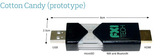
So a post on the Android and Me blog about the prototype Cotton Candy, what amounts to an Android flash drive that turns any screen into a computer, intrigued me today. Interesting features is that it works on any screen or device, both Windows and OSX, and works with bluetooth. By the way the price of Cotton Candy is expected to be around $200. But this part moves it beyond cool to perhaps a gamechanger:"The current device runs Android 2.3, but Borgar also mentions that there’s no limitations to the OS. You could install Ubuntu Linux on this device, as well as the ARM version of Windows 8, once it is available.The possibilities are endless, and devices like this could turn computing into a whole different universe. You could simply carry this little thing around, and instead of actual computers, schools and businesses could simply set up monitors. The company/organization would save money on PC components, while the user would be able to keep all his information with him, wherever he may be." So what if going 1:1 just meant buying some screens? Schools could provide the wifi infrastructure and monitors/screens of different types for students to plug in their customized drive. My school has found great results out of these collaboration centers that allow 4 students to hook up to one screen. Students enjoy using them and the groups that do have better projects because they are truly working together instead of each person lost in their own screen.So what do you think? Does this type of device have the potential to truly bring 1:1 to all schools? Is this legitimate or do you see some drawbacks?by Mike Kaechele
Shelly Blake-Plock
.
Blog
.
<span class='date ' tip=''><i class='icon-time'></i> Aug 26, 2015 11:46am</span>
|
|
By Noah GeiselThis school year, millions of students will participate in the time-honored tradition of writing research papers. They will formulate a thesis statement and seek out evidence from reliable sources that supports their claims. In recent years, this seemingly straightforward premise has been complicated by the definition of what constitutes reliable sources. Some of these students will be told by their skeptical instructors that they may not use any information found on the web. I worry about the sustainability of this approach as newspaper, magazine and traditional book publishing are dwindling and some libraries are moving toward closing their stacks altogether.Many more students will be told that Wikipedia is not a reliable source. For some, this is a no-brainer while for others it is a travesty. The key question in this debate has nothing to do with Wikipedia or any other source. What we need to be asking ourselves is: What is the point of the research paper? Five, fifteen and fifty years from now, do we want students to know the information they learned from their research topics or is the real value in what future graduates will be able to do, namely seek out information, evaluate it for relevance and accuracy and, ultimately, analyze and synthesize it in order to make an informed argument? If you are in the former camp, you can stop reading now and skip down to comments section to tell me how foolish I am. For those of us in the latter camp, I believe we need to re-think our approach to defining reliable sources. We need to ask ourselves if we are doing students any favors by compartmentalizing for them which sources are authoritative and reliable and which are not. Even if we coach our students to steer clear of Wikipedia, fringe media and news sources they have never heard of, we are not shielding them from seizing on erroneous information. Three examples: 1. Investigative journalism found in such mainstream sources as The New Republic, Harper’s and Rolling Stone may safely be considered reliable. If you are going to tell your students what is and is not reliable however, just make sure they avoid articles written for these magazines by Stephen Glass, who was fired from them all in 1998 when it was found that he had fabricated all or parts of dozens of stories on topics as important as the Clinton White House and the D.A.R.E. program. 2. For a few hours one morning last March, many were duped into believing that Cheif Justice Roberts was resigning from the Supreme Court. Georgetown Law professor Peter Tague, an indisputably authoritative source, assured his class that he had inside information that Roberts would be resigning and within minutes the news had been picked up by a number of "reliable" news organizations, based on the students' tweets and FB updates. Thirty minutes later, Tague revealed to his students that it was a prank intended to show them that even reliable sources could disseminate inaccurate information. 3. While eating at a chain restaurant last summer, my friend at the head of the table had a different tip total everyone needed to chip in than I did. I asked him to double-check his math but he smugly pointed to the tip calculator printed at the bottom of the receipt and boasted that the computer had already done the math for him. Five people then pulled out their cell phones and jaws dropped as we discovered that the tip calculator was not a reliable source. The 18% calculation was actually over 25%. A teacher’s blanket assertion that Wikipedia and other web-based sources are not reliable is troubling as it falls prey to the very trap we want our students avoid: not thinking for themselves. Clive Thompson has an article in this month’s issue of Wired in which he presents research suggesting that students today are not effective at searching for information. He minces no words in assessing the problem: "...the ability to judge information is almost never taught in school."It is essential that as we prepare students for post-secondary success in the 21st Century, we use the research paper as an opportunity to teach critical thinking skills not only in employing sources to support their opinions but in evaluating the sources. In the case of Wikipedia, there are plenty of academic entries that have been compiled by reliable sources and peer reviewed for accuracy. These should be fair game as sources. The answer to the Wikipedia Dilemma is not in telling students where they should and should not look for information but in equipping them with the skills needed to exercise due diligence in assessing the reliability of their sources. One solution specific to the Wikipedia Dilemma that may make everyone happy could be the introduction of a new protocol for annotated bibliographies. If students choose to cite a Wikipedia entry, they would also be expected to sub-cite the information by seeking the original source of a specific claim in the References at the bottom of the page and stating how they had verified it for reliability.
Shelly Blake-Plock
.
Blog
.
<span class='date ' tip=''><i class='icon-time'></i> Aug 26, 2015 11:46am</span>
|
|
by Shelly Blake-PlockSitting around in my in-law's living room after a nice Thanksgiving dinner with family and friends, my wife and I were talking to her brother and his wife. They have two small boys and were telling us about how much the kids loved one of the slapstick skits in the original "Singing in the Rain". They originally came upon it on YouTube after watching the movie and being completely amazed by the skit; they pull it up on the iPhone and laugh and roll and tumble. Toddlers being into slapstick is nothing new. Toddlers (or any of us) being able to tap into the collective memory of film culture at any moment via a handheld device... that's something else (and yet we so take it for granted now).My brother-in-law commented that one of the most amazing things about technology these days is the ability to find and share whatever is on your mind. And it is not just thanks to the technology, but thanks to folks who have engaged with the technology in all of the weird ways that people engage with things. For instance, we had been playing a game involving a wooden maze and a metal ball. You control the ball by using levers to tilt the base of the maze. It is infuriatingly difficult. My father-in-law, humorously exasperated, said that it was impossible. A quick scan of YouTube via iPhone showed a dozen clips of folks finishing the maze -- one of whom completed the whole thing in about 20 seconds. My brother-in-law's response: "Of course it's on YouTube."In a sense, YouTube provides evidence for human capacity.On Thanksgiving morning, my daughter was helping my wife bake bread and my sons were rapt in a Minecraft-induced trance. From out of the dining room, one of the boys called: "How do you make a chair?" My wife didn't follow: "What do you mean?" He replied: "How do you make a chair in Minecraft?" She: "Don't know; maybe try YouTube?" Sure enough, within 30 seconds he found a (very dry, but useful) tutorial on how to build a chair in Minecraft.My daughter, meanwhile, wanted to know the proper pronunciation of "lingonberry" and she trusted neither my wife nor myself when it came to Scandinavian berries. Where did she turn? Guess.The point it that we've all got questions. Sometimes they are the big questions. Sometimes they are the "how do you pronounce the name of this berry we picked up at Ikea?" type of question. More than anything else, the net offers us a shared space where we can choose to turn with our inquiry when mom and dad don't do the trick. I myself have found myself over the past week looking up info on everything from questions about finance to questions about gall bladders to questions about Kevin McHale's best season for the Celtics. Answers came in a range of qualities, and many pointed to more questions; but that's the nature of all of this stuff -- and as the web represents people, it represents the way people have always dealt with questions; it's just that now you have access to the questions of everybody all at once -- and everybody else does too. Hello, everybody.I often hear educators say things like: "Change will not happen overnight, but it will happen." And I know they have the best intentions in expressing such sentiments. But the fact is that change already happened. And most schools missed it. It's not that they are going to eventually change. It's that they missed the boat. It left the port. And they are still standing on the dock.Why didn't they get on the boat? Well, one reason has to do with the fact that lots of ed tech in the 80s and 90s sucked. I hate to be so blunt, but as a child of the 80s, I can testify from a kid's point of view as to the suckiness. As a nine year old, I was making my own games that were leagues beyond the games they forced us to play in school. And so, between the exorbitant cost of quickly-obsolete hardware and the pedestrian nature of most of the software of the time marketed to "change education", I totally understand why so many educators are gun-shy of anything tech.I'd be wary of any veteran teacher who wasn't. We talk about "buy in" and to any savvy veteran, that may be exactly the problem.Ed tech started out like the Titanic. A big hype was made about it, it cost a bundle, it marketed itself as the future, and it failed big time.But the commercial cruise industry didn't end because the Titanic went down. The commercial cruise industry learned from the mistakes of the Titanic. Technology progressed and the commercial cruise industry kept up with the progress and the ways ships were built, the ways they were navigated, the safety measures involved -- all that changed as well. And as time went by, cruise ships became mainstreamed and for the most part the worst we had to suffer through when it came to cruise ships was syndication of The Love Boat.Likewise, the best in ed tech has progressed with the times and now engages the social and the mobile; it's lean and handles both personalization and collaboration. Interestingly, some of the most important tools in education were never intended for primarily an education mindset -- Twitter perhaps being the boldest example. And sure, we still have plenty of ed tech that is on par with The Love Boat, but that's to be expected; there is always going to be a lot of crap out there (nothing against Captain Stubing). It's up to astute and educated educators to be able to distinguish between the quality of one and two.And so, my family and I know how to say "lingonberry" and we get to share funny clips from old movies and we get to learn how to make stuff with the help (very dry) strangers have offered online for no reason other than that someone might come inquiring about such a thing sometime.And taken separately, these seem like minor things. But taken together, and understood in the context of the great big connected picture, these are connected instances of inquiry. And if nothing else, our connected technological context has laid down the framework for a golden age of inquiry.The ship left the dock. Some time ago this might have meant you'd either need someone with a speed-dingy or you were just going to have to get into fishing. Nowadays there is another option -- the network itself. It is extending ropes out to you. If you really need it, it'll send a Coast Guard helicopter to pick you up. Just say you want to take part. Say you've got questions. And rather than dwell on the marketed promises and predicted failures of the past, think about how the context of the present matters to you now... and think about how it matters to your students.This Black Friday, don't "buy in" -- just engage.
Shelly Blake-Plock
.
Blog
.
<span class='date ' tip=''><i class='icon-time'></i> Aug 26, 2015 11:46am</span>
|
|
Quick question for the crowd:Anyone know a ballpark figure for how many iPads are in schools?I'm working on a project I'm sure I'll be blogging about before long and need this number for part of it. It is proving more difficult to determine than I originally thought. Whether they are 1:1 or iPad carts doesn't mater.
Shelly Blake-Plock
.
Blog
.
<span class='date ' tip=''><i class='icon-time'></i> Aug 26, 2015 11:46am</span>
|
|
by John T. SpencerI'm at a conference, listening to a technophile gush about the latest available tools that schools need to quit blocking."What's relevant to kids these days?""Facebook," the audience cries out in unison."See, you know it. I know it. What's relevant for the students? Let the kids use Facebook. Get them on Twitter. Find the tools that they use in life."I have serious concerns with Facebook, ranging from privacy to data mining. However, I'm much more concerned with the obsession with relevance and the blind embrace of technology, regardless of context.* * *The Astrodome was the most relevant stadium of its time. With the largest JumboTron, the trendiest color choice and a very modern, symmetrical design, it embodied the Space Age. It was the most technologically-driven. It was the anti-Fenway. It was the ball park of the future. It was relevant.It wasn't developed with the purpose of baseball in mind, though. A simple foul ball nearly blinded the players, so they had to paint the ceiling tiles, which killed the grass, which led to Astro Turf. Astro Turf was relevant. It was Space Age technology. It made sense. Except it looked ugly and it meant a diving catch could end a career.The stadium, once relevant, became a joke.So, I think of lesson design. I'm not interested in relevant. I'm not looking for the trendiest tools. I'm not out to find the latest research from a collage artist like Marzano. I'm not peppering my lessons with the latest pop culture references to prove just how insanely hip I am (not that hip if I use hip, unless I'm a hipster using hip ironically).Remember Carmen San Diego? Remember Lazer Discs? Remember WebQuests? Remember how all of those relevant technologies were going to transform learning?Fenway gets it right. The stadium was designed to fit the community, which explains the quirky field dimensions and why it continues to be one of the most creative designs in baseball. It was designed to fit the game of baseball, which is why it's so classic. I want to teach more like Fenway and less like the Astrodome. Or better yet, I want my teaching to be a hybrid ballpark like San Francisco, where there are still new innovations in structure and design (no one's staring at a pole like they do in Fenway), but a clear embrace of the context, the community and the classic ideas. I want to start with meaning and purpose rather than relevance. And the crazy part? When I start with purpose, students often find it relevant to their lives.
Shelly Blake-Plock
.
Blog
.
<span class='date ' tip=''><i class='icon-time'></i> Aug 26, 2015 11:45am</span>
|