Blogs
|
by Shelly Blake-PlockWindows.That's my prediction. Here's my rationale: Windows 8 has been designed especially for touchscreen computing. Windows is the overwhelming winner in the enterprise market. Major PC manufacturers from HP to Dell are re-evaluating their business in a post-iPad world. In the short term, no PC company is going to catch up to the iPad. And the Kindle Fire will soak up much of the remaining consumer market for folks who just want to watch movies and read books on a tablet. While Android phones will continue to gain market share -- though with a $99 iPhone 3S floating around, it will be interesting to watch what happens -- Android tablets will get squeezed out by Apple and Amazon on the consumer side and by Windows tablets in business. Windows is what business trusts and Windows will be what business goes to as tablet computing hits the workplace in a big way. Watch for a company like Nvidia to monopolize the need for increased graphics capability on tablets and watch the usual suspects -- HP, Sony, Dell, Lenovo, Asus -- all come out with Windows-based tablets. My guess is that this will all burst on to the scene in a big way for the post-election holiday season of 2012. We'll likely see the big commercial blitz over the summer to coordinate with television advertising for the candidates and on the Internet streams of political shows on MSNBC, Fox, and the like.And then you'll start seeing them in schools. Because high schools -- high schools are likely where the majority of 1:1 tablets will come in because of online AUP/TOS policies regarding younger kids -- will do as they have traditionally tried to do and follow the lead of business and higher ed when it comes to tech buying decisions.And so, starting in 2013, we'll see the first wave of Windows tablets entering classrooms. That momentum will build as the price of productivity-oriented Windows tablets comes down and the need for 1:1 connectivity will become increasingly an infrastructure and instructional expectation (as well as a necessary way to deal with online textbooks in places like CA) -- starting in a big way in suburban public schools, but also building off early forays into mobile learning in urban and rural schools. Most private schools -- at least those with an eye to maintaining high college placement stats -- will make Windows tablets the standard 1:1 learning device / notebook / organizer in those settings.By 2016 or so, Windows tablets will be the industry standard.Of course, I could be totally wrong. This is just a prediction. And in many ways it's a ludicrous prediction, but I'm willing to put it out there.
Shelly Blake-Plock
.
Blog
.
<span class='date ' tip=''><i class='icon-time'></i> Aug 26, 2015 11:51am</span>
|
|
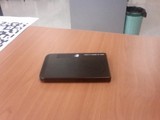
By Steve KatzUnfortunately, hard drives don't last forever. But you can keep using them. Here is my friend Kevin's external hard drive shortly after it died. I love opening electronic equipment after it no longer is in use, so that's what I did with the hard drive. I left it sitting on my desk after opening it. I started using it as a coaster for my coffee cup. A few days later I came across some of those rubber footpads that are used to keep things from scratching up your table. I stuck four of those to the bottom to keep my "coaster" from scratching my desk. Reduce, reuse, recycle. Originally posted on my blog.
Shelly Blake-Plock
.
Blog
.
<span class='date ' tip=''><i class='icon-time'></i> Aug 26, 2015 11:50am</span>
|
|
by Mike Kaechele Stumbled on this in Google+ from Benjamin Wilkoff about the consensus process being used at Occupy Wall Street.This has potential for so many questions and discussion topics with students.What is actual democracy?Is the current government of the United States a democracy?Whose voice is most important in an democracy?For PBL it is a great example of how student groups should function.What are the weaknesses of this form of government?Does this scale to a national level and what would that look like?How can we make sure more opinions are heard and given a true seat at the table before decisions are made?How can we implement the consensus model in schools?How could the consensus model be used in your classroom? How could the consensus model be used with students in curriculum planning and design?What would you add?
Shelly Blake-Plock
.
Blog
.
<span class='date ' tip=''><i class='icon-time'></i> Aug 26, 2015 11:49am</span>
|
|
by John T. SpencerThe Radio"They seem to lack a unified message." Really? I heard that phrase twelve times over the course of two mornings on NPR, which implies that unity can only occur through a set of specific talking points and a hierarchal structure. This is a fundamental misunderstanding of democracy, social media and what a grassroots movement is all about. I'm not a reporter. I get that. But I noticed quite a few signs with words written on them. After reading the words, I noticed people were angry about the bailouts, angry about the corporate take-over of public institutions, upset about the Supreme Court allowing corporations to be treated as people. Sounds to me like a unified message that there is an oligopoly, plutocracy and kleptocracy running America. Then again, I'm not a "real" journalist.At one point, a reporter (not someone being interviewed) said, "they haven't seemed to figure out why they are protesting." I've never known anyone who protests just for the hell of it. I doubt anyone said, "Dude, there's gonna be awesome bongo drums. I don't care about why we're protesting. I'll risk being arrested because those bongo drums, my God, they sound great."The Take-HomeI still like PBS and NPR (someday I'm going to meet Terri Gross in person). However, I need to remember that while they might be the best of mainstream media, they still pale in comparison to the real public media. We are in a new era where information is instantly accesible. Who covered the Occupy Wall Street protests first? (Or for that matter, who paid attention to the Tea Party first?) Who video-taped police beating folks who were exercising their First Amendment rights? Who covered and helped produce the Arab Spring movements?The Occupy Wall Street movement is proving that the public is the true public media. We are the citizen-journalists. What this means for teachers is that if we want true social studies, we need to teach students to think well about civics and social justice. Students need to move beyond memorizing facts and into the bigger issues of understanding context, distinguishing between facts and opinions, analyzing language, reporting accurately, expressing one's voice respectfully and understanding the bias of both the medium and the message.Mobile devices have created the Pocket Journalist, where students can access, create, mix and analyze information as it is happening. I can complain about the bias in public media, but my time is better spent helping develop a more informed, accurate and meaningful public media within my own context of the public education system.* * *Note: For the rest of this week and all of next week, you can buy any of my books for one dollar. You can get all five of them for a price of a venti latte. Oh, you'd rather have that venti latte? Okay, I don't blame you entirely.
Shelly Blake-Plock
.
Blog
.
<span class='date ' tip=''><i class='icon-time'></i> Aug 26, 2015 11:49am</span>
|
|
By Steve KatzIn the ed tech office we often get teachers coming in with computer problems that are solved with some very basic troubleshooting tips. I created this document (in the form of a certificate) with the hope of helping teachers to learn the most basic troubleshooting. I created it as a certificate thinking that people might be more inclined to post it on the wall and refer to it. Please feel free to share the document. Download the full-size CertificateCross posted on my blog.
Shelly Blake-Plock
.
Blog
.
<span class='date ' tip=''><i class='icon-time'></i> Aug 26, 2015 11:49am</span>
|
|
by John T. SpencerI had a lengthy Twitter instant message conversation with Russ Goerend. We talked about hard issues of desires for teaching, reform in our classroom and burnout. It was a time of vulnerability for both of us. On other nights, we might have talked theory or exchanged instructional ideas. But tonight we were both needing a conversation about the parts of teaching that aren't mentioned in the staff lounge or a PLC meeting.A few nights ago, I "met" via Google chat with Gregory Hill. Again, the conversation pingponged between teaching and life and the sense of hope and crushed hope that we both experience at different times. On Saturday I met with Robert Greco. We had had coffee and shared stories, geeked out about teaching and society and spoke honestly about what it's like to be a dad. A few nights before that, I Skyped with Jeff Russell. While the focus was on filming student documentaries, he had a chance to see my kids misbehave and my response to him. I felt embarrassed, but he was gracious. The day before that, I sent some books out to David Loitz, read an amazing post by Justin Stortz and heard some of the best push-back and compliments I've ever gotten by Chad Sansing. That same day, I had a very geeky, intellectual, honest conversation with Shelly Blake-Plock and a long Twitter conversation with William Chamberlain and Michael Kaechele. If you had caught me on a different week, I would have been interacting with David Wees, Jabiz Raisdana, Jerrid Kruse, Shelly Terrell, Michael Doyle, Angela Watson, Mary Beth Hertz, Stephen Davis or Jose Vilson.At this point, my entire post could easily feel like a long list of names. However, for me, these are the people who have kept me teaching, writing and thinking when I was nearing a place of burnout. It's a bigger list than I had ever imagined. I am, too a large extent, an introvert. I tend to hang out with Javi the Hippie and Quinn the Business Bohemian.I've written before about PLNs. I've created sketchy videos to explain how a PLN works. And yet . . .I'm not looking for something that works. Not when I have somewhere that I belong. I have a loose band of online friends (many of whom are not mentioned in this post) who offer ideas, ask questions, share stories and, most of all, allow me to be myself. I have a non-geographic place that transcends any medium and it is in this place that I can not only be transparent, but also vulnerable.So, when I search for a metaphor regarding this space, I'm most likely to think of it as a guild. It is a place where I am known as a whole person engaged in a challenging, meaningful vocation. It is a place where I can share ideas on my craft, tell stories from the classroom and make sense out of my struggles. It is a group that I trust who will fight for me against the forces of apathy, insecurity and standardization that so often derail me as a professional. Ideally we would all live in a physical community. Then again, ideally I would ride a unicorn to work and instead of a stress ball at work, Carol King and Samuel Beam would stand by my desk and each offer their own singer-songwriter melodies. However, we live in an urbanized, fragmented, compartmentalized world. We can allow emerging technologies to push us toward amusement and fragmentations or we can form a guild and share our lives.* * *Note: For the rest of this week and all of next week, you can buy any of my books for one dollar. You can get all five of them for a price of a venti latte. Oh, you'd rather have that venti latte? Okay, I don't blame you entirely.
Shelly Blake-Plock
.
Blog
.
<span class='date ' tip=''><i class='icon-time'></i> Aug 26, 2015 11:49am</span>
|
|
Somewhere over the last couple days, we published our 1000th blog post here on TeachPaperless.I'd just like to say that I have really enjoyed and appreciated the variety of forms both in terms of writing and philosophy that have taken to these pages since the blog became a community-created endeavor back in January of this year. Thank you to all of the writers, contributors, commenters, and readers who have -- in my mind -- made TeachPaperless the special thing that it is.Looking forward to 1000 more.- Shelly
Shelly Blake-Plock
.
Blog
.
<span class='date ' tip=''><i class='icon-time'></i> Aug 26, 2015 11:48am</span>
|
|
by Shelly Blake-PlockA lot of discussion recently over the pros and cons of BYOD -- Bring Your Own Device. Some folks have been quite adamantly in favor or against.For all the hub-bub, I think it's worth thinking about devices not just in relation to what kids do with them in the classroom, but rather how they relate to the connection those devices represent for them in the real world.Fact is that we are living in a time -- not unlike those previous -- when one device will not do it all. Context is the key.If I am processing audio, I want to be on a Mac. If I am tweeting on the bus, I want to be on a smartphone. If I am reading the news, I want to kick back with a tablet. If I am learning a new language, my iPod will do just fine.Does this make life more difficult when you are trying to find a "solution" for you school? Yes. Technology is not making life easier.Again, context is the key.Personally, I don't think that forcing a "school standard" will change the fact that for a lot of people, the smartphone represents their connection to the Internet.Nor is giving me a laptop going to change the fact that I personally read better on an iPad. Nor is giving me an iPad going to change the fact that I type better on a laptop.There is no "one device".So why do schools pretend they can provide it?My wife loves Android. I'm waiting for Windows 8. Fortunately, we can make decisions to experience technology in the way that is most conducive to the way each of us work. So, I can't afford a new fancy Mac to do high-end video, but luckily there is a community center in town that offers time on theirs. I take my iPad to the library, but when I want to do some heavy writing, I use the desktop PCs they have there running OpenOffice. In other words, between what we can provide and what the community can provide, we have a range of options for using devices to do what we need to.Maybe instead of trying to find the "device" or the "solution", we should step back and think about our role in schools to provide a range of computing experiences -- and to allow kids to bring a range of computing experiences with them. This after all is fundamentally what a school is meant to do: provide a range of learning experiences and accept that kids bring a range of experiences with them.One of the biggest failures of 1:1 computing in education is school's inability to understand that there is a difference between having a machine and having a lifestyle device.One of the biggest potential failures of BYOD is thinking that kids can provide equity on their own.My own approach as a decision maker would probably be to strike a balance whereby the school would provide machines capable of handling the task at hand and the students are allowed to bring their own devices to complement the tech infrastructure.We need to integrate both into a learning experience.We need a range of devices to handle a range of problems and provide a range of opportunities.Going hard one way or the other -- for or against BYOD -- is missing the reality of the way most of us actually compute, and missing a chance to leverage the context in the way we and our students actually understand and relate to technology.In reality, this isn't about BYOD, it's about BYOC -- Bring Your Own Context.
Shelly Blake-Plock
.
Blog
.
<span class='date ' tip=''><i class='icon-time'></i> Aug 26, 2015 11:48am</span>
|
|
by Mike KaecheleWe had our first parent/teacher conferences at our new school last week (project based learning). I had great discussions with parents regarding standards based grading. No one has any issues when there is opportunity to "fix" any grade that is not up to their standards.But the thing that stood out to me overall about the conferences was how happy parents and students are with our school. We have a diverse group of 100 students including previously successful students who see our school as a place to stretch their independent wings and go deep into curriculum. On the other hand we have students with labels such as ELL, EI, and ADHD with IEP's who have struggled greatly in the past. We have students receiving professional help for depression and related issues. We have students who have lots of experience with suspensions and even have been expelled previously. We have students that I am confident would end up in "alternative ed" or just drop out if they stayed in a traditional school.by Leo ReynoldsIf you just looked at "grades" you would see that some of these students are "failing" at this time. But when you talk to a parent who has been at their wits' end with their child and they say my daughter/son likes being here and is doing so much better than last year you realize that all of our students are "succeeding."Every student may not reach grade level reading, pass every class, or receive exemplary scores on the state mandated test. Some one somewhere may label them a "failure." But I know that our students belong to our school family and are growing in ways that matter even if it isn't measured in a grade program or on a test.
Shelly Blake-Plock
.
Blog
.
<span class='date ' tip=''><i class='icon-time'></i> Aug 26, 2015 11:48am</span>
|
|
by John T. Spencer"Dad, if ants are so strong why can't we just make really big machines that are built like ants and can carry heavy stuff for us?" Joel asks me.Being a first-grader, I struggle with how to teach the difficulty of scalability. "Sometimes things that work in small spaces don't work when they get too big," I tell him."Show me," he dares. So we build a small Lego structure that works wonderfully as at four inches tall. However when we attempt to create a human-size version it collapses. "That's the problem," I tell him. I don't get into the formulas involved, but he's able to grasp in a very tangible way that small things when scaled to larger spaces don't always function as well.* * *I've been re-reading Socrates lately. I find it interesting that the same man (presumably) who had engaged in critical dialogue within the public realm had concocted a militaristic, standardized, heavy-handed, prescriptive solution for education. When I re-read The Republic, I am struck by how benign Race to the Top and No Child Left Behind seem. It would be easy to condemn The Republic as a dystopian fantasy for an ideal society based upon coercion and social conditioning. However, it seems to me that Socrates crafted his vision for Athens based upon what worked for Sparta. The real issue isn't that it was bad ideology (which, in my pseudo-libertarian worldview, I see as a truth) but that it didn't fit the context of Athens. As much of a genius as Socrates was, he failed to grasp the reality of context, models and scalability. He assumed that what worked with one type of person or one local politic would transfer trans-geographically to a new context without any hiccups. This has me thinking that the real issue might not be factory education and the real solution might not be as simple as applying home-school, unschool, charter school, private school, Waldorf, Montessori, KIPP, PLC, BYOD or LSD across the spectrum. It's why, as amazing as Finland may be, I don't think the solution will be to copy them, either. We can rail about industrial education, but culprit has less to do with the factory model as much as the reality that the model was applied top-down to all public schools while ignoring the sense of nuance, paradox and context implicit in every educational experience. The real issue goes further back than the factory and probably further back than Socrates. It's the idea of enforcing one idea, one system and one model across the board and assuming that it will work. It's not so much the problem of one-size-fits-all (in a true one-size-fits-all there is room within the fitting for customization) but a one-fit-sizes-all where the "fit" is used to size up every person, place and institution that doesn't conform to a particular standard.The real issue is arrogance*.When I think of where to go with educational reform, I look again at Socrates - though not so much in his grandiose dream of an educational utopia. Instead, I yearn for the Socrates of the street or of Jesus or of any other rabble-rouser who began with humility, with questions and with the notion that challenging social norms through real dialogue is the only way that sustainable social change will occur. *And I've often been the one laying out grand plans for what I think works in education.
Shelly Blake-Plock
.
Blog
.
<span class='date ' tip=''><i class='icon-time'></i> Aug 26, 2015 11:48am</span>
|