Blogs
|
by Shelly Blake-PlockJust caught myself commenting on a student's blog to make sure to cite sources at the end of the post in APA format.Which is fine. If it's APA format that I want the kid to learn.But this is a blog post I'm grading. And so, I realize: oh, yeah... I'm using the internets!And thus I amended my comment to read: "Please remember to link to your sources within your post".Links make the Internet, well... the Internet. Links are the only thing that gives the Internet the right to be capitalized (well, that's my rationale; and, on a side note, the history of the capitalization of Internet is actually fairly interesting.)And while as a history teacher, I'll continue to teach and expect the use of APA format and in-text citations in essays and research papers, when it comes to blog posts -- whether in the less formal ones or in totally straight-laced academic-tone posts -- I'm going to remember to teach linking as a fundamental part of writing.Because you teach good networked writing by teaching the value of links... and the style that goes with it.
Shelly Blake-Plock
.
Blog
.
<span class='date ' tip=''><i class='icon-time'></i> Aug 26, 2015 12:27pm</span>
|
|
By Steve KatzOriginally posted here.I’m sure that many of you have already heard about Natalie Munroe, the Pennsylvania teacher who made some negative comments about here students on her personal blog. If not, I’ll give you some links so you can catch up on what has now become an international news story, and has Ms. Munroe preparing for a legal battle to be able to return to her job. A few facts about the incident: She says she was blogging for her friends & not a larger audience. (Seven people were following her blog.) Her blog post that got her into trouble was posted over a year ago. The posts in question did not name any students, and did not include her last name. She has been suspended from her job. There are a couple of points I’d like to make about what happened: When you post something on the Internet it can be read by anyone with Internet access. Even when content is removed from the Internet it is VERY likely that it has already been archived by Google and other search engines. Regardless of what Munroe meant, people make their own interpretations. What we can learn from this: Regardless of whether or not this falls under free speech, Munroe’s is paying a high price for her comments. Once you post something on the Internet you lose control of it. What you post on the Internet probably won’t go away, even when you delete it. Everything you do on the Internet contributes to your digital reputation. Think before you post. Steve Munroe Defends Comments - CNNABC News ReportMunroe defends herself on her blogChris Lehmann’s Open Letter to Munroe - Make sure you read this.
Shelly Blake-Plock
.
Blog
.
<span class='date ' tip=''><i class='icon-time'></i> Aug 26, 2015 12:27pm</span>
|
|
by Shelly Blake-PlockYour students turn in all of their work electronically. You grade everything on your Tablet PC. All of your lectures are supported by PowerPoints. You haven't been in the copy room in months. You are a completely paperless teacher.So what?As we've discussed on this blog since the very beginning, being paperless is not just a matter of using no paper. It's a matter of bringing the live and dynamic content of the world into your classroom in real time and connecting your student's voices to the conversation of the world.It's not enough to be "paperless". You've got to be connected. The connection is the key.
Shelly Blake-Plock
.
Blog
.
<span class='date ' tip=''><i class='icon-time'></i> Aug 26, 2015 12:27pm</span>
|
|
by Shelly Blake-PlockTweet posted earlier today:Is this the iPad we've been waiting for? RT @erikmal: Apple's iPad product page has been refreshed: http://www.apple.com/ipad/ #edtechWell, is it? Comment away...
Shelly Blake-Plock
.
Blog
.
<span class='date ' tip=''><i class='icon-time'></i> Aug 26, 2015 12:26pm</span>
|
|
Today's question of the day:What should compensation models look like in schools of the 21st century? What kinds of compensation should 21st century schools use to attract and retain teachers?Comment away... we want to hear your ideas.
Shelly Blake-Plock
.
Blog
.
<span class='date ' tip=''><i class='icon-time'></i> Aug 26, 2015 12:26pm</span>
|
|
by John T. SpencerLast night I engaged in a few Twitter conversations ranging from the death of democracy to the bizarre cult following of Apple fans to whether or not the Supreme Court should allow bigots to protest at military funerals. They were intellectually appealing and somewhat fun. I had planned to work on editing my book, but instead I had the chance to ask questions, offer opinions and get involved in intellectual sparring matches with like-minded people.Yet, I kept feeling lonely. Something about feeling "connected" without the sense of space or tone or texture offered just enough personal connection to give me a hint of relational proximity without the authenticity that I would get from sharing a pint with someone. So, I switched to Hulu and watched an episode of The Colbert Report and then an older re-run of Modern Family. It was neither interactive nor relational. However, my thoughts were not limited to 140 characters and oddly enough I didn't feel lonely, either. It's because the television, as a medium, does not pretend to know me or interact with me. Instead, the shows offered a sense of story, context and commentary that had been missing from the Twitter streams. This left with a series of questions:How do we recover the sense of space in our online interactions?Is this a common phenomenon to feel lonely when interacting online?How do we tell and listen to stories using media that are geared mostly toward short sound bytes? Does this mean that our own sense of narrative has been forever altered?Is there a balance we need between online interaction and traditional media? If television viewers don't feel as lonely as a Twitter user (perhaps too bold of an assumption), what does that actually mean? Is it possible that television (unlike Twitter or Facebook) is more dangerous in the fact that we rarely have a chance to feel the loss of space in our lives?
Shelly Blake-Plock
.
Blog
.
<span class='date ' tip=''><i class='icon-time'></i> Aug 26, 2015 12:26pm</span>
|
|
by John T. Spencer Also posted on Spencer's Scratch PadI wrote this after reading a thought-provoking post on the Spicy Learning Blog. When I first began blogging, I felt like a lone Luddite in a techno-wilderness. While writing about the greatest "killer apps" (sadly, not nun-chucks), I wrote about the need for technology criticism. I'd cringe about a glassy-eyed description of the future class erasing the boundaries of time and space. I thought I was alone. I wasn't. It was pure arrogance on my part and I soon ran into Doyle's Science Teacher blog and saw the value of understanding the physical world. Using a more poetic, honest and narrative format, he managed to speak what I felt. So, I wasn't exactly a trailblazer as much as a tech critic on the wrong trail. However, I've noticed that it's become commonplace now to put pedagogy above technology. I constantly read retweeted lines about why the real magic is the learning and the students and the thinking. And yet . . . To say, "You shouldn't love technology, you should love pedagogy," is akin to saying, "You should love the points you made about Sufjan's newest album" rather than saying, "I really love getting a chance to sip coffee and have a conversation with Quinn."I expect an author to love his or her ultra-trendy Moleskin or retro typewriter or, God forbid, brand-new Mac Book. Similarly, I expect a guitarist to appreciate his sing-string companion. I expect any master of any art to love his or her tools. The point is to get past the novelty phase and love the medium, knowing all of its faults and understanding its limitations. I want to be grateful for the medium, knowing its power and potential without trying to convince myself that the tool will not change me in both good and bad ways.
Shelly Blake-Plock
.
Blog
.
<span class='date ' tip=''><i class='icon-time'></i> Aug 26, 2015 12:26pm</span>
|
|
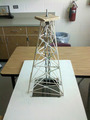
by Mike KaecheleIn my 8th grade applied technology class we do a unit where we build balsa towers. We start off talking about the history of building and architecture while investigating the strongest shapes that make up buildings. Students then research different design ideas on the web. We talk about the science concepts behind the project daily with opening discussions about force, mass, center of mass, loads, and buckling. Students draw their towers to scale measuring the angles and lengths to calculate whether or not they will have enough sticks to complete their design. After we break the towers students calculate whose tower was the most efficient. At the end I have had students write letters to our local mayor designing a tower for tourism or blog about their experience on our class blog. So we integrate math, science, history, and language arts into one project where students research, design, build, destroy, and evaluate.But this project lacks a few things that I would ideally (see my ideals listed here) like to see: not enough student choice, the projects all tend to look the same, and too much of the structure of the unit is pre-designed by me. So I would like to expand this idea to a larger theme that could be taught by a single teacher, perhaps in an elementary setting, or by a team of teachers at any level. I like the idea of "theme" better than "unit" because I envision the teachers having some idea of what will happen but the students influencing the process so that where it goes and ends up is open-ended.For starters it would be a theme on housing. The unit would look at what kinds of dwellings humans choose to live in. It would emphasize the political, social, economical, cultural, and environmental factors that influence these choices. I was originally going to separate these suggestions by subject area but they are too intertwined so I will just list some possibilities. This theme is designed to fit an "all day" integrated project not just a one hour class.Housing could be looked at in terms of the history of architecture from different countries, climates, and/or cultures around the world. Students could watch films like Garbage Warrior to learn about modern, environmentally friendly building methods. This film also brings up the problem of strict building codes limiting innovation.Students could analyze the role of government in establishing building standards and codes and influencing building policy through laws and incentives. They could look at the advantages of quality control vs. the disadvantage of limiting innovation.Students could study how the environment effects the shelter needs of humans in different climates. For example they could learn how and why Inuits chose to make igloos and Mongolians make yurts. Students could learn about recycled homes or innovative urban designs like this Chinese egg.Students could learn about differences in impact between single family homes and multi family complexes and even communes.Students could look at children's bedrooms around the world to compare differences in living standards.Students could learn about the millions of people who have no "home" but live in shelters, shanty towns, refugee camps, or even in garbage dumps.Students could learn how toxic or carcinogenic materials have been used in construction.Students could go on local field trips to view historic and/or modern architecture. Students could visit "green" buildings.Students could watch this TED talk about how the differences in engineering in Haiti and Chile led to contrasting results from the recent earthquakes. Students could interview architects, construction workers, and engineers in person or through Skype. Students could learn about differences between LEED, Green Built, zero energy, and passive home designs. They could analyze how much of these programs are political and how much of them are actually environmentally responsible.Students could analyze statistics about how humans live across the globe. Then they could create an infograph about how the choice of materials effects human health and the environment.Students could research the dwellings of indigenous people and compare them. Students could have debates whether modern or indigenous dwellings are better for human life and the environment. Students could perform energy audits of their own homes figuring out the volume and square footage of their homes and finding cost/ square foot to heat and cool their homes.Students might study an important architect such as Frank Lloyd Wright or a branch of design such as feng shuai.Every group of students would not do all of these things but different groups would choose the topics that are most interesting to them and even suggest other ideas. Some students might choose to branch off into related topics such as environmentalism, capitalism, architecture, interior decorating, sustainable native plants, etc. The directions this project could go are almost endless. Hopefully it is obvious that intertwined in all of these ideas is math, science, social studies, language arts along with art and technology.The cumulative project would be for teams to use what they learn to design, draw blueprints, and make a scale model of an ideal ecological dwelling (like this example). It may or may not look like a conventional house with conventional materials. It could be influenced from any of these activities from cultures around the world. Students would also have to provide a budget for the estimated cost of the materials of the home. They would have to show the energy consumed. Students would also present their homes to their peers (and broader audiences through social media) and describe the benefits of their models.These are my thoughts for a practical theme based on my key beliefs of the best practices of student learning. What are your thoughts? What would you add/subtract? How could this theme or a different one be used for student-centered learning in your classroom?
Shelly Blake-Plock
.
Blog
.
<span class='date ' tip=''><i class='icon-time'></i> Aug 26, 2015 12:25pm</span>
|
|
by Shelly Blake-Plock Discussion of Romantic poet Percy Bysshe Shelley's 'Defence of Poetry' today in history class turned into a conversation about the nature of imagination and a debate about whether or not schools demand imagination.Here's a tweet I posted detailing one of the more devastating and totally and irrevocably relevant things I've heard come out of a kid's mouth:More candid ideas fr disc w/ kids: If grades had to be based on imagination & creativity, current schools would cease to exist. #edchat
Shelly Blake-Plock
.
Blog
.
<span class='date ' tip=''><i class='icon-time'></i> Aug 26, 2015 12:25pm</span>
|
|
by Michael Grzelak Just wanted to highlight an awesome web 2.0 tool that I started to use after a conversation with a fellow teacher on Twitter (#edchat). It is called uJam and it allows a person to create a free account to make free songs.I have zero musical ability (I am not lying... it's pretty bad), but this site does not care about my lack of musical ability.There are four different ways to use the site for music creation; the way I used it was simple -- I recorded my voice. My focus was giving directions for a test. After I finished recording (and I did attempt to sing a little) the site was able to sync my voice and speed to a variety of background music options. I was able to change the style of my voice, the tone, the pace, and so much more. It was awesome! If you do have the ability to read notes... well... still check it out as you can manipulate certain features to make your songs sound better.My students thought my song was dorky, but sometimes that is the role of the teacher in order to gain some interest.Have your students play around with the site. They will love it and it can be used for project creation. It has an endless amount of creative potential and your students can actually create a song of their own and save it as an mp3 file.Imagine your students with headphones on, but instead of listening to their songs they are listening to class-created music that will help them review/learn content.
Shelly Blake-Plock
.
Blog
.
<span class='date ' tip=''><i class='icon-time'></i> Aug 26, 2015 12:24pm</span>
|