Blogs
|
by David Andrade, http://tinyurl.com/edtechguyI recently saw Ben Franklin’s daily schedule and planner on Larry Ferlazzo’s website (which is an awesome resource for educators). I was a long time user of Franklin Quest (now Franklin Covey) paper planners and used their planning software and methods on my first PDA and had heard that they had gotten some of their ideas for planning from Ben Franklin, but had never seen Ben’s planner. It was very cool seeing it. Ben Franklin was a prolific inventor and scientist and believed in being organized and on task. Many of his quotes and ideas are still in use today. If you look at Ben’s schedule, you’ll see that he has two questions he asks himself and then some things he does every day. He asks himself "What good shall I do this day?" and then "What good have I done today?". These are great questions to ask oneself when planning your day and then reflecting on your day, especially as an educator. Review your lesson plans for the day and get prepared. At the end of the day, review how the lessons went. Was there anything that should be changed or addressed next time? I also like how he has standard things he does everyday, like "taking the resolution of the day" and "prosecute the present study". I take these as looking at what my goals are for the day and getting ready to do them. At the end of the day, he puts things away, relaxes, and reflects on his day. This is something we all should do every day. Get up and get ready for the day. Think about what are tasks and goals are for the day, prepare ourselves for these goals, and then go and attain them. At the end of the day, we need to make sure everything is in it’s place, relax and reflect on the day. Putting everything away each night (or at end of school day) helps us to stay organized and on task. We need to relax and refresh our brain with music, entertainment and conversation. And then we need to reflect on our day. How did it go? Did I accomplish everything I wanted to? Is there anything I should change or do better?Today’s apps allow us to stay more organized - calendars, to-do lists, notes, and more. We can have these apps email or text us with reminders so we don’t forget. We carry our smartphones with us everywhere, so we always have access to our data and apps. Heck, there are even apps that can use the GPS chip in your phone to remind you of a task or appointment if you go anywhere near that location (including your shopping list). There are hundreds of paper planners, software and apps, and systems out there to help you get organized and plan your day. But, you are the main ingredient in the planning and execution of your plan. Here are some tips and resources for planning and organizing your day:Basic ideas from Franklin Quest:1. Connect to Mission - what is your mission today, this week, in life?2. Review roles - teacher, spouse, parent3. Identify goals - daily, weekly, monthly, year4. Organize weekly - and plan daily5. Exercise integrity - integrity and values matter6. Evaluate - your tasks, goals, values, and progressUse some kind of planner - purchased or made yourself, paper or electronic, to keep organized and on schedule. Have a daily task list, prioritized. Work on high priority 1st.Have a daily, weekly, and monthly schedule with appointments and obligations.Keep a daily record of events - commitments exchanged, journal entry, thoughts and ideas, agendas, conversations, notes, tasks, etc. Related Articles and Resources:Getting Students and Teachers Organized - tips and resources Great tips, ideas, resources, links (including to paper and electronic planners)Evernote - get organized - free and on all platforms iGoogle as a educational/organizational tool - revisitedThoughtboxes - organize everything you do - great resource for education Wunderlist - free and easy to use task manager Toodledo - An easy to use, free, powerful, online to-do list.
Shelly Blake-Plock
.
Blog
.
<span class='date ' tip=''><i class='icon-time'></i> Aug 26, 2015 12:18pm</span>
|
|
"Educators should..."Let's do a little out-of-compartment brainstorming together. Follow this link to the "Say It Here" GDoc and share thoughts, ideas, pics, snippets, free associations, and philosophical brain tweaks. No rules, just ideas.
Shelly Blake-Plock
.
Blog
.
<span class='date ' tip=''><i class='icon-time'></i> Aug 26, 2015 12:17pm</span>
|
|
by Shelly Blake-PlockWe don't need more "professional" development. We need social development. Or at least we need to recognize it and recognize that the ultimate outcomes we often desire from the best of professional development are actually an outcome of social development. We need a development of human capacity, not an adherence to the rules of our established profession. We need to build our relationships for the purpose of furthering our humanity, not furthering our careers.And we know this instinctually. We know that Rosetta Stone can teach a foreign language as well if not better than a foreign language teacher, no matter how much "professional development" a teacher has; and yet through real relationships and social competence, that foreign language teacher can foster a love of language that trumps the didactic prowess of the program.We know that the best thinkers will end up skipping over much of what we put in front of them to pursue their own interests despite whatever "professional development" we have; and we can either nail 'em for failing to read whatever arbitrary 19th century novel we put in front of them or we can celebrate their independence and the bloom of autodidactism that we have often recognized in ourselves -- not because an expert told us it was there, but because we've had our eyes open for a long time... that's part of the reason we are teachers to begin with, after all.We know that our ability to follow the procedure of a learning strategy will never trump our ability to look into the eyes of a student and say, "trust me".We are teachers and we are in the business of relationships, motivation, and the facilitation of dreams.And so we develop ourselves. On blogs. On Twitter. Throughout the PLN. We have used the opportunity of the tools at our disposal to engage in an older and vastly more satisfying form of professional development than the mandatory in-service. We've developed a relationship with development. We are engaging with our growth and our communal experience in an open, social, and mutually beneficial way.We are all teachers teaching teachers. We are all responsible for each other's development. We are responsible for our profession, yes; but more importantly, we are responsible for our kids' futures. And the future isn't built on "a way" of doing something. It's built on finding a way -- and the emphasis is on the finding.And for all of our theories, all of our curriculum design, all of our talk of standards and guidelines -- nothing trumps the fact that the world is not a well-oiled machine.There is no such thing as perfect grammar. There is no such thing as a right answer.There are only relationships between things.The world is not professional. The world -- at least our communal experience of it and of one another -- is social. So let's keep up this conversation. Let's help one another out. And let's keep our eye on the meandering path of the ever changing social development of that thing we call education and those we call educators.
Shelly Blake-Plock
.
Blog
.
<span class='date ' tip=''><i class='icon-time'></i> Aug 26, 2015 12:17pm</span>
|
|
by John T. SpencerIn the name of "digital citizenship," students are encouraged to engage in social networking and develop an online personna that will serve them well in life. "Keep your comments nice," we warn them. "Make sure to avoid profanity in your blog. An employer might see it someday." "Hey kid, you might want to be careful about getting shit-faced drunk and posting the picture to Facebook. That vapor trail lasts forever." I get it. We want students to behave appropriately. We want to see acceptable use. We don't want a juvenile mistake to screw a kid up for a lifetime. And yet . . .Sometimes I wonder if we're encouraging students to self-market rather than engage in meaningful interaction. Sometimes it seems that students are encouraged to post only their best work, ask only the best questions, avoid anything remotely offensive on their Twitter and keep their Facebook squeeky clean. We're asking them to hide. We're asking them to create a brand of themselves that will then be used to self-market for the rest of their lives. For all the talk of meaningful learning and authenticity, the system often reminds students that social media is a megaphone and therefore, we'd be best to avoid being insensitive or offensive. I ask students to watch what they post online. Filter it through the lens of "anybody can see this." I ask students to develop portfolios and post their best work. I hammer the concept of digital citizenship. Sometimes, though, I wonder if it's all in preparation for building a brand, finding a niche and the perpetual self-marketing that plagues the adult world.I get it. I don't want students to be lost in the future. I don't want them to pay permanently for a mistake made in the eighth grade. And yet . . . Adolescents need to experiment socially. Ever worked with teenagers? Their ups are way up and their downs are way down and they can be brutally honest in a way that adults often curb. They are figuring out relationships. They are engaged in friendships with training wheels. Asking students to "be nice" might be great in managing liability, but it fails to reach them at their level and ultimately it fails in the purpose of education. If I want students to become honest, ethical critical thinkers, I'm not sure the model needs to be Mr. Rogers.I want students to be themselves, unfettered and unbranded.
Shelly Blake-Plock
.
Blog
.
<span class='date ' tip=''><i class='icon-time'></i> Aug 26, 2015 12:17pm</span>
|
|
By Steve KatzAlso posted on my blog.Below is the presentation I gave to the wonderful educators from BIS Canada in Korea on Friday, April 15, 2011.Some of my other professional development presentations.The Paperless Classroom on Prezi
Shelly Blake-Plock
.
Blog
.
<span class='date ' tip=''><i class='icon-time'></i> Aug 26, 2015 12:17pm</span>
|
|
Wondering how many folks out there have managed to go paperless or nearly paperless since last April 22nd. And wondering about what kind of effects it is having on their teaching and the way they think about learning.Leave a comment and tell us what you've been up to.
Shelly Blake-Plock
.
Blog
.
<span class='date ' tip=''><i class='icon-time'></i> Aug 26, 2015 12:16pm</span>
|
|
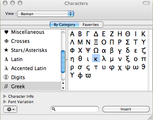
By Steve KatzYesterday I was organizing my mail folders in Gmail and I wanted to move two of the labels that I don’t use very often to the end of the list. It is easy to move something to the top of the alphabetical order by placing a symbol (~, $, *) or a space in front of the word. I was hoping that some of these symbols would fall at the end of the alphabet. I checked an ASCII table, figuring my answer was there. I was wrong. The symbols listed after Z didn't alphabetize to the end of the list as I had hoped. I decided to play with the Character Viewer (Mac), and after trying various symbols ✄ ✓ ✠ ✩ I found that the Greek alphabet comes after the letter Z. One cool thing about using the Greek alphabet was that the letters look the same as in English but send my labels to the bottom of the list. "ADE" in the image below actually starts with the Greek letter alpha, and "Korea Network" with kappa.
Shelly Blake-Plock
.
Blog
.
<span class='date ' tip=''><i class='icon-time'></i> Aug 26, 2015 12:16pm</span>
|
|
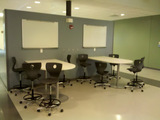
by Mike Kaechele This week I had the chance to visit Columbus Signature Academy in Indiana. It is part of the New Tech Network of schools which are problem based learning high schools. The first thing I noticed was the open spaces and architecture (I blogged about that here). It was designed for students to use the "hallways" as gathering/learning spaces.CSA "common space"The second and more lasting thing I noticed was the students. They were in hallways and classrooms. They were on laptops, listening to headphones, working independently, working in groups, and working on projects. Everyone seemed engrossed in whatever tasks they were involved in. Not everyone was doing the same thing. It was not quiet, but it also was not loud either. The one group of people I had a hard time locating were the teachers.I got to spend two days at the school and talked to many of the students. We had official student guides and student panels, but my favorite part was just talking to random students in the building. Every student I talked to confidently explained to me what they were working on and honestly answered any questions. These students have "tours" of their school all of the time and are comfortable with public speaking.I got the same message from all of them. They enjoyed being in the school and were genuinely proud of it. The school was only three years old and the junior class had helped start it. They helped create the handbook and the expectations for each space in the school. The school has no bells or hall passes. Students are treated as professionals and not micro-managed. The students had a true sense of ownership of their school.The students talked about the importance of having a voice, working in groups, and how they preferred PBL to traditional learning. It is important to note that these were not "special" students in any way. They were chosen by lottery and represent the demographics of their district. But you can tell that every student feels special because they are part of a school that they care about. They are invested in their school and in their own learning.I know this school works hard to establish and grow this culture among students. It all starts by assuming students are responsible and expecting them to act that way. Instead of trying to control students, they empower students to take responsibility. Then they give students choices in meaningful projects that are shared with experts in the community. Students hold themselves accountable to do quality work to represent themselves and their school. Yes, this school is 1-1 with laptops, but what really makes it stand out is the learning climate of trust and responsibility. Are students working and on-task every second? Of course not, and neither am I.Do you trust your students enough to let them learn by exploring interesting problems together? Or are you too busy trying to control them to make sure they get the appropriate standardized learning experience?
Shelly Blake-Plock
.
Blog
.
<span class='date ' tip=''><i class='icon-time'></i> Aug 26, 2015 12:16pm</span>
|
|
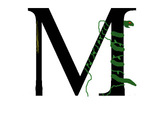
By Steve KatzCross posted on my blog.We were studying the Middle Ages in my seventh grade social studies class. We learned about monks and monasteries and illuminated letters. When I have taught this unit in the past I always have my students draw an illuminated letter by hand. This year my class is paperless, so the students created the letters on their computers using various software. The software a majority of students chose to use is Paintbrush (Mac), a free download. I have posted a few letters below. You can see all of the illuminated letters here.
Shelly Blake-Plock
.
Blog
.
<span class='date ' tip=''><i class='icon-time'></i> Aug 26, 2015 12:16pm</span>
|
|
This one's for the teachers to answer:If I were an administrator, I would...
Shelly Blake-Plock
.
Blog
.
<span class='date ' tip=''><i class='icon-time'></i> Aug 26, 2015 12:15pm</span>
|