Blogs
|
CSU Channel Islands faculty met today for their first session of the Fall 2012 Blended Learning Preparation Program. As you can see, they were thrilled to receive their copy of my new book, Best Practices for Teaching with Emerging Technologies. The book will serve as a friendly, accessible guide through the process of integrating web 2.0 and social media tools into their students' face-to-face learning to make it more participatory, collaborative, and relevant.Join me in a special online book chat!
Michelle Pacansky-Brock
.
Blog
.
<span class='date ' tip=''><i class='icon-time'></i> Aug 26, 2015 04:48pm</span>
|
|
In my featured GETInsight blog post this month,* I share a very special story with you that I have titled "Learning from Life." I often get asked by other educators, how did you get started using social media and web 2.0 tools? Well, this post illuminates the answer for you. You may be surprised to know that it was a traumatic life event filled with a deep need to connect with other humans that empassioned me to engage with emerging technologies and, in turn, opened my eyes to the dazzling learning possibilities they held for my own classes.As I share this post with you, I also view it as a celebration of the publication of my new book, Best Practices for Teaching with Emerging Technologies; for my book is, in many ways, a documentation of my journey. Writing my book was an opportunity for me to share many of the valuable lessons I've learned along the way and capture exciting examples of how other faculty are transforming their own teaching approaches through emerging technologies.I hope you enjoy the post. And, as always, I welcome your comments. Thank you for reading. :)Link to the GETInsight post, Learning From Life (includes my Author Book Chat at the top):http://getideas.org/getinsight/author-book-chat-and-learning-from-life/*Each month, I write a sponsored blog post for Cisco's GETinsight blog, which is part of the GETideas.org network, a global community of educators with a shared interest in discovering ways to change and innovate education through technology.
Michelle Pacansky-Brock
.
Blog
.
<span class='date ' tip=''><i class='icon-time'></i> Aug 26, 2015 04:47pm</span>
|
|
I delighted to share that my book is now available in Kindle version! Please share the good news. :)Read Best Practices for Teaching with Emerging Technologies on your Kindle today!Are you an iPad user? Get the free Kindle app.
Michelle Pacansky-Brock
.
Blog
.
<span class='date ' tip=''><i class='icon-time'></i> Aug 26, 2015 04:47pm</span>
|
|
This month, in my featured GETInsight blog post, I reflect on the ways in which video has been transformed as a medium and has transformed many aspects of our lives and I lay these significant shifts on top of the minimal changes in how video is applied in higher education today as a teaching and learning tool. I invite you to read the post and view the related video, Online Learning in the Social Era: Human, Connected, and Inclusive, and leave a comment here or on the GETInsight blog in response to how you feel about whether or not video is engaged as effectively as it could or should be in online teaching and and learning today. Be sure to consider video as a tool for both instructor *and* student use. I would love to hear your thoughts! Enjoy the post and the video and please share!Click here to go straight to the GETInsight post, "Video: Our Most Misunderstood Teaching and Learning Asset"*Each month, I write a sponsored blog post for Cisco's GETinsight blog, which is part of the GETideas.org network, a global community of educators with a shared interest in discovering ways to change and innovate education through technology.
Michelle Pacansky-Brock
.
Blog
.
<span class='date ' tip=''><i class='icon-time'></i> Aug 26, 2015 04:47pm</span>
|
|
"When we think of where people turn for information, we usually think of databases, the Internet, intranets and portals, or more traditional repositories such as file cabinets or manuals. What we may not think of is one of the most crucial sources of all: other people."-Ageless Learner.comRob Cross, Andrew Parker, Laurence Prusak, Stephen Borgatti It's time that all higher ed stakeholders value technology as a vehicle to connect people, share ideas, foster relationships, break down the silos, reduce the redundancy in our work processes, and collaboratively solve the problems that so many institutions and individual faculty are grappling with across our nation. This is a new way of framing technology which is still viewed as a barrier in the eyes of many individuals, particularly those who resist the notion that online learning can be relevant, inspirational, empowering, and life changing which, I have learned, it can when an instructor is trained and supported effectively. How Google Hangouts Are Rocking My WorldI've been reflecting recently on how Google+ Hangouts have affected my learning and thinking about how free, easy-to-use, social, synchronous video-based learning environments will reshape organizational faculty development programs in the future. The future is looking much more faculty-centered to me, provided that faculty participate, build their personal learning networks, and engage in online informal learning.So many people have asked me, "What makes Hangouts so different, really?" Well, in some ways nothing but in other ways, everything. Really, they deliver many of the same technological features that Skype delivers -- synchronous voice, text, and video communications -- but Hangouts support video conversations in groups up to 10 for free. Further, the simple fact that a Hangout is "baked into" a social network that I use to cultivate my own personal collection of humans from who'd I'd like learn and with whom I'd like to share sets it apart. Simultaneously, this is still the greatest drawback to most faculty, as well, as relatively few are using Google+. Hangouts come in two flavors: the standard "Hangout" and "Hangout On Air." The "On Air" feature allows you to simultaneously stream your video conversation to the web (not always appropriate, no, but it can be quite valuable for certain applications). The stream appears automatically on your YouTube Channel (which you manually connect to Hangouts one time) and on your Google+ Profile page. When you launch the Hangout On Air, you also are provided with embed code that you may copy and paste into any html web page (like your course management system, a blog, a wiki, etc.) and point your audience there ahead of time. When the Hangout On Air is over, the stream is archived in video on your YouTube Channel (which you can adjust to either public, unlisted, or private). For the past year, I have been holding a monthly office hour session for VoiceThread in my role as their Higher Ed Learning Consultant. This is an opportunity for any educator using VoiceThread to ask me questions, share ideas about how they're using VoiceThread, and work through questions or problems they have. Before August I was holding the sessions in a web conferencing system that required advanced registration. There were several months when nobody showed up. In August, my first Hangout On Air month, I had a dynamic group of between 4-7 people join me and last month Amanda, my colleague from VoiceThread, and I were joined by three educators. The experience is just more fluid, more natural. And so is the conversation -- at least after I have gotten over my initial stage fright! Anyone who says presenting in front of a webcam is NOT nerve racking like public speaking has never done it.Learning from Other Faculty: Without WallsBut the really compelling idea that I'm left with is probably the most simple. It's about how faculty are learning today on college campuses. As I reflect on my experiences with teaching, the greatest "Ah ha" moments I've had are those that have come about through the informal learning moments I've had interacting with other faculty members. I have not worked on a physical campus since 2009; yet, my "Ah ha" moments have not dwindled. They continue to flourish -- through the faculty development classes I teach (our VoiceThread discussions), the webinars I present and attend; the interactions I have on Twitter, Google+, LinkedIn and my blog with my PLN; and now my Google Hangouts. Over the past decade, as state budgets have dwindled higher ed faculty have become increasingly more part-time and more frequently work for multiple institutions. Earlier this month, I Skyped with a colleague of mine who is now teaching for FOUR colleges. The point here is that web-based social technologies allow faculty to engage in formal learning while immersed in personalized video conversations at a distance. The boundaries of our campuses are no longer obstacles that keep us from learning from faculty at other campuses. We really are one big learning community ... if we just participate.On college campuses, faculty development programs continue to be cut along with the budget, leaving the minimally staffed departments (if there is even one!) to be managing responsibilities that reach far outside of their original domain and leaving no time to stay current on emerging technologies. Exploring, questioning, examining and experimenting with how to teach effectively with social technologies is perhaps the factor that will keep college learning moving forward. These are the questions that will empower us to recraft a college learning experience that prepares our students for life in a digital, mobile, interconnected, global society -- one in which employers expect new employees to demonstrate their ability to have fostered relationships at a distance (through Twitter, LinkedIn, Google+, etc.) and be able to effectively present and converse asynchronous and synchronously through a webcam (for starters).There are a mess of issues that faculty deal with on a daily basis. How do we navigate the overwhelming world of new technologies? Where do we start? How do we teach with new tools and manage accessibility regulations? How do I navigate my students' privacy effectively in the open web? How do we balance life and work? How do we foster active learning with large class sizes? What LMS should my insitution change to? What conferences are worth attending? We all have the same questions! Let's ask them together! From my experiences, technology is so often viewed as a barrier in higher education. It is seen as as an obstacle that comes between humans and undermines our genuine ability to interact and engage with each other. I've never viewed technology that way. To me, it's technology's dazzling capability to bring humans together regardless of their physical location that excite me. Faculty Development Hangouts?I would like to start arranging Google Hangouts for faculty to discuss hot topics, share ideas, and just converse with one another. Do you think this is a good idea? Would you attend or be interested in watching an archive of a Hangout On Air? If so, add me to your Circles and leave a comment here on my blog with your thoughts or ideas for Hangout topics. If you have questions that you'd like answered, please leave them here in the form of a blog comment and I'd be happy to answer them.
Michelle Pacansky-Brock
.
Blog
.
<span class='date ' tip=''><i class='icon-time'></i> Aug 26, 2015 04:46pm</span>
|
|
Learning Out Loud: Is it the Missing Link in Online Classes? Friday, October 19th, 12pm PDT/ 3pm EDTFree Webinar (Registration Required) Join me, Michelle Pacansky-Brock, author of Best Practices for Teaching with Emerging Technologies and associate faculty at Mt. San Jacinto College, as I shares the results of an ongoing study that seeks to discover how online, asynchronous voice discussions affect community college student learning at a distance. I will be joined by one of my former online students who will answer your questions and share her experiences.In 2008, my online teaching studies showed evidence that VoiceThread, a web-based tool that gives users the choice to comment in voice or text, increases online community and enhances the instructor-to-student relationship. But over the years, I found that only 25% of my students regularly selected to comment in voice when given a choice. I wanted to know why and understand how I could improve this percentage, as well as discover what what would happen if I was successful.In this webinar, I will demonstrate a change I made in my online teaching approach in 2012 that resulted in an increase from 25% to 75% of my students choosing to participate with voice comments in class discussions. I will show samples of the VoiceThread activities and present the students’ feedback about how this rich, humanized, online classroom affected students.Register for this webinar here.Hangout with Michelle and the VoiceThread TeamWednesday, October 24th at 3pm PDT/ 6pm EDTJoin me, Michelle Pacansky-Brock, and a member of the VoiceThread team on Wednesday, October 24th at 3pm PDT/ 6pm EDT in a Google+ Hangout On Air. This interactive environment provides seats for up to 10 people to engage in a video conversation and accommodates an unlimited number of online viewers. Come to ask questions about VoiceThread, share your ideas for using it in your class, or raise topics for discussion. To learn how to participate, visit the Hangout page of Michelle’s blog.
Michelle Pacansky-Brock
.
Blog
.
<span class='date ' tip=''><i class='icon-time'></i> Aug 26, 2015 04:46pm</span>
|
|
In my previous blog post, I wrote about using Google+ Hangouts for faculty development and learning, particularly to connect faculty beyond our physical campus boundaries and reduce some of the redundancy in our workload.As a follow up, I'm arranging what I'm referring to as a "Teach & Share" which is simply a one-hour Google+ Hangout On Air dedicated to a hot topic in college teaching. Here is our inaugural event -- I hope you can join us!Tuesday, October 16 at 3:30pm PDT/6:30 EDTTeach & Share: a Google+ Hangout on AirTopic - Canvas by Instructure: The hot, new LMS on the blockCanvas is a new, open source LMS from Instructure (http://www.instructure.com/) that has grabbed that attention of many institutions recently. This "Teach & Share" is an open, informal invitation to faculty who are teaching with Canvas or considering adopting Canvas to share their experiences with other faculty who are beginning the process of evaluating it as a possible LMS solution. What do you like? What do you dislike? What works? What needs to improve? Bring your ideas to share and questions to discuss with your peers!What is a Teach and Share? A "Teach & Share" is simply an hour-long Hangout On Air in which faculty are invited to come together to share their teaching experiences about a particular topic and learn from one another. The event will be recorded. You must receive an invitation to the Hangout to be able to join.Have a suggestion for another Teach & Share topic? Share it here in the form of a comment!Two Ways to Participate: Join (active participation) or View (passive/lurking)There are seats in the Hangout for up to 10 participants (including me). So please be mindful about what your preferences are to ensure those who want to contribute have a chance to get a seat. If you want to "join," be sure to follow the instructions below.If you just are interested in "view" the event, you may watch the live feed that I will embed on the Hangout page of my blog.How to receive an invitation to join the Hangout on Air (this is for those who wish to actively contribute, rather than passively view the event):Log into Google+ with your Google account. (If you do not have a Google account, you will need to create one.)Search for Michelle Pacansky-Brock or click here to go straight to my profile page.At the top of the page, hover over the red "Add to Circles" button and select the Circle you wish to add me to or create your own. Click here to watch a brief video that illustrates how to add a user to your Circles in Google+. Once you have added me to your Circles, I will "Add you back." When this reciprocal relationship has been established, you will receive invitations to join my Teach & Shares. On the day/time of the Hangout, open Google+ and look for the invitation that will appear in your feed. Click on "Join Hangout." If it's your first Hangout, you will need to download a plug in the first time. Have an topic in mind for a future Teach and Share? Please make your suggestion in a comment below!
Michelle Pacansky-Brock
.
Blog
.
<span class='date ' tip=''><i class='icon-time'></i> Aug 26, 2015 04:46pm</span>
|
|
Direct link to archive: http://youtu.be/dhVFRLj_xnsI just wrapped up our inaugural Teach & Share, my experimental effort to use Google+ Hangouts on Air to discuss "hot topics" in teaching and learning. Today, I was joined online by Mike Smedshammer, Jennifer Garner, Tera Ulbert, Jacque Harris, Christine Sibley, and Brad Belbas who shared their experiences about Canvas. We also had up to 18 viewers of the live Hangout stream during the event. My big takeaways from our conversation are 1) the ways that Canvas is improving the faculty adoption barriers for integrating rich media into classes by streamlining media content into the LMS without an instructor needing to mess around with embed code and 2) how various features in Canvas (built-in of audio and video communications and a continuous, threaded collection of all communications an instructor sends to each student) can increase instructor-student relations (as cited in the feedback shared by Mike Smedshammer in this Hangout).Thank you again for participating! I learned a lot from you and, honestly, now I'm aching to have the opportunity to teach with Canvas. I hope this archive is a resource to many! Have a topic in mind for a future Teach & Share? Leave it here in a comment or Tweet it to @brocansky.
Michelle Pacansky-Brock
.
Blog
.
<span class='date ' tip=''><i class='icon-time'></i> Aug 26, 2015 04:45pm</span>
|
|
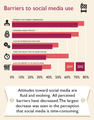
Moran, M, Seaman, J, Tinti-Kane, H. (2012). Blogs, wikis, podcasts, and Facebook: How today's higher education faculty use social media. Pearson Learning Solutions and Babson Survey Research Group.A new report was recently released by Pearson and Babson Survey Research group which examines the personal, professional, and instructional uses of social media by more than 4,000 college faculty of varying age groups. Who participated in this survey?4,534 faculty members 75% of respondents teach full-time25% of respondents teach onlineslightly over 50% of respondents are femaleover 1/3 of respondents have been teaching for 20 years or moreSome key findings, cited in the press release, include: 64.4 percent of faculty use social media for their personal lives, 33.8 percent use it for teaching41 percent for those under age 35 compared to 30 percent for those over age 55 reported using social media in their teachingFaculty in the Humanities and Arts, Professions and Applied Sciences, and the Social Sciences use social media at higher rates than those in Natural Sciences, Mathematics and Computer ScienceBlogs and wikis are preferred for teaching, while Facebook or LinkedIn are used more for social and professional connections88 percent of faculty, regardless of discipline, reported using online video in the classroomSome additional interesting observations include:Only 14.4% of faculty use blogs or wikis in teaching to "post or create" Twitter is used by only 7.9% of faculty for "personal use" but isn't even included in category of tools used by professors to "connect professionally" While LinkedIn surpassed Facebook as the #1 tool used by professors to "connect professionally," it is still used by less than 25% of faculty for this purpose33.8% of faculty create their own videosAll perceived barriers to using social media have decreasedThe survey and infographic(s) are available for download online after you submit your name, email address, institution, and title. The infographics are embedded withing a PDF document. Thanks for the great info Pearson and Babson. One thought...it would be quite nice if the format of this survey was more "social" and akin to sharing, keeping in line with its topic. Also, some additional topics that I'd personall love to see would be data about *why* faculty use social media in their teaching. That is, what is that drives them to integrate tools outside of the learning management systems that their institutions pay so much money for, when there are so many widespread barriers. And how are institutions responding to this shift? Are we seeing a shift to enterprise-wide adoption of social media tools? Who pays for the tools that are not free? What is the breakdown between 4-year and 2-year institutions and full-time vs. part-time instructors? Thanks for sharing!
Michelle Pacansky-Brock
.
Blog
.
<span class='date ' tip=''><i class='icon-time'></i> Aug 26, 2015 04:45pm</span>
|
|
Teaching with VoiceThread Hangout on AirWednesday, October 24th at 3pm PDT/ 6pm EDTJoin me, Michelle Pacansky-Brock, and a member of the VoiceThread team on Wednesday, October 24th at 3pm PDT/ 6pm EDT in a Google+ Hangout On Air. This event will be recorded and streamed live.Come to ask questions about teaching with VoiceThread, share your ideas for using it in your class, or raise topics for discussion. This interactive environment set within Google+ provides seats for up to 10 people to engage in a live video conversation and accommodates an unlimited number of online viewers. To learn how to participate, visit the Hangout page of Michelle’s blog.
Michelle Pacansky-Brock
.
Blog
.
<span class='date ' tip=''><i class='icon-time'></i> Aug 26, 2015 04:44pm</span>
|