Blogs
|
It’s that time of year again when the Nashville Business Journal tells us where the best places in town to work are. Rustici Software made the list for the fourth year in a row!
It’s been an especially fun year with a great group of people. I’m honored to work with one of the smartest and most entertaining groups of people I’ve ever come across. I honestly look forward to coming to work every morning. We’re hiring more six people right now, come join us.
Speaking of a great year. Exciting things are happening with the Tin Can API. This blog on scorm.com has been pretty quiet of late, but we haven’t gone away. Most of our efforts are going into the blog over on tincanapi.com. Go check it out and sign up for our Tin Can newsletter that we send out every month.
The post Four for Four appeared first on SCORM - .
Mike Rustici
.
Blog
.
<span class='date ' tip=''><i class='icon-time'></i> Sep 05, 2015 02:23am</span>
|
|
There are some deployment scenarios that SCORM makes difficult. One of them in particular is when you have content on one domain, and an LMS on a different domain. There are several solutions for this with varying merits, and all of them require effort of some sort. Further, cross domain solutions aren’t necessary in most cases. For these reasons, addressing "cross domain" scenarios is specifically excluded in some of our SCORM Engine licenses.
Why the cross-domain limitation, and how can you get around it?
Basically, SCORM requires that content be served from the same domain as the LMS API. Browsers intentionally prevent the javascript in the content from communicating with the SCORM API if they originate from different domains. This is intentional on the part of the browser makers because it’s a security risk.
If you control both domains (content and LMS), then this security risk shouldn’t be a particular concern to you, but that’s not easy to convey to everyone’s browsers. There are several ways to deal with cross-domain situations, all of which have downsides.
Alter the settings in every browser that will play content. (This is a bad idea.)
Manipulate document.domain in each piece of content. (Also not a good idea, because the content vendors have to be involved. Any solution that requires cooperation on the part of the content and LMS vendors basically defeats the purpose of a standard like SCORM.)
Use Tin Can, because it works via web services. (Good idea long term, but it doesn’t solve your current problem of playing SCORM content.)
Manipulate this via networking magic.
Make each additional machine appear to come from the same domain. You can run multiple SCORM Engine installations in a single domain, essentially behind a load balancer.
You could even go so far as to have something like http://scorm.domain.com/customerA and http://scorm.domain.com/customerB if you wanted different content stores for each of them, with each communicating back to http://scorm.domain.com. These would be virtual directories that are housed on different machines (with content in each) but appear to come from the same domain. This requires some skill in proxies. (Note: This wouldn’t work if you asked for http://customerA.domain.com, http://customerB.comain.com communicating with http://engine.domain.com. That would require central/remote, listed below.)
You can also do a lot of funny business down in apache with redirect forwards, virtual hosts, etc and make those domains look however you want to the outside browser.
Use what we call a central/remote architecture.
This is a great solution to the problem, and something we’ve built out well in SCORM Engine. It does, however, carry an extra cost because it requires reintegration and is explicitly excluded in our SCORM Engine contracts.
Basically, this allows you to have a single core Engine installation. You then replicate the remote component at each content store, wherever that might be. You would be responsible for replicating the content files to those locations. We would collectively write logic that determines which of the remote locations should play the content for each user.
So, there are options. They generally require extra work and extra costs. If you’d like to discuss these options, just get in touch with us. Ask us anything, really.
The post Solving the SCORM Cross Domain Issue appeared first on SCORM - .
Mike Rustici
.
Blog
.
<span class='date ' tip=''><i class='icon-time'></i> Sep 05, 2015 02:23am</span>
|
|
The floodgates are open. It’s time to celebrate. The Tin Can API, version 1.0, is here today.
It was almost three years ago when ADL asked the e-learning community to help them with research to create a new, simpler, more powerful e-learning standard. E-learning standards are what we do, so of course we jumped at the opportunity.
The result was Project Tin Can, which resulted in the Tin Can API. We wrote the first version of the API, version 0.8, then handed it over to ADL and a vibrant open community.
Today it looks like a few guys in Nashville, TN (and a few stragglers up North) managed to transform our slice of the world.
Learning isn’t going to be tracked the same way that it has been. You want to know more about learners than just "someone completed a course" or "someone scored 98% on an test". You want to be able to track activities that take place outside of an LMS, like serious games, mobile apps, group projects, conferences, simulations and so much more. You want to be able to correlate real-world performance with training data. And, you want all of this learning and performance data to live in one system.
The Tin Can API makes all of this a reality.
Already about 60 products/companies have adopted beta versions of the spec. Now is the time when the rest of the industry joins in.
The post The World Just Changed appeared first on SCORM - .
Mike Rustici
.
Blog
.
<span class='date ' tip=''><i class='icon-time'></i> Sep 05, 2015 02:19am</span>
|
|
Three years ago, we started on a journey with ADL to help them come up with the next version of SCORM. We’ve come a long way since then (we just hit Tin Can API 1.0!) and Rustici Software has grown quite a bit. Today we’re excited to welcome our two latest additions to the Rustici Software family: Ervin and Nathan (or Ervin and Skirvin, as we call them). If you haven’t noticed, we like to hire in pairs, and rhyming pairs are even better.
Ervin Puškar is joining up with our developers and we are really excited about the things he will be working on. Right now he is focused on making it easier for our sales team to interact with prospects, which has a few people around here smiling (I’m looking at you, Chris & Tammy). Wanna learn a bit more about Ervin? This should help.
Nathan, on the other hand, is jumping onto Team Delight to help with supporting our customers. Team Delight’s main goal is to dazzle our customers with great support, and we think Nathan is a wonderful addition to the team. There’s a lot more to Nathan than his way with customers, so head over here to learn more.
We are so excited to welcome Nathan and Ervin to our team, and we’re always on the lookout for more awesome folks just like them to join us. Check out this blog post to get an idea of who we are looking for. Who knows, we could be welcoming you next
The post A big welcome! appeared first on SCORM - .
Mike Rustici
.
Blog
.
<span class='date ' tip=''><i class='icon-time'></i> Sep 05, 2015 02:19am</span>
|
|
Quell
[kwel]
verb (used with object)
1. to suppress; put an end to; extinguish.
We base our work year around quarters, like a lot of companies do. At the end of each quarter, we have a "quell" week. It’s the end of the quarter, and it’s time for us to spend some time and think about what we did and what we’re going to do next.
Quell weeks are a mix of meetings, good food, and change. We change a lot around here, but that’s how we get better. Quell weeks make some people nervous, and some excited.
As our last quarter ended, some of our developers suggested that we do a "hackathon", and see what we could achieve. We decided to do it. But in the true Rustici Software spirit, we couldn’t call it a "hackathon" — we called it a Quack — half quell, half hack.
Mike and Tim (the owners) stayed out of it. They let us come up with our own ideas and organize into groups as we saw fit.
…and there were awards. $500 to the team that Mike and Tim saw as the winner, and $500 to the team that the company, as a whole, voted to win.
We quacked last week. We built things. We created things to help the company and our customers. I’m not going to list them all here; they’ll be explained in a subsequent blog post.
While Mike and Tim retreated to Mike’s office to discuss their "winner", we all voted. It’s important to note that we had to put our names on our ballots, so if you self-voted, everybody would know it. It could be an endless opportunity for your peers to shame you (not that we’d do that).
There were too many good quacks for Mike and Tim to decide on one winner, so their award was split between two teams. Winner #1 was "Team John and Andy", with their easy-to-use Tin Can API statement generator that can be deployed to customers that want to let their users capture their experiences. Winner #2 was given Ervin, Nathan, and Brian M. for their work in making our software development process more efficient.
The "Mike and Tim" $500 award was split between those two teams. It came from an envelope full of $20 bills, so I’m not sure which team got the extra $20.
The company-voted prize was awarded to the team of David, TJ, and me, for giving the SCORM Cloud LRS a real home inside SCORM Cloud.
So, my team had to figure out how to split up our $500 between three people. You can’t split up twenty-five $20 evenly, so somebody had to get an extra $20. We left that job up to TJ.
TJ’s personal quack vote went to Joe Donnelly. Joe didn’t finish his quack because he got wrapped up in helping our customers with their support issues, but TJ realized the value of Joe taking the time to take a deep dive into our code, the Tin Can API spec, and learn more about code in general. When our customers have issues, Joe is the first person that has contact with them, and by Joe having a better working knowledge of the code, over time, the added value to our customers and our company is priceless.
TJ divided the cash award and handed me a folded stack of $20 bills. I didn’t count it. I didn’t know where the extra $20 bill went.
Mike made a joke about how it would be funny if TJ gave the extra $20 bill to Joe.
TJ: "What else would I have done with it?"
I was speechless.
Awesome.
That mindset is what makes Rustici Software the best place to work.
The post At Rustici Software, We Like to Quack appeared first on SCORM - .
Mike Rustici
.
Blog
.
<span class='date ' tip=''><i class='icon-time'></i> Sep 05, 2015 02:18am</span>
|
|
If you missed our post about Quack, you should check that out before digesting this post. This post is to tell you about one of the creations that came out of Quack.
SCORM Cloud has been the easiest way for you to get your own LRS, but its main use has been for launching Tin Can content packages and for testing Tin Can activities that live outside of the LMS.
This is how it used to be.
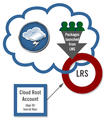
This is because we hadn’t built a way to provide authentication for an activity provider, which means you had to use your SCORM Cloud root-account credentials in order to send statements from an activity outside of an LMS to your Cloud LRS.
Well, using your own SCORM Cloud credentials in a publicly-facing way like that just isn’t practical. It’s fine for testing, but it can’t be used in the "real world."
This is what our Quack did.
We fixed it. We gave the LRS a home in SCORM Cloud. Now you can add activity providers to your Cloud LRS, which gives the activity provider a username and a password to use with your LRS. Choose either basic auth or OAuth.
This means that now you can use your Cloud LRS to accept statements from anywhere, in a secure and "real-world usable" way. All of the things that couldn’t be done before due to security/authentication issues can be done now.
It’s a big step towards having a useful Tin Can LRS implementation in SCORM Cloud.
The post The Next Leap for Your Cloud LRS appeared first on SCORM - .
Mike Rustici
.
Blog
.
<span class='date ' tip=''><i class='icon-time'></i> Sep 05, 2015 02:17am</span>
|
|
We’re happy to announce we have a new addition here at Rustici Software!
When I first heard that we hired someone from Mississippi, I was overjoyed! You see, I get teased a lot around here for my super southern accent. I was thrilled that I would have someone to spread the teasing around with. I mean… he’s from Mississippi, surely he’s got a southern accent, right?! Boy was I WRONG!
While Tim Edwards doesn’t have a southern drawl, he has a bunch of other great qualities that made him a perfect fit for our DevOps position. Tim (or Tedwards, as we call him) will be joining Ben, our chief worrier, in the never-ending task of keeping our services available and scalable. If you’d like to learn some more about him, check out his profile!
Welcome aboard, Tim! We’re glad to have you, even without a southern accent
The post It’s a Boy! appeared first on SCORM - .
Mike Rustici
.
Blog
.
<span class='date ' tip=''><i class='icon-time'></i> Sep 05, 2015 02:17am</span>
|
|
mLearnCon 2013 is happening right now, and we thought this would be a good time to write about some related topics:
Mobile learning. M-learning. Native apps. Tablets. Smart phones. Offline e-learning. HTML 5.
These are all terms that we’ve been hearing a lot about in the e-learning community, but where do we really stand with all of these different things, especially when talking about trackable and standards-conformant learning?
Many of our customers have a large catalog of SCORM content, and some of them have particular needs like being able to do offline learning or delivering their content via a native mobile app.
In the past, this had only been done by a few people and in limited contexts, but about six months ago we figured out a really good way to make it work. This is a huge development in the world of SCORM. You can learn more about how it works here, or just just email or give us a call. We’d love to chat up some mobile/offline SCORM with you.
Another option, and a more forward-thinking, future-proof alternative, is to use the Tin Can API. With Tin Can, you just enable your learning content/activities to send Tin Can statements to any LRS (or multiple LRSs). Configure your app to store the statements locally, and then send them when a network connection is present.
Almost 40% of exhibitors at mLearnCon 2013 have adopted the Tin Can API, which has only been formally released as 1.0 since late April of this year. That’s pretty amazing, isn’t it?
You can even use Tin Can to track things like games and location-based activities, both of which are commonplace on mobile devices.
If you happen to be at mLearnCon 2013, right now, this is the perfect opportunity for you to come by and talk about mobile SCORM and the Tin Can API with us. Just go find Andy and/or Tammy in booth 108, and they should be able to answer any questions that you have. If you’re not at the conference, send an email to info@scorm.com or give us a ring.
You might be tired of seeing this line, but we love saying it (and we mean it) — we love talking to people about this stuff!
The post Mobile learning…what’s the deal? appeared first on SCORM - .
Mike Rustici
.
Blog
.
<span class='date ' tip=''><i class='icon-time'></i> Sep 05, 2015 02:16am</span>
|
|
All work and no play, well, that’s just not how we do things.
The first thing people usually learn about our company is that we work with e-learning standards like SCORM and the Tin Can API. The second thing that people tend to learn about us is that we have fun.
Part of the fun we have at the office revolves around ping pong — singles matches, doubles matches, inventing new variations of pong (we have one called "grand canyon pong"), and keeping track of our office rankings on the "Pong Ladder".
We even have our own language around the pong table…almost every score combination has its own codename. Here are a few:
10-8: we call it "Ten-eight-cious"…or "Tenacious"
7-7: we call it "un-cola"…get it? 7up?
10-4: "over and out"
0-0: we call it "7-2", because John is terrible at keeping score and has been know to call the score "7-2" when it’s really "0-0". Side note: I’m as bad, if not worse, at keeping score.
5-8: vivacious
9-9: nein!
4-2: fortitude
10-0: ten-o-cious (a very prized score)
…and there are a lot more, not to mention our doubles teams’ names (The Wooves, The Kings, 7 Wonders, Engine Room, etc.)
So, you see the importance of pong at Rustici Software — it’s serious business here.
We used to keep track of our rankings (the Pong Ladder) on a white board. There were some specific rules, but it wasn’t too high tech.
Well, when we hired TJ, he realized that the pong ladder could be better.
We have a big screen in our main meeting room/pong room that displays important company stats, and TJ had a vision for a system that we could put on that screen that would include a new pong ladder. It would keep track of all of our singles & doubles matches, our rankings, and it would use the Elo ranking system.
He found an open-sourced Elo ranking system on Github, but it was written in Ruby, a language that he hadn’t used before.
TJ did exactly what any of our developers would have done. He took a little time to learn Ruby so he could implement the Ruby Elo ranking system for our company. Voila! We had a new pong ladder on the big dashboard in our main meeting/pong room. It looks like this:
It’s fancy, it stores all of our game results, and it even sends Tin Can statements to our public LRS when a pong match is done.
What does all of this have to do with hiring the right people?
Whenever we tell people that we’re looking for good software developers (which is all the time,) the first question we get is "what language?"
We give the same answer every time. "If he/she is good enough to work here, then their familiarity with certain programming languages doesn’t matter."
The story of TJ and the pong ladder is a perfect example of this, but it’s not just TJ. This is how all of our developers are.
So, now it’s time for me to be a marketer: if you know somebody that fits our definition of a good developer, let us know. We want to have a conversation with him/her.
The post How do you know you’ve hired the right person? appeared first on SCORM - .
Mike Rustici
.
Blog
.
<span class='date ' tip=''><i class='icon-time'></i> Sep 05, 2015 02:14am</span>
|
|
I like to take care of people. It’s in my blood. I like to think that being "southern" has a lot to do with it, but most likely it comes from watching my mom take care of everyone I knew growing up. It just comes naturally to me, I guess.
A few months ago, Mike and Tim (the owners of Rustici Software) asked me to head up a new project that would change the ways in which we cared for our employees.
They wanted to launch a new program that would amp up our existing employee benefits package, allowing us to be able to recruit more amazing talent and give them (and existing Rusticians) an even more awesome place to work.
Thus, "Jenafits" was born. You might have even seen our new #Jenafits shirts here and here… pretty cool, huh?!
Jenafits is our new employee benefits program that goes way beyond the normal health, vision, and dental insurance. We want our employees to do awesome work while they are here, and lead exciting lives — free from some of the everyday stresses of life — when they aren’t. We believe in the power of a happy, less-distracted workplace and I’m here to make sure our employees stay that way.
With Jenafits, our employees have access to twice-monthly house cleaning (yes, the employee’s house or apartment), a pretty cool wellness program, lawn care, and a bunch of other pretty sweet services. Rustici Software pays for these things, for our employees.
They also get Jenafits on-demand, which covers everything from picking up cat food for Little Guy, to dropping a package at the post office, to planning a birthday party for our employee’s children, and everything in between.
There are some companies, not many, but a few, that offer things that are similar to Jenafits (although without that awesome of a name — am I right?) Most of them have a catch — you’re expected to put in more hours at the office, since the company is taking care of so many "personal life hassles."
Not here.
We still work 40 hours a week; the only difference is we’re all a lot happier now.
Oh, and your friend that’s the best software developer that you know…you should tell him/her about Jenafits, and send them our way.
The post It’s official…Jenafits are here. appeared first on SCORM - .
Mike Rustici
.
Blog
.
<span class='date ' tip=''><i class='icon-time'></i> Sep 05, 2015 02:13am</span>
|