Blogs
|
One of those catch-phrases that sticks with anyone familiar with Star Trek is "resistance is futile," and I’m among those who jokingly mutter the phrase when facing seemingly insurmountable challenges.
But a conversation this morning with a wonderful colleague who is facing numerous difficult challenges made both of us propose a complementary thesis—"Resistance is necessary." Because it hints that many of our best and most productive endeavors will be accompanied by tremendous resistance. Because an alternative to resistance is resignation. And because refusing to succumb to despair when we are facing our most daunting professional and personal challenges ultimately carries us through our darkest times.
It’s a fact of life that we all face those dark nights that San Juan de la Cruz captured so beautifully, so poignantly, and so poetically in the sixteenth century—and that if we are willing to work our way completely through that darkness toward whatever light awaits us rather than turning back and remaining without hope, we emerge transformed in ways we could not have previously imagined.
We can’t, however, do that alone—which is why the conversation my friend and I had his morning meant so much to both of us. She’s one of an ever-growing group of people I know who are currently facing extremely challenging and discouraging situations. They are very talented. Very creative. Very well respected by colleagues in their tremendously different industries. They were hired for their commitment to and reputation for inspiring positive changes meant to benefit the people and organizations they serve. They willingly accepted the challenges they face because they believed they would receive the support required to reach the goals they agreed to pursue. And they have found themselves, at various times, pushed to the point of despair—wondering what they "did wrong" rather than asking why some who should be supporting them are, in essence, betraying them and those who might ultimately benefit from the energy, heart, and soul they put into their endeavors.
It’s hard for them to avoid depression and resignation. And it’s hard for those of us who admire them to see what they are experiencing. But just as each of them has reached bleak moments in their darkest nights, they have found or are finding glimmers of light from kind words and expressions of support from family, friends, and colleagues. They hear from the beneficiaries of the efforts they have been making. They are finding hope because members of their communities are reaching out to support them in their individual moments of need, writing to them, and writing about them.
This provides us with an important reminder after we have passed through our own dark nights: the smallest act of kindness or well-timed expression of understanding verbally or in writing, the willingness to simply listen to a friend or colleague in need, can make a world of difference for that person. And for everyone else that person touches directly or indirectly.
Resistance makes us reexamine what we are attempting to accomplish. It helps us to be sure we are following the best possible path. It helps us eliminate the weakest aspects of our approach. It forces us to ask a very important question: Is what we are doing worth doing? And, ultimately, resistance leads us to better understand, appreciate, and react effectively to the opposition our efforts are creating so all of us can find the common ground that produces positive change.
Paul Signorelli
.
Blog
.
<span class='date ' tip=''><i class='icon-time'></i> Dec 03, 2015 07:08pm</span>
|
|
Visitors to the Hidden Garden Steps
Walking up and down the ceramic-tiled Hidden Garden Steps and adjacent garden in San Francisco’s Inner Sunset District on a daily basis brings at least three words to mind: opportunity, imagination, and joy. There is that daily reminder of the opportunity provided by a volunteer-driven community-based coalition that was strongly supported by colleagues in the Street Parks Program, a wonderfully supportive collaboration between the San Francisco Department of Public Works and the San Francisco Parks Alliance. There is the tremendous manifestation of imagination displayed by project artists Aileen Barr and Colette Crutcher through the mosaic they created for the site. And there is the sheer joy of seeing a long-ignored space brought back to life not only through the work of Hidden Garden Steps organizing committee members, but also by the numerous volunteers and donors who supported—and continue to support—the project, and the presence of people who increasingly are arriving from places all over the world to visit and enjoy the serenity as well as the camaraderie that comes when people meet, talk, dream, and share a space they treasure.
It isn’t all that much different than what I find in the best communities of learning to which I’m drawn. We are united by a common (learning) goal and benefit from each other’s company over long periods of time. So when I read the sentence "Cities should provide and people should have access to opportunity, imagination, and joy" in Allan Jacobs’ The Good City: Reflections and Imaginations recently, I felt as if the world of city planning, park (particularly street-park and parklet) development, and learning had all come together on the pages of an inspiring and engaging book.
Jacobs, former director of the San Francisco Planning Department and a University of California, Berkeley professor emeritus, covers a lot of ground in a book comprised of essays and short stories. Beginning with a description of two years he spent in India as an urban planner working under the auspices of the Ford Foundation, he leads us through a series of vignettes that ultimately are connected through the theme of how community and collaboration does or does not develop in a variety of settings including Cleveland, Curitiba, Pudong, Rome, Tokyo, Toronto, Vancouver, and, in the final sections of the book, San Francisco.
His work is firmly rooted in what many of us fascinated by cities and community development have found in books by Jane Jacobs (The Death and Life of Great American Cities), Christopher Alexander (A Pattern Language: Towns - Buildings - Construction; The Timeless Way of Building; and just about everything he has written since then), William Whyte (City: Rediscovering the Center), Peter Harnik (Urban Green: Innovative Parks for Resurgent Cities), and many others who have written thoughtfully and in depth on what makes our cities work.
When he turns his attention to San Francisco, he obviously delights in exploring the themes of opportunity, imagination, and joy. There are his recollections of how he and his City Planning colleagues engaged community at a grass-roots level: "we called well-advertised meetings, often by delivering notices to all individual mail-boxes, to get people together for an effort or to confront an issue" (p. 143) just as Hidden Garden Steps volunteers began the project with face-to-face, door-to-door conversations with neighbors close to the proposed project site, and followed those efforts up with numerous postings of flyers in neighborhood businesses and bulletin boards in addition to online contact using social media platforms. Jacobs acknowledges seeing "our role as the professional staff as partners of people more than as facilitators" (p. 145)—something that increasing numbers of training-teaching-learning colleagues are embracing in the work we do, and something that is at the heart of all the positive experiences Hidden Garden Steps volunteers had (and continue to have) with our San Francisco Parks Alliance, Department of Public Works, and other City/County colleagues. As I’ve noted many times, our successful partnerships never descended into us-and-them disputes; we were unified by a common goal and that’s what held and holds us together.
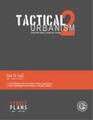
Jacobs notes the dramatic results achieved through various partnerships: "The most positive, dramatic change to San Francisco over the last 30-plus years is the northern and northeastern waterfront, from the Golden Gate Bridge to the kids’ mini-baseball diamond-park at McCovey Cove, a distance of about seven miles. Crissy Field, a gem of a restoration area, part of the Golden Gate National Recreation Area, has rightfully become a huge draw for walkers, cyclists, skaters, picnickers, fishermen, beachgoers, naturalists, people of all ages, and dogs…." (p. 160). He could have just as easily been talking about the smaller-scale Tactical Urbanism efforts that fuel San Francisco’s Street Parks projects when he discusses the changes that make our—and any—city great.
He weaves the various and varied themes together as he nears the end of The Good City when he describes what that city would include: "there would be opportunities to learn and to work, to earn one’s livelihood; and places to get to with ease, places for social interaction or just to see other people, or places to be alone; and opportunities to participate in local decisions; and places for fun" (p. 176)…"People should feel that some part of the urban environment belongs to them, individually and collectively, some part for which they care and are responsible, irrespective of whether they own it. The city environment should be one that encourages participation….The public environment, by definition, should be open to all members of the community. It is where people of different kinds meet. No one should be excluded unless they threaten the balance of that life" (p. 178)—all of which, to me, just as accurately describes what is foundational to great communities of learning.
Perhaps this is why so many of us are drawn to learning; to great cities; to parks and open spaces; and to libraries, museums, and so many other community resources: they share an all-important link—the magic that happens when opportunity, imagination, and joy bring us together to form, interact in, and sustain great communities that bring rewards far beyond any others we can imagine. They connect us to our past, through our present, and into a future we may not be around to see, but know will be much better for the contributions that we make to it.
N.B.: Previous articles about the Hidden Garden Steps remain available on this blog.
Paul Signorelli
.
Blog
.
<span class='date ' tip=''><i class='icon-time'></i> Dec 03, 2015 07:07pm</span>
|
|
You won’t hear any of the "MOOCs are dead" lamentations here at the 2014 New Media Consortium (NMC) Summer [ed-tech] Conference in Portland, Oregon. In fact, many of us attending New Mexico State University Assistant Professor of Curriculum & Instruction Julia Parra’s pre-conference workshop this morning walked away understanding that the world of MOOCs (massive open online courses) is still very much evolving. As is the approach to designing and delivering them. As is the vocabulary that attempts to describe them.
Parra took an appropriately playful approach to the topic as she suggested that incorporating concepts of gamification into the evolving world of MOOCs might produce more engaging and rewarding learning experiences for all involved. If we apply the playfulness of gamification to MOOCs, she suggested, we begin trying to cultivate "fans" rather than designing coursework for "students." Those "students" then become "adventurers" in learning "adventures" rather than completing uninspiring assignments in weekly "modules," and they engage in connected learning by working in small "guilds" comprised of less than 10 people per guild so they can more effectively become learners as creators rather than learners solely as consumers—something I’ve experienced and documented through participation in #etmooc—the Educational Technology and Media MOOC—and other connectivist MOOCs.
Even the terminology applied to these online courses can reflect the variety of options available, Parra noted: MOOCs, in a variation she is exploring through an "Adventures in Learning Design, Technology, and Innovation" course she is developing, become MOLOs—Massive Open Learning Opportunities. Other variations she noted in passing include LOOCs (little open online courses), SPOCs (small private online classes), and LeMOOCs (limited enrollment MOOCs).
The way we and our learners approach MOOCs and define completion and success is equally open to variations. One of her own practices is to engage in what she calls "scavenging"—diving into a MOOC long enough to find something of value to her or to achieve a particular learning (adventure) goal rather than feeling that she has to finish every assignment designed by those creating and facilitating the adventures she is pursuing. It’s the same approach many of us are taking in our lifelong-learning endeavors: we maintain that we have "completed" this sort of learning adventure when we have met our own learning goals rather than standard one-size-fits-all definitions of the term "course completion." The bottom line, of course, is that we help create and foster a culture of lifelong learning that provides the opportunity for learning facilitators to learn alongside their learners.
Parra further helped us explore our ever-evolving learning environment by reminding us that some of our familiar approaches to learning (e.g., pedagogy and andragogy) are complemented through increasing attention we give to other "gogies," including heutagogy (the study of self-directed learning) and hybrid pedagogy. The push to explore, synthesize, and build upon the myriad approaches and influences trainer-teacher-learners encounter every time we step back from our work enough to see all that goes into it helped clarify the exciting range of possibilities that come our way each time we convene at a conference as inspiring and as eye-opening as the NMC Summer Conference is.
Leaving the session—and looking forward to all that is before us for the next few days—left at least few of us appreciating the elements of a framework for learning that Parra outlined: clarification; community and collaboration; creation; crystallization; and contemplation—a framework that should serve us well as we continue learning from our colleagues here in Portland and within the much larger communities of learning to which we belong through all that we attempt and accomplish.
Paul Signorelli
.
Blog
.
<span class='date ' tip=''><i class='icon-time'></i> Dec 03, 2015 07:06pm</span>
|
|
Conference attendance, whether onsite or online, can be transformative. The planned and unplanned encounters with colleagues, the vendors with whom we work, the authors we adore (or are going to adore after encountering them and the work they produce), touch and change us in ways that sometimes are immediately evident and at other times require the passage of time to geminate and bear fruit.
We seek, come across, and learn from people whose work we have avidly followed in print or online, and sometimes are stunned to find that they just as avidly following and learning from ours. We have unexpected, intensively personal conversations in spaces like the American Library Association (ALA) Annual Conference Networking Uncommons and, in the process, deepen relationships with people we might otherwise not have come to know. We learn how much more challenging and rewarding the conference-as-learning-experience can be when we learn how to blend our onsite and online participation via the conference backchannel.
Relishing the collaborations that produce significant results through our volunteer service on committees or through participation in efforts like ALA Membership Development’s Ambassador program is just another part of mining conference opportunities for all they are worth; they help us understand how welcoming and supportive the ALA community can be—and is.
And even though the size and scope of the ALA Annual Conference has us sharing space with more than 20,000 colleagues, it’s amazingly easy to find the individual members of our community we want to find—and equally stunning to realize how much the absence of even one cherished colleague can affect us.
I had known that Ernie DiMattia, the chair of the ALA Publishing Committee, would not be with us here in Las Vegas this morning for our semiannual onsite meeting. All of us on the committee had been notified earlier this week that he was dealing with "ongoing health issues." But I had had no idea, before arriving at the meeting, that he had been in the final stages of a long-time battle with cancer and that he had passed away last night.
There was a moment of silence as we all, in our own individual ways, struggled to absorb the news that this gentle, literate, vibrant light in the ALA community had been extinguished. And while I can’t speak to what others were thinking, I found myself reliving the moment, a couple of years ago, when Ernie approached me during an orientation session we were both attending, asked me how I was doing, was insightful enough to ask a thought-provoking question that significantly changed my perceptions about what all of us were learning to do in that session, and, as a result, sent me down a very productive year-long path as chair of an ALA advisory committee that completely changed the way it did its work.
Ernie’s simple question at the moment I was about to become a committee chair: "Who will you be serving as a committee chair?" And the obvious answer—ALA 2012-2013 President Maureen Sullivan while working with (rather than for) ALA staff—inspired a series of interconnected partnerships that was rewarding for all of us and the larger ALA community we served.
When my year-long term came to an end and I was lucky enough to be accepted onto the Publishing Committee with Ernie as chair, I continued to learn from the inclusive, collaborative approach he took to our work. I appreciated the fact that he went out of his way to stop and chat whenever our paths crossed in those wonderfully expansive conference hallways. I admired the way he fostered productive partnerships with our ALA staff colleagues to help craft a forward-looking strategic plan that will continue to make ALA Publishing an essential part of the ALA community’s operations.
I wish I could say that I knew Ernie better. I wish I could say we had numerous lovely and inspiring conversations, but they were far too few. And as I walked those Ernie-less halls today, I knew they would never again feel quite so vital as they were through Ernie’s presence. But I also sensed that they would remain important, comforting, and essential to all I do as long as I continue acting upon and sharing all I learned from Ernie’s unofficial and very informal mentoring.
Paul Signorelli
.
Blog
.
<span class='date ' tip=''><i class='icon-time'></i> Dec 03, 2015 07:06pm</span>
|
|
The more we explore connected learning through connectivist massive open online courses, the more room we see to push beyond our own perceptions of how far we can carry the connected-learning experience, I learned again last week.
As I neared the end of my second full week of complete immersion in the Connected Courses MOOC (#ccourses) as a learner and in the Open and Connected Learning MOOC (#oclmooc) as a "co-conspirator," I had what I believed was an opportunity to step away from that connected online learning and return to onsite learning for a day with colleagues at the ATD (Association for Talent Development) Sacramento Chapter’s 4th Annual Training and Development Conference.
I quickly cast aside the onsite-online dichotomy, however, by connecting to the onsite wireless network before the first session began, and spent significant parts of the day carrying the onsite experience online by using Twitter in two ways: to capture learning moments I could return to later as a way of reviewing what I had heard, and to share what I saw as the learning highlights with colleagues who were not present—including my learning partners in #ccourses and #oclmooc.
Attending Mike Ryan’s extremely well-organized and engaging session on m-learning (mobile learning) that afternoon pushed me beyond anything I had expected to pursue in terms of connecting various communities of learning through a completely blended learning opportunity with synchronous and asynchronous elements. It was clear to me immediately that Ryan was providing a tweeter’s dream: a presentation where key points were provided sequentially and concisely enough to provide a narrative flow via a stream of tweets. It was also equally clear to me that combining those tweets into one document would produce a learning object that could be shared with colleagues in a variety of settings—which made me realize I had the perfect impetus to learn how to use Storify, since that free online tool is designed to do exactly what I wanted to do: put the tweets in sequence and add commentary that transformed them into a basic asynchronous lesson online that could be adapted for a variety of situations. I came full circle when I realized I could interweave the Storify narrative with this blog post to help colleagues review some m-learning basics while also learning how to use Storify itself.
The m-learning tips and narrative are all available online within that Storify narrative. What is worth noting here is that Storify is fairly easy to learn and use once we establish our account on the Storify site and move past a few easy-to-overcome challenges with the assistance of a concise, well-written "Creating your first story" document online.
It wasn’t, for example, initially obvious to me from the Storify edit screen that I needed to click on the Twitter icon and log into my account to access the tweets I wanted to incorporate into the story; the online document quickly moved me past that challenge. The document also made it obvious that once I had completed a search for tweets that were unified by the hashtag I had used (#ATDsac), I could either move all the tweets into the Storify edit screen or move them one by one to manually put them in sequence. (Tweets appear in reverse chronological order in feeds, so we see the last tweet first; Storify gives us the option of manually carrying them over into the edit screen in correct chronological order to literally tell the story sequentially, and also allows us to click on an edit button that reverses the order of tweets within the screen to create the correct start-to-finish narrative flow if they are in their initial latest-to-earliest sequence.)
This exercise in connected learning became most interesting for me when I realized that the tweets, by themselves, adequately conveyed the basics, but that adding narrative would produce an interesting hybrid between a record of tweets and a more thoughtful lesson-in-a-blog format that could then be interwoven with a formal blog post—the article you’re reading now.
The result is a "package" that includes the stand-alone Storify story and this stand-alone blog post that also work well in tandem—as long as links within each learning object easily lead reader-learners from one to the other. And the added benefit to me as a trainer-teacher-learner is that I’m building upon what I’ve seen colleagues do, extending the onsite learning within that ATD community of learning into my online communities of learning, and providing yet another example for anyone interested in exploring innovative uses of open tools in ways that transform them into ed-tech tools that serve our partners in learning.
Let the ed-tech connected learning continue.
N.B.: This is the sixth in a series of posts documenting learning through #ccourses and #oclmooc.
Paul Signorelli
.
Blog
.
<span class='date ' tip=''><i class='icon-time'></i> Dec 03, 2015 07:05pm</span>
|
|
Given all we read and hear every day, we could easily (and mistakenly) assume that being overwhelmed by information and a rapid technology-driven rate of change is a new phenomenon—but it’s also relatively easy to discover what a consistently-important challenge the flow of information and the pace of change has been, if we delve into Sandra Hirsh’s newly-released anthology Information Services Today: An Introduction.
While the entire book is—among other things—a richly rewarding exploration of the changing nature of librarianship/the work of information professionals, one important moment of change- and information-management revelation comes in Christine Pawley’s contribution (Chapter 2, "Libraries and Information Organizations: Two Centuries of Experience") as she writes about how "new technologies lead to information overload": "…William S. Learned noted a ‘phenomenal improvement in speed and accuracy of communication’ and complained that even the trained student finds the time required thoroughly to examine a topic in an unfamiliar field almost prohibitive"—not today, but in 1924 (Information Services Today, pp. 13-14). If we pursue this theme by revisiting Sarah Houghton’s "Being Wired or Being Tired: Ten Ways to Cope With Information Overload" (originally published online July 30, 2008 in Ariadne), we find the reminder that "As far back as the sixteenth century people were complaining about the wide range of information they had to consume in order to contribute to society."
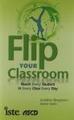
Any of us involved in training-teaching-learning within libraries and other learning organizations viscerally know and understand the feeling of being overwhelmed by information and change. We recognize that an important component of our learning-facilitation efforts is to help learners come to terms with the changes they face within any learning opportunity. We also are struggling to find words evocative enough to describe what we do so we recognize the ever-expanding breadth and scope of our work and offer terminology that helps others understand how much what we offer has changed. And we do understand that the goal of "keeping up" with educational technology and even with the basics of how to learn in a world where the way we learn is continuing to evolve (e.g., through the flipped classroom model, through massive open online courses—MOOCs—and through innovative blended-learning opportunities) is about as easy to reach as the pot of gold at the base of a rainbow.
At a certain level, it’s somewhat comforting to read those words that Learned wrote in 1924 and that Houghton wrote in 2008: we realize that others have faced and survived the challenges we continue to face. It’s also comforting and inspiring to read those words within the context of Information Services Today’s book-length exploration of our changing learning and information landscape: we see that the nature of library collections is changing—but that has always been true. We see that the nature of libraries is changing—but that, too, has been true for many decades. We see that library users’ expectations are changing—another consistent element within the library and information services world. We see that the tech tools that information professionals use continue to evolve and that the need to continually upgrade our skills is essential—but the best of our current and former colleagues have always recognized that their work required and continues to require a commitment to lifelong learning. And I suspect many of my best training-teaching-learning colleagues in a variety of learning environments would have little argument that continual learning and a responsiveness to change are among the requirements and the pleasures of the work we do.
The theme of change is particularly apparent in Lisa Gregory and Amy Rudersdorf Information Services Today chapter on "Digital Resources." As they discuss a digital librarian’s roles (cataloger, collector, educator, legal expert, manager, negotiator, researcher, and technologist), we see some terms that would be familiar to most librarians/information professionals as well as to many trainer-teacher-learners, and we see some terms that reflect how quickly our professions are evolving. Nowhere is the need for adaptability among all of us more apparent than in the section about technologists: "The technology skill sets needed by digital librarians are as varied as the technologies that surround us. However, most digital librarians should—at the minimum—have a basic understanding of content management systems, databases, some metadata standards, and web technologies (p. 102)"—advice that can easily guide our training-teaching-learning colleagues to greater opportunities for success.
All of this would seem to be the fodder for nightmares among those who despair of ever keeping up with the flow of information and the rate of change within our lives. But some of what we gain through contemporary learning experiences themselves is an understanding that keeping up has long required an ability to sift through what comes our way. Filtering out what is less important. Applying what we can apply. Relying on our colleagues and other members of our personal learning networks to help us fill the gaps we face. And developing what might be coined as yet another form of literacy: "information-overload literacy"—the skill and the ability to know when it’s time to step away from the flood of information and rapid pace of change long enough to relish what we have absorbed.
N.B.: This is the second in a series of reflections inspired by Information Services Today: An Introduction, which includes Paul’s chapter on "Infinite [Lifelong] Learning."
Paul Signorelli
.
Blog
.
<span class='date ' tip=''><i class='icon-time'></i> Dec 03, 2015 07:04pm</span>
|
|
We used to have wonderful, clearly-defined words like "library," "librarian," "classroom," and "teacher." And some of you may still have crystal-clear visions of what those words mean. But reading two very thoughtful pieces today makes me wonder, once again, whether our nomenclature is failing to reflect the evolving world of educational technology and learning resources in which we work, play, and live—the world so well-explored and documented by New Media Consortium Horizon Project reports.
YOUmedia Center, Chicago Public Library
Reading—and equally importantly, looking at the great set of photographs included in—Buffy Hamilton’s "A Visit to Discovery High School: Rethinking Learning Spaces and Learner Experiences" on her "Unquiet Librarian" blog this evening initially made me think about many of the fabulously creative learning spaces I’ve been lucky enough to visit, photograph, and describe in presentations this year. I see them in libraries. I see them in academic settings. I see them in corporate buildings and "training centers" where management, staff, and learners are committed to (as the Association for Talent Development so aptly puts it) creating "a world that works better." And seeing them so explicitly displayed in Buffy’s article makes me see how similar those spaces are becoming—and have become. Which raises a question I posted in response to Buffy’s thoughts:
When does a library become interchangeable with other learning spaces rather than being unique?
The knee-jerk reaction to that question, for many of us, is "when it no longer has books." But that ignores the changing—and very-much changed—nature of libraries and, in particular, library collections, as Rick Anderson writes in "The Death of the Collection and the Necessity of Library-Publisher Collaboration: Young Librarians on the Future of Libraries," which he posted earlier today on the "Scholarly Kitchen" blog. Among the many very thoughtful points he makes is that a review of a group of young librarians’ work strongly suggests that "…the library collection, as traditionally understood, is dead.
"It’s worth noting," he continues, "that these writers weren’t saying the print collection is dead, but rather that the very concept of a librarian-built, prediction-based collection, in whatever format, is moribund. Furthermore, none of them seemed to be particularly upset about this; on the contrary, they generally mentioned it more or less in passing and as if it were a self-evident reality and nothing to get worked up about."
Library Media Lab, University of Texas at Austin
Let’s be clear about one thing at this point: neither writer is suggesting that libraries are dead or in danger of extinction. Their writing is very much grounded in documenting the positive, exciting evolution of libraries, librarianship, and learning. Buffy implicitly sees what so many of us are seeing: physical changes within libraries that reflect the increasingly strong roles libraries are playing in lifelong learning (including providing onsite and online formal and informal learning opportunities for the increasingly extended communities they serve). Rick’s article focuses more on how the mindset of the young librarians he is discussing affects the organizations in which they work—a mindset that means the change has already occurred in some libraries and will continue to expand as these young librarians replace more and more of their predecessors who had different visions of what the words "library" and "librarianship" implied.
And to carry this more explicitly to my question about when a library becomes interchangeable with other learning spaces, let’s acknowledge something I’ve maintained for several years now: librarians increasingly are trainer-teacher-learners (or, to use more common terminology, "learning facilitators"). But not all trainer-teacher-learners are librarians—a distinction that, up to now, has provided us with a way to clearly differentiate between the two groups. But as more libraries evolve to include those wide-open spaces that Buffy so wonderfully documents through the photographs in her article, and as more libraries take an entirely different approach to what a collection is, and as more first-rate trainer-teacher-learners become better at information management and the sort of educational technology that is increasingly common to libraries and other learning spaces, will we see library spaces (onsite as well as online) remain easily differentiated from other learning spaces, or are we beginning to see a merging of learning and librarianship that will bring us all closer together and provide exciting new opportunities for everyone willing to collaborate in this potential endeavor?
Very much an admirer of R. David Lankes’ work (including Expect More and The Atlas of New Librarianship), I have always been intrigued by his suggestion that "a room full of books is simply a closet but that an empty room with a librarian in it is a library" (Atlas, p. 16); he also has some wonderfully nuanced thoughts on the nature of collections within libraries. His ideas help us, at least in part, to define libraries by the presence of librarians; by extension, they also help us recognize how much we define classrooms by the presence of teachers/instructors/trainers. But the equation frays a little at the edges when we see increasing numbers of great librarians doing what other great trainer-teacher-learners do, in ways that don’t clearly differentiate them from those other trainer-teacher-learners. It frays much further when we see the library spaces in which they weave their magic becoming increasingly similar to non-library learning spaces (and vice versa) , as some of those spaces documented via Buffy’s photographs confirm.
These are learning spaces with lots of open space as opposed to spaces dominated by print collections. These are learning spaces that are learner-centric—spaces featuring moveable furniture and moveable (including bring-your-own-device) technology that can quickly be reset to meet varying learning needs that can come up even within a single learning session. These are spaces where short-term as well as lifelong learning is supported. And, increasingly, these are spaces that look the same in a variety of settings—Buffy includes photographs of a corporate learning center—something we clearly have not yet addressed with the language we use to describe our libraries and other learning spaces, and something that, as we address it, may lead us to even more exciting learning possibilities and collaborations than we’ve have ever seen or imagined.
Paul Signorelli
.
Blog
.
<span class='date ' tip=''><i class='icon-time'></i> Dec 03, 2015 07:03pm</span>
|
|
Gamification is not a new topic within learning and development but it is one that seems to be particularly pertinent at the moment. Having heard a few case studies about companies adopting gamification in their learning strategies at Learning Technologies back in January, I decided to learn a bit more.
Filtered
.
Blog
.
<span class='date ' tip=''><i class='icon-time'></i> Dec 03, 2015 07:03pm</span>
|
|
Our vision is to maximise the impact of learning.
It is important for both learners and managers alike to know how our training can make a tangible and long-term impact to individual and team performance. We think the best way to do this is through online tests which are taken either side of the training. By offering pre- and post-training assessment we can reliably the measure impact of our training.
Filtered
.
Blog
.
<span class='date ' tip=''><i class='icon-time'></i> Dec 03, 2015 07:03pm</span>
|
|
Headspace, the meditation and mindfulness startup, raised $34m funding last month from a range of venture capitalists, business bigwigs and even hollywood celebrities. The app now has 3 million users in over 150 countries and is symptomatic of a rise in the popularity of activities intended to bring some calm to the data-laden modern mind.
Filtered
.
Blog
.
<span class='date ' tip=''><i class='icon-time'></i> Dec 03, 2015 07:02pm</span>
|