eBooks, Guides, Templates and White Papers
|
Wondering if other L&D professionals are feeling a bit stretched thin?
Don't worry - according to our 2025 Trends in Training Report - they are. Almost 47% of HR and L&D professionals reported that they expect their top challenge in 2025 to be a lack of time to devote to building a training program. This has been the number one challenge for the last three years!
Our 2025 Trends in Training report explores how a CEO’s influence shapes programming, dives into content focus areas, and uncovers program planning logistics—all tied together with actionable insights.
Download our 2025 Trends in Training report today!
|
|
As the workplace evolves, so do the demands on leadership.
The way we lead, train, and develop people must adapt to shifting expectations and challenges. For 2025, three pivotal leadership development trends stand out.
Ignoring them could leave your organization falling behind—but embracing them can propel your team forward. Let’s explore these trends and how programs like Lead in 30 are designed to address them.
|
|
So, you want to train your employees with videos. Which video type should you choose? How do you create it?
Whether you're an educator, a corporate trainer, or simply someone who wants to share knowledge, this guide is your one-stop resource to help you get started on the path to creating engaging and impactful training videos.
|
|
Have you ever looked at someone who seems to hit all of their goals while you’re stuck on the first one?
Maybe the problem isn’t you - it’s the goal or the way you’ve set it. Goal setting seems like it should be intuitive, but there’s actually a scientifically studied framework behind most successful goals and well-defined methods to encourage yourself and others to set goals that are achievable.
Download BizLibrary’s Guide to Setting Goals for Success and learn actionable strategies for helping learners stay focused and hit their targets.
|
|
Struggling to keep learners motivated throughout your training programs?
Wish your sessions felt more like games and less like lectures?
We’ve got you covered!
Download the guide and learn how to:
Turn dull content into visually stunning animated modules with Animaker
Enhance learner participation with Storyline's interactivity
Use your LMS to introduce rewards and challenges
Drive learner engagement up by 80%
Improve knowledge application rates by 3x!
Gamification starts here—unlock the guide now!
|
|
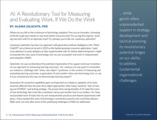
Where do you fall on the continuum of technology adoption? Are you an innovator, chomping at the bit to get your hands on new tools before everyone else? Do you lag the majority, resisting new tech until it’s an absolute must? Or, perhaps you’re like me, cautiously optimistic?
Cautiously optimistic has been my approach with generative artificial intelligence (AI). When ChatGPT set a historical record in 2023 as the fastest growing consumer application, I paid close attention to early adopters as they experimented with AI, before determining how I might incorporate this new wave of technology into my own ecosystem and work in measurement and evaluation (M&E).
Optimistic me was excited about the potential of generative AI to support and even revolutionize our approach to measuring learning outcomes. Yet, cautious me was quick to remember our industry’s challenge with "shiny, new object" syndrome. In the context of measuring and evaluating learning outcomes, is generative AI just another shiny new technology tool, or can it truly revolutionize the way we demonstrate learning impact?
|
|
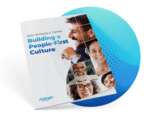
The workplace is evolving, and the future is human. As technology continues to automate tasks, prioritizing human connection at work is more important than ever. To help you prepare for the changes we foresee heading into 2025, the Arbinger Insitute has put together its second annual Workplace Trends Report.
The 2025 edition of this report delves into the critical role of people-centric leadership, fostering a culture of genuine connection, and creating a sense of purpose. Get your copy now!
|
|
Executive summary: At the edge of the cliff —
The overwhelming challenges of today’s workforce
Psychology research shows that when we face an overwhelming number of challenges, it’s easy to lose hope and feel helpless. In reality, today’s employees are faced with more challenges than ever before, and while some of the variables are outside employer control, that doesn’t make the situation any less difficult for the workforce.
For example, headlines abound focusing on the business risk of losing high-performing employees, and a recent PwC report indicates that the second wave of the Great Resignation could be just around the corner. Not only that, but for yet another year, Gallup and other reputable organizations indicate that employee engagement remains stagnant, costing employers upwards of nine trillion dollars annually in lost productivity.
It's an overwhelming series of challenges for employers as they attempt to support a productive and capable workforce. What options exist to help drive engagement and retention while giving each employee a sense of progress in their skills and work?
In a new research study of 2,000 global learners, the team at Lighthouse Research & Advisory partnered with Adobe to uncover some of the aspirations, needs, and priorities of workers, and one clear opportunity stands out as an option to combat this variety of challenges—a culture of learning based on autonomy and opportunity.
|
|
As your network of channel partners, resellers, and other third parties increases, managing product training doesn’t get any easier. However, establishing a plan for distributing training content is essential to ensuring your products are properly understood, marketed, and sold. This guide provides technical considerations to help you build a plan for distributing training content across a variety of systems.
You’ll learn:
What to consider from a technical point of view before starting
How to create a content distribution strategy across the ecosystem
Ways to streamline your training content management
How to ensure each learner has access to the latest, most up-to-date version
How to gain insights into course usage to inform strategic decisions
|
|
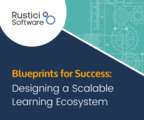
As you start adding more components, your ecosystem becomes more complex, and you may find yourself bombarded with more tools than you can manage, more content than is useful, and more data than you know what to do with. Whether you’re building your ecosystem from scratch or working in a complex one, this guide will help you better understand the learning tools and technologies available and how to design a practical, scalable ecosystem.
This eBook will help you:
Discover common tools and platforms
Organize your ecosystem
Manage content across various platforms
Prepare for introducing new components
Plan for reporting and data
|


.webp?1733852401)