Blogs
|
Choconancy1 posted a photo:
Nancy White
.
Blog
.
<span class='date ' tip=''><i class='icon-time'></i> Dec 04, 2015 04:41pm</span>
|
|
Choconancy1 posted a photo:
Nancy White
.
Blog
.
<span class='date ' tip=''><i class='icon-time'></i> Dec 04, 2015 04:41pm</span>
|
|
…and I’m not really ready!
Can one every be ready for change? I don’t think it is so much ready for change, but living in a way that embraces the fact that change is already happening. Or perhaps this is self justification for my lack of preparation as the host or whatever of the Change: Education, Learning and Technology
As I wrote quite a while back in Preparing for my MOOC Contribution , I would not focus on a particular piece of writing. I’m interested in BEING in change. That act of being aware of, engaging in and reflecting on change. In this case, it is about change in education, learning and technology, but I still think I’ll frame this as about US, about practitioners, rather than on those more abstract things of "education, learning and technology."
We are kicking things off on Monday with Dave Cormier hosting me at 9am US Pacific on the live platform (Dave, I need a URL please! EDIT: here’s the URL http://t.co/SM9BFhnA) where we’ll draw together on the whiteboard a bit and explore. Explore what? Good question. Here are the things on my mind:
Multiplicity of groups… how do we work creatively with multimembership? What is the role of the transversal?
Social artists via Etienne Wenger’s definition. (I have a little slide with that which I need to get online ASAP!) One thing I was thinking was to raise the idea of social artists, then ask people to go find stories about social artists in their learning life and share them with the double tag, #change11 and #socialartist
Why small things matter.
I know… these are all over the place. But face it, I’ve been all over the place lately, so lets just roll with it, right?
Then at 1pm Pacific time @giuliaforsythe is hosting a Google+ meetup.
So jump on in and join us!
Nancy White
.
Blog
.
<span class='date ' tip=''><i class='icon-time'></i> Dec 04, 2015 04:40pm</span>
|
|
I’m working on getting the chat - which was SUPER rich, but in the mean time, here are the "before and after" slides of our conversation for #Change11. We used the white board a lot!
It was really a stream of consciousness hour — not a presentation at all, where we played around with change (what, who), multiple-membership (the heaven and hell of many places/people to learn with and from) and the roles of "social artist" and "transversal."
I confess full blown jet lag non-linearity. When I have the recording link, I’ll edit this post and put it in. To those present, what did you walk away with (beyond, perhaps, a headache!)
#Change11 MOOC Session - October 31
View more presentations from Nancy White
via #Change11 MOOC Session - October 31.
Nancy White
.
Blog
.
<span class='date ' tip=''><i class='icon-time'></i> Dec 04, 2015 04:40pm</span>
|
|
My week facilitating #change11, a very massive MOOC, flew by too fast for me to blink. (See these previous posts for more background.) Between being on the road so much and the distributed nature of the conversations, my head was spinning by Friday and it has taken until today to slow down, reflect and write. I’d like to reflect on both the content and process of "week 8″ where we focused mostly on the idea of "social artists" in learning and technology. Well, honestly, mostly just on the social artist bit. As always, I was too ambitious in my planned scope. I am happy it narrowed down to social artists. That was enough!
First, the process. #Change11 is structured around whatever theme or idea the facilitator of the week offers. Up until now that has been kicked off by a piece of writing, a recording or some structured artifact where the facilitator shares his or her big ideas around change, technology and learning. There is at least one synchronous event per week (more often two) hosted on the platform formerly known as Elluminate (now BB Collaborate, and I think worse for the transition). There is the #Change11 daily which aggregates posts from the lead facilitators (George Siemens, Stephen Downes and Dave Cormier), posts and tweets tagged with #Change11. There are some quasi-centralized discussion outposts on Facebook, Google+ (see this tool to find Change11 circles on G+) and Moodle, but most of the action seems to be on blog posts/comments and Twitter. In other words, the landscape one might traverse for learning and sensemaking is broad and diverse. I’m not the only one trying to make sense of this. See "We are always catching up" http://squiremorley.wordpress.com/2011/11/04/change11-playing-catchup-part-3/#comment-190 and https://jennymackness.wordpress.com/2011/10/26/the-selfish-blogger-syndrome/#comment-1666
Of course, I didn’t structure my week around a piece of writing. I was interested in explore the experience of change and how the social artist plays a role in that experience. Instead of content slides, I ginned up a deck full of questions and whiteboard templates inviting people to express themselves together visually, textually and if so moved, to grab the mic. (The before and after slides are here, but don’t expect them to make much sense as a stand alone presentation, and more like digital traces of what we did together. ) I ended with a challenge to find stories of social artists in their learning lives and to blog and or tag them #socialartist. And of course I scheduled both session late in the game, giving few time to get it on their calendar. Did I mention I have been busy? Can you read my sense of guilt between the lines? Yup. Giulia Forsythe then invited me to a follow up session later on Monday, and we had a final hour on Friday where George and Stephen interviewed me which was both interesting and weird. I think I got a little verclempt. Ahem! Judge for yourselves!
The first conversation in an accessible, non-BBCollaborate format http://jefflebow.net/node/271
The second conversation http://dtlttoday.com/71/
The third conversation http://jefflebow.net/node/271 (Two of the three thanks to Jeff Lebow! Amazing, dude! Thanks!)
I then tracked tags to try and read and comment on most of the blogs that either blogged in general on the #socialartist idea or took up my challenge. Here are a few of the links (and yes, I’m still catching up commenting on some of them! DO look at the comments in these posts! Lots to think about)
https://worklearn.wordpress.com/2011/11/02/social-artists-ends-up-being-about-mooc-design-change11-socialartist/
http://suifaijohnmak.wordpress.com/2011/11/04/change11-social-artist-and-collective-intelligence/
http://juandomingofarnos.wordpress.com/2011/11/04/change11-social-artist-and-collective%C2%A0intelligence/
http://heli.edublogs.org/2011/11/07/884/
http://silenceandvoice.com/2011/11/04/i-am-a-nancy-white-groupie/
http://silenceandvoice.com/2011/11/06/glass-gandhi-ows-and-social-artistry/ (added Nov 10)
http://www.scoop.it/t/digital-delights/p/628320308/change11-mooc-session-october-31
http://suifaijohnmak.wordpress.com/2011/11/04/change11-change-happiness-and-social-artistry/
http://suifaijohnmak.wordpress.com/2011/11/05/change11-patterns-fractals-and-conversation/ (should I have talked about network weavers? See http://www.bethkanter.org/network-mindset/)
Finding social artists everywhere http://virtuallyfoolproof.com/?p=686
http://coachcarole.wordpress.com/2011/11/05/change11-listening-to-nancy-socialartist/
The Queen Has No Clothes http://edtech-insights.blogspot.com/2011/11/social-artist-doubts-process-and-feel.html but see also http://edtech-insights.blogspot.com/2011/10/have-processstructure-but-dont-kill.html "We will try a Technology for Learning Forum (T4L-Forum) to develop the pedagogy necessary, working with enthusiasts, wannabes and even perhaps skeptics, but always asking "where is the learning in this"."
http://serenaturri.wordpress.com/2011/11/06/change11-triangolare-tessere-e-connettere-il-nostro-apprendimento/#comments (Added Nov9)
https://connectiv.wordpress.com/2011/11/01/change11-socialartist-why-small-things-matter/#comments (added Nov 9)
http://gbl55.wordpress.com/2011/11/03/change11-how-now-sweet-cow-the-social-artist-who-disrupted-my-mooc-learning/ (added Nov 10 and wonderfully funny and spot on!)
http://asaginu.com/blog/social-artistry-culture/ (added Nov 10)
https://jennymackness.wordpress.com/2011/11/03/the-power-of-passion-for-change/ (added Nov 10)
https://jennymackness.wordpress.com/2011/11/05/social-artistry%e2%80%a6-a-new-idea/ (added Nov 10)
https://connectiv.wordpress.com/2011/11/10/cause-function-intention-change11-accident-coincidence-interpretation/ (added nov 10)
Here are some of the tweets archived into a Tweetdoc.
So now the content. The alleged synthesis and sense making. NOT! I don’t think I can do it, but here are the things that have been emerging for me through all these distributed conversations.
What IS a social artist?
So, what is a social artist and why did I think it might be relevant to #Change11? I’m not sure we landed on a clear definition. I started with the concept I borrowed from Etienne Wenger-Trayner, who has talked about the social artist as a person who makes the space for the social aspect of learning. Here is a quote from him from 2008 on David Wilcox’s blog which really resonates for me:
"The key success factor we’ve found is learning citizenship where learning citizenship is a personal commitment to seeing how we are as citizens in this world. Let me give you an example: I know an oncological surgeon in Ontario, Canada who asks himself how to provide the social infrastructure for patients to learn about cancer. An act of learning citizenship is to be able to use who you are to open this space for learning. I’ve come to call these people social artists, people who can create a space where people can find their own sense of learning citizenship.
"I love social artists. In fact I worship them. First because social artists know how to do what I only know how to talk about; and second because I care about the learning of this planet. I think we are in a race between learning and survival. We live in a knowledge economy where any expertise is too complex for any one person. One person can’t be an expert so anyone who can give voice to that need to work together is a social artist.
"I do a lot of consultancy work for training community leaders, but in my heart of hearts I know the real secret of those social artists is not something I can teach. The real secret of those people is knowing how to use who you are as a vehicle for opening spaces for learning. I don’t really have the words - but I just know when I see it. It is a way of tapping into who you are and of making that a gift to the world … it’s about being able to use who I am to take my community to a new level of learning and performance.
"I want to leave you with three questions…
How can you act as a learning citizen in this world?
How can we as a group help , sustain, celebrate that capability among ourselves? If EQUAL has done a bit of that - how do we capture it, nurture it cherish it?
For those of you who are movers and shakers - how can you build an institutional structure that enables people to find their voice in the interests of the people they want to serve? Social artists need to fight … How can we enable a structure that enables those people to do the work that they do?
"These are urgent questions. Social innovation is a matter of the heart, not just projects. We need you to do that for the world, not just Europe".
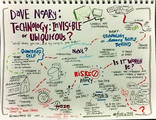
You can also hear Etienne talk about social artists (as well as other community issues) in this keynote from September’s ShareFair in Rome. The sketchnote above is from that session.
Jean Houston defines social artistry as:
Social Artistry is the art of enhancing human capacities in the light of social complexity. It seeks to bring new ways of thinking, being and doing to social challenges in the world.
…Social Artists are leaders in many fields who bring the same order of passion and skill that an artist brings to his or her art form, to the canvas of our social reality. (See also the Jean Houston Foundation page)
As I juxtapose Etienne and Jean’s meanings of the concept, I am finding out how to link the roles to learning. From Etienne’s questions "How can you act as a learning citizen in this world? How can we as a group help , sustain, celebrate that capability among ourselves?" I hear the call to recognize the social acts of learning more explicitly and to attend to the people with social artistry skills. Nurture and recognize them. At the least, remove barriers to their participation. From Jean, I glean the parallels of passion and skill from art forms, to the social canvas.
The other thread was the juxtaposition of "social" and "artist" — where some had the concept of the solo artist, working alone to create a product of their work, while here the canvas is not only ephemeral through the interaction of people, but the role is inherently WITH people and social, not solitary. One person also noted the tension between the idea of a scientist and an artist which is to me one of the artificial constructs we create by dividing art and science. They have roots which intermingle.
Here are some links where people really picked up on the art part, which thrilled me.
http://amusingspace.blogspot.com/2011/11/art-of-change.html
http://ilikethisart.net/?p=11006
http://lucidatranslucida.blogspot.com/2011/11/every-child-is-artist-problem-is-how-to.html
http://www.scoop.it/t/art-a-way-to-feel
(belatedly http://gbl55.wordpress.com/2011/11/03/change11-how-now-sweet-cow-the-social-artist-who-disrupted-my-mooc-learning/ )
In case you want more on visual practices, check out https://onlinefacilitation.wikispaces.com/Visual+Work+and+Thinking
Why is social artistry useful?
As the week went on and we sought out examples of social artists, and as we did this, I also realized it was useful to tease apart the social artist as a person (their role, skills, talents, way of being in the world) and the practices of social artistry which are often named as process arts, facilitation, network weaving, etc. People pointed a lot to specific practices, like the power of engaging people in using the white board in the online webinar space, how to use both silence and music instead of talking all the time, commenting on others’ blogs, helping them feel heard, designing connecting out into the world into her classroom, asking great questions, and such. I think people really resonated with these familiar practices, but we struggled with the less tangible ones. Like the kinds of people who just open up and hold space for people to be together and learn. The people who do that lightly and without manipulation. The people with big ears, big hearts and generosity of spirit. How do you tie that tangibly to education when we haven’t a clue how to measure it and I think many of us wonder if it can be learned, or it is something some of us just carry with us. The "fluffy bunny" stuff which I know, in my heart, is not fluffy at all, but very profound. I have seen the difference "being seen, heard and loved" means to people. But I can’t call it out in clear, intellectual terms that some people sought. I could not answer them. At the same time, I felt a quick kinship to those who recognized it. Are we finding our tribe? I don’t know.
Finally, it was very interesting to note that both the experiences of the synchronous gatherings (particularly the first one) and the concept of social artistry really seemed to resonate with some people, baffle some people and find no relevance for others. This was VERY interesting to me. In The Queen Has No Clothes, George wrote about feel-good commentating:
This week’s MOOC #change11 has not held my interest. Without doubt, Nancy White is a charismatic facilitator, using graphical tools to have participants express themselves and develop a particular view. I think this approach (using such graphical tools) is excellent for the participants.
I learned long ago that my wonderfully produced mathematical notes were excellent - for me. The iterrative process of producing these and improving them was valuable to me, the writer. My students needed to produce their own versions (yes, to construct their own knowledge), for this to be valuable for them. So the outcome of the process did not mean much without being a participant.
Also, there seemed to be an inordinate amount of "feel-good" commentating. Why? Could there be a cultural difference?
Hence my Tweet: the Queen has got no clothes on. There, I said it.
Tonight I responded:
I’m still chewing on what I understand to be underneath - the lack of resonance for you (and others!) about social artistry in the context of change, learning and technology.
When we moved into "interview Nancy" mode during the Friday session and George started asking me questions which felt more academic to me, I started to get some insight into the fact that while I know "inside" what social artistry is because I believe I practice it, I still can’t clearly articulate it in a way that fits in with learning theories and the deeper, intellectual grounding that many of you have. I’m a simple practitioner. So making that leap is .. well, hard.
As I listened to today’s session w/ Dave and rhizomatic learning, I kept being troubled by his reference of the rhizomatic learner as a nomad. The metaphor of the nomad — at least the romanticized notion of a nomad is a solitary being, forging off on her or his own.
This has a disconnect for the social aspect of learning for me. I’m not saying all learning must be in a social context, but a heck of a lot of it is. Those who pay attention to making that space where this learning happens play and important role. Thus the social artist.
We ran out of time and never got to the transversalist. That’s another interesting kettle of fish!
I need to go back and dig into what George meant about "feel good comments" — what makes a comment feel-good? What other qualities of comments might we use or name? A whole ‘nuther interesting thread.
The loose ends…Onward
You know what they say. Once you start looking for something you had not noticed before, you start to see it everywhere. Like when I became pregnant with my first child, I saw pregnant women everywhere where before they didn’t even show as a blip on my radar screen. So as the week went by, I kept Tweeting related #socialartist links. For example, not change11 directly, but related social artist practices from Barbara Ganley http://community-expressions.com/2011/11/04/lessons-learned-part-one-listening/ and from the Facebook Convo, an link to http://en.wikipedia.org/wiki/Habitus_(sociology) from Vanessa Vaile who wrote "PS I see strong traces of habitus in Digital Habitats" which of course tickled me! I can even see glimpses of social artistry in this more general reflection on Change11 https://bigreturns.posterous.com/change11-looking-forward-and-looking-back
Habitus is the set of socially learnt dispositions, skills and ways of acting, that are often taken for granted, and which are acquired through the activities and experiences of everyday life. Habitus is a complex concept, but in its simplest usage could be understood as a structure of the mind characterized by a set of acquired schemata, sensibilities, dispositions and taste.[1] The particular contents of the habitus are the result of the objectification of social structure at the level of individual subjectivity. Hence, the habitus is, by definition, isomorphic with the structural conditions in which it emerged.
The concept of habitus has been used as early as Aristotle but in contemporary usage was introduced by Marcel Mauss and later re-elaborated by Pierre Bourdieu. Bourdieu elaborates on the notion of Habitus by explaining its dependency on history and human memory. For instance, a certain behaviour or belief becomes part of a society’s structure when the original purpose of that behaviour or belief can no longer be recalled and becomes socialized into individuals of that culture.
Habitus is the set of socially learnt dispositions, skills and ways of acting, that are often taken for granted, and which are acquired through the activities and experiences of everyday life.Habitus is a complex concept, but in its simplest usage could be understood as a structure of the mind characterized by a set of acquired schemata, sensibilities, dispositions and taste.[1] The particular contents of the habitus are the result of the objectification of social structure at the level of individual subjectivity. Hence, the habitus is, by definition, isomorphic with the structural conditions in which it emerged.The concept of habitus has been used as early as Aristotle but in contemporary usage was introduced by Marcel Mauss and later re-elaborated by Pierre Bourdieu. Bourdieu elaborates on the notion of Habitus by explaining its dependency on history and human memory. For instance, a certain behaviour or belief becomes part of a society’s structure when the original purpose of that behaviour or belief can no longer be recalled and becomes socialized into individuals of that culture.
Here are some other places where Social artistry appeared in front of me this week
http://paper.li/ikms_singapore/ikm
https://www.ohrd.wisc.edu/fullypreparedtoengage/FullyPreparedtoEngage/SocialArtistry/tabid/70/Default.aspx
http://einstitute.worldbank.org/ei/story/complementing-structured-learning-e-communities-interview-nancy-white
http://thinkingknowledge.wordpress.com/2011/11/04/knowledge-society-knowledge-troubadours-and-social-artists/#comment-179
http://www.entreprisecollaborative.com/index.php/en/articles/217-performance-strategies-et-social-learning
http://gforsythe.ca/2011/11/06/rhizome-remix/
Want more #Change11? The schedule is here.
The beauty of a MOOC is the way you can sail into ideas, people, memes, and streams. Here are some people and their streams I want to read more of:
Cindy Jennings https://odnett.wordpress.com/
Read more of my pal CogDog http://cogdogblog.com
Giulia Forsythe http://gforsythe.ca/
Claudia Lamoreaux http://lamoreauxchange11.tumblr.com/
Clark Quinn (who is not, as far as I know, involved in #Change11 but I used some of his stuff) http://blog.learnlets.com/
http://www.organizationdesign.net/
Nancy White
.
Blog
.
<span class='date ' tip=''><i class='icon-time'></i> Dec 04, 2015 04:36pm</span>
|
|
Great stuff from Ellen Wagner that resonate with some of the conversations we’ve been having across the #change11 MOOC on Technology, Change and Education. Take a peek:
Education transformation really is a team sport. Old ideas don’t just fade away. Old ideas can be stubborn and relentless. Systemic change calls for many contributors. There are many variables to address, much practice and dedication required to develop expert skills. Transformation demands a clear understanding of what is to be changed, AND the will to see changed implemented. And with all due respect to everyone who claims the ID [instructional designer - nw] badge…We simply can’t afford to all think the same way.
For real change - true transformation - we need all ID hands on deck. Scholars, analyts, artists, technologists, evaluators, and managers alike. Big thinkers. Expert practitioners. People who can translate big ideas into actionable strategies and tactics driving real results about things that matter to the communities and stakeholders we purport to serve.
via On Secret Handshakes and Making the World a Better Place with ID - eLearning Roadtrip.
We have also been struggling with metaphors like rhizome, nomads and social artists. "Team Sport" is another one that has its pros and cons. What I’m really sensing is that we are trying to live into the world of learning in a new way, and our labels fail us.
OK, nuff for a quick, throw off post. Back to work!
Nancy White
.
Blog
.
<span class='date ' tip=''><i class='icon-time'></i> Dec 04, 2015 04:35pm</span>
|
|
A friend asked me to share any tips I had after facilitating week 8 of the massively open online course (MOOC) Change11. In the interest of openness, here is a copy of my response! I clarified my hasty email a bit and added a few more things in [brackets].
At 01:44 PM 12/22/2011, you wrote:
Nancy -
Last summer I agreed to facilitate a week of the change11 MOOC — I don’t know how to say no, I’m afraid. I’ve been so caught up in other responsibilities that I really haven’t followed it much so far. I know you facilitated a week. I have a presentation ready and some texts. Any tips on what I should expect/do during the week?
Hiya Friend
Haha, I don’t know how to say no either and I did week 8 in the midst of a massive Autumn of travel. I should have my head examined. But it turned out really great because I deeply connected with a few people… we resonated! (See theseprevious posts for more background.)
I, unlike most of the other week facilitators so far, did NOT prepare anything. I was aiming for experience and reflection and, besides, no time to prepare. Ha! What is important is to decide on your live events and get them on the calendar. [meaning days and times -- remember this is global so consider time zones].One of the biggest complaints so far is these things are very last minute and people can’t get them on their calendars.
Then kick of the week with a live event (which seems to focus energy in this very diverse group) and then follow the hash tag. [My event was focused on a few key questions I put on slides in the synchronous meeting room white board. You can see the before and after versions here. I also did an DLT one on Tuesday and the wrap up event on Friday. ]
What I did to see who was writing or tweeting was to add a #Change11 tag to my Tweetdeck and to read the #Change11 daily that Stephen sends out with a pretty good collection of links. Then I followed the links and left comments on as many blogs that I found relating to my week. That took a bit of time, but the feedback was that this was really meaningful to people — particularly since we talked a lot about connection in week 8. Then I did a wrap up live event on Friday where Stephen and George peppered me with academic questions which I, frankly, didn’t relate to very well. But we had fun and that was ok. Then I wrote a wrap up blog post and included as many links as I could find to give everyone a little link love and recognition of their inputs for the week.
I followed up a bit more the week after, then returned to Change11 lurk mode. (see here, here and here)
The reason I did the follow ups was because I was also talking about something that was a learning edge for me. It wasn’t "complete" and thus learning from everyone’s input was of value to me. Some may find this onerous work (and time consuming.) YMMV.
…deleted personal message…
Waving with lots of warm holiday choco-thoughts. Happy Solstice!
N
Nancy White
.
Blog
.
<span class='date ' tip=''><i class='icon-time'></i> Dec 04, 2015 04:34pm</span>
|
|
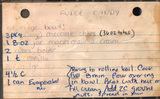
Fudge Dark, rich and sweet Fudge!
This is the recipe my family has been making for the holidays FOREVER! (Well, at least for the last 40 or 50 years!) Since I am spending time with family and not so much blogging, I thought it would be good to share the recipe yet again.
Put in large bowl (really big, big, big) to allow stirring room:
3 packages chocolate chips - 36 oz. total I recommend Nestles or Guittard — don’t go cheap!
1 8-oz jar marshmallow cream - if you can only find 7 oz jars, that’s OK
2 cubes butter- buy a brand name — sometimes the cheap stuff is full of water and it will ruin the fudge — very sad
1 teaspoon vanilla extract
Have ready at hand
2 cups chopped nuts optional — you can even add coconut!
Put in large kettle. Again, I mean big - the mixture boils up to four times it’s original volume as you cook it!
4 1/2 cups sugar
1 can evaporated milk - not skim or lowfat!
Bring the sugar/milk mix to a rolling boil stirring constantly. Cook a full eight minutes timed once the mixture comes to a boil — critical!!!.
Take off heat and pour over chocolate/butter/marshmallow mixture. Beat with mixer until creamy. Add nuts and spread in a pan to cool. Lick the bowl and beaters before washing!
I like to use a cookie sheet with high edges, but the size of pan depends on how thick you like your fudge. Mine is about 13×24. My siblings use smaller pans. My mom uses two Pyrex pans. Cut into pieces and enjoy! I like to put each piece in a little candy paper and pack into pretty packages to give away. But some years, the fudge is gone before that happens.
Nancy White
.
Blog
.
<span class='date ' tip=''><i class='icon-time'></i> Dec 04, 2015 04:33pm</span>
|
|
Learnlets » Yes, you do have to change. Clark Quinn nails a good one today. In writing about effective learning, he notes:
And that’s assuming courses are all the learning unit should be doing, but increasingly we recognize that that’s only a small proportion of what makes important business outcomes, and increasingly we’re recognizing that the role needs to move from instructional designer to performance consultant. More emphasis can and should be on providing performance resources and facilitating useful interactions rather than creating courses. Think performance support first, and communities of practice, only resorting to courses as a last result.
This rang my bell as I’m starting to do some research for a client on effective ways for more distributed work place learning. (More on this later, as I want to pick your collective brains.)I’m deeply interested in these intersections on roles.
What do we know about the costs of moving towards more performance support for globally distributed, not-all-in-one organization contexts? (I’m talking international development here!) Ideas?
Nancy White
.
Blog
.
<span class='date ' tip=''><i class='icon-time'></i> Dec 04, 2015 04:33pm</span>
|
|
Choconancy1 posted a photo:
Nancy White
.
Blog
.
<span class='date ' tip=''><i class='icon-time'></i> Dec 04, 2015 04:33pm</span>
|