Blogs
|
A 100 Thousand Poets for Change poster by volunteer designer Odysseas Milios (info@ijustdesign.gr)
This is a guest post by Celisa Steele.
What will you be doing this Saturday, September 24, 2011? How about taking part in what’s billed as the biggest poetry event in history?
100 Thousand Poets for Change is the unifying force behind the widely diverse and decentralized endeavors to take place on September 24. Some 600 events in 450 cities and 95 countries are planned, and the numbers are growing daily. The movement is radically inclusive—the only requirement for an associated event is that it promote some kind of environmental, social, or political change "within the framework of peace and sustainability." In the big bucket of change, the poets and others participating decide what to do. As a sampling:
People will chalk the sidewalks with poems in Wilmington, North Carolina.
A dance party is planned in Greece, and drum circles will beat out hope for peace in California, New Mexico, Nigeria, Jamaica, and Gambia.
A poet will sit at a typewriter in an independent bookstore and produce poems on demand—while dressed as the Poetry Fox. (Don’t worry if you aren’t sure what a Poetry Fox looks like. My understanding is they’re exceptionally rare.)
At least two poets are planning to read poems while flying commercially (on different flights).
Another poet plans to read a poem to an Eastern seaboard marsh she’ll drive past on that Saturday.
And there are literally hundreds of readings, slams, open mics, and workshops around the world.
While I’m hoping to do more on September 24, I plan at a minimum to participate in an effort to inundate with poetry the inboxes of state and local government offices in North Carolina (where I live). Poets and poetry lovers are encouraged to e-mail poems to their elected representatives. Poets Joseph Bathanti and Kathryn Kirkpatrick, North Carolina organizers of the mass e-mailing effort, explain the details:
Please use the poem’s title for the subject line, and place the poem itself in the body of the e-mail, with your name and the town you live in at the bottom of it. No additional message should be inserted. Our aim is for the poems themselves to be the message. The poem you elect to send does not have to be political, per se, though it can be argued that all poems are political. Of course the subject matter remains solely your choice. We request, however, that this action be one that underscores our dignity as poets and the integrity of our art. Our intention is not to shout at our politicians, or in any way insult them, but to present a powerful united advocacy for change—and to alert them to our constituency.
I already have my poem picked—it’s one I’ve had memorized for years, and it seems to fit the bill. (Be sure to read Jeff’s "7 Reasons to Memorize Some Poetry," if you haven’t already.)
In Place of a Curse
by John Ciardi
At the next vacancy for God, if I am elected,
I shall forgive last the delicately wounded
who, having been slugged no harder than anyone else,
never got up again, neither to fight back,
nor to finger their jaws in painful admiration.
They who are wholly broken, and they in whom
mercy is understanding, I shall embrace at once
and lead to pillows in heaven. But they who are
the meek by trade, baiting the best of their betters
with extortions of a mock-helplessness,
I shall take last to love, and never wholly.
Let them all in Heaven—I abolish Hell—
but let it be read over them as they enter:
"Beware the calculations of the meek, who gambled nothing,
gave nothing, and could never receive enough."
So what will you be doing September 24? Whether you live in North Carolina or no, whether you’re a poet or not, you can e-mail your legislators a poem. Or you can find some local happening at http://www.100TPC.org. Or you can organize your own. We’d love to hear what you plan to do—so let us know by leaving a comment.
This guest post is by lifelong learner and poet Celisa Steele. Emrys Press published her first chapbook, How Language Is Lost, in May 2011. You can find out more about her poetry at www.celisasteele.com.
Related posts:Remember 100 Thousand Poets for Change
So easy a three-year old can do it
7 Reasons to Memorize Some Poetry
Jeff Cobb
.
Blog
.
<span class='date ' tip=''><i class='icon-time'></i> Dec 04, 2015 07:04pm</span>
|
|
Map of cities and countries participating in 100 Thousand Poets for Change (from www.100tpc.org)
This is miniature guest post by Celisa Steele.
Just a quick reminder that 100 Thousand Poets for Change is happening tomorrow, Saturday, September 24. Whether you’re a poet or not, I hope you’ll take a few minutes to e-mail your elected representatives a poem or otherwise participate in the biggest poetry event in history. (My post "100 Thousand Poets for Change-and You" tells more about the day’s purpose, origin, and manifestations.) I’ll be sending "In Place of a Curse" by John Ciardi to my elected representatives on Saturday.
This mini guest post is by lifelong learner and poet Celisa Steele. Emrys Press published her first chapbook, How Language Is Lost, in May 2011. You can find out more about her poetry at www.celisasteele.com.
Related posts:100 Thousand Poets for Change—and You
How Language Is Lost
So easy a three-year old can do it
Jeff Cobb
.
Blog
.
<span class='date ' tip=''><i class='icon-time'></i> Dec 04, 2015 07:03pm</span>
|
|
The "why" of self-directed learning is survival—your own survival as an individual, and also the survival of the human race. Clearly, we are not talking here about something that would be nice or desirable….We are talking about a basic human competence—the ability to learn on one’s own—that has suddenly become a prerequisite for living in this new world. - Malcom Knowles, 1975
While lifelong learning and self-directed learning are not equivalent, they overlap substantially. I think the following points apply equally to both:
1. Takes initiative
This first one is core to the entire concept of "self-directed." The successful self-directed learner does not wait for someone else to say "you must learn this."
2. Is comfortable with independence
Self-directed learners do not always act autonomously or independently. Indeed, increasingly they must cultivate their networks to learn effectively. Nonetheless, successful self-directed learners know how to be self-reliant.
3. Is persistent
Learning takes time, it takes repetition, it takes practice. Successful self-directed learners stick to it.
4. Accepts responsibility
The successful self-directed learner embraces responsibility for doing the work of learning and doing it well
5. Views problems as challenges, not obstacles
The successful self-directed learner embraces a growth mindset and is not easily thwarted when the going gets tough.
6. Is capable of self-discipline
Even when learning is enjoyable (which, for the successful self-directed learner, it usually is), it often requires discipline. The self-directed learner knows (or learns!) how to develop and maintain discipline.
7. Has a high degree of curiosity
Successful self-directed learners have a high propensity for asking why - and lots of other questions.
8. Has a strong desire to learn or change
The successful self-directed learner is intrinsically motivated. She has a will to learn and sees learning as a positive path forward.
9. Is self-confident
Successful self-directed learners have a solid sense of "self-efficacy" - the belief that one is capable of performing in a certain manner to attain certain goals
10. Is able to use basic study skills
As I have said here before, skills like taking notes effectively are useful for a lifetime. The self-directed learner knows this.
11. Organizes his or her time
While self-directed learning does not require the obsession with productivity that seems to be everywhere on the Interweb, the successful self-directed learner nonetheless knows how to find and manage time effectively to allow for learning.
12. Sets an appropriate pace for learning
The successful self-directed learner recognizes that learning is as much (if not more) about the process than the outcome and doesn’t try to do too much too fast.
13. Develops a plan for completing work
Setting a plan is part of setting the pace and ultimately reaching the destination. The successful self-directed learner recognizes this.
14. Has a tendency to be goal-oriented
While not all self-directed learners consciously set goals, they nonetheless tend to have an end in mind when they start down the learning path.
15. Enjoys learning
The proverbial bottom line: the successful self-directed learner simply likes to learn.
**
How well do these points describe you as a learner?
How effectively are you cultivating these ways in those you teach (your children, you members, you employees, your students - you name it.)
Please comment and share
Jeff
P.S. - These "ways" have been extracted from a description in a 1977 survey that ultimately led to development of the Self-Directed Learning Readiness Scale, which was subsequently renamed the Learning Preferences Assessment. In the post above, I have expanded upon the characteristics highlighted in the description with my own comments.
A highly self-directed learner, based on the survey results, is one who exhibits initiative, independence, and persistence in learning; one who accepts responsibility for his or her own learning and views problems as challenges, not obstacles; one who is capable of self-discipline and has a high degree of curiosity; one who has a strong desire to learn or change and is self-confident; one who is able to use basic study skills, organize his or her time and set an appropriate pace for learning, and to develop a plan for completing work; one who enjoys learning and has a tendency to be goal-oriented. (Guglielmino, 1977/78, p.73)
Related posts:
10 Ways to Be a Better Learner: No. 1 - Growth Mindset
10 Ways to Be a Better Learner: No. 6 - Practice, Deliberately
10 Ways to Be a Better Learner: No. 7 - Be Accountable
Jeff Cobb
.
Blog
.
<span class='date ' tip=''><i class='icon-time'></i> Dec 04, 2015 07:02pm</span>
|
|
A while back I noted that working memory may, it turns out, be a more important factor than deliberate practice in achieving greatness (or at least as important a factor). More recently I came across this addictive little test of working memory capacity on the GoCognitive Web site. While there is currently no information on how to use the feedback you receive from the test, I found going through it several times to be enlightening nonetheless - if only because it breeds humility! (Apparently a manual for this and other tests on the site are on the way.)
I haven’t played much yet with the other tests on the site, but they cover areas like:
Memory for lists
Selective attention
Change blindness
Implicit memory
Have fun. And if you pick up any insights from these cognitive tests, please share them here in the comments.
Jeff
P.S. - Have you told your colleagues and friends about Mission to Learn? I’d be grateful if you did and asked them to subscribe by RSS feed or e-mail.
No related posts.
Jeff Cobb
.
Blog
.
<span class='date ' tip=''><i class='icon-time'></i> Dec 04, 2015 07:02pm</span>
|
|
Our pilot roll-out of Google Apps is going well. To date we’ve invited 12,000 students and nearly 2,000 of them have signed up. At the moment it’s up to students what they do with the tools and we’re staying out. The possible uses for formal learning though are intriguing and I just had a chat with Rhodri Thomas about the next steps.
We’re looking at replicating our tutor group structure within Google apps. That would have two initial benefits:
You could email those in your group more easily
You could share documents with them easily too
It also might make you feel some affinity with those in your group I suppose and be more likely to share things. Some students of course might not want to be emailed by members of their group or to have documents shared with them so we’ll need to think about that.
Sharing documents with the wider world outside the University is also likely to be of interest. Currently we’ve locked down the ability for users to share documents outside the my.open.ac.uk domain but there will soon be pressure to open this up. You might have a collaborative project with people elsewhere or wish to share eportfolio content with a future employer. There are also third party applications such as DocsToGo which apparently won’t work unless this option is switched on.
Our exploration of the use of Google Apps as an eportfolio system continues. Eportfolios sometimes need to be assessed, and one of our key requirements will be to ensure that any content that is submitted for assessment is preserved in that state. Another option would be to export it into our assessment handling (eTMA) system however the alterations to formatting when transferring out of Google Docs and into Word may mean it’s better to keep the documents in Google and invite the tutors to go there instead.
Niall Sclater
.
Blog
.
<span class='date ' tip=''><i class='icon-time'></i> Dec 04, 2015 06:06pm</span>
|
|
Niall Sclater
.
Blog
.
<span class='date ' tip=''><i class='icon-time'></i> Dec 04, 2015 06:06pm</span>
|
|
Jisc, Apereo and the Lace Project held a workshop in Paris on 6th February to discuss the ethical and legal issues of learning analytics. The focus of this meeting was the draft taxonomy of issues that I prepared previously. It was extremely helpful to have comments from experts in the area to refine the list, which is forming the basis for Jisc’s Code of Practice for Learning Analytics. I have subsequently reworked the taxonomy based on the group’s comments.
Re-ordering
I’ve now re-ordered the table to reflect a slightly more logical lifecycle view of learning analytics moving from issues of ownership and control to seeking consent from students, ensuring transparency, maintaining privacy, ensuring validity in the data and the analytics, enabling student access to the data, carrying out interventions appropriately, minimising adverse impacts and stewarding the data.
Type
I’ve added a "Type" column which states whether the issue is primarily one of ethics, legalities or logistics. It’s become clear to me that many of the issues in the literature around ethics and privacy for learning analytics are more about the logistics of implementation than about doing what’s right or keeping within the law. I’ve therefore renamed the taxonomy to reflect the fact it’s about logistics as well.
Rank
The Paris group suggested scoring the issues on the basis of their importance and we began to rate them on a scale of 1 to 5, highlighting the most important ones. I have subsequently reduced the scale to three points, roughly equating to: 1 - Critical; 2 - Important; 3 - Less important / may not arise. I have reflected the views of the group in the rankings but have had to make many choices as to their relative importance myself. I’d like to find some more rigorous way of rating the issues though the ranking will always be dependent on the nature and priorities of the institution.
Responsibility
The group added a stakeholder column. Subsequently I divided this into Stakeholders most impacted and Stakeholders responsible. I then found that the most impacted stakeholders were almost always students so the column wasn’t particularly helpful and I’ve just included a Responsibility column which shows who is primarily responsible for dealing with the issue. Again there’s a level of subjectivity here on my part and these roles will be constituted differently depending on the institution. I’ve listed six stakeholders:
Senior management - the executive board of the institution.
Analytics committee - the group responsible for strategic decisions regarding learning analytics. This might be a learning and teaching committee, though some of the issues may be the responsibility of a senior champion of learning analytics rather than a more representative commmittee.
Data scientist - while the analytics committee may decide on particular issues, there is a need for data scientists or analysts to advise on issues relating to the validity of the dataset and how to interpret it.
Educational researcher - some issues would be best dealt with by staff with detailed knowledge of the educational issues who are able to monitor the impact of analytics on students. This role may be carried out by teachers or tutors or those more dedicated to educational research.
IT - the institutional information technology department will take primary responsibility for some aspects of the analytics processes.
Student - while students are potentially impacted by almost every issue here, they are primarily responsible themselves for dealing with a few of them.
Group
Name
Question
Type
Rank
Responsibility
Ownership & Control
Overall responsibility
Who in the institution is responsible for the appropriate and effective use of learning analytics?
Logistical
1
Senior management
Control of data for analytics
Who in the institution decides what data is collected and used for analytics?
Logistical
1
Senior management
Breaking silos
How can silos of data ownership be broken in order to obtain data for analytics?
Logistical
2
Analytics Committee
Control of analytics processes
Who in the institution decides how analytics are to be created and used?
Logistical
1
Analytics Committee
Ownership of data
How is ownership of data assigned across stakeholders?
Legal
1
Analytics Committee
Consent
When to seek consent
In which situations should students be asked for consent to collection and use of their data for analytics?
Legal / Ethical
1
Analytics Committee
Consent for anonymous use
Should students be asked for consent for collection of data which will only be used in anonymised formats?
Legal / Ethical
3
Analytics Committee
Consent for outsourcing
Do students need to give specific consent if the collection and analysis of data is to be outsourced to third parties?
Legal
3
Analytics Committee
Clear and meaningful consent processes
How can institutions avoid opaque privacy policies and ensure that students genuinely understand the consent they are asked to give?
Legal / Ethical
1
Analytics Committee
Right to opt out
Do students have the right to opt out of data collection and analysis of their learning activities?
Legal / Ethical
1
Analytics Committee
Right to withdraw
Do students have the right to withdraw from data collection and analysis after previously giving their consent?
Legal
3
Analytics Committee
Right to anonymity
Should students be allowed to disguise their identity in certain circumstances?
Ethical / Logistical
3
Analytics Committee
Adverse impact of opting out on individual
If a student is allowed to opt out of data collection and analysis could this have a negative impact on their academic progress?
Ethical
1
Analytics Committee
Adverse impact of opting out on group
If individual students opt out will the dataset be incomplete, thus potentially reducing the accuracy and effectiveness of learning analytics for the group
Ethical / Logistical
1
Data scientist
Lack of real choice to opt out
Do students have a genuine choice if pressure is put on them by the insitution or they feel their academic success may be impacted by opting out?
Ethical
3
Analytics Committee
Student input to analytics process
Should students have a say in what data is collected and how it is used for analytics?
Ethical
3
Analytics Committee
Change of purpose
Should institutions request consent again if the data is to be used for purposes for which consent was not originally given?
Legal
2
Analytics Committee
Legitimate interest
To what extent can the institution’s "legitimate interests" override privacy controls for individuals?
Legal
2
Analytics Committee
Unknown future uses of data
How can consent be requested when potential future uses of the (big) data are not yet known?
Logistical
3
Analytics Committee
Consent in open courses
Are open courses (MOOCs etc) different when it comes to obtaining consent?
Legal / Ethical
2
Analytics Committee
Use of publicly available data
Can institutions use publicly available data (e.g. tweets) without obtaining consent?
Legal / Ethical
3
Analytics Committee
Transparency
Student awareness of data collection
What should students be told about the data that is being collected about them?
Legal / Ethical
1
Analytics Committee
Student awareness of data use
What should students be told about the uses to which their data is being put?
Legal / Ethical
1
Analytics Committee
Student awareness of algorithms and metrics
To what extent should students be given details of the algorithms used for learning analytics and the metrics and labels that are created?
Ethical
2
Analytics Committee
Proprietary algorithms and metrics
What should institutions do if vendors do not release details of their algorithms and metrics?
Logistical
3
Analytics Committee
Student awareness of potential consequences of opting out
What should students be told about the potential consequences of opting out of data collection and analysis of their learning?
Ethical
2
Analytics Committee
Staff awareness of data collection and use
What should teaching staff be told about the data that is being collected about them, their students and what is being done with it?
Ethical
1
Analytics Committee
Privacy
Out of scope data
Is there any data that should not be used for learning analytics?
Ethical
2
Analytics Committee
Tracking location
Under what circumstances is it appropriate to track the location of students?
Ethical
2
Analytics Committee
Staff permissions
To what extent should access to students’ data be restricted within an institution?
Ethical / Logistical
1
Analytics Committee
Unintentional creation of sensitive data
How do institutions avoid creating "sensitive" data e.g. religion, ethnicity from other data?
Legal / Logistical
2
Data scientist
Requests from external agencies
What should institutions do when requests for student data are made by external agencies e.g. educational authorities or security agencies?
Legal / Logistical
2
Senior management
Sharing data with other institutions
Under what circumstances is it appropriate to share student data with other institutions?
Legal / Ethical
2
Analytics Committee
Access to employers
Under what circumstances is it appropriate to give employers access to analytics on students?
Ethical
2
Analytics Committee
Enhancing trust by retaining data internally
If students are told that their data will be kept within the institution will they develop greater trust in and acceptance of analytics?
Ethical
3
Analytics Committee
Use of metadata to identify individuals
Can students be identified from metadata even if personal data has been deleted?
Legal / Logistical
2
Data scientist
Risk of re-identification
Does anonymisation of data become more difficult as multiple data sources are aggregated, potentially leading to re-identification of an individual?
Legal / Logistical
1
Data scientist
Validity
Minimisation of inaccurate data
How should an institution minimise inaccuracies in the data?
Logistical
2
Data scientist
Minimisation of incomplete data
How should an institution minimise incompleteness of the dataset?
Logistical
2
Data scientist
Optimum range of data sources
How many and which data sources are necessary to ensure accuracy in the analytics?
Logistical
2
Data scientist
Validation of algorithms and metrics
How should an institution validate its algorithms and metrics?
Ethical / Logistical
1
Data scientist
Spurious correlations
How can institutions avoid drawing misleading conclusions from spurious correlations?
Ethical / Logistical
2
Data scientist
Evolving nature of students
How accurate can analytics be when students’ identities and actions evolve over time?
Logistical
3
Educational researcher
Authentication of public data sources
How can institutions ensure that student data taken from public sites is authenticated to their students?
Logistical
3
IT
Access
Student access to their data
To what extent should students be able to access the data held about them?
Legal
1
Analytics Committee
Student access to their analytics
To what extent should students be able to access the analytics performed on their data?
Legal / Ethical
1
Analytics Committee
Data formats
In what formats should students be able to access their data?
Logistical
2
Analytics Committee
Metrics and labels
Should students see the metrics and labels attached to them?
Ethical
2
Analytics Committee
Right to correct inaccurate data
What data should students be allowed to correct about themselves?
Legal
1
Analytics Committee
Data portability
What data about themselves should students be able to take with them?
Legal
2
Analytics Committee
Action
Institutional obligation to act
What obligation does the institution have to intervene when there is evidence that a student could benefit from additional support?
Legal / Ethical
1
Analytics Committee
Student obligation to act
What obligation do students have when analytics suggests actions to improve their academic progress?
Ethical
2
Student
Conflict with study goals
What should a student do if the suggestions are in conflict with their study goals?
Ethical
3
Student
Obligation to prevent continuation
What obligation does the institution have to prevent students from continuing on a pathway which analytics suggests is not advisable?
Ethical
2
Analytics Committee
Type of intervention
How are the appropriate interventions decided on?
Logistical
1
Educational researcher
Distribution of interventions
How should interventions be distributed across the institution?
Logistical
1
Analytics Committee
Conflicting interventions
How does the institution ensure that it is not carrying out multiple interventions with conflicting purposes?
Logistical
2
Educational researcher
Staff incentives for intervention
What incentives are in place for staff to change practices and facilitate intervention?
Logistical
3
Analytics Committee
Failure to act
What happens if an institution fails to intervene when analytics suggests that it should?
Logistical
3
Analytics Committee
Need for human intermediation
Are some analytics better presented to students via e.g. a tutor than a system?
Ethical
2
Educational researcher
Triage
How does an institution allocate resources for learning analytics appropriately for learners with different requirements?
Ethical / Logistical
1
Analytics Committee
Triage transparency
How transparent should an institution be in how it allocates resources to different groups?
Ethical
3
Analytics Committee
Opportunity cost
How is spending on learning analytics justified in relation to other funding requirements?
Logistical
2
Senior management
Favouring one group over another
Could the intervention strategies unfairly favour one group over another?
Ethical / Logistical
2
Educational researcher
Consequences of false information
What should institutions do if a student gives false information e.g. to obtain additional support?
Logistical
3
Analytics Committee
Audit trails
Should institutions record audit trails of all predictions and interventions?
Logistical
2
Analytics Committee
Unexpected findings
How should institutions deal with unexpected findings arising in the data?
Logistical
3
Analytics Committee
Adverse impact
Labelling bias
Does labelling or profiling of students bias institutional perceptions and behaviours towards them?
Ethical
1
Educational researcher
Oversimplification
How can institutions avoid overly simplistic metrics and decision making which ignore personal circumstances?
Ethical
1
Educational researcher
Undermining of autonomy
Is student autonomy in decision making undermined by predictive analytics?
Ethical
2
Educational researcher
Gaming the system
If students know that data is being collected about them will they alter their behaviour to present themselves more positively, thus distracting them and skewing the analytics?
Ethical
2
Educational researcher
Abusing the system
If students understand the algorithms will they manipulate the system to obtain additional support?
Ethical
3
Educational researcher
Adverse behavioural impact
If students are presented with data about their performance could this have a negative impact e.g. increased likelihood of dropout?
Ethical
1
Educational researcher
Reinforcement of discrimination
Could analytics reinforce discriminatory attitudes and actions by profiling students based on their race or gender?
Ethical
1
Educational researcher
Reinforcement of social power differentials
Could analytics reinforce social power differentials and students’ status in relation to each other?
Ethical
2
Educational researcher
Infantilisation
Could analytics "infantilise" students by spoon-feeding them with automated suggestions, making the learning process less demanding?
Ethical
3
Educational researcher
Echo chambers
Could analytics create "echo chambers" where intelligent software reinforces our own attitudes and beliefs?
Ethical
3
Educational researcher
Non-participation
Will knowledge that they are being monitored lead to non-participation by students?
Ethical
2
Educational researcher
Stewardship
Data minimisation
Is all the data held on an individual necessary in order to carry out the analytics?
Legal
1
Data scientist
Data processing location
Is the data being processed in a country permitted by the local data protection laws?
Legal
1
IT
Right to be forgotten
Can all data regarding an individual (expect that necessary for statutory purposes) be deleted?
Legal
1
IT
Unnecessary data retention
How long should data be retained for?
Legal
1
Analytics Committee
Unhelpful data deletion
If data is deleted does this restrict the institution’s analytics capabilities e.g. refining its models and tracking performance over multiple cohorts?
Logistical
2
Data scientist
Incomplete knowledge of data sources
Can an institution be sure that it knows where all personal data is held?
Legal / Logistical
1
IT
Inappropriate data sharing
How can data sharing be prevented with parties who have no legitimate interest in seeing it or who may use it inappropriately?
Legal
1
IT
Niall Sclater
.
Blog
.
<span class='date ' tip=''><i class='icon-time'></i> Dec 04, 2015 06:04pm</span>
|
|
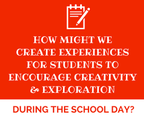
STEM Design Experiences empower students to be creators in the fields of Technology, Science and Engineering through hands-on learning. Throughout the school year I will work with teachers to create STEM experiences aligned to district curriculum for students. STEM stands for Science, Technology, Engineering and Mathematics. The goal of STEM is to provide students with real-world problem solving opportunities. STEM allows students to think outside the box with project-based learning. STEM experiences are about collaboration, teamwork, problem-solving, delegation responsibility, and innovation. They are designed to help our students become 21st century digital age learners by creating, inventing, and designing through challenge based learning activities, and exploration.These experiences have completely transformed learning in the classroomWhy Do We Need STEM?Lesson Objectives: Students will understand empathyStudents will understand the Design Challenge ProcessISTE STANDARDS: 1) Creativity & Innovation2) Communication and Collaboration4) Critical Thinking, Problem Solving, and Decision MakingScience: Impact of Science, Technology, and Human Activity- Identify a question that was asked, or could be asked, or a problem that needed to be solved when given a brief scenario (fiction or nonfiction of people working alone or in groups solving everyday problems or learning through discovery)Work with a group to solve the problem, giving due credit to the ideas and contributions of each group member.Communicate the procedures and results of investigations and explanations through: oral presentations, drawings and maps, writings, etc...Design and construct a machine, using materials Health: Demonstrate decision-making and problem solving skills. Demonstrate appropriate ways to solve conflicts with peers.Communication Arts: Read and follow simple directions to perform a task.Listening and Speaking Read and follow three-and four-step directions to complete a task.I enjoyed spending time this week working in classrooms to share STEM experiences with students. Since this was a new concept for most students. I started by explaining to students what STEM meant. Students very first challenge was the 30 Circles Challenge.Directions: 1 minute to turn as many of the blank circles as you can into recognizable objects Each student chose a group 4-5 students to work with. Each team member has a role. These roles can be shared.TECHNOLOGISTS- Work with the iPads to complete portfolio using the Seesaw APP or Book CreatorBUILDERS- Assess Materials and Build PrototypeWRITERS- Complete written journal, and empathy mapPRESENTERS- Share the group accomplishments and final prototypeNext, was the Thingamob Challenge: On this new science entertainment series on the History channel show, ThingamaBob's task is to use seemingly random objects to create never before seen inventions. I showed students this 30 second screwdriver challenge:Each team was given a random object to find other uses for. They brainstormed ideas for one minute. (ex: toothbrush, battery, sponge, and other everyday objects)I gave the students simple objects; and they came up with some pretty interesting new uses.The next part of the lesson required students to understand empathy.The ability to understand and share the feelings of another.2nd Grade Empathy Lesson involved... Listening to the story of Jack and the Beanstalk, and completing an Empathy map (similar to this one) for Jack What is Jack feeling, seeing, doing, hearing, saying?Option: Or use a mind mapping apps like these 3rd/4th Grade Empathy Lesson Empathize with a pizza delivery driver.Empathy questions: What does a delivery driver see, do, hear, say, feel? What is the best and worst thing about being a pizza delivery driver? The students then apply their empathy mapping skills to complete a map for their assigned user, then design a prototype. After completing an empathy map students in 2nd grade had the challenge of building the highest tower for Jack using pipe cleaners. Each group received 15-20 pipe cleaners. We measured the tallest tower, compared the sizes of our towers, and then declared a winner.3rd Grade Challenge Experiences:Challenge: Create a solution for a problem for the pizza delivery man.Students got to spin the wheel using the random name picker app to choose their group challenge.Example challenges : I need to protect myself from the rain, I need to take multiple items up several flights of stairs, or I need to keep the pizzas warm. More ideas hereStudents were given a STEM Journal, their challenges, and 5 minutes to brainstorm their ideas, explore their materials, and sketch out an idea.Each group was given a bag with different materials. Each bag contained two or three fastener items, two or three surface items, and two or three secure items.After the 5 minutes, the technologists in the group were given a short tutorial on how to either use the Seesaw App or BookCreator APPPortfolio Requirements4th Grade Challenge Experiences:We used The Extraordinaires Design Studio Kit. Students had 15 minutes to design, and build a prototype, and create a portfolio for their user.From the website: The Extraordinaires Design Studio is the creative thinking game for problem solvers aged between 8 and 108. If you've ever wondered what it's like to invent a music player for a robot, a remote control for a pirate, or cooking utensil for a vampire teen, this is definitely the game for you. Each set includes dozens of design challenges.The students learned a lot about working together, time management, and they produced some fantastic projects.Each student earned their STEM challenge stickerIt is important to remember:STEM is not a curriculum.STEM is a culture that can happen in all classes, all grade levels.STEM is a way of thinking. It has to be fostered.STEM needs to be relevant.You need resources to facilitate the culture of STEM.Items that would be great for STEM activities: cereal boxes, empty tissue boxes, oatmeal boxes, paper towel tubes, paper grocery sacks, colored tissue paper, shoe boxes with or without lids, scrap pieces of cloth, pipe cleaners, popsicle sticks, coffee filters, straws, tin foil, string, brown paper bags (lunch), cardboard, glue scissors, paint, glue sticks, tape.Special thanks to Andrew Goodin , Mr. Makerspace for the inspiration :)
Patricia J. Brown
.
Blog
.
<span class='date ' tip=''><i class='icon-time'></i> Dec 04, 2015 06:02pm</span>
|
|
"Why should I use custom content?" Probably a thought every learning and development professional has considered. Off the Shelf content libraries provide resources with a lower initial price tag and time commitment over a massive number of subjects.
Why spend the money developing custom content for your business?
While both off the shelf and custom content have their place, custom content provides a level of agility and performance indispensable for many companies.
Here are the top 4 benefits you gain by using custom content.
1) Combats Disengagement
One of the biggest reasons employees disengage from training is because they do not feel that content applies to their job. Real world examples, industry relevant terms, learning games , and workplace simulations capture the attention of the learner by creating a more personal connection. As a result, custom content designed to fit your company generates greater engagement and makes the most of every minute devoted to training.
2) Content Optimization
Custom content gives you the ability to update and edit content to best fit your needs: while developing, after initial results, and throughout the lifetime of the content. Change the font, change the look, and change the feel to best match your company culture. In addition, custom content can be updated in response to employee feedback and changing business environments, keeping the content up to date, and strengthening the connection between company and employee.
3) Greater Return on Investment
Custom Content requires more time and money up front than off the shelf content, but over the lifetime of the content, custom content creates a higher return on the investment. When you purchase custom content, you own the content. The high initial investment pays off because updating content is often much less expensive then reoccurring fees from content libraries. For many businesses, custom content actually saves money in the long run.
4) Decrease Formal Training Time
Although custom content takes longer to develop than pre-built content, you will gain this time back in the efficiency of custom content. The 70/20/10 framework tells us that we need to shrink the amount of formal training and the best way to do that is with content that leaves out all of the fluff. This fluff shows up in pre-built content to successfully create mass appeal, but if it doesn’t relate back to your specific needs, it is a waste of time. Custom content allows your message to be hyper-targeted, which is the best use of your limited time dedicated to formal training (10%).
Custom content requires a larger initial investment, but using agile content development and management practices, you can shrink this investment and achieve a higher lifetime value. Of course, pre-built content will never go away completely, but with over 2.5 million pieces of content being produces every minute on Facebook alone, you need to be sure your content is relevant and engaging enough to maximize your investment. If you can accomplish this with pre-built content and save some money in the process, go for it!
About the author:Marketing Coordinator for the US, Robert focuses on exploring and creating impactful material. He has a passion for researching and sharing L&D topics, with a particular interest in learning strategy, mobile technology and anything innovative that changes the way we think about learning.
The post Here are the top 4 benefits you gain by using custom content appeared first on .
InfoPro Learning
.
Blog
.
<span class='date ' tip=''><i class='icon-time'></i> Dec 04, 2015 06:01pm</span>
|
|
Do you remember your first job? The young age and the foreign surroundings. No comfort around you. No familiar faces. No information on what would happen next? Unpredictable and unknown.
That’s right, most of us remember our first day at work with the "fear of the unknown". Sometimes this fear can overtake all rational thought processes and really impede our well-intended performances.
And what about the "first impression is the last impression?" Pardon us for the cliches, but employee onboarding programs are in place to alleviate these very regressive feelings. And much more.
In this article, we share with you some innovative ways to use your company’s online portal to change the way employees are brought into a company.
Gone are the days when individuals would feel lucky to be part of a successful organization. With the proliferation of dot com and brick and mortar companies all around us, companies consider themselves lucky when a new employee accepts an offer and continues to stay with them beyond six months!
Companies now offer sign-on bonuses, yearly bonuses, a percentage of stock, competitive health and tuition benefits to attract the top talent. The hiring and recruitment to the final selection process is time, resource and budget consuming for companies. And they face grave losses when an employee decides to leave within six months (or less).
Most firms believe that the employee onboarding are the activities taking place on the first day of work. On the contrary, business research indicates that the employee onboarding begins on the day the employee accepts the offer and goes well into their first year in the company. Employee onboarding is an employee acclimatizing program!
And would it be possible to cram all company information, its culture, business processes and unique individuals into the new hire, in one day? We wouldn’t agree if it was even one week!
Many of us have been through an unorganized and mismanaged onboarding process. All we wanted was the right information at the right time without asking around too much. Let us tell you that the tolerance for such lack of information is lowering in today’s corporate environment. Employees need information at their fingertips.
Emails and phone calls run out of their welcome and colleagues are also tired of repeating the same information for new faces each time. The employee onboarding process is another application of new-hire related knowledge management. Up next, we explain how your learning management system or learning portal can be employed to manage new knowledge for new hires so that it is available when needed.
Create an in-house Online Support for New Employees
Onboarding training software is not the only solution to this entire new-hire scenario. A learning portal or a learning management system needs to emphasize knowledge management. Instead of repeating themselves over and over again, senior and experienced employees need to share their wisdom in an organized manner in the form of a Wiki.
The commonly asked questions need to be answered by the right personnel, signed off with their screen name. This adds to the confidence of the new employee, while involuntarily introducing the person who answered the question.
Specific questions are for specific time frames. First day questions are different from questions the new-hire may have during their fourth month. All possible issues need to be documented within the discussion area of the learning management system, TalentLMS in our case.
This is also a great area for addressing performance concerns and sharing "lessons learned". Encourage key employees to maintain a "reflective practice" journal and share with peers and juniors. Imagine the amount of time and resources saved when a new-hire works proactively and is alert of potential pitfalls.
New employees need to learn and adapt to a new workflow and new software. These training programs include screenshots or videos of software used by the company. These include the regular database management software, the CRM, the LMS software and so on.
All training tutorials need to be visible and available for use when the new employee is ready. Online support questions need to be answered and mentored in a "community of practice" manner.
HR related questions need to be portrayed on the learning portal too. A bundle of click-and-read interactive information articles should be available on the following:
Your company’s basic products or services
Size and general organization of the company
An overview of your industry and where your business fits into the overall picture
Your competitors
Your company’s mission statement and values
Company goals and strategic objectives
Your organizational culture
Mandatory learning programs available for employee development
Create an Online Position Profile
Managers need to describe in detail the entire job description, expectations and behaviors expected from the employee under the specific position profile. This area needs to be updated as the need arises. Any new requirements are directly conveyed to persons holding the position. This keeps everyone in the loop, including the new employee. Job expectation transparency is the key to earning the new employee’s trust.
Have all formalities completed online
Create an automated task list for new employees. This list gets checked as soon as a task is completed. The related knowledge base for the task is also available as a link. Orders for stationary, software and other utilities can be made online too.
Forms can be filled and signed electronically and sent for processing. Having all workflows online helps create a knowledge sharing environment. It also demonstrates a need for an online training program for the new employee.
Get Social Online
Welcome messages and walking around on the first day is a great way to introduce the new employee. When things get busy, help may not be available for the new employee. Introduce them to the social groups in the online portal. The social group can be gamified to motivate peers to help each other, with bonus points to help the new employee.
Quick questions can be answered without leaving the desk! Undivided attention can be provided when busy managers chat with new employees. This is also a great way to remove the culture shock experience. Invitations to casual meetings are also best when shared on the social network.
Provide Online Feedback
Managers and peers who receive work from a new employee can rate the performance, offer feedback and provide some improvement pointers. Real-time feedback that is provided online is more sincere, honest, constructive and discrete. The new employee can immediately adjust performance according to unique expectations.
The best part? No fears of the unknown! When it’s time for the 90-day review, the new employee is confident about their capabilities and the managers are aware of the new employee’s capacities. Any online training programs for professional development can also be recommended easily.
Your online portal, particularly the learning portal, is the ideal place for the new employee to turn to for guidance, advice and information. Stock it with organized and categorized knowledge throughout the year. Mentor it carefully to weed out any unwanted content. Add recommended professional development tutorials, job-aids and eLearning programs for new employees. Gamify the entire onboarding process to help the new employee catch their bearings and contribute in their successful entry and acceptance.
The post Successful Online Employee Onboarding Strategies appeared first on TalentLMS Blog.
John Laskaris
.
Blog
.
<span class='date ' tip=''><i class='icon-time'></i> Dec 04, 2015 05:06pm</span>
|