Blogs
|
Awards season might be dying down, but we’re not ready to slow down any time soon! We’ve just been named as a finalist in this year’s AITD Excellence Awards!
Since 2002, the Australian Institute of Training and Development (AITD) has used these awards to recognise outstanding achievement in learning and development and in organisational development.
That’s right, these awards are actually based in the Land Down Under. Not bad going for our UK-based company!
But we can’t take all the credit, because this has only been made possible through a close and fruitful partnership with one of our Australian clients, Holcim Australia.
They licensed our gamified, social Academy LMS and used it to build their very own Holcim Australia Sales Academy.
We managed to calm down Juliette Denny, our Managing Director, just long enough to get a few words from her: "I feel like running all the way around the globe to celebrate with our Holcim friends in person! The fact that we’re making such big waves on the opposite side of the planet proves just how much impact we’re making internationally!"
The category we’re up for is ‘Best Implementation of a Blended Learning Solution’. But what went into getting shortlisted?
Holcim’s blended learning solution
Holcim haven’t just licensed our Academy LMS, they’ve also licensed our high-impact interactive sales training content, which is all accredited by the Institute of Sales and Marketing Management.
They based their learning programme around this content, and turned it into a robust five-stage blended learning solution:
Online learning - Learners complete an online unit which gives them a full overview of the topic.
Applying learning on-the-job - Leaners apply their new-found knowledge back in the real world (Just because we love online learning doesn’t mean we forget that this place exists!). Their experiences are recorded as case studies to see how they’re getting on.
Face-to-face workshop - Learners prepare work for highly-interactive workshops. Rather than traditional classroom spoon-feeding, these are super-engaging and make sure that everyone gets involved!
Written assignment - Learners go away and spend some time putting together a report to demonstrate their understanding of the topic. Writing something like this for the first time since school might seem scary, but with all the training to this point writing it ends up being a breeze.
Accreditation - All of the learner’s hard work pays off, as they end up earning an internationally recognised qualification from the ISMM!
Though a lot of this learning takes place offline, it’s all managed through the online LMS. Convenient, eh?
Holcim’s results
But what has this robust learning programme actually achieved?
Well, since launching the programme, Holcim has seen its sales performance accelerating all across the business.
The learners have also shown enormous levels of engagement with their training. To put this into perspective, the average learner is logging into Holcim Australia Sales Academy a staggering 46 times!
Finally, the chance to earn real internationally recognised qualifications has been a huge morale boost. After the first round of qualifications was awarded, participation rates in the face-to-face workshops jumped from 87% to 94%. This is fantastic, given that Holcim’s workforce is spread all across Australia, so getting to the workshops is a genuine challenge for some!
So what next? The AITD Excellence Awards winners will be announced on November 27 at a swanky gala dinner in Sydney. We can’t wait!
If you fancy finding out more about Holcim’s fantastic learning programme, check out their case study!
And if you want to see what our Academy LMS could do for you, why not take a free tour?
The post We’re a finalist in the AITD Excellence Awards! appeared first on Growth Engineering.
Growth Engineering Blog
.
Blog
.
<span class='date ' tip=''><i class='icon-time'></i> Dec 05, 2015 02:32pm</span>
|
|
Last week, we looked at Training Needs Analysis and we were even generous enough to give you 5 handy tips to help you get the most out of it.
We’re nice like that!
But just when you thought you’d found the limits of our benevolence, we’re back again to give you 5 more pointers to help make sure your TNA process is as smooth as Carlos Santana drinking a pint of Guinness in a silk onesie!
So, we highlighted the importance of knowing your company’s aims, knowing their training history and figuring out what resources you have available to you.
What’s next?
1. Who needs the training the most?
As you gather your data and get closer to defining where your training needs lie, you’ll start to notice particular groups and departments that are in greater need of training than others. There’s no single reason why these training gaps open up and your circumstances will likely be unique to your company. Some examples of reasons might include:
Rapid business growth
An ever-changing product list
Previous reluctance to provide training
Lack of employee engagement
Only you can tell why this need for training has grown, but the important thing is that you’ve defined who the struggling employees are. Now all you need to do is focus your efforts in these areas and ensure that those with the greatest need get the help they deserve.
2. Who are your subject matter experts?
So, where are you going to find the information that your learners need to succeed in their jobs? You could Google it, I guess, but there is a more efficient way to harvest expertise and it’s right there on your doorstep.
You need to discover who the subject matter experts are within your organisation. They don’t just know their topic inside-out, but they know what it means within the context of the company. Generally speaking, the SME’s input to the training will be an additional duty on top of their already-busy working day.
You’ll need to consider how much time each potential SME can commit to the project. You may find that the person with the most expertise has the least amount of time. The savviest SME in the world is useless to you if they can’t get around to answering their emails!
3. How will you deliver the training?
What form is your training going to take? There are a lot of options available to you ranging from classroom sessions, to manager-led, face-to-face training, to online training solutions. What you choose will largely be dictated by budget and time constraints but the big question you need to ask yourself is which method will deliver the best return on your investment.
For example, classroom training may be easy to arrange and relatively uncomplicated, but with the additional costs that surround it (venue booking, travel & lunch expenses, etc.), the total investment can become substantial. The effectiveness of this type of training can also be difficult to measure, which can make calculating the return on investment quite tricky.
An online training solution requires more forethought and planning which can delay your training programme. Once this solution has been implemented, however, you’ll have a much clearer picture of how effective each piece of learning collateral is. This also opens the door for a blended training solution that lets you plan and manage classroom training within your online learning platform.
As an online training company, our opinion might be a little biased, but that’s only because we’ve seen at first-hand the effect online learning can have on your ROI. You can check out our white paper here.
4. Review roles and competencies
Your business is like a big machine - a machine with a lot of moving parts. Take some time to look at the various roles in your organisation and how these roles interact with one another. Many of your day-to-day processes rely on a chain of different roles working towards the same goal. If one link in that chain is a little weaker, it has an effect on all of the others.
If, for example, your TNA process has illustrated a widespread lack of knowledge at an associate level, you might discover that this is the result of poor communication at a management level. This essential competency must be addressed as a matter of priority since its impact is so large.
Then again, you might find that these failings are systemic and stem from outdated processes and inefficient communication systems. In this case, there isn’t much that you, as a training manager, can do to fix the problem, but that doesn’t mean that it’s out of your hands. Perhaps you can consider training that focuses on making the most out of the systems that are in place, no matter how clunky they might be!
5. What form will your content take?
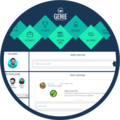
"Pole Position" on the Genie Authoring Tool
Finally, you need to get down to the content of your training programme. By now, you know where the gaps are and where your efforts should be focused. If your learners are lacking in product knowledge, for example, you need to find the most effective way of giving them that knowledge so that it is absorbed and retained.
Here, we’re hitting on the biggest challenge that training professionals face today - engaging their learners. It’s quick and easy to put a document or a slideshow together, but learners today demand something more interactive.
There isn’t a training manager alive who wouldn’t want to pour time and thought into training content that’s both informative and engaging for the learner, but deadlines and budget constraints usually get in the way. An online authoring tool could be the ideal solution. With the right tool, you can quickly build eLearning without the need for an eLearning developer.
Genie is an authoring tool with a difference. It’s an entirely collaborative platform that lets you and your team create game-based eLearning units quickly and easily.
The result is a training asset that conveys all of the relevant information, but that behaves more like a game. If that doesn’t win your learners’ hearts and turn your training programme into a roaring success, nothing will!
Want to try it for yourself? Pop over to unleashthegenie.com now and sign up for a free demo.
The post 5 More Steps to Training Needs Analysis Heaven appeared first on Growth Engineering.
Growth Engineering Blog
.
Blog
.
<span class='date ' tip=''><i class='icon-time'></i> Dec 05, 2015 02:31pm</span>
|
|
We often talk about how we use our unique Discovery Method to bring the personal touch to the online learning journey.
It sounds great doesn’t it? But what exactly is the Discovery Method?
The problem
When we entered the world of online learning (a long time ago now!), we found that it wasn’t anywhere near as engaging as it should have been. We’ve written endlessly about how we use gamification and social learning to engineer enormous levels of engagement, but there was still more that could be done.
The problem with a lot of online learning is that it’s often built to be ‘one-size-fits-all’. Since anyone could be having access to the content at any time, it is generally designed to deliver all of the information in a way which anyone could understand.
But this means that the training isn’t speaking directly to that particular learner. In a face-to-face classroom environment, a teacher can get to know each individual and relate the content to them. But this personalised learning journey seemed to be missing online.
We decided that things didn’t have to be like this! So the Discovery Method was designed with this problem in mind.
Discovery Method step-by-step
So how exactly does the Discovery Method solve this problem?
Well, it’s a method we use to create content, which enables the learner to ‘Discover’ the expertise through reflecting on their own experiences.
What this boils down to is allowing a learner to plug information into the online learning unit. The unit is then clever enough to recall this information later on, letting them think about what they’ve just learned in context.
Let’s make things easier by putting this into context. In this example, a learner is finding out about how to manage customer expectations:
The learner will input their name and the names of their colleagues at the start of the unit. From this point on, the eLearning will refer to the learner by their name (e.g. ‘Hello John Smith!’). It can also take the names of the learner’s colleagues and use them to populate the scenarios dotted throughout the eLearning content. It’s a quick and easy way to breathe a little life into the training material.
The learner now takes a quick quiz to see how much they understand the topic at this point. They’re given immediate feedback so that they can see where their knowledge gaps are, letting them focus on filling them.
The learner is now asked to think of two customers they had problems with in the past. They input their names and the reason for their dissatisfaction.
Next the learner works their way through some training, which again uses the personalised names they entered at the start.
Now that they have this training under their belt, the unit recalls the two dissatisfied customers they thought about in step 3. They’re now asked to think about exactly what went wrong and how it could have been avoided, in the context of the training they’ve just completed.
At the end of the topic the learner will take another quiz to check their understanding. This helps them to see how much they have progressed over the unit, and lets them know if there are still areas they need to brush up on.
Finally, the learner is given a downloadable PDF. This is a personal document which records all of the information they inputted throughout the unit. So they can clearly see how their thinking might have changed between steps 3 and 5.
Steps 3 to 5 can take place multiple times throughout a unit, allowing every area of the topic to be placed into context. By getting the learner to keep reflecting back, the training is much easier to take in.
And having already thought about everything in context, our learner will be far more likely to recall the information the next time they find themselves in a similar situation in the real world!
You can do it too!
You might think that the Discovery Method is tricky to implement into your content. But actually, we’ve turned it into a simple process by building it into Genie, our game-based content authoring tool!
Genie is designed to be as user-friendly as possible, so it made sense to make it simple to incorporate the Discovery Method as well.
When building a screen, you just have to add a Discovery Method question. When the learner gets to it, they’ll be prompted to fill in their answers:
Then when building the screen you want to recall the information, you use an easy drop-down menu to select the question you want to use. When the learner goes through the unit, at this point it will bring up whatever they wrote in the previous section:
How you use this is entirely up to you!
If you’d like to play around with the Discovery Method for yourself, why not sign up for a free 30-day trial of Genie?
The post What is the Discovery Method of learning? appeared first on Growth Engineering.
Growth Engineering Blog
.
Blog
.
<span class='date ' tip=''><i class='icon-time'></i> Dec 05, 2015 02:30pm</span>
|
|
We’re all about gamifying online learning here at Growth Engineering. Gamification is the magic ingredient we add to all of our learning technologies to get learners engaged and make them actually want to take the content.
The tools in our gamification-kit are called game mechanics and today we’re going to look at one of the most powerful game mechanics - Levels.
So, what are levels?
The concept of levels was born in the early days of video gaming. When someone starts playing a game for the first time, they need time to adapt to the controls and the game-play. Because they’re an inexperienced newbie, the first level is generally quite easy.
As they progress through the game, from second to third level and beyond, the challenges get more difficult - which is great, because the player is becoming more skilled. In essence, levels let the player measure their proficiency in that particular game and the bite-sized, incremental challenges keep the player hooked.
But what’s that got to do with online learning?
Levels can be used in much the same way to secure learners engagement on your LMS. Let’s take a look at Growth Engineering’s very own internal Academy.
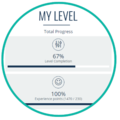
There’s no point having a great level structure if nobody can see it! As you can see here, the level details are front-and-centre on the main dashboard of the LMS. The learner can see at a glance which level they are on and how far they need to go to complete it.
So, let’s take a closer look at this level.
Here, the learner can get a clearer look at the level. On the left, there’s a summary of the level completion and the experience points earned so far. On the right, we’ve got a list of content.
As you can see, each item in the list has a number of experience points attached. These points contribute to the total score for the level. If the learner doesn’t complete the content, they won’t earn the required number of points to pass to the next level.
What’s going on here then?
The secret science behind levels is pretty straight-forward. Humans have a natural urge to complete things. By splitting your content into levels, you create a sequence of mini-victories. In this way, an end is always in sight, and the learner doesn’t feel as though they’re tackling some impossibly huge task.
If you want to read more about how UX designers exploit your obsessive-compulsive tendencies, check out our article on progress bars - the hidden menace…
Like most things, when it comes to gamification, levels let you hack your learners’ brains and hijack their most basic urges to get the most out of them.
Besides this, they also help you to create a logical pathway throughout the learning, forcing you to think of the best way to present the information to your learners. By creating a continuous development programme in this way, you are effectively automating the learning process.
Your learners progress through the levels at a pace that suits their competencies reducing the need for regular training interventions. This takes a huge workload off of the L&D department leaving you to pursue more ways to make the training more effective!
If you want to leverage some gamification superpowers in your online learning, download our white paper below. It’s full of fact, tips and other fun stuff that’s guaranteed to turn you into a gamification wizard in no time.
The post Learn to Love Levels in Online Learning appeared first on Growth Engineering.
Growth Engineering Blog
.
Blog
.
<span class='date ' tip=''><i class='icon-time'></i> Dec 05, 2015 02:29pm</span>
|
|
With the threat from dull online learning ever-present, the Genie Team has been working around the clock to develop new and more powerful weapons of mass instruction!
Our game-based content authoring tool is growing at such an alarming rate, even we have trouble keeping up with it!
In all likelihood, your hands are probably full with your own battles against the forces of boring eLearning.
If you don’t have time to read the whole update, just pop over to unleashthegenie.com, sign up for a demo and see it for yourself!
For the rest of you…
1. New Learning Games!
There’s good news for anyone looking for new ways to engage their learners. We’ve added a whole new pack of games to Genie! The Adventure Pack includes 5 new templates which together are more fun than the entire Indiana Jones box set (the one excluding ‘Indiana Jones and the Kingdom of the Crystal Skull’)!
Now your learners can explore hidden islands, scale mysterious peaks and evade bear traps in a bid to escape the catacombs! They can also dodge crocodiles in the swamp and follow an old map to find the buried treasure!
‘What is that treasure?’ I hear you ask! Why, it’s a first class ticket to Awesomeville and the key to accelerated professional development!
Keep an eye on these new games - we’ll soon be adding specific badges and wild wildcards to make the learning experience even more immersive!
2. The Console Area!
Now every game in Genie includes a handy new HUD (Heads-Up Display)! This feature, borrowed from the wonderful world of videogames, gives the learner a central location for all of their in-game interactions. This console features:
The Briefcase
Here, the learner can access any wildcards they’ve collected and view any learning collateral that has been pushed to them as the result of an incorrect answer.
The Badge Cabinet
As they work through each unit, the learners can view their badge cabinet. This lets them see which badges they’ve collected so far, as well as those that are still up for grabs.
As always, we’ve got some more great developments in the pipeline for the console area, but they’re TOP SECRET*!
*if you want to boost your security level, sign up for a free 30-day demo
and get the latest news before everybody else does!
3. Brand-new Support and Training section!
We’ve made it even easier to find out all you need to know to create awesome eLearning experiences! What was once a comprehensive training manual is now a series of helpful tutorial videos!
These short demos will take you through all of the main processes in Genie including:
Creating Badges
Building units
Managing your assets
And much, much more…
To check them out for yourself, log in to Genie and click the Support and Training button on the main dashboard. We’ll keep adding to this repository of training material as Genie grows so be sure to keep checking back!
Also, if there’s something you’re unsure of, you can always submit a support ticket through Genie, or get in touch with a member of the Genie Support Team!
4. And the rest…
Aside from the major developments, we’ve improved the existing functionality in the following areas:
Multiple Wild Cards can now be assigned to the same slide.
The font colour for quiz questions is now 100% customisable.
The text editor now has a bigger selection of font sizes.
Genie’s developers are hammering out new developments on an almost-daily basis. To keep on top of all the latest Genie news, sign up for your free 30-day demo today!
Besides having access to the most revolutionary authoring tool out there, you’ll also receive our newsletter and become one of the cool kids at the party!
Take Genie for a test drive today and join the Learning Revolution!
The post Genie Development update - October 2015 appeared first on Growth Engineering.
Growth Engineering Blog
.
Blog
.
<span class='date ' tip=''><i class='icon-time'></i> Dec 05, 2015 02:29pm</span>
|
|
We’re just going to come out and say it - Learning and performance management should go hand in hand. They should be like bread and butter, Batman and Robin, the Himalayas and goats…
So why is learning management so often kept separate from performance management?
It’s kind of like salt and pepper shakers. They are kept separate, but close together and they’re often combined when it comes to meal time. The management of learning and the management of performance are two distinct things, but they complement each other in obvious ways. If you don’t have a system that brings this connection to life, then you could be missing a trick. What would life be like without salt and pepper?
After all, the ultimate goal for a Learning Management System is to improve performance. As your employees work their way through training content, you’d expect to see them hitting more targets, assuming the training is good of course!
Here are five very compelling reasons why bringing learning and performance management results in a happy marriage:
1. Cut costs
This is sure to get everyone in your organisation smiling! Why splash the company cash on two systems when it’s likely that you’d spend less by combining them into one super, Megazord or Captain Planet-like platform?
Then there are the savings you’ll make in managing the system. By having everything in the same place, and on a single database, administration time (and hence costs) is slashed!
For example, one of our Academy LMS clients makes such fantastic use of the Performance Centre that they’re able to provide training and performance management to 1,000 employees all around the globe using a team of just three people!
You’d struggle to get more cost-effective than that!
2. Cut confusion
We guarantee that if you ask any member of staff what drew them to your company, the chance to use your performance management system won’t appear on their list.
They have plenty of other things to be getting on with, so having to learn how to use multiple different systems isn’t something they’ll want to spend time doing.
But by combining the two systems into one, you simplify everything and minimise any chances of confusion. Now your employees only need to add one URL to their bookmarks bar, they only need to remember one password, and they only need to set up one profile.
You could even set-up a Single Sign On access to your HR System, intranet, or other business applications, so that all of your employee’s needs and wants are all housed under one glorious roof. Even the busiest of people will have time for that!
3. Boost engagement
For any of us whose job it is to manage learning or performance systems, one of the biggest hurdles is always in getting people engaged and using them. But by bringing the two systems together in a single place, this actually becomes easier.
Instead of trying to pull people to two separate locations, you can now focus your efforts on just one, which is a much more manageable task.
There’s also the fact that someone visiting the platform for some learning will see the performance tools and take a look at them while they’re there, and vice versa. So overall usage of both systems is sure to rise!
4. Easier reporting
Chances are that you face a constant struggle within your business to prove that your learning programmes are actually working and generating a real return on the investment.
Well by bringing learning and performance management together this becomes easier to prove! Now you can directly compare the employees who complete the most training with their performance, to see whether they’re hitting more targets as a result.
That’s sure to keep your bosses happy!
5. Intuitive Individual Development Plans
Another key benefit of integrating learning and performance management is that you can easily recommend the best learning content to plug any gaps in their knowledge, which might be hindering their performance.
With our Performance Centre this is literally a tick-box exercise, as a manager simply ticks which content they want to recommend to an employee. The employee then finds it in their Individual Development Plan, and can see at a glance exactly what they’ve done and what they still need to do.
Want to bring these benefits to your organisation? Why not take a free tour of our Performance Centre to see how well it’s integrated into our Academy LMS?
The post 5 compelling reasons to unify learning and performance management appeared first on Growth Engineering.
Growth Engineering Blog
.
Blog
.
<span class='date ' tip=''><i class='icon-time'></i> Dec 05, 2015 02:28pm</span>
|
|
Gamification works. There’s simply no denying it. The evidence is all around us. Look in your wallet. Rifle past all the receipts and you’ll probably find a loyalty card for your local coffee shop. Check your wrist. Do you have a Fitbit or a Nike Fuel Band? Do you have an app on your phone that counts your steps? Have a think. Do you collect Air Miles?
Game mechanics are all the rage. That’s not set to change any time soon. And yet, a large number of Learning Management Systems (LMSs) remain ungamified. This, I’m sure you’ll agree, is a devastating state of affairs.
In some cases, you may not have the budget to introduce a Gamified LMS (or you may be locked into contract elsewhere). But fear not. This doesn’t mean that you are doomed to live a bleak ungamified existence. In fact, we’ve created the following list of tips to help you gamify your training (even if you don’t have a Gamified LMS, or some other slick new-age piece of technology, straight out of Blade Runner or Minority Report).
1. Adventurers, Assemble!
If you plan properly, you can structure your training in a meaningful way. Indeed, if you theme the training from the get go, you’re more likely to produce the results you’re striving for. Don’t invite your learners to ‘Sales 101’. Invite them to a ‘Sales Boot Camp: where only the strong survive’. This sets the tone, drives expectation and helps motivate your team. If they go in believing that there’s something special about this training, they’re likely to be considerably more engaged and ready to learn.
You should also shape the invite and the communications that go out to your delegates around your designated theme. Don’t be afraid to utilise your design team and any word wizards within your organisation. If you do it properly, you’ll help your delegates form an emotional attachment to your course that goes above and beyond the actual course materials. Think of it this way: you’re not sending your team to a compliance course in Milton Keynes, you’re setting them up for a learning adventure of epic proportions.
2. Collaborate to Compete!
There are few more powerful motivational forces than competition. Competing against other people (whether they happen to be our best buddy, or our arch nemesis), tends to bring the best out of us. What would Tom be without Jerry? Why not draw on this impulse by creating a Learning Battle Royale? Let your learners embark on the 2015 Learning Hunger Games.
To do this, you’ll need to divide your classroom into different teams. To help team-members feel a sense of ownership, you should ask them to name their team or even create their own team flag! If each team knows the learning outcome(s) they are attempting to achieve, they’ll be motivated to work together to overcome any challenges that await them.
3. Badge Bonanza!
Before you embark on a training experience, take the time to consider what’s important to your audience. What can you draw on to help engage them? Once you’ve established this, you can start creating badges or stickers that reflect this activity. For instance, if collaboration is an important element of your programme, you should create a ‘Collaboration’ badge and award it to the social butterflies within your group. But don’t stop there. Why not hand out badges throughout the day to those who ask the best questions, deliver the best presentations or those who perform well when called upon?
4. Leverage Leaderboards!
are powerful motivators in and of themselves, but you can take things to the next level by introducing a leaderboard. At breaks throughout the day, you could ask team-members to add their badges to the board. The team with the most badges is the team who’s in the lead. Don’t forget to use this opportunity to comment on how the teams are doing and to encourage those poor souls who have fallen behind.
5. Learning Levels!
The best learning experiences are those that never end. Don’t let your delegates think that their learning experience ends the moment they leave the classroom. You’ll need to make it clear that there will be further challenges available to their teams once the course is over. You could even set up a level structure, where new training content is made available once they reach a certain threshold of engagement during the course.
6. Challenge Your Champions!
Your brightest and boldest learners may need extra pushing in order to get the most out of them. To achieve this, you could set up unique challenges with special rewards. For instance, you could ask team-leaders to create a case study on the transformative effect of your training content. If they do a good job, you could reward them with a badge, a gift voucher, or even a mention on the company intranet or social media profile.
7. Recognise & Reward!
Turn your badges into this season’s must-have fashion accessory. No, we’re not talking about making them look like a vintage Dior brooch (though they should look pleasing to the eye). We’re talking about imbuing them with meaning so that your learners are willing to fight tooth-and-claw to earn them. A great way to build significance into these badges is to offer recognition to those who receive them. Why not invite your top badge collectors to lunch with your organisation’s CEO? After all, the importance of your learning is only as good as the impact it has and the recognition that your organisation gives to those who are utilising it.
So, there you have it - Seven spectacular tips for using gamification within training scenarios, whether you happen to have a Gamified Learning Platform or not. Have you tried some of these out yourself? Do you have any more tips? Then please let me know on Twitter, @JulietteDenny!
The post Gamification in Action: SEVEN Seductive Ideas for Gamifying Your Classroom Training appeared first on Growth Engineering.
Growth Engineering Blog
.
Blog
.
<span class='date ' tip=''><i class='icon-time'></i> Dec 05, 2015 02:27pm</span>
|
|
Just imagine for a moment that you could build a system so amazing that it has the power to get every single area of your organisation engaged. But that must just be a pipe dream, right?
Wrong. This is something that can be done more easily than you think. And here’s today’s shocking plot twist: the solution lies in how you use your performance management system, of all things! Didn’t see that one coming, did you? (Or maybe you did, if you read the title of this article)
Research shows that only 14% or organisations are happy with their performance management system, and if the organisation isn’t happy with it then there’s no chance the employees are. So how can such a system possibly become a universal engagement super-machine?
Well it comes down to choosing a system with the right features and making sure you use them in the right way. Here’s how we use performance management to fire up the whole business:
1. Engage your leaders, and the rest shall follow!
One of the trickiest parts of any business system implementation, whether it’s for learning or performance management, is in convincing managers and head office staff to get involved as well. Often they’ll expect their staff to make full use of the system, but might think they’re far too busy to jump in themselves.
But if you encourage them to lead by example, it becomes much easier to get everyone else on board. So on our Performance Centre, we make managers dip in regularly to approve objectives and provide feedback, and to assign preparatory work for reviews.
We also allow managers to award special praise badges to the employees who go the extra mile. This gives senior staff an extra reason to interact with the system, helping them to get more out of it. It’s a win-win for everyone!
2. Find your place in the universe (or business at least)
One of the key enablers of employee engagement is in helping them to understand the part they play in the wider business.
A study by ACAS found that employee engagement is closely related to working "for a successful organisation or one that is striving to be so, with a clear mission and purpose" and knowing "how what [they] do contributes to this".
That’s why we built our Performance Centre to include departmental and organisational objectives, as well as individual ones. This allows individual employees to see how their objectives align with those of the business as a whole, and they can see in real-time exactly what impact their hard work is having on the organisation.
All the team building exercises in the world would struggle to inspire such an indomitable company spirit!
3. Better together: Marry learning & performance management
Finally, by properly integrating your learning and performance management systems, you can stand a much higher chance of boosting engagement across the board! After all, this is one of the key reasons we built the Performance Centre to fit nicely into our social, gamified Academy LMS.
So when someone visits the platform for some learning they see the performance tools and take a look at them while they’re there, and vice versa. This helps boost engagement both ways.
Also, if you’ve managed to get managers and head office involved, it means that they’ll get first-hand experience of your LMS, which they might not otherwise. This can be a fantastic way for them to see the value of your learning programmes and how they’re impacting performance.
You never know, once they see all of the hard work being put in, they might even send some more resources you way!
If you’re keen to check out our feature-packed Performance Centre in more detail, why not take a free tour?
The post 3 Proven Steps to Engage Your Entire Organisation Through Performance Management appeared first on Growth Engineering.
Growth Engineering Blog
.
Blog
.
<span class='date ' tip=''><i class='icon-time'></i> Dec 05, 2015 02:27pm</span>
|
|
Gamification. It’s a term you’ve probably heard before. Maybe you have a vague understanding of what it is. Maybe you don’t. Perhaps you’ve used it before. Perhaps you haven’t. Maybe the term makes you break out in hives. Maybe it makes you jump for joy (this is the correct response).
Whatever the case may be, there’s a clear issue with the term. No two people seem to have the same working definition of what gamification is. It doesn’t help that there are two different kinds of gamification (‘Structural’ and ‘Content’). Then there’s ‘Learning Games’, which are their own beast, but often get dragged into conversations about gamification. Finally, there are those poor, misguided folk who use the term as a catch-all for anything tangentially connected to the gaming world. Argh! Why?
There’s clearly an underlying sense of confusion about this word. If you run a quick search, you’ll find a startling lack of clarity on the topic. Bamboozlement abounds. As it happens, we’re about to throw our own beret into the mix. In fact, by the end of this article, we’ll have reached our very own definition of gamification. Hurrah!
First, however, we need to establish our plan of attack. We’re going to start by picking apart somebody else’s definition like a pack of digital vultures. By doing this, we’ll be able to piece together the vital elements of any working definition of the term, before producing an alternative of our own.
Back in the halcyon days of 2014, Gartner sought to redefine ‘gamification’. Here’s what they landed on: Gamification is ‘’the use of game mechanics and experience design to digitally engage and motivate people to achieve their goals".
This is an interesting definition. It covers structural gamification (‘game mechanics’) and content gamification (‘experience design’) and highlights the importance of engagement and driving motivation. And yet, this definition comes off as both a little too precise and a little too loose. Let’s break it down. Without further ado, here’s our three-pronged deconstruction.
Digital or Analog?
Interestingly, Gartner’s definition hones in on ‘digital’ engagement. But whilst digital experiences tend to be easier to gamify, they’re not the only types of experience that can be gamified. Think about the loyalty card you receive from your local coffee shop. There’s nothing particularly digital about a piece of paper and a stamp and yet this is clearly an example of gamification in action.
What’s more, we often use gamification in classroom training, without using any digital applications as a crutch. Learners earn badges throughout the day and climb up our makeshift leaderboard. We even apply a level structure around our content. Can you really say that it’s not a gamified experience just because it’s not happening within a digital application? …Can you?
Whose Goal is it Any Way?
In Gartner’s definition, gamification focuses on enabling people to achieve ‘their’ goals. This begs the question: can you not gamify an experience to help people achieve your goals?
Could you not create a gamified experience that encourages others to complete a survey you have created? They may not have woken up in the morning with a burning desire to complete a questionnaire, but the use of rewards could be enough to motivate them into action.
Whilst we appreciate the importance of aligning individual and organisational goals, we don’t see how this impacts on the definition of gamification. This goes back to the ‘Is/Ought’ fallacy. Just because something ought to be, doesn’t mean it is (and vice versa). And it certainly doesn’t mean that it should be built into the description.
Perhaps Gartner are trying to position gamification as a goal alignment tool. In other words, it’s something that can be used to bring people’s objectives and goals in line with your objectives and goals. In that sense it’s a sort of magical-motivation-reconfiguration machine. Still, even if this is true, it doesn’t feel accurate to classify a reconfigured goal as ‘their’ goal. The motivation has changed, but the author of the goal remains the same.
Gameception: Can You Gamify a Game?
Gamification can’t exist in a vacuum. Gamification is something that’s applied to something else. Yet in capturing this fact, Gartner’s definition seems to come up a little short.
There’s no mention of where the game mechanics (or experience design) need to be applied, beyond the ‘digital’ qualifier. Does that mean that we could describe the gaming mechanics used within video games as an example of gamification? This seems nonsensical on the face of it, but Gartner’s definition doesn’t necessarily rule it out.
As nit-picky as this all may sound, consensus is an important thing. If we’re all working from the same base definition, then we’re able to have better conversations and drive deeper understanding. So now that we’ve quibbled with Gartner’s definition on a near-atomic level, we’d better throw our lot in. We couldn’t let you go without providing our own definition, could we?
"Gamification is the application of gaming mechanics to non-gaming contexts with the aim of inducing engagement and raising levels of motivation."
There we are. This isn’t a definition that is going to blow anybody’s minds, or change anybody’s thinking on the topic, but it is one that adds a much needed sense of flexibility to the term, whilst still clearly communicating the inherent, obvious sense of what we mean when we say that an experience is ‘gamified’.
Doesn’t that seem like a good starting point?
What’s your take? Do you have a unique definition of ‘gamification’? Do you like our definition? Is Gartner’s definition worthy of re-evaluating? Let us know in the comment section below, or on our Twitter Handle!
The post Gamification Defined (& Re-defined): What On Earth Is It Anyway? appeared first on Growth Engineering.
Growth Engineering Blog
.
Blog
.
<span class='date ' tip=''><i class='icon-time'></i> Dec 05, 2015 02:26pm</span>
|
|
Did you ever watch TV with your grandma? If you have, there’s a good chance that you felt like some kind of alien. The murder mysteries your granny likes to watch have been created with old ladies in mind.
If you’re not an old lady, you could find that a lot of it goes right over your head. You might even find that the constant gripes about ‘young people today’ frankly get on your nerves.
That’s only natural - your gran probably wouldn’t like the same things you do. TV execs know that everybody is different and that’s why they take a different approach with every show they make.
As an instructional designer, you need to know who you’re speaking to if you want your training to be a success.
Why you need Learner Analysis
Learner analysis or eLearning audience analysis is an important part of your training program. It gives you the context you need to communicate with your learners in a way that’s appropriate for them. Without this step, you could run the risk of insulting the learners’ intelligence or, worse still, assuming an expertise that’s far above their competencies.
The first thing you need to consider is the goal of the training. What is it that your learners should be able to do after taking the training? Your learners’ needs will dictate the approach you need to take in order to reach this training goal.
Much of the data you’ll need for your learner analysis will come from your training needs analysis. If you’ve been thorough, you’ll already know what training has worked in the past and how your audience reacted to it.
What’s that? You haven’t analysed your training needs yet? Check out these two articles for some top tips!
5 steps to Training Needs Analysis heaven
5 more steps to Training Needs Analysis heaven
Who are your learners?
So, you’ve got a fairly good picture of previous training initiatives - now you need a good overall picture of who makes up your audience.
What is the age of the average learner? Are they male or female? It’s also helpful to know their cultural and educational background as this will give you a good indication of their level of understanding. (Also, if you’re the kind of ID who likes to add humour to your courses, you’ll know which jokes are likely to fall flat!)
How will they learn?
The next thing you need to do is to step into your time machine, and travel forward to the point where your learners are taking the training.
Are they likely to take an hour out to work through an in-depth unit?
Maybe the nature of their job means that they’ll only be able to absorb bitesize units whenever they have a little spare time.
You’ll also need to get a good idea of their level of technical expertise. If you’re delivering the learning content online, will they have the requisite IT-lore to access it and understand how it works?
If not, you might consider including a brief tutorial at the beginning of the course that describes the basic functionality.
How to find out more about your learners
As you can see, there are a few things that you need to consider, but how are you going to find the information you need? If it’s possible, the most obvious (and probably most helpful) solution is to meet with the learners themselves and observe them at work.
It’s also a good idea to have a chat with the relevant managers - they’ll have the best overview of the learners within their team. You could also try inviting the learners to an online survey. There are a few online services that’ll let you do this, but if you’ve got access to a really good online learning platform, it should have a survey functionality.
Engagement is everything!
The most important thing you need to remember is that engagement is everything. Without engagement, your training program will have precisely zero effect on your learners’ habits. If your learner analysis tells you that your learners won’t respond to a boring, click-through slideshow, then you’d be a fool to include one in your training.
Instead, why not give them something they’ll enjoy? With Genie, you can create game-based eLearning units that turn your training content into a whole new kind of learning experience.
‘What do I need to do to get some of that game-based learning action?’ I hear your cry!
All you need to do is click the link, pop in a couple of details and sign up for 30 days of game-based authoring hijinks!
Happy building!
The post Learner Analysis - Know Your Audience! appeared first on Growth Engineering.
Growth Engineering Blog
.
Blog
.
<span class='date ' tip=''><i class='icon-time'></i> Dec 05, 2015 02:25pm</span>
|