Blogs
|
Trying hard to forget it!'The harder you try to forget something, the more likely you will remember it!"- Zaid Ali AlsagoffFORGET IT!Have you noticed that when you try hard to forget something that you don't want to remember (e.g. a crappy presentation you did!), it becomes harder to forget it. It just sticks in your mind like glue....Forget! Forget! Forget! It isn't going to happen! Memorable incidents whether bad or good will stick longer (or are easier to retrieve from the memory archive).Or you are preparing for an important exam trying really hard to remember something, and you simply can't remember anything! And then when you finally do remember it, you forgot something else! And it just continues in a stressful cycle until the end of the exam. Interestingly, within days after the exam many of those important memories are archived somewhere, nowhere to be found or retrieved anymore (unless used!). Memory or memory retrieval is a funny thing.MALE BRAIN VS FEMALE BRAINHave you wondered why it is nearly impossible to win an argument with your wife (sister/girlfriend/mother/any women for that sake), especially if it's about personal, emotional, or social incidents. You will have one big point (It wasn't me!), and then she will have a few hundred small points that you can't challenge or remember. It will be like...but, but, but, but, but... Oh man, I wish I had such great memory for details. That would make my life easier (or worse)!The secret? One word: EMOTION!Don't believe me, watch this:MY 32 CENTS!Have you wondered why subjects you enjoy to study are easier to learn and remember? What happens in your mind when you enjoy something? You keep on thinking about it! If you don't enjoy it? You think about something else!The secret? One word: REPETITIONThings you like, you repeatedly think about in your mind.To improve your memory you could eat healthy, exercise well, play brain games, use millions of memory techniques, and all the other who-ha prescribed by the memory gurus. I have tried them all without too much lasting success.But I do know that when I try really hard to forget something, it usually sticks better than any other method that I have ever tried. I suppose in the process of trying hard to forget I am evoking an emotional state (e.g. angry), and by doing it repeatedly it makes it nearly impossible to forget.In a never forgetting memory shell, make whatever you want to remember memorable by trying hard to forget it in an emotional state repeatedly.Now, forget what you have just read! FORGET! FORGET! FORGET! FORGET!If you can't remember, you haven't tried hard enough to forget! GET IT?Who cares if you can remember (digital databases do a better job!), if you can't understand, apply or create some form of value from it! That makes more sense... Now I get it!What about you? What is your secret recipe to great memory (with understanding!)?
Zaid Ali Alsagoff
.
Blog
.
<span class='date ' tip=''><i class='icon-time'></i> Jul 14, 2015 02:51pm</span>
|
|
ONE STOP LEARNING"As I have progressed along my journey as an educator, I have come to better appreciate that teaching is about sharing—sharing what I have learned with others, including the public at large. This blog is my expression, my way of sharing my passion on the issue of teaching and learning, lifelong learning and education in general. It is also intended as a repository of resources related to teaching and learning. This is my humble attempt to put together useful links, articles, websites, presentations, videos, etc. in one place -- for my own reference and for those who are interested to learn more about teaching and learning...more"- Professor Karim (Universiti Sains Malaysia) I am always thrilled to discover new edublogs from educators in Higher Education in Malaysia passionate about sharing their learning discoveries and journeys. This blog by Prof. Karim has already been around since November 2010, so it is not totally new, but without doubt worth sharing here. Interestingly, we met during a workshop (National E-Learning Road Map) late last year (2010), and have since communicated through Twitter (@biopolimer) and e-mail, but ironically I didn't really discover his juicy blog until today.As the One Stop Learning blog is also Prof. Karim's own reference for learning discoveries on teaching and learning, means that his motivation to keep it going goes beyond hits and fame, which is important to keep it rolling until the world discovers this gem of a blog. Besides being self-motivated to share, it is always great to know that you have readers and people willing to challenge your ideas and thoughts. If he can keep it up (like now!), I am pretty sure that this blog will achieve just that as it explores and grows.In short, why not visit...I shall say no more... just CLICK HERE :)
Zaid Ali Alsagoff
.
Blog
.
<span class='date ' tip=''><i class='icon-time'></i> Jul 14, 2015 02:50pm</span>
|
|
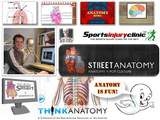
It is amazing how much knowledge, skills and attitudes a medical student must internalize (memorize, understand, apply and practice) before he or she can graduate, and making that learning journey a bit more engaging and exciting would surely not hurt. Personally, I would probably need brain shock therapy before even grasping the basics of Anatomy during the first semester. The language used for anatomy is way too complex for my impatient and simplifying brain to learn.Interestingly, a pro-active IMU student (Ibnu Haniffa) shared an awesome Anatomy Arcade Games site on IMU E-Learning Facebook page recently (22/01/2011), and that just sparked me to an unexplored galaxy of great anatomy games and resources. In other words, unless you are using some of the sites coming next, why not spice up your Anatomy learning activities (or reading list) with some of the sizzling resources shared right here:WebAnatomyA collection of study aids and games from University of Minnesota for entry-level anatomy and physiology students. For example, the Anatomy Bowl multiplayer games could be used to spark the class to life learning different aspects of anatomy in a competitive, but exciting manner.Anatomy Arcade Games (Ben Crossett)This mission was born of frustration with what he saw as a lack of truly engaging material in the area of anatomy and also a frustration as a teacher catching students wasting class time playing flash games every time they were in a computer lab. The catch phrase "if you can't beat 'em, join 'em" sums up the decision he made; to investigate the potential of these "pesky" little games to invigorate the delivery of anatomical material to the teenage audience (Source). Use some of these awesome anatomy games in your class (collaborative fun!), or at least share these games with your students where relevant.Visible Body (3D Human Anatomy)Visible Body is a content and software development firm that produces award-winning interactive and visual content. Visible Body's clients include many of the world's top pharmaceutical, biotechnology, medical device, and educational publishing companies. The revolutionary Visible Body web application is a 3D human anatomy visualization and learning tool available by subscription.BBC Interactive BodyA sizzling free 3D animated anatomy resource that even includes interactive games to explore the senses, organs, skeleton, muscles and the nervous system.Get Body Smart Visually learn about the human body through beautifully detailed and interactive Flash animations.The Virtual Sports Injury ClinicCovers interactive information on over 100 sports injuries.TeachPECheck out the anatomical section especially on bones, muscles, the heart, lungs and energy systems.Human Embryology AnimationsIt explores General Embryology, Cardiovascular Embryology, Development of the Head and Neck, Gastrointestinal Embryology, Development of the Limbs, and Urinary and Reproductive Embryology. Amazing stuff!Think AnatomyIs the creation of Vanessa Ruiz, art director, medical illustrator, blogger, and all out anatomy fanatic. This great site links, categorizes and discusses the best anatomy resources on the Internet.Street AnatomyCovers the use of human anatomy in medicine, art, and design (Vanessa Ruiz again!).Ourselves & Our Bodies (Shambles)A growing collection of excellent anatomy resources worth visiting once a while to discover new anatomy learning gems.To be Discovered!If you have any other excellent (free) anatomy online resources that you want to share, please share them in the comments section, and it will be added (if appropriate). Thanks :)Ibnu Haniffa, thank you for being a pro-active students sharing your learning discoveries, and hopefully more students (lecturers and learners) will participate in sharing their learning discoveries on IMU E-Learning Facebook (or here!).Finally, now we should not have any excuses in making our anatomy classes (or courses) boring, because with physical anatomy tools (at the medical museum), and sizzling online resources above, we have tremendous opportunities and possibilities to engage and inspire the medical students' mind, body and soul like never before :)
Zaid Ali Alsagoff
.
Blog
.
<span class='date ' tip=''><i class='icon-time'></i> Jul 14, 2015 02:49pm</span>
|
|
CCK11This is my first reflection (posting) for the Connectivism and Connective Knowledge course (CCK11), which is a 12-week open online course facilitated by Stephen Downes and George Siemens. This course will explore the concepts of connectivism and connective knowledge and explore their application as a framework for theories of teaching and learning. Participation is open to everyone and there are no fees or subscriptions required....Register here!Important links:Discussion ThreadsDaily NewsletterNewsletter ArchivesElluminate recordings (Links to all recorded live sessions in the course)Click here to read my experience participating in PLENK 2010, which was also conducted by Stephen and George.WEEK1: WHAT IS CONNECTIVISM?"At its heart, connectivism is the thesis that knowledge is distributed across a network of connections, and therefore that learning consists of the ability to construct and traverse those networks. It shares with some other theories a core proposition, that knowledge is not acquired, as though it were a thing. Knowledge is, on this theory, literally the set of connections formed by actions and experience. Readings list for week 1 George Siemens, Connectivism: A Learning Theory for the Digital Age Stephen Downes, What connectivism is, and What Connectivism Is Not George Siemens, What is the Unique Idea in Connectivism? George Siemens, video recap of Connectivism and Connective Knowledge 2008 Rick Schwier interview of George Siemens on connectivism. George Siemens presentation on Defining Connectivism and Comparing connectivism with other learning theories Stephen Downes presentation: A quick introduction to connectivism (ustream) (Spanish, German)"(Source: CCK11 - Week 1)So, what does connectivism and connective knowledge mean to me? Instead of dwelling upon my own contextualized remixed or mashed-up version of this theory, I will instead share with you a true story that I believe manifests the potential effect of embracing connectivism, and connective knowledge.BASED ON A TRUE STORY A couple of months back (November 29th, 2010), I posted an article on this blog entitled, 'Islam, Higher Education & The Virtual Campus!', which Stephen Downes spotted in his RSS galaxy (I assume), and then he shared and reflected it on OLDaily. And as a result:"Zaid, I read with interest the ZaidLearn blog that Stephen described in OLDaily. Great column! (And thanks to you, Stephen, for including it. This is what I meant when I sent you a note lauding your service to the educational community. You get people like Zaid and me together!)..."- James Morrison (via E-mail)First, thanks Stephen for connecting me to amazing people like James L. Morrison. I have probably lost count of how many amazing people and renowned educators, Stephen Downes has connected me to (knowingly or unknowingly) ever since I first appeared on OLDaily (in 2005). Those 26 appearances on OLDaily over the years (until now) have been magical in terms of connections and plugs to amazing people around the world, so I certainly owe him in appreciation and respect for that. THANK YOU!JAMES MORRISONInterestingly, thanks to this awesome Zaid-to-Stephen-to-James connection, I got to hook up with James L. Morrison for half-a-day, when he came to Malaysia on the 2nd January (2011) to conduct a couple of lectures and one workshop. If you are not familiar with this renowned educator and futurist, perhaps these 3 sites will enlighten you more about his contribution to mankind:HorizonThis is where (his homepage) you will find all his shared resources, including articles and workshop/presentation slides. And when you have written more than 200 articles, and conducted more than 240 lectures/presentations/workshops around the world, it becomes like....WOW...Thanks for sharing! This site has been hit more than a million times, so surely it must have had some impact on educators and learners around the world.InnovateFounded and served as editor-in-chief, Innovate (2004 to 2009), a journal of online education.The Technology Source Co-founded and served as editor-in-chief, The Technology Source (1997 to 2003).What even amazed me more was his eagerness and excitement to have a learning conversation with me, which was really humbling, and I honestly felt a bit embarrassed. Here is man who has contributed so much to learning and education, and he is going all out to meet me. Who the ___ am I? Anyway, it didn't get to my head, and I showed similar genuine excitement to hook up with him, because surely I could learn some gems from this exceptional guru.HIGHER EDUCATION IN TRANSITIONAs I was recovering from a flu, we could only meet up a few hours before his Tan Sri Jeffrey Cheah Distinguished Speakers Series Lecture at Sunway University (3rd January), which was entitled, 'Higher Education in Transition'.We met at 2.30 pm (3rd January) at Sunway Resort Hotel, and soon after a car sent us to the lecture hall at Sunway University where he was to deliver his lecture at 5.30 pm. Yes, 5.30 pm! Although, James has done more than 200 official lectures around the world, he still likes to take his time to setup his Mac, rehearse his presentation, and get comfortable with the environment before delivering his lecture. I certainly found that amusing for a man that has delivered lectures for decades, but then again that is one of the signs of a great educator, which is that they are always striving to improve whatever they are doing.Besides the preparation, he was eager to go through his slides with me, and get my feedback and insights to improve further. Those couple of hours before the lecture was probably more valuable and enriching than the actual lecture, because I got to have an enriching learning conversation with him, and see how a great educator prepares for a lecture."Higher education is in a major transition period that will fundamentally change the way colleges and universities will conduct their business in the coming decades. Although change in social institutions is seldom rapid, the combined forces of demography, globalization, economic restructuring, and information technology are forcing colleges to reconceptualize their markets, organizational structures, and pedagogical practices. This presentation focused on the impact of these forces on American and Malaysian higher education." - SourceClick here to download presentation slides.The lecture itself was also crispy and refreshing, as it also explored the new evolving paradigm of learning, and the importance of facilitating more authentic learning (e.g. project-based learning), instead of lecturing students through too much theory without allowing them to explore and experience the possibilities. Let's enjoy and reflect the recorded lecture broken down into 3 parts: Higher Education in Transition, Part I from James Morrison on Vimeo. Higher Education in Transition, Part II from James Morrison on Vimeo. Higher Education in Transition, Part III from James Morrison on Vimeo.After the lecture he insisted that I join him for the special dinner in honor of him. I suppose Sunway University Executive Director Elizabeth Lee, and Vice-Chancellor Professor Robert Bignall were surprised, but obviously I would not turn down an opportunity to continue the learning conversation with a renowned futurist. In short, it was an inspiring learning experience and a great connection.LESSONS LEARNEDSo, what lessons can we draw from this inspiring experience, and connectivism and connective knowledge?First, if we have a reasonably good Internet connection today we can all connect with amazing learning resources and exceptional educators around the world. However, by simply passively connecting to content and people, and just consuming without contributing ourselves back to learning ecosystem and connective world, we will probably never experience the learning possibilities that connectivism and connective knowledge can empower.In other words, if you really want to experience the empowering learning possibilities and inspiring connections, you need to take an active role, which means sharing your ideas and discoveries openly, and joining actively in the learning conversations (relevant to you) taking place online around the world."The juicier your shared discoveries and ideas are, the more likely people will want to connect and interact with you." - Zaid AlsagoffOn January 19th, to my big surprise George Siemens wished me Happy New Year, and asked me whether I was available to present to CCK11 this year. I have to admit I nearly choked when I read the e-mail, and was thinking have you gone ___! Anyway, challenging it may be, I am not planning to chicken out, and will be hopefully be giving my online Elluminate presentation to CCK11 on Wednesday 16th March (Week 9 - Openness & Transparency).Oops, what have I agreed myself into! If you have any tips to share, or topic you want me to discuss during my CCK11 presentation, I would certainly appreciate that. For once, help me out here...Please :)
Zaid Ali Alsagoff
.
Blog
.
<span class='date ' tip=''><i class='icon-time'></i> Jul 14, 2015 02:49pm</span>
|
|
"While Facebook is a goldmine for connecting people and having social fun, Linkedin is the present and future goldmine for connecting students and ideas to the corporate world." - Zaid Ali Alsagoff Not that this is so exciting, but as universities around the world are striving to create industrial or corporate linkages, and explore innovative ways to connect their students and research projects with relevant companies, professionals and experts out there, Linkedin looks increasingly like a great connector.WHAT IS LINKEDIN?Today, Linkedin has over 90 million registered users, and the company is growing at a rate of around 3 million new people per month. Although, most of its current users (as of January 2011) are located in US (52%), European Union (25%), India (8%) and Canada (4%), I predict that the user demographics will dramatically change in 2011, and you will see mega growth in many other countries, especially in South-East Asia. Linkedin has already members in 200+ countries, and delivers around 1 billion pageviews per month (Source).It is already being touted by Josh Bersin to radically transform corporate recruiting, which means companies like Jobstreet.com and Monster.com might be facing tough times ahead, unless they can keep on innovating, and encourage people to continue to use their services.Though, I am not going to waste or fickle my words on that, but instead focus on what Linkedin can do in terms of facilitating corporate learning connections.WHY NOT USE FACEBOOK INSTEAD?I have already discussed earlier on this blog about how Facebook can be used for learning and creating learning communities. It is still a useful tool to do exactly that, but I have to admit I am getting more and more annoyed with the increasing number of distracting picture adverts (4-5 adverts per page) taking over the Facebook interface. We were first introduced to 3 annoying picture adverts per screen (mostly irrelevant ones, too!), and at one time I am sure it was 5 (getting dizzy!), but now it is 4... What is going on?From a learning point-of-view:GOODFacebook is great for connecting me to friends and uploading baby pictures to keep my Mum connected with what is going on, while living thousands of kilometers away. It is also a great tool to communicate and interact with students, create small learning communities, play games together, promote ourselves...MoreBADFacebook is increasingly becoming a BIG BUSINESS, which is understandable when you have 600 million users, and still growing significantly. Though, this also means more adverts, spam, rubbish, junk, distractions, etc...You name it! I actually respect Mark (Seen to be notoriously uninterested in money in the past) for keeping the Facebook interface clean from annoying adverts for so long, but sadly that is no longer the case.UGLYHave you ever seen a Facebook junkie at work. I have! If your colleague is checking Facebook updates and pictures every 3 minutes, and is always busy (doing nothing work related), then you have seen one. Did you know that a study showed that 54% of US companies ban Facebook (and Twitter) at work? Working when connected to Facebook is like having a daddy day care full of kids screaming in your ears nonstop. It can be done, but you need discipline!Having said that, we should not blame Facebook on all this (or should we?), but instead discipline ourselves (and others) to use it appropriately, because if used appropriately it can be an amazing connector and a great learning tool.It will be interesting to see how Facebook evolves, but for me I will be exploring Linkedin more in 2011, and see how it can be used to connect and transform learning.WHY NOT USE LINKEDIN FOR LEARNING?Actually, I have been on Linkedin for several years (since 2005 or 2006, If I am not mistaken), but it wasn't until recently that I felt the urge to explore and really use it. I had just completed a 3-part series discussing my frustrations with the Blue Ocean Strategy (BOS):Part 1 - Would Nemo Survive Using the Blue Ocean Strategy? Part 2 - Simplify Blue Ocean & Make Consultants __________! Part 3 - ZaidLearn's Blue Ocean Strategy for 2011 Although, I didn't get many comments on the blog, I noticed there was an interesting BOS discussion taking place on Linkedin, which was initiated by Dick Lee (CEO and Chief Innovation Officer at Value Innovations, Inc), using my BOS article as a trigger.Me being me, I joined the group and as a result, I experienced a refreshing and truly insightful discussion, which ironically was triggered by my bashing or 'Critique of Blue Ocean Strategy' as Dick Lee articulated it. Reading and reflecting arguments by people that have been initiating value innovations for decades was really enriching, and then that got me thinking...Why can't we encourage more students to participate or join relevant groups in Linkedin. Professionals and experts out there are always looking for refreshing ideas and suggestions, while students want to learn from experienced people in the corporate world. Bingo!Also, Linkedin is becoming more user-friendly, the discussion forum is not too bad, and it will probably be introducing more collaboration tools in the near future. WOW, what a potential!Why not use Linkedin to link up students and educators with awesome people in the corporate world, and explore ways to create value innovations and win-win situations, etc...! Yes, why not?Finally, I have to agree with Professor Thomas Baker that both Facebook and Linkedin are valuable for their own reasons, and that we should use both to good effect!What do you think? Do you have any learning experiences with Linkedin to share?I am still learning the Linkedin way to learn :)
Zaid Ali Alsagoff
.
Blog
.
<span class='date ' tip=''><i class='icon-time'></i> Jul 14, 2015 02:49pm</span>
|
|
Social Media & Web 2.0 for Learning Website(Still Under Construction) Social Media & Web 2.0 for Learning (2nd Edition) View more presentations from Zaid Alsagoff WELCOME!Welcome to this ’Crash Course’ (still under construction) to get you started with social media and web 2.0 for learning and teaching. Today there are thousands of exciting learning tools to explore, but sadly most teachers do not have the time to explore all, or figure out which ones to use. This presentation and site provides all the resources shared during the 'Social Media & Web 2.0 for Learning' workshop (I facilitate), which focuses on several of the most essential learning tools that we can use to facilitate learning and build an effective personal learning environment and network. Site (Workshop) ContentsRSS & CurationBloggingTwitterFacebookWikisOER/OCW Other ToolsWORKSHOP? Although, the presentation slides are pretty much done, the website will be under construction for the next few weeks. I will first be facilitating this workshop online (1/2 day) to a group in Saudi Arabia next week (20th February, one of the pre-workshops for the 2nd International Conference - E-Learning & Distance Learning, Riyadh), and then again I will be facilitating a similar workshop (face-to-face) in March at the AMEA 2011 Conference (another pre-workshop), and after that who knows where (if anywhere!)... So, to make it a bit more interesting this time, I have decided to share the workshop (presentation slides, resources and site) with all of you, and then hopefully get some constructive feedback, so that I can improve further.Still early days, but with a bit of work this workshop could evolve into something quite special, which could benefit people beyond those just participating. Isn't that what Social Media and Web 2.0 is all about?Reaching out and making a positive difference beyond the brick walls of a class, hall and building?What do you think?
Zaid Ali Alsagoff
.
Blog
.
<span class='date ' tip=''><i class='icon-time'></i> Jul 14, 2015 02:49pm</span>
|
|
LINGUISTIC GENIUS OF BABIES"Patricia Kuhl shares astonishing findings about how babies learn one language over another -- by listening to the humans around them and "taking statistics" on the sounds they need to know. Clever lab experiments (and brain scans) show how 6-month-old babies use sophisticated reasoning to understand their world." - SourceOf course it easier to learn a language when you are younger, especially when you are a baby. What do you do besides eating, playing, exploring, sleeping, crying and ______?However, I don't agree with the diagram above, because I believe it is much more to it than simply getting stuck in the age thingy about learning a language. No doubt human being's ability to acquire a new language declines with age to some extent, but there are many more factors to learning a language than just the decline of the brain, which could vary dramatically from person to person, depending upon how they use it during their lifetime.What about interest and passion to learn a language? For example, if a 30 year old dude has the interest and passion to learn a language, I am pretty sure he or she will learn a language much faster than a 3 year old kid, especially if given the same amount of time to achieve it.Perhaps the brain power has declined, but by using learning and thinking skills acquired fused with passion and interest... No contest!Well, that is my opinion, and I don't have a Magnetoencephalography (MEG) to prove it. Neither am I a linguist (and I am crappy at learning languages, too!), but I have met passionate people my age, or older that have a gift for learning languages really quickly. So, age might be one factor, but the interest and passion to learn fused with effective learning methods, I am pretty sure we can continue to learn new languages pretty well until we expire :)What do you think?
Zaid Ali Alsagoff
.
Blog
.
<span class='date ' tip=''><i class='icon-time'></i> Jul 14, 2015 02:49pm</span>
|
|
Today, I don't spend much learning time following people or particular lists on Twitter, but I do spend time following, reflecting and interacting with relevant learning hashtag conversations (streams) taking place around the world.If you are confused about what Twitter hashtags are, you have come to the right place to understand the power and possibilities that these learning conversations can do to amplify your learning!WHAT ARE HASHTAGS? "The # symbol, called a hashtag, is used to mark keywords or topics in a Tweet. It was created organically by Twitter users as a way to categorize messages" - SourceFor example, #edchat is a well-known and influential hashtag used by many to discuss educational or learning related issues on Twitter. By following (saving) this hashtag you will be able to see all the tweets shared on Twitter including the #edchat hashtag.Also, please keep in mind that Twitter hashtags can occur anywhere in the tweet, and that they are not case sensitive, as shown in the example below (#cck11 or #CCK11 = No difference):Today, Twitter hashtags are widely used for conferences, events, courses, topics, trends, etc. enabling people to easily follow and participate via hashtag learning streams relevant to them.WHERE DO I FIND JUICY HASHTAGS?Actually, if you are looking for global (or country) trends you can for starters discover some on your Twitter homepage, which will display the top 10 trends at that particular moment.If you are looking for (#hashtag) trends, then tools like What the Trend?, Twitterfall and Tagalus should be useful.But then again, I give two hoops what 'Lady Gaga' and 'The Bebiers' tweets, and instead I am looking for educational and learning streams (hashtags), which will most likely never appear on my Twitter homepage. Of course, you could start using Twitter Search, but that is perhaps not the best place to start (unless you know what you are looking for).Actually, sometimes you can discover enriching hashtags by accident, when reading tweets from people you follow. However, the fastest way (to me) is to Google up educational hashtags and find a gold mine like this one: Educational Hash Tags (Cybrary Man)Here some interesting learning hashtags that you might want to follow (Save):#edchat - Education#CCK11 - Connectivism and Connective Knowledge 2010 Course#edutech - Educational Technology#web20chat - Web 2.0#hsc - Homeschooling #ecosys - Changes in public education#DistEd - Distance education and e-learning#innochat - Innovation in education#Lrnchat - Learning issues for educators#ellchat - English Language LearnersMore... :)HOW DO I FOLLOW (SAVE) A HASHTAG?There are several ways, but if you want to simply follow (save) a juicy hashtag from Twitter itself, you can first:Copy/Paste the hashtag into Twitter Search (Or simply click the hashtag on your Twitter page) and then Search.Then click 'Save this Search'Click 'Home'Select the hashtag from your 'Searches'... Done!However, many today hardly spend time on the Twitter homepage itself, and prefer using their mobile devices and tools like TweetDeck to check Twitter updates regularly (every 3o seconds!).In addition, some prefer real-time updates on tweets and hashtags (a flowing learning stream), and tools like Monitter, TweetGrid and TweetChat are awesome for exactly that. For example, you might want real-time Twitter updates during an event, or learning session on a big screen (or projector), meaning you can reflect and discuss on the spot issues streaming down the screen (no refreshing needed!). Besides real-time updates, some might prefer getting daily updates from the hashtag(s) they are following in the form of a sizzling self-organized online newspaper. paper.li could do that without you basically doing anything, except for signing up and feeding it your hashtag (e.g. #CCK11 Daily). Really cool!If you find your Twitter homepage messy for having conversations, you could try Twitoaster, which threads and archives your conversations in real time. This tool could help you improve the way you communicate with your students or connections (followers).Using Twitter to Transform the Classroom!HOW DO I CREATE A HASHTAG?That is so easy! Just remember to keep it unique, short and simple, because we only have 140 characters to make a point, and we certainly don't want the hashtag itself to take up too many characters.Also, try to avoid commonly and widely used terms like '#elearning', because then you're learning stream could be diluted and overwhelmed with too many non-related tweets. For example, the 'Connectivism and Connective Knowledge 2011' hashtag is shortened to #CCK11.Finally, once you have created your unique, short and simple hashtag you need to promote it to your target audience, and here are a couple of articles on how that can be done:Using Twitter to Amplify Connective Learning and Sharing at ICEL 2010Join the #moodlewish Twitter Stream!Now, that you know how to find, follow and create Twitter hashtags, you have a powerful...I shall say no more!Other excellent resources that explore Twitter hashtags:HashtagsHOW TO: Get the Most Out of Twitter #Hashtags (Ben Parr)What Are Hashtags ("#" Symbols)? (Twitter Help Center)Twitter users discuss educational issues through Hashtag Chats (Alexis)Educational Hash Tags (Cybrary Man)Twitter Power: The Twitter Hashtag (Jordan)15 Fascinating Ways to Track Twitter Trends (Ben Parr)WOW! That wasn't so difficult, was it? :)
Zaid Ali Alsagoff
.
Blog
.
<span class='date ' tip=''><i class='icon-time'></i> Jul 14, 2015 02:49pm</span>
|
|
Backupify"Backupify is an all-in-one archiving, search and restore service for the most popular online services including Google Apps, Facebook, Twitter, Picasa and more."If you are looking for a tool to backup your social media stuff (Google Docs/Sites, Twitter, Blogger, Facebook, etc.), Backupify is a pretty cool tool. Though, you need to keep in mind that the free version is currently limited to 2GB storage, so the idea of using it for backing up for example your Gmail would also probably require you to invest in the commercial version, unless your Gmail account is below 2 GB (Very unlikely!!!!). Though, the current pricing is reasonable (Pro 100 version - $4.99/month), so it might be a good idea to consider such an option if your Gmail is critical to your work, studies and life.Putting Gmail aside, I would recommend using the free version of Backupify to backup your blog, Twitter, and other social media stuff that are reasonably light. The free version does weekly backups of up to 5 accounts (e.g. Blogger, Twitter, Facebook, Google Docs, and Google Calendar). If you want to backup more accounts on a daily basis, then you need to subscribe to the commercial version.If you are wondering how Backupify works, then watch this video tutorial:Cool! But, are there better social media backup tools out there?Or tools that enable you to backup unlimited social media accounts providing unlimited storage space? Now, that would be AWESOME :)
Zaid Ali Alsagoff
.
Blog
.
<span class='date ' tip=''><i class='icon-time'></i> Jul 14, 2015 02:49pm</span>
|
|
Kable.MY"This website provides the latest news, articles and tutorials on emerging technologies for educational purposes, and serves as a hub for educators to congregate and share ideas that can be put into practice. It is hoped that this website will be on the forefront of Malaysia's instructional technology and inspire educators to use technologies to enhance their instructions."NEW!19 hours ago, I got a pleasant e-mail from Hafiz Hanif, who invited me to visit his new Kable.MY website. I was also invited to be a freelance writer for the website, but I told him instead of being a freelance writer, why not use whatever you like from ZaidLearn, and then link back to the original post (article). The reason is that whatever I write to share (to anyone), I will post it on ZaidLearn (First!). Anyway, this post is not about ZaidLearn, but about this awesome Kable.MY website that I just discovered, thanks to Hafiz Hanif.Although, Kable.MY is still brand new, and probably needs some time to build up a substantial collection of awesome articles (unless they reuse with attribution and permission from great Edubloggers out there), I am really impressed with the website design, and the first few articles too are very useful and relevant.INSPIRING!Also, I like their team's learning philosophy and spirit:"We are a bunch of normal educators like you, with the enthusiasm to provide the latest and fun ways to teach students, to inspire them with the use of technologies that are often regarded as a separate entity from our instructional strategies. Here, we share our thoughts on how to integrate technologies into your everyday teaching and learning activities, and how to understand the design of certain applications, how to re-purpose the applications to suit our educational needs, and how to get control over our own methodological strategies (Source)."Yes, certainly a good start! The challenge is to keep that volcanic creative eruption continuously flowing, and if the passion and focus is there... WOW, this could evolve into something really special!Thinking of it, after being inspired by Kable.MY's awesome website design, I believe it is time to relook and rethink the website design of ZaidLearn, which has not really changed much since its inception. But then again, neither has Google's homepage either. But, then again I have yet to find that swoosh factor that fits ZaidLearn's flavor and content. One thing for sure, I would want the revamped website to infuse a lot of (white) dreaming space free from anything.I believe it is time to erupt some changes soon...Need another 102 days to think about it!Kable.MY, thanks for this inspiring website, and hopefully it will inspire more educators in Malaysia to share their learning stories and tips. Yes, why not :)
Zaid Ali Alsagoff
.
Blog
.
<span class='date ' tip=''><i class='icon-time'></i> Jul 14, 2015 02:49pm</span>
|