Blogs
|
PURPOSE OF A LECTURE?InspireInfluenceInformOn the 24th May 2010, Prof. K. Ramnarayan (Vice Chancellor of Manipal University) conducted an inspiring lecture entitled 'The Vanishing Art of Lecturing' at the International Medical University (IMU), Bukit Jalil (Main Campus).To cut the story short, let's enjoy and reflect this amazing and inspiring lecture below, chunked into three (3) parts:PART IPART IIPART IIITo summarize in his own words, lectures should be:LivelyEducativeCreativeThought (provoking)UnderstandableRelevantEnjoyableLet's scrutinize and reflect his lecture a couple of times (or more), and then ask ourselves, "How can I be more inspiring uncovering what I am covering in a more exciting manner..."Click here, to discover and enjoy IMU's inspiring e-Learning stream on Facebook :)
Zaid Ali Alsagoff
.
Blog
.
<span class='date ' tip=''><i class='icon-time'></i> Jul 14, 2015 02:54pm</span>
|
|
Join the #itunesuwish twitter stream for change!WHAT?"...iTunes U is a free service available to qualifying two- and four-year accredited, degree-granting, public or private colleges and universities in the United States, Australia, Austria, Belgium, Canada, Denmark, Finland, France, Germany, Greece, Ireland, Italy, Luxembourg, Netherlands, New Zealand, Norway, Portugal, Spain, Sweden, Switzerland, and United Kingdom. Universities and Colleges must enter into an iTunes U Service Agreement before being eligible to use the iTunes U service. Apple reserves the right to determine eligibility. (Source)"WHAT ABOUT US?Yes, the rest of the world!!!! Do, I need to mention another 175 countries. Why should applying for iTunes U services be discriminated based on country. It is simply insulting!!!! I took it with a pinch of insult in 2009 (explored possibilities), and hoped that eventually iTunes would open up their free services to Universities beyond those 21 countries, but until today (June 2010), nothing seem to have changed (please correct me, if I am wrong!).But let's be positive! We are talking about iTunes U and the legend Steve Jobs here, so let's hope they will change for the better, and really carry out the democratization of expertise and learning beyond this little world of 21.Stephen Downes, thanks for sharing...#itunesuwishTo help them realize our frustration and learning needs (to share, too!), let's spread our wishes using social media (Blogs, Twitter, Facebook, YouTube, etc.) to change iTunes U insulting application requirements based on country. Perhaps our crowd intelligence and initiative can speed up the process for enabling... iTunes U services FREE for ALL! Let's make a difference, join the #itunesuwish for change :)Latest News06/16/2010 - iTunes U Distribution Limited (Open Education News)06/14/2010 - iTunes U Services For ALL! Join the #itunesuwish... (OLDaily, Stephen Downes)
Zaid Ali Alsagoff
.
Blog
.
<span class='date ' tip=''><i class='icon-time'></i> Jul 14, 2015 02:54pm</span>
|
|
WHAT?I will be attending the 5th International Conference on e-Learning (ICEL 2010) at the Universiti Sains Malaysia, Penang, Malaysia, 12-13 July 2010. No, I won't be presenting any paper or Keynote (I wish!!!), but instead I will be sharing my discoveries, reflections, and ideas during these two, hopefully explosively enriching, inspiring and encapsulating learning days.HOW?Last year, I attended an interesting e-learning conference, and used Twitter to capture my learning notes. It was an awesome and valuable learning experience! Not only did Twitter capture my learning notes, it also enabled me to spiral off to spontaneous and enriching learning conversations with others out there in the Twitter world.So, I will hopefully be doing the same tweet thing this time around, too. But, wait a minute! Let's make it a bit more interesting...and create a Twitter hashtag for the whole conference (unofficial one!) and invite others to join this intelligent collaborative and connective learning sharing stream. What do you think?Anyway, whatever you think, I will be learning away using the #icel5 hashtag during this conference.If you are confused on how to use or follow the #icel5 hashtag, please watch this video tutorial:Tools mentioned in the video tutorial:TwitterMonitterPLEASE JOIN!So, if you are there, and going to Twitter your own little twitter learning stream, let's join forces and have some fun with #icel5. Think about it for a second (or a minute)! Imagine, everyone out there (whoever that may be) interested to discover and learn something from this conference, can enjoy at least one inspiring #icel5 learning sharing stream contributed by you and me. I am 99% confirmed, but are you?IF YOU ARE THERE, PLEASE JOIN... #icel5 ...CLICK HERE TO VIEW PART II - #ICEL5 RESULTS & FINDINGS
Zaid Ali Alsagoff
.
Blog
.
<span class='date ' tip=''><i class='icon-time'></i> Jul 14, 2015 02:54pm</span>
|
|
"If only one person knows it, nobody knows it!" - Ludwig Wittgenstein#ICEL5I have already written a post about the story behind this Twitter experiment, but if you missed it, here is a visually stimulating clarification:If the picture above makes no sense, then perhaps you can find some time to watch this 5-minute video tutorial:Besides this, I would like to highlight that if you are an active Twitter user, Monitter might not be the ideal tool to monitor/track a word, phrase or hashtag (e.g. #icel5). Instead, you might as well use the 'Search' function in Twitter, and then save the search, which you can follow.Another tool you might want to consider (among several) is TweetDeck, which provides you a host of excellent features to track whatever you want, and also enables conveniently to update your own Twitter world. If you are using an IPhone, you are probably going to love the TweetDeck application.Alright, so did the #icel5 learning stream idea work?THANK YOU!But, before going into that, I would like to thank everyone involved with the 5th International Conference on e-Learning (ICEL 2010) for making it a sizzling learning adventure (Universiti Sains Malaysia, Penang, Malaysia 12-13 July 2010).Also, I would like to give a special thanks to Prof. Rozhan M. Idrus (Conference Chair) for inviting me personally, and making it a memorable and exciting learning adventure throughout, starting from Japanese sushi to promoting my blog (Say no more!).In addition, Frashad Shah deserves a big thank you for picking me up from the airport and making my trip to the hotel smooth and easy. Yes, he will be joining IMU e-Learning team next month, and I am sure we can fuse our brain waves to innovate and inspire our University's e-learning ambition to new heights. Can't wait!Besides this, Sue Nugus (Organizer), Issham Ismail (Programme Chair), David M. Kennedy (Keynote Speaker), Laura Czerniewicz (Keynote Speaker), Brant Knutzen (Best Speaker and Swimmer!!!), and Ben Archer (Best Twitter #icel5 user, heads down!) were amazing. In addition, I got to tickle Philip Balcaen's 'Critical Thinking' brain a bit, which was kind of fun.There were around 100 participants from 19 countries that attended, and that certainly made it more exciting. I probably chatted with at least 60% of the participants, and learned too much to babble it here...!Click here to view the ICEL 2010 Photo Gallery...SO, DID #ICEL5 WORK?Out of around 100 participants at the conference, only nine (9) joined (including me) or shared tweets using the #icel5 hashtag. I believe many in the audience were kind of new to Twitter (or were clueless). Prof. Rozhan Idrus did a great job in promoting the #icel5 hashtag (and my blog) during his opening speech.However, next time we should perhaps facilitate a 10-15 minute Twitter tutorial (unless everyone is already using Twitter) to get more participants involved.Here is a sizzling visual illustration of all the people that contributed to the #icel5 learning stream:If you notice, you will actually notice that around 30 people (3 times more!!!) from the Twitter world (gray icons) also contributed to the #icel5 learning stream, one way or the other. Did we invite them to join? Of course not! They probably saw some interesting tweets while following our tweets, and then simply gave us their piece of mind, or retweeted interesting stuff here and there. Interestingly, a few of the tweets were even translated into Spanish (example).So, was it a success?Difficult question to answer! Below is a bird's eye view of all the #icel5 tweets (230+) shared over the 2-day e-learning conference:Cool graphic, but I want to review and learn something from these 230+ #icel5 tweets; Not just bells and whistles (and a octopus!)? No, problem! Here we go:#ICEL5 Learning Stream Not, bad! Surely, it could have been more participation, but overall it did generate some really interesting connections, ideas, reflections and resources. From a personal learning point-of-view, tweeting kept me busy thinking and pondering throughout the conference. I only felt sleepy towards the end of the whole conference. Usually, you will see me practically sleeping before the 2nd speakers is done (unless the presenter is awesome!).So, what did I learn?10 LEARNING NUGGETSHere are 10 interesting things I learned during this e-learning conference:Paul was right!Yeah, Paul the octopus (above) guessed 8 out of 8 matches during the 2010 World Cup, but would he have predicted that we would start an e-learning conference four hours after the World Cup final. What were they thinking? Luckily, I managed to survive the first day, thanks to a bit of yoga breathing exercises and a 1000 ml Vitamin C tablet.IPhone is a sizzling mobile learning device!Alright, I am surely going to pursue an IPad once the price goes down a bit, but the IPhone is not a bad alternative. I did actually bring along my notebook, but it was never used, because I was able to do all the necessary learning and sharing activities using my IPhone. For example, I used the IPhone to tweet, take pictures (upload them using Twitpic), reply e-mail, read online newspapers, play games, listen to podcasts, search, moodle, etc.Might not make the British swimming team for 2012 Olympics!I got hooked on swimming last year (2009), and have ever since been swimming 2-3 times week. For the sake of fun, I have set an audacious goal (Nothing is impossible) to make the British swimming team for the 2012 Olympics. And I thought I was on track (seriously!), but then I got into a 50 meter freestyle race with David Kennedy (Australia) and Brant Knutzen (USA) at the hotel (Equatorial). They were going to race (for fun), and I thought why not test my ability against these two 50+ year old dudes. This should be easy, right? I went all out, but within 25 meters, Brant 'Phelps' Knutzen was propelling his feet past my face, and I was crushed as badly as England was against Germany during the 2010 World Cup. I suppose I'm kind of British after all! Anyway, I am not targeting to make the sprint team, but instead I will go for the ultimate manhood test: 15oo meters. The world record is around 14.35 min. and I am currently capable of 36.53 min. (was 50 min in April, 2010). It looks bad, but I still got two (2) more years to go. Yes, I am certainly British :)Mahoodle could rock!What? You get a Mahoodle, when you mash-up Mahara with Moodle. In pedagogical terms, you combine these two tools to facilitate both teacher (Moodle) and student centred (Mahara) learning, according to David Kennedy. It looks promising, and if you want to know more, just CLICK HERE.Free Internet Access is a Fundamental Human Right!Actually, I have been babbling about this before, but after listening to presenters from several so called 'developing countries' it would simply be amazing if we could make Internet as easy to access as National radio and TV channels. Or think of it as a Digital Democracy, whereby not only do we have a right to vote, but also a right to free access to the Internet, or learning resources around the world (Explore Laura's reflective Keynote: Digital Native in a New Era: Apartheid or democracy). Why not? Within five (5) years, I believe the world will be fully wired, but will it be a better one (or more learning friendly)? With an accessible free global network, we might be able to do some amazing things together. What do you think?Resistance to E-Learning is still Global!You would think that lecturers in countries like England and Australia would not be so resistant and negative to implementing e-learning at their learning institutions. But, the truth is that it is probably as common there, as it is here in Malaysia. But then again, if they have been exposed to crappy e-learning content and environments, how can we blame them (or us)? So, who do we inspire first to adopt e-learning, the students or the lecturers? Do we really need e-learning? Perhaps, we should just call it LEARNING. What do you think? I got some great ideas (I think), but let's discuss them in another post.Highly interactive discussions through small learning groups!In the past we wanted to use self-paced e-learning to train millions at a time. But, today we are increasingly realizing the power of learning through small groups, whether online or offline. Brant Knutzen discovered through his research that 4-5 members per group is ideal for facilitating dynamic online discussions in terms of getting more responses and replies. Any thing to add?Be PREPARED! Seriously, be prepared!Besides listening to some amazing keynotes and paper presentations, there were a few that made me wonder...What were you thinking? For example, one presenter shared her findings exploring Mobile learning with 20 students, by simply showing a table with 20 rows of raw data (comments by students). And she summed up that most of the participating students didn't like mobile learning. Interestingly, a person sitting next to me, summed up within seconds that 70% of the students didn't like mobile learning, by simply looking at the table. Worse yet, when I asked her what kind of mobile devices these 20 students were using during the research, she couldn't even answer that question accurately, and fumbled... 'I think... Worse yet, when you look at the first student's comment in the table, it basically noted that the student had no Internet coverage. I mean, who would enjoy mobile learning without Internet access. Worse yet, the presenter was an Associate Professor, and you would expect that if you have reached that level, you would have at least an analytical or scientific mindset, but I suppose that is not necessarily the case. In short, if you are going to present anything, be prepared, and try to explore all possible scenarios and questions for whatever you are researching. If you question yourself and what you are doing, it is not so difficult. Oops, I might be wrong!Prezi is not so great after all!Interestingly, three (3) of the presentations I attended used Prezi to present their story or research. Yes, it is really cool, trendy, and you kind of get swooshed away with no slides and amazing zoom-in-and-out elevations through a big learning map, or may I say a Picasso painting. However, after viewing a few Prezi presentations, you kind of get bored with it (They all look the same, just like PowerPoint!). Well, I do. And one presenter summed it up nicely, by saying, 'It is a real headache developing one" (if I heard it correctly!). Whatever tool you use, the bottom line is substance. If you have substance, then design makes sense. But design without substance, is a joke. But, if you have both substance and design, then WOW! And I would argue that PowerPoint (2010) is a more complete tool (including picture editing) to sizzle. I know, Apple dudes are going to scream, 'Keynote'... Whatever! It is fun experimenting with tools like Prezi, but until they have real Power, like PowerPoint 2010, then forget it. I am not joking!Mobile Learning is the FUTURE!Period...! We should not ignore this, but instead embrace the amazing possibilities to reach out to billions of people out there around the world. I used my IPhone for all my learning and sharing activities during this 2-day e-learning conference, and it was simply an amazing tool for learning. I am now dreaming of an IPad, and imagine students not needing to carry a heavy bag full of books, and having instead an A4-sized learning device enabling them to read, interact, play and connect with learners all over the world. What are we waiting for?CONCLUSIONIn conclusion, I have to admit I didn't learn so many new things during this conference. I suppose when you subscribe to OLDaily and RSS most of the top learning professionals around the world that is a difficult prospect and mission.But then again learning is so much more than simply learning new knowledge and following trends, whether it Web 2.0, 3.0, 4.0 or 10.0. Looking back, I am really excited to have connected with some amazing learning professionals, and hopefully I can continue to learn from and interact with these geniuses.Finally, you can say what you want about Twitter, but for me, it rocks for learning! Why? It rocks, because it empowers me to connect, interact, and learn from people all over the world. And using a hashtag (#) to connect and collectively think (out loud) makes it even more convenient and dynamic. What do you think? Any better alternative (besides a Facebook wall!)? :)LATEST NEWS: #ICEL5Experiencia usando Twitter para ampliar el aprendizaje conectivo y colaborativo
Zaid Ali Alsagoff
.
Blog
.
<span class='date ' tip=''><i class='icon-time'></i> Jul 14, 2015 02:54pm</span>
|
|
"Education is what remains after one has forgotten what one has learned in school."- Albert Einstein"See, here's the thing, though. I don't want 99 mind mapping resources, tools, and tips. I want one. That works. Really well. "- Stephen DownesCLUELESS?To cut the crap short, and get to the point... It is amazing how many educators (that I have crossed path with) until today (Yes, already 2010!), who are clueless or know little about the amazing world of Open Educational Resources (OER)/Open Courseware (OCW) and learning tools. There are probably many reasons for that, so I am not going to go into that.But, what I find even more shocking and troubling is educators who are also clueless about the amazing learning possibilities (tools and resources) within their own field/area/specialization/learning domain. I just hope you are not one of them.No doubt we can't know and do everything, and there will always be new tools and resources blazing through in an ever growing global learning sharing stream. But, we should have some idea, or be open to explore new and innovative learning possibilities within our learning domain(s), because our students deserve it (or they will eventually desert us...).WHAT TO DO?So, how can we motivate or inspire educators to find and explore these new learning possibilities?Peer pressure? Peer recommendation? Now, we are getting closer (I think!). Of course mambo jumbo lists are useful (e.g. OER), but for a busy educator it might be.... No time for that! Stephen Downes's quote above makes sense!But, what if we filtered out the juiciest learning resources and tools, and stamped our validation for use (or recommendation). Now, that would be interesting, wouldn't it? Instead of 1000, 100, it is narrowed down to digestible portions (unless you are Takeru Kobayashi!).To set a digestible portion criteria, we could use the magical number of seven, but I am going to suggest no more than 10 for whatever... Anyway, we don't have to be too rigid on such things, but just be reminded that Less is often more (especially for learning). Look who's talking :)For example, I am looking for excellent resources or tools to explore critical thinking, where to start? I know Stephen Downes is facilitating a Critical Literacies Online Course, and has published a widely used 'Guide to the Logical Fallacies'. So, wouldn't it be great to have a juicy Top 10 (or anything less, or perhaps a bit more!) list of excellent critical thinking resources recommended by Stephen Downes as a starting point.Of course, there are many more sites to explore, but having a great starting point validated or recommended by an expert won't harm anyone (would it?).So, let's think bigger! What if more experts shared their filtered and recommended learning resource lists for their particular specializations or areas. Imagine great contextualized learning start points for Psychology, Medicine, Biology, Law, English, Creative thinking, critical thinking...(perhaps a bit more micro) you name it. Now, wouldn't that be useful?MY TOP 10 LEARNING SITES FOR PERSONAL LEARNINGHere are 10 amazing learning resources to explore for personal learning, especially if you are into e-learning and learning (Not ranking, just numbering): EinzteinA wonderful starting point to find free online courses with a bit of spice from top Universities. Also, the Academic Porthole is a great starting point, as it also includes OER guides to several learning domains.iTunes U Here you can find more than 250,000 free lectures, videos, films, and other resources from many of the top Universities around the world. Since I am using an IPhone (and IPod), it is such a wonderful resource to feed me with recorded lectures for my long traffic jams every working day.YouTube EDU and Academic EarthYouTube has aggregated all of the videos from its college and university partners - including luminaries like Stanford, Harvard, and Dartmouth - in one place. Academic Earth is an educational video website with the goal of enhancing the usability and expanding the awareness of OER, focusing first on video lectures. Since most of its resources are aggregated from YouTube, I have mashed both into one. Also, you can even grade the lectures (A to F) on Academic Earth. Cool!TED TalksHundreds of inspiring talks by the some of the most innovative and amazing thinkers and doers the world has to offer. And 95.5% of these talks are 20 minutes or shorter, meaning they are perfect for mobile learning. How on earth can we ignore such a resource (after discovering it)?OLDaily (Stephen Downes)If you are looking for the latest news, trends, reflections, etc. in the (online) learning world, Stephen Downes is the ultimate synthesizer (that I have come across) of what is going on. I love the way he reflects and extracts the essence (or what he finds interesting) of all the articles, sites, tools, resources, etc. he discovers in his daily online newsletter (excluding weekends!). You might also want to also check out his homepage to discover all the other stuff he is doing, including his other excellent reflective blog (Half an Hour) and video recordings of all his presentations. While talking about Stephen Downes, we cannot ignore George Siemens and his elearnspace. He is the mastermind (together with Stephen Downes) behind Connectivism, the only learning theory that makes sense in the online learning world. His reflections and ramblings will keep you updated with e-learning, knowledge management, networks, technology, community development, and corporate learning.Centre for Learning & Performance Technologies (Jane Hart)If you want to find or know more about learning tools and how to use them to facilitate online learning that sizzles, then this site will serve you amazingly well. Jane's E-Learning Pick of the Day is awesomely useful, and you won't be disappointed with her Tools Directory and Top Tools for Learning 2010. In addition, I love the fact that she provides us with a weekly round-up of the new learning tools added to the tools directory. Besides that you just have to check out her social media guides: Introduction to social media for learningSocial Media for Workplace LearningHow to use Twitter for Social LearningHow to use Facebook for Social LearningThese social media guides are simply a goldmine for anyone who is clueless, or wants to learn how to implement social learning in their teaching and learning environments. Also, don't miss her 100 Featured Learning Professionals, which will provide you with information, inspiration and/or interaction on a range of educational and workplace learning topics from around the world - via their blog, on Twitter or on other social networks. A life time worth of learning!The Rapid eLearning Blog (Tom Kuhlmann)When you think about improving your rapid e-Learning, instructional design, PowerPoint or graphic creation skills, Tom Kuhlmann's Rapid eLearning blog provides you with a lot of great advice, tips, examples and short-cuts. Also, don't forget to get his free elearning ebook while you’re there. In short, this blog is easily my favorite 'Rapid e-Learning' learning blog! No doubt about that!ELearningLearning (Tony Karrer)It is not really a list, but an amazing aggregator of excellent workplace or corporate learning blogs and posts filtered out by Tony Karrer. Just subscribe to this one, and you are basically subscribing to tons of great corporate or workplace learning blogs out there. Actually, it is a blog post repository in itself, and you will find the indexing, Monthly top featured posts, best from.., etc. very exciting (Well at least I did!). It uses the Browse My Stuff technology to create this topic hub. Topic Hubs are sites that aggregates content from a variety of sources, organizes that content around keywords in the topic domain, and supports both manual and social curation of that content.Kapp Notes (Karl Kapp)If you want a blog that explores 3D learning, Second Life and learning games in general, this blog is certainly one of the best that I have come across.iLearn technology (Kelly Tenkely)This blog is dedicated to giving teachers practical tips for integrating technology into the classroom. The learning stories are short, sweet and digestible. Perfect for the busy educator. Kelly you rock!Besides these awesome learning sites, there are tons of other outstanding bloggers, sites, tutorials, learning games and tools to explore, but having a good starting, or knowing what sites that consume most of my online learning time should not be any harm.YOUR TOP 10 LEARNING SITES FOR _________?Alright, that was my top 10 learning sites for personal learning. What about you? Do you have any amazing sites to share from your learning domain? If you are interested to participate, simply share your Top 10 list through your blog, or using any learning tool convenient for you. Then, either blast me a comment with a URL to your list, or perhaps tweet the URL to the list using the following Twitter hashtag: #T10LSIf many of you want to participate, I will setup a wiki (using Google Sites), whereby we all can collaborate to build. Actually, it would have been cool if someone like Jane Hart could use her magic to create something similar to the Top Tools for Learning 2010 for learning sites. Now, that would be awesome!If no one is interested, too bad! At least you can enjoy my top 10 (personal) learning sites list above. Perhaps, whatever I have said, already exists. What do you think? :)
Zaid Ali Alsagoff
.
Blog
.
<span class='date ' tip=''><i class='icon-time'></i> Jul 14, 2015 02:54pm</span>
|
|
Welcome to ZaidLearn's Learning World! What?WORLD CLASS LEARNING Don't we all hate to hear the overused 'World Class' becoming statement, which probably is an ambition of too many Universities and Colleges to mention here. The truth be told, if there is no real criteria set, or any benchmark standard reference point(s), then anyone can be 'World Class'. I am World Class! No big deal!Having said that, if we want to access 'World Class' (Oops, did it again!) learning resources, no need to join an University for that (if that is all you are getting!). Here is a good (overwhelming) starting point to access awesome learning resources to graduate as a 'World Class' (Last time!) self-learner.CLICK HERE!And while you are at it, please join the Free Learning movement (and get your Free Learning badge): WOW! If that was overwhelming, here are a few ZaidLearn resources I would recommend to explore first:My Top 10 Personal Learning SitesBest EduBlogs on the Planet!Juicy Tutorial SitesThe Very Best from ZaidLearnNow, the learning resource overload is hopefully not too much. However, if learning was only a CONTENT-CENTRIC DIGESTION process (anyone feeling guilty, please reflect and change now!), then we might as well close down all Universities tomorrow. Today, anyone can with a decent Internet access experience amazing lectures and learning resources from many of the top Universities around the world. Please explore the links shared above (if not already), because then you will really understand what I mean.EXPLORING, DOING, REFLECTING & SHARINGHowever, consuming and digesting learning resources is only one important part of the learning cycle. In the 21st century we are expected to do much more than just 'KNOWING'. As I have discussed this before, I am not going to dwell too much more about that here.However, I am going to unscientifically state that the FEEDBACK component of the learning process cycle is probably the most critical aspect for any learner to reach their true potential. Luckily, we all have a lifelong internal feedback system telling us this and that, but sadly not always 100% reliable (although, we might think so!). But if we continuously practice deep (or shallow) reflection on our learning and actions it should speed up the process for us to become more self-aware, knowledgeable and innovative. But that alone even with access to amazing learning resources, is probably not sufficient to maximize our true potential. In short, we also need learning networks (George Siemens are you reading!), and constructive and inspiring feedback to truly reach our potential in the 21st century.Just remember that constructive feedback should be PRECISE, meaning:P — Positive and practicalR - RelevantE — Evidence-basedC — ConstructiveI — Immediate/informalS — SpecificE — EncouragingClick Here to explore the details for each component, if that is unclear. If you are an educator/lecturer/trainer/teacher/etc., and you only give your students grades consisting of numbers or letters (e.g. 50% or B+) without much constructive feedback...Well, if that is the case, you can be automated now or very soon. If you are a real expert you will survive, but if you are not, then who really needs you?LEARNING NETWORKS Using RSS Readers, Twitter, Facebook, Blogging, Wikis, YouTube, Foursquare, search... Learning Tools we can practically connect with any person or community around the world without too much effort. And if we are really brave, we can ask them questions and even challenge their views and eventually join the global learning stream.'Knowledge is Power' was great for the 20th century, but in the 21st century 'Sharing (Juicy) Knowledge is Power'. The more juice you share, the more powerful you become in the learning network. I just need to mention Stephen Downes, George Siemens and Jane Hart to justify that statement (Not justified, but a strong point).But more importantly, when you share, explore or discuss your learning with people out there, you are actually amplifying your learning curve. First, the act of sharing (except for 100% replication) requires you to reflect on what you have learned, and then you need synthesize those things that was meaningful to you, and explore how to do that in a simplified way (using Learning Tools), so that others can grasp what you are trying to say. Then, hopefully you get feedback on your reflections, and it evolves into a learning conversation. You and all those involved in the learning conversation (passive or active) benefits and goes beyond (or behind) the initial exploration.If you are looking for interesting learning networks out there to explore, here are 20 Social Networks for Lifelong Learners.I always joke that some academics like to complexify things that are often inherently simple (if we think about it). Anyway, how are you going to get a PhD without complexifying your thesis? I need to get back to this question in 2012.INSPIRING FEEDBACKAlthough, I am intrinsically motivated to learn (a habit already), I have to admit that inspiring feedback does amplify my mission to learn and share. And in general learned from experience and observation, many of us do a terrible job in providing positive and inspirational feedback to our students. Those little sparks of inspirational feedback (that are reasonably PRECISE) can sometimes inspire students to really reach their potential, or get those AHA-moments that lead them to meaningful changes in the way they think and act.However, sometimes giving negative feedback can spark the total opposite in a student...And when you are slammed online it can even hurt more. Here are a few personal examples, I actually really enjoyed (although painful initially) and learned a whole lot from (But I am probably not that normal!):"WOW……….what a pompous comment to make and though I wish to give you the benefit of the doubt — WOW, you really put that in print?? Honestly, I am speechless and that does not happen often...." - JenW She was right, and I have learned since then... I think!"...if this blog is what passes for education science, then education science is the study of making Powerpoint presentations. Throw in a few weeks time with STATA and a year long study of some highly obscure, sparse clusters and you can call yourself an econometrician. Draw a completely insane conclusion from the final graphs, and you're a full fledged economist!..." - revprezTo conclude this after visiting my blog and writing your (132 words) comment within a span of 17 minutes (refer to the discussion time) is that education science? I arrest my case! But, I agree that I am not into too much education science. Let's face it, inspiring learning and teaching is a fusion of art and science."You are likely a warm and sincere human being but having one’s heart in the proverbial right place is of little value if one’s head is not on straight (no matter how popular). Your presentation didn’t inform me how to inspire (so, it was unoriginal), it didn’t tell me where to explore (so, it was misguided), it gave no examples of emotionally relevancy (so, my logical ’New Brain,’ as per by Renvoise and Morin, was ignored), it failed to compare positive vs. negative challenges and criticism (so, it was just abusive), it didn’t tell me what to do when I failed (so, it left me simply continuing to fail, but somehow perversely proud of my failures), and it gave me a slew of quotes either incorrect or taken out of context (so, making it clear you don’t believe facts should ever interfere with one’s fun), it’s motivation seemed like but wishful thinking (so, I tried wishing it away, but it instead became a perfect symbol for today’s failing educational system, all fluff with no meat), and it gave no brainstorming tips to help innovate (so, it ended up being popular just for its ’truthiness’). A far better ten ’secrets’ would have been System Theory, skills (and more skills), extrospection, strategic planning, leadership, organizational memory, student learning contract, cultural literacy, No Child Left Behind, as well as effective hero, scientist, and change agent building. This presentation and its popularity (just like your loved movie, The Secret) may be why Marva Collins (described in The Marva Collins Story movie) said, ’People still believe in the tradition of dedicated, self-sacrificing school teachers. They don’t know how the profession has changed... what was once the poor man’s burden had become everyone’s.’ No real secret there, huh? ...Bla, bla, bla (809 words)" - Jim MaginnisSimply great feedback for learning. I am really honored that someone of Jim Maginnis stature would actually get emotionally frustrated and spend so much time on giving me all this constructive feedback, which I am truly grateful for. And I do agree that this "10 Secrets to Great Teaching" slidecast is certainly no master piece. Actually, I developed it within 2 working days (including the slides) as I was exploring Adobe presenter, and then I made it available via SlideShare. So, I accept and agree 98.5 % of what he said. Finally, Jim Maginnis if you want your ideas and slides to be appreciated and viewed by more, remember the golden rule: 'Less is often More'. I admire your work, but it is 'information overload' on rocks, and too scientific to be inspired. No hard feelings, just being honest.I have gotten a few more interesting slams, but mostly I have experienced a lot of inspiring feedback and comments from some of the most interesting people in my learning world, and let's brag some of them here:STEPHEN DOWNES"One of the things that really delights me in this field is seeing people who have taken to these new technologies and new approaches achieving genuine success. I've seen it a number of times with colleagues I almost envy, so widespread is their impact and their reach (every time I feel a twang of competitiveness, I remind myself that I already have a great career, I don't need another, so I can celebrate someone else finding success in the marketplace). Anyhow, now I am seeing it again as Zaid Ali Alsagoff gives his first (no doubt of many) keynotes. Zaid joined me for my two-day session in Malaysia earlier this year and was a huge asset as we led a group of educators though numerous web 2.0 technologies. His slide shows and resource lists have been receiving acclaim, and that's what his talk is based on." - Stephen DownesWOW! Thanks, but I still only have one Keynote under my belt... (Need help here)! Inspiringly, I have actually appeared on OLDaily more than 20 times, and that is something I am honored and humbled by. From a learning point-of-view, means that I have gotten 20+ inspiring (positive and negative) feedback nuggets from him, which I have reflected and learned from. In addition, I assisted him during his e-Learning 2.0 workshop in Malaysia, and that was truly an amazing learning adventure. In short, he has provided me more valuable and inspiring feedback than any other lecturer I had during my University and College days. Cost? A BIG Juicy ZERO (except for time)!GEORGE SIEMENS"ZaidLearn has been an active blogger, focusing on open learning and open tools. Great to see he is giving (has given) his first keynote address to a Malaysian conference. As Stephen Downes states, it’s great to see people achieving genuine success in the pursuit of new tools/approaches in education. Congrats Zaid!" - George Siemens"Last month, Zaid compiled a list of top 25 edubloggers. The weighting was male-centric (22-3). He has now corrected the omission with a new list of top 27 female bloggers. Nicely done." - George SiemensJANE HART100 Featured Learning Professionals in 2009KARL KAPP"...Zaid does some amazing work on this blog, especially in terms of visuals..." - Karl KappBRYAN CHAPMAN"...He has the uncanny ability to find useful tools, services, etc. that are mostly free and readily available on the web...." - Bryan ChapmanMICHELE MARTIN"...Thanks to Zaid's willingness to create his list of 27 Women Edubloggers, we also had an opportunity to find new people to add to our own feed readers. This learning loop wouldn't have occurred, though, if Zaid had not been open to the learning process. He could have chosen to see the discussion as an attack and then become defensive and closed to alternative options. Instead, he showed the courage of the true learner and used our observations as a springboard to expanding his own thinking--and ours as well..." - Michele MartinJOSEPH THIBAULT"...He showcases a video to illustrate the issue at hand, which I believe does a great job, not to show that one is better than the other, but rather to show that there may be easier ways to achieve the same end result..." - Joseph ThibaultRead All About It!'Facebook Vs Moodle - Sharing Links' Screencast Featured on Screenr Homepage (from 13th to 27th May, 2010)#Moodlewish no more "turn editing on" Moodle vs. the Google Docs’ FormJOSEPH HART "This promising new weblog by Zaid Ali Alsagoff is devoted to open learning resources around the world; Zaid is located in Malaysia. His blog is especially valuable for its extensive listing of links to bloggers who write about eLearning and its multiple links to Learning Tools, eLearning sites, OpenCourseWare sites, University Podcasts, and Learning Repositories..." - Joseph HartJANE PARK"One of my must-read blogs on technology and education, ZaidLearn has been rating various learning tools since July of last year..." - Jane ParkJEFF COBB"Either way, I highly recommend joining Zaid on his intergalactic learning adventure!" - Jeff CobbTOM HANSON"...Zaid's blog caught our attention for a number of reasons. First and foremost, Zaid uses a measuring stick called learning juice to categorize materials that serve to inspire readers of specific materials. Second Zaid consistently searches the net for interesting web sites related to technology and learning so his blog features a number of compilation posts listing the latest sites worth visiting.At the same time, what has always been critical for this writer is the amount of reflection Zaid puts into the role of teacher. He constantly reviews his own practices to determine the impact he is having on his students making him an outstanding role model for those aspiring to the profession... (A long review)..." - Tom HansonERIC A. TREMBLAY"Sounds like a bit of a gimmick title right? Well, it’s not. It’s a free eBook by Zaid Ali Alsagoff... He’s assembled a very easily readable eBook that covers six major topics (aka Galaxies!): Learning, Teaching, Stories, Free e-Learning Tools, Free Learning Content and Free EduGames. In conjunction with his blog called Zaidlearn, it provides a nice set of resources for the practitioner who is in "knowledge seeker" mode." - Eric A. TremblaySTIAN HÅKLEV"Zaid Ali Alsagoff, who has an intriguing Norwegian connection, has carved out a neat niche in the edublogger community, providing colorful and interesting slideshows on different topics, whether it be Web 2.0 educational tools, lists of edubloggers, or other resource collections. He has even published a book, called 69 learning adventures in 6 galaxies, available for free online..." - Stian HåklevGRAHAM GLASS"...I particularly appreciate his belief that sites like ours are the beginning of a new era in education, where free learning systems, open resources and community involvement will change the way we teach and learn." - Graham GlassTOM KUHLMANN"....If you have your own blog, do like Zaid did. He linked to this series and showed some before and after images. It’s also a great way to share your own tips and tricks..." - Tom KuhlmannWYNN WILLIAMSON"...Two other excellent, regularly updated and substantive educational blogs are Oculture and Zaid Learn." - Wynn WilliamsonPATRICIA DONAGHY"...First came across this site thanks to a reference on Zaid’s blog, which has lots of other interesting posts regarding free resources." - Patricia DonaghyBARTOSZ SOKOLINSKI"ZaidLearn: Animacja w PowerPointcie... sami zobaczcie | PowerPoint Animation! Take a look..." - Bartosz SokolinskiKEE MAN"...This is perhaps one of the best blogs that provide reviews and tips on e-learning tools..." - Kee ManJAMIE LITTLEFIELDZaidLearn is included in The Ultimate Self-Education Reading List... (Awesomely cool!) - Jamie LittlefieldGORDON LOCKHART"...in a well-balanced presentation edu-pioneer Zaid Alsagoff weighs up the pros and cons of using Facebook for social learning and concludes it certainly CAN be used..." - Gordon LockhartANTONIO FINI"...Zaid Ali Alsagoff, avendo recentemente seguito un seminario sull’argomento, ha realizzato uno dei suoi documentatissimi post, nel quale ha incluso un confronto con un altro big dell’educazione mondiale (Singapore) e soprattutto ha cercato di sintetizzare i motivi del successo scolastico del paese nordico..." - Antonio FiniMAGGIE VERSTER"...With the new Facebook features that allows for groups and fan pages (cutting out the necessity of being forced to befriend weirdoes), I am ready to wander back and give it another go using this little PowerPoint as inspiration..." - Maggie VersterJOCHEN ROBES"Ein sehr persönlicher, aber gelungener (und unterhaltsamer!) Versuch, den Erfolg des finnischen Bildungssystems zu beschreiben. Zaid Ali Alsagoff hat einen Seminarbesuch zum Anlass genommen, über Finnland, Norwegen, Singapur und Malaysia nachzudenken und verschiedene bildungspolitische Ansätze zu vergleichen. Seinen abschließenden Vorschlägen stimme ich auch aus der Ferne gerne zu..." - Jochen RobesJOHN LANG"I found the information excerpted below and the balance of the post The Secret Recipe to Delivering World Class Lectures potentially useful and insightful..." - John LangExperiencia usando Twitter para ampliar el aprendizaje conectivo y colaborativoWOW! If I had got that kind of inspiring feedback when I was a student, I would be having lunch with Obama right now. Let's give him a tinker...But thinking about it, I was actually a very naughty and noisy student the first 9 years (primary and secondary school), and in College and University I got by lectures through sleeping. Once a lecturer threatened to kick me out of class, if didn't stop sleeping. Did it work? Actually, it worked for that course, but I slept with my eyes open.In other words, I probably would not have deserved any inspirational sparks to inspire me to change the world (Actually, changing ourselves is tough enough!). What to do? I suppose I am a reasonably late bloomer.YOU ARE AWESOME!I have come to realize the GOD has given me a great potential and hopefully as I grow older and wiser (I hope) it will benefit more and more people out there for the better (if worse, please ignore me). And more importantly, I have increasingly realized that all of us have tremendous potentials (Yes, plural!) and a bit of constructive and inspiring feedback from others could do wonders. If no one inspires you, better yet, use your inner-voice (internal feedback system) to inspire yourself. It works for life, if you use it.For more details regarding self-improvement you could explore dudes like Anthony Robbins, but let's face it...Anthony Robbins is an extremely gifted, charming and intelligent 7-foot Hulk (or 6.5 or something), so no wonder he believes in 'Unlimited Power'. We ordinary people here, perhaps we should start by saying..." I AM AWESOME!" If you don't think so, please watch this video...You are AWESOME or not? I think so :)
Zaid Ali Alsagoff
.
Blog
.
<span class='date ' tip=''><i class='icon-time'></i> Jul 14, 2015 02:54pm</span>
|
|
HOW DO YOU...1. DOWNLOAD YouTube videos?2. CONVERT YouTube videos into a format supported by PowerPoint?3. INSERT YouTube videos into PowerPoint (and run it offline smoothly)?Since I am always asked those three (3) questions above, why not screencast it once for ALL! This screencast explores these questions:(Click here to download this screencast)TOOLS?Tools recommended:RealPlayer - Downloading videos from YouTube and Converting them into other formats (e.g. wmv).Format Factory - Converting videos to any other video format you can imagine.If you are using PowerPoint 2003 (or 2010) no worries, because inserting videos into PowerPoint is as easy as toasting...Insert > Movies and Sounds > Movie from File (2003)...You might also want to check out my previous article entitled 2 Juicy Ways to Insert YouTube Videos into PowerPoint, but I believe the tips shared above is even juicier. Trust me!Finally, if you have a cooler or more efficient way of doing it for free, please share it with us. Now that would be AWESOME :)
Zaid Ali Alsagoff
.
Blog
.
<span class='date ' tip=''><i class='icon-time'></i> Jul 14, 2015 02:54pm</span>
|
|
"If we want real change in the students' learning mindset, just rethink and transform our assessment model(s) to become more authentic and relevant... It is that simple! Changing the rest (e.g. curriculum) is easy, except changing the mindset of a seasoned lecturer stuck in the 20th century factory paradigm. However, the impossible is possible, right?" - Zaid Ali Alsagoff RT-SERIESThis article is the first of a series exploring my thoughts and experiences on what I think is wrong with Higher Education in Malaysia (and beyond), and how we can actually transform it to be more relevant without too much effort. 'RT' refers to Rethink and Transform.As for how many episodes this RT-Series will include, I have no idea at this moment (fuzzily exploring and sharing). Let's just see how it goes as we explore different aspects of the current education systems/methods/approaches/etc. commonly being applied in Higher education. Also, I have for sure not reached that intellectual level that I am stuck with my opinion and ideas (not moulded yet!), so please challenge me on every aspect if you can (find time!). By the time you challenge my reflections, I might have already changed my mind. In other words, these posts are just snapshots of what I was thinking at the time of writing, and my ego will hopefully not allow me to be stuck in one direction, if my intellect has been convinced otherwise.Importantly, I am not going to refer to particular Universities, but instead focus on what I have experienced, observed, read, discussed, learned, and reflected over the last 15 years. Let's face it, you will find great lecturers and courses in all Universities, but you will also find crap in every University (including Harvard!). The best Universities have the least crap (if that is a measure of excellence)! What I mean by crap, well that will be explored in the RT-series in the coming weeks and months, as I reflect out loud what I am honestly thinking.As for now...Lets cut the babble crap, and explore assessment and specifically closed book exams, which I believe is that ultimate weapons of mass destruction to inspiring, innovative and lifelong learning. WHY CLOSED BOOK EXAMS?But before I start slamming closed book exams, let's reflect why we still keep on using them, even though many of us know that they have some potentially series side effects to authentic learning and constructive learning habits.Here are a few pointers for why using closed book exams makes sense: Administratively convenient and efficientYou can stuff hundreds (even thousands) into examination halls at the same time (if you have the facilities) and get it over within a short period (e.g. 2-hour exam). If you are using multiple choice questions (closed-ended questions), better yet you don't even have to correct them, as the system will basically do everything for you (including item analysis), whether online or using scanners. What other assessment method can be done as efficiently as exams? Usually, at least 60% (mid-term = 20%, Final exam = 40%) of the total course marks are assigned for closed book exams, which is still widely practiced for Diploma, Bachelor and Master programme courses. In terms of efficient assessment administration, exams are the Holy Grail for assessing students (but not necessarily the most effective method!).Final Result (Summative)We want to know at the end of the course, whether students have fulfilled the learning outcomes set (according to Bloom's taxonomy) and then reward them with a grade based on what they answer. This makes sense, if final exams really measure what they are supposed to.CoverageYou can cover the essential components of the course curriculum with (mid-term or final) exams, and especially if you are using multiple choice exams, you can basically cover every chapter in the book. Now, that is awesome! Isn't it?Reliable and ObjectiveExams results are often predictable and you can be quite objective, especially if you are using closed-ended questions. A-scoring students will mostly get 'A', B-scoring students will mostly get 'B', and F-scoring students will mostly get 'F'. Now that is what I call consistency or perhaps a self-fulfilling prophecy... Not sure! But exams are certainly a good indicator whether the students are hard-working and academically inclined, just like IQ tests measure your intelligence. Wait a second! Could both be reliable, objective but not really valid and relevant. What do you think?Knowing If you are doing an open-book exam, we don't really know that you know. But if you are only using a pen(cil), eraser (sometimes calculator) and paper, you are on your own, and what you answer is what you know. In short, you can replicate what the lecturer or learning outcome wants without any additional tools. Isn't that great, you can vomit out what you have learned exactly the same way it was learned (or memorized), and then if the lecturer is kind you might score an 'A' by just memorizing the course PowerPoint slides (Been there, done that!). Whether you understand the concept or idea is secondary, as long as you can write out the answer. What matters is what you wrote in the exams, not what you actually understand, right? If both are achieved then great, but if not, you are still going to get an A, because the exam script is evidence enough to prove that you know your stuff. What more do you need to prove?Yes for Quantitative SubjectsFor subjects that are infused with a lot of mathematical and scientific formulas, it makes sense to use closed book exams. Using pen(cil) and paper (and scientific calculator) is an authentic way (or close to) for assessing such type of learning areas. Don't you think so?Alright, I could point out a few more reasons why closed book exams are still being used, but let's now instead focus on why exams or more specifically why closed book exams could kill...Alright, let's leave George the Jungle out of this discussion...WHY NOT?If you were asked to retake all the (mid-term and final) exams you took during your University days, would you be able to do as well as you did?Looking back at my Bachelor (Psychology) and Masters (IT Management) programmes (mostly mid-term = 20%, Final = 40%), I can safely say that I would probably fail 80-90% of those exams, if I had taken them today. Forget about scoring 'A' and 'B' (and some 'C'), I would literally fail most of the exams! So, what did those closed book exams actually measure?"Education is what remains after one has forgotten everything he learned in school." - Albert EinsteinUntil today, I am still clueless to that question. Though, we should not necessarily blame the exam format itself, because it is the lecturers who set the questions for the exam, right? what do you think?The best answer I can think of is SNAPSHOT. Most closed book exams that I have experienced measure what I have memorized or understood before the exam (temporary memory), but does not necessarily measure what I know (long-term memory) or can do now. So, what is the point of allocating say 60% of the course evaluation on something so shallow and trivial (snapshot learning). Is it because education is a business, and it makes sense from that point-of-view, or is it perhaps because we simply don't know better? Please, enlighten me!Universities around the world do tons of research related on teaching and learning, but how much of that output has been used to transform education. Educational science as a tool for transforming education is probably as influential as Bart Simpson's mood swings. So, what to do?Let's put educational science aside, and let's use our common sense and experiences to reflect why closed book exams should be history for most courses or subjects. Perhaps stimulating the logical and affectionate mind (left and right brain!) can transform change, or perhaps our old ways are so ingrained in our ego, it is simply impossible to change. Impossible is possible!Here are three (3) more reasons for why closed book exams should be benched (substituted):CrammingIf 60% of your grade is allocated for exams (40% for coursework), I can guarantee you that many students will schedule their learning to cramming before exams, and produce great snapshot learning experiences. Although, I am a great fan of PowerPoint for teaching, I am not sure it is the ultimate tool for learning (no matter how detailed your slides are!). I have seen (and even practiced for boring subjects) students depend on the course PowerPoint slides for everything, and worse yet, managed to score 'A' by simply memorizing the slides (without understanding). Some students can actually graduate from a Bachelor programme without reading a single course related book. Isn't that cool? Yes, until the graduated student goes for his first job interview, and realize he just wasted 4-5 years of his life learning Nothing (Stephen Hawking, we were created from Nothing and the Laws of Science...Yeah, why not use your right brain for crying out loud!). Although, we should not blame the exam format, because it is the lecturers who set the questions. However, closed book exams seem to often encourage consciously and unconsciously cramming and gear students towards scoring rather than learning. Who cares what you learn, as long as you get 'A', right?Closed Book Exam = Authentic Learning?If you are asked to deal with a problem, find an answer, make a decision, or perhaps solve a mystery, don't you use whatever tool legally (hopefully!) possible to master it (picture above)? When you are working, does your boss give you a work related challenge, and then asks you to use no tools except a pen(cil) and paper? Of course not (at least most of the times)!But, why do we conduct closed book exams, if it is totally against common sense to finding an answer. Worse yet, closed book exams subconsciously teach us to not look beyond our crammed brain of knowledge to find an answer. I always find it amusing when newly hired staff gets stress and close-to-nervous breakdowns, when their boss give them a challenge beyond what they have learned, without a book or PowerPoint slide to save their day.In the 21st century, we have Zorro-bytes to store information, and the Wolfram|Alpha, Google Squared or Answer.com (etc.) to memorize and summarize, so that we can instead focus on applying our knowledge and skills to solve problems, make better decisions and be more creative and innovative about how we do things.I know it is tougher to set questions for open-book exams (or any tool exam!), but at least we will be encouraging healthy learning habits from day one, so that students' habitize to think beyond and use whatever tool appropriate to answer the question. That is how it works in the real world, so let's simulate that! Why not?Measuring the Right Stuff?It depends, but mostly from my experience with (Bachelors and Masters) closed book exams is terribly frustrating experiences. Obviously! But, what annoys me more is that closed book exams using especially just pen(cil) and paper hardly measure what they are supposed to. For example, I am doing a course exploring Business Leadership, and then 60% of my grade is based on what I write and tick in two (2) exams. It is obviously administratively convenient to measure that way, but shouldn't most of my grade be based on how I do in learning activities that are closer to the real thing (authentic), rather than ticks and a few paragraphs of synthesized memory? Yes, I am a great business leader if I can score A in that subject.SUBSTITUTE?So, what should closed book exams be substituted with to ensure more authentic and relevant learning?Today, we have amazing possibilities to facilitate learning and assessment environments that sizzle, and I will explore some of these in RT02... Coming soon (after a couple of pending articles). But, what is important for now, is to realize that closed book exams should be benched for good (for most courses), and that we need to explore other assessment methods to transform the way we learn and assess. If we continue to stick with our old ways of assessing, we will soon be irrelevant, including the necessity to have a degree to get a decent job. Have you noticed that organizations and companies are increasingly skeptical to graduates' knowledge and skills (specialization), communication/language/leadership/teamwork skills, etc. I seriously don't blame them.Well, that is what I think! But, what about you, what do you think? Let's together explore the future of learning and assessment. I can change, you can change, we can change! Impossible is possible, so let's think that we can do it. If others can't, we can :)
Zaid Ali Alsagoff
.
Blog
.
<span class='date ' tip=''><i class='icon-time'></i> Jul 14, 2015 02:54pm</span>
|
|
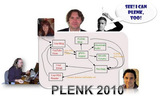
Click here to watch the animation videoHOW DID YOU DO THAT?I used xtranormal to create the animation (above) by simply writing the dialogue script (text only! Seriously!). The whole production process (thinking and writing the script) took me around 30 minutes only. Now, that is what we want from awesome learning tools; Minimal effort, amazing output! Though, xtranormal has a commercial version (besides the free features) with even more sizzling juice, and that _____ me off :(PLENK 2010?PLENK stands for Personal Learning Environments and Knowledge Networks. This Massive Open Online (thinking) Course is facilitated by Stephen Downes, George Siemens, Dave Cormier and Rita Kop. More than 1500 persons have already registered. The course will last until 21st November, so you can still join and experience inspiring and useful information overload on rocks!Click here to know more about PLENK 2010 and register.My PLENK mashup on PLENK 2010 home page. WOW!MY PLENK 2010 REFLECTIONS?Over the next nine (9) weeks this post will be continuously littered with my reflections as I learn week-by-week (One mega post, instead of 9-10 small ones! Between 4000-6000 words for sure!), but for now I am too busy engrossed learning and making noise beyond this blog.But, before scanning my reflections, here are the most juicy collaborative reflections of PLENK2010. Yes, you can find that in the weekly webinars, which include the facilitators (Stephen, George, Dave & Rita), invited speakers, and active participants (recorded webinars): Introductory Session - How this Course Works (10 September 2010)Researchers' SIG Meeting (10 September 2010)Week 1 Wednesday Discussion (15 September 2010)Week 1: Friday Discussion (17 September 2010)Week 2: Martin Weller (22 September 2010)Week 2: Facilitator Discussion (24 September 2010)Week 3: Janet Clarey (29 September 2010)Week 3: Facilitator Discussion (1 October 2010)Week 4: George Siemens - Complex Knowledge & PLE/Ns (6 October 2010)Week 4: Facilitator Discussion (8 October 2010)Week 5: Helene Fournier (13 October 2010) Week 5: Facilitator Session (15 October 2010)Week 6: Will Richardson (20 October 2010)Week 6: Facilitator Session (22 October 2010)Week 7: Maria Andersen (27 October 2010)Week 7: Facilitator Session (29 October 2010)Week 8: Facilitator Session (3 November 2010)Week 8: Harold Jarche (5 November 2010)Week 9: Wendy Drexler (10 November 2010)Week 10: Facilitator Discussion (12 November 2010)Week 10: Seb Fiedler (17 November 2010)Week 10: Moderater Session (19 November 2010)Actually, due to time differences and sleepiness I have missed all the live sessions, but the great thing about webinars (or using tools like Elluminate) is that they can be recorded easily and archived for later viewing. So, in that sense I have managed to watch and reflect most of these recorded sessions, and they have certainly enriched my ideas and opinions about learning and moving forward. Seriously interesting, so don't skip the recorded webinars above! WEEK 1: A TOUR OF PLEs & PLNs The first week of PLENK 2010 was an explosive and inspiring discussion flow of ideas and thoughts from the participants (and facilitators); exploring what is a Personal Learning Network (PLN), or should I say Personal Learning Environment (PLE). Here is the reading materials shared to 'trigger' off this explosive discussion (#plenk2010, Daily [Sep 12-18], Paper.li Daily and Blog feeds list):EDUCAUSE: 7 Things you should know about PLE's (.pdf) Learning Networks in Practice (.pdf) Personal Learning Environments: Challenging the dominant design of educational systems (.pdf) Developing Personal Learning Networks for Open and Social Learning (.pdf) Scott Leslie's Mother of All PLE Diagram CompilationsThe Design and Development of a Personal Learning EnvironmentFive points about PLEs and PLNs - Dave Cormier (Blog post)Stephen Downes: Personal Learning Environments (Video)However, as the discussion raged on, it turned out initially to be a battle for whether PLN or PLE is the appropriate term to describe our self-assembled/constructed learning environment/network using a variety of learning tools. Of course from a semantic, theoretical, or academic point-of-view such discussions are extremely exciting, but many (based on my understanding) seemed to be more interested in exploring the 'HOW' rather the 'WHAT' and 'WHY', which we will eventually do later in this course (I think), based on the course outline.As from a learning point-of-view exploring what a PLN or PLE is, and the potential differences helps (hopefully) the learning group come to some sort of agreement or understanding (reference point) of what we are actually talking about, as we progress in the course. Also, it was great to explore how participants articulated their own original and personal ideas and thoughts of what a PLE/N is to them.As the discussion raged on, I discovered that PLN originated from USA, and PLE originated from Europe (somewhere!), and that PLN indicated 'Active', while PLE on the other hand indicated a more 'Passive' role, and therefore PLN is perhaps a more appropriate term to use (Nice with brains and perception!). Also, PLN emphasizes more on our online (or offline) network of people, while PLE is more focused on the usage of learning tools. Soon, some argued that the terms PLN or PLE (and lifeless visual snapshot diagrams) were not appropriate, and that perhaps 'Lifestream' with real-time flowing diagrams was more appropriate (Whatever!).As the discussion raged on, obviously someone would argue that 'P' or Personal did not make sense for our mostly shared Learning Networks/Environments. Usually, we like to keep our Personal stuff (e.g. life) private and perhaps only share a bit (on Oprah!). But then it was argued that we needed to understand the difference between 'Personal' Learning E/N from 'Personal Learning' E/N, and as Socratic intellectuals that makes totally sense! In short, maybe we should just ditch the 'P' totally, as some people actually pronounce 'P' with a 'B' (my 5-year old son for starters!).So, if no 'P', why not use 'S' standing for Self (or perhaps Social). So, instead of PLE or PLN, let's explore instead SLN or SELF LEARNING NETWORK :Alright, my first diagram of SLN is too abstract, meaningless, and macro to make sense for beginners, but I will work and re-visualize it throughout PLENK 2010, and hopefully it will bloom beyond Bloom's taxonomy (No harm in being a bit ambitious!).Finally, the real challenge for me (and probably for many others) was to access or build the mother of all learning streams, which includes every single learning contribution from all the participants (Forum discussions, blog posts, Twitter, and whatever!). Of course that would be information overload on rocks, but I kind of like that option. Of course, the Stephen Downes Daily updates are awesome, but you have to wait 24-hours for filtered juice. The Paper.li Daily is more attractive than Daily, but until Moodle Forum posts are included in the #PLENK2010 Twitter hashtag, it simply excludes too much.In short, is it possible that all Moodle forum post links are shared through the #PLENK2010 hashtag? The only option I can think of now, is to use my Google Reader to subscribe to #plenk2010, Daily, Blog feeds list, and Moodle forums (RSS) to create my own mother of all learning streams, and enjoy the full stream.Any better solutions?WEEK 2: CONTRASTING PERSONAL LEARNING WITH INSTITUTIONAL LEARNINGReading materials for week 2: PLE's versus LMS: Are PLEs Ready for Prime Time? (Terry Anderson)Open complementing closed - PLE and LMS - why, what for and how? (Panel Discussion)The networked student model for construction of personal learning environments: Balancing teacher control and student autonomy (Wendy Drexler)PLE vs. LMS - disaggregate power, not people (Dave Cormier)Learning or Management Systems? (George Siemens) "Towards an eLearning 2.0 provisioning strategy for universities" (Oskar Casquero et al)The Centralization Dilemma (Martin Weller. free copy is available by following the link toward the end of the post).Web2.0, Personal Learning Environments and the Future of Learning Management Systems (Niall Sclater) I have actually discussed earlier in my blog, why LMS is playing an increasingly less important role in our PLE (without actually using the PLE term):Moodle is an Airport, Not a Total Solution!Join the #moodlewish Twitter Stream! Here is a photographic best answer to contrast LMS with PLE (or Constructivism and Connectivism), inspired by George and Stephen (plagiarism or copyleft?):I am already one week behind (the class geniuses), so I will leave my reflections for week 3, and then perhaps return to week 2 if 'learning time' permits :(I nearly dropped off my seat in surprise and laughter while watching the recorded week 3 webinar with Janet Clarey, as she was not sure what the marshmallow man is doing on the diagram (above)...I thought it was pretty obvious... I am still learning :)WEEK 3: UNDERSTANDING THE NEXT/EXTENDED WEBReading materials for week 3: PLEs and the Extended Web (Rita Kop) Web 3.0: the way forward? (Steve Wheeler) The xWeb (George Siemens) The Next Web (Tim Berners Lee - TED Talk) Whatever! It will always be the 'Next Web' or 'Extended Web'. Web 3.0? Alright, now that gives us some number, so we can perhaps relate to. Semantic Web? Yes, that sounds even more specific and contextualized. Anyway, all these terms kind of mean different things to different experts and ordinary people (like myself). Also, I have never really engrossed myself in defining where a specific tool belongs; whether it is web 1.0 or web 2.0, or web 4.5...who cares!What really matters, is what a particular learning tool can do for us (efficiently, effectively, in an user-friendly manner), or perhaps what we can do for it. For example, only a clown would today train Professors to use 'Dreamweaver' to develop a course website, and then recommend subscribing to a hosting company, so that the website can be uploaded. Or teach Flash MX to develop animations and games. Or even use Photoshop to mashup or create images (PowerPoint 2010 rocks!). Today, we are blessed with an amazing and growing toolkit (or PLE) of possibilities to learn, share and interact with practically anyone in the world (Who has access to the Internet).It is fine to define what level the Internet and learning tools have evolved to, but what really matters is how we use the Internet and learning tools to establish our own PLE, and how we engage and inspire students to create their own little PLEs, so that that they can evolve into independent self-learners for life.WEEK 4: PLE/PLN AND LEARNING THEORIESReading materials for week 4: Cluster and Focus, Surviving week 4 of a MOOC (dave cormier) Review of Elearning Theories, Frameworks, and Models .pdf Learning Theories Learning Theories and Models Theory into Practice: Theory Listing Comparing Connectivism with Other Learning Theories SourceAre learning theories important to know? Good to know, but not necessary to know to become an excellent learner or teacher. If you explore learning theories, you might notice also that learning theories often seem to reflect THE FLAVOR TECHNOLOGY/IES OF THE DAY. And Connectivisim is not an exception, as it seems to be influenced by the emergence of the Internet (connections), social media (networks), and brain science (neural connections). Whether these new technologies and understandings (of the brain) have influenced George Siemens and Stephen Downes thinking consciously or not, I have no clue, but the more I read about their evolving learning theory the more I see connections, or influences they have on their thinking. However, there is nothing wrong with that, it is just an observation (which might be wrong).But does any learning theory conceptualized until today actually describe how we learn? I doubt it! Meaning, Connectivism is the flavor of the day today, but in a few years time another delicious learning theory will pop-up and everyone will get excited again. Although, learning theories don't exactly describe how we learn, they are still important as they guide our thinking about how we learn. As such, I believe all the major learning theories (Behaviourism, Cognitivism, Constructivism & Connectivism) have a place in understanding how we learn, and they may be relevant in their own way as they explore learning knowledge, skills, attitudes and wisdom.In short, NO learning theory conceptualized until today actually describes how we learn, but they are all important to know as they explore how we learn from different angles. We could discuss, 'which learning theory is the most appropriate for our time (perhaps Connectivism), but I find that a waste of time. Why? Because (in my opinion), no learning theory until today really describes how we learn, so instead we should appreciate the nuggets of wisdom in all of them, and use these nuggets of wisdom to facilitate sizzling learning experiences.So, how do we really learn? The process of learning is too complex, dynamic, unique, contextual and amazing to really understand using words and diagrams to explain. Looking forward to the next learning theory! Excited already!WEEK 5: EVALUATING LEARNING IN PLE/NSReading materials for week 5: What can't be measured? (short article, but raises questions about how to measure things such as raising children, love, etc.) Exploring and Defining Influence Evaluating E-learning: A Guide to the Evaluation of E-learning. Graham Attwell (ed.) Online learning and the evaluation of group processes. D. N. Philip, Institute for Knowledge Innovation and Technology OISE/UT, Canada Effective Assessment in a Digital Age. Ros Smith, JISC Connecting Assessment. Clarence Fisher PLE Conference Papers (.pdf): Researching the design and development of a Personal Learning Environment Managing personal learning environments: the voice of the students Personal learning environments: concept or technology? Have you ever heard anyone excited about using and learning through a Learning Management System (LMS). Perhaps initially, but most people kind of get turned off after a few experiences. Why? I am sure there are many reasons for that, but it could be the way it operates, influences, monitors, user-interface design and the way it structures (or controls) learning (objects), which often resembles the factory model (input-process-output), or perhaps like a book. For reading that is fine, but for interacting and collaborative learning? Not so sure!What I am trying badly to say, is that the way systems are designed and used do effect our learning, especially our motivation to learn. For example, I am passionate about writing this blog post (which is open to everyone!), but would I be passionate about posting my reflections in a closed forum (in a LMS), which is only accessible to my teacher and students. Or even worse, I write an assignment using Word, and then it is submitted online to the LMS for only my teacher to review and grade. Worse yet, the teacher is too lazy to provide feedback, except a grade (number or alphabet!). Now that is terrible, but sadly happens often in our Universities around the world.Today, we have so many awesome learning tools to use, and getting stuck in one all conquering (LMS) is not the way to go. LMS today are more like airports, whereby we meet up before using the most appropriate learning tool(s) to collaborate and sizzle learning.In short, we need to find those learning tools that suit us best for learning, and integrate them into our PLE and PLN. Learning is actually really fun, just need to find the right rhythm and tools!WEEK 6: USING PLES SUCCESSFULLY - SKILLS, MINDSETS, AND CRITICAL LITERACIESReading materials for week 6: New Media Literacy in Education (Robin Good, Howard Rheingold) Critical Thinking Resources Some factors to consider when designing semi-autonomous learning environments Speaking in LOL Cats: What literacy means in the digital era WEEK 7: PLE/NS TOOLS - WHAT EXISTS, WHAT IS BEING BUILT?Reading materials for week 7:Handbook of Emerging Technologies for Learning -Tools (.pdf version is available) Weaving a Personal Web: Using online technologies to create customized, connected, and dynamic learning environments, McElvaney? & Berge Patterns of personal learning environments, WilsonPLEF: A conceptual Framework for Mashup Personal Learning Environments, Chatti,Jarke & SpechtHistory of Personal Learning Environments - Wikipedia WEEK 8: PLE/NS AND PERSONAL KNOWLEDGE MANAGEMENTReading materials for week 8: http://en.wikipedia.org/wiki/Personal_knowledge_management A weblog case of personal knowledge management (.pdf) Personal Knowledge Management and Wisdom Information Overload and PKMSlideshare presentation - Personal Knowledge Management (Harold Jarche) PKM PLENKView more presentations from Harold Jarche.Oops, I forgot George Siemens! Now, it makes more sense:Great, Harold Jarche has also discovered ZaidLearn's intergalactic gaga PLENK 2010 adventure! Amen :)WEEK 9: PLE/NS IN THE CLASSROOM (PLE/NS AND BLENDED LEARNING)Reading materials for week 9:7th grader's PLEDrexler, W. (2010) The Networked Student Model for construction of personal learning environments: Balancing teacher control and student autonomy, Australasian Journal of Educational Technology, 26(3)http://www.ascilite.org.au/ajet/ajet26/drexler.htmlWEEK 10: CRITICAL PERSPECTIVES ON PLE/PLN COMING IN A DISTANT FUTURE! Reading materials for week 10:Personal learning environments: concept or technology? (Sebastian Fiedler & Terje Väljataga)What is a PLN? Or, PLE vs. PLN? (Dr. Alec Couros) PLE’s getting fleshed out (conceptually) and COI Model (Terry Anderson)Web 2.0, Personal Learning Environments, and the Future of Learning Management Systems (Niall Sclater) My PLE model is the internet - no more system for me (Dave Cormier)PLE Nominalism?… (George Siemens)Slideshare presentation - The Representative Student (Stephen Downes)The Representative StudentView more presentations from Stephen Downes.Still thinking :)
Zaid Ali Alsagoff
.
Blog
.
<span class='date ' tip=''><i class='icon-time'></i> Jul 14, 2015 02:54pm</span>
|
|
"Whereas people might spend a long time composing a comment to a blog post or engage in lengthy, in - depth conversation on a discussion board, Twitter invites more in - the - moment interactions. It provides an easy way to maintain connections, share thoughts, or ask for advice." - Jane BozarthBLOG BOOK TOURWhile I was on holiday with my family in Sabah, I got a wonderful surprise tweet message (above) from a famous author called Jane Bozarth. Interestingly, I was picture-tweeting my holiday during that period using TwitPic (on my IPhone). So, perhaps my interesting family or baby photos sparked her to invite me to be part of the blog book tour for her new book entitled 'Social Media for Trainers'. Or perhaps it was Karl Kapp who recommended me, as I was also part of his Blog Book Tour earlier this year with this post: Learning in 3D! Why? How?Whatever sparked her to invite me; I surely didn't need any spark to accept the invitation :)SOCIAL MEDIA FOR TRAINERSIf you already don't know, Jane Bozarth is the author of several relevant and useful e-Learning related books. I have previously explored E-Learning Solutions on a Shoestring and Better than Bullet Points, and you can actually find them in our University library (IMU), too. In short, I was already familiar with her great work before exploring her latest master piece.Her latest book, 'Social Media for Trainers' basically explores in depth the essential social media tools to facilitate sizzling (online) learning environments and experiences, using learning tools such as Twitter, blogs, wikis, Facebook, YouTube, Google Docs, SlideShare, Flickr, etc.What makes her latest book so special (to me) is that it uses a non-jargonized conversational language style, meaning even my mum could understand and enjoy it. The book is not obsessed with showing us where to click, but instead explores how we can use these learning (or social media) tools to enhance and transform our personal and social learning environments. Not only do you get the 'WHY' and 'WHY NOT', you also get tons of excellent stories and tips on how to get started and sizzle your way to sizzling e-learning. Although, the book uses the word 'Trainers' in its title, this book is also a perfect read for anyone involved in education (Period!).To find out more about Jane Bozarth's latest book, visit the Social Media for Trainers Facebook page and/or follow Twitter on @SoMe4Trainers.Having said that, social media has its dark sides, too. But, like most things on planet earth; we can use it to transform, or destroy life. It is really up to us to make that choice (unless we are 'Under 13'). Right?For this post, I am only going to focus on Twitter (Chapter 2), and explore how we can use it to transform our classroom or face-to-face learning. Sometimes you need to infuse learning tools into the classroom for stubborn educators to really see the variety of amazing possibilities such tools could bring to our learning and thinking.Are you ready?TWITTERActually, I should first thank Patricia Donaghy for inspiring me to take up Twitter as a learning tool. THANK YOU! Although, she didn't introduce me to Twitter, she did provide the initial spark needed for me to take this learning tool seriously. I mean seriously, who cares reading tweets where persons are pondering upon whether they should go to the toilet or not, or reading millions of tweets cursing Tiger Woods. Why should I bother reading what people are thinking now, such as reading Paris Hilton's struggle to patent 'That's hot!' It is ridiculous, and for sure a waste of time.TRUE, using Twitter could be a waste of time, but it could also be used to connect and interact with educators and learners from all over the world. Imagine filtering 90 million daily tweets from 145+ million registered users down to who is talking about 'e-learning', or your specific research area. What a wonderful learning stream that would be. And did you know that 25% of the 90 million daily tweets contain links. Meaning people are not only talking crap, but also sharing juicy links, including articles and papers that sometimes even Google can't spot for you.If you are interested to know dozens or even hundreds of ways to use Twitter to learn, teach and interact, these 55 great twitter articles should be a good starting point (I mean starting points!). Besides that, you might want explore my first three (3) journeys to explore Twitter for learning. Here we go:Using Twitter to Amplify Connective Learning and Sharing at ICEL 2010Join the #moodlewish Twitter Stream!iTunes U Services For ALL! Join the #itunesuwish... (Failed project, but fun!)Fine, but how can we use Twitter to spice up classroom learning?Let's focus on that now...TWITTER FOR LEARNING First, you need to make sure that all your students are using, or have a Twitter account. Most students should have little difficulty (especially X, Y and Z generations) with signing up for Twitter by themselves. To avoid any hassles, I would recommend that you specify in your course plan/guide that you will be using Twitter as one of the learning tools for the course.As Twitter is a perfect communication tool for mobile devices (e.g. IPhones, Blackberries, Androids, IPads, smart phones, and notebooks), you only need to ensure a decent Wi-Fi enabled environment, and most, if not all students can participate during a face-to-face learning session. If not, let's imagine and be a bit futuristic, because in 2-3 years time, I believe most students will have some form of Wi-Fi enabled mobile device (Well, at least at Universities in Malaysia). No rocket science required to come that prediction.Secondly, you need to establish a unique hashtag (#) for your course, which will make it easier for your students (and you) to follow and participate in the course conversation. If it becomes really active, it will evolve into one enriching and inspiring learning stream (e.g. #plenk2010). However, some students might prefer getting daily updates in the form of a sizzling self-organized online newspaper. paper.li could do that without you basically doing anything, except for signing up and feeding it your hashtag (e.g. PLENK2010). Awesome!To promote the usage of Twitter and your unique course hashtag (e.g. #plenk2010), you might also want to create a video tutorial (e.g. using Screenr). Here is an example, where I promoted the usage of Twitter during the ICEL 2010 conference using the '#icel5' hashtag:Besides starting and facilitating a Twitter learning stream, you will probably want to capture and archive the evolving learning conversation, which could sadly get lost over time (Done that, been there!). For that, you could for example use Twapper Keeper.If you are too busy or quite IT illiterate, and still want to use Twitter for your course, ask someone from your University/College's e-learning (or educational technology) team to conduct a Twitter session with the students. If they are not capable of that (or lazy), they should (all) be fired on the spot! Learning has evolved since the Courseware development era!!!!Here are a few tips on facilitating the use of Twitter for classroom learning:BEFORE CLASSBefore every Face-to-face learning session you might want to encourage students to ask questions regarding the upcoming topic/module/lesson, or perhaps what kind of expectations they have, or even what they really want to learn, and suggest things to discuss. By doing so, you might get a clearer view of what really matters to students, and as a result your learning session might evolve into a sizzling learning experience. If students prefer sharing and discussing in private, you could use GroupTweet instead of a hashtag (which can be viewed by public). GroupTweet helps groups communicate privately via Twitter.DURING CLASSTwitter is an excellent venue for students to ask the lecturer questions during the learning session, especially if you are in a large lecture hall (200+ students), and the student is a bit shy. To keep track of the flow of questions visually (for everyone to see), you could use Monitter or Hootcourse (or even TweetDeck), which will update as soon as the tweet (question) has been posted.Hootcourse's Classroom Mode feature allows course tweets to show up in real-time on a projected screen.Besides using Twitter for questions, you could even conduct polls (use Twtpoll, Poll Everywhere, or SAP Web 2.0) during the class, and the results can even be displayed live in your PowerPoint presentation (or the web. Yes, even in Keynote, too!). Lecturer's love to ask students, "Do you understand? Is it clear?", and everyone says 'Yes' loudly (or silently with a nod). And the lecturer feels comforted with his masterful lecture. Sadly, the truth might indicate otherwise, and by using a poll, we could more easily gauge whether students understand or not, with some real stats to refer to. We could basically test them directly in class on something, and then if for example the majority is clueless of the right answer, we could revisit that component, and explore simpler ways to explain and inspire them to learn it. Now that is cool for learning!AFTER CLASSWe could ask them to tweet questions after class regarding what they have learned, or related things they would like to be clarified. Also, we should encourage students to answer other students questions, and by providing some incentive for the most active students (e.g. bonus marks, praise, or perhaps a Mars bar), should not be so hard to do. Also, you might want to ask students to provide short comments on how the learning session was, and how it can be improved further. If your ego is receptive to constructive (and destructive) feedback, you are going to win the next 'Best Lecturer Award', trust me! Anyway, we lecturers are noble people, and the reward of experiencing students' learn, or getting those 'AHA' moments are awesome rewards in themselves that even money can't buy (Well, it depends!).These are just a few possibilities for using Twitter to enhance your face-to-face learning sessions, and of course sizzle it beyond the classroom. I hope you realize by now why Twitter is the number one ranked learning tool among learning professionals around the world (Facebook is number 10!).Besides the Twitter apps mentioned above, click here for a comprehensive list of other learning possibilities.THINKING BEYONDHowever, Twitter alone is not going to transform the students' learning experience. If you ask me, we should also encourage students to continuously reflect (deep thinking) their learning in their own personal blog(s) (using Blogger or Wordpress).They should work on course projects using wikis (or collaborative learning tools), such as Google Docs, Google Sites, Wikispaces or Wetpaint. They could use Facebook to set-up and establish learning/interest groups, and promote causes they strongly believe in.All students (and lecturers' of course!) should know, or learn how to use RSS readers (e.g. Google Reader) to enable them to efficiently access relevant information (updates come to you, instead of you needing to visit the actual sites) about what is going on in the world, especially in their learning domains.Besides these essential learning tools, there are many more possibilities to interact with and filter our learning world to be more efficient, effective, interactive and inspiring.Let's explore how we can use Social Media to transform the way we connect, learn, interact, share and facilitate. Today, we have amazing learning possibilities, we just need to (I would say 'MUST') find time to explore them :)
Zaid Ali Alsagoff
.
Blog
.
<span class='date ' tip=''><i class='icon-time'></i> Jul 14, 2015 02:54pm</span>
|