Blogs
|
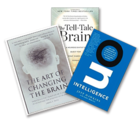
Three books that provide a fascinating look at the the brain and neuroscience.Post from: The eLearning CoachThree Brainy Books Reviewed
Connie Malamed
.
Blog
.
<span class='date ' tip=''><i class='icon-time'></i> Jul 15, 2015 06:12am</span>
|
|
You can design and create information graphics to improve learning experiences. Listen in.Post from: The eLearning CoachELC 010: How To Design Real (Not Fake) Information Graphics
Connie Malamed
.
Blog
.
<span class='date ' tip=''><i class='icon-time'></i> Jul 15, 2015 06:11am</span>
|
|
I’m guessing that I’m probably the first person to connect these two terms in a single blog post (but hey I may be wrong). I’m not doing it for effect, aware as I am of the concept that sex sells. I’m doing it because I’ve just finished reading ‘The Essential Difference‘ by Simon Baron-Cohen which describes the two fundamentally different ways in which male and female brains operate. Simon Baron-Cohen is a Professor at Cambridge University in the fields of psychology and psychiatry. His book is based on based on years of research and specifically research into Autism, and as one of the quotes says:
This no Mars/Venus whimsy, but the conclusion from twenty years of experiment.
The tenet of the book is that men have brains that are wired for systemizing while women have brains that are wired for empathising.
Empathizing is the drive to identify another persons emotions and thoughts, and to respond to them with an appropriate emotion. Empathizing occurs when we feel an appropriate emotional reaction, an emotion triggered by the other person’s emotion, and is done in order to understand another person, to predict their behaviour, and to connect and resonate with them emotionally.
Systemizing is the drive to analyse, explore and construct a system. The systemizer intuitively figures out how things work, or extracts the underlying rules that govern the behaviour of a system. This is done in order to understand and predict the system, or to invent a new one.
To illustrate this imagine you are in a bookshop in the business section and are looking for a book on starting up a new business. Which of these two titles would you choose?
‘Start-up on a Shoestring’
Learn how to get your idea off the ground by hearing the stories of 10 successful entrepreneurs. See what worked for them and learn from their (frequent) mistakes.
‘The Superfast Start-up Model’
Avoid the classic mistakes and take your start-up from creation to sale in just three years using our tried and tested system.
Prefer option A; then you are an empathiser. Prefer Option B; then you are a systemizer. If you chose the wrong one for your sex then don’t worry. Men can be good empathisers and women can be good systemizers too!
I think it’s clear that men and women do think differently in some fundamental ways. 200,000 years of evolution hints at why this is the case and relatively recent cultural advances can’t change that behaviour easily. Of course the differences aren’t black and white but an infinite variety of shades of grey. Simon Baron-Cohen is clear about the fact that not all men tend towards systemization or that all women tend toward empathy - it’s just that in general men are more tuned to systems (things) while women are more tuned to empathy (people). In practice we probably all lie along a continuum and the distribution along that continuum follows a normal curve.
So if men and women’s brains are wired slightly different how might this shape how they learn?
In developing hundreds of e-learning programmes no client has ever asked me to design differently for a male or female audience. If we go along with the empathiser/systemizer concept, and the idea that there is an essential difference how might this affect our learning design?
Learning for Systemizers
The focus would be on underlying patterns and abstract concepts. Systemizers love models, graphics, charts and mind maps. They want to see the big picture and how each piece fits into the overall whole. For a systemizer learning is about solving the puzzle and putting all the component pieces in their appropriate places.
Learning for Empathisers
The focus is on outcomes and emotions. Stories and case studies are key to relate the learning to the real world. Empathizers prefer scenarios and dialogue type interactions. They like to identify with others and see the situation from their perspective.
In practice our audience is likely to have elements of both depending upon where they lie on the continuum so we probably need to balance the two types of learning activities to engage as wide an audience as possible. This is largely how we cater for different learning styles in e-learning.
Since I’ve finished the book I’ve enjoyed applying an essential difference lens to various aspects of everyday life. From interacting with the satnav to catching up on the news or simply giving advice to your partner it’s amazing how we oscillate between systems and empathy in the course of our everyday lives.
I’m wired as a systemizer - I instinctively knew that as I read the book but afterwards I took the SQ and EQ tests and came out with the following results:
Systemizing Quotient - 52 (way above average for a man, very high ability for analysing and exploring a system)
Empathy Quotient - 40 (about average for a man)
I came out as a strong systemizer but over the years I’ve recognised the value of empathy and have learned to be more people-centric in my work. It takes a bit of practice to re-wire our evolutionary brains but the result is a much more rounded view of the world.
More stuff here:
Guardian Article on ‘The Essential Difference‘
Take the Systemizer Test (SQ)
Take the Empathy Test (EQ)
Simon Baron-Cohen’s ‘The Essential Difference’ book on Amazon
The post E-learning and Sex appeared first on Designed For Learning.
John Curran
.
Blog
.
<span class='date ' tip=''><i class='icon-time'></i> Jul 15, 2015 06:11am</span>
|
|
Ten sets of ten freebies for you: graphics, audio, media tools, etc.Post from: The eLearning Coach100 Hand-picked Freebies for eLearning Designers
Connie Malamed
.
Blog
.
<span class='date ' tip=''><i class='icon-time'></i> Jul 15, 2015 06:10am</span>
|
|
Video is becoming increasingly popular in e-learning. It’s an engaging medium and one that everyone is familiar with considering we spend so much time in front of our TVs and our multimedia devices. Video is also mobile device friendly - videos will run on pretty much all devices and are particularly suited to smartphones with a reasonable size screen. But can you actually learn from watching a video or a documentary on TV? (For more on this : Can you learn from watching a video? ). This video from the Open University teaches us about how the economy works (or doesn’t); pretty topical I think. It also uses humour - something which is sadly lacking from most e-learning programmes (but don’t blame me - clients almost always remove any that I try to sneak in).
The post Video of the Week: The OU on Economics appeared first on Designed For Learning.
John Curran
.
Blog
.
<span class='date ' tip=''><i class='icon-time'></i> Jul 15, 2015 06:10am</span>
|
|
Common issues eLearning designers and developers face and how to overcome them.Post from: The eLearning CoachELC 011: eLearning Design Challenges And Solutions
Connie Malamed
.
Blog
.
<span class='date ' tip=''><i class='icon-time'></i> Jul 15, 2015 06:09am</span>
|
|
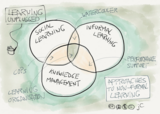
This post follows on from the post on ‘Social Learning and Knowledge Management‘ which compared both approaches on the assumption that they are attempting to achieve the same outcome - people in organisations sharing their knowledge, and learning from each other in order to improve performance.
In the L&D world social learning has become a bit of a fashionable fad. It’s not hard to see why. With increasing pressure to do more for less, and with the improved adoption of learning technologies the conventional formal classroom approach to learning feels a little outdated and is very much top down rather than bottom up. Social and informal learning based on the 70:20:10 idea and utilising some cool social media technologies seems like a no brainer for our 21st century digitally connected workforce. But though it appears pretty straightforward, getting learners to learn informally from each other (and let’s face it they are probably doing that already) opens up a Pandoras box of challenges for the organisation in general and for L&D in particular.
Knowledge management (KM) people often talked about knowledge management being an oxymoron. Knowledge was by its very nature difficult to tie down - explicit knowledge was tricky to codify and tacit knowledge was even more elusive. It’s true that managing an organisations knowledge was a big ask but in my view KM failed for more pragmatic reasons and those reasons are key for us to be aware of if we are going to have a chance of making social learning work. Here are nine things we need to address if we are going to have any chance of making social learning work.
1. KM was time consuming
KM required time and sometimes substantial effort on the part of those people who owned the really useful knowledge. KM was time away from the ‘real work’ and KM activities always looked bad on your time sheet.
2. KM suffered from a poor reward and recognition framework
In the early days there was substantial support and encouragement to invest time and to share stuff but once people realised that sharing wasn’t good for them personally all that altruism slowly drained away.
3. Many more people took rather than gave
In practice KM involved knowledgeable people (usually the experts) sharing stuff with less knowledgeable people. Most people realised it was easier to take rather than give. A few underwent the pain while the mass got the gain but this imbalance was unsustainable and the experts soon stopped sharing.
4. KM was technology driven
KM was hijacked by ‘big IT’ and the vendors sold a misguided vision of a knowledge sharing utopia. You can imagine how it goes: ‘Buy our system and KM will be sorted in your organisation.’ Of course they were wrong. KM needed much more than a re-packaged document management system to succeed.
5. KM was encouraged and facilitated by a dedicated team
Most organisations employed people to support and encourage knowledge sharing (I was one of them). The idea was that these people would act as the catalyst for others to participate and that KM would then grow organically. However once KM lost its initial shine and failed to deliver on its early promises the KM teams were quietly axed. The reason often given was that ‘KM was now embedded in the business’.
6. KM wasn’t embedded in the business
In practice KM was never really embedded in the business and the KM team was seen as a sort of annoyance that could be dropped when appropriate (not unlike the position that L&D finds itself today).
7. The technology wasn’t up to the job
In 2000 we didn’t have social media. We hardly had a satisfactorily functioning internet. KM systems were primarily about information and document storage, and search. In an effort to connect knowledgeable people within large organisations they also included people profiles and discussion forums which were used by communities of practice (COPs) and communities of interest (COIs). The idea was that if you couldn’t find the answer in the knowledge base you could contact someone who could help, or ask a question in an appropriate community forum.
8. KM focused on explicit not tacit
Paradoxically KM focussed on the explicit (the know what) where there was least value, rather than the tacit (the know how and why) where the value was much greater. Explicit knowledge can of course be valuable - especially to novices - but the really valuable insightful stuff tends to stay locked up in expert’s heads.
9. Sometimes the knowledge within the organisation is not enough
Sometimes you need fresh thinking. Connecting your experts may simply result in more of the same or similar solutions. Sharing beyond the silos and boundaries of the organisation can be so much more valuable that sharing within.
In the third and final post, ‘How social learning can work‘, I’ll explore some of the ways we can address these challenges and get social learning working for us.
The post Why social learning won’t work appeared first on Designed For Learning.
John Curran
.
Blog
.
<span class='date ' tip=''><i class='icon-time'></i> Jul 15, 2015 06:09am</span>
|
|
Try this idea for your next eLearning design.Post from: The eLearning CoachCreate A Metro Style Design For eLearning
Connie Malamed
.
Blog
.
<span class='date ' tip=''><i class='icon-time'></i> Jul 15, 2015 06:09am</span>
|
|
The new Articulate Studio Pro '13 borrows some best features from Storyline.Post from: The eLearning Coach10 New Features You’ll Love In Articulate Studio ’13
Connie Malamed
.
Blog
.
<span class='date ' tip=''><i class='icon-time'></i> Jul 15, 2015 06:09am</span>
|
|
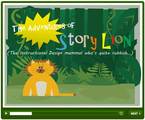
Couldn’t resist sharing the ‘Adventures of Story Lion’ series of short tutorials on Articulate Storyline by Articulate Superhero Bruce Graham. Just shows what can be achieved using a rapid e-learning tool by mixing a little imagination with some playful humour. The illustrations are by Laura (www.veryvermilion.co.uk).
Episode 1 - Using Markers in Storyline
Episode 2 - Using Lightboxes in Storyline
Episode 3 - Using States in Storyline
Episode 4 - Using Video in Storyline
Enjoy!
The post The Adventures of Story Lion appeared first on Designed For Learning.
John Curran
.
Blog
.
<span class='date ' tip=''><i class='icon-time'></i> Jul 15, 2015 06:09am</span>
|