Blogs
|
What is your name, your position, and your affiliation and what is your involvement in Brainshark?I’m Joe Gustafson, the CEO of Brainshark. I founded the company in 1999 to create a simpler, faster, cost-effective way for organizations to deliver learning and information to their employees, customers and partners. Using Brainshark, organizations can significantly accelerate learning programs and
Susan Smith Nash
.
Blog
.
<span class='date ' tip=''><i class='icon-time'></i> Jul 16, 2015 10:58am</span>
|
|
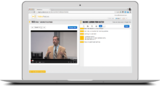
Do you have your students watch online videos in support of your classes? Are you using or thinking of using the flipped classroom model? You're going to love this!I think what I love most about Videonot.es is that it is a tool designed to improve how we learn with online video, which is truly one of the biggest needs in education today. The recent video revolution has dramatically increased the amount of online video used to support formal and informal learning but, often, it's just tough to track what we learn with videos. Even when we deliberately take notes while watching a video and include the link to the video in the notes, the desire to view that very moment in the video again at which a concept was discussed or explained is experienced. And I imagine this is even more true for second language learners, dyslexics, and other "non-traditional" learners. If you use online videos in your classes, take 4-minutes to watch the video I created below. It will show you the benefit of using Videonot.es and demonstrate how it integrates directly with Google Drive, creating a simple, cloud-based access pathway to your notes (which you can even share with others).I'd love to hear from some of you who have been using Videonot.es awhile and might have some student feedback to share. My only hiccup I experienced was an inability to get the video to pause by using the combination key command specified on the screen. This may be user error. :-/
Michelle Pacansky-Brock
.
Blog
.
<span class='date ' tip=''><i class='icon-time'></i> Jul 16, 2015 10:58am</span>
|
|
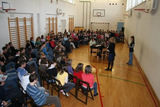
Welcome to an interview with Majda Kovačič Cimperman, who lives and works in Slovenia. She is principal of a school that offers instruction to students grades 1 through 9, and also includes a kindergarten. The school, OŠ dr Ivan Prijatelj Sodražica, was named after a distinguished scholar. In this new series, we share the experiences of successful educators as they discuss their unique
Susan Smith Nash
.
Blog
.
<span class='date ' tip=''><i class='icon-time'></i> Jul 16, 2015 10:58am</span>
|
|
This morning I had the pleasure to be streamed live via a Google+ Hangout from my home office in Rocklin, CA to Fort Worth, TX to speak with a group of 100+ faculty at the Southwestern Baptist Theological Seminary about my book, Best Practices for Teaching with Emerging Technologies. +Greg Smith , Associate VP for Academic Administration, invited me for the event and it was a great opportunity to apply Hangouts to connect with faculty and share ideas.The live feed was shared online via Google+ today and a few faculty members also engaged in a Twitter backchannel, sharing reflections during the presentation. The only "goof" was on my part (I am learning, just like you!). While recording the Hangout, the user who launches the Hangout on Air (in this case, me) is responsible for manually toggling between the attendees' (me and Greg) video images to "tell" the YouTube recording which image will appear in the large video screen. Unfortunately, I was so engrossed in our conversation that I forgot to do this. Oops. So, for most of the conversation, you'll "see" Greg and "hear" me. But you can still "see" me somewhat through the large screen projection screen in the back, which is what the faculty in the room were viewing.It was a great experiment and I enjoyed the dialogue. I'd love to do more of these!This video may be viewed on YouTube at: http://youtu.be/g8_KAdX-m9I
Michelle Pacansky-Brock
.
Blog
.
<span class='date ' tip=''><i class='icon-time'></i> Jul 16, 2015 10:58am</span>
|
|
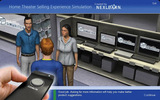
Virtual worlds, simulations, and games are used in training and education in ever-expanding applications which seek to create learning experiences. Welcome to an interview with Patrick Mileham,director of editorial development for NexLearn (http://www.nexlearn.com).What is your name, your position, and your affiliation and what is your involvement in NexLearn?Patrick MilehamDirector of Editorial
Susan Smith Nash
.
Blog
.
<span class='date ' tip=''><i class='icon-time'></i> Jul 16, 2015 10:57am</span>
|
|
Online learning for secondary education continues to evolve, and the curriculum developed is being used in innovative ways. Welcome to an interview with Cheryl Vedoe, CEO of Apex Learning, developer of curriculum and elearning solutions for secondary education.What is your name and what is your involvement in e-learning?I'm Cheryl Vedoe. I've been directly involved in the development and
Susan Smith Nash
.
Blog
.
<span class='date ' tip=''><i class='icon-time'></i> Jul 16, 2015 10:57am</span>
|
|
The video revolution is bringing about the need for sweeping changes in higher education -- from the way we teach to the way we support the needs of our diverse student population. As video creation tools become less expensive and easier to use, educators continue to realize their potential to enrich learning. The popular flipped classroom model involves the use of online video to transform passive face-to-face classroom experiences into active, critical thinking sessions. Smartphone ownership continues to rise year over year; at 56% of U.S. adults in 2013. This number is staggering when we consider the first smartphone hit the market just six years ago. And while Facebook users are accessing the social network less on desktop computers, mobile access is soaring and YouTube is seeing similar mobile growth. Each month, 1.5 billion hours of video are watched from mobile devices. The rise of mobile has created an intensified demand for swifter, smaller, more manageable video technology. We can now record them and share them straight from a smartphone. No multimedia lab is necessary any longer. And the newest video sensation? Glide -- video text messaging. Inside the walls of colleges and universities, the increasing pace of video creation and easy access to online videos that can be linked to or embedded in an online class have created accessibility concerns. To be compliant with section 508 of the Rehabilitation Act, videos must be captioned. The federal law requires that electronic content provided by all entities that receive federal funding must be accessible to all users. If you listen, you will hear that accessibility is a critical priority in higher education. Yet, as emerging solutions for captioning videos have surfaced, few have been systemically integrated. Many colleges and universities caption their content internally and others send the content out to external captioning resources. Others provide poor to severely inadequate support and can set up unspoken or spoken expectations for faculty to caption their own instructional content. In other words, the fear of lawsuits in instilled within an instructor who may clearly see the learning value that video brings to his students' experiences. Yet, when there is not support to caption those videos, what must he do? As one who has captioned many of my own videos, I can attest that manually captioning videos is incredibly time consuming task and not the most effective use of an instructor's time. I would much rather be interacting with my students or making pedagogical or content related improvements to my course. This latter approach generally collapses attempts to create innovative cultures of teaching and learning, as faculty find themselves immersed in a culture of fear -- wanting to teach with video; yet knowing they cannot find the time to caption the videos and understanding there is no support to help them. Frustration sets in. One may feel undervalued. I have spoken with faculty in workshops who have shared, "I want to use videos in my classes but I know it's illegal for me to do so unless they're captioned. And I have no support."This is a serious issue in higher education and one that we need to learn from. Talking about how to provide streamlined support for the captioning of videos seems to have become one of the unspoken issues, which Chris Argyris (1990), an organizational learning expert, indicates is a symptom of a defensive routine that surfaces when organizations find themselves amidst a significant change. The change could be anything that requires members of the organization to become aware of the latent mental models that govern their everyday routines. Looking at ourselves through a fresh lens and becoming aware of the traditions that drive our actions places us in a vulnerable state -- and this state of awareness is the first step in initiating change.That's why defensive routines are so common. They keep us comfortable. Making something non-discussable is easier than tackling a tough problem, taking it apart, understanding how and why it challenges us. Defensive routines can present themselves in different ways -- you may observe someone quickly changing the topic when the issue arises, shaking their head and nodding the issue off as if it's not accurate or important, or simply making the topic non-discussable. All of these routines create a social environment for members of an organization who begin to understand that "this is just the way it is." But, really, these issues are precisely the issues that must be addressed if change is to occur. I believe accessibility is one of the most important topics that needs to be discussed in higher education today. It is one of the most misunderstood issues and too many educators (a term I use to refer to all members of colleges and universities, not just faculty) turn away from valuable tools out of the assumption that they are "not accessible" or that they cannot find a solution to making the content accessible to all learners. There are sustainable options for captioning instructional videos. YouTubeCaptions.com is a new a partnership between YouTube and 3PlayMedia. It is an easy-to-use tool that integrates directly with a user's YouTube account. The captions are not cheap at $2.50 a minute (perhaps some leverage for undersupported faculty?). A 9-minute 23-second video of mine was quoted at $25 to caption (not sure how that breaks down to $2.50/minute?). Captions are produced in about 8 hours, according to the site. I just place my first order (the freebie noted below).The site is offering 10-minutes of FREE YouTube video captions now through 9/21/13. Enter PROMO Code 10FREE at check out.Note: YouTubeCaptions only provides captions for videos in your own YouTube account -- you cannot caption videos created by other users. Amara: Add subtitles and captions yourself, request them to be added through Amara's crowd-sourced community approach (a brilliant idea -- has anyone tried this?), or order them through their retail service.Amara is an "overlay" captioning service, which means you can add captions to online videos you did not create. Essentially, Amara produces a secondary video url for the captioned video. The video embedded at the top of this page is from Amara. CastingWords.com is an option for those who only need transcripts. Prices start as low as $1.00. CastingWords will not provide transcripts of videos "on screen." In other words, you must supply the file you want transcribed. Therefore, if your goal is to caption a video you did not create, this option isn't for you. If you are a regular YouTube user, you can use the transcripts from CastingWords and upload them into YouTube's captioning tool to convert the transcript into closed captions in a matter of minutes!I envision a dream world where faculty members are granted a gift card each year to one of the sites above and encouraged to use the credit on the card to demonstrate their commitment to teaching with video in an accessible manner. To get a new card the next year, the original card would need to be used completely the first year. I would love to learn how your institution supports the captioning of instructional videos. Or if you have feedback about any of the services listed above or other ideas to share, please share a comment.
Michelle Pacansky-Brock
.
Blog
.
<span class='date ' tip=''><i class='icon-time'></i> Jul 16, 2015 10:57am</span>
|
|
Web-based techniques for learning languages are expanding, and social networking is proving to be one of the most effective approaches. italki.com has adopted an open platform approach, and the resources have remained free. In addition, it has recently added new features which encourage language learners to receive tutoring from native speakers. The italki.com platform allows individuals to
Susan Smith Nash
.
Blog
.
<span class='date ' tip=''><i class='icon-time'></i> Jul 16, 2015 10:56am</span>
|
|
I am honored to be the keynote speaker for the 3rd Annual eMerge Blended Learning Conference at Cuyahoga Community College on March 13, 2014. The conference brings together an inclusive gathering of representatives from higher education and professional industry in Northeast Ohio. If you are in the Cleveland area, check out their site and consider joining us on March 13th! I'd love to meet you.For updates, follow the conference on Twitter at @TriCemerge.
Michelle Pacansky-Brock
.
Blog
.
<span class='date ' tip=''><i class='icon-time'></i> Jul 16, 2015 10:56am</span>
|
|
PodcastThe energy farm, containing multiple "cash crops" on the same block of land has become a reality, at least on a large scale. Chances are, you've seen the large wind turbine farms, miles long, with massive wind turbines configured to maximize electricity generation and then to deliver it into the grid at wholesale prices. They are often combined with solar panels to collect energy on days
Susan Smith Nash
.
Blog
.
<span class='date ' tip=''><i class='icon-time'></i> Jul 16, 2015 10:55am</span>
|