Blogs
|
Recently, Globe University-La Crosse veterinary technology department hosted its first CEU event in partnership with Hills Pet Food Company. What is CEU, you may ask? It is the continuing education program for veterinary workers.
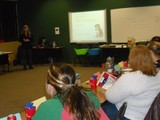
Continuing Education veterinary workers learning about canines
This event was open to any veterinary worker from veterinarians to veterinary technicians. In the course of a veterinary worker’s licensing, they have to obtain a certain number of continuing education hours per year. Our Globe-La Crosse campus offered a two-credit continuing education opportunity at no cost to attendees.
The presentation encompassed small animal nutrition (cats and dogs) and how to utilize social media in a clinic setting. The social media piece was very timely and included lessons on how to incorporate Twitter, Facebook, Instagram and blogs to advertise a veterinary clinic.
Dr. Amy Humpal-Hoscheit, Globe-La Crosse instructor, hosted the event along with the veterinary technology team of Amy Stinson, Dr. Elayne Haas, Kari Laumb and other Globe-La Crosse veterinary technology instructors.
Dr. Amy was excited to have several Globe-La Crosse veterinary technology program students attend. There were also staff, faculty and Globe-La Crosse alumni in attendance.
"The students enjoyed attending the event and got to enjoy some great knowledge," Dr. Amy said.
It was quite an honor for Globe-La Crosse to host this CEU event, and we hope to make it an annual event.
The post Globe University Hosts Veterinary Continuing Education Event appeared first on Globe University Blog.
Globe University & Minnesota School of Business
.
Blog
.
<span class='date ' tip=''><i class='icon-time'></i> Jul 16, 2015 01:28pm</span>
|
|
The NMC Horizon Report > 2014 Higher Education Edition is a collaborative effort between the NMC and the EDUCAUSE Learning Initiative (ELI). This eleventh edition describes annual findings from the NMC Horizon Project, an ongoing research project designed to identify and describe emerging technologies likely to have an impact on learning, teaching, and creative inquiry in education. Six key trends, six significant challenges, and six emerging technologies are identified across three adoption horizons over the next one to five years, giving campus leaders and practitioners a valuable guide for strategic technology planning. The format of the report is new this year, providing these leaders with more in-depth insight into how the trends and challenges are accelerating and impeding the adoption of educational technology, along with their implications for policy, leadership and practice. View the work that produced the report at www.horizon.wiki.nmc.org.
> Download the Report PDF
> Download the Preview PDF
Jason Rhode
.
Blog
.
<span class='date ' tip=''><i class='icon-time'></i> Jul 16, 2015 01:28pm</span>
|
|
Being a college student can be stressful and oftentimes hectic. Between classes, assignments, group projects, studying and internships, there’s a need to prioritize and stay organized.
Organization skills have changed throughout the years. Throw it back to your grandparents’ generation when to-do lists were either written down or kept in the noggin. In the "olden" days, there were no smartphones that come with "personal assistants" named Siri or Cortana.
Today, there are Student Services Departments and study resources to help you stay on top of your college experience, along with an endless list of organizational tech tools. So let’s take a walk down memory lane and compare how college students stay organized then and now.
Source: The Homework App
For Time Management:
Then: Weekly Planner and To-Do Lists
This is strictly pen and paper planners. Busy college students plan schedules out by writing everything down in a planner or on a notepad, which can be time consuming. A planner can be used to track assignments, appointments, classes and other activities for the day, week or entire month. There is some satisfaction in being able to physically cross off an item from a to-do list.
Now: The Homework App
We’re going paperless. With the world of technology at the palm of our hands, it’s no wonder apps are taking over the paper to-do list. The Homework App allows students to schedule tasks that are color-coded by course subject. Tasks can be prioritized by low, medium or high and the due date even has a reminder option. Students can also snap a photo on their smartphone and attach it to a task. Everything can be viewed on a daily, monthly or even a yearly calendar.
For Taking Notes:
Then: Loose-leaf Paper
It started with clay, papyrus, wood and parchment. Eventually, humans figured out how to make paper and then came loose-leaf paper. Loose leaf is preferred because of its availability, flexibility and affordability. Loose-leaf paper can be separated neatly into binders by subject and don’t have ragged edges like notebook paper. Notes can be pulled out of binders and placed next to the pages of a textbook that coincide with those notes.
Now: Speech-to-Text Notes
For students who take a lot of notes when studying, the speech-to-text or voice recognition technology is a godsend. Among the most popular speech-to-text apps is Dragon, available on both iOS and Android platforms. Students can speak right into their phones and the app will transcribe what’s being said. Dragon uses its Dragon® NaturallySpeaking® software to turn speech into text at a rate that’s up to five times faster than regular typing. It also supports a wide range of languages. Notes can be emailed or simply saved on the Notes app for iOS. However, it will likely be an inconvenience to your instructor and classmates if you want to use this note-taking tool during class.
For Waking Up on Time:
Then: Knocker-Upper, Bladder and Natural Sunlight
The early bird catches the worm. As college students, it’s important to use your hours efficiently and effectively. But getting up early is never easy. In the 1920s, before alarm clocks were readily available, there used to be knocker-uppers. Their job was to wake people up by using a stick to knock on their doors. Longer sticks would be used to tap on windows. In the days of pre-alarm clocks, there was the bladder. Some people drank a lot of before they went to bed so that their bladders were full. Although it can’t be 100 percent accurate, it got people up and out of bed to relieve themselves. And finally, the sun. Early humans relied on the brightness of the sun to wake up. As the sun rise, the day started. As the sun went down, the day would end.
Now: Wake-up Lights and Cellphone Alarm Clock
If you sleep with black-out curtains to avoid any sort of natural sunlight in the hours that you sleep, you likely have a harder time waking up. Sunrise was natural stimulation for waking up. Today, there are wake-up lights. The Philips Wake-Up light gradually turns its light on 30 minutes before your alarm. The Withings Aura Smart Sleep System is a similar idea, but combines light effects with sound. Sunset lighting relaxes you as you drift on to dreamland. When it’s time to wake up, the Aura gradually lights up with blue wavelengths that inhibit secretion of melatonin. Very scientific. You can track your sleep habits through your iPhone®. Speaking of iPhone, it’s almost shameful to see the alarm settings on smartphones these days, but we’ve all done it. Smartphones come with snooze buttons, customized sounds and the ability to have an alarm set at 6:55, 6:57, 6:59, 7:00, etc.
For Keeping Track of Important Days:
Then: Calendars
Calendars have existed for thousands and thousands of years. The oldest of the calendars is the Lunar, developed in 8,000 BCE. The Gregorian calendar was introduced in 1582. Calendars have been changed and updated many times but each time, it’s been used to organize and identify days. There are religious, civil and social holidays. There are days set for the spring equinox and winter solstice to help identify seasons. It also helps people manage their schedules for upcoming events, birthdays, family commitments, etc. For students, it’s a great way to mark down when final exams are or when the quarter ends.
Now: Google Calendar
A physical calendar almost seems primitive. That’s why today, your Google Calendar is synced with everything from your email to your phone, tablet, etc. With Google Calendar, you can type in plain language appointments, like "group meeting at 4 p.m. in library next Tuesday" and it will know how to translate and put that into your calendar. Want your own personal assistant? You can also get an automated email every day of your Daily Agenda, based on your Google Calendar. Want to keep track of your significant other’s calendar too? You can simply add their Google Calendar, with their permission, into your calendar. This way, you can schedule an event for a time that works for everyone. There’s also the flexibility of scheduling interesting events, such as the US release schedule for Xbox 360 games. For the film fanatic, movie release schedules can be imported into the calendar.
For Studying:
Source: Quizlet
Then: Flashcards
Flashcards are a standard study tool for any age and they’re easy to make. On one side of an index card, write down a question. On the other side, write an answer. Students can use flashcards to test themselves repeatedly and memorize the information. It’s a great study tool if you are visual learner.
Now: Quizlet
There’s an app for just about everything. Quizlet is a free app that allows students to compile flashcards to help study. Cards can be set to appear in a specific order or it can be randomized. It’s convenient because it’s on your phone and studying can be done on-the-go. There are pre-made flashcards so students can look up study material or create their own flashcards. Studying can also be fun with Quizlet by turning flashcards into games. According to its website, Quizlet is the #3 free education iPhone app with more than 8.3 million study sessions.
Source: Dropbox
For Data Storage:
Then: USB Flash Drives
It’s hard to believe USB flash drives are nearly a thing of the past. We can’t forget about floppy disks and CDs of course. In the same way, USB flash drives are used to store and transfer files to other computers, hence its name universal series bus. Unlike floppy disks and CDs, USB Flash Drives come in a variety of sizes with the largest holding 1TB. That’s a lot of data in such a tiny thumb drive. It also doesn’t require internet connection for uploading or downloading documents. If you’re concerned about privacy, the flash drive is the way to go. The down side? After heavy use, flash drives will inevitably fail. They don’t last forever and your files won’t either if your flash drive is the only backup.
Now: Cloud Storage
What did college students before "the cloud?" If you have decent internet, cloud storage options like Dropbox and Google Drive are incredibly convenient. It gives you the ability to share files between multiple devices without having to plug anything in. Google offers 15GB of free storage while Dropbox offers 2 GB. More storage is offered for a price. Dropbox is as simple as placing a file in a folder on your computer and seeing it pop up on your phone’s Dropbox app almost instantly. It’s also great for sharing large files with classmates. You can send them a direct link to the file rather than sending an actual file. Google Drive is a lot like a computer hard drive. Like Dropbox, you’ll have access to your files no matter where you are (with internet) on Google Drive. Because cloud storage goes through a third party online, your files are not 100 percent secure. Make sure to only save documents that you need for school or work on the cloud.
For Citing Sources:
Then: Following a template
In the days before auto-cite, students had to handwrite their bibliographies for citation. There’s a format for print books, newspapers, online articles and even Amazon Kindle books. Students used to flip through the pages of a book, look for the authors last and first name, title of the book, the city and publisher, year published, etc. Basically, it’s following either an MLA, APA or Chicago template and filling out each category.
Now: EasyBib
Forget templates. With the EasyBib app, students can cite their sources in MLA, APA and Chicago format in just seconds. Create citations by either typing the title of the book or scanning the ISBN barcode with your smartphone’s camera. Your bibliography will be automatically alphabetized. Once the list is complete, email your bibliography to yourself. Now that’s easy.
Conclusion:
In the end, it’s all about preference. Some people like to physically cross off their to-do list on a notepad. Others like to have everything organized and synced electronically through a mobile device. There’s no right or wrong way to be an organized college student as long as it helps you stay on top of your schedule, deadlines and goals.
The post Organized College Students: Then and Now appeared first on Globe University Blog.
Globe University & Minnesota School of Business
.
Blog
.
<span class='date ' tip=''><i class='icon-time'></i> Jul 16, 2015 01:27pm</span>
|
|
The national initiative, the State Authorization Reciprocity Agreement (SARA) will create interstate reciprocity in the regulation of postsecondary distance education. The four regional higher education compacts - the Midwestern Higher Education Compact, New England Board of Higher Education, Southern Regional Education Board, and Western Interstate Commission for Higher Education, will collaborate to make distance education courses more accessible to students across state lines, as well as making it easier for states to regulate and institutions to participate in interstate distance education.
During this 75 minute recorded webcast from 1/23/14, Marshall Hill, executive director of the National Council for State Authorization Reciprocity Agreements (NC-SARA); Rhonda Epper, director of WICHE SARA; and Russell Poulin, deputy director for research and analysis at WCET.
The webcast covered:
Key facts about SARA
How your state and institution can participate
The projected timeline for implementation
Resources
> Presentation Slides
> Recorded Webcast
Jason Rhode
.
Blog
.
<span class='date ' tip=''><i class='icon-time'></i> Jul 16, 2015 01:27pm</span>
|
|
Name: StudySearch
Website: www.studysearch.co
Headquarters: Lagos, Nigeria and London, UK
Vertical: Higher Education
Tech: Web App
Introduce your startup and give a short description of what you are doing.
studysearch.co connects prospective international students with on-demand 'peer' study advisors for advice and support applying to universities abroad. Our peer advisors are current students and alumni of leading universities around the world.
Prospective students tell us what countries they'd like to study in, the university, and course they want to study and what support they need. We instantly connect them with a peer advisor and service partners that can help. All in one dashboard, on any internet connected device.
Our mission is simple - to empower students with the information and tools needed to make the best decision about their future.
Who are the founders, how did you meet, what are your different roles in the startup.
Our founders are Frederik Obasi and Taofeeq Alabi, we have founded and launched start-ups in the UK and Nigeria and have experience studying and living in both the UK and Africa. Frederik is the CEO and focuses on strategy, operations and business development while Taofeeq leads on product.
How was the idea for your startup born?
StudySearch was born out of our personal experience. Whilst living in London we helped out family and friends in Nigeria with UK university applications.
After relocating to Nigeria from the UK, we found that just like friends in our network, many other young Nigerians decide to further their education abroad but we're being underserved by traditional agents and didn't have the information they needed to make the best decision.
What is the main problem in education that you aim to solve.
We believe in order to make the best decision about study options, prospective students need access to qualitative, 'real life' information. Many of the online services supporting students in making their education choices are obsessed with the quantitative information - scores, male to female ratios, international student population, acceptance rates etc.
The most under-utilised and probably the best source for information on applying to university, life as a student and even careers is a current student or alumni. We want to open up their 'insiders' knowledge to the world.
Who are your main competitors? What sets you apart from them?
Our competitors are both agents and recently launched start-ups.
Some agents work hard to support students however the problems are well documented; high fees, biased information, lack of transparency and even fraud. Other start-ups operating in the space focus on data crunching and statistics.
We believe the layer of information missing on the web in regards to education is information and knowledge from learners and students themselves. We're helping prospective students crowdsource the information and support needed to make the best decision. Our approach to solving the problem - ensures highly personal support is affordable, transparent, efficient and accurate - and works at scale.
In which markets / regions are you active. What markets / regions are next.
We are currently active in Africa - specifically Nigeria and Ghana where 90% of students using StudySearch are located.
A burgeoning middle class and fast growing population across Africa means there is an increase in the demand for quality education. Africa is amongst the fastest growing regions for globally mobile students.
We focus on prospective international students, embarking on both undergraduate and postgraduate study.
Who is your target audience.
Our current users are prospective undergrad and postgrad students located in Nigeria or across Africa. Our target peer advisor is a current international student or recent graduate with strong ties to Africa. We're working hard to ensure prospective students from Africa are matched with peer advisors that have experienced and understand their context.
On the B2B side we focus on global universities that are seriously committed to Nigeria and wider African opportunity for student enrolment. We also work with standardised test providers, immigration consultants and student accommodation providers, to ensure students can get from application to arrival seamlessly via one StudySearch dashboard.
How do you engage with your target audience. How do you convert them into users of your product.
By far, we have seen the most growth and discovery of our product come through recommendations and word of mouth. Prospective students and advisors are surprised that a service like ours exists and most importantly works in Africa! So they share with their personal network.
We also engage with prospective international students through official partnerships with local secondary schools, online we focus on location producing specific content to engage our users.
A Majority of the interest we've received from our university and service partners has been inbound, and we are working currently with 20+ universities and student service providers. We are rolling out a structured university and partner program this quarter and focusing on global universities with a real desire to operate in Nigeria and across Africa.
What is your business model. How much does your product / service cost.
We currently offer universities the flexibility of either a commission based agreement or access to our student recruitment management portal for an annual subscription fee. We also monetise through partnerships with service providers (language testing, student accommodation providers etc).
This allows us to give our product away to prospective students for absolutely free. We do, however, offer premium support for the students (and families) looking to fast track the application and preparation process. They can upgrade their account for a $200 fee.
Our advisors are able to earn monetary and non monetary rewards for the advice and support they provide.
If you raised funding, how much did you raise. Who are your investors. If not, are you planning to raise funding.
To date we raised $25k from the Savannah Fund, a leading seed stage investor in Africa, and we are currently raising a new round of funding.
Are there milestones you are especially proud of and would like to share.
Within the first month of launching our peer advisor program we received over 500 applications from current international students and recent graduates from Africa studying at universities in every continent.
We're serving customers that love our product and will see our first cohort of applicants embark on their studies abroad in September. We have built and continue to grow our start up operating primarily from a country that many in the global community, see as a dangerous and challenging region.
What are the next steps in growing your startup.
We will be aggressively growing and on-boarding the numbers of prospective students and peer advisors in our network as well as universities and student service partners.
We are recruiting talented people both locally and globally to ensure we have the right team to execute on our goals and visions.
How can people get in touch with you.
Web: www.studysearch.co
StudySearch twitter: @myStudySearch
frederik@studysearch.co
Personal twitter: @welldonefred
Edukwest
.
Blog
.
<span class='date ' tip=''><i class='icon-time'></i> Jul 16, 2015 01:27pm</span>
|
|
The faculty of Globe University-Wausau is pleased to name Megan Lissner of the medical assistant program as the Winter 2015 student of the quarter.
At Globe University-Wausau, the award recognizes hard work, attendance, attitude, professionalism and exemplification of Globe’s "We Care" philosophy. These qualities are a perfect description of Megan.
Megan Lissner, medical assistant student, is the Globe University-Wausau student of the quarter
"In the time that Megan Lissner has been on campus, she has brightened the hallways and classrooms with her smile and upbeat disposition," said Kerry Miller, medical assistant program chair.
Kerry continued, "She is friendly and social and has quickly made friends with several classmates. Despite carrying a weighted load of classes, she made time to help with the Project Breathe seminar on campus and has helped fellow students work through some technology challenges. Megan excels at whatever she puts her mind to. In addition to her academic efforts, she participates in school activities. Megan is very deserving of this distinction."
Megan is happy to be at Globe University-Wausau.
"I absolutely love our school and staff. I enjoy all of the campus activities and the little things that the staff does to make the anxieties from the hard work of classes much more manageable," Megan said. "I especially like the small class sizes since you can really get the help that you need as well as develop friendships easily. I know I’m gaining the valuable skills I need to prepare me for my career in medical assisting."
"Since last quarter, I’ve gotten to know Megan," Deborah Feldbruegge, administrative assistant, said. "She is a compassionate and caring individual. She works hard in her classes. She is a devoted mother, and between school and home, she has found the balance needed to be successful. I am truly happy she is attending Globe University."
For the entire spring quarter, Megan will enjoy a designated parking spot, complete with her name and photo on the sign.
"It is not often that a mom gets some sort of recognition for her hard work," Megan said. "I am so honored to receive this."
The post Globe Student of the Quarter: Megan Lissner, Medical Assistant appeared first on Globe University Blog.
Globe University & Minnesota School of Business
.
Blog
.
<span class='date ' tip=''><i class='icon-time'></i> Jul 16, 2015 01:27pm</span>
|
|
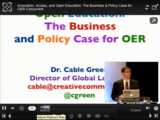
UPCEA has made freely available the recording of Cable Green’s general session presentation titled, "Innovation, Access, and Open Education: The Business & Policy Case for OER" at the recent Summit for Online Leadership and Strategy. While the slides are available here, the recording is now available here.
To view the rest of the Summit For Online Leadership and Strategy‘s program you can purchase the Online Pass.
Jason Rhode
.
Blog
.
<span class='date ' tip=''><i class='icon-time'></i> Jul 16, 2015 01:27pm</span>
|
|
Education First (EF) announced a new pilot program with the professional social network LinkedIn today. LinkedIn users who indicate English as a second language will get the offer to take a free assessment test via email. Upon completion users will receive the option to add a certification to their LinkedIn profile.
The EF Standard English Test (EFSET) was launched in fall 2014 and measures the English proficiency level based on the Common European Framework of Reference (CEFR) for Languages. The exam is free of charge.
Further Reading
EF Education First Brings Free English Certification Test to LinkedIn | PR Newswire
Links
efset.org
Edukwest
.
Blog
.
<span class='date ' tip=''><i class='icon-time'></i> Jul 16, 2015 01:27pm</span>
|
|
DeeAnna Moore, accounting student
Congratulations to the Winter 2015 quarter Community Service Scholarship winners DeeAnna Moore and Charity Zeigler. Both of these women have been committed to community service for several years.
For the second quarter in a row, Globe University-Appleton awarded the Community Service Scholarship to two recipients. The financial aid office received many worthy applications and applauds all students that participate in volunteer service within their communities.
To be eligible for the $2,000 annual Community Service Scholarship students must maintain a minimum 3.0 GPA, 90 percent attendance, and be taking at least 12 credits per quarter. Along with meeting the requirements, students must submit a half-page summary of the community service activity they have performed within the past three months. DeeAnna and Charity’s service activities are highlighted below.
DeeAnna, an accounting student, has volunteered at her mother’s senior citizen apartment complex for the past four years. DeeAnna has performed a variety of tasks ranging from making craft items and treats to helping individual residents with their laundry and cleaning. DeeAnna recognizes that her education is beneficial for her volunteer work because she can use her computer expertise to create flyers, mailing labels and mail merges as well as administrative items. Her education has given her the opportunity to assist the treasurer in creating spreadsheets to help track the council’s funds.
Charity Zeigler, veterinary technology student
Charity, a second quarter vet tech student, is a member of the Christian Motorcyclists Association and has participated in volunteer projects at both the Saxeville Food Pantry and Ruby’s Pantry in Waupaca. Charity commented that she performed similar tasks at both Ruby’s and Saxeville like organizing the food, preparing for distribution and assisting customers as they came through the line. Aside from her volunteer participation with the Christian Motorcyclists Association, Charity was a longtime volunteer with Loaves and Fishes at Faith Community Church in Waupaca. Charity says that through her volunteer service she has learned to be less judgmental of others because everyone has hard times.
Congratulations again to Charity and DeeAnna! If you are currently a Globe University-Appleton student and would like more information on how to apply for the Community Service Scholarship, please contact Brianna Williamson, financial aid manager, at 920-364-1141 or email her at bwilliamson@globeuniversity.edu.
The post Community Service Pays Off for Globe University Students appeared first on Globe University Blog.
Globe University & Minnesota School of Business
.
Blog
.
<span class='date ' tip=''><i class='icon-time'></i> Jul 16, 2015 01:27pm</span>
|
|
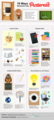
As we are introduced to the huge amount of information we do realize the important of content curation. And for that with the increasing use of internet in education, we have good curation tools like Pinterest being used by teachers and educators all over the world. The How Can Educators Use Pinterest infographic shows 16 ways a teacher can use Pinterest for educational purposes.
Courtesy e-Learning Infographics
Jason Rhode
.
Blog
.
<span class='date ' tip=''><i class='icon-time'></i> Jul 16, 2015 01:26pm</span>
|