Blogs
|
Design from the Māori fable of Māui and his brothers taming the sunThe Marae, Te Papa Museum of New ZealandNovelists and playwrights are done without it.The success of the film industry depends on it.Folklore is embedded in its construction.It is the basis for substantive contributions to world poetry.The Old Testament is so graced with it there is not a pagein that book where it is absent.Its might is well known and celebrated by educators,instructors and coaches of all disciplines and in all cultures.It is the fascination of children, the bread and butter ofstorytellers, the potion used by keynote speakersand even the magic pill of bloggers.Yet in an age when change is the watchword, the modest story remains steadfast and unvarying in its ability to capture the attention of people of all ages and in all walks of life. The conundrum is that it should be so commonplace and yet so potent.How can this simple device still be so assiduously engaging?CaptivatingAt a recent meeting I attended, the guest speaker made an inelegant approach to the topic, was inept at choosing words appropriately and had a tendency to ramble. What saved the too long speech and made it memorable was a story told near the close of its delivery. I watched, fascinated as people moved from angles of repose to more attentive postures.Designers of adverts use its arousing magic in a similar way to the speech-maker. Executed well in the manipulative exploit of advertising, it can result in awards being won, and not just for sales statistics.RelevanceNo other teaching device can bring context so uncontrivedly and adroitly to a teaching moment as the story. Whether written, narrated or depicted in scenes in a video, it has the knack of introducing a packet of learning incognito.Through the conduit of the story, the whole of Māori folklore has been passed down to us by word of mouth, as were the traditional beliefs expressed in stories and songs of many other cultures.InterestThere is an innate tendency in everyone to follow the passage of a story. The successes of the publishing and film industries are testimony to that, individually and jointly. What senses-able child in western society today does not know of Harry Potter?For as much as adventure-games appear to captivate and engage participants with the matrix of the game, it is the unfolding escapade that captures the interest of players. They create and experience their own stories within the contexts of their games.At the start of this century, my wife, Linda, learnt of the Sid Meier’s computer adventure-game Civilization III. Despite my total disinterest in adventure games at the time, she enticed me to partner her while she played out her first game. We chose to be joint advisors in building a British civilization ruled by Queen Elizabeth.Being new to the rules and capabilities of CIV III, we had to learn a lot to help our growing civilization to survive. And did we learn a lot!After a long struggle, successfully avoiding conflict after conflict, we won a cultural victory, according to the rules of CIV III, in building a virtual civilization on a resource-rich land-locked virtual continent. For as much as we have played the game since then, perhaps hundreds of times, we can still remember the thrill of our first CIV III adventure.ImaginationMy daughter, Catriona, is as familiar with ice-cream as she is with the Eye of Sauron in the Lord of the Rings movie trilogy directed by Peter Jackson.She was just 12 years old when she first took an avid interest in all that The Rings had to offer. Catriona saw the films and then read the trilogy by J R R Tolkien a year or so later. When I discussed the nature of the Eye of Sauron with her, I was astonished at what she knew."It’s not the same in the films as in the books", she told me. She explained that the film depicted the Eye of Sauron held in a tower, but in the book it was like the eye of a spirit that was seemingly ubiquitous.Catriona read Tolkien only after having seen the films many times over. Yet the image of the Eye of Sauron as depicted in the film did not interfere with her ability to imagine quite a different concept of it as read from the book.This experience showed me how able Catriona was at discerning a screen depiction from its counterpart in the original novel. But it was also proof of the power of the written story to excite the imagination, even in the wake of a different mental image laid down by a series of scenes in a movie.MemorableI first learnt of Winnie-the-Pooh when I was eight years old, but not from a story read directly from one of A A Milne’s novels. My friend next door had a well-read older sister who delighted in telling stories to her younger brothers and anyone else who cared to listen.In her own words she told the story that was later to become a favourite of mine and that I read to my children many times, "In Which We Are Introduced to Winnie-the-Pooh and Some Bees and the Stories Begin".Never underestimate the power of the story. Its unique ability to capture the imagination can make an everyday event memorable, add interest to an otherwise mundane activity, bring relevance to a teaching moment and wake up an indifferent audience.
Ken Allan
.
Blog
.
<span class='date ' tip=''><i class='icon-time'></i> Jul 20, 2015 09:00am</span>
|
|
Мы рады приветствовать "НТУ" Украины, как нового партнера в миссии: "Демократизация обучения с помощью технологий". Университет основан в 1944 г. и продолжает выпускать профессионалов в широких областях и по сей день. Уже на протяжении 70 лет университет старается использовать новейшие … Continue reading →
Eliademy
.
Blog
.
<span class='date ' tip=''><i class='icon-time'></i> Jul 20, 2015 09:00am</span>
|
|
Tue, Nov 8, 2011 12:00 PM - 1:15 PM CSTThis webinar will deal with the latest trends around Learning & Talent Systems and Services. They will share a portion of a clip from the ELCE show, where they asked the "founding fathers" of the LMS industry, "With the growing trend towards social and informal learning, what do you think the role of the LMS will be in the future."Who were these "founding fathers" and CEO’s? You know them all: Bobby Yazdani of Saba Systems; Alan Todd of KnowledgePlanet/Mzinga, now CEO of Corporate University Xchange; and Frank Russell, the former CEO of GeoLearning, and now the CEO of Prositions.Register at https://www2.gotomeeting.com/register/970415786
Debbie Richards
.
Blog
.
<span class='date ' tip=''><i class='icon-time'></i> Jul 20, 2015 09:00am</span>
|
|
At the ending of 2013, IBM revealed its predictions for five big innovations that will change our lives within five years. The number one on the list is "The classroom will learn you". This claims that Learning Analytics(LA) will change our learning. The innovations are being enabled by cloud computing, big data analytics, and adaptive learning technologies. This infographic... Read More ›
Classroom Aid
.
Blog
.
<span class='date ' tip=''><i class='icon-time'></i> Jul 20, 2015 09:00am</span>
|
|
This week is proving to be busier that usual for me, with no time to catch my breath, or thoughts in posts, so it seems. I'd decided to catch up on my post reading, reduce the list on my RSS Reader and do some hard thinking rather than writing. But it doesn’t always work out that way, of course.I end up commenting on posts on other blogs and writing more there than I would if I’d written a post. That’s how it’s been for me since the weekend.ShareGeorge Siemens’, Why Groups Fail To Share Information Effectively, was such a post that drew my comment. He picks up on the Psyblog article of the same name.I recalled Tony Karrer’s post, Reduce Searching start Talking, that prompted my long reply in June, and also Michele Martin’s earlier discussions on homophily.George’s enviably short post summarises a number of related ideas that get me thinking:Failure of (group) interaction to take advantage of the value of critique and debatesharing information that will not cause conflict or upset othersthe need for a degree of self-confidence (and a supportive environment) to ensure contrary voices are heardgroup pressure to normalize ideas.At TCS we have been and are following a series of sessions of appreciative inquiry. These involve staff group discussions where shared ideas, once collated, are ostensibly contributing in some measure to the path of the current restructuring of the organisation.In the light of all of the above, perhaps you can figure the way my mind’s working right now?FreeTony Karrer’s post, Free, picks up on Chris Anderson’s new book, Free: The Future of a Radical Price, and homes in on the idea that "we value atoms more than bits".Tony highlights the theme that content delivered as bits (online, etc) has less value than the equivalent atoms version (printed book, say).He summarises a number of interesting key questions related to how consumers might contribute to the system and how the effectiveness of networks might best utilise the system.It bothers me that bits are regarded as being less valuable than atoms. I’d already discovered that within my own family, bits are encouraging time-debts that are unlikely to be repaid, in the form of stocks of never-to-be-viewed TV video recordings, not to say too much about the posts on my RSS Reader that I might never get round to reading - sigh.Upcoming eventsSome free elearning events are coming up, now and till the end of October. Perhaps you might like to contribute to these enriching, free webinars through bits of participation and sharing?related posts - >> ( 2 ) ( 1 )
Ken Allan
.
Blog
.
<span class='date ' tip=''><i class='icon-time'></i> Jul 20, 2015 08:59am</span>
|
|
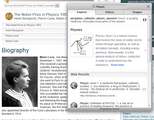
Apture is a free browser extension that works with most major browsers. When you highlight a topic, a "Learn More" bubble pops up but you don't leave the webpage you are viewing. Click the bubble to get a pop-up window with more information. Check it out: http://www.apture.com/
Debbie Richards
.
Blog
.
<span class='date ' tip=''><i class='icon-time'></i> Jul 20, 2015 08:59am</span>
|
|
Walta Mothers & Children Health Care Organization is a not for profit Non-Governmental Organization established in 2007,by volunteer individuals/health professionals that aspires to see an Ethiopia where all mothers get the necessary services to positively raise their children, and children can … Continue reading →
Eliademy
.
Blog
.
<span class='date ' tip=''><i class='icon-time'></i> Jul 20, 2015 08:59am</span>
|
|
An infographic about verbs categorized according to Bloom’s taxonomy, from Mia.
Classroom Aid
.
Blog
.
<span class='date ' tip=''><i class='icon-time'></i> Jul 20, 2015 08:59am</span>
|
|
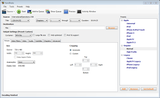
Handbrake is an open-source program (free) that converts video.It is available for PC, MAC and Linux platforms. I discovered Handbrake when I was converting PowerPoint presentations to video for iPAD distribution. The PowerPoint Save and Send as Video function converts the PPT to a WMV file. I used Handbrake to convert the WMV to MP4 format. Start by selecting your source file (or files). Handbrake scans and sets up the GUI for the selected source file. Select your destination and configure the output settings. Choose a preset from the Preset list. This will automatically set up the all the required settings. Press the "Encode Video" button. If you have a source with multiple titles, you can queue these up using the "Add to Queue" button. Check it out:http://handbrake.fr/index.php
Debbie Richards
.
Blog
.
<span class='date ' tip=''><i class='icon-time'></i> Jul 20, 2015 08:59am</span>
|
|
courtesy GoogleAnalyticsI’ve been nudged to review my stats this month, something that I normally do as a matter of course but I’m reporting on it here.Tony Karrer’s post, Alternative Views of Blog Content, reminded me that the last time I’d reported on the Index Page Project was in March this year.The Index Page for Blogger in Middle-earth was a project I embarked on in January 2009. It was initiated by Tony’s First Time Visitor Guide, which provides a brief description of what his blog is about with selected posts listed under general topic headings. I admired his Guide, and as I was already thinking about building a blog index, it prompted me to start one.Initial novelty valueThe new Index Page certainly caused a lot of interest for a few months after it was published, during which time it was the most popular post on the blog. I suspect that this was more its novelty value. The time spent on the page suggested that it was being inspected rather than used directly for the purpose I’d intended.In recent months activity has settled with a steady flow of visitors who obviously use it as an index - its favourable bounce rate of 27% indicates this, as does the 1:17 time on the page.courtesy GoogleAnalyticsThere is a significant correlation between activity on the Index Page and the dates of new posts. This tends to suggest that those hits are made by newcomers to the site, though this is not entirely conclusive.MaintenanceI'm inclined to tinker when it comes to some aspects of blogging. Perhaps I put more time into tweaking and trimming than I should - who knows? That’s purely my own judgement of how I make peripheral adjustments to posts. Part of it is curiosity to find out what works best.For instance, I’ve found that putting in links to related posts like the ones at the base of this post, though time consuming, actually provides some access to posts that might otherwise become time-capsules.When this activity becomes a chore, I’ll probably give it a miss. The time spent updating the Index Page is nevertheless much less, perhaps only a minute or so each time I publish a new post - a small percentage of the total time I spend on the hobby of blogging.Usefulness as an index?I’m probably the most regular user of the index. With now well over 200 posts on the blog, I find it increasingly difficult to locate one of my own posts unless I use the index. GoogleAnalytics has indicated that the latest category, the monthly archives, is being used by visitors as are the post-label links.This last period it ranked 8th in popularity, and attracted 3% of the total visits to the blog. Considering that it received more than twice the activity of hits in its first few months, the Index Page is undoubtedly the most popular post on the site this year. It does not have the long-tail profile of a typical post, which makes it quite unique.courtesy GoogleAnalyticsUsefulness as a first-time-visitor guide?The jury is still out on this one. Laurie Bartels gave me a lot of support in her comments in the first two months and I am grateful for those.So far there have been no comments that indicate there’s any need for improvement! My suspicion is that the need is there nevertheless.If you have a useful suggestion, why not nip over to the Index Page, check it out, and tell me what you’d like to see there? Go for it! Nāu te rourou nāku te rourou he pai te iwi kātoa. With your food basket and my food basket our tribe will prosper. related posts - >> ( 4 ) ( 3 ) ( 2 ) ( 1 )
Ken Allan
.
Blog
.
<span class='date ' tip=''><i class='icon-time'></i> Jul 20, 2015 08:59am</span>
|