Blogs
|
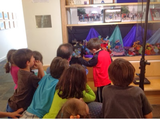
Learn how the iPad App Puppet Pals is being implemented in elementary schools to create AMAZING projects.
Jeffrey Bradbury
.
Blog
.
<span class='date ' tip=''><i class='icon-time'></i> Jul 23, 2015 06:27am</span>
|
|
Learn how Scratch Jr can teach your students about Coding. Jeff and Sam also discuss the 2015 ISTE conference held in Philadelphia Pa.
Jeffrey Bradbury
.
Blog
.
<span class='date ' tip=''><i class='icon-time'></i> Jul 23, 2015 06:27am</span>
|
|
Are you a dynamic educator from New Jersey or Pennsylvania? Are you interested in sharing your passions with like minded educators who are equally as passionate about supporting all that is good in education? If so, I would like to introduce you to NJ/PA ECET2!
Jeffrey Bradbury
.
Blog
.
<span class='date ' tip=''><i class='icon-time'></i> Jul 23, 2015 06:27am</span>
|
|
Did you know that you can create classic cell by cell animations in Google slide and use the auto-play slide show to share them with your audience?
Jeffrey Bradbury
.
Blog
.
<span class='date ' tip=''><i class='icon-time'></i> Jul 23, 2015 06:27am</span>
|
|
Pretty Link is come in both the free and premium varieties and can be found on the WordPress repository. Pretty Link allows you to input a URL of your choice and then mask it with a self branded custom URL of your choice.
Jeffrey Bradbury
.
Blog
.
<span class='date ' tip=''><i class='icon-time'></i> Jul 23, 2015 06:27am</span>
|
|
Have you ever considered using VINE Videos in your classroom? Here are 4 great things you can try in your classroom right away!
Jeffrey Bradbury
.
Blog
.
<span class='date ' tip=''><i class='icon-time'></i> Jul 23, 2015 06:26am</span>
|
|
I have been hosting my podcasts on MediaCore for years. Find out why you should be too!
Jeffrey Bradbury
.
Blog
.
<span class='date ' tip=''><i class='icon-time'></i> Jul 23, 2015 06:26am</span>
|
|
Tweet
Last week’s MakerFaire in San Mateo was an amazing experience. The air was alive with creativity, drones, and giant ribbons of flame. Moms, Dads, kids, business people, artists all gathered to celebrate our ability to change the world through invention. At the heart of so many great things at MakerFaire are Microcontrollers. If I want to bring this learning to my kids, I have to figure out how to make learning with microcontrollers accessible for them.
A microcontroller is a small computer, many are the size of a phone or smaller. These computers can run programs, and read input from meters attached to them, as well as control output to motors, lights, and servos. The most popular brands are Arduino and Raspberry Pi, but there are countless small companies out there designing these for so many applications. The ability to produce these microcontrollers cheaply has created an explosion of innovation and home prototyping.
We might look back on this time as the golden age of hobbies, as we can invent almost anything imaginable. Walking around the MakerFaire in San Mateo this weekend, I saw microcontrollers flying through the air in drones, rolling around the floor in giant R2-D2’s, even powering a four foot tall LED grid, programmed with the biggest game of snake I have ever seen. What is clear from the thousands of people at the fairgrounds is that innovation and DIY is here, and we as a culture value and reward it. The Makers were a good mix of hackers and artists, and a couple of crafters. People who attend MakerFaire do it to lift their misperceptions of the possible, to become inspired. So many of these amazing inventions, from the automatic drink mixer, to a head to head Space Invaders game, had a microcontroller at the heart.
So we have a technology that is really versatile, but it’s a bit inaccessible. Honestly, designing with a microcontroller isn’t something I would jump into cold and unassisted. In fact, I have been looking at these tools from a distance for a while, trying to see how this could be useful in a classroom. Thankfully, there are many people asking that same question, and frankly I think they might know a great deal more about the microcontrollers than I do.
Since, my focus is K-5 I have been tossing Arduino resources at my 6-8 colleagues hoping they will get a great idea and pull me along so we can learn together, but that has not completely happened yet. One of our challenges is that we are an iPad based school and only recently has it become easy to interact with an Arduino via Bluetooth from a tablet. I have been looking for tools and resources to bring this to my younger students.
We have LEGO NXT on campus, I think 12 full kits, and this does give me access to many of the same functions and concepts that apply to a microcontroller. The Lego kits are designed to support prototyping, so the functions and goals are a good match, which is why the LEGO Mindstorms products have dominated the market for years. In class I am challenged to make good use of these kits because of the limited time I have. With only 45 minutes per class per week, the Mindstorms kits get relegated to after school clubs(where they will be built into warriors, battled, disassembled, and rebuilt like a knight doomed to eternal torment).
Learn why Robotics is AWESOME for your students! by @SamPatueClick To Tweet
I am looking at bringing something like Hummingbird Robots into class. With these kits the idea is to build an interactive robot with cardboard and servos. The build is much quicker as the students cut out the shapes they need and program them to move. I am thinking I will introduce this as a way to animate a diorama project they already do. I haven’t spent much time with them, but I know my 4thgraders could do the block-based coding because we learn Scratch and Tynker in 3rd grade. Figuring out where a piece like this could fit into scope is one thing, but supporting it in sequence is quite another. The question now is this "What am I doing to make sure 4thgrade is ready to program with microcontrollers?"
If my 3rdgrade used the Thymio robots, I could have them do an innovation project that used the microcontroller-based robot as a foundation. Thymio is about the size and shape of a double decker peanut butter and jelly sandwich. With 20 built in sensors and 2 independently programmable driving wheels many of the inputs and outputs students will later use are available in a package the is durable and deploys easily. The robot has LEGO compatible build points on the body and the wheels so it is easy for students to build out from this base. Students can increase functionality by adding LittleBits components to their design, often just using tape.
I know that if I get my students microcontroller ready by middle school, the tech team there can do some amazing things. Last year they soldered LED art pieces; I think next year they might be animated, or responsive to light. When we support kids in building, designing and making we ask them to think differently. We give them the chance to change the world by putting something new in it. How are you using innovation or, specifically, microcontrollers to convert imagination into learning? Share below and let’s keep the conversation growing.
Jeffrey Bradbury
.
Blog
.
<span class='date ' tip=''><i class='icon-time'></i> Jul 23, 2015 06:25am</span>
|
|
Tweet
Click and wait, is that on the standards? There is something going on with the router, or the wireless access point. It is bad. This is the opposite of the work I love to post. This is me prepping for an hour before a forty minute class because the iPads are taking a minute and a half each to set up. All I am doing is opening a browser, navigating to a page, and logging them into a profile.
If the students were older I could ask them to log in, but with my 3rd grade class this would mean losing 10 minutes of the all too short 45 minute class.
There isn’t much to do about the slowness of the internet. The router will be replaced in the coming weeks, and if past performance is any indication, the problem will migrate to a new piece of equipment. This is the daily struggle of interdependent factors that make the position of tech integration specialist necessary. Someone has to be available to do all of the extra prep and recovery from all of these great technology related assignments.
If I want the 3rd grade to use the website Tynker.com, I need to set up accounts several days before class and on the morning of class I need to get each iPad signed in to the right account. Following the class I have to work with the teacher to make a selection of the work visible on their public blog. This is not an extraordinary amount of work to do for one tech rich lesson. Accounted out, it might be as much as 10 minutes per student overall, start to finish. (10 min x 48 students = 480min= 8 hours).
Learn how to integrate a Tech Coach in your school today! By @SamPatueClick To Tweet
As a trained English teacher I am very good at noticing how many minutes per student a lesson requires in prep and recovery/ response. Honestly it is a metric that sometimes kills assignments. Often it is not the class time that is lacking, but the out-of-class prep time.
This prep and recovery time is often invisible to anyone not in the classroom daily, and it is the very reason we need tech integration specialists and STEM coaches. Teachers need a partner that can not only inspire them to try new modes of learning, but a pedagogical partner to take on part of the load.
The "prep metrics" even encourages specialists to teach a limited number of tools and interfaces over the course of the year as each one requires different enrollments and support. When I am evaluating tools I want ones that work in a 3 year age range, so I can build lessons over time from one year to the next.
Great teaching requires budgeting time like this and when something takes longer than we thought it would, we have to re-budget time. This is when I start feeling stress, it is 8 in the morning and I might not have enough time to get the tech ready before the kids walk in the door for tech class.
This makes me think about all the teachers out there doing tech integration alone, the teachers making bold changes to their instruction without a support network of specialists in their school. What it comes down to is that if schools want teachers to innovate, they have to provide the support needed to make that happen. More often than not this support isn’t training, it is time.
Jeffrey Bradbury
.
Blog
.
<span class='date ' tip=''><i class='icon-time'></i> Jul 23, 2015 06:24am</span>
|
|
Tweet
Educational Podcasting Today is a weekly podcast that celebrates podcasters and podcasting. It’s mission is to help educators learn how to create podcasts and amazing WordPress websites for their podcasts. For more information, please visit www.EducationalPodcasting.today.
Show Topics
What makes your podcast awesome? In this episode, we talk to the guys from Buzzsprout.com to learn all about podcast hosting as well as tips and tricks to creating an awesome podcast.
About Our Guest
From uploading your audio to tracking how a show is growing, Buzzsprout makes it simple. Some of the ways Buzzsprout does this are listed below, but the best way to see if it’s a good fit is to see it in action.
Links of Interest
Buzzsprout (http://www.Buzzsprout.com)
Podcasting 101 (http://www.buzzsprout.com/how-to-make-a-podcast)
Mobile Friendly Podcasting (http://www.buzzsprout.com/blog/2015/01/15/mobile-learning/)
Podcasting News
The TeacherCast Educational Broadcasting Network is proud to once again be broadcasting LIVE from the ISTE Conference. This year, we will be broadcasting LIVE from Bloggers Cafe on Monday and Wednesday June 29 and July1. On Tuesday, we will be doing a special live broadcast of my panel discussion featuring Jenny Grabec, Jaime Casap, Sam Patterson, and Wokka Patue in the morning. Check out our full calendar of guests over on TeacherCast.tv
Podcasting Conferences in the News
Two Great Podcasting Conferences just announced:
Podcast Mid-Atlantic
Podcast Mid-Atlantic | September 12, 2015 in Westville New Jersey
ISTE 2015 Birds of a Feather Event
If you are going to be at ISTE this year I welcome you to check out my Birds of a Feather session on Monday from 5:30-6:45. We are just in the beginning stages of planning this event but I have some pretty awesome support from the podcasting community and we are working on getting some pretty awesome sponsors. If you are interested in attending as a podcaster, or as an educator who listens to educational podcasts, please feel free to contact me @TeacherCast or by email and I’d be happy to share more information. I hope to have many more details on this event in the weeks to come.
Share the Love
If you enjoyed the show, please rate our show on iTunes and write a brief review. That would help tremendously in getting the word out and raising the visibility of the show.
Please join the TechEducator Podcast LIVE every Sunday night at 7:00 P.M. EST on http://www.TeacherCast.tv
Learn How To Launch Your Very Own Podcast!
Are you interested in learning how to podcast? Do you want to share podcasting with your students or perhaps create a podcast from your own home? Jeff is available for one-on-one consulting to help you learn how to bring your podcasting ideas to life.
Email: info@teachercast.net
Voice Mail: http://www.TeacherCast.net/voicemail
Check out our Educators Guide to Podcasting today! | Video | Slideshare Presentation
Please contact TeacherCast with any Questions or to become a guest on the show
Host: Jeff Bradbury @TeacherCast
Email: info@teachercast.net
Voice Mail: http://www.TeacherCast.net/voicemail
YouTube: http://www.TeacherCast.net/YouTube
iTunes: http://www.TeacherCast.net/iTunes
View LIVE Professional Development from TeacherCast
Watch LIVE: http://www.TeacherCast.tv | Broadcasting Schedule (http://www.teachercast.net/showcal)
TeacherCast Broadcasting Community: http://www.TeacherCast.net/broadcastingcommunity
Invite TeacherCast to Speak or Broadcast at your conference
Jeff Bradbury (@TeacherCast) is available as a Keynote Speaker, Presenter, or to Broadcast your conference LIVE!
Check out more TeacherCast Educational Broadcasting Network Shows
TeacherCast Podcast (http://www.teachercast.net/education/teachercast-broadcasting/)
TeacherCast App Spotlight (http://www.teachercast.net/education/teachercast-broadcasting/the-teachercast-app-spotlight/)
Educational Podcasting Today (http://www.educationalpodcasting.today)
The TechEducator Podcast (http://www.techeducatorpodcast.com)
Jeffrey Bradbury
.
Blog
.
<span class='date ' tip=''><i class='icon-time'></i> Jul 23, 2015 06:24am</span>
|