Blogs
|
Dr. Ann Snow, writing consultant for Q: Skills for Success, Second Edition, discusses the particular challenges of writing in an academic context.
This month I will be teaching a new academic writing course for second language students at my university. I am thus thinking a lot about writing these days and looking forward to helping my students become better academic writers. I’ve promised a lot in my course proposal. I will:
Cover characteristics of expository writing and help students apply them to their own academic disciplines;
guide them through a cycle of awareness and analysis leading to self-assessment; expose them to different text types (e.g. problem-solutions, methods, discussion sections) and genres (e.g. critiques, case studies, literature reviews, research papers);
help them improve their sentence and discourse-level grammar and be better proofreaders of their own writing.
In addition, I am determined to go outside the traditional boundaries of a writing class because I think that writing cannot and should not be taught in isolation from the other skills that students need in order to be effective writers. Therefore, I have added academic vocabulary and strategic reading skill components. I also plan to integrate critical thinking skills so my students improve their abilities to make inferences, synthesize, develop arguments and counter-arguments, and evaluate sources in their writing. My task feels a little overwhelming right now, but also helps me as the instructor appreciate the complexities of academic writing and understand better the challenges our second language students face.
Finding the writer’s voice
Stepping back from the details of my new course, let’s consider the big picture of what writing entails. Writing is a complex language form practiced by users of all languages (both native and non-native) for everyday social and communicative purposes and, for many, for vocational, educational, and professional needs. It has been variously described as a product - a piece of writing with a particular form and the expectation of "correctness." And as a process - a journey that takes writers through stages where they discover they have something to say and find their "voice." From the cognitive perspective, it is seen as a set of skills and knowledge that resides within the individual writer and from the sociocultural perspective as a socially and culturally situated set of literacy practices shared by a particular community (Weigle, 2014). With these perspectives in mind, all teachers of writing must ask: How can I help my students improve their writing and what are best practices in the classroom? As I design my new course I am asking myself these same questions.
Needs assessment
An important first step is undertaking a needs assessment, whether informal or formal, to learn what kinds of writing students need. From this assessment, a syllabus or curriculum can be developed or a textbook series selected that is a good match with your students’ needs. Typically, the instructional sequence starts with personal/narrative writing in which students have to describe or reflect on an experience or event. This usually leads to expository writing in which students learn to develop a thesis statement and support this controlling idea in the body of their writing. Analytic or persuasive writing is the most challenging type of academic writing because students must learn to state and defend a position or opinion using appropriate evidence (Ferris, 2009). These kinds of academic writing tasks require students to become familiar with a variety of text types and genres, one of my course goals.
Improving vocabulary and grammar
The academic writing class also provides the opportunity for students to fine-tune their grammar and expand their academic language vocabulary. Typically, by the time our second language students are engaged in academic writing, they have been exposed to the majority of grammatical structures in English (e.g. complete tense system; complex constructions such as relative clauses and conditionals), but they still may need to learn how to integrate these structures into their writing. They also need to match text types with the kinds of grammatical structures needed. For example, in order to write a cause/effect essay, students need to use subordinating clauses with because and since and they need to use the appropriate transitional expressions like therefore and as such. Student will most likely have learned these structures in isolation but now need extensive practice and feedback to use them accurately in their writing. In terms of academic vocabulary, students need to differentiate the types of vocabulary found in everyday usage (e.g. the verbs meet and get) with their more formal academic counter-parts encounter and obtain (see Zimmerman, 2009, for many other examples.)
In sum, the English for Academic Purposes curriculum must integrate reading and writing skills, and, as mentioned, grammar and vocabulary. Cumming (2006) points out that a focus on reading can lead to writing improvement and an opportunity to learn discipline-specific vocabulary. It also gives students something to write about. Combining reading and writing also provides needed practice in analyzing different text types so students see the features of these models. These kinds of activities create opportunities for more complex tasks such as summarizing and synthesizing multiple sources. A curriculum that integrates reading and writing also exposes students to graphic organizers for reading comprehension which student can recycle for pre-writing (Grabe, 2001). Finally, students need many exposures to similar tasks in order to master the complexities of academic writing and build confidence in their abilities.
I look forward to teaching my new academic writing course and I hope this brief glimpse inspires others to undertake this challenge as well.
References and Further Reading
Ferris, D. (2009). Teaching college writing to diverse student populations. Ann Arbor, MI: University of Michigan Press.
Grabe, W. (2001). Reading-writing relations: Theoretical perspectives and instructional practices. In D. Belcher & A. Hirvela, (Eds.), Linking literacies: Perspectives on L2 reading-writing connections. Ann Arbor, MI: University of Michigan Press.
Weigle, S. C. (2014). Considerations for teaching second language writing. In M. Celce-Murcia, D. M. Brinton, & M. A. Snow (Eds.), Teaching English as a second or foreign language (4th ed., pp. 222-237). Boston, MA: National Geographic Learning Heinle Cengage.
Zimmerman, C. (2009). Work knowledge: A vocabulary teacher’s handbook. New York, NY: Oxford University Press.Filed under: Adults / Young Adults, Skills Tagged: Academic writing, Ann Snow, EAP, English for Academic Purposes, Q Skills for Success, Writing skills
Oxford University Press ELT blog
.
Blog
.
<span class='date ' tip=''><i class='icon-time'></i> Jul 23, 2015 08:28am</span>
|
|
Picks from Rod's Podcaster Guide and E-Learning News
Campus Technology 2009 Presentations
7 Textbook Publishers Move to Electronic Format
Interview with Dr. Alec Couros, professor of educational technology and media at the Faculty of Education, University of Regina, Saskatchewan, Canada
Open Thinking - his professional blog
Social Media and Open/Networked Learning - his open course
Harnessing the Power of Social Networks in Teaching & Learning - his recent keynote at the University of Delaware
Podsafe Music Selection from Music Alley
"New Soul" by Yael Naim, the acclaimed singer/songwriter from Israel, from her album Yael Naim. 'New Soul' gained fame as the music played during Apple's Macbook Air ad campaign.
Duration: 29:13
Rods Pulse Podcast
.
Blog
.
<span class='date ' tip=''><i class='icon-time'></i> Jul 23, 2015 08:28am</span>
|
|
As you know, I have been job-hunting lately. And I've been thinking about the history of job-hunting... or at least my experience of it.My first few jobs were part-time or holiday affairs while at school and drama school, and they were a case of word of mouth. I was advised by someone in the know that John Orr's was looking for holiday sales staff for the Christmas rush. I was advised that Communikon School of Performing Arts was looking for part-time drama teachers. I was advised that the provincial board needed adjudicators for drama eisteddfods. This was in the very late 70's and early 80's.Once I graduated from drama school, and while I was waiting to be discovered by Hollywood (or at least the SABC), I found a couple of jobs in the small ads of the local newspaper. This was in the early 80's.My first office job was found via newspaper ads, again. But this time, it was a feature ad. The same applied to my next office job.In much the same way (feature ads in the newspaper), I found a job at a theatre agency in Cape Town, but I treat this one separately, because this job led to my getting a few photographic modelling assignments and a contract as a TV presenter (at which I sucked, royally).During this phase, I met and married my husband. For a year after this, I tried and failed to find a steady, 'proper' job. Of course, my efforts were never enough to please the in laws, who felt that I was sponging off their son. This was in the late 80's, and my search consisted of cold-calling and responding to newspaper ads. It was soul-destroying. But I took every opportunity to upskill, and did run the occasional computer applications training course (as they were then known) during the dry spell. This was to prove the best move I'd ever made. After nearly a year, I finally landed a job working in a learning centre... and found my vocation. The company that had set up the learning centre was way ahead of its time for the market, and the initiative didn't take off. I found myself back on the job market within 16 months. But this time, I had built up something of a network and a reputation.I went freelance. I tapped the network for opportunities, and they came. I worked as a freelance training consultant until we left South Africa, fitting my career around my children. During this time, I got to work with some of the big names of South African industry, as well as taking on ad hoc overflow work for specialist training organisations. I was offered a few chances to take full-time posts with some of my clients, but, with my husband's full support, I opted not to accept them. I will never regret having been able to be a hands-on Mom, even though it almost certainly impacted my career development.When we arrived in the UK, in 1999, I took a year out to settle the family in to our new home. By the time I started job hunting again, it was via the local newspapers. I took a part time job at an FE college. We had pretty much decided that I would go back to work full time only once both our sons were in secondary school. However, I continued to scan the papers for opportunities. When a 'perfect fit' full time job came up earlier than expected, we decided to take the plunge. The office was 3 miles from home. I could make the trip in 7 minutes. Our kids were 11 and 9, and would be home alone for 1.5 hours each afternoon. We lived in a safe neighbourhood. This was 2002.During this period, the Internet began to come into its own as a place to go job hunting. I found and applied for my next job via the world wide web. I felt so modern! This was 2005.In 2008, the wheels fell off and I found myself at a crossroads. I decided to take the plunge and go back to being self-employed. But it had got a whole lot more complicated since my last shot at it. And I was under pressure to earn more, because our commitments had been based on what I had been earning while working for 'the man'. That was in 2008. I did look for alternatives, and didn't find a whole heck of a lot, so the Learning Anorak was launched.Now that that venture is coming to an enforced close, I am job hunting again.... and it looks very different.I have automated searches in place with several of the biggest recruitment agencies. Almost daily, there are jobs I can apply for. Sadly, as I have mentioned before, the first-line screeners are not the very clued up. They are utterly unable to identify that skills in X map across to requirements for Y. So I get turned down for a lot of jobs I could do blindfolded... sometimes within minutes of submitting my application.I also check out the online vacancies pages of some of the organisations I am consciously targetting. This is a huge plus.But I am also able to be far more pro-active than before. When I was job hunting way back in 1988/9, I was at a loss as to what else I could do. Other than cold-calling and responding to ads, what was there? Especially in a city in which I was unknown (ergo, no network). This time around, I have put feelers out across the network, which is global. I have made my position known on Facebook, LinkedIn and Twitter. I have written a blog post. And all of those have taken several hits.The support from my beloved community, while thus far not yielding anything, has been enormously comforting. Harold Jarche even created a hashtag for me on Twitter (#YesYouShouldHireKaryn). Okay, so it didn't get a lot of take-up, but the fact is that he did it. It was a very kind gesture from someone who has become a real friend, even though we have never met face to face. This is the beauty of the network. And it didn't go unnoticed. Someone, a complete stranger to me tweeted something to the effect that he didn't know who this @karynromeis person was, but she must be worth hiring, based on the support she's getting from Twitter "big hitters".I have had several job offers, actually, but all of them have been spam, bar one. The one genuine job offer I received was at a lower rate of pay than I was getting 5 years ago, and involved 3 hours of commuting time every day. It wasn't easy to pass up on the bird in hand, but I decided that I had to. The level of sacrifice by my whole family simply wouldn't be worth it. Fortunately, my incredible husband has been staunchly supportive. He simply will not have me sell myself short. He has always had more faith in me than I do in myself.It remains to be seen if this method of job hunting yields something more quickly than previous methods have done.Watch this space.
Karyn Romeis
.
Blog
.
<span class='date ' tip=''><i class='icon-time'></i> Jul 23, 2015 08:28am</span>
|
|
Note: This is a standard audio-only mp3 podcast.
See RPP #82EP above for Enhanced Podcast.
Picks from Rod's Podcaster Guide and E-Learning News
Internet Archive: A Future for Books - BookServer is an open system to find, buy, or borrow books, just like search to find Web sites.
An E-Textbook Program Aims to Benefit Students and Professors - Professors create digital textbooks bringing prices down from their average cost of $100 to a much more moderate $15.
Embracing Electronic Textbooks - Electronic textbooks offer convenience for professors, who can easily review a new textbook online, then make a quick decision to include it in a course.
Interview on E-Textbooks with Scott Beadenkopf, Director of Academic Technology at Neumann University
CourseSmart - benefit from instant access to the largest single source of electronic textbooks available anywhere
Connexions - a place to view and share educational material made of small knowledge chunks called modules that can be organized as courses and books
Flat World Knowledge - books by leading experts, rigorously reviewed and developed to the highest standards are free to read online
Podsafe Music Selection from the Podsafe Music Network
"Stress" (song and flash animation) by highly caffeinated Jim Infantino of the band, Jim's Big Ego. Buy at Amazon
Duration: 23:25
Rods Pulse Podcast
.
Blog
.
<span class='date ' tip=''><i class='icon-time'></i> Jul 23, 2015 08:28am</span>
|
|
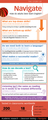
What are the building blocks of skills teaching and how can these help your learners listen and read for tomorrow?
Take a look at this infographic to find out more.
Navigate is a brand new General English course that takes an innovative approach to reading and listening based on this academic research as to how adults best learn languages. It teaches reading and listening from the bottom up, giving learners the skills they need to understand the next text they will read and hear, not just the one they are reading or hearing now. The course content also has been extensively piloted and reviewed in ELT classrooms across the world, giving teachers the confidence that it really works. Find out more at www.oup.com/elt/yourdirectrouteFiled under: Adults / Young Adults, Skills Tagged: Adult, Adults, bottom up, decoding, Listening, Navigate, Reading, top down
Oxford University Press ELT blog
.
Blog
.
<span class='date ' tip=''><i class='icon-time'></i> Jul 23, 2015 08:27am</span>
|
|
Last night was 'parents' evening' at my son's school. It isn't officially called parents' evening anymore, and hasn't been for some years, because the students themselves are a very important part of the three-way meeting. Nevertheless, the name has stuck on a colloquial level.Our younger son is a grafter. Always has been. Every single one of his teachers spoke highly of his work ethic. This was no less true in the subjects where he is struggling. His classwork is always done, as is his homework. He contributes to class discussions, and raises excellent questions. He participates wholeheartedly in group work.For the duration of his school days to date, every teacher (bar one) has found this child a joy to teach.And it has been a joy to address his education as a parent.This may have something to do with the fact that he has known since he was just three years old that he wants to be an explosives demolitionist. Of course, when he was three, he didn't know that it was called that. We didn't either. But as his commitment to this career path has remained strong for the past 14 years, we have learnt a lot about it along the way.The problem for him at the moment lies with the assessment model. Particularly in respect of pure maths. In order to take Maths with Mechanics, which is essential for his future career, he has to take Pure Maths. And he isn't doing terribly well in the tests. In fact, it is fair to say that he is doing poorly.Part of the problem is that he was placed in a rather low set for maths (over our objections, just by the way) and that set did not cover some sections of the syllabus. As a consequence, what constitutes revision for the rest of the class, is totally new work for those who were in that set.But the teacher (Ms Verity who has previously made an appearance in this blog), has said she only wishes he could produce the same work in the test situation that he does for homework. His homework, apparently, is excellent.The difference is that, when it comes to homework, he can open the text book (yes, they still use them) to the example page, and adapt the worked example to the problem(s) at hand. Or he can look it up online. If he struggles to make sense of the example, he can contact a friend via text message or instant messaging and they can work through it together. He has identified a study buddy, and he checks in with this kid, if he's unsure of his workings.This sounds rather a lot like life, or like the reality of a working environment to me. Don't you agree?In a test situation, you're deprived of those options. You can't research the solution and then apply it. You can't get a friend to check your work. You can't ask for support from someone with particular skill in this area.But I think he is demonstrating a very mature, resourceful skill. A skill that will stand him in great stead for the rest of his life. A skill which far outweighs being able to manipulate surds... whatever the heck they are - I don't think they had been invented yet, when I was at school ;0).Sadly, we haven't yet figured out how to assess that particular skill. We have only figured out how to subject kids to sensory deprivation and expect them to work purely from memory, and fail them on their inability to manipulate surds under these conditions.You might think that I feel this way just because this is my son we're talking about, here. But I hope that my track record on the subject of assessment stands on its own merit.In order to better equip my son to meet the current assessment criteria, we have decided to hire a private tutor (as an aside here, I should point out that the school has laid on extra lessons to help kids like ours catch up, but that these clash with rugby practice and we consider his sporting interests to be a valid component of a well-rounded school education).Oddly enough, the tutor himself has made his own appearance on this blog before! Thanks to his background, we believe that this young man will be the right person to help our son make up the deficit. Of course, this is going to cost a fair amount of money, but our son has amply demonstrated over the years that he is more than prepared to put in the work from his side. Like I said: a grafter. And he needs this, if he is to get into the university he has identified, to get the qualification he has chosen in order one day to "blow stuff up and get paid for it". Because of that, we consider the money well spent.But it doesn't mean that it sits easily with me. It is a little like training a performing monkey.But I am satisfied that my son already demonstrates the sort of characteristics that an explosive demolitionist requires: he is sensible, responsible, hard-working, resourceful, determined... Put that on a report card!
Karyn Romeis
.
Blog
.
<span class='date ' tip=''><i class='icon-time'></i> Jul 23, 2015 08:27am</span>
|
|
Bonus Enhanced Podcast formatted for viewing in iTunes or iPods.See RPP #82 post below for details.
Rods Pulse Podcast
.
Blog
.
<span class='date ' tip=''><i class='icon-time'></i> Jul 23, 2015 08:27am</span>
|
|
Picks from Rod's Podcaster Guide and E-Learning News
The Complete Guide to Google Wave - Google Wave is a new web-based collaboration tool that's notoriously difficult to understand. This guide will help...
Purdue U Brings Social Networking to the Classroom - Some professors--especially those who teach in large lecture halls--have come to embrace social networking as an instructional aid....
Diigo - Like Delicious and Digg but better, with web highlighting, sticky notes, and annotation.
Interview (Part 2) on E-Readers with Scott Beadenkopf, Director of Academic Technology at Neumann University:
Amazon Kindle
Sony E-Reader
Plastic Logic
E-Ink - originator of electronic ink technology used in most e-book readers
Barnes & Noble Nook
Podsafe Music Selection from the Music Alley
"Winter Moon" by Rhonda Lorence - from the new age viola album "Winter Moon" which was nominated for four Lifestyle Music Awards including Album of the Year and Best New Artist.
Duration: 26 min
Rods Pulse Podcast
.
Blog
.
<span class='date ' tip=''><i class='icon-time'></i> Jul 23, 2015 08:27am</span>
|
|
Anna Parisi is course tutor and materials designer for teacher development courses at ACCESS, in Greece. Anna has extensive experience in syllabus design and producing supplementary materials for private language institutions in Greece. Ahead of her webinars on 27th and 28th January, she gives us a preview of what she will be talking about…
I envy new teachers!
When you are a new teacher, everything you do is new. While ‘learning the ropes’, you constantly take risks and experiment, evaluate and take decisions. There are so many surprises: your students surprise you, you surprise yourself. It can be highly stressful but exciting because it’s an on-going process of observation and discovery.
We call this ‘enthusiasm’.
And then, routine starts settling in. We know we have to cover the curriculum no matter what, finish the book, and after so much trial and error we know what works best ( well, most of the time) so why take risks? We change our routines when something goes seriously wrong or when we are bored out of our wits.
We call this ‘experience’.
Occasionally, both enthusiastic new teachers and experienced old-hands attend conferences, listen to experts and take notes. Later, we may use 1 or 2 ideas in class but generally we find ’there is no time’, ‘you can’t do this in the real world’ as real students often respond in a different way to what we want them to.
We also share fabulous ideas and photographs on the social media; we follow gurus and mentors online in search of general truths and successful practices. But still most of our issues in the classroom remain unresolved, and out of date or over-demanding curricula remain in place.
In the meantime, there is so much that goes unacknowledged, devalued or ignored: teachers’ tacit knowledge, the knowledge that teachers have acquired through the years but find it difficult to articulate or transmit.
While PLNs (Personal Learning Networks) have helped in this respect with sharing lots of ideas, thoughts and insights, teaching lives as depicted online have left a lot feeling they are missing out on developments or even with undeserved feelings of inadequacy. This wealth of ideas from teachers, trainers, authors is a host of wonderful recipes but not a better diet overall.
The gap between theory and practice remains as large as ever, published material sometimes seems to come from a parallel universe, and although everything takes place for the good of students, they are not part of the decision making and are not even asked what they think some or most of the time.
For teachers to take control and have greater professional responsibility over what we do, small scale teacher-led research is the next step in teacher development.
Why research?
Research is by definition questioning, challenging preconceptions, discovering, experimenting. Teacher-led research is action taking place where the action is: in the EFL classroom. If we, teachers, would like to see change and improvement then we are the best placed to initiate and undertake it. If we want greater autonomy, we will have to seek and welcome greater responsibility.
If we believe that we, teachers, should be involved in curricula change then we ‘need to take a critical and experimental approach to our classrooms’ (Nunan 1989). Solutions to practical problems in the classroom can rarely be imported from outside the classroom. It’s the teacher who is best placed to investigate and resolve issues by taking some course of action. By researching our own classes we can better understand our own classroom procedures. We can become better able to assess what actually happens in the classroom as opposed to our own assumptions about what happens. Teacher-led, classroom based research also means consulting our students, understanding and catering for their differences.
But what does teacher-led classroom based research involve?
Carrying out research should be a collective project, not a solitary task. It’s really about discovering, sharing and transmitting knowledge, problem-solving. It’s an integral part of teacher development. Carrying out such a project can be a collective experience inclusive of all teachers in all stages of professional development. Teachers being part of this experience is the heart of a collective, teacher-led research project.
In the upcoming webinar, we’ll look at some of the basics of teacher-led classroom based research and how it can transform our teaching lives. You’ll be surprised! You can register for the webinar here.
References
Nunan, D. and Bailey, K.M. 2008 . Exploring Second Language Classroom Research : A Comprehensive Guide. Boston: Heinle
Nunan, D. 1989. Understanding Language Classrooms . Cambridge : Prentice Hall InternationalFiled under: Professional Development, Skills Tagged: classroom research, Personal Learning Network, Research, Webinar
Oxford University Press ELT blog
.
Blog
.
<span class='date ' tip=''><i class='icon-time'></i> Jul 23, 2015 08:27am</span>
|
|
I'm sure you already know that we don't have Thanksgiving in the UK. That would just be silly. But I have many American friends, readers, followers, etc. in the various spaces I occupy online, to whom this holiday is very important.This post is for you. I would like to wish you a happy Thanksgiving, although I'm sure you have better things to do than read my blog today.Americans tend to be much-maligned in the UK, but my own (entirely unscientific) observation is that the very people who thus malign them are often equally guilty of the characteristics they disdain so very vocally.So may I say that I am thankful for you?Thank you for your warmth, your acceptance, your support, your enthusiasm. I am glad you and I have crossed paths.
Karyn Romeis
.
Blog
.
<span class='date ' tip=''><i class='icon-time'></i> Jul 23, 2015 08:27am</span>
|