Blogs
|
Charles Vilina, co-author of the forthcoming Young Learners series, Oxford Discover, shares some tips on helping young learners to write well in English. Charles will discuss this topic in more depth in his upcoming webinar, taking place on 21st and 23rd January.
I teach writing to primary students almost every day. Fellow teachers often ask me, "Isn’t it difficult to teach students to write well? I couldn’t do it!"
I understand the sentiment. Of the four language skills (listening, speaking, reading, and writing), writing is often the most challenging to teach… and to learn. Many people find writing to be difficult even in their native language, so the challenge is even greater for our EFL and ESL students.
Why isn’t writing an easy task?
Writing is a productive skill that requires concentration and effort, even for those who write professionally throughout their lives.
Writing, like playing a sport or a musical instrument, requires regular practice to do it well. The more often students write, the more likely they are to improve.
Writing is a process. Revision is always part of good writing (which is why pencils have erasers), and revision takes patience and effort.
Good writing has a very important companion: good reading. Without daily reading across many literary genres and text types, it is difficult for students to develop strong writing skills.
Now for the good news.
There are strategies teachers can apply to make the task of writing easier, clearer, and even enjoyable for our students! Here are three that work especially well in my classes, for both fiction and non-fiction writing tasks:
1. Introduce students to good writing
Fiction:
A good story has the ability to send us on amazing journeys, create strong emotions, and even change the way we look at life. Children need to read good works of fiction, and then always consider the question, "What makes this story so good?" In every class I teach, I try to introduce good fiction, and the love of reading, to my students.
Non-fiction:
In the world of non-fiction, clear and organized writing makes all the difference when learning something new. My students and I read examples of excellent explanatory writing about topics they find interesting. In this way, students learn the best ways to inform others through writing.
2. Motivate students to write about the world around them
Fiction:
"Write what you know about" is excellent advice for a fiction writer. I encourage students to choose a setting that they are familiar with. In this way, they can focus on creating strong characters and an interesting plot within that familiar setting. They are also more able to describe the scenes with greater detail. Later, they go on to create stories in other times and places of their choosing.
Non-fiction:
I first ask my students to write about what they have seen and experienced in their everyday lives, through a personal narrative written in the first person (I). This task teaches them to be observant and aware. They learn to consider all the information that might be useful to the reader (who, what, when, where, why). Students focus on presenting what they know in a clear and organized fashion. Later, they use these skills of clarity and organization to write about subjects outside of their personal experience.
Suggestion:
One simple activity is to think of a clear topic sentence on a theme students know well, such as "I really like English class." Write this on the board. Then, invite students to give reasons why they like English class, such as, "My teacher is always helpful." Write these reasons on the board as students say them. After many reasons are listed on the board, ask students to write a paragraph that begins with "I really like English class," followed by three or four of their favorite reasons.
Mind maps can help students brainstorm what they know, while organizing the information at the same time. For example, students can write and circle the words my school in the center of a sheet of paper. From this circle, lines can be drawn out to subheadings such as my friends, my classes, and my activities. Examples can branch off from those subheadings. This activity can give students a physical profile of what they can write about.
3. Emphasize that good writing is a series of steps
As I mentioned before, writing is a process. We can teach our students to achieve their writing goals more efficiently by following a specific series of steps that will lead them to a stronger piece of writing.
Here are the steps I ask my students to follow in both fiction and non-fiction writing tasks:
Brainstorm your ideas first!
This means to write freely, allowing your ideas to flow without judging or thinking too hard. Fill the page with anything that comes into your mind. This step should be fun and creative.
Organize your ideas into groups
Each group of ideas should center around one main idea. This step also allows you to arrange your ideas in order of importance, and eliminate those ideas you don’t need.
Write a paragraph around each group of ideas
A good paragraph will have one clear main idea, usually stated at the beginning. Continue the paragraph with three or four sentences that support the main idea.
Revise your work
As you read through your paragraphs, ask yourself, "Can I make my topic sentences clearer? Can my supporting sentences be stronger? Are they listed in the best order? Can I find nouns and verbs that are more specific, and adjectives that are more descriptive? Is my grammar and spelling free of errors?"
A final step is often referred to as "publishing" the piece of writing. This step means that students have revised and edited their writing to the best of their abilities, and are now ready to share what they’ve written with the class.
Because each of the above steps is unique, and has specific outcomes, students do not become bored or frustrated with the process. It is best to do the steps over a number of days, so that students can begin each step refreshed and ready to continue.
Suggestion:
After "publishing," one very effective activity is called peer review. Students read each other’s pieces of writing and then write comments about them. By giving students the responsibility of looking critically at another’s writing, they are able to look more objectively at their own writing.
In closing, I would like to add some final thoughts for teachers:
Don’t expect perfection at any level. Writing is a lifelong pursuit, and even the most gifted writers know that they can always do better.
Always emphasize the more important writing goals for your students: creativity, clarity, organization, and conciseness.
When giving feedback, focus on one area that needs improvement per writing task. For example, does each paragraph have one main idea? Circling every error with red ink will only frustrate students.
Whenever possible, for every weakness you point out in a student’s writing, also point out two strengths. Confidence is a prerequisite for all great writing, and we never want to dishearten our students. Stay patient and focused, and you will see real progress over time.
With my best wishes,
Charles Vilina
Would you like more practical tips on encouraging your students to write and developing 21st Century skills with your children? Visit our site on Teaching 21st Century skills with confidence for free video tips, activity ideas and teaching tools.
Sign up for a free webinar with Charles Vilina and Natasha Buccianti on getting young learners to write in English on 21 & 23 January 2014.Filed under: Professional Development, Skills, Young Learners Tagged: 21st Century skills, Charles Vilina, EFL, ELT, ESL, Fiction writing, Motivation, Non-fiction writing, Oxford Discover, Productive skills, Reading skills, Writing process, Writing skills, Young Learners
Oxford University Press ELT blog
.
Blog
.
<span class='date ' tip=''><i class='icon-time'></i> Jul 23, 2015 09:56am</span>
|
|
Exemplarr SEO Services
SEO services - Popular search engine logos
In today’s world, for any business to succeed, it must attract users on both the online and offline platforms. We at Exemplarr Worldwide Limited help your business do just that. We can assure you of your company’s outreach on the online platform. Our SEO experts can guarantee that your business reaches existing and potential clients on the Internet without any hindrances. With our SEO team, you will not have to worry about your online presence ever again. We provide world class SEO services that will make your business unparalleled by any other on the Interweb. SEO services at Exemplarr, with their unique approach to page rankings and keyword rankings will place your business at the top of search engine rankings. You only have to leave this job to our top class expert SEO team, sit back and watch your business grow.
e-Digital services include online marketing and Search Engine Optimization
We provide several SEO services that employ a variety of methods to improve your website’s prominence in search engine rankings. We improve your online presence by enhancing your content and adding to it. Our team of SEO experts can tailor our SEO services as per your requirements. They even analyze your business’ history and use that to provide a better outreach strategy for your company.
SEO experts at Exemplarr Worldwide Ltd. are well acquainted with the page ranking algorithms that various search engines use. Our SEO team tracks any updates to these algorithms and our methods for optimization change along with this, keeping in mind these updates. This way we can always guarantee that our services are never out of date. They change with the ever changing Internet and provide state of the art optimization services for your website.
The online marketing for your business will be completely covered by the host of SEO services provided by Exemplarr Worldwide Limited. Therefore, it is not inappropriate to call us the one stop shop for your online marketing problems. If you have any inquiries send us an email at info@exemplarr.com
……….
Exemplarr
.
Blog
.
<span class='date ' tip=''><i class='icon-time'></i> Jul 23, 2015 09:56am</span>
|
|
Image courtesy of Nadeau&Barlow
We’re helping to solve your EFL teaching problems by answering your questions every two weeks. This week’s blog is in response to Harvey Chanoup’s blog comment regarding the challenge of teaching a monolingual class vs. a multilingual one. Verissimo Toste from the Professional Development Team discusses how to encourage the use of English in monolingual classes.
Harvey Chanoup sent us a simple "problem"; that of teaching monolingual classes as opposed to teaching a class of multilingual students. I have written the word in inverted commas because I think it is best not to see it as a problem. It is a characteristic of the class you are teaching that should be taken into account, as you would with mixed abilities, different interests, and motivation. The difficulty is obvious; monolingual classes communicate in their own language and so don’t need English to get a message across. Multilingual classes, however, would have English as their common language, automatically creating the need to use English to communicate.
The challenge is how to motivate students in monolingual classes to use English in order to communicate. Here are some ideas I have used in my classes, both for teenagers and adults.
Talk to your students
Most students accept that the best way to learn English is to use English. Ask them if they agree and why. Then, discuss if it is difficult to use English in class, and, if so, what makes it difficult. Ask them for some suggestions that would make it easier for them to use English. The main aim of the discussion is to raise the topic with your students. Teaching should not be a secret, so discussing this with them gives them an opportunity to be part of the solution, rather than having rules imposed. Also, knowing what their difficulty is in using English in class will give you ideas for activities that will help them use the English they are learning.
Time for English
Challenge your students to use only English for a specific period of time. For example, before beginning a grammar exercise, I would turn to the class and say, "Let’s see if we can use only English for the next 10 minutes." Since they won’t need L1 to complete the exercise, I know this is something they can achieve. By creating a 10-minute limit, students see it as a challenge and make an effort to avoid using L1 for those 10 minutes. They also know that if they need the L1, they will be able to use it after the 10 minutes.
What happened in my classes is that students saw that they really didn’t need to use L1 to do that type of exercise. Usually, they would continue using English beyond the 10 minutes, giving me an opportunity to praise them for how well they had done. At the end, I would ask if they had any questions about the exercise. Most of the time, they didn’t. In this way they realised they had been using L1 to confirm what they already knew. It was a crutch they didn’t really need. This raised their confidence. Over time, the class was able to work on a variety of controlled activities without needing L1. Equally important, students became aware of what they could do in English and when they really needed L1.
Traffic Light
One idea that has been very helpful with my classes has been putting up a "traffic light" in class.
I print out a traffic light on an A4 piece of paper. In the red circle I write, "No Portuguese", for example. In the amber circle I write, "Some Portuguese" and in the green circle I write, "Portuguese OK". I display the traffic light where everyone can see it. I then explain it to the class:
I hide the red circle and the amber circle with white paper circles, leaving the green "Portuguese ok" visible. I tell the class that when the green circle is visible, they can use L1 (in this case, Portuguese).
Then, I hide the amber and green circles, leaving the red "No Portuguese" visible. I tell the class that when the red circle is visible, they cannot use L1 at all.
Finally, I hide the red and green circles, leaving the amber "Some Portuguese" visible. I tell them that, in this case, they can use L1, but only in relation to the activity we are doing at that time. I use this when they are working in pairs or small groups on an exercise and may need to use L1 to talk about the language.
The traffic light gives students a clear signal as to when they should be able to use only English, as well as when they can use their own language. As their teacher, you can choose when to use each light, and how long to leave it there. For example, I usually have "No Portuguese" as they walk into the classroom. An easy exercise for them to work on is already on the board, so they have something to do. This helps with the transition from their language to English.
Depending on the age of the students, you may want to give them a reward when they are able to use only English. Adult students will usually not need this, using the traffic light as a guide to improve their use of English in class.
Give them a reason to use English
It’s important that students have a reason to use English. If a group is organising their project work, they will probably do this more efficiently in their own language. There is little reason to use only English, especially at lower levels. However, if a pair or small group is preparing to act out a dialogue, they should be using English as they will need this to act out the dialogue in front of the class. I reinforce this idea by not allowing my students to read when they act out. The dialogues they act out are usually short and easy to remember. The pair/group work gives them an opportunity to practice before performing in front of the class. Students easily see that they need to practice their lines, as they won’t be able to read them off a sheet. Having students video their performances further increases their need to practice before actually performing.
Acting out is one example of an activity that creates a need to use English. There are many others. Information gap activities usually create a need to use English. Another activity is for the teacher, or a student, to read a text with the wrong information. Students, who have the correct information, would correct by repeating the complete sentence correctly. For example:
Teacher: (reading) "The capital of the state of New York is New York City."
Student: (with the correct information) "Excuse me, but the capital of the state of New York is Albany."
Using L1
Finally, it is important for your students to know when to use L1. Demanding that they use only English all the time may actually hamper their learning of English. Older students can use L1 as a viable learning strategy to better learn English. For many students, being able to discuss their learning in their own language gives them greater understanding of the learning process, and allows them to adapt in order to improve.
There are times when they are learning the language and need to use it in order to practice the pronunciation and the word order. Practicing helps them to make their use of the language automatic. Equally, there are times when they are talking about the language, comparing it to their own, discussing learning strategies. This may best be done in their own language.
Invitation to share your ideas
We are interested in hearing your ideas about teaching monolingual classes, so please comment on this post and take part in our live Facebook chat on Friday 10 January at 12pm GMT.
Please keep your challenges coming. The best way to let us know is by leaving a comment below or on the EFLproblems blog post. We will respond to your challenges in a blog every two weeks. Each blog will be followed by a live Facebook chat to discuss the challenge answered in the blog. Be sure to Like our Facebook page to be reminded about the upcoming live chats.Filed under: Adults / Young Adults, Professional Development, Teenagers Tagged: #EFLproblems, Adult Learners, Classroom management, EFL, First language, L1, Language learning, Monolingual classrooms, Multilingual classrooms, Professional Development, Teenagers, Verissimo Toste
Oxford University Press ELT blog
.
Blog
.
<span class='date ' tip=''><i class='icon-time'></i> Jul 23, 2015 09:56am</span>
|
|
Typesetting, Copy Editing and Book Design Services @ Exemplarr Worldwide Limited
Copy Editing markers
So, the manuscript’s done. Months or even years of hard work translated into this one singular document. Next comes the huge responsibility of giving life to it and releasing it into the world.
But how?
There are plenty of choices and one’s mind gets easily boggled by the decision ahead of them. The main course is done but there is neither a starter nor any desert. Typesetting, copy editing, the book design, the artwork & illustration and much more is yet to be done. The confused person is sometimes left feeling more helpless than satisfied when this happens.
We at Exemplarr Worldwide Limited understand the plight of such confused souls and offer a host of services to help with the publishing of the manuscript anywhere in the World. Our experience and expertise in providing professional solutions has made us who we are today. Our skilled typesetters are experts at composing crisp and clean layouts. The highly qualified team of copy editors will examine your document for grammar, conciseness, repetition, shifts in tone/voice, etc., ensuring that the message in your document is direct, meaningful and clear to the reader.
Exemplarr also has software engineers working on creating newer methods for the automation of pre press processes, to save time and increase accuracy many-fold. Book design services such as the design of cover pages and illustrations including figurative tables and graphs for scientific content are provided by us. We also assist publishers by providing easy to use templates, built-in images and production specs. All of this makes Exemplarr Worldwide into a one stop solution for smart publishing. Look us up, get to know us, and for queries, send us an email at info@exemplarr.com
To know more about the services Exemplarr offers, visit Exemplarr’s e-publishing page.
……….
Exemplarr
.
Blog
.
<span class='date ' tip=''><i class='icon-time'></i> Jul 23, 2015 09:56am</span>
|
|
Dr. Jack C Richards is an applied linguist, writer, and teacher trainer. He is the co-author of Speak Now, a four-level speaking course that helps students to communicate with confidence. In this article, he looks at small talk in conversational English.
Small talk refers to communication that primarily serves the purpose of social interaction. Small talk consists of short exchanges that usually begin with a greeting, move to back and forth exchanges on non-controversial topics such as the weekend, the weather, work, school, etc., and then often conclude with a fixed expression such as See you later. Such interactions are at times almost formulaic and often do not result in a real conversation. They serve to create a positive atmosphere and to create a comfort zone between people who might be total strangers. While seemingly a trivial aspect of speaking, small talk plays a very important role in social interaction.
Skills involved in mastering small talk include:
Acquiring fixed expressions and routines used in small talk
Using formal or casual speech depending on the situation
Developing fluency is making small talk around predictable topics
Using opening and closing strategies
Using back-channeling
Back-channeling involves the use of expressions such as Really?, Mmm, Is that right?, Yeah, etc., and very commonly short rhetorical questions such as Do you? Are you? Did you?. The use of expressions that show exaggeration such as Way out, Awesome, Fantastic is usually a sign that the two participants are friends, as in the following example:
A. Look at what my dad gave me for my birthday.
B. Fantastic.
A. He got it in Italy.
B. Awesome!
Echo responses are another type of back-channelling and involve echoing something the speaker said. For example:
A. So where are you from?
B. Chicago.
A. Chicago. That’s interesting.
Ways of teaching small talk include:
Modelling and creating: students study examples of small talk exchanges and create similar exchanges on the same topic.
For example a lesson can start by giving students a model of a small-talk exchange, such as the following example from a teacher in Japan, that shows a conversation between two friends in Japan who meet in a shopping mall:
A: Hi.
B: Oh hi, how’s it going?
A: Good, good, fine.
B: Are you, er, doing some shopping?
A: Yeah, just a few things really, you know.
B:Yeah.
A: Yeah, …actually I’ve been looking for a present, for Hiroko, but it’s difficult to.. you know..
B: Yeah, umm, what kind of thing?
A: Oh, something like, umm, a present… something like… it’s her birthday tomorrow actually. [laughs]
B: Tomorrow?
A: Yeah, tomorrow. So I’ve looked in Hamaya, like, at the makeup and stuff, but it’s not very exciting.
B: Tomorrow? How about Amu Plaza, they’ve got Tower Records and some kind of new shops.
A: Yeah. OK, great, Tower Records might be good. I might give that a go. I’ve got to go over to the station, anyway. So, anyway, good to see you and thanks for the tip.
B: That’s fine. Say happy birthday to Hiroko from me.
A: OK I will. Bye.
B: Yeah, bye.
A: Bye.
This exchange can be used to highlight some of the features of casual language, such as the use of ellipsis (e.g. doing some shopping?), phrases such as you know, idioms (give that a go), and bye as a closing routine. Like many interactions of this kind, the exchange opens with a friendly greeting, moves towards small talk, and then closes with an exchange of greetings. The teacher provides worksheets in which the students identify the different sections of the conversation and the discourse functions and practice writing their own dialogs using the same discourse features. They later enact role-plays to further practice the appropriate sequence in a small talk exchange.
Other activities to practice small talk are:
Class mingles: each student has one or two topics on a card. The class mingle, students greet, introduce their topic, make small talk for one or two exchanges, close the conversation, and move on to a different student.
Question sheets: students have a worksheet with 10 different small talk questions. They move around the class and take turns asking and responding to their exchange in small talk format.
Don’t forget to visit this blog on Thursday 16th January to read the second part in this blog series written by Jack C Richards: "Teaching Conversation".Filed under: Adults / Young Adults, Skills Tagged: Applied Linguistics, Conversation, Conversational English, Expressions, Fluency, Jack C Richards, Routines, Short exchanges, Small Talk, Speak Now, Speaking
Oxford University Press ELT blog
.
Blog
.
<span class='date ' tip=''><i class='icon-time'></i> Jul 23, 2015 09:55am</span>
|
|
Copy Editing Services
Exemplarr’s copy editing services
Copy-editing is a very effort intensive job as the copy editor is often the last line of defense for the publication.
The "five Cs" summarize copy-editing, which are namely to make the copy "clear, correct, concise, comprehensible, and consistent."
At Exemplarr, there are three levels of copy-editing - light, medium and heavy. At all of these levels, the copy editor corrects errors, queries the author about conflicting statements, requests for advice when the means of resolving a problem is unclear, and prepares a style sheet.
Light copy-editing involves correction of spelling, grammar, punctuation and usage, checking cross-references, sequencing, checking for consistency in spelling, hyphenation, numerals, fonts, etc.
Medium copy-editing ensures correct usage and grammar. It involves flagging inappropriate ambiguous or incorrect statements, ensuring that key terms are handled consistently, tracking the continuity of the plot setting and character, querying the discrepancies, enforcing consistent style and tone in a multi-author manuscript and type marking the manuscript.
Heavy copy-editing deals with improving the flow and readability of the given script. It further eliminates wordiness, achieves logical structure and sometimes implements additions/deletions at the sentence and paragraph level.
Copy-editing is not proofreading. Copy-editing is the first of the pre-press activities and is followed by typesetting and then proof reading. To reduce correction cost and effort, most of the errors should be caught at this stage and a very clean document should go to typesetting and proofreading. To achieve this, the copy editors at Exemplarr are skilled grammarians and wordsmiths who can write bright and engaging content.
To know more about the services Exemplarr offers, visit Exemplarr’s e-publishing page.
……….
Exemplarr
.
Blog
.
<span class='date ' tip=''><i class='icon-time'></i> Jul 23, 2015 09:55am</span>
|
|
Advantages Of E-publishing
The world is quickly moving towards digital, including the publishing business. At this point, to say that print is dying is not an exaggeration. Reports say that in the past year or so, several self-published authors have sold only eBooks. The number of print books being sold is decreasing gradually while the sales of eBooks are increasing at an alarming rate. There is a reason why eBooks are so popular; there are a lot of advantages of e publishing that cannot be rivaled by the print industry.
eBook read on a tablet
For starters, the investment required is very less, almost negligible when compared to the money that goes into normal publishing. Also the publishing and distribution time is very low.
The resources needed are electricity, computer, appropriate software applications and the right people! These resources stay the same no matter what length the book is. So the length of the manuscript does not greatly affect the cost of publishing. Any editing can be done easily and updating to newer edition is also far less expensive in the digital world.
The limited resources and the absence of huge amounts of paper make eBooks eco-friendly too.
E-publishing ensures that the book reaches the global market easily and it includes methods to retain rights which are very effective.
The low cost of e publishing facilitates its use as a tool for testing the market and the response of readers. The eBooks are much more user friendly as the user can easily adjust font, background, size of the text, etc. The fact that the text in eBooks is searchable saves a lot of time and the text to speech feature is a great add on for the readers. EBooks facilitate adding click-able links that can be used to access the latest content on the subject in the books.
To know more about the services Exemplarr offers, visit Exemplarr’s e-publishing page.
……….
Exemplarr
.
Blog
.
<span class='date ' tip=''><i class='icon-time'></i> Jul 23, 2015 09:55am</span>
|
|
Guy Cook, author of the award-winning applied linguistics book Translation in Language Teaching, considers why using literature to teach English is still worth doing. Guy will discuss this topic in more detail in his upcoming webinar on 14th and 17th January.
Let’s face it. Teaching literature to language learners can be a tough challenge!
The language can be difficult, unusual or just old-fashioned (you wouldn’t want your learners saying ‘Wherefore art thou Romeo?").
It can demand a lot of background knowledge - from an unfamiliar time and place.
It deals with controversial topics, which may be very personal, embarrassing or culturally divisive.
It needs a close focus on written text, which may be alien to the ‘internet generation’.
Lastly it is supremely useless! There are not many jobs demanding an understanding of poetry!
To make matters worse, an inappropriate choice of texts may be forced upon you by an exam syllabus. Or, if you can choose your own, you may end up teaching a text that you love but the students hate - an excruciating experience.
HOWEVER, if you still feel strongly, as I do, that despite all these problems and pitfalls, literature remains supremely worth teaching, and can be very successful in the classroom, then this is a webinar for you.
First, we shall discuss ways of presenting a poem, dealing with its difficulties and subleties, and getting learners to engage with its sound, language and meaning. Next we shall consider what kind of literature is best for the language learner, depending on age, stage, and context. Finally we shall debate some of the cultural and personal issues which arise.
Literature is inspiring, beautiful, eloquent, and memorable. It deals with the big universal experiences of human life: love, death, sexuality, sickness, religion, childhood, friendship, and so forth. As such, it is certainly more interesting than the bland inoffensive materials favoured in ELT classes and textbooks!
I hope you will leave the webinar agreeing with me that, despite its difficulties, literature in the language classroom:
has a unique educational value;
is relevant to student contemporary lives and experiences;
can improve English language knowledge and use;
is enjoyable and stimulating for both teacher and students.
In short, my webinar argues strongly for the teaching of literature in ELT, but also candidly address the problems that come with it. I look forward to seeing you there, hearing your comments and opinions, and to benefitting from your own insights and experiences, too.
To find out more about using literature in English language teaching, register for Guy’s webinar on 14th or 17th January.Filed under: Applied Linguistics, Grammar & Vocabulary, Professional Development Tagged: Applied Linguistics, ELT, English Language Teaching, English literature, Guy Cook, Language learning, Literature, Translation in language teaching, Webinar
Oxford University Press ELT blog
.
Blog
.
<span class='date ' tip=''><i class='icon-time'></i> Jul 23, 2015 09:54am</span>
|
|
1. e - learning Design - design e - learning material which are DRM protected. This format ensures copyrights protection and unwanted distribution. So your books won’t be uploaded by any rebellion over the internet for free.
2. eBooks are not cannibalizing physical books- In fact they have become a reason for increased sales of physical copies. All the hot-shot publishing players can vouch for same.
3. e - learning materials have helped increase reading habits among youth. There is an increase of 17% reading habits among youth, after e - publishing has arrived.
4. Build a Bigger Publisher Brand - your technology embrace shows that you are among early adopters, which makes you opinion leaders among your audience of readers. Create a digital marketing plan
5.Earn Higher Profits- Reach higher number of audience through our Digital Distribution Network and earn more profits. It would save you shipping & logistics cost.
Go Digital Confidently!
Exemplarr
.
Blog
.
<span class='date ' tip=''><i class='icon-time'></i> Jul 23, 2015 09:54am</span>
|
|
Ian Brookes is a freelance writer and editor based in Scotland. He has edited a number of dictionaries and has written books about spelling, writing, and punctuation. In this post, he looks at how to learn two words for the price of one.
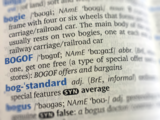
There is something very attractive about the idea of getting two things for the price of one. One of the more striking new words to enter the English language in recent times is BOGOF. This is an abbreviation based on the initial letters of the phrase ‘buy one, get one free’; as this suggests, it refers to a special offer in a shop that allows you to receive an extra item free of charge when you make a purchase. The fact that the word is pronounced the same as bog off, which is a mildly offensive way of telling somebody to go away, makes it sound slightly rude, and this has no doubt added to its popularity.
If the idea of getting something extra for their money is attractive to shoppers, then learners of English should be encouraged by the idea that learning one word will often bring another word - and often more than one word - into their vocabulary, virtually free of charge.
If you learn a noun, you can often form a related adjective by adding a short suffix. For example, adding the ending -y creates chilly from chill, cloudy from cloud, and dirty from dirt.
Similarly, many verbs give rise to a noun that ends in either -ment or -tion: entertain, govern, and measure lead to entertainment, government, and measurement, while collect, educate, and invent lead to collection, education, and invention.
If only you could apply these suffixes to every noun or every verb then you could increase your vocabulary enormously. Unfortunately, English is rarely as simple as that. You can’t just add the ending -y to any noun. For example, there are no words booky or cuppy. And even when you can add a -y to a noun, the meaning may not be what you expect: thus catty means ‘spiteful’ rather than ‘like a cat’ and not all bosses would like to be described as bossy.
However, there are some typical patterns of word generation that are worth knowing, and in this blog I want to look at how verbs with certain endings tend to generate a related abstract noun ending in -tion or -sion.
The most common pattern here is that verbs that end in -ate will usually form an abstract noun ending in -ation: calculate/calculation, celebrate/celebration. Other common patterns are that verbs ending in -ize (or -ise in British English) form nouns ending in -ization/-isation (organize/organization) and verbs ending in -act and -ect form nouns ending in -action and -ection (react/reaction, connect/connection).
I should stress that not every single verb with these endings will form an abstract noun that ends in -tion. But most of them will, and when they do, the noun is formed in a regular way, with no change to the stem of the word.
However, there are some interesting verb endings that form abstract nouns in less obvious ways:
Verbs ending in -duce form nouns ending in -duction: produce/production, reduce/reduction.
Verbs ending in -mit usually form nouns ending in -mission: permit/permission, admit/admission.
Verbs ending in -cede usually form nouns ending in -cession: recede/recession, concede/concession.
When other verbs ending in -de form abstract nouns, the nouns end in -sion: decide/decision, explode/explosion, intrude/intrusion.
Keeping these points in mind can help learners to increase their vocabulary two words at a time rather than word by word: learn one word, get one free!Filed under: Adults / Young Adults, Dictionaries & Reference, Grammar & Vocabulary Tagged: Abstract nouns, Grammar, Ian Brookes, Noun endings, Nouns, OALD, Oxford Advanced Learner's Dictionary, Oxford Wordpower Dictionary, Verb endings, Vocabulary
Oxford University Press ELT blog
.
Blog
.
<span class='date ' tip=''><i class='icon-time'></i> Jul 23, 2015 09:54am</span>
|