Blogs
|
If you are having trouble getting started, you may have to to force yourself! Here are 9 helpful tips on how to start blogging to get you over your inertia.
Source: www.lifehack.org
See on Scoop.it - InformationCommunication (ICT)
Mr Kirsch's ICT Class Blog
.
Blog
.
<span class='date ' tip=''><i class='icon-time'></i> Jul 23, 2015 10:19am</span>
|
|
Prefer to read "Don’t Make these Top 4 Mistakes When Creating a WordPress LMS site"
Joshua: Hello, everyone. We are back today with another episode of LMSCast. I’m Joshua Millage, and I’m joined with Christopher Badgett. Today, it’s going to be a really fun episode because it’s going to help you avoid some landmines when you’re creating your WordPress LMS course. Chris, we’ve got four topics, four things you should avoid doing when you’re creating your WordPress LMS course. Kick it off, man. What’s the first one?
Christopher: All right. Awesome. One mistake that we see happening in the industry is, in general, I would just call it feature creep. What that means for a WordPress LMS course is that you’re just … You have a lot … The thing is education entrepreneurs, they’re creative. They’re smart. They’re intelligent. They want to like do all these different things with their courses. The way we built the Lifter LMS plugin is we’re making it, so they can do a lot of the core things that you need to do when you want to touch online and there’s various functionality there that you can turn.
Almost always with a WordPress-powered Learning Management System, people want to extend and go further which is great and totally possible. That’s one of the beautiful things about the WordPress framework as a development base for additional functionality, additional plugins like we talked about in the previous episode. What ends up happening a lot of times is if someone is like, "Wouldn’t it be nice if we could also do X, Y, and Z? It’s not an option in the plugin."
That kind of thing, I’ve seen it delay a lot of people for launching, and getting to revenue, and getting to impacting lives, and getting their business launched or jus their course platform launched as quickly as they really could. They get bogged down in feature creep.
Joshua: Yeah. I think it’s a great point, man. It means like people are coming for the content that’s in your one course. Maybe in time, they’re coming for multiple courses, but it’s like focus on the absolute essentials out of the gate and make sure you’re getting those right. I had a call today with someone that … He’s a good friend of both of ours, Charles Gaudet. Charles is just a brilliant marketer, teacher in his own right, and he said something that really struck me.
He said, "If these marketers could just understand that if their course …" He’s talking about marketers, so you got to apply this to your own life, but he’s like, "If the marketers can understand if their course actually helped people like if the content of the course actually helped people," he’s like, "They would have more business, more leads, and more profit than they would know what to do with because the course itself changed that person."
Christopher: It’s like the old outage, "Form follows function." We would modify that slightly to say that additional functionality follows the course content. That’s the … Yeah.
Joshua: Exactly, but the lie that we tell ourselves is, "Oh, I don’t have that X, Y, or Z," things that we talked about. One of the things I think is great is we have a system that gives you Swiss Army knife of all the essential tools that you need to build your course with Lifter LMS. At the same time, even if you’re using LearnDash, WP Courseware, or ZP Courses for the … More of the marketers or even if you’re trying to put this in a membership, it applies to everybody.
It’s like create killer content right out of the gate and don’t get so focused on all the whiz-bangs that go around it. That stuff is nice as time goes on. I would just say engage, engage, engage, and engage some more, and he who engages the most will win. That’s the quotable, I think, for today.
Christopher: Absolutely. Just to piggyback on that, I’d come into the mistake number two that we see happening. This is especially for someone who’s just starting their first online course platform is too many courses, and that you can always rollout your WordPress LMS platform with just one course, and now you’re on the market if you’re selling your courses and you’re up and running. If you’re like, "Oh, wait. I need to get a course ready for this. I need to get a course ready for this."
If you’re starting from scratch, that can like really delay and also demotivates you because you don’t feel like you’re getting any closer to launching and actually connecting with students and impacting lives. Especially for the complete beginner. If you don’t already have all these course content created, just focus on just one course.
Joshua: Yeah. I think that’s huge. I think the best online schools, especially the independent ones, they have courses that fall logical sequence that build on each other which I think is really a unique opportunity. Like you go to college, you have all of these different degrees, right? You have all of these different pathways, these different journeys you could take, and things build on each other. Prerequisites build on each other. I think it’s important to do that instead of just having a course on everything.
Christopher: Yeah.
Joshua: It’s like someone … You got to build that power line and that power band. It makes sense, and you can have a much greater impact I think from a learning standpoint as well as it’s just so much easier to market and sell something that plays into the next thing, in the next … 101 to 201, et cetera. That’s a really good tip. What else, Chris?
Christopher: The mistake number three that we see a lot is actually piggybacking on both those things, and it’s creating other offers that you want to launch with in addition to your courses. It’s just … Overall, it’s a tendency to overcomplicate things. What I mean by that is if you’re going to sell a course and then you’re like, "Oh, I should … I need to make or also sell this complementary product I have with it that’s not ready or already for sale on my website. I need to get that ready too." Now, you’re juggling a different kind of ecommerce with your LMS.
It just interjected a lot of complexity in the mix. Of course, it’s important to have courses. Then if your business model supports it, they have other things like physical products, eBooks, coaching opportunities, one-on-one or group. All these other things can be added in, but if you’re just trying to launch, just launch with the course first before you start trying to build all these pieces and like launch it all at the same time. Building a WordPress Learning Management System is more of a process than like there’s one event that only happens once.
Joshua: I think it’s a … It’s the marathon mindset.
Christopher: Yeah.
Joshua: I don’t think we have ever said or I know we will never say that this is a get-rich-quick thing.
Christopher: Yeah.
Joshua: It’s not. It’s just … It’s not going to be that. If anyone is listening who thinks that building an online course is like the lottery ticket, I would suggest shutting off our podcast and not listening to it because that’s not at all what we teach, and that’s not how it works. It’s an iterative process. It’s really focusing on value from course to course, to course and making things roll out in a way that makes sense. I love that.
Christopher: Absolute …
Joshua: Number four?
Christopher: Number four and the final mistake that we see a trend that we’d like to bring to your attention is just not outsourcing when you need to. What happens is, especially with educational entrepreneurs, is often times, there’s a lot of like knowledge in like the course material, but then they get bogged down in the tech or they get bogged down in graphic or other custom development.
If you’re running into issues with your course, instead of just like just trying to teach yourself how to program or trying to teach yourself how to do graphic design on Pixlr or something like that, sometimes it’s just so much more worth it and so much more profitable in the long run and get better results by going to someone who’s specializes in that thing. To give a few examples of what that could be, courses tend to have like a featured image that represents the course.
Designing that image is like really important to grabbing attention like we talked about in our episode about creating a sales letter and selling your course. If you’re not a graphic designer, you can spend $5 on a website like Fiber and see what someone comes up with as an idea to represent your course.
Joshua: Yeah.
Christopher: The same is true for development. If you run into some issue with the theme you changed and you want to change some sizes and colors that aren’t really part of the Lifter LMS plugin or whatever you’re using or your WordPress theme and you can’t figure it out, you probably need a developer to help you with it and something that may take them like, "Oh," just like 60 seconds. You might waste two hours like trying to figure that out on your own or more, so things like that, development, design.
We did the episode about multimedia and learning styles. If you need help with like creating the video part of your online course material, maybe grab some help, throwing out on Craigslist and see what you can get for a local video person to come help you out or audio person and that kind of thing. The same for the written word. You can get back up on the writing part if you’re doing downloadable PDFs and so on.
Joshua: Let me give a real good example. This podcast as well as the other podcasts I run in FusionCast, it’s a lot of work, man. Six episodes a week, I can’t handle it. I recently brought on a phenomenal assistant named Kara. She’s going to help with the syndication process of this. I got a guy down in Arizona who’s going to help me with actually … We give him the transcript. He’s going to help us with creating the actual post. We’re bringing people into the fold as time goes on. Does it cost money? Yes, it cost money, but it’s investing in the business.
It’s also the innovation and suggestions that come from people like our writers and producers like Kara is huge because they’re going to see things that we don’t see, and that’s another added benefit of outsourcing. I don’t think a lot of people consider or even put on their radar. I know that like one of the things that people say about CodeBOX which is the company where you and I are partners is that we innovate with people.
They’ll come to us for a project, but in the progression of that project, we come up with ideas for them, different ways of structuring their LMS system if that’s what they’re coming to building, or traditionally where we’ve come from is Infusionsoft, coming up with new marketing campaigns and things where … It’s another value add. We don’t need a charge for that, but was just part of our culture. I think that’s the thing.
If you build a culture of that in your eLearning system where you’re bringing on contractors and you’re encouraging them to give you ideas, for one, they’re going to love working with you because they have ideas, but no one ever gives them the platform to share those. That’s really fulfilling because a lot of times, people look at these contractors, their outsourcers, as hired guns. "I’m going to pay you money. You give me a product." Yeah, that’s like very … That’s not very human like allow them to suggest things and build that platform. It’s only going to help you.
I think it’s really a hidden benefit of spreading the work out. The biggest thing is it gives you more time and energy to be creative and do what you do best too. Let’s not forget the primary reason here either, but there’s a lot of secondary really good reasons to get comfortable with that. One book I want to suggest is by Chris Ducker, "Virtual Freedom." If you’ve been in the internet marketing world, I’m sure you’ve heard this book mentioned.
It is a truly phenomenal book. I don’t say that very often because I read about a book a week, and I’d say half the books I read every year, I just can’t suggest, but his book is really good. It has a lot of ways of looking at outsourcing, so check that out when you get a chance.
Christopher: Awesome. I would just close it out with one more book recommendation in line of what we’re talking about here with outsourcing, and building systems, and keeping as education entrepreneur whether you’re marketer, teacher, an artist, or some kind of subject matter expert is to focus on your … Stuff that you can be in your zone of genius, and that book is called "Work the System" by Sam Carpenter. It had a huge impact on my life, so there’s another one.
Joshua: Yeah. I actually think that if you’re going to make a decision whether to read a book about systemization whether it’s getting things done … I can’t really put "The 4-Hour Work Week" in there, but that’s a pretty good book too, but "Work the System" lays it out. It’s very straightforward on how to do this and how to build processes. I think it’s a really, really, really good book to … It’s like foundational learning, so I would suggest checking that out too.
With that, we’re going to close up today’s episode. We’ve got another one right around the corner for you, so stay tuned. If you haven’t already, go to LMSCast.com and hit the "Subscribe" button, and we will email you every time we have a new episode available. Thank you so much, and have a great day.
The post Don’t Make these Top 4 Mistakes When Creating a WordPress LMS site appeared first on LMScast.
Joshua Millage & Chris Badgett
.
Blog
.
<span class='date ' tip=''><i class='icon-time'></i> Jul 23, 2015 10:19am</span>
|
|
Teaching coding in schools is a growing effervescent trend. The late Steve Jobs of Apple stated, "Everybody in the country should learn how to program a computer... because it teaches you how to think." But not only Mr Jobs had something to say; the supporters of this phenomenon are increasing endlessly. The BBC, among others, has launched a campaign in favour of learning coding (http://goo.gl/AHvVpV @Wired). In the same way, many governments have made up their minds to follow the lead; for instance, in Spain’s capital city, Madrid, the Education Department (@educamadrid) decided to include one hour a week to teach it as a mandatory subject last year, having achieved the initiative a great impact (http://goo.gl/Jp3qg6 @elpais_espana). In the USA, political parties joined to support the Hour of Code some months ago http://goo.gl/THaKfi @theverge). Even the world of fashion has been spreading the word actively with the help of some top models, like Karlie Kloss (@karliekloss), encouraging girls to learn coding (#KodeWithKarlie). And recently, the giant Microsoft has partnered with the CoderDojo Foundation.Read the whole article in Edtechreview.in
Adoni Sanz
.
Blog
.
<span class='date ' tip=''><i class='icon-time'></i> Jul 23, 2015 10:19am</span>
|
|
Comic Strip - Digital Citizenship Scenarios.
Please create a comic strip on some aspect of Digital Citizenship utilizing Pixton! Keep in mind all the different scenarios you could create: social media safety, cyberbullying, gossip, posting "too much" information, and/or plagiarism!! Please embed your Comic Strip Scenerio on YOUR blog by Friday, February 6, 2015 by 5:00 pm.
Student Example:
Mr Kirsch's ICT Class Blog
.
Blog
.
<span class='date ' tip=''><i class='icon-time'></i> Jul 23, 2015 10:18am</span>
|
|
When designing an online course, one element to consider is the inclusion of quizzes or tests. You may choose to include them for a grade, or as an option to aid self-study. You may not need to include them at all. But you do have to make a decision about them.
A test can be used as a lesson summary, a gateway to the next lesson, or an assessment of student progress. In order to function in your course design, including quizzes and tests should:
Be a positive, anxiety-free experience for students
Reinforce learning for each assignment
Be necessary to your course architecture
Support your learning philosophies
Keeping the quiz short helps reduce test anxiety for students. One solution is to have a large test battery, but only show a few questions at a time. Questions should be challenging, but not unnecessarily difficult. Consider calling the assessment a "challenge" instead of a quiz or test. You can also gamify the quiz and make it fun.
An optional quiz at the end of an assignment can aid in quick assimilation and learning retention by reinforcing what has been studied. Thinking about it in a different context helps to internalize the subject matter.
Of course, for professional accreditations such as medical, technical and legal professions, testing is a requirement for certification. In some other applications, however, quizzes and tests may not be necessary at all. The point is to help the student progress through the lessons and achieve the skills and knowledge they expected as well as be prepared to purchase the next level of coursework.
Assessment results can also help designers improve future versions of course offerings. If students are having trouble with the quizzes, don’t assume the students are the problem. Be willing to reevaluate the course design and measure success by how well students do on the next set of tests. Getting direct feedback from students upon course completion is also an excellent way to improve future course offerings.
In designing online courses with a system like Lifter LMS there are far more options available than ever before. For continuing improvement, always be thinking in terms of, "What if I could…" and then find a way to do that.
Here is the transcript for the "How to Design Effective Quizzes and Assignments" episode:
Joshua: Hello everyone! We are back today with another episode of LMS Cast. My name is Joshua Millage and I am joined with Christopher Badgett. Today is going to be exciting because we’re going to be talking about something that is highly requested in our Lifter LMS plug-in. We’re not really going to talk about the plug-in specifically more of the philosophical ideas behind quizzes and tests. How we should think about quizzes and tests when we’re designing an online course.
Chris, the mike is on you man. You have a lot of great ideas on how we should look about this particular area of an online course and the importance of placing it as, I guess you would say, gate to other pieces of the course or to actually gauge the acumen of your student.
Chris: Absolutely! I think if you’re building a word press learning management system, the first question when it comes to quizzes and assignments is, "Do you even need that?" If you’re, there’s a lot of instances where you don’t really need quizzes. If your lessons just stand on their own, there’s lots of situations where you don’t need it.
If you do need it, the real function of a quiz, and we have to help our students get over the psychological baggage that comes from memory of not liking quizzes or not liking tests. I think it’s really important as an education entrepreneur to approach quizzes without bringing any baggage of what it used to be like when you’re in school as a kid, anything like that.
Joshua: That’s such a good point because I didn’t even want to do this but I can’t [inaudible 00:01:41].
Chris: Yes.
Joshua: I was like, "I don’t want to talk about quizzes and tests, but I think it’s different with online education because we can gather so much more data. It’s also it’s not always about just memorization. I think that’s something that’s different about online courses, at least the ones I have taken.
Sometimes, especially if it’s a technical program I’m allowed it’s something I’m doing as the course is telling me what to do, which is really fun. I think the quiz in that scenario should be totally different than … you say quiz I automatically think SAT. It bums me up.
Chris: Yes, that’s the thing! As the education entrepreneurs, we need to get over that and we need to help in our approach with it with our customers or our students to not feel that way. You know what? I think the big philosophy there is that quizzes should be there to reinforce learning. That is the number one thing of why they are buttoned.
Joshua: I think that’s the quotable is it should reinforce. How do you do that? You’ve run a lot of online courses and on a lot of different platforms from Udemy to doing your own. You’ve had a course on the academy theme. Prior to Lifter LMS you’ve been all over the place. What have you seen is a good way to use quizzes to engage your students?
Chris: That’s really an "it depends" question. I think it’s one thing. It’s making that reinforced learning, and then it’s another thing which is making it fun. Let’s start with just making it fun. With Lifter LMS and other platforms, sometimes you can get a badge or you hear that word "gamification". If you pass this quiz you get a badge. If someone has a challenge it’s fun. They want to see their profile page fill up with badges.
Joshua: Yes.
Chris: A quiz is just a part of that journey. That’s one way we can make it fun. The other way to make it fun is to get away from that negative mindset where quizzes sometimes if they are designed poorly in a multiple-choice situation, it’s like they’re trying to trick you. You can’t really tell what’s different between A and B. Don’t be like that! Do it in a way that really reinforces learning.
Joshua: Yes.
Chris: To talk about that a little bit, with the LMS plug-in we’re going to be putting a lot of focus on the quiz architecture. Right now we’re launching with the basic functionality of multiple-choice and assignments where a student can upload something and then the teacher gets it. It’s up to the teacher to manually approve it, that kind of thing. That’s the foundation. From there, there are so many different areas we can go.
Another way that we’re making it fun and less intimidating is that we’re going to have the option to not list every single question on the page so that you have this long list. They can focus on one thing at a time.
Joshua: It’s amazing!
Chris: Then move on to the next one. That’s cool. The other thing is it’s really it depends, because maybe you really do need quizzes. If you’re in a medical certification or a legal profession, it’s important. Maybe you have a governing body that requires certain types of questions and also a passing percentage before you’re allowed to receive the certificate that then allows you to continue on your profession or have some credentials to get a job or that kind of thing.
If you’re just using quizzes to reinforce learning, you can make them fun and also make them optional. Make it so that the student can even skip it if they don’t want it or they could take it and fail and still go on to the next one. That quiz was an opportunity to at least get people thinking about the ideas they’re trying to learn a second time.
Joshua: Yes. One of the things that I think is cool is maybe a little bit of a heck. I like the word "heck". It’s taking the quiz architecture in LMS and actually using it as a feedback system so that you can continually improve your course. I think a lot of people don’t think of a quiz like utilizing a quiz that way, but there’s ways to ask questions to see whether or not people are actually learning with that piece of content that you put out there.
I look at my father who is he is retiring this year, but he’s taught marketing principles and real estate and all sorts of different business classes for over 30 years. I think it’s 36 years. That is insane to me!
Chris: Yes.
Joshua: One of the things that he said is that the difference between good and bad teachers in his mind is that a good teacher never thinks that they are the expert. They are an expert but they don’t have that arrogance complex. What they’re doing with quizzes is they’re looking at, "A lot of students didn’t do so well here. I need to take that as feedback of what did I do in my teaching to help them see and connect the dots here?" I think it is.
Chris: That’s a really great point.
Joshua: Yes, it’s humble. You have to be humble about it. I think this is something that has to happen in the eLearning space online. It has to because there is so much noise. People put content up. I’m guilty of it. I put a lot of podcasts, I were almost 30 episodes in my other podcast in Fusion Cast. Even though that’s not a quiz, the concept is the same. It’s like going back. What was share well? What did I get a lot of comments on?
Allowing that to inform my next step it takes a lot of energy, but I think it’s important. When I look at quizzes and tests I think like, "Let’s ask questions that are challenging. Let’s reinforce learning like you said, but let’s also decompress what the outcome is of that quiz or that test. Utilize that to follow up and engage the student to make sure that they’re learning. If they fail with our plug-in, but you don’t have to do this in the plug-in, you could see who failed." Take the time to email that person!
Chris: Yes.
Joshua: "I saw that you failed and I just want to reach out. Is there anything that I didn’t explain well?" You might actually learn that you’re completely missing something in your content. You actually may get go recreate that video or audio or add a paragraph if it’s text. I think it’s really important to look at it that way too. Cool!
Chris: That’s great. That’s such a good point right there in the sense that we have had other episodes about the difference between a passive membership site that’s all about they’re on up okay, well. It’s more of the marketer mindset of, "I just need to get sales. I want to get conversions, get people in my members’ area. Then, boom! There’s my content.
Joshua: Yes.
Chris: We’re taking this whole other approach where yes, that is important. We’re also, once people get in here, we want to use quiz functionality to reinforce their learning and helping people get through the process of learning and achieving that skill or that desired outcome that they, "What’s their motivation for buying the course in the beginning?"
Joshua: Yes, absolutely! Thanks, Chris. I’m not as nervous as I was talking about quizzes and tests. I’m a little bit more chilled out now. I think this is some shortened to the point, but there’s a lot of value here if people chew on it and think about their quizzes and tests as in.
I want to bring in an idea too to close this out from a guy interviewed in Fusion Cast. His name is Jermaine Griggs. In the Fusion soft world he is someone who he is the Michael Jordan. He writes. He was telling me that he has this question that he writes down sometimes just to reinforce. "What if I could? What if I could? What if I could?" It’s this continuing improvement idea.
I think with quizzes and tests it’s like, what if I could make this content more applicable in someone’s day-to-day life? What if I could? He starts to ask these questions. He gets these really innovative ideas by asking, "What if I could?" He doesn’t pressurize himself.
I think when we’re creating quizzes and tests with a system like Lifter LMS that has the ability to expand and connect to other things, what if I could send an email after they answered a question correctly or wrong? What if I could start to get really creative? I think that’s what is going to breed such insane innovation in this online earning space. Actually, hopefully changes the way that people learn, makes it more.
For me, I think one of the metrics I look at is knowledge retention and the speed to get the knowledge in your head to the knowledge in my head. What if I could make that happen? What would that look like? What would the system look like? What would it have to do? That’s one of them that I’ve been thinking about a lot lately. Yes, I wanted to end with that. Do you have any final thoughts for people?
Chris: Yes, I’m going to piggyback on what you said. That would be, "What if I could make quizzes and tests more appealing, more fun?" There’s a really simple thing you can do. Don’t call it a "test" or a "quiz"! Call it a "challenge".
Joshua: Yes.
Chris: Come up with your own name for it. Don’t call your lessons "lessons". Call them something else. Bring the fun factor up.
Joshua: Yes, words are powerful. It’s really important that we use a vernacular that connects with people and is a little bit more energetic than the stodgy lessons and courses and quizzes and things. Awesome! All right man. We’ll close out on that as a good nugget of wisdom until Thursday. We’ll see you then! Awesome! That was good.
Chris: Hang up and start over.
The post How to Design Effective Quizes and Assignments appeared first on LMScast.
Joshua Millage & Chris Badgett
.
Blog
.
<span class='date ' tip=''><i class='icon-time'></i> Jul 23, 2015 10:18am</span>
|
|
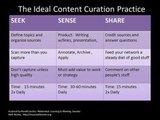
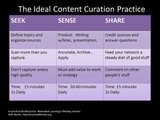
Content curation is the process of collecting, organizing and displaying information relevant to a particular topic. Teacher content curation can be used by students and students can be asked to sh…
Source: coachpanther.wordpress.com
See on Scoop.it - InformationCommunication (ICT)
Mr Kirsch's ICT Class Blog
.
Blog
.
<span class='date ' tip=''><i class='icon-time'></i> Jul 23, 2015 10:18am</span>
|
|
A real challenge in online course design is achieving balance between an attractive theme and the learning core. People often get caught up in all of the exciting visual elements available to them with WordPress themes, but too many design elements, or a lack of visual continuity, can distract users from course content and make your course modules hard to use.
Because of this potential for user distraction and confusion, a minimalist approach is generally the best way to design your online course offerings. Future episodes of LMScast will cover design subjects like flip classrooms and blended learning for WordPress based LMS in depth. Right now let’s start with the basics of choosing the best WordPress theme to support and enhance your online learning environment.
The reason minimalism works well for elearning is because the focus of your course is the course content. Content includes audio, video, images and text. Content is what people really want to buy from you, so design should be clean and professional with the focus on learning.
Creating simple design that works sounds easy, but it’s actually more challenging to make fewer design elements deliver more impact while making your content both attractive and accessible. You also want to make sure your design promotes your branding, makes navigation intuitive, and creates a cohesive look to your course offerings. Some of the ways this can be accomplished include:
Choosing fonts and typography that are complimentary and easy to read
Using a simple yet visually attractive color scheme
Designing for multiple viewing platforms, including mobile devices
Keeping your design visually engaging without being distracting
The visual design of your online courses is crucial to how your customers and users will perceive the quality of your elearning products. Your users need to experience easy access to content in an online environment that keeps them engaged and helps them learn. Lifter LMS will offer you exceptional choices in minimalistic, focused theme options to make users want to interact with your courses.
Prefer a transcript on Wordpress Based LMS Theme Design Ideas
Joshua: Hello, everyone. We’re back with another episode of LMSCast. I am Joshua Millage and I’m joined today with my good friend Christopher Badgette. Today, we’re talking about something really, really, really important and it’s all about design. We’re going to give you some WordPress based LMS theme design ideas and I want to start it off because I think a lot of us think we have to add a lot of elements to our design to make it really, really important and flashy, and to get people interested. That’s just not the case.
Actually, as Chris, you’re going to recommend. You suggest doing completely the opposite being a minimalist. What do you mean by that? How do you be a minimalist with your course, the visual design of your course?
Christopher: Well, for a WordPress based LMS, we talk about design a lot. We’re going to do more episodes in the future about instructional design and this designing learning, and these things like flip classrooms, and all these other ways of looking at learning, and blended learning online. That’s not what we’re talking about today.
What we’re talking about, which is also a rabbit hole we’ve seen people go down not just in LMS, but in the WordPress base in general is like, "Oh, my God. Which theme am I going to use for my WordPress website?" People spent a lot of time looking and shopping around for WordPress themes. In this episode, we’re going to talk specifically about a WordPress LMS theme and what you want to look for if you’re into minimalism.
Let me start off by saying, the reason minimalism is really important in eLearning is because when you get somebody into your site either before they buy the course or sign-up and subscribe, or while they’re inside the course itself, minimalism is great because you’re not distracting people with bright colors and fancy images around the content. You want the focus to be on your actual course content which may include video, audio, and text. That’s why minimalism is so powerful just to keep the focus on the learning and not on the design.
Joshua: Right. I think it’s huge. I think there’s a couple plugins that have recently been released that do a really good job of keeping the minimalist focus. My hat’s off to actually to a competitor of ours which is Derek Halpern in Zippy Courses because that theme that comes with that plugin is really, really beautiful in my mind. I think they did an incredible job of just making that really clean-cut and making the courses stand out on their own two feet which is huge, so hats off to those guys.
I know that we have plans in the progression for a lifter to create a really minimalistic focused theme that people can use or choose not to. They can integrate it into their own sites, but I think the huge part about it is just keeping the focus on the course content and not distracting the course content. That’s why people buy. That’s why people are with you. That’s why they’re students is they want your content. They don’t want the crazy.
If you’re thinking about the late 1990s, early 2000s, the arrow is here and the highlighted stuff. It’s like we don’t need that anymore. We just need the course content. What are some other ideas, Chris, that you would suggest for listeners?
Christopher: Well, if you’re getting a minimalist design, it’s actually really challenging. It sounds like, "oh, I just put less on there," but it’s really an art to what to take away. But let me back into how you can do that and say that just because you’re a minimalist in taking things away or not putting some things there, you still have a huge opportunity for branding and injecting design into the user experience. A couple of key areas of that, I can just give two really great examples.
One is typography which includes your font selection. That can be huge in the general vibe of your site. I never recommend using more than two, three maximum fonts on your site. Even in most cases, one font for everything is great. If you want to do two fonts in web design, and this comes through in learning management systems when you have a headline and then the actual body text or the paragraph text below that. You can have a different font for the headings they’re called and then a complimentary font for the actual body, but focus on making it readable. Don’t get too creative on it so that it’s hard to read. Think about the fact that someone may be experiencing your course on a smartphone, so that font needs to be really readable.
If you want to look at some great Google web font combinations which Google web fonts are free to use, you can just Google that, Google web font combinations and you can find some great examples of complimentary fonts that go well together. Within fonts it’s also like the size you select. If you have an older audience, maybe you want to go to a bigger font like 16 or even 18 pixels … Go ahead.
Joshua: I just want to jump in here, Chris. I just read an article about conversion which is not, I don’t think, the primary focus of people who are learning management systems, but one thing that we talk a lot about is engagement. Readability is a big part of that. It was suggesting that you should use a Sans Serif font for the headline and a Serif font for the body text, and create that variation between the two just for readability. The I sees the differentiation in the two fonts styles and it allows you to see the sections and the headers, and things a little bit easier.
I do think that that’s important though to consider when you’re putting together the visual design because you want the I to be able to track through the content. You don’t want it to be fatigued. You don’t want it to look like a wall of text. You don’t want people to be like, "Ah! I get so …" You know? This is one of my biggest frustrations actually with a big player in the market, Blackboard, is they lock down these styles. It’s really frustrating because you can’t modify the look and feel.
If you take a course from Phoenix, well, I think the University of Phoenix is on some other system now, but I’ve taken a lot of online courses in my day and they all look the same. Then your eye, you just get tired of it, man. You’re just like, "I want to do something else." I think it’s important to have some slight variation, but take into consideration that it is important to make things beautiful. You know?
Christopher: Absolutely. That’s a great point about avoiding the wall of text. Another thing you can do is just focus on the spacing between the letters in addition to font size. Also, like Joshua is saying, to avoid a wall of text consider just using bullet points more and more headlines and sub-headlines to break it up because the reality is, online, even in WordPress based LMS online courses is people scan. If you want to capture them while they’re scanning and not intimidate them with walls of text, use those other things in your actual content and that comes through as a form of design and branding.
The other big one I just want to bring to light is if you were only going to focus on two things for a minimalist design, I would say typography which we just discussed and then color. Really, when it comes down to color, keep your color palette simple. I like the idea of the action color for links and buttons. If somebody can click on something, make that just one color so that they know, OK, here is something that’s bright blue or here is something that’s green or pink, or whatever it is, but just use only that color for links and buttons, and things of that nature.
Then the actual text content itself, go with something pretty plain like a gray. That’s, in minimalist design, a big mistake people make is they think in terms of black and white. But if you really open up your mind to the full spectrum of grays, you can create incredible design especially for just body fonts by using different shades of gray that look great and elegant, and high-end, and polished.
Joshua: I love that. Well, I think we’ve given a lot of great design tips today. I hope people take this into consideration because I think the LMS community as a whole could use a little bit of a design upgrade, so I think there is some definite key takeaways here. Do you have any final thoughts for the audience, Chris?
Christopher: That’s it. If you want to explore fonts, just go ahead and type in Google web fonts and there is a collection of 650 fonts there that you can play around with and start brainstorming ideas. That’s a great place to start.
Joshua: That’s fantastic. Well, if you haven’t already, head over to lmscast.com and subscribe to our email newsletter so that we can update you every time there’s a new episode as well as some of the cool new developments that we’re seeing in the LMS space. I hope you have a great day and we’ll talk to you soon.
The post WordPress Based LMS Theme Design Ideas appeared first on LMScast.
Joshua Millage & Chris Badgett
.
Blog
.
<span class='date ' tip=''><i class='icon-time'></i> Jul 23, 2015 10:18am</span>
|
|
Today’s question for the Q: Skills for Success authors: Do you have any advice for teaching technical English?
Tamara Jones responds.
Do you have a question about teaching English to adults that you’d like to ask our Q author team? Comment below or email your question to qskills@oup.com.
Related articles
Should you give homework to students who only meet with the teacher once a week? (oupeltglobalblog.com)
How do I motivate my students to speak English instead of their native language in class? (oupeltglobalblog.com)
What do I do when I ask the class a question and no-one is speaking? (oupeltglobalblog.com)
Filed under: Adults / Young Adults, Skills Tagged: Adult Learners, Business English, Q Skills for Success, Questions for Q authors, Tamara Jones, Technical English
Oxford University Press ELT blog
.
Blog
.
<span class='date ' tip=''><i class='icon-time'></i> Jul 23, 2015 10:18am</span>
|
|
After spending most of yesterday catching up on blogs, Facebook posts, twitter and linked in, I began to wonder if it was worth it and how I would I would measure the value (in academic terms) of my day. First of all I should note that the day was a pleasant one, with a few good articles uncovered, a joke or three, time wasted trying to find closed articles mentioned in open repositories, a few new slides for upcoming keynotes, updates on a number of colleagues, some interesting conference to keep in mind and a great of peripheral knowledge that I have no idea if it will ever have any use. But was it worth it??
Source: terrya.edublogs.org
See on Scoop.it - InformationCommunication (ICT)
Mr Kirsch's ICT Class Blog
.
Blog
.
<span class='date ' tip=''><i class='icon-time'></i> Jul 23, 2015 10:18am</span>
|
|
Rachel Appleby, co-author of two levels of the new International Express (publishing January 2014), will be offering a sneak preview of the course during her webinar on Wednesday 6th November.
I wonder how you decide which coursebook you’re going to use with your adult professional learners. Not long ago, the choice seemed a lot easier, but there’s so much out there now that it’s much more difficult, not to mention the fact that contexts are changing, and learners are getting more demanding too!
So, what can we do?
Well, I’m always on the look-out for materials that offer flexibility: I don’t necessarily want to work through them page by page, although having a reliable coursebook structure is certainly comforting. What matters most to me is being able to respond to what my learners want, and what motivates them. So that means dealing with language they might need there and then - language they can use immediately after class - and also making sure that topics are up-to-date and inspiring, and will get them talking!
I’m also keen to get my students using new language as much as possible, especially in speaking activities. I have lots of resource books at home, but quite often I find a task which fits their level, but is totally off-topic, or vice versa, and so not really appropriate. That sort of time-wasting can be incredibly frustrating!
So let me tell you about the new edition of International Express. You probably know the earlier editions. I’ve used the different levels at a number of companies, but such a lot has changed since they came out. Learners these days expect to be able to do more in their own time, or at home, which means, I think, that language in coursebooks needs to be even more clearly presented, guiding learners through really carefully, and giving them plenty of practice too.
The new 5-level International Express series is coming out in January 2014, so in fact no-one’s seen it yet (although I have a hunch the Beginner level might already have escaped!). Rest assured that if you were a fan of International Express before, as I was (for its reliability, clarity of language work, and meaningful practice for students), then you’ll find all this here - and more. The content is 100% new, so of course it’s up to date with contemporary global lifestyle topics, including travel and socializing, but it’s still for the professional. And it offers plenty of bite-sized chunks, and flexibility - music to my ears!
But apart from addressing how students want to study, one of the other things I find especially tough these days is "keeping up with the Jones’s", in other words, other teachers! It’s happened to me a few times that a colleague has mentioned "a great video-clip" they used in class, and I simply don’t find it easy to select videos that are going to work with my students. I do think this is what learners are wanting, yet we still have to ensure that what we do in class will support and help their learning, and meet their needs.
As luck would have it, one of the exciting new features of the new International Express is the add-on video for each unit, directly related to each unit topic. They’re handled in such a way that, by the end, the learners are really going to get a sense of achievement in watching the clips; and let’s face it, that’s one of the main confidence boosters I know of in language learning!
So, if you want to be one of the first to look inside the third edition of International Express, perhaps check out a video clip, and see how it’s going to help you and your learners, join me for the webinar on Wednesday 6th November, and I’ll show you more.
It would also be great to see you at the BESIG conference in Prague from Friday 8th - Sunday 10th November. On Saturday 9th, I’ll be using hot-off-the-press International Express materials during my talk entitled ‘Does the customer really know best? Getting the most out of in-company training’. Speak soon!Filed under: Adults / Young Adults, Business & English for Specific Purposes Tagged: Adult professional learners, BESIG, BESIG conference, Business English, Course book, International business, International Express, Rachel Appleby, Webinar
Oxford University Press ELT blog
.
Blog
.
<span class='date ' tip=''><i class='icon-time'></i> Jul 23, 2015 10:18am</span>
|