Blogs
|
Filtered
.
Blog
.
<span class='date ' tip=''><i class='icon-time'></i> Jul 23, 2015 01:49pm</span>
|
|
These days it seems like you could find an online course to teach you just about anything you could ever want or need to know. Having vast amounts of knowledge at your fingertips for a fraction of the price of face-to-face learning seems like a no-brainer right? The answer to that question depends on one very important factor: Will you stay engaged in the training?
Filtered
.
Blog
.
<span class='date ' tip=''><i class='icon-time'></i> Jul 23, 2015 01:49pm</span>
|
|
Filtered
.
Blog
.
<span class='date ' tip=''><i class='icon-time'></i> Jul 23, 2015 01:49pm</span>
|
|
I am probably late to the party on this one, but I recently watched an animation taken from a speech by Sir Ken Robinson entitled Changing Paradigms that focuses on the need for change in education and how we can make it last.
Filtered
.
Blog
.
<span class='date ' tip=''><i class='icon-time'></i> Jul 23, 2015 01:48pm</span>
|
|
For a programmer reliable documentation is always a must. The presence of documentation helps keep track of all aspects of an application and it improves on the quality of a software product. Its main focuses are development, maintenance and knowledge transfer to other developers. Successful documentation will make information easily accessible, provide a limited number of user entry points, help new users learn quickly, simplify the product and help cut support costs. Documentation is usually focused on the following components that make up an application: server environments, business rules, databases/files, troubleshooting, application installation and code deployment.
Filtered
.
Blog
.
<span class='date ' tip=''><i class='icon-time'></i> Jul 23, 2015 01:48pm</span>
|
|
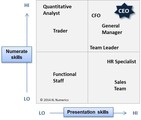
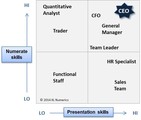
Working with business professionals from a number of different types of organisations, I’m often asked about what’s more important for business success: numerate skills or presentation skills?
If you take a look at this, you can broadly classify the types of skills needed in different business areas:
Filtered
.
Blog
.
<span class='date ' tip=''><i class='icon-time'></i> Jul 23, 2015 01:48pm</span>
|
|
When determining the need for training what better way to find out which members of staff require training than doing a survey right? Wrong.
Filtered
.
Blog
.
<span class='date ' tip=''><i class='icon-time'></i> Jul 23, 2015 01:47pm</span>
|
|
Microsoft SharePoint has often been defined as the ‘Swiss Army Knife’ of collaboration software suits. With over 100 million users worldwide and an average of 20,000 new users each day, SharePoint is used by over 78% of Fortune 500 companies.
Businesses globally use Microsoft SharePoint to increase productivity, efficiency and general organisation. But are they utilising all of its features? Below are five features that we’ve highlighted from SharePoint that you should be using.
Filtered
.
Blog
.
<span class='date ' tip=''><i class='icon-time'></i> Jul 23, 2015 01:47pm</span>
|
|
Time is money. In the learning domain, the longer it takes for employees to become proficient vis a vis competent is a relevant cost incurred by the organisation. It's more than just a cost in terms of training time and total cost of training. It also means longer time to value: the benefit and opportunity added to the business by the employee improving their performance. Training interventions have long been linked to improving performance at the organisational, group and individual levels. It's a given that the vast majority of training an employee will undertake is based on training needs identified somewhere in order to improve their performance and meet their assigned objectives or more effectively complete their work (the improvement of such set as an objective). When looking at the general assignation of training to improve performance, what is trying to be achieved? In short we are looking for employees to gain or improve competencies in a particular domain. However when L&D professionals or a manager are looking at a particular employee, are they looking at whether the employee has completed the training or whether the employees’ competence gap has been addressed? For the L&D person it's generally the former and for the manager and employee, it is the latter. After all, for the employee and manager the training is the means to an end: capability. Now you may be wondering why, for many of you, I'm bringing this up at all. For a decent proportion of L&D professionals linking up objectives, performance improvement and training intervention is standard practice and enables you to actually measure the impact of the intervention more precisely. Well here's the thing. If an employee needs to improve a subset of competences from those covered in an intervention, is having to complete the entire intervention the best way to go about it? What about once they're back on the job and need to apply their new capability in order to meet their performance objectives? It would certainly be a more effective proposition to give them access to training that allowed them to acquire the competencies they need without having to waste time having to engage with competencies they do not need or are already proficient. Furthermore it would probably be extremely beneficial to the employee to be able to access content that they can use to support embedding of their newly acquired competencies as they apply it to their job to meet performance objectives. The benefits to this sort of approach are: 1. Employees are developing the precise competencies they need rather than doing a whole course or a very broad capability 2. Employees can access support directly focused on improving competencies while on the job 3. They are back on the job faster, applying what they've learnt, with confidence that there is effective support material to rely on 4. The experience is focused on value and reducing the time to achieve it both for the organisation and the employee None of the above is hot news. Charles Jennings has been actively promoting the 70:20:10 model. In case you're not sure what this is, it posits that the majority of learning takes place on the job via challenging work (70), a proportion through social interaction with managers and colleagues (20) and a smaller proportion through specific training events (10). The ratios are notional and will vary to a degree but the unmissable fact is that the pursuit of improved competence is a constant activity for the majority of employees. Any training intervention needs to recognise and support this reality if it is to have genuine impact.
Filtered
.
Blog
.
<span class='date ' tip=''><i class='icon-time'></i> Jul 23, 2015 01:47pm</span>
|
|
Project management is central to the work of all organisations. In order to create value, develop and generally succeed, organisations need to launch, manage and evaluate projects of all descriptions.
Filtered
.
Blog
.
<span class='date ' tip=''><i class='icon-time'></i> Jul 23, 2015 01:46pm</span>
|