Blogs
|
Introduction"An intelligence is the ability to solve problems, or to create products, that are valued withinone or more cultural settings." -- Howard E. Gardner, Frames of Mind (1983)There are many theories dealing with how learners learn, what cognitive processes they use, how instruction should be created, what conditions should be provided to facilitate learning, and so on. All these theories apply to a single category of learners and there is no individually tailored method to cater to the varied learning styles of learners. This changed with Howard Gardner's Multiple Intelligence theory. "Human cognitive competence is better described in terms of a set of abilities, talents, or mental skills, which I call intelligence." -- Howard E. Gardner, Multiple Intelligences: New Horizons in Theory and Practice (2006)Gardner took into consideration the cognitive science (the study of the mind) and neuroscience(the study of brain). He believed that every person had an intelligence (mental skills, abilities, talents) but with varying degrees of development and multiple combinations. Therefore, every person/learner has a unique individual intelligence that defines his/her learning style and ability to respond to stimuluses in a unique manner. Let's say, you are meeting with a couple of people for the first time. You introduce yourself, while trying to remember their names and faces simultaneously. Fast forward one week, you see this person and you are trying to remember where you met him - at the meeting of course! But what's his name? Chances are you might not remember that...not because you were not paying attention, but most likely because you belong to the 'Visual-Spatial' intelligence group, the ones who remember things like faces, images, graphics, and pictures more easily, than say names or telephone numbers of people. This theory stress the fact that educators and instructional designers must take into consideration the various types of intelligences have - and then design their instructional materials accordingly. There are seven types of intelligences as per Gardner. Let's take a look at each one:Verbal-Linguistic IntelligenceVisual-Spatial IntelligenceLogical-Mathematical IntelligenceMusical-Rhythmic IntelligenceBodily-Kinesthetic IntelligenceInterpersonal IntelligenceIntrapersonal IntelligenceVerbal-Linguistic IntelligenceIf you fall under this type of intelligence, you most likely have very well developed verbal and auditory skills. You have a highly developed sensitivity to rhythm of words and sounds that those words make. You tend to accumulate knowledge using "language" as a vehicle - reading, writing, and speaking. You think in words, so to describe a picturesque valley or envision the rising sun over the horizon, will come naturally to you. You, like most people with this intelligence, are the ones usually playing scrabble, solving crossword puzzles, writing poetry or novels. You love to be part of discussions, debates, formal speaking, creative writing, assignments and comprehension activities. You are best taught by including 'words' and 'rhythm of words' that make connections in the materials being taught - therefore help you remember things better. Visual-Spatial IntelligenceIf you fall under this type of intelligence, you think in terms of images, illustrations, graphics, pictures, shapes, designs, patterns, textures, and diagrams. For you, a picture is worth a thousand words. You have the ability to visualize any concept and remember it. You have interests in jigsaw puzzles, in reading maps, and in drawing. Designers and architects fall into this category - give the designer a blank room or give the architect a piece of land, and they can come up with the most amazing designs - on a piece of paper. They have an inherent sense of design and colors - what goes with what. You are best taught by including a great deal of pictorial information in the instructional materials. Logical-Mathematical IntelligenceIf you have this intelligence, you are good at reasoning and calculating. You have the ability to think in numbers and patterns. You have a knack to visualize things conceptually and abstractly. You can use numbers, math, and logic to identify patterns in real-life, which are often overlooked by others. You can identify visual patterns, numerical patterns, thought patterns, color patterns and so on and try to make sense out of it. For you, reasoning and logic are part of your inherent process of thinking - and you try to make sense out of everything in terms of these two characteristics. You love solving complex problems and tend to be very systematic and organized. You have a logic explanation to everything you are doing at any time and often try to apply logic to every situation you come across. You enjoy experimenting things, solving puzzles, and debating philosophical questions. To learn anything, you faculty should present you an empty house (abstract concept), which you will fill later - with the details. You enjoy learning through use of games that involve logic and investigations. Musical-Rhythmic IntelligenceAs the name suggests, if you fall in this group, you love the sound of music and the vibration of rhythm. You are sensitive to various sounds and vibrations in your environment - and often react to what you 'hear'. Remember the friend with the ear-plugs on at nearly all times - well, that one was not listening to music all the time - rather was using music to concentrate on other tasks. Or that girl who could remember the entire song that she had heard, only once - well, this is their musical intelligence at play. You can work, study, and concentrate better with music in the background. You like creating music, mimicking different sounds, types of speech, and language accents. You can identify different instruments from a composition. You are best taught by including rhythms and sounds in the instructional materials. This includes using multimedia, CD-ROMs, musical instruments, radios, stereos among others.Bodily-Kinesthetic IntelligenceIf you have this intelligence, you have a heightened sense of awareness about your body. You are the 'learn by doing' types. You like to get involved in physical games, hands-on learning tasks, acting-out things, role-playing activities, dancing, and building things and inventing stuff with your hands.You often perform activities better after seeing someone else perform them first - remember the friend who could copy the precise dance movements of anyone on that TV show - well, that's a bodily-kinesthetic intelligence for you. You can be taught by getting involved in any type of physical activity, else you will get bored easily.Interpersonal IntelligenceYou are the 'go-to' people of a group - need advice, need help, need empathy - you fit the bill. You have a heightened sensitivity to the feelings of others and most of you learn by interacting with other people. You usually have a large group of friends and you tend to develop an empathy towards most people. You have very effective people and communication skills. You are proficient at bringing people out of their shells and getting them involved in discussions. You are skilled at conflict resolution and enabling people with radically opposing views reach a satisfying compromise. Your intelligence group can be called the peacemakers of the society. The best way to teach you is to get people involved somewhere down the line. Group activities, seminars, and dialogs are some modes that interest you as modes of learning. In addition, various media such as audio and video conferencing, individual one-on-one time, and telephonic conversations can also be used.Intrapersonal IntelligenceIf you have this type of intelligence, you have an ability that most people don't- self introspection and self-awareness. How many of us have ever wondered about our purpose on this planet, what we will accomplish in a lifetime (non-materialistic things), or how can we improve ourselves for the greater good? If you answered to any of these questions, you have an intrapersonal intelligence. You have the ability to introspect every situation that you are in, step aside and see it subjectively. Rather than looking outwards for solutions, people with your type of intelligence look inwards for the answers - introspective intelligence. They understand the inside world - emotion, self, values, beliefs, and the ever continuous adventure to attain perfection. You tend shy away from people and tend to be loners. You are self-motivated, confident, strong-willed with an intuitive nature. You will enjoy learning if your learning materials allow you to introspect and to foster independence of thought. Things that can help you learn are books, creative materials, and diaries, all of which will provide the privacy you need (shy nature) and provide an independent learning environment that is best suited for you.
Parul Sharma
.
Blog
.
<span class='date ' tip=''><i class='icon-time'></i> Jul 23, 2015 02:58pm</span>
|
|
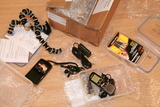
This shoebox arrived in the post today. It is the creation of one of my technical colleagues. It contains everything needed to record video and audio that can be use as additional digital learning resources to accompany an e-textbook that we are working on. There is a compact video camera, audio recording gear, guerilla tripod, cables, instructions, and spare batteries - all in robust snap-lock boxes. The idea is that the shoebox will tour the colleges and the participants will self-record their contributions, which we will later edit and add the clips to a companion website to supplement the e-book. We are trying to streamline the recording process so that we can easily produce high-quality digital resources to augment text and other learning resources for a wide range of subjects. We will document the process so that others can learn from our experiences.
Frank Rennie
.
Blog
.
<span class='date ' tip=''><i class='icon-time'></i> Jul 23, 2015 02:58pm</span>
|
|
http://commons.wikimedia.org/wiki/File:Athlete_at_starting_block.jpg
It seems, therefore, that starting to study for a PhD is much like starting on any new job. On your first days at work you want to feel comfortable, both with your environment and your colleagues. The induction is simple, and after all, mainly common-sense. The student needs to know where to find things that are going to be useful, everything from the desk and chair where they are going to sit, to the facilities that they will be using - the tea-room, the toilets, the laboratory, the library, and so on. They also need to be introduced to the people they will be working with - their fellow postgraduates, the academic staff, the support staff, and most of all, their supervisors. This is going to be the case whether the student has newly arrived at the university or has already studied there as an undergraduate for several years. In the latter case, the evolution from undergraduate to postgraduate might be deceptive, because although there might already be an established familiarity between the students and staff, this relationship will necessarily be subtly changed. When a postgraduate student embarks upon a PhD they are normally treated as an honorary, if temporary, member of staff. They will have more generous permissions for library and IT services than they had as an undergraduate, they might be encouraged, or even expected, to acquire a teaching commitment in the department, and they will certainly be expected to hold there own in academic discussions when their subject area comes up.
In all of these changing circumstances, the supervisor has a mentoring and advisory role for the student, and this relationship needs to be established at the outset. Although the precise topic of the PhD study may have been decided by the supervisor, who has raised the money to support a students, then interviewed and appointed a likely candidate, the fact is that from the moment of embarking, the research topic is owned by the student, not the supervisor. The student must go from a standing start to becoming a recognised expert in this area of research, and this can only be achieved if the student makes the subject their own. The role of the supervisors is to help the student to develop the skills to complete the task. Obviously, the supervisors have a vested interest in the student reaching a successful outcome, but this stops short of actually doing the work for them. The distinction is that the supervisors have already won their own PhD, it is up to the student to rise to the occasion and prove their own abilities.
To start with, this is hard. Possibly the student is over-awed by the reputation of the supervisors or by the academic language that is used to phrase the nature of the challenge. Conversely, they might initially think that this is a continuation of their undergraduate work and that they just need to turn up in class often enough and take good notes in order to pass. Traditionally, PhD students have normally been based on the same campus as the main supervisor, although second and third supervisors might be located on a different campus, or even a different university. Increasingly, however, the use of digital communications, the internet, online library resources, and more flexible ways of work and study, have liberated the PhD study out of the cloisters and into the digital world of distributed education. There are a lot of tools and techniques to encourage and support the tuition of PhD research at a distance, and I would like to draw attention to these over the next few weeks as I ruminate over the experience of the PhD student and the role of the PhD supervisor in a digital environment. Like all tools and techniques, the suggestions made are just suggestions, there is no compulsion to rush out and adopt them uncritically. In addition, the usual caveat applies when discussing digital resources, in that this is a very fast-changing subject area, so software applications and services rise in popularity and disappear without trace; they are improved, superseded, and adapted to suit other purposes. So, much like the PhD process itself, their use is a voyage of discovery and transformation that leads to new ways of thinking about old problems.
Frank Rennie
.
Blog
.
<span class='date ' tip=''><i class='icon-time'></i> Jul 23, 2015 02:57pm</span>
|
|
Increasingly, services which we used to consider could only be delivered face-to-face, are being offered through online media. Supervision of research students is no exception to this trend, and although there is a belief among some supervisors that the PhD student needs to be "just along the corridor" from the supervisors, really this is more for the comfort of the supervisor than the student! In fact, with some aspects of the work of post graduate research students, there is an argument that the student can get more attention, and perhaps better attention, by combining face-to-face with online opportunities. In my work, a recurrent question is, "How can I do this activity with a student who is at a distance"? In some cases it might simply be making use of video-conferencing software, such as Skype, to have an in-depth discussion; in other instances the student can be referred to a host of useful online resources to enhance their skills and knowledge.
In my experience, almost every instance of thinking through the issue of how a face-to-face educational experience can be moved (at least partially) online, means that the re-thinking process strengthens the pedagogy and the educational rationale. In part, this may be because we are fundamentally re-thinking about what is really essential in the educational activity itself (as opposed to how the ‘lesson’ we deliver has evolved away from what we initially started with). On the other hand, experience tells us that there is more than one way of learning/teaching a subject, so adding various online educational resources might be considered simply extending the tool-kit that we have at our disposal, and that we are prepared to share with the student.
A helpful online resource when getting started on a PhD is http://www.findaphd.com as this combines a number of useful resources and networks. Obviously, it can be used to find a PhD position which the prospective student might apply for, but it goes way beyond this. Details of funding opportunities and different types of PhD offers can be viewed and compared. There are sections on the "nuts and bolts" of what constitutes a PhD, as well as advice on how to cope with the most common difficulties, or suggestions of help from a variety of sources - including other PhD students. An interested surfer can browse through the PhD opportunities that are currently on offer, compare the details, and even contact the proposed supervisors in a variety of countries for more information on their research proposal. Most importantly, the surfer can access this information at their own convenience rather than travelling for an hour to ask a question that requires a three-minute answer. For these reasons, I make a point of investigating new online opportunities for each teaching and research activity that crosses my path.
Frank Rennie
.
Blog
.
<span class='date ' tip=''><i class='icon-time'></i> Jul 23, 2015 02:57pm</span>
|
|
I appeared on Fred MacAulay’s programme on BBC Radio Scotland yesterday, talking about online education. The clip is at the end of this piece if you want to listen to it. (It only lasts ten minutes or so). As is often the case with TV and radio media, the content tends to be fairly superficial and fast-changing in order to appeal to the widest range of listeners, but the advantage is that there are a LOT of listeners! In a way, it is interesting how the comments on "degrees by post" or "get a degree without getting out of your pajamas" has given way to a serious radio discussion among a whole range of other items which are simply taken as ‘part of life’.http://www.bbc.co.uk/programmes/b052my7v
Frank Rennie
.
Blog
.
<span class='date ' tip=''><i class='icon-time'></i> Jul 23, 2015 02:56pm</span>
|
|
1.1 The suitability of the research student
What sort of person makes the best PhD student? What characteristics and attributes should a supervisor look for? Fortunately there is no blueprint. Each and every student is different, but there are some common attributes. Obviously, every supervisor hopes for the perfect student, who will be meticulous, self-motivated, well-disciplined, and a competent all-rounder! The reality is that most students who make it as far as being registered for a research degree will have all of these attributes in some measure. Their levels of competence and performance will vary throughout their period of study, and part of the job of a supervisor is to moderate, encourage, and develop these competencies, and perhaps to add a few more skills as the need occurs. The journey of the PhD research student is essentially and fundamentally a voyage of transformation of the student. The person who successfully completes a PhD is really a different person from the one who began; more confident, more skilled, more competent, with a fundamentally changed outlook on their own professional abilities.
In the old days, it was felt that the only way the student could acquire this change of state was for the student to inhabit the same environment as the professor. Not in the same room, of course, but certainly living within shouting distance. What really intrigues me in contemporary academia, is the ability to utilise a wide range of digital technology to narrow the conceptual distance between a supervisor on campus, and a research student at a distance. We frequently take for granted the diversity and sophistication of the digital technology within our easy reach. From ‘simple’ e-mail and Skype, to more complex social media and file-sharing protocols, there is a range of digital tools that, while they have not been specifically designed for academics, are amply suited, with perhaps minor adaptations, to the intimate world of research student supervision.
Traditionally, one, or perhaps two, academics would get together to think about a burning research question that interested them. They would seek funding to cover the costs of employing a student, meet the need of associated costs such as tuition fees, library and IT resources, possibly field work, and so on. Then they would advertise, interview, and appoint a research student, who would come to work full-time under their instruction, usually for around three years, until the student completed writing up and defending a research thesis that (usually) supported and was an extension of the life-work of the main supervisor.
This is still a common model, but fortunately the flexibility and innovation that has evolved at all levels of progressive education, has resulted in a wide range of new study options. It is increasingly frequent for research students to be self-funded, and studying part-time. These students will normally be working - fees and other bills have to be paid - and they may also have family responsibilities - the care of young children or elderly parents - that would make full-time study impossible. On the other hand, what they lose from the energy and momentum of working full-time on an absorbing research project can be made up for by increased time-span for reading, cogitation, and gathering data.
Frank Rennie
.
Blog
.
<span class='date ' tip=''><i class='icon-time'></i> Jul 23, 2015 02:56pm</span>
|
|
There are two key considerations that apply to any student, whatever their mode of study, and it is imperative that the supervisory team make these clear from the outset. Firstly, it needs to be understood and emphasised, by both student and staff, that the research project belongs to the student; only s/he can make a success of this. The supervisors should provide initial direction, and will offer constant advice and reinforcement throughout the period of study, but the important decisions - for better or worse - need to be made by the student. It is the student who will need to advocate and defend the thesis, and who will reap the rewards.
Secondly, the supervisors need to provide for an appropriate induction for the new student as soon as they start working. No matter how smart and self-confident a new student might be, it is wrong to assume that s/he will just "pick things up" as they go along. Whether it is the simple matter of making introductions to co-workers, or the more complex business of learning specific research methods and IT technical skills, a common-sense approach dictates that the supervisors should assume a zero baseline of experience until proven otherwise. Research has clearly shown the benefits of a good induction for students starting on undergraduate courses, and it makes no sense to assume that it would be otherwise for postgraduate research students. In fact, it is very likely that the research students will soon begin to overtake the supervisors, both in the details of their specific research methodology and also, going on current trends, in their adoption and use of new digital applications such as social media services.
For these reasons, it makes sense to have an online, or at least a digital, version of the skill-set and supporting resources that will be issued to research students at their induction. No matter how good your memory is, or how copious your note-taking, there are a lot of new things to remember and the new research student is unlikely to remember them all accurately. Nor do the need to. An online repository of relevant information, either on the institutional intranet, or on the open internet, immediately allows users different levels of access. Slow learners can re-read and re-visit the information at a later date; all learners can visit the information for revision, or when the need-to-know becomes necessary; and fast learners can delve into layers of additional information - the extras that are nice-to-know in greater depth than can normally be covered in tutorial sessions.
Another important point in favour of compiling a suite of resources online is that the very act of being required to think through all the possible situations and resources that might be needed by the research students tends to mean that a comprehensive resource can be built up. The need to prepare in advance for an asynchronous reader at a geographically distant location, rather than photocopying last minute, ad hoc guidance to be handed out in a classroom, generally results in a better designed set of resources. Of course, an additional beauty is that these resources can be updated easily and that they are available 24-7, unlike any supervisor that I know!
Frank Rennie
.
Blog
.
<span class='date ' tip=''><i class='icon-time'></i> Jul 23, 2015 02:55pm</span>
|
|
In the course of a normal year, I frequently help to organise an introductory training sessions for new research students and for lecturers who are just starting out to supervise research students for a PhD. Naturally, one of the issues that we address is to consider what makes a good supervisor. This is both very simple and quite intangible. The simple version is that the good supervisor guides, advises, and supports the research student through the entire process - from the first tentative steps, to the final success at the viva and subsequent graduation. This seems rather obvious, and it is fair to ask for a more detailed breakdown of the roles of a research supervisor, and this is where it gets a bit more complex. Firstly, there are two main roles for a supervisor - the Director of Studies, and the Second (or Third) supervisor. Let’s deal with the main supervisor first.
The Director of Studies (or lead supervisor) is normally the most senior of the supervisors, though this is not always the case. As the main supervisor, s/he will be responsible for the week-by-week guidance of the research student, although the frequency and extent of contact-time will vary widely for different students and subject areas. This supervisor will be the main link between the student and university administration, possibly a Graduate School or similar management section. There will be regular progress monitoring reports to complete (perhaps six-monthly), and these will normally be based upon regular formal meetings with the student to discuss the progress of the research. In addition, there will probably be lots of intervening meetings, of both short and long duration, as the supervisor responds to questions from the student, suggest tasks to perform, or recommends reading to enhance some area of knowledge that the student might benefit from. Some of these meetings might be quick, ad hoc conversations in the corridor or the café, while others will be formal reviews between the student and the whole supervisory team.
Normally the only professional requirements are that a) the supervisor has a PhD already; b) that they have some area of expertise in the subject area that they are proposing to supervise; and c) that they are attached to an academic institution. Frequently, the main supervisor is required by the university to have successfully supervised at least two PhD students to completion, usually undertaken in the more junior position of Second or Third supervisor, but this is not always the case. In certain circumstances, a non-academic expert may also be appointed as an Advisor, rather than a Supervisor, if this person has some relevant specialist skills or knowledge, for instance an important industrial contact.
Like all walks of life, some Directors of Study are more diligent than others, and have greater or lesser social skills and leadership qualities, but basically they all have a vested interest in assisting the student to complete their PhD. Usually the supervisors share a common enthusiasm for the research topic with the student, and helps to co-create the voyage of discovery. Even with the best supervisor, it would be foolish to expect them to know the answer to everything, but hopefully their level of experience should be able to suggest a logical way to discover these answers. I like to give detailed (line by line) feedback on the first pieces of academic writing from the student, so that some guidance on the style of academic writing, the level of detail, and the quality of the text can be established, but some supervisors may take a less hands-on approach. My role is to help the student to understand and deal with the academic challenge that they face during the research project, but it is to guide and offer advice on how they might tackle these challenges, to provide some scaffolding, not to do the work for them.
Frank Rennie
.
Blog
.
<span class='date ' tip=''><i class='icon-time'></i> Jul 23, 2015 02:54pm</span>
|
|
Taking day-long hikes into an exquisite national park like Desolation Wilderness, west of Lake Tahoe, provides a wonderful metaphor for learning: just when we think we’ve reached a destination we have established for ourselves—a summit, a pristine lake, or a meadow—we realize there are even more to pursue. Which is exactly how several of us are feeling in #etmooc, the Educational Technology and Media massive open online course (MOOC) that Alec Couros and others are currently offering through March 2013.
Nearing the end of a two-week exploration of digital literacy that was initiated by Doug Belshaw’s introductory session on the theme, our entire #etmooc learning experience is both extending all around us rhizomatically and circling back in upon itself.
When we think about some of the #etmooc themes—the idea that learners in this sort of (connectivist) MOOC set our own goals within the broad framework established, and that there is no pressure around keeping up or falling behind since we each approach the course with a desire and ability to set our own learning goals and learning pace—we gain a visceral appreciation for and understanding of what a well-run MOOC can offer. And we have to ask ourselves a simple question: how do those concepts play into the challenge of defining and nurturing digital literacy? When, for example, we find ourselves starting with what appears to be a basic course text—Belshaw’s What is ‘digital literacy’?—and then, through our own learning hikes, locating other texts that can be equally engaging, attractive, and important in helping us shape ideas of what digital literacy means to us, we come to the realization that we’re using digital literacy skills we may not have previously considered. This, of course, can’t help but shape our own attempts to define and nurture digital literacy.
Two of those digital learning texts came my way this week through digital connections. The first, Confronting the Challenges of Participatory Culture: Media Education for the 21st Century (2009), caught my attention when a colleague (Cleveland Public Library learning strategist Buffy Hamilton) mentioned it in her Goodreads account. The second, the New Media Consortium’s online publication A Global Imperative: The Report of the 21st Century Summit (2005), came my way directly from the first in that it was mentioned in Confronting the Challenges.
Henry Jenkins and his co-writers, in Confronting the Challenges, engage us in a book-length exploration regarding "core social skills and cultural competencies" for anyone interested in being "full, active, creative, and ethical participants in this emerging participatory culture." The book (available free online as well as in a printed edition) is well worth reading for its concise descriptions of those skills; for the examples provided at the end of each section; and for the summary of those elements on pages 105-106: play, performance, simulation, appropriation, multitasking, distributed cognition, collective intelligence, judgment, transmedia navigation, networking, and negotiation. More importantly, the writers conclude the book with a reminder of why digital literacy is important: to "ensure that all students benefit from learning in ways that allow them to participate fully in public, community, [creative,] and economic life…"
The same concern drives the New Media Consortium report. The first few pages remind us that 21st-century literacy is "multimodal,…includes creative fluency as well as interpretive facility,…means learning a new grammar with its own rules of construction,…lends itself to interactive communication,…implies the ability to use media to evoke emotional responses,…[and] has the potential to transform the way we learn." A call to action on page 19 of the report provides one possible road map that, through its proposals, helps us focus on the digital literacy skills we might want to foster.
A striking element of Confronting the Challenges and A Global Imperative is that both works focus on the need to promote digital literacy among our youngest learners. There’s no reason to limit our attention to that audience, however; it’s clear that older learners have as strong a need for digital literacy—however we define it—as those younger learners have. If we expand our thinking a bit and apply the same needs for digital literacy to learners of all ages, we stand a good chance of fostering the sort of digital citizenship that is going to be a topic of discussion during the final weeks of #etmooc. Which brings us back to the #etmooc challenge of defining, understanding, and, by extension, fostering digital literacy: if we want to understand the theme, we need to take a hike. And expect to keep going long beyond the destination we originally intended to reach.
N.B.: This is the thirteenth in a series of posts responding to the assignments and explorations fostered through #etmooc.
Paul Signorelli
.
Blog
.
<span class='date ' tip=''><i class='icon-time'></i> Jul 23, 2015 02:54pm</span>
|
|
If we want to learn at a deeply significant and long-lasting level, we clearly need to keep re-walking familiar paths while remembering, each time we recreate those journeys, to look at them as if we’ve never seen them before this moment.
This becomes more obvious than ever to me earlier today when I have an unexpected opportunity to re-view EDUCAUSE Director Malcolm Brown’s stimulating "Ideas That Matter" presentation from the New Media Consortium Horizon Project Summit on the Future of Education held in Austin, Texas in January 2013. I enjoy the presentation when Brown originally delivers it. I take notes that I reread with fresh eyes a few days later. But it isn’t until I watch the newly-posted video of that discussion of the creative process needed to address wicked problems—those complex and ambiguous problems requiring innovative approaches—that I see how much my perspective on the topic has evolved over the period of a single month.
What makes the viewing of that video transformative is that it places me, in a very visceral way, in two distinct yet interwoven moments and frames of mind. The original moment, environment, and frame of mind is the one created by the act of being part of a summit where all attention is focused on a single, spectacular theme—the future of education. The contemporary moment is the one that is here and now, just one month later, when I continue to be part of a group absolutely transformed by participation in #etmooc, the Educational Technology and Media massive open online course (MOOC) that Alec Couros and others are currently offering through March 2013.
Brown, like Couros and his associates (his "co-conspirators"), lays the foundations for explorations without establishing a clear vision of the outcome. We know we’re going somewhere, we know it’s going to be a journey well worth taking, and we know we’re going to experience unexpected pleasures along the way, but we have no idea what the destination is until we help create it through our own participation. It’s a learning process, and the most successful learning processes are those that the learners themselves—ourselves—help define, create, and complete. We allow for successes far greater and more significant than we can envision at the beginning of the learning process; we create an expectation and acceptance of the possibility and likelihood of failures along the way; and we create the most wonderfully odd juxtapositions that in and of themselves serve as the sandboxes capable of producing results worth seeking.
Brown, at a key point in his presentation, draws our attention to John Cleese’s lecture on creativity—a spectacularly entertaining and thought-provoking presentation that was originally delivered in 1991, yet continues popping up via online links with great regularity and proving itself to be as timely today as it was more than two decades ago. Being onsite with Brown means that we experience Cleese second-hand; watching the video of Brown’s presentation provides the invitation (consider it a command performance) to take the time to actually relive Cleese’s lecture in the moment, in juxtaposition with what Brown is offering. And we’re all the richer for this opportunity to re-walk both those paths again as frequently as we allow ourselves to be drawn to them, just as we’re able to re-walk some of the paths we’re creating, visiting, and revisiting through the various platforms that #etmooc uses (Blackboard Collaborate presentations; blog postings; live tweet chat sessions; postings in a Google+ community; and a variety of other settings limited only by our own imaginations and the amount of time we have to give to our continuing education efforts in a vibrant community of learning).
But let’s stay with a key point that Brown makes by quoting from Cleese’s earlier yet virtually contemporaneous presentation: creativity "is not a talent; it is a way of operating." Every time we creatively pull ourselves back into an inspiring learning moment by re-reading our notes, or re-viewing an online presentation, or re-reading a blog posting (and, perhaps, adding to what is already there by posting a new comment that draws the original blogger back to what he or she wrote days/weeks/months/years ago), we keep our learning moments alive, productive, and fertile.
Jumping from Brown to Cleese also takes us deeper into that fabulously Cleesian world where he begins by telling his audience (which, thanks to the video, now includes us in the sort of wonderfully synchronously asynchronous moment that I’m attempting to create with this article) that he can more easily explain humor than he can explain the creative process. Then proceeds to do both by talking about creativity while continually interrupting his own presentation with a seemingly endless string of light bulb jokes. Then finds a way to connect the learning dots by helping us understand how the juxtaposition of seemingly unrelated ideas (like creativity and light bulb jokes) can move our minds from a comfortably closed state (that is antithetical to creativity) to one open to unexpected possibilities (which provides a field where seeds of creativity can sprout, grow, and thrive). He makes us laugh repeatedly by reminding us how important these absurd juxtapositions are, and then producing more of them to prove the point. By the time we leave Cleese and Brown, we have strengthened our ability to engage in the process—and even make sense of the sort of juxtapositions I calculatingly create in the headline to this article.
N.B.: This is the fourteenth in a series of posts responding to the assignments and explorations fostered through #etmooc.
Paul Signorelli
.
Blog
.
<span class='date ' tip=''><i class='icon-time'></i> Jul 23, 2015 02:54pm</span>
|