Blogs
|
Even though football teams may have several captains, there can only be one quarterback to lead the team to victory, or defeat, each week.
The quarterback directs the calls and usually is the one receiving most of the accolades or criticism, depending on the outcome of the game.
ESPN.com recently reviewed three very different role models on the field: Andrew Luck, Russell Wilson and Robert Griffin III. Luck and Wilson’s leadership style has them taking responsibility for their actions even when they might not deserve the blame. They don’t deflect criticism and don’t sell out their teammates.
According to the article, Griffin III hasn’t quite turned into a leader like Luck and Wilson yet. He seems to care more about endorsements (in fact Luck mentioned that it’s too early in his career to accept endorsement deals—he first wants to prove himself, then the deals will still be there) and off-the-field pursuits than putting his nose to the grindstone and becoming a leader of his team. He has more endorsement deals than the other two put together. He takes veiled jabs at the coaching staff and indirectly blames team members for mistakes. He forgets that true leaders don’t do that.
RGIII has the fan base, the money, the contract—he’s got everything in his hands. Now, he just needs to be the leader that everyone invested in, which means focusing entirely on football, becoming a true team player and leader.
Michael Abrasoff
.
Blog
.
<span class='date ' tip=''><i class='icon-time'></i> Jul 28, 2015 09:05am</span>
|
|
One of the mental exercises I often put myself through is to look at current events from a leadership perspective and continue my lifelong pursuit of self-improvement. There are two cases that fascinate and stand out for me. One is the Captain of the Italian Cruise Liner, the Costa Concordia, the ship that ran aground and sank two years ago and the other fascinating case study is Pope Francis.
As we all know, the Captain of the cruise liner is not taking responsibility for his actions. He is blaming his crew for running aground. He was the first one off the ship when it went down. When the final account is ultimately written, I am certain the facts will show some sailor or sailors on the bridge of that ship knew the ship was approaching danger but were AFRAID to raise their hand and challenge the Captain. In the US Navy, when the helmsman receives a confusing order, or one that he or she thinks is plain wrong, they are authorized to question that order by yelling out "Orders To The Helm?" Meaning, did you really want to do what you just ordered me to do? I will bet there was fear on the bridge of that ship, preventing the crew from challenging an autocratic Captain.
Contrast that leadership style with the leadership style of Pope Francis. While the Pope is still very much a work in progress, and regardless of your religious affiliation, I am fascinated by him and his humble leadership style. Instead of living in the Papal apartment, he lives in a simple dorm room. Instead of eating his meals in splendor, he eats at a communal dining facility. Instead of riding in an expensive automobile, he recently arrived to a state dinner in a used Ford Fusion. He calls people directly who write letters to him.
Here is how Wikipedia defines humility:
The term "humility" comes from the Latin word humilitas, a noun related to the adjective humilis, which may be translated as "humble", but also as "grounded", "from the earth". See the English humus.[1]
Because the concept of humility addresses intrinsic self-worth, relationships and socialization as well as perspective, it is emphasized in religious practice, moral teaching and ethical study where the notion is often made more precise.
Mythology[edit]
Aidos, in Greek mythology, was the daimona (goddess) of shyness, shame and humility.[2] She was the quality that restrained human beings from wrong.
And…we are fascinated by him. I can’t read enough about him. One of the things I am paying more attention to these days is the subject of self-awareness and how we are showing up to our people. You have to know yourself before your people can ever come to know you.
At GLS Worldwide, we help leaders understand themselves by identifying their key strengths, limitations and blind spots. We then partner with them, leveraging their strengths to drive performance, productivity and results. Our proprietary TalMetrics assessment tool identifies strengths and focus on the most critical development opportunities that will help leaders reach their potential.
Michael Abrasoff
.
Blog
.
<span class='date ' tip=''><i class='icon-time'></i> Jul 28, 2015 08:43am</span>
|
|
One sign of a great leader is when they can look back on a decision made several years ago and say, "Yup…I’d make the same decision today."
As I watch the tragic events unfold in Ukraine, there is something that happened 20 years ago that has received absolutely no media attention. Most people don’t know that when the Soviet Union broke apart, Ukraine became the third largest nuclear power in the world with 600 Inter-Continental Ballistic Missiles (ICBM’s) each armed with ten nuclear tipped bombs that were aimed at the United States and western Europe. Three visionary leaders, Senators Sam Nunn and Richard Lugar and then Secretary of Defense William Perry all agreed to work together to try to convince Ukraine that it was not in their best interest to keep these missiles. The sticking point was the military officers who were responsible for these weapons did not want to relinquish them as they would then be out of a job and would have no way to support their families. Despite some vociferous opposition from those in the Congress objecting to "foreign aid", Congress passed the Nunn-Lugar bill that appropriated money to build housing for the de-commissioned officers in Ukraine as a means of gaining their acceptance to dis-mantling their livelihoods. The amount was minuscule in the big scheme of things…maybe 200 million dollars. But over a period of two years in the mid nineties, William Perry traveled to Ukraine a total of four times to supervise the dis-mantling of 600 ICBM’s. The first trip was to supervise the removal of the 6,000 nuclear tipped warheads. The second time was to supervise the removal of the 600 missiles themselves. The third time was to blow up the 600 missile silos so that they could never again be used for hostile purposes. In my office to this day is a photo of William Perry pushing a button that set off the detonation of one of the silos. The fourth trip was to plant crops in the fields that used to house missiles of death and destruction.
On one of the trips, the weather was so bad that the plane carrying us and the Ukrainian and the Russian Defense Ministers almost crashed after landing on an icy runway. Several people were injured including one of the Defense ministers but this was awfully important work and there was a sense of urgency to get it done quickly. As we watch the events continue to unfold in Ukraine, ponder for a moment how the media coverage would be different if there were still nuclear weapons there?
Three leaders saw a danger and they worked together for the common good to achieve an end despite withering criticism from many in Congress and some in the media. Think about that as we watch a Congress that can’t seem to agree on anything and so therefore, nothing gets done. What pressing problems 20 years into the future aren’t getting solved today because we can’t seem to come together for the common good?
A great leader plans and acts for the long term. As you think about your own leadership journey, think about the decisions you’ve made in years gone by and think about how you would have acted better or differently. Also, ask yourself are you taking the time now to plan for next year, the next five years or the next ten years or are you so stressed out now that you don’t have the clarity of mind to do so? By the way, are you also coaching your subordinates in the art of leadership so they can help envision the future?
Michael Abrasoff
.
Blog
.
<span class='date ' tip=''><i class='icon-time'></i> Jul 28, 2015 08:42am</span>
|
|
Blue skies, a slight breeze and 72 degrees—a perfect spring day here in Denver to sit outside and enjoy lunch. Our President, Stacey Cunningham had just flown in from very dreary and snowy Philadelphia. We sat, soaking up the sun and warmth as we ate, brainstormed and strategized. You all know this feeling, no matter where you live. That feeling that comes with each new season, especially a warm spring day after a brutally snowy and cold winter. The excitement of change, the newness of seeing the sun again and feeling that nothing is impossible. For me, spring tends to bring out a feeling of optimism, starting fresh and being willing to take on a challenge.
One challenge that many of us jump into this time of year with zeal is spring-cleaning. We exuberantly gather our cleaning supplies, make our to do lists and launch into sprucing up our homes, yards and garages. This right of passage into spring makes us feel focused, organized and renewed.
Just like with our closets and attics, our leadership style may also benefit from a spring-cleaning. Ask yourself-is it time to shed some bad habits, pack away some behaviors cluttering your effectiveness or spruce up your leadership approach?
This time of the year is a great time to get out and take inventory of what your doing well, areas that may need some work, as well as some potential habits that might need to be broken. Spring is a great excuse to get out of your winter rut and renew your commitment to leadership excellence.
So, just like when we spring clean our homes you will need the right tools (cleaning supplies) at your disposal to do a top-notch job. Two tools that come to mind are a 360 evaluation and our revolutionary TalMetrics assessment.
A 360 evaluation will allow you to take stock of how others see you—your strengths, challenges and areas to development. 360’s can be as simple as asking a few trusted advisors for some honest and candid feedback to working with an Executive Coach who can gather detailed data from a multitude of sources and then help you put a plan in place to truly impact your performance.
While 360’s give you great perspective on "what" you do, TalMetrics can give you the insight on "why" you do the things you do. This tool allows you to look at your actions from three vantage points—how you think (why do you make the choices and decisions you do) to what makes you tick (what motivates you) to how you show up (the behaviors others experience and see when they interact with you).
Couple these two "cleaning supplies" together and you have a powerful agent to refine your leadership skills, elevate your capabilities and rid yourself of some of the bad habits you may have developed "over the winter."
So get out there and enjoy spring and continue to bloom as a leader.
Michael Abrasoff
.
Blog
.
<span class='date ' tip=''><i class='icon-time'></i> Jul 28, 2015 08:41am</span>
|
|
Are you the type of leader that others will want to follow? How will you know? What can you do to become one or to continue being that kind of leader?
Great leaders set the example for others to follow. Their character stands strong and is not blown in different directions, regardless of good times or bad. They are aware of their strengths and where they need to improve. They know themselves. And, in the process, they create a living legacy.
I was recently thinking about how leaders can know the answers to the questions above. Living in Denver, I remembered reading an article in the Denver Post written by a mom of two little boys. The article http://www.denverpost.com/opinion/ci_25077270/dear-mr-manning was written after the devastating loss to the Seahawks in the Super Bowl.
She wrote the following about Peyton Manning: "You hand down an example of work ethic, of courage to come back after a career threatening injury, of humility in victory and graciousness in defeat, and of perspective on one’s accomplishments. That legacy matters, and that’s why yours is untarnished, even - and especially - after last Sunday’s Super Bowl loss."
Isn’t it amazing how in one paragraph she captures Manning’s humble perspective on his accomplishments and the character traits that make those around him want to follow him into battle? He is a leader others want to follow, and you can be too.
So how can you know? It’s starts with awareness. Some people are aware and can figure it out on their own; some awareness can come from trusted peers, friends and coaches. And some awareness can come from a revolutionary assessment tool we created called TalMetrics http://www.glsworld.com/talmetrics that can provide insights to help you become the kind of leader that others will want to follow.
Know yourself, and then become the best you can be. Don’t settle for second best. Be a great coach and mentor to your people who put it on the line for you everyday. And create a living legacy that makes those around you come to work each day exhilarated to be there. There are plenty of examples to follow - become that example for others.
Michael Abrasoff
.
Blog
.
<span class='date ' tip=''><i class='icon-time'></i> Jul 28, 2015 08:39am</span>
|
|
How has serving in the Navy impacted your leadership skills?
Most Americans don’t understand that the military faces the same pressures that the corporate world faces. We don’t get to choose our missions. We don’t get to choose the people we work with. And…we don’t have unlimited resources to get the mission accomplished. In fact, we are in an era of declining resources. Amidst all of this, we still have performance metrics that we have to hit…just like the corporate world.
The military is a living leadership laboratory and nearly everyone is put into leadership situations at an unusually young age. Since there is no such thing as a perfect leader, leadership development is a lifelong endeavor. The best leaders are those who are self-aware and understand how they show up at work. I really never had that true self-awareness until I had been in the Navy for 16 years when I saw a leader get jeered as he left a ship for the final time. For the first time, I stood back and asked myself how many times my direct reports cheered when I left a previous position. Thus, I set out on a journey to view myself through the eyes of my crew. Today, the corporate world calls these 360′s. My goal wasn’t to be liked, but rather respected and trusted. From that day forward, before I made any decision, I would always put myself in the shoes of those I was trying to influence. What do I have to do to get their engagement, their support and their buy in I eventually came to realize that 50 or 60 % of my job was figuring out how to effectively communicate and get people going in the right direction.
The other major thing that I learned in the Navy is to sit back and observe other leaders, gauge their impact as leaders, and how I can learn from them. Some leaders are ego driven. Some lead with humility. I learned in the Navy that the best style for me is something I call "excellence without arrogance."
How important is teamwork in a corporate environment?
I think it all depends on the position. Organizations need leaders and also individual contributors. I have a family member who has a PhD and strove to become the department chair because it paid more money. She soon found out that she was miserable in a leadership position. Her team wasn’t happy, either. What I have learned over the years is that a team reflects the personality of the leader. If a leader is upbeat and optimistic, the team will be, too. If the leader is downbeat and pessimistic, the team will be as well. She soon realized she was happiest and most productive being an individual contributor. After much soul searching, she decided to give up the extra money to do what gave her the most satisfaction. She is in a research role and making great contributions to the organization without having to be on a team.
However, there are many positions in organizations that do require great teamwork and that is tough to achieve. Those that get it right have loyal and dedicated customers. They gain evangelists who are out there extolling why it is so great to work with that company. It helps you to drive business excellence, which keeps you safe in tough economic times. Teamwork puts you in the best competitive space against your adversaries. Those who get it right have a better shot at controlling their own economic destiny.
What are some tools that every leader needs to posses in order to take command?
As I mentioned, I think great leaders have tremendous self-awareness. That is one of the things I am helping companies do with my talent development group, GLS WORLDWIDE (www.glsworld.com). Great leaders need to understand their strengths but also their blind spots and how they are showing up at work.
You blend that self-awareness, technical and leadership ability and that is the ticket to success. In my work, I use the research of Dr. Robert Hartmann who discovered, through extensive research, that all individuals primarily exhibit one of three thinking styles: (1) a people or intuitive approach, (2) a task or approach or (3) a systems or conceptual approach. A great leader needs to know where he or she is coming from in order to lead better. The mistake most organizations make, including the military, is to put task oriented people in positions of leadership without the self-awareness that they may be lacking the people skills necessary to lead.
What advice can you give to leaders looking to make a change in their attitudes? How can this change lead to the effectiveness of their team overall?
You can learn a lot about leadership from just about anywhere. When watching children’s soccer, you always see the kids rushing to where the ball is…not to where it’s going. Great leaders are those who have the foresight to know where the ball is going and then build the team that is going to get them there. I call it seeing the handwriting on the wall before others even see the wall. People are very complex machines. We live in a very dynamic world. Those who are able to envision and articulate where it is you need to go will be the ones who continue to control their own destiny.
These are extraordinarily challenging times. No matter how technologically complex your business is, it all comes down to people. That is the challenge of our times. Attracting, training and equipping the work force of tomorrow. That’s how you gain a competitive advantage and how you control your own destiny.
Michael Abrasoff
.
Blog
.
<span class='date ' tip=''><i class='icon-time'></i> Jul 28, 2015 08:38am</span>
|
|
From Cheryl Richardson’s Newsletter on 9-23-2012
In October of 2010, on the 10th day of the month, I sat down and made a spontaneous list of ten things to say yes to, ten things to say no to, and ten things that contribute to a great life. It was a fun exercise and when I came across that newsletter this afternoon, I decided to do it again. It’s a spontaneous, intuitive way to figure out what you need to be happy right now.
If you do it, too, you might be surprised by what you learn about yourself. The trick is to do it quickly, writing from your heart instead of your head, putting down the first things that come to mind. Here’s what I wrote:
Ten things to say yes to:
Down time at home
Rest
Any offer of help
Dinner with close friends
A hot bath
Taking more space than I think I need to make decisions
Dancing
Walks at the beach
Sitting on the deck watching the clouds go by
Lifting weights and moving my body
Ten things to say no to:
Social events that require chit chat
Rushing
Appointments in the morning
Chocolate
Doing anything I don’t really want to do
Unkind thoughts about myself
Guilt about not taking care of the needs of others
Pushing myself to do "just one more thing"
Watching or reading depressing news
Overriding my feelings
Ten things that will make my life better:
Green juice every day
Sleeping late
Waking up without an alarm clock
Going to bed early
Time with the girls
A foot massage
Long walks in nature
Lots of time and space around appointments
Keeping a list of things that make me happy
Smiling at my reflection
Now it’s your turn. Don’t over think this exercise. Just make three lists of ten and see what you discover about yourself! Take Action Challenge: Take ten minutes and make your own 10/10/10 list now!
Tami King
.
Blog
.
<span class='date ' tip=''><i class='icon-time'></i> Jul 28, 2015 08:37am</span>
|
|
Connecting Performance & Goals equips you with the in-depth employee performance information you need to decide who you want to keep, reward, or single out for targeted development. Its innovative capabilities and intuitive user experience ensure aligned, clear goals and accurate, objective talent assessments.
Linking Performance & Development Goals, you’ll be able to:
Align goals. Help employees and managers align individual goals to company business objectives.
Deliver meaningful reviews. Ensure employee engagement and retention.
Calibrate performance. Provide objective ratings across even the largest organization.
Develop employees. Help managers provide meaningful feedback and coaching.
Cultivate leaders. Clearly identify not just high performers, but potential future leaders.
Research indicates that companies who leverage the capabilities of Performance Goals outperform their peers and even the broader market. In fact, they have outperformed the NASDAQ index by two times and the Dow Jones and Standard and Poor’s indices by eight times!
Tami King
.
Blog
.
<span class='date ' tip=''><i class='icon-time'></i> Jul 28, 2015 08:36am</span>
|
|
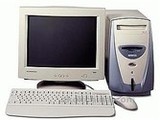
So, I’ve been asked to ponder how we’ve advanced with technology over the last ten years. Let’s take a step back into the last ten years. A new phone taught us to use our thumbs to silently communicate before, after or during a meeting. This flip phone is considered an antique according to today’s standards. iPods revolutionized lifestyles allowing us to personalize music lists to fit in our pockets. Source: http://www.britannica.com/EBchecked/topic/1104723/Computers-and-Information-Systems-Year-In-Review-2005/250319/Computer-Games The box style computer was still widely used in most homes and schools (where technology existed). Source: http://www.nytimes.com/2005/06/21/technology/21broad.html?_r=0 Facebook had just peaked over the one million mark. Today they sit at over 1.35 BILLION active users monthly!Source: http://www.statista.com/statistics/264810/number-of-monthly-active-facebook-users-worldwide/ All of these devices can now be streamed to a wearable device. So what does ten years into our future look like? I see ubiquitous computing for all everywhere, anytime. Wearable devices with which we can control our homes and cars; read our blood pressure and monitor our heart-rate will be extensions at our finger tips and the norm, not just the luxury. I want the James Bond watch which projects onto my arm for a larger screen to sync with the Google glasses for which I can nod to turn on and off or wink to take a picture. In the meantime, stay tuned here for blog posts to hear about the results of the wearable technologies our students will be piloting this term to increase their energy, efficiency level and academic performance. Ubiquitous computing will capture the analytics to measure and drive the future. Are you joining us for the ride?
Suzanne Ensmann
.
Blog
.
<span class='date ' tip=''><i class='icon-time'></i> Jul 28, 2015 07:53am</span>
|
|
There is no denying that playing and working in a variety of digital environments can sometimes feel akin to trying to drink out of a fire hose. There is also no denying that there’s another way to approach digital/online interactions: as if they produce magnificent waves well worth riding to a warm and welcoming shore—which pretty much describes the experiences I had riding rather than drowning in digital interactions last week as our ALA Editions four-week online course "Rethinking Digital Literacy" continued.
While the learners I am supporting—and have, as an extension of what I have learned elsewhere, begun referring to as my "co-conspirators" —spent the second of four weeks trying to define and determine ways to foster digital literacy among those we serve, I continued engaging in my own efforts to see where a blend of onsite and online interactions involving a wide range of friends and colleagues might take me—a tremendously satisfying exercise that culminated in a richly rewarding conversation with T is for Training colleagues at the end of the week.
Plenty of disparate elements had to come together for that particular wave to carry us all to shore, and they seemed to coalesce around a very specific digital-literacy skill: an ability to collaborate across numerous platforms and environments. The experience began early in the week as a local (San Francisco Bay Area) colleague (Clark Quinn), with whom I tend to interact more frequently online than face to face, was confirming lunch plans with me. Taking advantage of an hour-long trip via public transportation to reach Clark, I read several recent posts on his blog, where he consistently and engagingly addresses training-teaching-learning issues of interest to those of us working with adult learners in workplace learning and performance (staff training) settings. The punch line to one of his most recent posts—"…it’s not about content [in learning]. It’s about experience [in learning]. Are you designing experience?"—led to an intriguing conversation over lunch as I carried that online resource and inspiration into our face-to-face environment.
But it didn’t stop there: I sensed there was plenty more to explore, and suspected a perfect venue drawing upon our digital literacy skill of collaborating within digital environments was back in the online sandbox I share with colleagues through Maurice Coleman’s biweekly T is for Training conversation/podcast—a program designed for those of us involved in library training-teaching-learning efforts. When Maurice and our T colleague Jill Hurst-Wahl agreed that Clark’s post and the question regarding content vs. experience would be a great topic for discussion, I notified Clark to see if he wanted to join us; he and I also continued the conversation briefly via exchanges in the weekly #lrnchat tweet chat (with an entirely different set of colleagues discussing tech trends) the night before the T is for Training was scheduled to take place.
Initially indicating he wouldn’t be available, Clark ultimately was able to join the conversation a few minutes after that episode of T began, and the results were every bit as stimulating as any of us might have hoped. A core group of the T "usual suspects" quickly welcomed Clark and interacted in ways that brought his non-library learning and development expertise to the forefront of the conversation; Clark, in turn, dove into the conversation in ways that helped him better understand how designing experiences in library training-teaching-learning efforts paralleled as well as differed from what he has seen elsewhere.
By the end of the hour-long exchange, many things were obvious. The cross-pollination that occurs through interactions among members of various online communities—particularly the kind of online connected-learning communities with which I’m familiar—can bring benefits to everyone involved. This variation on hyperlinked learning—comprised of playing, learning, telling stories, transparency, participation, harnessing user-generated content (in this case, Clark’s blog post), and making connections, as Michael Stephens has suggested—benefits tremendously from our willingness to carry a variety of approaches into our continually evolving and ever-increasing tech tools. This combination of cross-pollination and hyperlinked learning produces notable results, small and large: T, for example, may have picked up a new usual suspect (if Clark is able to join us for additional conversations); Clark may be continuing the conversation in an upcoming Learnlet post to carry it to a larger audience; I’m certainly continuing this set of explorations further via my own blog and a tweet chat I’ll join later this week with #etmooc (Educational Technology & Media massive open online course) colleagues; and I will carry it back to the learners/co-conspirators in Rethinking Digital Literacy in the hope they can use it with their own colleagues in a number of different countries.
Ultimately, this level of collaboration, designing learning experiences, and riding rather than drowning under waves of digital interactions and resources creates exactly the sort of learning experience I pictured when I read Clark’s blog post. More importantly, it supports our efforts to hone that very important digital-literacy skill of collaboration that, at its essence, supports the way we live, play, and work positively, creatively, and enthusiastically in a hyperlinked world.
N.B.: This is the third in a series of reflections inspired by our ALA Editions "Rethinking Digital Literacy" course.
Paul Signorelli
.
Blog
.
<span class='date ' tip=''><i class='icon-time'></i> Jul 28, 2015 07:27am</span>
|