Blogs
|
Today we have a guest post from Stephanie Brennan.
Take a minute to look around your office. How many computers are on? How many lights? Do you think the copy machine has ever been unplugged? What temperature would you guess is on the thermostat?
According to the Energy Information Administration, offices consume more energy than any other type of building, and the U.S. Department of Energy expects this consumption to increase in the coming years.
When we try to think of ways to shrink our carbon footprints, we usually think of how we get to work, not how work gets to the environment. But even if you carpooled or rode your bike to cut your CO2 emissions, your office would continue to be a huge energy guzzler. Still, you have to go to work, right?
Wrong!
Work is not a place. It’s a thing you do. So why not do the thing you do wherever you want? How about a place where you can control the thermostat and install energy efficient light bulbs like, say, your own home?
As mentioned in a previous workshifting.com post, if everyone worked from home just half of the time, each year we could each save hundreds of dollars at the pump, collectively cut spending on foreign oil by $23 billion and reduce greenhouse gas emissions by 53 million metric tons. And that’s just the "get to work" part of the equation.
If employees worked from home - even just a few days each month - office buildings could give the environment some deserved vacation days, turning off the air conditioning or heating, reducing electricity usage and curtailing the financial and environmental costs of running the office at full power.
What about the energy used by the workshifters at home, you say? True, they have to have lights, heat and computers, too. But they don’t have vast empty conference rooms to heat or cool, copy machines on all day or industrial strength lighting.
All in all, I think a home office is pretty Earth friendly compared to an office building. What do you think?
Photo Credit: Ben Heine via Compfight cc
Bob Lee
.
Blog
.
<span class='date ' tip=''><i class='icon-time'></i> Jul 29, 2015 08:37am</span>
|
|
Dear Ritz-Carlton: What happens if an employee does not fit into The Ritz-Carlton culture?
The above question is from an attendee at "Symposium: Your Journey to Service Excellence" in April. The following answer is from John Cashion, Corporate Director, Culture Transformation at The Ritz-Carlton Leadership Center:
The Ritz-Carlton works very hard at selecting the top 1% in the service industry. We pride ourselves on ensuring that we take the process (which is very robust) very seriously. We work to select our employees—known as our Ladies and Gentlemen— who naturally align themselves with our culture. With that being said, there are times when our Ladies and Gentlemen do not fit into The Ritz-Carlton culture. When this happens, we must work to develop them. We invest in our Ladies and Gentlemen through coaching, mentoring and training. We feel that this investment will strengthen their desire to grow and develop and help them better understand The Ritz-Carlton brand. We are very passionate about our culture. Our written philosophy—which is called the "Credo"—is a Latin word for "I Believe." All of our Ladies and Gentlemen must believe in our service culture, or it will not work. If they don’t believe in what it stands for, they cannot provide the true meaning of Ritz-Carlton service.∞
Join us for a one-day symposium, "Your Journey to Service Excellence." The day includes a keynote speaker, a Q&A session with The Ritz-Carlton executive panel, an optional networking reception and presentations about legendary service, employee engagement and developing a customer-centric culture.
The Blog Post Dear Ritz-Carlton: What happens if an employee does not fit into The Ritz-Carlton culture? appeared first on The Ritz-Carlton Leadership Center.
Diana Oreck
.
Blog
.
<span class='date ' tip=''><i class='icon-time'></i> Jul 29, 2015 08:37am</span>
|
|
Toady we have a guest post from Ashley Verrill. Ashley is a market analyst at Software Advice. She has spent the last six years reporting and writing business news and strategy features. Her work has appeared in myriad publications including Inc., Upstart Business Journal, the Austin Business Journal and the North Bay Business Journal. Before joining Software Advice in 2012, she worked in sales management and advertising. She is a University of Texas graduate with a bachelor’s degree in journalism.
Email marketing to a house list, search engine optimization (SEO) and social media (not ads) are the most popular lead generation channels with business-to-business marketers, according to research firm Software Advice.
I recently released the results of the 2012 B2B Demand Generation Benchmark Survey. The report shows marketers increasingly prefer digitally focused channels.
About 98 percent of the sample uses email marketing to a house list, for example, versus just 50 percent using radio, television and print advertising. SEO was the second most popular with about 94 percent of the sample using this channel, followed by social media (not ads) with about 88 percent of the group. Trade shows were the exception to the digital trend, with about 87 percent of the sample using this lead conduit.
The digital focus was also apparent when marketers were asked about the success of each channel, as far as producing quality and quantities of leads.
Both search engine advertising and in-house email marketing ranked in the top three for quantity of leads, with 73 percent calling these channels medium to high quantity. These channels utilize inbound marketing tactics that draw prospects to you with content and optimized web search. These methods allow you to specify the kind of traffic you drive to your site and therefore only attract those leads most likely to buy from you. These tactics also allow more focused results tracking, so marketers can consistently tweak their content audience, optimization tactics and paid search.
For similar reasons, in-house email marketing also topped the list for quality with about 89 percent of respondents agreeing that leads from this channel are medium to high quality. Prospects that convert through this method have already raised their hand once and expressed interest in your company by subscribing to your email list, so they are more likely to come back and buy from you.
SEO came in second for quality, with about 84 percent describing prospects from this channel as medium to high quality. Again, this ranking is possible because of the ability to target only the most relevant potential buyers.
At Software Advice, for example, we focus our optimization around keywords that show high intent to buy software. We target phrases such as "CRM software comparison" more so than "what is CRM software?" because the latter search indicates someone still early on in the research process. In this way, we see the greatest return from SEO because we can choose keywords where the buying intent is clear. Even if the total search traffic might be high for "CRM software," a large percent of people searching that phrase likely aren’t in the market to buy.
Quality and quantity were not the only drivers, however, of channel popularity. Cost per lead was also important, the survey showed. Social media, for example, was listed as the lowest cost channel and among the most popular. But the medium did not score high for quality or quantity of leads.
This may have a lot to do with hype, but it may also be that social media isn’t just used for lead generation. Many marketers use social media for relationship building and pre-funnel networking.
This could be one reason Twitter, Facebook, LinkedIn and other social media efforts will be a top spending priority this year. About 55 percent of the sample said they will spend more on social media (not ads) next year, while about 53 percent will spend more on social media ads and 52 percent will increase their search engine advertising budget.
About the research
The survey was conducted over about four weeks in October and November 2012. Researchers received 155 responses from mostly C-level marketers in smaller organizations. See the study results and a breakdown of the sample by business size, marketing budget and seniority.
Bob Lee
.
Blog
.
<span class='date ' tip=''><i class='icon-time'></i> Jul 29, 2015 08:36am</span>
|
|
With the long-awaited promise of summer in the air, we’re inspired to hold another competition!
We’re giving away an iPad Mini with a year’s subscription of GoToMeeting so you can harness the power of online meetings wherever you choose work.
To enter*, just follow @GoToMeetingUK and tweet this message.
Win an iPad Mini with GoToMeeting! To enter, RT and follow @GoToMeetingUK http://bit.ly/17xqwUf #GoToMini
Competition bonus!
For the duration of the competition, we’ve made it even easier to try GoToMeeting.
Sign up for our exclusive free trial of GoToMeeting and enter promo code GoToMini. No credit card details required.
The competition ends on Tuesday, May 10. Good luck!
*This competition is for UK residents only. For full details, read the competition terms and conditions.
Photo Credit: @NickyColman via Compfight cc
Bob Lee
.
Blog
.
<span class='date ' tip=''><i class='icon-time'></i> Jul 29, 2015 08:36am</span>
|
|
Studies show that "companies with engaged employees outperform those without by up to 202 percent." That’s a huge impact on your organization! When your employees are engaged, they are more likely to go above and beyond for your customers and patients. In the following guest story, the employee was addressing a customer complaint and was able to not only solve a problem, but turn the situation into a memorable and personal customer experience.
Moving a Ruckus to a Rink
A Loss Prevention Officer at The Ritz-Carlton, Toronto was called to a guest room for a second time after receiving a complaint of children playing hockey in the hallway. He spoke to the children’s mother, and she apologized and promised to keep the children in the room. The Manager of Loss Prevention understood the aspiration of young athletes and decided to find a more creative solution to the problem. He enlisted banquet employees to isolate space in one of the meeting rooms and create a floor hockey rink using banquet tables as a frame for the rinks. During setup, the Manager of Loss Prevention ran to a local sports store and bought two hockey nets, six sticks and hockey balls for the big match.
When setup was completed, the Loss Prevention Officer delivered a written invitation to the family, letting them know that in Canada "hockey just isn’t a game, it’s a lifestyle" and that The Ritz-Carlton had a hockey rink for those who wish to play. Further, the Loss Prevention Officer challenged them to a match against the Loss Prevention All-Stars. The children’s father was incredulous that The Ritz-Carlton had a rink and a team on site and vowed they would be down shortly. When the father and son arrived at the meeting space, they were awed by the hockey rink and pronounced "game on!"
A Game to Remember
The Loss Prevention Supervisor joined the Manager of Loss Prevention and the Loss Prevention Officer to round out the "Loss Prevention All-Stars" and the Guest Services Supervisor joined "Team Family" to even out the odds. The Loss Prevention All-Stars started out with a strong two-point lead. Team Family responded with two goals—one from the son and the other from the father. With the game tied, tensions mounted and the teams played neck and neck for several minutes. The Loss Prevention All-Stars then scored another goal. Team Family stepped up their game and came out in strides of glory—scoring three goals for the win!
Hands were shaken and Team Family was invited to return for a rematch anytime. The game was recorded on the Loss Prevention in-house cameras, and Team Family was sent photos of their epic game.
From Whoa to Wow
In the above story, the Loss Prevention Officer could have knocked on the family’s door, asked them to be quiet and then just gone on with his day. There’s certainly nothing in his job description that requires him to build hockey rinks if needed. Instead, he devised an impromptu hockey match that WOWed and engaged the guests. In the process, he exemplified our Credo by fulfilling an unexpressed wish and enlivened one of our Service Values, "I am empowered to create unique, memorable and personal experiences for our guests." Engaged and empowered employees have the resources, creativity and drive to craft solutions that let everyone win. ∞
Join us for a one-day symposium, "Your Journey to Service Excellence." The day includes a keynote speaker, a Q&A session with The Ritz-Carlton executive panel, an optional networking reception and presentations about legendary service, employee engagement and developing a customer-centric culture.
The Blog Post Guest Story: Personal Customer Experience appeared first on The Ritz-Carlton Leadership Center.
Diana Oreck
.
Blog
.
<span class='date ' tip=''><i class='icon-time'></i> Jul 29, 2015 08:36am</span>
|
|
Instant messaging has changed how we communicate in our private lives and when we do business with one another. It serves that important communication need when email is too slow but a call (especially the obligatory phone etiquette) isn’t necessary. It brings us closer together and helps us make decisions faster - an especially important point for dispersed teams.
But the potential of IM in business has not been fully realized. Often employees in the same company are using different programs, and often Instant Messaging is not rolled out universally to all employees or even within teams. Let’s not forget your partners and clients outside your company. How do you chat with them? Before long you have to log in to three or four different instant messengers - all disconnected from your real work - just to keep up with all your contacts. As a result, most IM programs become silos of information, and you don’t have all your chat logs in one convenient place.
Podio Chat is changing that, and it is out now. (Try it yourself by logging in or signing up at podio.com.) It’s built to bring instant messaging to the source of your work - right where you plan and execute your projects and workflows. You can use it to chat with any of your co-workers and external contacts on Podio without pop-ups or a separate login, and all your chats are stored as ongoing conversations inside Podio, so you never lose valuable input or files you’ve shared.
Like other Podio features, Chat works on the web at podio.com and on the mobile apps for iPhone, iPad and Android. So you’re never out of touch with your team when you need them.
COMING SOON: Since Podio became part of Citrix, we’ve been working hard to bring the world-class Citrix audio and video technology into Podio. We are happy to report that we will launch ad hoc video conferencing this summer, meaning you can launch face-to-face meetings from right inside Podio. It will be the perfect way to brainstorm ideas, perfect details and make decisions with colleagues that aren’t sharing the same office. Find out more at company.podio.com/chat and get the full product update on the Podio blog.
Bob Lee
.
Blog
.
<span class='date ' tip=''><i class='icon-time'></i> Jul 29, 2015 08:35am</span>
|
|
History has always fascinated me, and the Pompeii exhibition currently on display at the British Museum got me thinking about how the old Roman society compares to our own. How different their approach to work must have been!
As a society, we’re reluctant to consider changing the way we work, yet the way we work is constantly evolving. Believe it or not, working in offices is a recent trend, and although it’s hard to imagine a future without it, just think how alien our modern-day offices would seem to people from ancient Rome.
In fact, working from home or a non-office environment has been the norm for most of human history. We still fondly refer to cottage industries, but for many people this was a way of life - their home and work spaces intertwined.
Throughout history, the idea of a centralised office where everyone went to work was primarily confined to local and central governments. Offices were somewhere for tax collectors, scribes and other bureaucrats to keep up with the day-to-day business of the administration. Merchants and guilds only adopted the idea of a central hub during the middle ages.
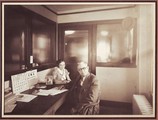
The office as we know it, like so much of our modern society, came about as a result of the industrial revolution. The need to keep track of a multi-stage manufacturing process and often complex accounting procedures made a single work site for overseeing a company’s operations necessary. The rise of the office was also facilitated by technology, with the telegram, telephone and typewriter all making these hubs more practical and efficient.
This change through technology convinces us at Citrix that our current office environment doesn’t represent an end point. We believe the future working environment will be fundamentally about choice. Each individual employee will decide where is best to work from and what tools are needed to do a job well. For some this will be a spare room at home, for others their local coffee shop.
Still more will choose to continue to work from the office, but they may put their own twist on their surroundings. They may opt for a stand-up desk or even no desk at all, working wherever they can find a space and somewhere to charge their laptop. This choice is why we’re committed to developing tools to help you work with your colleagues wherever you are and however you want, whether that’s meeting remotely or collaborating on a shared task list.
Photo Credit: deflam via Compfight cc
Bob Lee
.
Blog
.
<span class='date ' tip=''><i class='icon-time'></i> Jul 29, 2015 08:34am</span>
|
|
When GoToMyPC entered the U.S. market over 10 years ago, it was a pioneer in the remote access industry. Since then, we’ve seen American work culture change - as we like to say at Citrix, now "work is not a place; it’s a thing you do." Today, we’re launching GoToMyPC in Japan, and it’s exciting to think about how it could help enable a similar change in work habits for Japanese workers.
Citrix will be offering GoToMyPC through our Japanese partners KDDI Corporation and Ascentech K.K., leading distributors of cutting-edge business technology in Japan who will not only deliver the solution to customers but also provide localized customer support.
Why now?
While KDDI and Ascentech had previously partnered with Citrix to deliver other solutions to the Japanese market, it wasn’t until after the March 2011 earthquake, tsunami and nuclear reactor meltdown disaster that the continued business access and disaster recovery capabilities of GoToMyPC became imperative. The scope of 3/11 was the catalyst for KDDI to explore other remote access tools available in the market and they found that GoToMyPC was more robust than the rest. And they realized that other companies would appreciate that robustness as well. All it needed was to be translated into Japanese, which we were happy to do.
In addition to their increased awareness of business continuity, Japanese enterprises are very conscious of data security. To ensure proper governance, most of their critical information is stored on desktop machines or servers within the traditional four walls of their company. That’s why when we did live demos of GoToMyPC to our prospective partners, they were most impressed by its screen sharing capability - they liked that they could actually see and interact with their entire desktop and access all the information and functions they needed to work.
Our hope is that once businesses in Japan see how GoToMyPC safeguards data, they will consider the benefits of enabling workers to adopt a more mobile workstyle. In a nation where so many people commute long distances, and where so many people carry the latest technology in their pockets, there is a great opportunity to use the GoToMyPC mobile apps to make the most of their time. Then, GoToMyPC could be employed not just as an occasional business continuity tool, but also as an everyday productivity enhancer.
What’s next?
Today’s launch of GoToMyPC in Japan is part of an ongoing global expansion for Citrix SaaS products. We look forward to continued growth in Europe and Asia, and hope to develop a presence in Brazil in time to help its businesses stay productive through the 2014 World Cup and the 2016 Olympics.
Meanwhile, we are eager to see how the Japanese receive GoToMyPC. Perhaps, in a few years their commuter trains won’t be so crowded, thanks to people using GoToMyPC to work remotely, and the people on those trains will be using GoToMyPC to get their work done faster.
Photo Credit: Sprengben [why not get a friend] via Compfight cc
Bob Lee
.
Blog
.
<span class='date ' tip=''><i class='icon-time'></i> Jul 29, 2015 08:33am</span>
|
|
I recently found out that if you use GoToMyPC with the voice input feature on your smartphone, you can dictate copy to your host computer. So, instead of trying to type with your thumbs, you talk into your phone and it comes out as text in an email, Word doc, spreadsheet or presentation on your Mac or PC. Pretty cool, huh?
This got me thinking - when would you use this "The Jetsons meets Dictaphone" capability? Seems like anytime you only have one hand free would make sense, plus a few other occasions when it simply feels like a good idea.
You’re walking the dog.
You’re holding onto the pole on the subway/bus.
Your other hand is in a cast.
You’re eating something you can’t put down (like a pita or ice cream cone).
You’re holding a drink at a party.
You’re playing cards.
You’re holding a baby.
You want to impress your date/potential in-laws/boss.
You stink at texting.
You’re just in too big of a hurry to type.
Note that "You’re driving" is not on the list - let’s keep both hands on the wheel, folks.
Want to learn more about how it works? Read the GoToMyPC Mobile Voice Input fact sheet.
Photo Credit: Leo Reynolds via Compfight cc
Bob Lee
.
Blog
.
<span class='date ' tip=''><i class='icon-time'></i> Jul 29, 2015 08:32am</span>
|
|
Recently, we ran a competition to help people discover the power of online meetings by giving our UK followers the chance to win an iPad mini with a free subscription to GoToMeeting. Judging by the number of entries we received - a lot - this was a very popular prize!
I’m delighted to announce that William Bellis has won our competition. Well done, William! With summer on the way, now is the perfect time to escape the office and discover the benefits of flexible working.
Thanks to all who entered. Be sure to look out for our future competitions as well as my regular posts with tips and tricks for maximising productivity. Enjoy the sunshine!
Photo Credit: CalypsoCrystal via Compfight cc
Bob Lee
.
Blog
.
<span class='date ' tip=''><i class='icon-time'></i> Jul 29, 2015 08:31am</span>
|