Blogs
|
Today we have a guest post from Cindy Huggett. Cindy is the author of Virtual Training Basics, and co-author of the ASTD Infolines "Simple, Effective Online Learning" and "Designing for the Virtual Classroom." She has taught hundreds of synchronous online classes for a variety of audiences.
Her favorite passion is to help trainers deliver effective and engaging live online classes. She also assists clients on their transition to blended solutions and conversion to virtual training.
You can find Cindy sharing training tips via Twitter at @cindyhugg or contact her via her website www.cindyhuggett.com
When was the last time someone left your virtual training event and said "That was the best class I’ve ever attended!" or asked "When can we do this again, because it was a great way to learn?"
My hope is that you hear these comments on a regular basis. But if your virtual training is like most, then you are more likely to hear nothing at all.
How can you elevate your virtual training and make it better? Through interactive design and effective delivery.
Interactive design gets participants involved in their own learning. They engage with the content, the facilitator and the platform tools. They also engage with each other. A truly interactive virtual training class creates a high-quality online learning experience.
Interactive design begins with a clear definition of expectations about what the virtual training will accomplish. It determines exactly what the goal is, and how an online session will meet that goal.
And interactive design also invited participants to get involved with engaging activities from the start. It incorporates learning methods that maximize participant involvement using the platform tools in creative ways.
For example, an interactive interpersonal skills virtual training class might include a role play that combines creative on-screen graphics with poll questions that steer the conversation in various directions. Or an interactive technical virtual training class might make use of the chat feature to prompt learner questions about procedures. These are just two of many ways to creatively design interactive online training.
Effective delivery means the facilitator can engage an unseen audience in a way that draws them into the online training. Virtual facilitators prepare accordingly, multi-task with ease and handle unexpected challenges - all in order to create a comfortable learning environment for participants.
Effective delivery begins with extreme preparation, similar to what a world-class athlete does to get to the peak of their game. This preparation includes standard planning as well as technology planning. Once the virtual facilitator is fully ready, they engage with participants from the start by using the platform tools, saying names, setting expectations and keeping the learners focused.
For example, a master virtual trainer practices often and becomes extremely proficient with online delivery. They use all of the tools at their disposal to create an effective learning experience, including an engaging tone of voice, video conferencing and polling and chat features. They are at ease when delivering. And they work to build rapport with every learner.
Wondering how to make this happen - both interactive design and effective delivery? My two new white papers - 5 Techniques to Design Interactive Online Training and 5 Techniques to Deliver an Effective Online Class - will give you tips to create engaging online classes and deliver them well. Each paper offers useful tips that will make your virtual training better.
Download them here and make your virtual training better!
5 Techniques to Delivery an Effective Virtual Class: http://www.slideshare.net/slideshow/embed_code/16815362
5 Techniques to Design Interactive Online Training: http://www.slideshare.net/slideshow/embed_code/16815365
10 Things You Should Do to Make Your Online Training Better: http://www.slideshare.net/slideshow/embed_code/16815368
Photo Credit: familymwr via Compfight cc
Bob Lee
.
Blog
.
<span class='date ' tip=''><i class='icon-time'></i> Jul 29, 2015 08:39am</span>
|
|
Today we have a guest post from Jacob Morgan. Jacob is the principal of Chess Media Group, a management consulting and strategic advisory firm on collaboration. He is also the author of The Collaborative Organization, a comprehensive strategy guide to emergent workplace collaboration. The book has been endorsed by leaders such as the former CIO of the USA, CIO of ManpowerGroup, CEO of Unisys, CMO of SAP, CMO of Dell and dozens of others. He blogs at Social Business Advisor and tweets under the handle @JacobM.
Work is a crucial part of our everyday lives, and it’s evolving right before our eyes. Employee perception of work is impacting the way companies will operate in the years to come. Companies everywhere are addressing the questions of where, when and how employees should work.
Look up synonyms for "work" and you’ll find words such as "struggle," "daily grind," "drudgery" and "stress." Inversely, antonyms for "work" include "fun" and "entertainment." There is something very troubling with the synonyms, as they describe the mindset that employees have been working under for years. But that mindset is changing. Companies are being approached with the task of redesigning work, and it’s about time.
Employees are getting a louder voice inside companies, managers are more open and transparent, companies are adopting flexible work environments and enterprise technology has evolved beyond email to connect people and information anywhere, any time, on any device.
Many of the changes we are seeing inside companies are a result of what we have seen in the consumer web. The use of platforms such as Twitter, Facebook and LinkedIn have altered how we conduct ourselves in public - using an open mic, sharing knowledge freely and collaboratively building communities and solving problems are just a few examples of new behaviors that are making their way into companies.
But what exactly is work?
Work is essentially comprised of four key areas: employees, managers, the company and technology. And all four of these areas are changing rapidly. Chess Media Group, in collaboration with Citrix, has examined what these changes are and what impact they will have. The Future of Work Is Now white paper is intended to help managers and employees understand that change is happening today in many companies around the world. We looked at what work used to look like and where it is heading.
It’s tempting to assume that the future of work is years away. The reality is that the future of work is happening now, and smart organizations are adapting to the changes we are seeing in behavior and technology. Your company should be one of them.
Would you like to learn more?
Join my free webinar on April 17 at 10 AM (PDT) - I’ll be discussing what the future worker and the future company will look like. Register here.
Bob Lee
.
Blog
.
<span class='date ' tip=''><i class='icon-time'></i> Jul 29, 2015 08:39am</span>
|
|
"I feel sorry for the person who can’t get genuinely excited about his work. Not only will he never be satisfied, but he will never achieve anything worthwhile." - Walter Chrysler, Founder of Chrysler Corporation
The Ritz-Carlton Leadership Center:
It’s quite simple. If your employees are not excited about their day-to-day responsibilities, they won’t work as hard to complete their tasks. Additionally, they will not provide you with their best work. These employees are disengaged. In order for an organization to actively engage employees, the leadership needs to help staff see beyond function—the day-to-day tasks—and connect with a greater purpose—the mission of your organization. Employees who see a bigger picture will recognize that they are contributing to a greater purpose within your organization and consequently, will bring more passion to the workplace and be more excited about work. The employees of The Ritz-Carlton, also known as our Ladies and Gentlemen, understand from our Credo that "the genuine care and comfort of our guests is our highest mission." When your organization’s culture includes a clear message of purpose, you give your employees the opportunity to transcend identifying themselves solely by their job function. What does your organization do to inspire employees to volunteer their best every day? ∞
The Ritz-Carlton Leadership Center offers advisory services, courses and presentations to organizations that wish to benchmark the award-winning business practices of The Ritz-Carlton.
The Blog Post Inspired Thinking: Excited About Work appeared first on The Ritz-Carlton Leadership Center.
Diana Oreck
.
Blog
.
<span class='date ' tip=''><i class='icon-time'></i> Jul 29, 2015 08:39am</span>
|
|
I’m a firm believer that every job should involve creativity and that every employee is capable of bringing an innovative touch to their work if we enable them to do so. But the constant pressures of deadlines and reviews often mean that creativity is the first thing we sacrifice as we look to deliver work that meets expectations. Here’s what you can do to reverse this trend and help encourage creativity in the office.
1. Give everyone time to work on their own projects.
Google is famous for giving their employees one day a week to work on their own projects, rightly believing that it will benefit the company in the long run. And they have been proved right many times over. Gmail and Google Maps, two tools most of us take for granted, grew out of individual employees projects.
2. Encourage your employees to lunch away from their desks.
Too many of us spend our entire working lives chained to our desk. Workshifting is helping address that trend, but even if you’re not lucky enough to work flexibly yet, there’s really no reason why you shouldn’t take lunch away from the office. Take a break during the day and recharge your batteries - a different setting with different stimuli may be just what you need to get creative during the afternoon.
3. Set employee challenges.
Try and engage your employees with challenges that are linked to their work but not reliant upon it. Encourage them to stretch themselves while they attempt to solve these challenges. Linking the tasks to tangible rewards can help - but try and make these benefits for the team rather than the individual (solving a particular challenge rewards the whole office with lunch).
4. Change the language of the workplace.
Why not approach the decision-making process in a different way? When a problem arises, try making a collaborative effort to resolve it. Encourage your employees to think up creative solutions and work through them - don’t just put up a wall every time. By saying yes instead of no, you encourage people to look for innovative solutions to problems instead of just taking the safe road.
5. Set aside time on Monday morning to discuss your industry.
Set aside time first thing on Monday to discuss the biggest news and industry stories that affect the sphere your company works in. This will get your employees’ brains ticking early. And as time goes by, you can broaden the process by examining trends and opportunities in neighboring industries.
What do you do to encourage creativity in the office?
Photo Credit: Colors in B&W via Compfight cc
Bob Lee
.
Blog
.
<span class='date ' tip=''><i class='icon-time'></i> Jul 29, 2015 08:39am</span>
|
|
Dear Ritz-Carlton: When customers don’t like attention and want to be private, how can you give them excellent service?
Answer from Jennifer Blackmon, Corporate Director, Culture Transformation at The Ritz-Carlton Leadership Center:
At The Ritz-Carlton, we have a concept that assists our employees—also known as our Ladies and Gentlemen—in understanding the "unexpressed" needs of our customers. This concept or mnemonic device is "Radar On and Antenna Up," and it reminds us to be alert and intuitive. To successfully serve others it is imperative that we can feel where the customer is in the service experience—whether it is verbalized or not. This is especially true when discreet service is wanted. There are few customers that will come right out and state, "Please stop speaking to me." Consequently, through our "Radar On Antenna Up" training we show, through example, how to read body language, tone of voice and facial expressions. If you are truly paying attention to these customer clues, it is not difficult to quickly recognize when someone would prefer to be left alone. This is also an exceptional customer service experience. Often the "WOW" is expected to be this engaging, amazing moment, but many times a knowing nod, eye contact and simple quiet can be just as impactful. ∞
Join us for a one-day symposium, "Your Journey to Service Excellence." The day includes a keynote speaker, a Q&A session with The Ritz-Carlton executive panel, an optional networking reception and presentations about legendary service, employee engagement and developing a customer-centric culture.
The Blog Post Dear Ritz-Carlton: Customers who want privacy? appeared first on The Ritz-Carlton Leadership Center.
Diana Oreck
.
Blog
.
<span class='date ' tip=''><i class='icon-time'></i> Jul 29, 2015 08:38am</span>
|
|
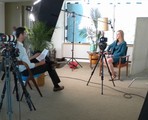
I’m the product marketing manager for GoToMeeting, and one of the most exciting and satisfying aspects of my job is when I interact with our amazing customers and find out that they’re just as passionate about this product as we are here at Citrix. Interviewing Wendy Lea, CEO of Get Satisfaction, was a spectacular insight into how she and her company use GoToMeeting with HDFaces every day, from communicating with customers face to face to taking on the next stages of growing their business.
As a marketer, you thrive on key customer insights - they are the best and most honest testament of how your product helps. With GoToMeeting, we’ve seen people communicate better and get more quality out of the time they spend collaborating in online meetings. Interviewing Wendy for our customer-focused Meeting Is Believing campaign was nothing short of enlightening.
Wendy opens up our newest TV commercial by stating, "We believe that good relationships make good business - and from that trust gets created." This is apparent in everything Get Satisfaction does: building customer communities that drive actual business results. By creating simple and engaging environments where customers can interact, make suggestions and answer their questions, Get Satisfaction helps companies acquire new customers, reduce support costs and drive product innovation.
The interview itself began with Wendy, a brilliant, fun and energetic leader, quipping (in a sweet drawl), "I’m on GoToMeeting all day. What else do you want me to say?" Could we live with just that simple statement? I was tempted. Our product is all about simplicity after all. But she continued to share more, talking about her passion for collaboration and getting face-to-face contact in an increasingly distributed and disconnected world.
Her sales and services teams also use GoToMeeting regularly to build trust with their client base. Doug Nugent, VP of customer success, spoke intently to us about how Get Satisfaction employees need to share not only their screens in real time but also their expressions of enthusiasm, perfectly communicated to clients in high-definition video.
Wendy also talked about working with her internal groups and getting commitments from her teams. She told me, "It’s easy to hide behind an email or telephone." How many times have your projects failed because commitments were not made authentically? Companies require trust and commitment every day. That’s what GoToMeeting does for Get Satisfaction. "With GoToMeeting, it’s so much easier to get work done faster and get that reaction in real time," she said.
That day, my conversation with the leaders at Get Satisfaction left me in a certain kind of marketing awe - I heard first-hand how GoToMeeting has a huge positive impact on daily business. Communicating the diverse ways in which this impact happens can only be accomplished when we see the value through the stories of our innovative customers and how they use GoToMeeting.
Visit the Meeting Is Believing website to see how our other customers, such as Angie’s List and Mindjet, evolve their businesses using GoToMeeting with HDFaces in their own way. And starting this week, be sure to tune in and see Get Satisfaction’s story in our Meeting Is Believing television commercials!
And last but absolutely not least, do you want to share your experiences as a GoToMeeting customer? We’d love to have you join the conversation on our community site, because, who knows, your story could be on TV some day!
Bob Lee
.
Blog
.
<span class='date ' tip=''><i class='icon-time'></i> Jul 29, 2015 08:38am</span>
|
|
Each month, The Ritz-Carlton Leadership Center (RCLC) features an interview with an employee—also known as a Lady or Gentleman of The Ritz-Carlton—in order to share an insider’s view of the organization. This month’s interview is with Abner Nelms, 34-year veteran Doorman and Driver at The Ritz-Carlton, Buckhead in Atlanta.
RCLC: Please talk a little about your role with our organization and how long you’ve been with The Ritz-Carlton.
Mr. Nelms: I have been at The Ritz-Carlton since January 1984—that’s over 31 years. I work in guest services and have for my whole career here. I’ve worked inside as a bellman, but most of my career was working as a doorman up front. Most recently, in addition to working as a doorman, I’ve worked as a driver.
RCLC: Can you share why you’ve chosen to work at The Ritz-Carlton for so long? What do you enjoy about working here?
Mr. Nelms: Well, there are a lot of things I enjoy about working here! If I go back in time, I was one of the first people to be hired. The neat thing about our property is that it’s the first Ritz-Carlton to open in the modern brand—so it was really an honor and it was exciting. It’s good to be part of the beginning of something—especially something that’s so successful because back then, we only had two hotels in the whole company. At that time, I had worked for other hotel properties, small properties, but you know when The Ritz-Carlton came along, it was like something I had always dreamed of working for—a real, "first class," luxury hotel. So I think I was just at the right place at the right time. Other opportunities have come up, but when you’re working for the best hotel company in the business at that time, probably in the world, I never thought about leaving—at least not to go to work for another hotel.
RCLC: What do you value about the culture of The Ritz-Carlton?
Mr. Nelms: I would have to say that all the things that the company has put in place: Gold Standards, all our Service Values and everything. I was in my thirties when I started working for the company, and I’m in my sixties now. When I think back, I see that the culture has taught us how to be gentlemen, how to behave.
RCLC: What does customer service mean to you?
Mr. Nelms: What does customer service mean? Wow, it means a lot of things! I feel that customer service is serving a customer or guest in the manner that they want to be served, that they want to be taken care of. I say that because I have been in some customer service situations where it didn’t go well, and when you’re in a customer service business, you’re well aware of when you’re not getting good customer service. Right? So that’s what it means—taking care of a customer the way they want to be taken care of.
RCLC: Have you built relationships with customers throughout the years?
Mr. Nelms: Most definitely! At The Ritz-Carlton, Buckhead, we’ve been there so long, not only have we built long-term relationships with the guests, but we’ve built long-term relationships with their children. Sometimes I’ll see a long-term guest that is arriving and being taken care of and the person that is taking care of them might not recognize them, and then they’ll ask them a question like "have you ever stayed here before?" and if I get the chance, I’ll always go over and greet them myself, recognize them and then introduce them to the employee that doesn’t recognize them. I kind of tease them, and I introduce them as a "Charter Member." "Oh yeah, Mr. Johnson, he’s a Charter Member, he’s part of the beginning!" We do have a lot of guests that have been staying with us for the entire time. It’s always fun because it gives me the opportunity to connect with that guest, that long-term guest.
RCLC: Are there any memorable customer experiences (WOW moments) that you would like to share?
Mr. Nelms: There are so many! Immediately when I think about WOW stories, I feel like I’m the one that was probably WOWed by the person I was taking care of. One moment comes to mind: a lot of people who come to our hotel are here on business, and they never get a chance to really get outside of the Buckhead area. Sometimes they think that that’s all Atlanta, right? Just that concrete area. We have the Atlanta History Center and that brings people to Buckhead, so these guests I was driving did break away long enough to go see the History Center. On the way back, I said to them "if you have a moment, I’ll take a little scenic route that will take us back to the hotel. It will only take us 10-15 minutes," they wanted to do that—so I showed them the neighborhood that they never had a chance to see. They talked about it, and they were so excited because they had read about it in books and saw pictures in magazines. We have an area, the West Paces Ferry area, where our Governor’s Mansion is, as well as a lot of antebellum homes and properties with rolling hills and magnolia trees. There’s a particular mansion where parts of Gone with the Wind were filmed. I was just amazed at how excited they were about it. So it really made me feel good, and they didn’t even really know about that part of our town—so that’s probably the most memorable. I enjoy doing that, introducing people to things like The Swann House, the most photographed house in Atlanta. I think I was just as WOWed as they were. They WOWed me!
RCLC: Have you had to deal with upset customers? If so, any advice on the best way to handle this?
Mr. Nelms: Like we were saying about what customer service means, the best way to handle an upset guest is first of all to listen, empathize and see what their problem is. Especially to listen, you have to let them vent, let them get it all out and then be thinking, anticipating, what you can do to help. Then I will ask them, "what can I do to help in this situation?" I’ve been in that situation before, and fortunately, I’ve had the resources to help people. We’ve had situations when people’s limousine transportation didn’t show up, and they were stressed out so we were able to put them in our vehicle and take them to their appointment—even though it was outside of the usual area where we typically go. They’re always wild about that.
RCLC: What are a few of the customer service lessons you’ve learned over the last three decades?
Mr. Nelms: You have to listen to people—listen to them and remain pleasant. Don’t allow yourself to get upset since a lot of times we deal with so many different kinds of personalities. Sometimes when people are upset, they want you to get upset. That’s the most important thing I have learned to do is to listen and then be thinking how you can assist them. "What can I do to make this better?" That’s what people want to hear in a customer service situation. ∞
The Ritz-Carlton Leadership Center offers advisory services, courses and presentations to organizations that wish to benchmark the award-winning business practices of The Ritz-Carlton. Your organization can learn about The Ritz-Carlton methodology for customer service, employee engagement and leadership development. We also guide organizations through a multi-step process in order to achieve sustainable culture transformation.
The Blog Post Our Ladies and Gentlemen: Abner Nelms, The Ritz-Carlton, Buckhead appeared first on The Ritz-Carlton Leadership Center.
Diana Oreck
.
Blog
.
<span class='date ' tip=''><i class='icon-time'></i> Jul 29, 2015 08:38am</span>
|
|
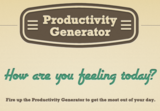
Productivity at work is a subject close to my heart and something I’ve written about before. But everyone’s approach to work is different, and each of us will have unique ways and means of maintaining our productivity.
That’s why we’ve created the Productivity Generator, to give tips that should help anyone perform at his or her best the entire day.
The generator measures your energy, creativity, organization, motivation and wellbeing, asking how you’re feeling about each. It then provides you simple, practical advice for boosting these areas - whether that’s having a healthy snack or trying to mix up your daily routine.
Once you’ve explored all five areas, the Productivity Generator will produce a custom infographic for you to use that you can even share with colleagues.
Give it a try and let us know your thoughts by tweeting us @GoToMeetingUK.
Bob Lee
.
Blog
.
<span class='date ' tip=''><i class='icon-time'></i> Jul 29, 2015 08:38am</span>
|
|
Today we have a guest post from Bob Hanson. Bob is the President of lead generation and conversion consultancy at Quantum Leap Marketing and creator of the Must-See Webinars™ success system. To get a free chapter of the guide "How to Create and Run a Winning Webinar Series" or to request a no-obligation consultation on creating successful webinars, email Bob at bhanson@qlmarketing.com or go to www.yourcuttingedgemarketingtips.com.
It may not come as a surprise that a new survey conducted by our company, Quantum Leap Marketing, Inc. (QLM), revealed that online events are now the default choice for marketing, training and internal communication events for small and medium-sized organizations. After all, in any economy, smaller companies are looking for ways to do more with less.
The survey results revealed that in-person seminars and trade shows cost 4 times more than marketing webinars do; likewise, in-person training costs 7 times more than online training does. In addition, 92 percent of organizations that participated in the survey plan to hold an online event in 2013, and 20 percent plan on adding marketing webinars to their repertoire.
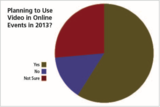
Here’s another reason for online events moving up into the default choice: the use and adoption of video is on the rise in the business world. Over 75 percent of webinar producers are considering or planning on using video in their online events this year. And here’s why:
The majority of learning happens visually - some estimate that as much as 80 percent of learning is visual - so the increased adoption of video in online events means better education and information retention.
In online events, most presenters and attendees prefer face-to-face interaction, and online video offers that.
The availability and use of consumer video conferencing has lead to increased usage in business-use cases, too.
Video offers a more personal and engaging online environment, helping event coordinators effectively reach a wider market than they could in person.
All these factors suggest that we can expect video adoption to continue driving more online events and pushing the ROI of those events even higher when we survey webinar producers again next year.
Download The ROI of Online Events for 2013 eBook.
Bob Lee
.
Blog
.
<span class='date ' tip=''><i class='icon-time'></i> Jul 29, 2015 08:38am</span>
|
|
"The biggest job we have is to teach a newly hired employee how to fail intelligently. We have to train him to experiment over and over and to keep on trying and failing until he learns what will work." - Charles Kettering, American Inventor
The Ritz-Carlton Leadership Center:
One of the common questions asked in a job interview is, "What does success look like in this position?" While that is an important question, an equally important question is, "What will happen if I fail?" You may not want to ask that in a job interview—because you don’t want to suggest that you may fail. However, how your organization handles failure could impact your success. When you start a new job, your learning curve is huge, and it’s likely that you will fail many times when you are first starting. For example, you may set a time frame for a goal that is reasonable from your past experience but unachievable in this new work environment where the red tape is harder to penetrate. Will your fledgling failures be seen as learning opportunities? Or will you retreat from taking risks? At The Ritz-Carlton, there are two Service Values that encourage our employees—known as our Ladies and Gentlemen—to feel secure when exploring new territory. One Service Value states, "I continuously seek opportunities to innovate and improve The Ritz-Carlton experience," and the other Service Value notes, "I have the opportunity to continuously learn and grow." These two Service Values give our Ladies and Gentlemen permission to take on new risks and hopefully, learn from failing intelligently. As Charles Kettering points out, we often find out what works when we eliminate what doesn’t work. How does your organization guide new employees from mistakes to achievements? ∞
The Ritz-Carlton Leadership Center offers advisory services, courses and presentations to organizations that wish to benchmark the award-winning business practices of The Ritz-Carlton.
The Blog Post Inspired Thinking: Fail Intelligently appeared first on The Ritz-Carlton Leadership Center.
Diana Oreck
.
Blog
.
<span class='date ' tip=''><i class='icon-time'></i> Jul 29, 2015 08:37am</span>
|