Blogs
|
Warp 9 Walt is a change agent with a strong sense of urgency. He's just one of the six buyer personas...
A while ago at a conference I had dinner with two people. The first, (we’ll call her Janine) I had known since we worked together six years earlier. The second person (Ed), Janine and I had just met.
Janine described a sales challenge she was facing. She’d been working with two prospects at two different organizations, one for over a year and one for almost two. The typical sales cycle is 6 to 9 months, and these were both well beyond. She felt she was nearing a sale with both, but for all she knew, "nearing" might mean a year or two to go.
This is a fairly common sales challenge: The sale looks good, but it’s taking forever. Janine happened to be facing two at the same time...
Rain Selling
.
Blog
.
<span class='date ' tip=''><i class='icon-time'></i> Aug 18, 2015 09:19am</span>
|
|
Too many organizations leave the success of their sellers to chance.
More sellers are missing quota, sales cycles are extending, and the competition isn't exactly standing aside to make life easy.
If sellers want to win in this environment, they must plan to win from the start.
Anything short of this and they set themselves up for failure.
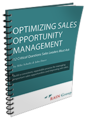
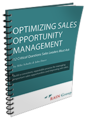
In this white paper, RAIN Group Presidents Mike Schultz and John Doerr pose 12 critical questions sales leaders must ask about their approach to sales opportunity management that will help them shorten sales cycles, improve win rates, and grow revenue.
Related StoriesEssentials of an Effective Account Planning ToolHow to Win Big Sales Opportunities with Big PlaysCore Competencies of Successful Sellers
Rain Selling
.
Blog
.
<span class='date ' tip=''><i class='icon-time'></i> Aug 18, 2015 09:00am</span>
|
|
This post is part of the TriNet ongoing series about the Affordable Care Act and its effects on small business. If you’re a midsize business owner, you may have heard that you will soon be required...
Visit site for full story...
TriNet
.
Blog
.
<span class='date ' tip=''><i class='icon-time'></i> Aug 18, 2015 08:57am</span>
|
|
As of July 1, 2015, a new earned sick time law in Massachusetts requires all Massachusetts businesses to provide sick time for their employees. If you are a Massachusetts business owner, this new law...
Visit site for full story...
TriNet
.
Blog
.
<span class='date ' tip=''><i class='icon-time'></i> Aug 18, 2015 08:57am</span>
|
|
When first introduced to the concept of desktop analytics, people often draw comparisons to Net Nanny® or George Orwell’s "Big Brother". WorkiQ Desktop Analytics, for example, is not tracking passwords or bank accounts, but the software does monitor an employee’s computer-based activity in real-time. Initially, this concept may be unsettling to a measured associate, but desktop analytics can improve productivity, eliminate uncertainty, and potentially provide new insight into "actual" performance.
Hawthorn Effect (aka. The Observer Effect)
People, who know they are being observed, typically improve their behavior. Our customers report an average 10% improvement in productivity after three months of sharing activity reports with their users. Within the first 3 months of measurement, we have seen productivity spikes up to 26%.
This does not mean that someone surfing Facebook all day will become a model employee when monitored, but he will be more aware of his actions. Every company will have A+ and C- workers that set the curve, but simply knowing there is a grade will improve the class average.
Flexible Workplace
Over the last few years, HR analysts have found that professional employees, especially millennials, have prioritized workplace flexibility. Employers that allow flexible hours, telecommuting, and less micro-management are able to attract more qualified candidates. However, employers cannot abandon all oversight.
Desktop analytics can serve as a tool to manage telecommute workers with in-office visibility. It also provides an evolved alternative to social media blocking. Instead of forcing employees to hide their social media addictions, companies with desktop analytics can measure time spent in productive vs. non-productive activities. Molina Healthcare’s employees deliver 6.5 hours of productive time per day, and associates are free to use the remaining time as they please.
The Workplace Fitbit
In addition to measuring application usage, WorkiQ can track how employees process work, even when jumping between several systems. Smart managers are using this crystal ball to build culture of transparency, collaborative process improvement, and performance-based rewards. This starts by providing analytics dashboards to both managers and measured employees, then socializing team productivity and performance. Real-time reinforcement keeps employees engaged and competitive, and eliminates the uncertainty that comes from infrequent performance reviews.
I elaborate on the idea of a workplace Fitbit in this blog: Fitness trackers set precedent for work performance management
To learn how a WorkiQ saved the job of an underutilized employee, continue reading Measure Twice - Cut Once.
The post The positive impact of "Big Brother" software appeared first on WorkiQ Blog.
WORKIQ
.
Blog
.
<span class='date ' tip=''><i class='icon-time'></i> Aug 18, 2015 08:57am</span>
|
|
For a carpenter, hasty cuts can result in an expensive loss of time and materials. Hence, the phrase "measure twice; cut once". Applying this "measure twice & cut once" principle to back-office operations simply means; you can’t improve what you don’t measure.
[Whitepaper] IDC Analyst Connection: What Gets Measured Gets Better: Improving Performance
"WorkiQ is helping us have effective conversations with employee’s we were previously unable to have." - Manager of Business Intelligence, Top Blue Cross & Blue Shield Plan
Many employees, especially those who choose back-office careers, are unable to communicate their challenges to managers or peers. One of the largest health plans in the country recently provided a great example.
A claims examiner, who we will call "Mary", was consistently missing production numbers. The health plan’s claims system could report the number of claims Mary worked, and her average time-per-claim, but it could not explain "why" she was below team standards. After several warnings, Mary was on the verge of disciplinary action. With a WorkiQ pilot about to start, her management decided to wait until they could analyze her daily activity.
It turns out that Mary was not taking breaks, and her lunch was rarely more than 10 minutes. She spent more time in "productive" applications than anyone on her team, but this effort was not reflected in the output of her work.
Mary’s WorkiQ dashboard revealed that she was spending her breaks doing research through company documents and online resources. As a result of real-time data, it was easy to determine she did not have the training to perform at expectations. Working with her manger, Mary was able to join the proper training programs, and she was partnered to a mentor. Employee turnover is a huge expense in money, time and resources, WorkiQ is providing valuable empirical data to help Insurance companies successfully evaluation workforce performance based on facts.
By adding a layer of operational visibility through desktop analytics, Mary is now one of her department’s top performers. In the future, Mary can use a peer-comparison dashboard to see if other top performers have found more efficient ways to process claims.
Peer Performance Comparison Dashboard - WorkiQ Desktop Analytics
Stories like this are fairly common, and a similar case occurred here at OpenConnect with one of our developers. To learn more about how desktop analytics can help your operations department, continue reading The positive impact of "Big Brother" software.
The post Measure Twice - Cut Once appeared first on WorkiQ Blog.
WORKIQ
.
Blog
.
<span class='date ' tip=''><i class='icon-time'></i> Aug 18, 2015 08:57am</span>
|
|
A Full Fun Summer
It’s been a summer full of work, fun, food, and friendship. Many ping pong battles have been fought, cries of agony and celebration over code, and slow enjoyable summer nights hanging out after work.
It hasn’t just been a summer job, but an experience that all eight of us have shared together. Some days this was discussing outdated technology in book club, and other days it was laying on the floor trying to understand the best way to move forward in the project. Now as the summer comes to an end, so does our internship. We may be leaving Rustici, but we take our memories, new friendships, and work experience that we can carry with us into the next part of our lives.
Super Brian
We came to know one another over sushi, playing ping pong, and being a part of the Intern Alley. We were all different, coming from different backgrounds, but we came together to form a team of interns under Brian. When things went wrong, there was a problem we couldn’t figure out, or needed a partner for ping pong, Brian was there to help. Thanks for putting up with our craziness, our frustrating days, our happy days, and days where we thought we got a lot done but we probably actually hadn’t. You pushed us in the right direction, allowing us to learn a great deal, but also helped us when we needed it. Thanks for being our leader this summer.
Dog Days of Summer
The experience provided by Rustici Software was a unique and beneficial experience. We had full days learning from people and working on the intern project. We learned about things like marketing tools such as Marketo from Jeff and Lizelle, how to run a company from Mike and Tim, and what not to do in an interview from Jena and Laura. The work wasn’t always easy when we had to redo code that accidentally got deleted, redraw wrench after wrench for the logo, or when there were large pull requests that created new conflicts and needed rebasing. But we pushed through the hard days, and we can now leave with our heads held high, knowing we worked hard over the summer and we learned a great deal that has made us better students and better people. Rustici has given us a summer we won’t forget, allowing us to build our networks and knowledge
Thank You
So thank you Rustici Software, for giving us a unique summer experience that not only gave us a job for 14 weeks, but gave us more knowledge and a community.
The post Thanks Rustici Software appeared first on Rustici Software.
Tim Martin
.
Blog
.
<span class='date ' tip=''><i class='icon-time'></i> Aug 18, 2015 08:54am</span>
|
|
Why it's time for GPP3Last week saw the publication of the third version of Good Publication Practice for reporting company-sponsored research (imaginatively, we’re calling it GPP3). To be useful, guidelines must reflect the current situation so they need periodic updating. The first GPP guideline (called GPP for pharmaceutical companies) appeared in 2003 and was revised to form GPP2 in…
Cynthia Clay
.
Blog
.
<span class='date ' tip=''><i class='icon-time'></i> Aug 18, 2015 08:53am</span>
|
|
There is a bold, compelling line between leadership and fierce leadership. You will begin to cross the line once you understand and act on the central premise at the heart of all things fierce: If you want to become a great leader, gain the capacity to connect with your colleagues and customers at a deep level … or lower your aim.We are excited to be partnering with Women in Real Life Leadership Summit (WiRL). WiRL is transforming the way professional development happens through an online, webinar-based conference that features sessions led by world-renowned speakers, authors, and experts.This September, Susan Scott will be talking about Fierce Leadership. She will share how to spot the worst "best" practices in your organizations using a technique she calls "squid" eye.Here are the six practices she will dive into:From 360-Degree Anonymous Feedback to "365" Face-to-Face FeedbackFrom Hiring for Smarts to Hiring for Smart + HeartFrom Holding People Accountable to Modeling Accountability and Holding People AbleFrom Employee Engagement Programs to Actually Engaging EmployeesFrom Customer Centricity to Customer ConnectivityFrom Legislated Optimism to Radical Transparency Which practice intrigues you most?Hope you can join us at WiRL this year, especially for Susan Scott’s session on September 24th at 10 AM PST.The post Let’s Talk Fierce Leadership appeared first on Fierce, Inc..
Cam Tripp
.
Blog
.
<span class='date ' tip=''><i class='icon-time'></i> Aug 18, 2015 08:53am</span>
|
|
This week’s Fierce resource was originally published on Harvard Business Review and outlines the difference between critical and constructive feedback.For most of us, just thinking about feedback elicits a sense of discomfort, anger, and even contempt. We can be so afraid of it that we either avoid it all together or hide behind anonymous feedback. But as a leader, providing honest, clear feedback is one of the best gifts you can give your team.Approach a feedback conversation as an opportunity to deepen an employee’s self-awareness and propel growth. How to Give Tough Feedback That Helps People Grow recommends creating certain conditions in which the receiver can take in feedback and learn from it.What conversations are you not having? "Managers fall into a number of common traps. We might be angry at an employee and use the feedback conversation to blow off steam rather than to coach. Or we may delay giving needed feedback because we anticipate that the employee will become argumentative and refuse to accept responsibility. We might try surrounding negative feedback with positive feedback, like a bitter-tasting pill in a spoonful of honey."Read the article.The post Fierce Resource: How to Give Tough Feedback That Helps People Grow appeared first on Fierce, Inc..
Cam Tripp
.
Blog
.
<span class='date ' tip=''><i class='icon-time'></i> Aug 18, 2015 08:53am</span>
|