Blogs
|
A massive new JISC document - The Edgeless University has just come out. It looked important enough for me to read. I'm about half way through and, so far, I've not learnt as much as with Higher Education in a Web 2.0 World. However, I've not got to the recommendations yet.What's useful is that it focuses on the challenges facing Higher Education in the new Web 2.0 world. The basic idea is simply - Universities must become edgeless - blurring their boundaries. I'll comment on this in later posts.Much of the focus so far is on OER. It takes the stance that with the wealth of OER available universities are still important because people "look to their expertise and their recognition to validate learning." Yes, this is true but will this perception always exist? It is true that universities contains the greatest concentration of expertise but with Web 2.0 others are springing up all the time. If everyone realised what is out there, people's perception of where they can legitimately learn will change. At the moment, employers are after same validity that the report say learners are. This could change if people realise that a university qualification isn't the only way that someone can gain expertise in a subject. I want this to happen but I'm not sure it will.Deep down, the main resistence to OER and Web 2.0 in general from higher education is that fact that it's free. How can they survive if we give everything away for free. For me, this is about the democratisation of learning, of knowledge. Why not give everyone the chance to learn. The current system was set up by the elite for the elite. It's natural that university will defend what they have got and I can't see anything changing any time soon. But Web 2.0 challenges this notion. The report will no doubt give some interesting ideas for how universities can change whilst remaining financially viable. But the message is clear, if you ignore the new world, you will become irrevelant anyway.This post is more of a stream consciousness that normal. I hope it makes sense to any reader and myself when I read this back later.
Tom Preskett
.
Blog
.
<span class='date ' tip=''><i class='icon-time'></i> Aug 18, 2015 10:09pm</span>
|
|
Originally published on the Educational Technology and Change JournalWeb 2.0 and didactic teaching may not seem directly related, but Web 2.0 challenges the way we teach across the board, and the impact will be felt as much in higher education as anywhere else. In general terms, in England, didactic delivery of lectures is prevalent. I’m happy to be challenged on this, but that is my experience. Whatever my motivation for starting this job (as a learning technologist), my motivation for continuing is very much to do with trying to change this status quo. There are others, but this is dominant.Why? This is difficult to get to the heart of. But it might have something to do with my experiences of education. What worked best for me. What was negative for me. It might have something to do with the fact that where I perceive bad teaching, it usually involves didactic, transmissive models. Didactic teaching is also the setup that requires the least planning, sometimes no more than deciding on the content. In some ways, it’s lazy teaching. People who don’t want to think about how they teach, will be didactic.Coincidentally, these people will also not want to hear about learning technology. I never saw myself as championing particular pedagogies, but the various collaborative models lend themselves to everything that is positive about Web 2.0 and, therefore, my way of thinking. I have used the phrase "Web 2.0″ rather than "learning technologies" because some learning technologies are concerned with presenting content (albeit in a flexible way) rather than offering different ways of delivering and learning. Web 2.0 gives us the right social, collaborative, creative idea.So how does Web 2.0 or any learning technology challenge didactic teaching? The simple answer is that when you show educators any learning technology, they are forced to think about how they teach. For higher education in England, the didactic, transmissive model is prevalent so this is being challenged. So, by making people think about how they teach, you are breaking down the status quo as I called it earlier. It’s worth noting that I’m not convinced our educators think about how they teach enough. My role is not ostensibly about challenging teaching methods; it’s about learning technology. But the didactic approach is often the issue underlying resistance to change.This is where the obvious impact of Web 2.0 on all of our lives is important. The more the impact, the harder it is to ignore. The more obvious the benefit, the harder it is to ridicule. Just look at Twitter and the Iran elections.
Tom Preskett
.
Blog
.
<span class='date ' tip=''><i class='icon-time'></i> Aug 18, 2015 10:09pm</span>
|
|
The first thing to say about the Edgeless University JISC document is there were quite a few new sites highlighted I hadn't seen before. All are now added to my delicious bookmarks (username - tpreskett if you want to look). The best is probably Teacher Training Videos containing loads of bitesize videos on lots of Web 2.0 tools. I will try look at and use some of these. I will also aim to start creating some of these. They use Camtasia, so we'll how easy it is.The main messages seem to be:Universities need to offer OER. Some already do it but most don't. It's a question of not wanting to give things away for free. This is the biggest barrier.Universities need to be flexible in how they offer their courses. Tapping into the 'informal' learning seen on such sites as School of Everything. Shorter courses spring to mind. The paper suggested links between established 'informal' learning sites and higher education institutions. That's good news for the established sites. How would this work in practice? Maybe it's just a case of paying for validation once you've done the learning.The importance of universities will be maintained with the validity that they give to any learning. It's a shame that we have to rely on stamps of approval. It's right that employers still need these stamps, they need the evidence. Hopefully, the 'informal' learning offering out there now and Web 2.0 in general will chip away at these perceptions.An important point is that the normal university experience is still valued and popular. But there is a market for a more flexible approach. They evidenced the Open University of Catalonia which is entirely online. Most of their students worked as well as studied so, for them, the flexible approach was ideal.I pretty agree with all of this. What's interesting is the focus on OER. This is the area that people in education can get their head around. Conceptually it fits in with current models of education and it's easy to see how it works. The only questions with it are where and to what extent. Questions that this paper answers. When it comes to new ways of teaching and learning offered by Web 2.0, the evidence and focus was of outside initiatives. Making links, not changing fundamentally what they themselves are doing. I think this misses the point. Higher education needs to change itself, educate itself on what this paper characterises as 'informal learning'. This way universities can change what they themselves are doing not just tap into what happening elsewhere.
Tom Preskett
.
Blog
.
<span class='date ' tip=''><i class='icon-time'></i> Aug 18, 2015 10:09pm</span>
|
|
I'm in danger of repeating ideas from previous posts but the Edgeless University does talk about the what I feel is the key issue facing Higher Education with regard to learning technologies. In fact, it expresses it very well. This the issue of staff skills or lack of it."Many academics find it hard to envisage the possibilities that technology affords, not least because often they lack the basic skills to use the new tools."So why don't many or most academics gain these basic skills. We can break this down into time and motivation. Re. time - they don't have enough of it! I hear that a lot and there is no easy answer to this. All I can do is try and tailor what I offer to being somehow time-saving. Anyway, the report states:"The answer is not to barrage teachers with imperatives to change how they behave, but to help them find space and the capacity to develop new ways of working for themselves. This needs more resources, incentives and support."So, as always, successful use of Learning Technology can only occur it the wider strategic plan allows it to. Giving staff time and space to reflect on their teaching and learn new skills is something that is way off - certainly in my organisation.On motivation, this is to do with the status of teaching against the status of research. Research is king! This is true of peer status and respect, true of caree profression, true thanks to the Research Assessment Exercise (which I need to know more about). I think in my organisation research is certainly the focus and is what drives and motivation staff more. However, time (or lack of it) also comes up when you talk to academics. It's no suprise that the use of learning technologies is at a more advanced stage in schools than in higher education. There isn't this duel role in school. There, teachers just teach! That's not to say that school teaching is easier as a result.
Tom Preskett
.
Blog
.
<span class='date ' tip=''><i class='icon-time'></i> Aug 18, 2015 10:09pm</span>
|
|
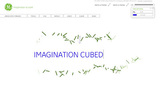
A common occurrence in the Learning Technology world is the random nature a tool is selected for use. Mostly when a Learning Technology tool or environment is taken up in education there is no precedent. So what do we do? Well, it's worth noting that in the days before Web 2.0, it was difficult to really explore a tool. You had to rely on the product marketing which is always glossy and misleading. So back in those days, we would go with what we've heard others are using. This is fine but often what others are using is the first thing they have come across or read about or heard was being used elsewhere. This can be to do with not really knowing what a particular tool is really all about. Also, people can get blinded by one iteration of a tool and think that this is the only look and feel that is valid. Mostly, it's to do with not really knowing what you want. Not really knowing what you want can be applied wholesale to Learning Technologies in education.I've been involved recently in converting a face-to-face module to e-learning. One of the activities I had to convert involved small groups drawing their thoughts on a subject. When I asked around, it becomes clear that what people were recommending in the diagramming/whiteboarding area was the one tool they had experience of or had heard of. I then followed the logical path of looking at as many tools as I could and choosing the best tool that fitted my criteria. Rather than spend hours googling, I used Web 2.0 in Education and Best Online Collaboration Tools 2009 - the latter turning out to be the most useful. The beauty of Web 2.0 is that you can try the tools out yourself assesses ease of use as you go. For this activity, I was keen to find a tool that didn't require creating an account (why-oh-why-oh-why do they always do this). The winner WAS ShowDocument - it's sharing method is quick and easy, it's collaboration options are intuitive, and the tools are easy to use. But they have changed their setup to require a login if you want a session to last more than 10 minutes! I'm now favouring Imagination Cubed which is really nice tool. The only issue is that the collaborative element isn't working at the moment. The below image shows the interface and some of my doodling.
Tom Preskett
.
Blog
.
<span class='date ' tip=''><i class='icon-time'></i> Aug 18, 2015 10:08pm</span>
|
|
I've revisited my PLE document and updated some areas. It was useful to reflect on how my working practices have changed. Not just from April to now, but also from a year ago to now. The way I learn has been invigorated by my engagement with Web 2.0. Instead of reading academic journal and JISC documents intermittently, I now engage almost daily with the the latest Learning Technology news and opinion. I won't spell out for you which is better.Overall, my core tools are Igoogle, googlereader, bloglines, delicious and blogger.
Tom Preskett
.
Blog
.
<span class='date ' tip=''><i class='icon-time'></i> Aug 18, 2015 10:08pm</span>
|
|
I have learnt a lot from reading Web Squared: Web 2.0 Five Years On by O'reilly and Battelle. It may be business orientated but it's given me insight into the future and a different perspective on the essence of Web 2.0. However, when I went back over it and thought about some of the main points with education in mind, I didn't get a great deal of insight. But one point is worth exploring:Web 2.0 is all about harnessing collective intelligenceYes, indeed. Web Squared talks about how applications get better the more they are used. The tools learn and use the user contributions. The key phrase here is harnessing collective intelligence. For me, this reinforces my belief in the collaborative/constructivist pedagogies. You could say that Web 2.0 is a collaborative/constructivist approach to the internet. An approach that people have voted for en masse. Similarly, you could liken Web 1.0 (if that's a phrase) to didactic teaching. No input from the user into the static html.So what for education? Well, the above is my biggest learning point. But conceptually educators need to get used to the idea of constant improvements and updates and actively engaging in this process themselves. Putting up with a static VLE for years and years isn't what we want to be doing in 2009.Some interesting stuff on how the Web learns from bodies of data. This is useful to know and you can see how the semantic Web will take shape from this. However, there is nothing profound here for education that springs to mind except how exciting some of the tools look. Definitely some educational potential here. If only everyone had an iphone!
Tom Preskett
.
Blog
.
<span class='date ' tip=''><i class='icon-time'></i> Aug 18, 2015 10:08pm</span>
|
|
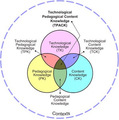
I went to an interesting seminar yesterday run by Punya Mishra where I learnt about TPACK - Technological Pedagogical Content Knowledge. The A is present to make a better sounding word. Basically, it's what educators need to know in order for effective integration of technologies into their teaching.
"Effective technology integration for pedagogy around specific subject matter requires developing sensitivity to the dynamic, transactional relationship between all three components. A teacher capable of negotiating these relationships represents a form of expertise different from, and greater than, the knowledge of a disciplinary expert (say a mathematician or a historian), a technology expert (a computer scientist) and a pedagogical expert (an experienced educator)." Punya MIshra’s websiteAs with any model or theory that rings true with me, this is not really telling me anything new. But it articulates one of the fundamental issues facing education. And articulates it very well.
How do we address this? Well, firstly I guess people in position like me need to help educators use learning technologies appropriately by not just showing them how to use the tools, but also learning about and helping them integrate it into their course. It’s a two-way process that requires the educator to involve the Learning Technologist in the learning design helping him/her understand the learning process with the LT helping the educator understand the essence of a particular tool. Interestingly, Punya didn’t advocate a presentation of the TPACK model to teachers. It’s useful for us to understand the process we are trying to get the educators to go through. But it’s not necessary to draw the circles. I’m not sure you should hide things but he’s right that if you talk too much theory most people switch off. One other good learning point centres around repurposing. We repurpose any technology for our own ends. This is true and obviously so but I really like its simplicity. Presenting things simply is very, very important and a skill that I constantly strive for.
Tom Preskett
.
Blog
.
<span class='date ' tip=''><i class='icon-time'></i> Aug 18, 2015 10:08pm</span>
|
|
I've been way behind on my blog reading but have been learning loads converting a face-to-face course into an online one. My key learning point from the last couple of week is not to underestimate the time and effort it takes to do this. Overall, it's very rewarding. This is especially true as the lecturer I am working with is receptive to the process and happy to learn about everything that's an offer. I thought I'd record here the process we have gone through so far:- I learn about the course- I demonstrate the organisation VLE we are supposed to be using- We decide where to house the course - The VLE with Web 2.0 linked in where necessary- We talk through the activities used on each face-to-face day. Each activity is unpicked and I suggest and demonstrate the options available online- I set up the course online- Timings are set and activities are editedActually, we haven't finished and the last 3 points are currently being worked up through several iterations. Much of the time is taken with distilling the activity to what's most important and addressing that above everything else. Another big issues is ensuring making it right timing-wise. At the heart of this issue is transferring the synchronous to asynchronous. It sounds straightforward to try and replicate any face-to-face discussion online in a forum of some sort. You could do the odd one synchronously but largely this will need to be asynchronous and with any asynchronous discussion you need to give it time to develop. I favour two weeks for any subject but one week often has to do. So, if you have 4 discussions during 1 face-to-face day and you want to keep all of these online, you will need 4 weeks at least. Hopefully, timeframes are not as pressing as time spent - which needs to be comparable with face-to-face. All this needs to be carefully thought through.One of the other main things I am trying to do is mix things up and use a wide a range of Web 2.0 tools as possible. You shouldn't really do things for the sake of it so I'm trying to ensure suitability and appropriateness. However, there is an evangelical element to it. I want people to experience a new learning tool to show how good it is! Show how easy it is! It makes it harder to be tied to a less than impressive VLE but they are getting better as they cobble together some Web 2.0-like tools to keep up with the real world and I can link to outside tools easily.
Tom Preskett
.
Blog
.
<span class='date ' tip=''><i class='icon-time'></i> Aug 18, 2015 10:08pm</span>
|
|
I've been reading through a behemoth of a discussion on the Ning network - Innovate-Ideagora called Addressing the problem of faculty resistance to using IT tools in active learning instructional strategies. There is so much of interest that I had to read it all. I wanted to record my main learning points here because I am positive there are many. The problem is that, as with any discussion, the discourse jumps around a lot and it's difficult to absorb properly as you move through the debate. However, I'm going to try and record the main issues here. When reading debates of this kindsd common issues crop up:Challenging the notion of the "lecture"Didactic vs collaborative pedagogies (in this discussion active learning is the key phrase)Higher education research prioritiesAssessment - and it's driving force dictating the teachingProcess learning now becoming more important than fact-based learningInteresting side issues here including the nature of blended learning and issues of cheating which was linked to the nature of assessment. Below are some additional thoughts.A lot of the debate pitted the lecture against active learning strategies exemplified in the TEAL initiutive from the physics dept. of MIT. So the heart of the issue is the realisation that the most important thing we are doing is promote active learning through learning technologies - not just learning technologies. It's important that we understand that.The discussion explored how a lot of learning technology use involved augmenting the lecture experience, reinforcing it in a way that didn't promote active learning - a reinforcement that added to the cost of the learning experience. Steve Eskow was prominent in challenging the notion of the lecture as all powerful and advocating alternatives to the face-to-face. I happen to agree with this. For most (nearly all) the traditional didactic lecture is so much the right way to educate that it isn't even worth debating. Currently, learning technologies have to fit in around these face-to-face events which are a pegs to hand our education onto. It's a fit that can work but often doesn't. However, this approach makes things more difficult than they need to be. Of course, face-to-face has value. But start off thinking of all your tools on an equal footing not with one on a higher plane.The discussion described the performance involved in giving a lecture. I have a hunch that this is an important element for many educators. Why be receptive to different teaching methods if we like you already do? Put bluntly, some like the sound of their own voice too much. There, I said it. But how can you challenge that? Not easily for sure.I've said in previous posts how important it is to educate the educators in learning technologies. One good idea from this discussion is to give them a reason to use it in their real lives, e.g. an aggregator for their news, and they will naturally start thinking about their teaching once this is embedded.
Tom Preskett
.
Blog
.
<span class='date ' tip=''><i class='icon-time'></i> Aug 18, 2015 10:07pm</span>
|