Blogs
|
I’m preparing for what might be a challenging facilitation gig this month involving a very complex domain, diverse perspectives, at least three languages and rooms where the tables are nailed to the floor. I actually love the first three things. The tables nailed to the floor asks for every bit of my creativity and ability to improvise with space, sound and time. So in preparation, I’m keeping my radar attuned to things floating in front of me. This is how I get inspired. It is like a magnetic field for ideas. Here is what came across the radar today, via a link from the Applied Improvisation Network‘s Facebook Page.
Lives In Progress: Listening And Acceptance: Improvising Our Way To Relationship With The Pre-Contemplative Person.
Acceptance of their offer, even if it is tinged with hostility or hoisted by layers of defensive projections about me and what I represent to them, is absolutely essential to engagement with the group. Acceptance of their offer is most often acceptance of their worldview, which most of us will freely share with others who listen without judgment. That is the hard part. To listen without imposing our will on another person even when it seems abundantly clear that their worldview can wind up killing them. Listening and acceptance of the offer of another person’s worldview are power tools in the improvisers toolkit, the builders of meaningful connection. Because why should anyone collaborate with me about a difficult, usually painful and conflict-inducing process of change if I fail to understand the way they see their story? How can I become a part of someone’s story - and no amount of intellectualizing or information-giving influences a person’s choices unless the new message and the messenger become part of his/her story - if I set myself apart from it?
The author, Jude Treder-Wolff. goes on to quote Daniel Pink, from his new book, To Sell is Human.
"The first principle of improvisation-hearing offers-hinges on attunement, leaving our own perspective to inhabit the perspective of another," he writes. "And to master this aspect of improvisation, we must rethink our understanding of what it is to listen and what constitutes an offer." Digging into the meaning of improvisation exercises designed to cultivate these skills, he concludes that "once we listen in this new, more intimate way, we begin hearing things we might have missed. And if we listen this way during our efforts to move others, we quickly realize that what seem outwardly like objections are often offers in disguise." (p. 192)
Then, of course, the magnetic field continued to strengthen and I came across a couple of Facebook posts from the amazing Kat Koppet, who probably doesn’t know that I regularly open her book (Training to Imagine) to some random page and, with that magnetic field, find inspiration and knowledge. She posted a scan of a letter that Robert Lowe sent her which contains some amazing advice to us that resonates with this idea of listening and acceptance. With permission, here are the two pages of the letter.
In my work with international development agencies, people are passionate about solving global problems, feeding the world, saving the planet. With this passion can come an almost blinding form of advocacy, to be heard, to be validated, that can cripple listening, idea creation and collaboration. We SO want to be right and solve the problem, but this can become the problem. There is so much value placed on data, on solutions that we forget to listen for context and meaning. So I’m going to think hard, or maybe better yet, open my mind to what possibilities I can weave into my next engagement that seek space for listening and acceptance as the ground for working really hard, well and with joy on tough, intractable problems.
Any advice to share?
Edit, just a few minutes later… I see this Tweet from Linda Stone:
Nancy White
.
Blog
.
<span class='date ' tip=''><i class='icon-time'></i> Aug 18, 2015 11:52pm</span>
|
|
Click on the link and read the whole post — it is short.
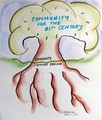
My friend Tim Merry has taken to saying that we can’t do community engagement we can only do community. Or not. I think this is a compelling idea. Engagement is meaningless now as a term. We are seeking real community, a genuine sense of being in this together. Whether it is public policy or building infrastructure you have the choice to do it to people or do it with people. Just using the word "engagement" is not enough.
Time to put real power behind the idea of community.
via Community engagement is dead « Chris Corrigan.
I have a little inkling that the practice of deciding what not to do is related to Chris and Tim’s insight. But I haven’t quite chased down the thought yet. Ideas?
Nancy White
.
Blog
.
<span class='date ' tip=''><i class='icon-time'></i> Aug 18, 2015 11:51pm</span>
|
|
There are a pile of good lessons on presentation preparation in Jessica’s blog post, Endless Knots: In the future, now: presenting virtually, but I appreciated all the layers around virtual collaboration, about walking the talk at every level when we talk about sustainability, virtual teams and collaboration. Sweet! Thanks, Jessica! Here is a snippet, but click in to read the whole thing.
OK, so what was so special about this? I always vet my presentations with clients and usually have a back-and-forth to fine-tune. This was the most global preparation I’ve ever done and I say this having done quite a number of these virtual presentations. And by the time we were done with all the preparation, Karl, Jacobina, and I felt like a team.
Nancy White
.
Blog
.
<span class='date ' tip=''><i class='icon-time'></i> Aug 18, 2015 11:51pm</span>
|
|
I love this piece on the front of the Learning Creative Learning MOOC from MIT.
In Mitch Resnick’s intro his final word is about learning through mistakes. Yeah, baby!
Nancy White
.
Blog
.
<span class='date ' tip=''><i class='icon-time'></i> Aug 18, 2015 11:49pm</span>
|
|
Yesterday I was grateful to attend a panel presentation by Beth Kanter (Packard Foundation Fellow), Paul Shoemaker (Social Venture Partners), Jane Meseck (Microsoft Giving) and Eric Stowe (Splash.org) moderated by Erica Mills (Claxon). First of all, from a confessed short attention spanner, the hour went FAST. Eric tossed great questions for the first hour, then the audience added theirs in the second half. As usual, Beth got a Storify of the Tweets and a blog post up before we could blink. (Uncurated Tweets here.)
There was much good basic insight on monitoring for non profits and NGOs. Some of may favorite soundbites include:
What is your impact model? (Paul Shoemaker I think. I need to learn more about impact models)
Are you measuring to prove, or to improve (Beth Kanter)
Evaluation as a comparative practice (I think that was Beth)
Benchmark across your organization (I think Eric)
Transparency = Failing Out Loud (Eric)
"Joyful Funeral" to learn from and stop doing things that didn’t work out (from Mom’s Rising via Beth)
Mission statement does not equal IMPACT NOW. What outcomes are really happening RIGHT NOW (Eric)
Ditch the "just in case" data (Beth)
We need to redefine capacity (audience)
How do we create access to and use all the data (big data) being produced out of all the M&E happening in the sector (Nathaniel James at Philanthrogeek)
But I want to pick out a few themes that were emerging for me as I listened. These were not the themes of the terrific panelists — but I’d sure wonder what they have to say about them.
A Portfolio Mindset on Monitoring and Evaluation
There were a number of threads about the impact of funders and their monitoring and evaluation (M&E) expectations. Beyond the challenge of what a funder does or doesn’t understand about M&E, they clearly need to think beyond evaluation at the individual grant or project level. This suggests making sense across data from multiple grantees -> something I have not seen a lot of from funders. I am reminded of the significant difference between managing a project and managing a portfolio of projects (learned from my clients at the Project Management Institute. Yeah, you Doc!) IF I understand correctly, portfolio project management is about the business case -> the impacts (in NGO language), not the operational management issues. Here is the Wikipedia definition:
Project Portfolio Management (PPM) is the centralized management of processes, methods, and technologies used by project managers and project management offices (PMOs) to analyze and collectively manage a group of current or proposed projects based on numerous key characteristics. The objectives of PPM are to determine the optimal resource mix for delivery and to schedule activities to best achieve an organization’s operational and financial goals ― while honouring constraints imposed by customers, strategic objectives, or external real-world factors.
There is a little bell ringing in my head that there is an important distinction between how we do project M&E — which is often process heavy and too short term to look at impact in a complex environment — and being able to look strategically at our M&E across our projects. This is where we use the "fail forward" opportunities, the iterating towards improvements AND investing in a longer view of how we measure the change we hope to see in the world. I can’t quite articulate it. Maybe one of you has your finger on this pulse and can pull out more clarity. But the bell is ringing and I didn’t want to ignore it.
This idea also rubs up against something Eric said which I both internally applauded and recoiled from. It was something along the lines of "if you can’t prove you are creating impact, no one should fund you." I love the accountability. I worry about actually how to meaningfully do this in a) very complex non profit and international development contexts, and for the next reason…
Who Owns Measurement and Data?
Chart from Effective Philanthropy 2/2013
There is a very challenging paradigm in non profits and NGOs — the "helping syndrome." The idea that we who "have" know what the "have nots" need or want. This model has failed over and over again and yet we still do it. I worry that this applies to M&E as well. So first of all, any efforts towards transparency (including owning and learning from failures) is stellar. I love what I see, for example, on Splash.org particularly their Proving.it technology. (In the run up to the event, Paul Shoemaker pointed to this article on the disconnect on information needs between funders and grantees.) Mostly I hear about the disconnect between funders information needs and those of the NPOs. But what about the stakeholders’ information needs and interests?
Some of the projects I’m learning from in agriculture (mostly in Africa and SE/S Asia) are looking towards finding the right mix of grant funding, public (government and international) investment and local ownership (vs. an extractive model). Some of the more common examples are marketing networks for farmers to get the best prices for their crops, lending clubs and using local entrepreneurs to fill new business niches associated with basics such as water, food, housing, etc. The key is the ownership at the level of stakeholders/people being served/impacted/etc. (I’m trying to avoid the word users as it has so many unintended other meanings for me!)
So if we are including these folks as drivers of the work, are they also the drivers of M&E and, in the end, the "owners" of the data produced. This is important not only because for years we have measured stakeholders and rarely been accountable to share that data, or actually USE it productive, but also because change is often motivated by being able to measure change and see improvement. 10 more kids got clean water in our neighborhood this week. 52 wells are now being regularly serviced and local business people are increasing their livelihoods by fulfilling those service contracts. The data is part of the on-the-ground workings of a project. Not a retrospective to be shoveled into YARTNR (yet another report that no one reads.)
In working with communities of practice, M&E is a form of community learning. In working with scouts, badges are incentives, learning measures and just plain fun. The ownership is not just at the sponsor level. It is embedded with those most intimately involved in the work.
So stepping back to Eric’s staunch support of accountability, I say yes AND the full ownership of that accountability with all involved, not just the NGO/NPO/Funder.
The Unintended Consequences of How We Measure
Related to ownership of M&E and the resulting data brings me back to the complexity lens. I’m a fan of the Cynefin Framework to help me suss out where I am working - simple, complicated, complex or chaotic domains. Using the framework may be a good diagnostic for M&E efforts because when we are working in a complex domain, predicting cause and effect may not be possible (now, or into the future.) If we expect M&E to determine if we are having impact, this implies we can predict cause and effect and focus our efforts there. But things such as local context may suggest that everything won’t play out the same way everywhere. What we are measuring may end up having unintended negative consequences (this HAS happened!) Learning from failures is one useful intervention, but I sense we have a lot more to learn here. Some of the threads about big data yesterday related to this — again a portfolio mentality looking across projects and data sets (calling Nathaniel James) We need to do more of the iterative monitoring until we know what we SHOULD be measuring. I’m getting out of my depth again here (Help! Patricia Rogers! Dave Snowden!) The point is, there is a risk of being simplistic in our M&E and a risk of missing unintended consequences. I think that is one reason I enjoyed the panel so much yesterday, as you could see the wheels turning in people’s heads as they listened to each other!
Arghhh, so much to think about and consider. Delicious possibilities…
Wednesday Edit: See this interesting article on causal chains… so much to learn about M&E! I think it reflects something Eric said (which is not captured above) about measuring what really happens NOW, not just this presumption of "we touched one person therefore it transformed their life!!"
Second edit: Here is a link with some questions about who owns the data… may be related http://www.downes.ca/cgi-bin/page.cgi?post=59975
Third edit: An interesting article on participation with some comments on data and evaluation http://philanthropy.blogspot.com/2013/02/the-people-affected-by-problem-have-to.html
Fourth Edit (I keep finding cool stuff)
"Who Counts: the power of participatory statistics." Edited by Jeremy Holland with an Afterword by Robert Chambers.
NYTimes "Can Big Data From Epic Indian Pilgrimage Help Save Lives?"
The public health project is part of a larger pilgrimage by Harvard scholars to study the Kumbh Mela. You can follow their progress on Twitter, using the hashtag #HarvardKumbh.
Nancy White
.
Blog
.
<span class='date ' tip=''><i class='icon-time'></i> Aug 18, 2015 11:49pm</span>
|
|
Experimentation: chocolate cakes and communicators | Full Circle Associates. Keeping on my reblogging of this St. Paddy’s day treat.
This year I used a different recipe, and then altered it for a slightly healthier version.
Chocolate Guinness Cake
Ingredients
1 3/4 cups all-purpose flour
3/4 cup natural (not Dutch-processed) cocoa powder - I upped the antioxident power to 1 cup. I love chocolate…
1 3/4 teaspoons baking powder
1/2 teaspoon baking soda
1/2 teaspoon ground cinnamon
2 sticks plus 5 tablespoons unsalted butter, softened - I used one stick of butter plus 3 tbs and 3/4 cup pumpkin puree
2 1/4 cups firmly packed light brown sugar - I used just over a cup of coconut sugar
3 large eggs
1 1/2 teaspoons vanilla extract
1 1/2 cups Guinness stout (do not include foam when measuring)
1 cup coarsely chopped pecans - I added a bit more nuts, plus 3/4 cup unsweetened shredded coconut
Confectioners’ sugar for dusting
Method
1. Position a rack in the center of the oven and preheat the oven to 325°F (160°C). Grease the bottom and sides of a 9-by-3-inch round cake pan or springform pan. Dust the pan with flour.
2. Sift together the flour, cocoa powder, baking powder, baking soda, and cinnamon into a medium bowl. Whisk to combine, and set aside.
3. In the bowl of an electric mixer, using the paddle attachment, beat the butter at medium-high speed until creamy, about 1 minute. Gradually add the brown sugar and beat at high speed until very light and creamy, about 3 minutes. Reduce the speed to medium-low and add the eggs one at a time, beating well after each addition and scraping down the sides of the bowl with a rubber spatula as necessary. Beat in the vanilla extract. Reduce the speed to low and add the dry ingredients in three additions, alternating with the stout in two additions and mixing just until blended. Add the pecans and mix just until combined. Remove bowl from the mixer stand and stir a few times with the rubber spatula to make sure the batter is evenly blended. Scrape the batter into the prepared pan and smooth the top.
4. Bake the cake for 70 to 75 minutes, until a cake tester inserted into the center comes out clean. Cool the cake in the pan on a rack for 20 minutes. I cooked mine for 70 minutes in a convection oven.
5. Invert the cake onto the rack and cool completely. With the springform pan, I just slipped the bottom out. This cake is delightful served warm.
6. Just before serving, dust the top of the cake lightly with confectioners’ sugar. Store in an airtight container at room temperature for up to a week. I did consider making the cream cheese frosting from the NYTimes version, but I resisted. Have a bit of Guinness with your cake as a beverage choice, or a nice cup of coffee!
From: http://www.leitesculinaria.com/recipes/cookbook/choc_guinness_cake.html
Nancy White
.
Blog
.
<span class='date ' tip=''><i class='icon-time'></i> Aug 18, 2015 11:48pm</span>
|
|
I use this improvisational co-drawing exercise a LOT and get asked about how to do it. I learned it from Johnnie Moore who learned it from Alain Rostain. It is very simple. So as a quick refresher…here is a quote from Johnnie’s blog… again!
The exercise is simple: you’re going to draw a face, together. It won’t be a familiar face (probably) but one you’re making up between you.
You need a pen and paper (we made do with a paper napkin from the cafe we were in).
Once you’re ready, you work silently. Resist the urge to discuss the picture as it develops and don’t comment on each other’s ideas. You probably won’t be able to suppress laughter though.
The first person draws just one feature of a face. It’s up to you what it is: it could be an ear, an eye, a nose, a tattoo, an eyebrow… whatver. Rule of thumb: when you lift the pen off the paper, you’ve finished your turn. And remember, as you’re working silently, don’t explain what you’ve drawn.
Then your partner takes the pen and they draw a feature. It may be another ear/eye whatever, or it could be something else. Whatever it is, you then get the pen and carry on. Even if you’re not sure what it is they’ve drawn.
If you don’t know what on earth your partner has drawn, don’t ask! Just carry on adding features as best you can.
Keep going like this for a few turns, each adding a single feature with each turn.
When someone gets the pen and hesitates about what to do, this means the face is finished. So that person now puts down the first letter of the name of this character. Keep adding letters until someone hesitates - when that happens, you’ve finished. And again, don’t comment on what your partner writes, whatever you may think!
Here are some sample pictures
And a quick video-in-action…
Nancy White
.
Blog
.
<span class='date ' tip=''><i class='icon-time'></i> Aug 18, 2015 11:48pm</span>
|
|
Creative Commons from the wonderful Roland Tanglao via Flickr
The title of the article, Talent Isn’t Fixed and Other Mindsets That Lead to Greatness, drew me in. Here is the opening paragraph.
According to Stanford University’s Carol Dweck, the psychologist behind the much-praised book Mindset: The New Psychology for Success, the attitude that we bring to our creative work—and to mentoring our juniors—can play a huge role in shaping just how much of our inborn talents we realize.
One of the most important things that I think I offer the individuals and groups I work with is to notice their contribution, their creativity, passion, persistence -> whatever the quality. The article calls this people’s "inborn talents." I think it is more than inborn, but I won’t quibble…
I call my role or function "holding up a mirror." Helping people see for themselves their power and agency. But that is an oversimplification. So it seems useful to consider how we give feedback — it matters. Take a look at some wise words from Stanford University’s Carol Dweck.
Could you give me an example of how that language would actually play out if I were giving someone feedback?
A fixed mindset approach would be saying something like: "This project turned out amazing. You’re a genius. I knew you had the talent. This is proof of it." As opposed to a growth mindset approach of, "Wow, this project turned out fantastically well. I loved the way you mobilized the team, the way you kept everyone focused, the way you brought it to fruition, the way you made everybody feel the ownership." These are things you can replicate and that you should replicate the next time. Whereas, when I say, "You’re a genius!"…how do you reproduce that over and over?
And what about when you need to give someone criticism? Or point out an area that needs work?
As I mentioned, when you are giving criticism, you need to carefully critique the process someone engaged in and discuss what skills they need to learn and improve.
But I’ve also fallen in love with a new word—"yet." You can say to someone who fell short: "You don’t seem to have this," but then add the word "yet." As in, "You don’t seem to have these skills…yet." By doing that, we give people a time perspective. It creates the idea of learning over time. It puts the other person on that learning curve and says, "Well, maybe you’re not at the finish line but you’re on that learning curve and let’s go further." It’s such a growth mindset word.
The "yet" thing is interesting and it reminds me of the power of "Yes, And," from improv. Interesting that searching for a link took me back to the 99U site! Look at this. It both cases, I don’t think the feedback is limited ONLY to specific feedback — I really liked what Dweck said in response to the first question. But also having some lack of clarity also leads to possibility. Thus Roland’s fuzzy mirror photo inspired my thinking a bit more. Clarity on feedback, and possibility going forward. How’s that? How do you give feedback?
Photo from my friend Roland Tanglao.
Nancy White
.
Blog
.
<span class='date ' tip=''><i class='icon-time'></i> Aug 18, 2015 11:47pm</span>
|
|
nancy and charles tapping into each other
Via Johnnie Moore (thanks!) comes something that is remarkably akin to the Liberating Structures approach I’ve been diving into deeply.
2 degrees of separation - 100%Open.
And so recently, we’ve prototyped an exercise at various workshops and events called ’2 degrees of separation’ that has worked so remarkably well that a) I wanted to share it and b) see if anybody can help prove exactly how it works. The way we have run it to date is as follows:
In a room of at least 30 people, ask everybody to think of a project or problem they are working on right now where what would really help them is to be introduced to a specific person or organisation.
Invite people to then take it in turns to shout out the name of who they are trying to reach, and also to briefly introduce themselves (if necessary) and why they want this introduction.
Ask the whole group if anybody knows that person or organisation directly, or might know how to reach them, and if so to raise their hands.
If so, just point them out to each other so they can chat afterwards and repeat the process a few times.
We’ve now done this exercise 3 or 4 times with group sizes varying from about 30 to nearly 100 and every single time we’ve been able to make a productive connection. And whilst I thought it would probably work I am struck how well it has worked so far.
Nancy White
.
Blog
.
<span class='date ' tip=''><i class='icon-time'></i> Aug 18, 2015 11:47pm</span>
|
|
From a Facebook post the students in Eric Tsui’s class at Hong Kong Polytechnic sent me this amazing thank you note. (Paper version, I’m told, is on the way!) Now THIS is a great community indicator. I get up early and late to deliver online webinar guest presentations. Rarely do you get this kind of feedback. I love it. Click the images to see more detail! Thank Eric and to all in your class. I’m smiling in Seattle.
Nancy White
.
Blog
.
<span class='date ' tip=''><i class='icon-time'></i> Aug 18, 2015 11:47pm</span>
|