Blogs
|
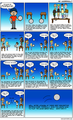
My students are teaching me and each other the power of Bitstrips as a writing tool.
Royan Lee
.
Blog
.
<span class='date ' tip=''><i class='icon-time'></i> Aug 23, 2015 06:23pm</span>
|
|
As an educator, it fascinates me to watch instructors in non-public schools ply their trade teaching kids to karate chop, kick a spherical ball, or depict a character in a play. Although this can sometimes be a bad thing, there is something illucudating about observing learning environments less encumbered by large ‘p’ Politics. I’ve often said that I feel lucky enough to have had my kids in extracurricular activities with superb educators who do not hold teaching degrees. I consider it a type of PD.
Here’s what they do in our municipal swimming classes:
Students pass or fail, period. There are no grades. Learners rarely pass the high levels their first time.
Everything that happens has feedback and exemplars embedded into the learning process. It is unambiguous, intelligible, and connected directly to success criteria.
Classes are not determined by age, but by acquisition level of skills. My daughter was just in a level with kids spanning 7 to 12 years of age.
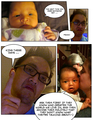
No stickers are used. Not even for the tiny kids like my 3yo Jackson.
Teachers and students open up their learning to other classes, parents, supervisors. Everyone literally sees what’s going on. It is the definition of transparency.
There are no electronic devices.
Royan Lee
.
Blog
.
<span class='date ' tip=''><i class='icon-time'></i> Aug 23, 2015 06:22pm</span>
|
|
Royan Lee
.
Blog
.
<span class='date ' tip=''><i class='icon-time'></i> Aug 23, 2015 06:22pm</span>
|
|
Royan Lee
.
Blog
.
<span class='date ' tip=''><i class='icon-time'></i> Aug 23, 2015 06:19pm</span>
|
|
It’s weird. As an open classroom, my students and I get a lot of questions about our use of technology, particularly new and emerging ones such as iPads and iPods. The most common are, at times, getting excruciatingly common.
Aren’t you afraid of losing them?
Who paid for it?
What’s your favourite device?
How do you stop the kids from getting distracted?
The one question we don’t get enough of is:
How is this changing the way you learn?
Royan Lee
.
Blog
.
<span class='date ' tip=''><i class='icon-time'></i> Aug 23, 2015 06:18pm</span>
|
|
The above clip is of one of my favourite comedians Louis C.K. I find his observations on the world utterly hilarious, and his delivery more precise than a toddler on an iPad. In this instance, however, he is completely wrong.
Let me explain why I take demonizations of this most remarkable thing called the Open Internet, and subsequent negativity addressed towards the supposedly spoilt generation it has apparently birthed, so very personally. Here is a taste of the schema I bring to the conversation.
My parents were peasants from Korea who immigrated to Canada in the seventies, a time I regard as a kind of golden era of North American immigration. Whenever they tell me about the Korea they left behind, it sounds a little to me like something out of a Zhang Yimou movie: pastoral and impoverished. They had almost zero formal education.
My parents, like a lot of immigrants at that time, worked a succession of factory jobs, and struggled through small business ownership. All the while, they learned English on the fly, if at all. My mother, to this day, sounds like she just stepped off a boat, as some of us are wont to say. On my first day of kindergarten as a three-year-old (December baby), I didn’t speak a word of English.
The first time I sat on an adult’s lap to have a book read to me was in kindergarten.
I didn’t know what a ‘cottage’ was until my twenties.
I was one of those kids that acted as an interpreter for my brother’s parent-teacher interviews.
Kraft Dinner, to me, was the height of exotic cuisine.
From a very young age, I realized that media and technology were going to be important - no, essential - if I was going to learn to be a contributing and active member of the world. I voraciously consumed TV, radio, music, newspapers, video games, cinema, and anything else I could get my hands on. It was my life’s blood. Although I didn’t learn the term ‘cultural capital’ until my university years, I knew its meaning intuitively.
As a young child in the eighties, this media was, of course, predominantly mainstream: The Cosby Show, Nintendo, Alyssa Milano. Hence, my twisted and hegemonic romanticization of mainstream society, of which I did not recognize myself a part. As adolescence dawned on my, however, I became almost a fiend for ‘underground’ and ‘alternative’ media, content, and art.
One of the closest people in my life, my cousins Diane and Julie, often call my teenage years The Dark Period (I prefer to call it my I Just Realized The World is F***ed Period). In a nutshell, a walked around with Jack Kerouac’s On the Road perpetually at my side, listened to weird 4AD music on my run down Sony walkman which was always and infuriatingly running out of batteries, and skipped school to see Robert Bresson films at the Carlton. I used to save up and literally travel miles just to get the latest edition of NME.
And then came The Internet. Turn the page.
Royan Lee
.
Blog
.
<span class='date ' tip=''><i class='icon-time'></i> Aug 23, 2015 06:18pm</span>
|
|
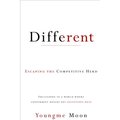
Differentiation is not a tactic. It is a way of thinking. It is a mindset, a mindset that comes from observing and absorbing and respecting. Most of all, it is a commitment to engage with people … not in a manner to which they are merely unaccustomed, but in a manner that they will value, respect, and yes, perhaps even celebrate.- Youngme Moon, Different: Escaping the Competitive Herd
Books about education often bore me. I have read so many good ones (too many to count), but, like all genres, the majority are soporific. I tend to prefer reading books that are about the contextualization of learning. And if the book has a touch of iconoclasm in it, then all the better.
Youngme Moon’s Different, about paradigm shifting in the world of business, is one such book. In it, she contends that most brands are in a foolhardy race to mediocrity and indistinction because of their inability/unwillingness to diverge from creative and competitive norms. Replace the word ‘brands’ with ‘schools’ and ’marketers’ with ‘educators’ and you’re close to the discourse on so-called 21st Century Learning.
The main question I asked myself while reading is a question I ponder almost everyday as a teacher and parent of young people: How do we create learning environments that are inherently differentiated and, thus, innovative? I’ll never forget the first time I saw an education publisher put out a (very expensive) resource on ’differentiated instruction’. I knew there was problem. My horror only increased once I noticed how full it was of blackline masters.
Differentiation is not a series of events and choices that occur in the process of arriving at a point of convergence. In other words, who cares if everyone is driving different cars if they are still arriving at the same, pre-determined destination at the exact time of day? At some point, there needs to be room for divergence and surprise, does there not? At its core, differentiation, to me, is simply an approach to learning where we provide the tools, space, time, feedback, and release of control for learners to come up with original ideas. It’s more of a climate, a culture. Moreover, this process is completely dependant on the needs presented by the learners in the room.
In Different, Moon admonishes us against prescriptive remedies to a lack of innovation in business. She also contends that the most innovative brands and marketing campaigns have usually succeeded by choosing to stop doing certain things rather than just doing more. I would pass along these warnings to any of us that are trying hard to make our learning spaces innovative and differentiated. As Moon says,
Difference is deviance. Difference is permutation. Difference is a commitment to the unprecedented, which is another way of saying it is a commitment to letting go.
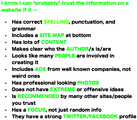
For more inspiration, check out Moon’s video below: My Anti-Creativity Checklist from Youngme Moon on Vimeo.
Royan Lee
.
Blog
.
<span class='date ' tip=''><i class='icon-time'></i> Aug 23, 2015 06:18pm</span>
|
|
I always thought The Simpsons were the kings of education satire. I forgot about Peanuts:
Royan Lee
.
Blog
.
<span class='date ' tip=''><i class='icon-time'></i> Aug 23, 2015 06:18pm</span>
|
|
Meet Misha (on the right). She’s my daughter’s (left) BFF and just about the most awesome 8-year-old you’ll ever meet. She’s a great dancer, loves reading, and watches movies repeatedly when she really gets into them. You know that kid whose needs you sometimes forget about in your class because they’re so bright and independent? That’s her.
Misha, like many normal middle-class kids in countries that have Apple Stores, got a 4th generation iPod Touch for Christmas. In case you were looking the other way or taking a nap, I want to suggest that we have just experienced a major change in the tide.
It is now not uncommon for kids in elementary schools to own what, for all intents and purposes, is an iPhone 4. I’m not saying that they’re everywhere. I’m simply saying that it’s not surprising if and when you see it.
I see a 4th generation iPod Touch as quite a different animal to other devices because it is essentially an iPhone 4. In addition to internet connectivity, access to the entire App Store, and music playing which many of us have grown accustomed to, the new Touch takes high quality photos and video, records audio, and can be used as a data-plan-less cell phone when on wifi. Oh, and you can make video calls. Yes, video calls. Anytime you want.
So, next time you need a filler for a staff meeting, perhaps you could facilitate a simple 20 minute activity which asks the following questions.
First, take a quick vote: Do you think it will become more or less normal to see children in possession of these kinds of devices?
Next, an inductive thinking activity based on this question: What does this mean for learning in our schools?
Royan Lee
.
Blog
.
<span class='date ' tip=''><i class='icon-time'></i> Aug 23, 2015 06:17pm</span>
|
|
I’ve read some great posts this past week reminding us to quell our über obsession with technology in education and focus on the pedagogy:
Stephen Louca sees a Room with Two Doors
Angie Harrison asks why we’re focusing on the tool.
Cathy Davidson admonishes our iPad fervour
Jerrid Kruse warns us not to look at the ‘things’ of classrooms.
Noel Gallagher of Oasis once bellowed, "Please don’t put your life in the hands / Of a Rock ‘n’ Roll Band / We’ll through it all away", and I would say tech in education is sometimes like Rock ‘n’ Roll.
We don’t want the learning in our classrooms to be like a bad, top-40 rock song: catchy, vacuous, and most entertaining when drunk.
We want to introduce ‘songs’ that make people go, "Shhh, let me listen to this!" Most people won’t appreciate it at first, but it will linger.
Remember: It’s not about the tech. Now let’s start using the tech.
Royan Lee
.
Blog
.
<span class='date ' tip=''><i class='icon-time'></i> Aug 23, 2015 06:17pm</span>
|