Blogs
|
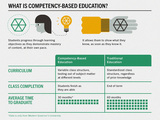
Competency-based learning is an approach to education that focuses on the student’s demonstration of desired learning outcomes as central to the learning process. It is concerned chiefly with a student’s progression through curriculum at their own pace, depth, etc. As competencies are proven, stu...
The post What Is Competency-Based Learning? appeared first on Patric Lougheed.
Patric Lougheed
.
Blog
.
<span class='date ' tip=''><i class='icon-time'></i> Aug 23, 2015 11:56pm</span>
|
|
Fueled by an incredible demand in the workforce for proficient programmers and the need to teach critical thinking skills, the coding movement in schools has exploded. Furthermore, we all communicate through technology, so we should at least know the basic premise of coding because the gadget sit...
The post Why (And How) To Start Teaching Coding In School appeared first on Patric Lougheed.
Patric Lougheed
.
Blog
.
<span class='date ' tip=''><i class='icon-time'></i> Aug 23, 2015 11:55pm</span>
|
|
22 propositions in an attempt to etch out the paradox of the modern teacher.
The post The Paradox Of The Modern Teacher appeared first on Patric Lougheed.
Patric Lougheed
.
Blog
.
<span class='date ' tip=''><i class='icon-time'></i> Aug 23, 2015 11:54pm</span>
|
|
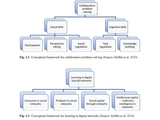
Though the constant updates can be annoying as twitter just to iterate itself towards monetization and permanent relevancy in a finicky digital landscape, among the changes I like is the ability to embed images. Other channels like tumblr have always had this, but not so with twitter. So when Sam Boswell tweeted the image above-being the right-brain idiot that I am-I clicked, and there was much irony in what I saw. A conceptual framework for learning in digital networks! (Get it? I was learning about digital networks on a digital network? Tough crowd.)
Source: www.teachthought.com
The post A Framework For Learning In Digital Networks appeared first on Patric Lougheed.
Patric Lougheed
.
Blog
.
<span class='date ' tip=''><i class='icon-time'></i> Aug 23, 2015 11:54pm</span>
|
|
When we approach digital reputation in an empowering way it allows us to reframe the conversation. Instead of nagging students about not posting party pictures on Facebook, we can empower them to build a digital reputation that aligns with the legacy...
Source: www.huffingtonpost.com
The post 6 Ideas for Teaching Digital Reputation appeared first on Patric Lougheed.
Patric Lougheed
.
Blog
.
<span class='date ' tip=''><i class='icon-time'></i> Aug 23, 2015 11:53pm</span>
|
|
One of the things I have discovered as I work with badges is that they are not all the same. The badges issued to staff are qualitatively different to those offered to students. Many of the badges incorporated into learning management tools are different again. This is problematic, because if badges representing robust credentials are put beside ‘well done’ badges issued to grade school students, the integrity of the whole system is put into question. To overcome this a standard taxonomy for badges needs to be established to differentiate between types of badges within the open standard. The question is how should this taxonomy be defined?
Source: doncollegegrant.wordpress.com
The post Digital Badges - A Suggested Taxonomy appeared first on Patric Lougheed.
Patric Lougheed
.
Blog
.
<span class='date ' tip=''><i class='icon-time'></i> Aug 23, 2015 11:53pm</span>
|
|
Digital badges as a credentialing tool may force us to re-think and redesign education, especially for emerging fields such as social innovation.
So how do digital badges work? Unlike traditional academic degrees that tend to communicate what subject you studied and where you studied it, most digital badges are more granular in scope. They point to specific knowledge and skills you’ve acquired, and in most cases, demonstrated. For example, instead of going to a reputable business school and leveraging that institution’s MBA to get a job, you would earn a series of badges that would demonstrate your business acumen—such as your mastery of business model canvas, Lean Startup, and customer development. Your school—or any school for that matter—doesn’t need to issue the badges itself; the badges simply need to come from a trusted source that can certify your competencies.
Source: www.ssireview.org
The post The Case for Social Innovation Micro-Credentials with Badges appeared first on Patric Lougheed.
Patric Lougheed
.
Blog
.
<span class='date ' tip=''><i class='icon-time'></i> Aug 23, 2015 11:53pm</span>
|
|
Computers have transformed our daily lives so much that it?s hard for most people who have grown up in this digital age to imagine a time without technology.
Source: www.opencolleges.edu.au
The post Studies Discover How Computers And The Web Are Changing The Way We Learn and Remember - InformED appeared first on Patric Lougheed.
Patric Lougheed
.
Blog
.
<span class='date ' tip=''><i class='icon-time'></i> Aug 23, 2015 11:52pm</span>
|
|
There's a whole host of complicated reasons why, from boring curricula to a lack of qualified teachers to the fact that in most states computer science doesn't count toward graduation requirements. But should we worry? After all, anyone can learn to code after taking a few fun, interactive lessons at sites like Codecademy, as a flurry of articles in everything from TechCrunch to Slatehave claimed. (Michael Bloomberg pledged to enroll at Codecademy in 2012.) Twelve million people have watched a video from Code.org in which celebrities like NBA All-Star Chris Bosh and will.i.am pledged to spend an hour learning code, a notion endorsed by President Obama, who urged the nation: "Don't just play on your phone—program it."
Source: www.motherjones.com
The post Is coding the new literacy? appeared first on Patric Lougheed.
Patric Lougheed
.
Blog
.
<span class='date ' tip=''><i class='icon-time'></i> Aug 23, 2015 11:52pm</span>
|
|
A new initiative at the University of Alaska Anchorage aims to roll out campuswide e-portfolios by 2015, with the potential to go even broader on the horizon.
Education is still very much concerned with how we know students are learning, that we're getting through to them, that they're walking away with knowledge, skills and abilities.
Sometimes the accrediting community — whether institutional or program — is asking the same types of questions. How do we know students are learning in your program? Give me examples. Give me evidence. Give me tangible things that show learning is taking place. Portfolios are one of those vehicles to start responding to those questions.
Source: campustechnology.com
The post Why Large-Scale E-Portfolios Make Sense appeared first on Patric Lougheed.
Patric Lougheed
.
Blog
.
<span class='date ' tip=''><i class='icon-time'></i> Aug 23, 2015 11:52pm</span>
|