Blogs
|
We’ve been knee deep in developing enhancements to - heck, creating an almost entirely new - SCORM Cloud, but that doesn’t mean we put other products on hold.
In fact, we’ve got big, huge, gargantuan news regarding SCORM Engine, still the player of choice for great e-learning applications. And now, it’s the choice of Odijoo, which is on the verge of releasing with SCORM Engine in place.
Not familiar with Odijoo? They’re a free web-based eLearning platform (soon to be SCORM 2004 and 1.2 conformant!) that allows users to have their own personalized online space from which to create, publish, share and monetize online courses. It’s a pretty cool service for people who don’t need their own installed LMS, want an easy way to create a course or look to make money distributing content.
Odijoo just launched back in October and quickly discovered a need for people to be able to import previously created content. And … well, since part of the point of using SCORM is to be able to easily play content across systems, SCORM moved up the to-do list to become the next step in Odijoo’s evolution.
The big bonus in this scenario for Odijoo is the tolerance we build into our players. Fewer headaches as people begin bringing in content created in a wide variety of tools and for a wide variety of LMSs.
Welcome to the Rustici Software family, Odijoo!
Rustici Software
.
Blog
.
<span class='date ' tip=''><i class='icon-time'></i> Aug 26, 2015 07:45am</span>
|
|
Moodle worked for years to achieve SCORM 1.2 conformance and certification. They achieved this laudable goal in October 2009, more than eight years after the standard’s release. A long road and congrats on getting there. Just a few months later, we had Moodle certified for SCORM 2004 by installing the SCORM Cloud Moodle plug-in (which takes about five minutes).
We totally understand that SCORM 2004 is irrelevant for a lot of Moodle users. But we also understand that it’s crucial for others. As Moodle partners like Moodlerooms and others attempt to sell their solution to government agencies, they frequently run into the federal government’s requirements around SCORM 2004. As sophisticated content authors look to apply their SCORM 2004 content in Moodle, they are stopped in their tracks.
For people and companies looking for next level of SCORM capability, SCORM Cloud lets them push Moodle miles forward … in about five minutes.
Rustici Software
.
Blog
.
<span class='date ' tip=''><i class='icon-time'></i> Aug 26, 2015 07:44am</span>
|
|
When we talk about SCORM Cloud, we usually talk about taking SCORM outside the LMS. Take learning anywhere online. Connect learners to learning.
Well, to date, we’ve still been connecting to LMSs with modules for open source learning management systems like Moodle and Sakai. But now we’ve taken that first step away from the LMS with a WordPress plug-in that allows you to offer a SCORM course right from a post or page or sidebar list.
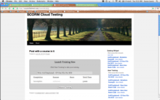
We’re still testing it out, writing up instructions and so forth, but by next week (maybe sooner?), we fully expect to have all our ducklings in neat rows and ready to go for full release. To tide you over until then, here’s a look at how I used it on a test blog. Just by pushing a button and picking my course, I was able to add a course directly into a blog post and registered learners can click the button and launch the course right from the post.
Now, if you just can’t wait and want to try out the beta version, you can go ahead and download it to check it out. Screencasts to walk you through some of it are on the way available in our YouTube playlist. We’d love to hear what you think about the direction we’ve taken with this.
Rustici Software
.
Blog
.
<span class='date ' tip=''><i class='icon-time'></i> Aug 26, 2015 07:44am</span>
|
|
It seems like we’ve been talking about "SCORM 2.0″ for years now…wait, come to think of it, it has been years. Literally years. But, finally, alas, we have some progress. The industry is moving forward. Hark, do I hear angels singing?
While it’s not officially part of "SCORM", LETSI has produced an exceptionally useful enhancement…and guess what, it’s ready and available to be implemented now!
The current SCORM communication framework (based on JavaScript) has served us well. It is simple, easy-to-understand, and straight-forward to implement. But, it’s getting a little long in the tooth. Technology has evolved and there are better ways to do things.
Enter LETSI’s Run-Time Web-Services (RTWS) project. Over the past year, the RTWS group has worked to create a complete and implementable web services communication protocol that is compatible with SCORM. This project addresses some of the most notable and frustrating limitations of the current SCORM model, including:
Enabling "out of browser" experiences, such as training delivered in simulations, games, virtual worlds
Facilitating offline or occasionally connected use
Removing the cross domain security restriction
Enabling deliver on alternative devices, such as mobile phones
Allowing for more secure system communication
(there are a few other goodies thrown in as well…such has historical attempt tracking)
LETSI has published an RTWS Developer’s Guide and there are a number of prototype implementations either already available or in development (from vendors such as Meridian, Booz Allen, OutStart, Boeing…and of course Rustici Software). One of the core tenants of LETSI is that implementation should drive specifications….standards need to be vetted through actual use. To that end, LETSI is actively looking for additional prototype developers and implementers. Let us know if you are interested.
As for Rustici Software, we currently have a version of RTWS implemented in a development version of the SCORM Engine. We expect to publish a production quality version with our next SCORM Engine release later this year. At that point, RTWS will be available in SCORM Cloud and it will start to be available in the LMSs of our 100+ SCORM Engine clients as they proceed through their upgrade cycles.
Rustici Software
.
Blog
.
<span class='date ' tip=''><i class='icon-time'></i> Aug 26, 2015 07:44am</span>
|
|
We write about working here more often than we ever post that we’re hiring. Small company, only so many slots to fill, yada, yada, yada. Seriously, when you have a great place to work, who wants to leave?
So now’s your chance. We’re hiring. Developer types. All sizes. Bonus points if you can beat Tim at ping pong.
Why you want to work here. (Well most of why. It doesn’t mention the cookies.)
How to make it happen
Some background on how we look at hiring.
Rustici Software
.
Blog
.
<span class='date ' tip=''><i class='icon-time'></i> Aug 26, 2015 07:44am</span>
|
|
It all started with Albert Haynesworth. Albert Haynesworth, you see, is a NFL defensive tackle, a big man who used to play his football at the University of Tennessee and for the Tennessee Titans. A year ago, he left the Titans via free agency to play for the Washington Redskins. He was given a massive contract, and he had a mediocre year.
This year, he came back to camp, and the coach wanted him to prove that he was in shape. He failed.
So yesterday, we caught wind of a couple of folks who had tried the challenge themselves. Mike Golic of "Mike & Mike in the Morning" on ESPN tried it… but he’s a former NFL player. Some of the employees at The Virginian-Pilot tried it with varying degrees of success.
Frankly, this struck me as just my kind of stupid. And so I brought the stopwatch to work today. And invited all comers to join in the fun. And the smack talk.
From one David Ells:
And so the fun begins:
David Ells, 27 years young: Shuttle 1: 66 seconds, Shuttle 2: 83 seconds. #fail
Troy Foster, 34 years: Shuttle 1: 64 seconds, Shuttle 2: 68 seconds. #pass
Joe Donnelly, 37 years: Shuttle 1: 75 seconds, Shuttle 2: 77 seconds. #fail, but Joe could keep up this pace forever
Mike Rustici, 33 years: Shuttle 1: 70 seconds, Shuttle 2: 73 seconds. #pass. And let me tell you, I have respect for someone who does just the right amount.
Tim Martin, 35 years: Shuttle 1: 64 seconds, Shuttle 2: 69 seconds. #pass
I came away for the experience with two conclusions.
That Ells kid got what he deserved.
This is exactly the kind of thing every single workplace needs more of.
Truthfully, Rustici Software is pretty good at doing fun stuff. We play disc golf, we have a ping pong table, our office environment is exceptionally casual. But we often fall into the same trap that so many offices do. One day simply can’t be distinguished from another.
Today is a day of work that I’ll remember. I’ll remember it because what we did was stupid (no, really, the heat index was over 100… the HR department is not happy.) I’ll remember it because it was different. I’ll remember it because we abused ourselves and each other.
Note to self: Do more of this kind of stuff. Give yourself and others a way to mark the days at work… not just wander through them. Work is way too big a part of our lives to plod through day after day.
Rustici Software
.
Blog
.
<span class='date ' tip=''><i class='icon-time'></i> Aug 26, 2015 07:44am</span>
|
|
First!!
More than 10,000 plugins available for WordPress and we’re your first, best and only option for using SCORM. Which we should be. This is kind of our spot, after all.
All that to point out that SCORM Cloud is officially in the WordPress plugin directory, which makes it just that much easier to install and get going. Just search for SCORM and … well, it’s in a class by itself there. College class, instructional design portfolio, sales training - all easy to execute now.
We’ve heard from lots of you who are excited about using this plugin. But we want to hear more about how you’re using it and what other plugins make it more valuable. Do you tie it to BuddyPress? Have you figured out a clever connection to [some related posts]? Making money with a tie to Aweber?
I’m compiling a list to be part of our WordPress section to show off your sites and the smart ways you’re putting our plugin to use. If you’ve deployed the SCORM Cloud plugin, let me know and I’ll add you to the list.
Rustici Software
.
Blog
.
<span class='date ' tip=''><i class='icon-time'></i> Aug 26, 2015 07:44am</span>
|
|
We wanted to create something new with SCORM Cloud. Something that could take advantage of the changes happening in learning online. Something that could change the way we think about tapping the internet. Something that anticipated the needs of educators and trainers.
And we think we did it. And we aren’t the only ones. In fact, SCORM Cloud was just short-listed for the e.learning age awards in the most innovative new product category. Sweet!
SCORM Cloud is just at the beginning of its impact. It’s already making life easier for people with big open-source LMSs, anyone needing to do SCORM testing and those offering training via WordPress. And we’re looking for new ways to stretch all the time.
Upcoming innovations? How about using it with Google Apps for domains? That one’s in the works to be available soon and could be a dream for small businesses. And we’re hoping to let you know soon about ways people outside of Rustici are building on top of SCORM Cloud.
Rustici Software
.
Blog
.
<span class='date ' tip=''><i class='icon-time'></i> Aug 26, 2015 07:43am</span>
|
|
I don’t know how many times I’ve said to someone on the phone, "SCORM is difficult, especially for the LMS provider." There are many moving parts, countless interpretations, and vagaries in the specification itself. For the most part, we handle these things exceptionally well. Sometimes we make mistakes, and sometimes those mistakes can compound themselves.
The Source of Today’s Problem
In SCORM 1.2, mastery_score and lesson_status can interact with each other strangely. Frankly, the specification can be interpreted in two ways.
From Section 3.4.4, "The SCORM Run-Time Environment Data Model", in the cmi.core.lesson_status section (henceforth called "The Narrow View"):
After setting the cmi.core.lesson_status to "completed", the LMS should now check to see if a Master Score has been specified in the cmi.student_data_mastery_score, if supported, or the manifest that the SCO is a member of. If a Mastery Score is provided and the SCO did set the cmi.core.score.raw, the LMS shall compare the cmi.core.score.raw to the Mastery Score and set the cmi.core.lesson_status to either "passed" or "failed". If no Mastery Score is provided, the LMS will leave the cmi.core.lesson_status as "completed".
From Section 3.4.4, "The SCORM Run-Time Environment Data Model", in the cmi.core.lesson_status section, incorporating text before and after "The Narrow View" (henceforth called "The Holistic View"):
Additional Behavior Requirements: If a SCO sets the cmi.core.lesson_status then there is no problem. However, the SCORM does not force the SCO to set the cmi.core.lesson_status. There is some additional requirements that must be adhered to successfully handle these cases:
Upon initial launch the LMS should set the cmi.core.lesson_status to "not attempted".
Upon receiving the LMSFinish() call or the user navigates away, the LMS should set the cmi.core.lesson_status for the SCO to "completed".
From above After setting the cmi.core.lesson_status to "completed", the LMS should now check to see if a Master Score has been specified in the cmi.student_data_mastery_score, if supported, or the manifest that the SCO is a member of. If a Mastery Score is provided and the SCO did set the cmi.core.score.raw, the LMS shall compare the cmi.core.score.raw to the Mastery Score and set the cmi.core.lesson_status to either "passed" or "failed". If no Mastery Score is provided, the LMS will leave the cmi.core.lesson_status as "completed".
Herein lies the big difference. The bullets are intended only for the cases in which the LMS has been forced to manage the status on its own. In a piece of content that sets its status (as we’ll discuss below), we believe the LMS is not supposed to intervene with regard to the Mastery Score.
What we did wrong, a while ago
In SCORM Engine 2007.1, we went with this logic, which maps to the "Narrow View":
If cmi.core.lesson_status has been set and cmi.core.score.raw has been set, compare the Mastery Score to the cmi.core.score.raw and set the status to "passed" or "failed".
Ultimately, as this logic rolls up through the course, this tolerates content we believe is wrong and reads as "completion_status=complete and success_status=passed" or "completion_status=complete and success_status=failed" to the client LMS. Put another way, it cleans up the mistaken interpretations made by the content author. (It’s an understandable mistake.)
This seems OK at first blush, but then you start running into content that expects the other behavior. If you’re a content author, one that reads the spec holistically, and you’ve intentionally set a value for lesson_status, and the LMS overrides it, that’s pretty confusing. If the spec were totally clear on the subject, we would stand behind it. Given that the spec is ambiguous here, we can appreciate the author’s point of view.
So, we did what we do. We made accommodations.
How we accommodate different interpretations of the specification
We have long believed that the best way to have a highly compatible SCORM player is to accommodate different interpretations from content. This is a perfect example of why we do this, and it allows us to properly support content in a way that other LMSs and players just don’t.
From our release notes for 2008.1:
Mastery Score Overrides Lesson Status - In SCORM 1.2, there is a debate about when and if the LMS should override the lesson status reported by the SCO with a status determined by the reported score’s relation to the mastery score (i.e. if the reported score is 60 and the mastery score is 80, then should the LMS set the status to failed even though the SCO said the status should be passed?). This setting allows you to choose whether or not the LMS should override the status based on the score for this course.
Alright, this is great, right? Now we can have our cake and eat it too. (The fact that cake is gross will have to be another post.)
Every time we add a new package property like this one, we have to make a decision on the part of our clients. We have to decide what the default is. In some cases, this is easy stuff. When we’re tolerating departures from the standard, we simply go with the standard as the default. This is a tough one, though, because the spec is a bit ambiguous. In this situation, we go with what we believe is the correct interpretation of the standard.
In this case, we decided to opt for "false", or, mastery score does not override status. We think that a content developer who’s smart enough to set his or her own status is also smart enough to retrieve the mastery score and compare against if they want to. We’re erring on the holistic side of things here, and I still feel good about this decision.
I do not, however, feel good about our mistake.
The Mistake
We chose the default. We deployed the new version of the SCORM Engine. And we added the necessary columns as part of the upgrade script. In doing so, we used the default value.
Big Mistake. Big. Huge.
-Vivian, Pretty Woman
(Note, this is not a wide spread problem. It’s isolated to content with an atypical interpretation, but it is very problematic for those courses. I just like to quote movies.)
Some of our clients have content that expected the LMS to make the comparison against the Mastery Score even though they’d already set the status themselves. This content had functioned without issue for some time. And in upgrading to 2008.1, they introduced a problem with older content.
With the new default, though, this is what happens. A course could set cmi.core.lesson_status to "completed" and then report a cmi.core.score.raw that exceeds the Mastery Score they’ve provided. The content could assume that the LMS logic defined in Section 3.4.4 (the narrow view) would then change the lesson_status to "passed". Because we’ve opted to go with the holistic approach by default, the status would in fact not be changed. This scenario, though, isn’t a big deal. The client LMS would still interpret this course as sufficiently completed and all would be well.
The mistake manifests itself, though, when the cmi.core.score.raw is less than the Mastery Score. In this situation, the status values would remain "completion_status=complete and success_status=unknown". To the client LMS, this appears to be a course that is probably complete and has no testing, when in fact, it’s really a failed test.
The conclusion? We have picked the right defaults for people going forward, but we probably should have set the defaults in the upgrade script to stick to the old behavior. (We have, in fact, gone back to the 2008.1 upgrade script and made this change for those of you who have yet to upgrade.)
Now What?
Well, we just, last night, discovered this side effect behavior, and it obviously merits immediate action for some clients.
For those of you who ran against 2007.1 and have some concern that you may have courses that function like this, you can opt to revert to the old logic. If you’d like help doing just that, you can simply ask us for the queries to revert to that default. We’ll help you through that and we’ll help you examine any potential "false completions" that have happened since you deployed 2008.1.
If you’re building a new SCORM Engine integration, you can opt to go with our defaults. It is our experience that more content (including some from a big authoring tool vendor) benefits from our new default behavior. But that doesn’t mean it catches every scenario. This is something that you and we will continue to be on the lookout for. In fact, we’re going to see if there’s any sort of a heuristic that we could deploy successfully to handle this ourselves. (We’re not optimistic, but we’d like to catch this one without human intervention.)
Rustici Software
.
Blog
.
<span class='date ' tip=''><i class='icon-time'></i> Aug 26, 2015 07:43am</span>
|
|
Have you heard we’re hiring? ’Cause we are, and I think you might want to work here.
In the process of our interviews and the emails I exchange with people, I’ve tried to give a short explanation of our benefits, and I’ve failed every time. So, instead, I’m going to lay out our current benefits, as of January 2011, and just send a link to people! Also, I thought y’all might like to see that there are companies out there that really do have good benefits…
Note: I’m going to post this publicly, at which point the people who work here will read it and tell me what I’ve misstated. Please don’t take this as gospel. But I think it’s pretty close.
Health Care
Our primary plan is an HSA. We really like the concept of an HSA, and the fact that the lower cost allows us to offer some of the other benefits. I’ll lay out some key points for you, but you’re welcome to ask for details if you like.
Our plan is through Blue Cross Blue Shield of TN, and is the P plan.
For single people, doubles, or families, we pay the full premium for the HSA.
The deductible (which has to be high for an HSA) is $2500 (max) per individual and $5000 for a family.
We contribute $125 every month to each employee’s HSA account.
If any employee exceeds $1500 in insurable expenses during the year, we have an HRA that kicks in for the next $1000. That means that a single person has a $0 exposure in a year that they work here full time.
The max exposure for a family is $2500 out of pocket, and there are plenty of occasions where they come out well ahead of this. (In 2010, my family came out ~$750 ahead.)
This year, we offered an alternate plan wherein families that were uncomfortable with the HSA setup could opt for a more traditional PPO plan. The premiums we pay for the HSA plan were simply applied across to the PPO and the remaining cost was passed on to the family.
Dental
We pay for dental care for families that want it. Our coverage is through Guardian, and it’s called DentalGuard Preferred.
It doesn’t include orthodontia, but remember, you can pay for your kids’ braces out of your HSA.
Vision
We pay for vision care for families as well. Our coverage is again through Guardian, and it’s called the Davis Vision plan.
I’m told that you can get glasses or contacts through it, but you have to be sure to go to the right place and stuff. Never tried it though.
Disability
We pay for this too. You get 60% of your monthly income, provided you meet the requirements found in the big pile of paper.
Accidental Death and Dismemberment
Yes. We provide $25,000 worth, and there are piles of paper that explain the parameters.
Life Insurance
See AD&D above. $25,000 worth, and even more paper.
401k/Retirement
Yes, even though we’re a small company, we do offer 401k benefits.
Both traditional and ROTH options are available, with a collection of investment options.
We do match, at 100% up to 4% of you salary.
Vacation
It’s pretty loose, honestly. We don’t count the days you’re here. If you’re taking so much vacation that we notice, you probably aren’t the right person for the job.
If you’re the kind of person who likes parameters and guidelines, 5 weeks out of the office over the course of the year might seem about right, but that would include the partial days, the full days, whatever you’re doing.
Again, though, I don’t count days, and I won’t count days. Be awesome, be part of what we’re doing, and we’ll never notice.
"Profit Sharing"
Yup, we share in the profits. Of late, we’ve been taking 20 - 25% of the profits and distributing them amongst the people who work here based on the quality of their work.
[Note: Added this bullet after publication when Jean yelled at me.] This is not a formal profit sharing plan (or so our HR department/office mom tells me). We give bonuses, and they are based on our profitability and the respective performance of the people who work here.
This serves as all the more reason to be awesome.
These things are subject to change, of course. So, if you’re reading this post in 2014 assuming it’s all fact, be sure to ask.
Rustici Software
.
Blog
.
<span class='date ' tip=''><i class='icon-time'></i> Aug 26, 2015 07:42am</span>
|