



The Science of Distraction
a White Paper by AhaSlides
This free item is only available for logged in members.
Description
Keeping people’s attention has quietly become one of the hardest parts of presenting at work.
Not because audiences don’t care — but because they’re operating inside environments designed to interrupt them. Notifications, messages, tabs, and meetings all compete for attention at the same time, making focus harder to sustain than ever before.
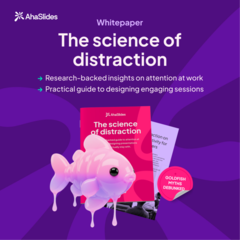
The AhaSlide white paper The science of distraction explores what’s really happening to attention in today’s workplaces. Drawing on neuroscience, behavioural science, and original research with over 1,000 presenters, it separates popular myths from evidence — including the much-quoted “eight-second attention span” — and explains why attention hasn’t disappeared, but is constantly being pulled and switched.
Learn how distraction affects learning, retention, productivity, and even presenter confidence and job satisfaction. It also explores why emotion, uncertainty, and
participation play such a powerful role in helping ideas stick — and why presentations that invite involvement consistently outperform those that rely on information alone.
Rather than simply blaming audiences, this paper provides a clearer, research- backed way to think about attention — and how presenters can design moments that gently pull people back into the room.
Whether you’re a trainer, educator, team lead, or anyone who presents regularly, this whitepaper is a guide to understanding attention better — and creating presentations people actually remember.
Not because audiences don’t care — but because they’re operating inside environments designed to interrupt them. Notifications, messages, tabs, and meetings all compete for attention at the same time, making focus harder to sustain than ever before.
The AhaSlide white paper The science of distraction explores what’s really happening to attention in today’s workplaces. Drawing on neuroscience, behavioural science, and original research with over 1,000 presenters, it separates popular myths from evidence — including the much-quoted “eight-second attention span” — and explains why attention hasn’t disappeared, but is constantly being pulled and switched.
Learn how distraction affects learning, retention, productivity, and even presenter confidence and job satisfaction. It also explores why emotion, uncertainty, and
participation play such a powerful role in helping ideas stick — and why presentations that invite involvement consistently outperform those that rely on information alone.
Rather than simply blaming audiences, this paper provides a clearer, research- backed way to think about attention — and how presenters can design moments that gently pull people back into the room.
Whether you’re a trainer, educator, team lead, or anyone who presents regularly, this whitepaper is a guide to understanding attention better — and creating presentations people actually remember.
Sponsored By


Share this lesson via Social Media



