Blogs
|
If you’re just getting started with Lectora® or Lectora® Online, the most time-saving feature that you’ll want to use right away is a concept called inheritance.
Inheritance allows you to place an object at the Title level, where it is inherited to all the Chapters, Sections, and Pages in your course. Take a look at the Title Explorer below. Notice that the Graphics group, Page Title, Logo, navigation buttons, and actions are all placed at the Title level.
Rather than copying and pasting these objects onto every page where you want them to appear, you can place them at the Title level and know they will be inherited. This is useful for background images, course navigation, or other objects you want on every page of your title. You can see this in action when you apply a Design Theme to your title. All of the course GUI elements are placed at the Title Level.
Chapters and Sections
The same inheritance concept applies to Chapters and Sections. Suppose you want to place a Progress Bar, Table of Contents, or button on all of the pages of a specific Chapter or Section. Inheritance has you covered. Any object you add to the Chapter level will be inherited to the Sections and Pages within it. And any object you add to the Section level will be inherited to any Sub-sections and Pages within that Section.
In the example below, you can see that the Progress Bar is placed at the Chapter level for Lesson 1, and so it will be inherited by the Sections and Pages within that Chapter.
Quick Tip: Did you know that you can change the Progress Bar type to TOC and set the Scope to a specific chapter or section?
Excluding Objects
What happens if you have an object that you do NOT want to inherit on a specific Chapter, Section, or Page? For example, consider the Next button. You may want to exclude the Next button from appearing on certain pages in your title. You can still use inheritance, but remember to disinherit that object on the Chapter, Section, or Page where you do not want it to appear.
To do this, select the Chapter, Section, or Page properties, and select the Inherit button. Choose to inherit ALL objects, NO Objects, or Specific objects from parents. Then select the objects you want Excluded and move them to the list.
In the example below, the Next button and OnSwipeLeft action are excluded from this page. I didn’t need to delete or copy the object—I just excluded it from being inherited.
Bonus Tip
If you have a long list of objects at the Title, Chapter, or Section level, it can be hard to manage the Title Explorer. Within your Preferences, you can turn on the option to "Show buttons for hiding objects in the Title Explorer." When this option is selected, you’ll have the ability to expand and collapse the objects set at the Title level or for a specific Chapter or Section.
Now that you understand inheritance, you’ll begin to save significant course development time. For more information about inheritance, view this Lectora Live video tutorial. To learn more about the Title Explorer, check out this recorded Inspiration Wednesday webinar.
Want to try inheritance in Lectora? Sign up for a free 30-day trial.
The post Why Inheritance Makes a Huge Time-saving Difference appeared first on .
Trivantis
.
Blog
.
<span class='date ' tip=''><i class='icon-time'></i> Dec 05, 2015 10:56pm</span>
|
|
The Trivantis® designers are back with more great tips for your eLearning course design. Today’s "Design Dos & Don’ts" post is full of helpful advice for getting inspired and making your course look professional.
Keep these dos and don’ts in mind as you’re designing eLearning courses:
Do: Find inspiration.
Art Director Tony Cavalier says, "Nothing is new in design, so go look at other courses in our Community and get inspired. Also, get inspired by looking at some top design blogs like abduzeedo.com." (Plus, if you haven’t already, register in the Trivantis Community so that you can share your own inspiring work!)
Do: Utilize white space.
"Keep things from getting cramped and avoid confusion by using white space effectively," says Trivantis designer Anthony LaQuatra. White space is the negative space on your eLearning course that is intentionally left blank to make the important parts stand out. For an extreme example of what happens when you don’t use white space, take a look at the World’s Worst Website Ever.
Don’t: Re-use designs.
"Sure, things can be used again and again to keep a consistent design; however, a design should be specific to the application you are designing for," explains Tony. "Designing something for a company like IBM will look totally different than something for Snapchat. Use brand standards to achieve a design that is on brand."
Don’t: Use clashing colors.
Anthony suggests, "Use colors that have purpose and meaning for them. Example: reds give a sense of urgency and danger while an orange gives a less loud, more approachable call to action." To read more about using color theory for online training, check out this post by Everything eLearning Blog writer Stephanie Ivec: Color Me Intrigued: e-Learning and the Psychology of Color.
Want more design dos and don’ts? Check out the other posts in this graphic design series:
Design Dos & Don’ts: Images and More
Design Dos & Don’ts: Fonts and Text
The post Design Dos & Don’ts: Great Tips appeared first on .
Trivantis
.
Blog
.
<span class='date ' tip=''><i class='icon-time'></i> Dec 05, 2015 10:56pm</span>
|
|
The Best of eLearning post is a bit early this month. Next week we’ll be busy being thankful for family, turkey, eLearning, etc. November has been busy here at Trivantis® too—from the release of Responsive Course Design™ in Lectora® Online to choosing a 2016 Lectora User Conference location.
But we haven’t been too busy to collect our favorite articles for you. Here’s the Best of eLearning in November:
1. 3 Meanings Of Compliance And Why They Matter
New to eLearning, or need more details on compliance training, Section 508 Compliance, and SCORM-compliant eLearning? This article provides good explanations and resources.
2. Trivantis Announces Responsive Course Design in Lectora
We released version 3 of Lectora Online this month. As John Blackmon, Chief Technology Officer at Trivantis said, "Lectora’s Responsive Course Design provides the solution that eLearning developers need for quick, effective mobile course development." (The eLearning Brothers even added over 30 new responsive templates to their Template Library.)
3. Great Time Talking #Gamification at Masie’s Learning 2015
Karl Kapp shares highlights from Elliott Massie’s Learning 2015 Conference. Keynote speakers included Steve Wozinak (Apple co-founder) on the history of technology and Salman Khan (Khan Acadamy) on data mastery and personalized instruction.
4. Top 10 Cloud-Based Learning Management Systems For Corporate Training
Christopher Pappas shares top choices of cloud-based LMSs for corporate training on eLearning Industry. CourseMill® is in the top 5!
5. Why Inheritance Makes a Huge Time-saving Difference
Laura Silver explains how you can save valuable time in your course development by using the inheritance concept in Lectora.
Which one is your favorite? Share in the comments below. Happy Thanksgiving, eLearning friends!
The post The Best of eLearning in November 2015 appeared first on .
Trivantis
.
Blog
.
<span class='date ' tip=''><i class='icon-time'></i> Dec 05, 2015 10:55pm</span>
|
|
My brother got all of the musical talent of our parents while I can barely carry a tune in a paper sack. He also got the beautiful, bouncy, curly hair while I got the lank, straight hair that won’t hold a curl longer than 5 minutes. Not fair!
Wouldn’t it be nice if we could pick and choose the things we inherit, and do not inherit, from our ancestors? Not so easy to do with humans, but very easy to do with Lectora titles! Inheritance is one of the most powerful features of Lectora. It saves you development time, overall file size, and even improves runtime performance. If you are new to the concept of inheritance in Lectora, pop over to the Trivantis® Community Knowledge Base where you will find a number of posts that explain howinheritance works.
Then come back here and read the rest of this because what I really want to talk about is disinheritance. Inheritance is a wonderful thing, but it can also trip you up and cause frustration if you forget about it!
When I started using Lectora, I was ridiculously giddy over the fact that I could add an object or action just once to any parent node (Title, Assignable Unit , Chapter, Section, Test, Test Section, or Survey) and it would automatically be included on all of the pages inside of that node! Woohoo! But I would also get so focused on building the interactions on a single page that I would forget about the things that the page was already inheriting. And if something went wrong when I tested the page, I would sometimes get stuck trying to find the cause because I was only looking at the objects and actions directly added to that page. Aarrgghh!
These days, when I help other Lectora users debug titles they’re having trouble with, often the solution to an issue is to disinherit, or exclude, something being inherited from a parent node. So if you cannot find the cause of unwanted behavior directly on the page, don’t forget to look up the chain of inheritance!
Inspecting the items that a page or node is inheriting is easy to do by opening the Inheritance Settings panel from the page or node Properties ribbon. Just looking at the icon for the Inheritance Settings button already tells you a little something even before you open the panel. The icon will match the following inheritance options as follows:
Inherit ALL objects from parents
Inherit NO objects from parents
Inherit (or Exclude) SPECIFIC objects from parents
Once you open the panel, you will want to choose the third option to be able to exclude individual items. There are some differences in the way the panel looks between Lectora Desktop and Lectora® Online, but the functionality is the same.
Inheritance Settings panel in Lectora
Inheritance Settings panel in Lectora Online
The left side lists all of the objects and actions being inherited by the page or node from all parent nodes. Look through this list for anything that might be interfering with the functionality of your page or node. Two things that the list does not show are actions that are attached to objects, as well as actions and objects inside of groups. So, you may need to check for these in the Title Explorer if you are unsure of their existence. If you find that the culprit is inside of a group, you will need to ungroup that item to be able to exclude it independent of the group. And be careful not to exclude any item that is the target of an action on the page or pages you are testing.
Inherited items aren’t always the cause of unexpected behavior, but it is they are certainly a common culprit. So, always remember the inheritance!
For more inheritance reading, check out Laura Silver’s post: Why Inheritance Makes a Huge Time-saving Difference. To try out inheritance in Lectora, sign up for a free 30-day trial.
Lectora Basics is your intro to eLearning authoring with Lectora. In this blog series, Wendy Miller, Lead Content Developer here at Trivantis, will introduce you to fundamental concepts in Lectora. Wendy is a visual designer and computer programmer with extensive experience developing software, courseware, web sites, games, and multimedia.
Other Lectora Basics articles:
• Lectora Basics: Question Variables
• Lectora Basics: User Defined Variables
• Lectora Basics: Variables
The post Lectora Basics: Why Disinheritance Could Save Your eLearning appeared first on .
Trivantis
.
Blog
.
<span class='date ' tip=''><i class='icon-time'></i> Dec 05, 2015 10:55pm</span>
|
|
On the Manage group of the Tools ribbon, you will find two very useful tools for managing aspects of your Lectora® titles, the Variable Manager and the Resource Manager. In this post, we will talk about the Variable Manager. We’ll cover the Resource Manager in a future post.
The Variable Manager
The Variable Manager allows you to view all of the Reserved variables associated with a Lectora title, as well as view, create, modify, and delete User-Defined variables.
Variable Manager - User-Defined Tab
When you open the Variable Manager, the User-Defined tab is active by default. On this tab, the left-hand pane lists all of the User-Defined variables that have already been created in the title, both used and unused. It is also where you would create any new variables by clicking the Add button at the bottom-left. Clicking the Add button enables the fields of the Variable Information panel on the right where you can choose a name for the new variable, set an initial or random value, and choose whether or not to retain the value of the variable between sessions.
Selecting one of the variables in the list on the left enables editing of its properties as well as displays its usage throughout the title in the Variable Used pane on the right. Clicking on one of the items in the Variable Used list will automatically select the action with which the variable is used in the Title Explorer.
If you are new to using User-Defined variables, you may find these resources helpful:
Lectora Basics: Using User-Defined Variables
The Trivantis® Community Knowledge Base resources on the topic of Variables
Variable Manager - Reserved Tab
The Reserved tab is where you will find a list of all of the Environment variables that are automatically included in a Lectora title, such as CurrentDate, CurrentChapterName, ElapsedTime, Platform, and many others. All of these can be used with actions to display their values or to determine how your course should behave.
The variables associated with certain types of objects that you create, such as question objects, form objects, and progress bars, will also appear in the Reserved list. Once you create one of these objects anywhere in your title, its variable will appear in the Reserved list. They will be named with the following format:
ObjectType_####
For instance, when you create the first question object in a title, its associated variable will appear in the Reserved list as Question_0001.
If your Title Type is set to AICC/SCORM/xAPI for LMS/LRS, the variables required to communicate data via those platforms are also included in the Reserved list. The names of these variables begin with either AICC or CMI.
Unlike User-Defined variables, the names of these variables cannot be modified, and many of them are read-only. For a full list of Reserved variables, including read-only or modifiable status, see the Reserved Variables section of the Help documents within the application.
Selecting one of the variables in the Reserved list displays its name, type, and description on the right. It also displays where the variable is used throughout the title in the Variable Used pane. Clicking on one of the items in the Variable Used list will automatically select the action with which the variable is used in the Title Explorer.
Variable Manager - Unused Tab
The Unused tab of the Variable Manager is very similar to the User-Defined tab. You can create new variables or edit variables on either tab. The difference is that the Unused tab only displays User-Defined variables that have not been used with an action anywhere in the title. And you can click the Delete All button beneath the list to remove these if you wish, although leaving unused variables in the title will not harm functionality in any way.
Stay tuned for an upcoming post on the Resource Manager! To try using variables and the Variable Manager in Lectora, sign up for a free 30-day trial today.
Lectora Basics is your intro to eLearning authoring with Lectora. In this blog series, Wendy Miller, Lead Content Developer here at Trivantis, will introduce you to fundamental concepts in Lectora. Wendy is a visual designer and computer programmer with extensive experience developing software, courseware, web sites, games, and multimedia.
If you are new to using User-Defined variables, you may find these resources helpful:
Lectora Basics: Why Disinheritance Could Save Your eLearning
Lectora Basics: Question Variables
Lectora Basics: User-Defined Variables
Lectora Basics: What Is a Variable?
The post Lectora Basics: How to Use the Variable Manager appeared first on .
Trivantis
.
Blog
.
<span class='date ' tip=''><i class='icon-time'></i> Dec 05, 2015 10:54pm</span>
|
|
It seems just a short time ago that we were extending our holiday wishes last year and here it is that time of year again. As the visions of sugar plum fairies slowly fade and the New Year looms just over the horizon it is time to turn thoughts to plans for 2012. Getting a head start on developing a budget is a great start to the New Year and planning to really jazz up your traditional training is an excellent investment. If you currently have an e-learning program, it is also a time to think about upgrading, updating and enhancing your current development to include the latest in technology and programming options.
During the cold months of January and February we can meet to discuss your e-learning needs and help you to design a spectacular online training program. This is definitely the time of year to take a serious look at your current programs and develop exciting and unique ways to focus your training in the upcoming year. Incorporating a professionally designed and developed e-learning training program can also help you have more free time to get on with the multitude of tasks you have to complete while we handle the development process.
As the training coordinator you may be racking your brain as to how to do things differently in the company this year. You are definitely tired of hearing employees complain about attending those mandatory trainings and professional development hour requirements. Moving from traditional training or online courses to fully interactive e-learning simulations or virtual worlds for meetings and information exchange needs to be high on the list of things to do. Not only will this satisfy your employee base but it is sure to delight your boss and highlight just how effective you are in your role with the company. New hires and existing employees will love to attend training online, preventing that age old problem of getting people to participate.
We want you to give us a call and let us help you make your training program the next big thing in the company. It is always a collaborative effort and our professional e-learning developers, virtual world developers and gaming programmers can provide you with the training tools you have been looking for. This is definitely going to be to your advantage since you will have full confidence that we will provide e-learning experiences that cover all the objectives you have while also keeping those employees actively engaged and learning new information.
In closing for this year, the staff at Designing Digitally, Inc. would like to extend a personal thank you to all of our existing and future clients. Thanks for allowing us to work with you in designing e-learning programs, virtual world tools and game-based trainings. Without you we wouldn't be able to provide the high quality work we are recognized for.
Happy Holidays to all and we look forward to working with you in the upcoming year.
Midnight Hughes
Co-Director of Morale
Designing Digitally, Inc.
8401 Claude Thomas Road, Suite 23
Franklin, Ohio 45005
1-866-339-3231
Andrew Hughes
.
Blog
.
<span class='date ' tip=''><i class='icon-time'></i> Dec 05, 2015 10:53pm</span>
|
|
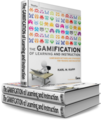
Designing Digitally, Inc. would like to congratulate one of the most influential writers in our e-learning, serious games, and virtual world industry today. Karl Kapp has done it again with his new book titled The Gamification of Learning and Instruction: Game-based Methods and Strategies for Training and Education. This book is the ultimate guide to explaining how and why to gamify your learning for government agencies and corporate clients.
In the book Kapp explains the fundamentals of how to create effective gamified learning. Organizations often think they are creating gamification with their learning by implementing basic content with a scoreboard or even a Jeopardy-like experience for the learners. While some would argue that using these tools is creating a gamified learning experience, you are also referring to what was being done by the e-learning industry five to ten years ago. This type of thinking is out of date and has a track record for failure. Kapp explains how gamification is truly a way of thinking and this could not be any more true. Gamification requires thinking outside the box, rather than pushing your content into an already existing game show or similar setting.
The gamification theme is a popular trend in the e-learning industry today and is being adopted by large companies and government agencies. These organizations are using game-based learning to leverage the competitiveness of employees, provide experiential learning, and are even using it for recruiting purposes. Here at Designing Digitally, Inc. gamification is one of our core services that has provided a track record for positive return on investments. Andrew Hughes the President of Designing Digitally, Inc. made the statement, "Gamification is not something that can be done by everyone; it takes the ability to think outside the box and use both game developers and instructional designers together to create an experience not yet even imagined by the client. Years ago we would have a hard time convincing the CEO's and the VP's of companies to accept gamification, and now they are knocking on our doors asking us to convert conventional presentation content into educational, engaging, and entertaining learning that will grasp the attention of the new generations entering the workforce while also providing visual references for the older generations within the organization. Karl's book explains in detail the way to approach learning and lays the foundation for companies that have specialized in this for years such as Designing Digitally, Inc. I commend him for his work and hopefully this opens the eyes of some of the naysayers we've experienced in the past."
A strong and important word of warning from Kapp is that not all content lends itself to be converted into a game. You must review and analyze both the content and the target audience to determine whether or not it will be the right approach. In our experience, we’ve found that when a company attempts to transform their content into a game and hasn’t found a positive ROI, they often don’t have an answer as to why they chose the route of gamification. In the book Kapp explains what does and does not work when considering gamifying your content. He has provided multiple case studies from many different organizations, agencies, and institutions including several of Designing Digitally, Inc.’s training simulation & serious game examples.
Designing Digitally, Inc. again congratulates Kapp on an amazing book and suggests to everyone in our industry to pick up a copy from Amazon.com. The book is an excellent reference guide and explains why Designing Digitally, Inc. does what we do and why the industry is turning to gamification for enhanced learning.
Andrew Hughes
.
Blog
.
<span class='date ' tip=''><i class='icon-time'></i> Dec 05, 2015 10:53pm</span>
|
|
Just last month we announced that an influential writer in our industry, Karl Kapp, had written and released a new book on gamification and learning and that Designing Digitally, Inc. was delighted to be featured in the book in several case study examples. It’s always rewarding to be recognized for our work in E-Learning development, but we started thinking about it and realized that some of our readers may still not fully understand the concept of gamification to begin with. Gamification sounds like a serious topic, but what exactly is it?
Gamification, sometimes known as serious games or game-based training, is really not THAT new of a concept. Remember in elementary school when your teacher would get you and your classmates to split-up into two teams to compete to solve math problems on the chalkboard and the winning team would get a piece of candy? Or remember your school’s spelling bee and all the kids competing to win prizes for the correct spelling recitation of all sorts of esoteric words? That’s kind of what gamification is all about, but in today’s world there is far more technology involved for a much more engaging visual learning experience.
As we’ve become a more technologically advanced society, our games have kept pace with the times. Board games like Monopoly and Scrabble are still very popular, but video games played with Playstation® systems on televisions or using handheld gaming systems like Nintendo® have become hugely popular for solo gaming. Online gaming systems allow players who never meet in real life to compete against each other or to compete on the same team against other players - sometimes players across the country or even in other countries. Some of these games have become immersive - 3D worlds where players can walk and run and explore buildings and subways or jungles and forests full of threats as well as potential friends to aid them on their adventures. It’s a thrilling time for the gaming industry and a challenging one for parents, who must make sure their children are not spending too much time playing games and not enough time getting physical exercise or completing their homework!
As these students have matured and grown-up, it only makes sense to speak to them in the language they already understand when it comes to education and training after high school. This is where gamification enters the picture. With gamification, training for everything from emergency medicine and police defense to mass production and equipment and automobile operation can be accomplished in a fun manner that still inculcates educational value. Adding in contests and challenges to software-based learning using computers, often presented in an immersive 3D format, also serves to break-up the monotony that can accompany job-based training and even some collegiate education. Since statistics show that 70% of major employers already use interactive software and games for training, it’s really a "no-brainer" to use gamification for educational training purposes.
Designing Digitally, Inc. specializes in E-Learning development, including gamification strategies for education and business purposes. We’d love to assist you in your next training development project, so feel free to request a free quote on our services and we can go from there.
Andrew Hughes
.
Blog
.
<span class='date ' tip=''><i class='icon-time'></i> Dec 05, 2015 10:53pm</span>
|
|
"Gamification is serious business," according to the Wall Street Journal and their coverage of the Gamification Summit that happened in San Francisco this week - attracting well over 600 individuals from companies as diverse and even unexpected as Salesforce, Cisco and SAP. With the gamification market expected to expand astronomically to $2.8 billion by 2016, industry executives, the media and companies large and small are paying attention to this remarkable advance in the technology of training and education, and we at Designing Digitally, Inc. couldn’t be happier. San Francisco, the home of many gaming companies, was the natural hot spot for this burgeoning summit and we thought you’d be interested in hearing more about it on the Designing Digitally, Inc.’s blog.
You see, we’ve been championing gamification as a logical expansion of our E-Learning development, 3D training simulations and virtual worlds development services for a years now. Gamification - the transformation of online training modules into robust, competitive, entertaining & immersive 3D learning programs that new employees actually enjoy engaging with - is becoming a focus for any company interested in consistent and effective training, particularly for younger new employees who have grown up playing hand-held and onscreen gaming systems. It’s simply a natural extension of the entertainment mediums they’re accustomed to, and a highly effective method of inculcating practices and processes they’ll need on-the-job, with far greater safety and cost savings involved for that initial training period.
Gabe Zichermann, a gamification author and the conference chair of the three-day Gamification Summit, had this to say about the theory behind gamification and how it can influence employee education and training:
"What we are trying to do is use the best technologies from games to create engagement and change behaviors. We’ve never operated a society that was free from structure, rewards, or penalty for bad behaviors. Now because of technology, organizations of all sizes are capable of putting that into their systems…Everybody plays games. Whether it’s a soccer mom comparing kids or guys comparing frequent flier miles, everybody’s keeping score. Keeping score is a core part of human nature. Why not bring these elements to all parts of life and make everything, even (unpleasant) jobs more fun?"
We couldn’t agree more, which is why gamification plays heavily in the E-Learning and 3D training simulations we design, write and create for our many clients in radically diverse industries. You can learn more about the Gamification Summit and how big players like Major League Baseball, NBC Universal and Pepsi are jumping on the gamification bandwagon by checking out the Wall Street Journal event coverage here.
Andrew Hughes
.
Blog
.
<span class='date ' tip=''><i class='icon-time'></i> Dec 05, 2015 10:52pm</span>
|
|
Look what we found.
Anne Derryberry, a writer and consultant on serious games, education and interactive digital communications, has a pretty informative blog where she waxes philosophical as well as practical on all manner of issues related to serious gaming and education. She also assembled an impressive white paper on serious games for none other than Adobe - the powerhouse behind great graphic arts and design programs like Photoshop®, Illustrator®, Flash®, Dreamweaver®, Acrobat Reader® and more - basically the building blocks of many an Internet website much as they themselves are named after one of the great practical building blocks used around the world physically. Adobe clearly sees the value and promise behind serious gaming, and hired Derryberry to produce a clear and concise treatise on the subject for their readers.
Ms. Derryberry has some grand and insightful things to say about serious games, games for training, and the gamification of learning that is happening in academic institutions and business organizations across the country and around the world. Her good journalism work is really making us excited about the business we’ve chosen to pursue, since the future clearly lies in technology-based education and training, and serious games are going to be a large part AND the fun part of that highly effective training future.
In sections such as Do Serious Games Really Promote Learning, What is Different about Today’s Worker or Learner, and What Can We Expect in the Near Future, Derryberry lays-out her vision of the future for training-based education and gets into fascinating material covering LMSs (learning management systems) and even haptic computing. Some of Anne’s more interesting assessments and observations include:
As organizations intensify their efforts to engage with members of today’s workforce, serious games offer a powerful, effective approach to learning and skills development. - page 1
While learning can and does occur within a casual game, it is a by-product, rather than an intentional outcome of game play. Serious games are designed with the intention of improving some specific aspect of learning, and players come to serious games with that expectation. - page 3
What sets serious games apart from the rest is the focus on specific and intentional learning outcomes to achieve serious, measurable, sustained changes in performance and behavior. Learning design represents a new, complex area of design for the game world. - page 4
As recently reported in BusinessWeek, "Companies around the world, including McKinsey & Company, Royal Philips Electronics, and Johnson & Johnson Pharmaceutical Research & Development, are bringing games with 3D computer graphics into the workplace[, and]…using games to recruit new talent, improve communication between managers and their far-flung staff, and train employees and new hires at all levels." - page 6
Younger learners are also being exposed to serious games with great success. England’s North West Learning Grid, for example, launched DiDA Delivered, a diploma program in IT skills for secondary students in the U.K. The curriculum includes 4,000 learning objects and 300 serious games. In the wake of the positive response to DiDA Delivered, the curriculum has more recently been launched in Australia, New Zealand, and Ascension Island. - page 8
Forward-thinking companies interested in attracting and retaining younger workers are already integrating serious games into training, performance support, and company community programs. They recognize what Deborah Wince-Smith, president of the Council on Competitiveness, has observed: "Game players have to think strategically about their positioning and analyze opponent strengths and weaknesses…. These characteristics might not immediately come to mind when considering the learning needs of an employee of a fast food restaurant. McDonald’s believes otherwise. Today, much of the training of McDonald’s in-store personnel is conducted via serious games, including customer service, store operations, and employee supervision. - page 9
· Adds Don Thompson, assistant director, Education and Human Resources, National Science Foundation: "Perhaps the most fatal flaw in the education of young people is that we apprentice young people into 19th century science rather than letting them play 21st century scientist." - page 11
Serious games do not exist in a vacuum but are part of a course, curriculum, or larger learning experience. Learning designers must plan for easy and natural integration of a serious game into the overall learning design. Most especially, learning designs must include a plan for learning transference from the game back to the greater learning plan or to the workplace. - page 14
As you can see from the selections displayed here, Derryberry’s whitepaper for Adobe is chock-full of affirmative facts and insights on the future of gamification for learning. It’s exciting to hear others talk about one of our chief passions, and now you can read our white paper on the same subject - please click here to download your own copy. Also, you can contact Designing Digitally, Inc. for more information on serious games design and development. We look forward to working with your company on your future training initiatives.
Andrew Hughes
.
Blog
.
<span class='date ' tip=''><i class='icon-time'></i> Dec 05, 2015 10:52pm</span>
|