Blogs
|
View post on imgur.com
A good part of my youth was spent in front of my old family hi-fi system, listening to Beatles records. This was music I knew no longer existed in the modern world—not on contemporary pop radio, and not on MTV… nowhere but on what seemed to me those ancient plastic disks. To my untrained ears, Revolver, Sgt. Pepper’s, Magical Mystery Tour, and especially Abbey Road sounded like they had come down from an advanced alien civilization.
What I was hearing in part—especially on Abbey Road—was the perfection of the studio as an instrument, and the major influence of the last, best fifth Beatle, George Martin. Not to diminish the incredible musicianship and songwriting abilities of the Beatles themselves, but without their engineers, without Martin at the controls, and without the state-of-the-art studios—EMI, then, of course, Abbey Road—those albums would have sounded much more down to earth: still great, no doubt, but not the symphonic masterpieces they are, especially—in my opinion—Abbey Road, the last album the Beatles recorded together (though not their final release).
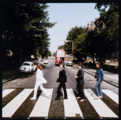
So how did such a brilliant recording come to being? You can piece its construction together yourself by sorting through all of the stuff that didn’t make it on the record—outtakes, alternate album cover photos—as well as through interviews with Martin and the band. At the top of the post, see one of the cover photos that didn’t make the cut. A self-effacingly-named blog called Stuff Nobody Cares About has several more alternate photos from that session on August 8, 1969 (which McCartney conceptualized beforehand in a series of sketches). Before the album got its iconic look, it came together—pun intended—as iconic sound. Just above, you can hear George Martin describe the process of producing the band’s last recording, a "very happy record," he says, compared to the tense, unhappy Let it Be. Afterward, hear George, Paul, and Ringo recollect their bittersweet memories of the sessions.
Near the end of the documentary clip, Paul McCartney says, "I’m really glad that most of the songs dealt with love, peace, understanding…." If that’s what "Mean Mr. Mustard" or "Maxwell’s Silver Hammer" are about, color me surprised, but I’ve never been one to get too hung up on the meanings of the Beatles songs—it’s the menagerie of sounds I love, the unusual chord changes, and the witty little narratives, touching vignettes, and almost shockingly apt lyrical images ("Hold you in his armchair / You can feel his disease").
But like the band themselves coming back together, the songs on Abbey Road—including that masterful closing medley—didn’t immediately fall into place; they were the product of much studio noodling and idiosyncratic Beatles brainstorming—an activity one part music hall comedy improv, one part genius happy accident, and one part good-natured family squabble. In the three clips above and below, hear the powerful Abbey Road medley come together, in fits and starts, with plenty of playful banter and off-the-cuff inspiration.
Hearing the making of Abbey Road doesn’t take away from the otherworldly final product, but it does bring the exalted personalities of the band back down to earth, showing them as hardworking musicians and natural writers and comedians who just happened to have made—with no shortage of help—some of the most mind-blowing music of the 20th century.
Related Content:
A Short Film on the Famous Crosswalk From the Beatles’ Abbey Road Album Cover
Hear the Isolated Vocal Tracks for The Beatles’ Climactic 16-Minute Medley on Abbey Road
The Beatles’ Rooftop Concert: The Last Gig Filmed in January 1969
The Beatles’ Final, "Painful" Photo Shoot: A Gallery of Bittersweet Images
Josh Jones is a writer and musician based in Durham, NC. Follow him at @jdmagness
The Making of The Beatles’ Abbey Road: Alternate Album Cover Photos, Recording Session Outtakes & Interviews is a post from: Open Culture. Follow us on Facebook, Twitter, and Google Plus, or get our Daily Email. And don't miss our big collections of Free Online Courses, Free Online Movies, Free eBooks, Free Audio Books, Free Foreign Language Lessons, and MOOCs.
Open Culture
.
Blog
.
<span class='date ' tip=''><i class='icon-time'></i> Dec 06, 2015 10:16pm</span>
|
|
I don’t know about you, but I’ve sort of always associated Charles Dickens with the kind of humorless moralism and didactic sentimentality that are hallmarks of so much Victorian literature. That’s probably because the work of Dickens contains no small amount of humorless moralism and didactic sentimentality. But it also contains much wit and absurdity, inventive characterization and rich description. While novels like the short Hard Times, published in 1854, can seem more like thinly veiled tracts of moral philosophy than fully realized fictions, others, like the strange and whimsical Pickwick Papers—Dickens’ first—work as fanciful, lighthearted satires. The big, baggy novels like Great Expectations, Bleak House, and A Tale of Two Cities (find in our collection of Free eBooks) manage to skillfully combine these two impulses with his own twist on the gothic, such that Dickens’ work is not overwhelmed, as it might be, by sermonizing.
For all of this tidy summation of that giant of Victorian letters, one adjective now comes to mind that I would never have previously thought to apply at any time to the writer of A Christmas Carol: Borgesian, as in possessed of the scholastic wit of 20th century Argentine writer Jorge Luis Borges. I’m not the first to note a resemblance, but I must say it never would have occurred to me to think of the two names in the same sentence were it not for an extra-curricular activity Dickens engaged in while outfitting his London home, Tavistock House, in 1851. Letters of Note’s sister site Lists of Note brings us the following anecdote:
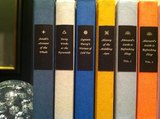
[Dickens] decided to fill two spaces in his new study with bookcases containing fake books, the witty titles of which he had invented. And so, on October 22nd, he wrote to a bookbinder named Thomas Robert Eeles and supplied him with the following "list of imitation book-backs" to be produced.
You can see the complete—completely Borgesian—list below. Borges is of course well known for inventing titles of books that have never existed, but seem like they should, in another dimension somewhere. His invention of alternate realities, and publications, manifests in most all of his stories, as well as in oddities like the Book of Imaginary Beings. Like Borges’ made-up books, Dickens’ contain just the right mix of the self-serious and the ridiculous, so as to make them at once plausible, cryptic, exotic, and hilarious—both Pickwickian and, indeed, proto-Borgesian.
History of a Short Chancery SuitCatalogue of Statues of the Duke of WellingtonFive Minutes in China. 3 vols.Forty Winks at the Pyramids. 2 vols.Abernethy on the Constitution. 2 vols.Mr. Green’s Overland Mail. 2 vols.Captain Cook’s Life of Savage. 2 vols.A Carpenter’s Bench of Bishops. 2 vols.Toot’s Universal Letter-Writer. 2 vols.Orson’s Art of Etiquette.Downeaster’s Complete Calculator.History of the Middling Ages. 6 vols.Jonah’s Account of the Whale.Captain Parry’s Virtues of Cold Tar.Kant’s Ancient Humbugs. 10 vols.Bowwowdom. A Poem.The Quarrelly Review. 4 vols.The Gunpowder Magazine. 4 vols.Steele. By the Author of "Ion."The Art of Cutting the Teeth.Matthew’s Nursery Songs. 2 vols.Paxton’s Bloomers. 5 vols.On the Use of Mercury by the Ancient Poets.Drowsy’s Recollections of Nothing. 3 vols.Heavyside’s Conversations with Nobody. 3 vols.Commonplace Book of the Oldest Inhabitant. 2 vols.Growler’s Gruffiology, with Appendix. 4 vols.The Books of Moses and Sons. 2 vols.Burke (of Edinburgh) on the Sublime and Beautiful. 2 vols.Teazer’s Commentaries.King Henry the Eighth’s Evidences of Christianity. 5 vols.Miss Biffin on Deportment.Morrison’s Pills Progress. 2 vols.Lady Godiva on the Horse.Munchausen’s Modern Miracles. 4 vols.Richardson’s Show of Dramatic Literature. 12 vols.Hansard’s Guide to Refreshing Sleep. As many volumes as possible.
As Flavorwire reports, designer Ann Sappenfield created her own fake bookbindings with Dickens’ titles (see some at the top of the page, courtesy of the NYPL). These are part of a New York Public Library exhibit called Charles Dickens: The Key to Character that ran in 2012-13. You can read Dickens original letter to Thomas Robert Eeles in The Letters of Charles Dickens here.
via Lists of Note/Flavorwire
Related Content:
Charles Dickens Gave His Cat "Bob" a Second Life as a Letter Opener
Charles Dickens’ Hand-Edited Copy of His Classic Holiday Tale, A Christmas Carol
Hear Neil Gaiman Read A Christmas Carol Just as Dickens Read It
Josh Jones is a writer and musician based in Durham, NC. Follow him at @jdmagness
Charles Dickens (Channeling Jorge Luis Borges) Created a Fake Library, with 37 Witty Invented Book Titles is a post from: Open Culture. Follow us on Facebook, Twitter, and Google Plus, or get our Daily Email. And don't miss our big collections of Free Online Courses, Free Online Movies, Free eBooks, Free Audio Books, Free Foreign Language Lessons, and MOOCs.
Open Culture
.
Blog
.
<span class='date ' tip=''><i class='icon-time'></i> Dec 06, 2015 10:13pm</span>
|
|
As a lover of fantasy and science fiction, but by no means a know-it-all fanboy, I know what it’s like to come to a fictional universe late. It can seem like everyone else has already read the canon, seen the movies, and memorized the genealogies, origin stories, magical arcana, number of ancient blood feuds, etc. For example, I grew up steeped in Star Trek but never watched Dr. Who. Now that British sci-fi show is seemingly everywhere, and I find myself intrigued. But who has the time to catch up on several decades of missed episodes? Some people may have felt similarly in the last few years about The Lord of the Rings, what with the number of J.R.R. Tolkien adaptations besieging theaters. If you haven’t read any of those books, Middle Earth—for all its air of medieval legend and Norse myth—can be a very confusing place.
Thanks to Peter Jackson’s films, for better or worse, Tolkien’s books have even more cultural currency than they did in the 70s, when Led Zeppelin mined them for lyrical inspiration, and "Frodo lives" graffiti appeared on overpasses everywhere. This brings us to the videos we feature here. Presented in a rapid fire style like that of motormouth YA novelist and video educator John Green, "The Lord of the Rings Mythology Explained" is exactly that-two very quick tours, with illustrations, through the complex mythological world of Middle Earth, the setting of The Lord of the Rings trilogy, The Hobbit, and other books you’ve maybe never heard of. These videos were made before the final installment of Jackson’s interminable Hobbit trilogy, but they cover most major developments before and after the events in short book on which he based those films.
I’ll say this for the effort—Tolkien’s world is one I thought I knew, but I didn’t know it nearly as well as I thought. Like most people, frankly, I haven’t read the sourcebook of so much of that world’s genesis, The Silmarillion, which gets a survey in the first video at the top of the post. I’m much more familiar, and you may be as well—through books or films—with the mythologies of The Lord of the Rings trilogy proper, covered in the video above. If these two thorough explainers don’t satisfy your curiosity, you can likely have further questions answered at one of the videos’ sources, Ask Middle Earth, a site that solicits "any question about Middle Earth." Another source, the work of comparative mythologist Verlyn Flieger, who specializes in Tolkien, also promises to be highly illuminating.
Related Content:
Map of Middle-Earth Annotated by Tolkien Found in a Copy of Lord of the Rings
"The Tolkien Professor" Presents Three Free Courses on The Lord of the Rings
110 Drawings and Paintings by J.R.R. Tolkien: Of Middle-Earth and Beyond
J.R.R. Tolkien Snubs a German Publisher Asking for Proof of His "Aryan Descent" (1938)
Josh Jones is a writer and musician based in Durham, NC. Follow him at @jdmagness
The Lord of the Rings Mythology Explained in 10 Minutes, in Two Illustrated Videos is a post from: Open Culture. Follow us on Facebook, Twitter, and Google Plus, or get our Daily Email. And don't miss our big collections of Free Online Courses, Free Online Movies, Free eBooks, Free Audio Books, Free Foreign Language Lessons, and MOOCs.
Open Culture
.
Blog
.
<span class='date ' tip=''><i class='icon-time'></i> Dec 06, 2015 10:12pm</span>
|
|
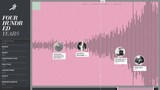
For his final project in Bezalel Academy of Arts and Design in Jerusalem, Matan Stauber created Histography, an interactive timeline that covers 14 billion years of history. The timeline, writes Stauber, "draws historical events from Wikipedia, and it self-updates daily with new recorded events." And the interface lets users see history in smaller chunks (decades at a time) or bigger ones (millions of years at a time). To get a vague feel for how Histography works, you can watch the video above. But really the best way to experience things is to dive right in here.
Follow Open Culture on Facebook and Twitter and share intelligent media with your friends. Or better yet, sign up for our daily email and get a daily dose of Open Culture in your inbox. And if you want to make sure that our posts definitely appear in your Facebook newsfeed, just follow these simple steps.
via Kottke
Related Content:
6,000 Years of History Visualized in a 23-Foot-Long Timeline of World History, Created in 1871
An Interactive Map of Odysseus’ 10-Year Journey in Homer’s Odyssey
The History of Modern Art Visualized in a Massive 130-Foot Timeline
Big History: David Christian Covers 13.7 Billion Years of History in 18 Minutes
Free Online History Courses
An Interactive Timeline Covering 14 Billion Years of History: From The Big Bang to 2015 is a post from: Open Culture. Follow us on Facebook, Twitter, and Google Plus, or get our Daily Email. And don't miss our big collections of Free Online Courses, Free Online Movies, Free eBooks, Free Audio Books, Free Foreign Language Lessons, and MOOCs.
Open Culture
.
Blog
.
<span class='date ' tip=''><i class='icon-time'></i> Dec 06, 2015 10:11pm</span>
|
|
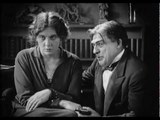
Yesterday we featured The Seashell and the Clergyman, the first surrealist film, directed by Germaine Dulac in 1928. Given Dulac’s gender, for those playing the cinema history home game, it also counts as the first surrealist film directed by a woman. That alone would make for a sufficiently pioneering achievement for any career in film, but Dulac had already accomplished another important act of cinematic trailblazing with La Souriante Madame Beudet (The Smiling Madame Beudet), a short silent that also happens to hold the title of the first feminist film.
Where Dulac worked from a story by Antonin Artaud in the The Seashell and the Clergyman, she works here from a story originally by Guy de Maupassant, one revolving around a wife, the titular Madame Beudet, pushed to the brink by years of life with her boorish husband. Madame Beudet at first finds some sweetness in her unenviable lot in life in the form of the rich fantasies in her head, realized onscreen with a suite of visual techniques similar to those Dulac would use to bring her audience into the romantically fraught psyche of the clergyman six years later. Eventually, though, she engineers a more permanent solution to her problems, placing a live bullet into the chamber of the revolver Monsieur Beudet uses in his constant self-pitying pantomimes of Russian roulette.
And where scholars label The Seashell and the Clergyman as a work of surrealism, they label The Smiling Madame Beudet as a work of impressionism. "Throughout the picture," writes critic Nathan Southern, "Dulac uses such devices as slow motion, distortions, and superimposed images to paint Beudet’s various emotional states onscreen," an intersection of form and substance that resulted in a picture that "instantly established Dulac as a force in world cinema." Now, alongside The Seashell and the Clergyman, The Smiling Madame Beudet lays strong claim to the title of her masterwork. Dulac clearly had far better luck than the pitiable Madame Beudet who, despite her best efforts ends the film deeper in despair than she began it. As advanced an artistic sensibility as she had, the filmmaker here expresses a dictum of age-old simplicity: you can’t win ’em all.
Related Content:
The First Surrealist Film The Seashell and the Clergyman, Brought to You By Germaine Dulac & Antonin Artaud (1928)
Simone de Beauvoir Explains "Why I’m a Feminist" in a Rare TV Interview (1975)
Based in Seoul, Colin Marshall writes and broadcasts on cities and culture. He’s at work on a book about Los Angeles, A Los Angeles Primer, the video series The City in Cinema, and the crowdfunded journalism project Where Is the City of the Future? Follow him on Twitter at @colinmarshall or on Facebook.
The First Feminist Film, Germaine Dulac’s The Smiling Madame Beudet (1922) is a post from: Open Culture. Follow us on Facebook, Twitter, and Google Plus, or get our Daily Email. And don't miss our big collections of Free Online Courses, Free Online Movies, Free eBooks, Free Audio Books, Free Foreign Language Lessons, and MOOCs.
Open Culture
.
Blog
.
<span class='date ' tip=''><i class='icon-time'></i> Dec 06, 2015 10:09pm</span>
|
|
When writer, politician, and BBC radio and television personality Melvyn Bragg began his long-running radio program In Our Time, which brings academics together to discuss philosophy, history, science, religion, and culture, he didn’t think the show would last very long: "Six months," he told The Scotsman in 2009, "but I’ll have a go." Now, seventeen years after the show began in 1998, In Our Time is going strong, with millions of listeners from around the world who tune in on the radio, or download the In Our Time podcast. Though it’s easy to despair when faced with the onslaught of mass media devoted to triviality and sensationalism, Bragg has shown there’s still a sizable audience that cares about thoughtful engagement with matters of import, and in particular that cares about philosophy.
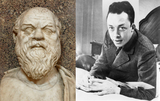
Though the subject takes a beating these days, especially in unfavorable comparisons to the hard sciences, the concerns articulated by philosophers over the centuries still inform our views of ethics, language, politics, and human existence writ large. In Our Time’s philosophy programs follow the same format as the show’s other topics—in Bragg’s words, he gets "three absolutely top-class academics to discuss one subject and explore as deeply as time allow[s]." In this case, the "subject," is often a proper name, like Simone Weil, David Hume, Albert Camus or Socrates.
The show just as often tackles philosophical movements like Skepticism, Neoplatonism, or The Frankfurt School, that aren’t associated with only one thinker; likewise, Bragg and his guests have devoted their discussions to longstanding philosophical problems, like the existence of Free Will, and historical developments, like the Continental-Analytic Split in Western philosophy.
Though there is certainly no shortage of high quality resources for people who wish to learn more about philosophy—such as the many free courses, podcasts, and lectures we’ve featured on this site—few are as immediately accessible as In Our Time’s philosophy discussions. Bragg describes his preparation for each show as "swotting"—or cramming. He’s not an expert, but he’s knowledgeable enough to ask pertinent questions of his guests, who then go on to educate him, and the listeners, for the almost hour-long conversation. Hear how well the approach works in the In Our Time philosophy programs featured here. At the top, Bragg discusses the philosophy and activism of Bertrand Russell with academic philosophers A.C. Grayling, Mike Beaney, and Hilary Greaves. Below that, he talks Kierkegaard with Jonathan Ree, Clare Carlisle, and John Lippitt. Just above, hear Bragg discuss Jean-Paul Sartre with Jonathan Rée, Benedict O’Donohoe, and Christina Howells. Finally, below, hear his conversation on Karl Marx with Anthony Grayling, Francis Wheen, and Stedman Jones.
These four examples are but a small sampling of the many compelling In Our Time philosophy discussions. Explore, stream, and download dozens more at the BBC Radio 4 site or hear them on Youtube here. And if any these conversations whet your appetite for more, then head over to our expansive archive of Free Philosophy Courses, and Free Philosophy eBooks.
Related Content:
Learn The History of Philosophy in 197 Podcasts (With More to Come)
Download 100 Free Philosophy Courses and Start Living the Examined Life
Take First-Class Philosophy Courses Anywhere with Free Oxford Podcasts
The History of Philosophy Without Any Gaps Podcast, Now at 239 Episodes, Expands into Eastern Philosophy
Philosophize This!: The Popular, Entertaining Philosophy Podcast from an Unconventional Teacher
Josh Jones is a writer and musician based in Durham, NC. Follow him at @jdmagness
Get to Know Socrates, Camus, Kierkegaard & Other Great Philosophers with the BBC’s Intelligent Radio Show, In Our Time is a post from: Open Culture. Follow us on Facebook, Twitter, and Google Plus, or get our Daily Email. And don't miss our big collections of Free Online Courses, Free Online Movies, Free eBooks, Free Audio Books, Free Foreign Language Lessons, and MOOCs.
Open Culture
.
Blog
.
<span class='date ' tip=''><i class='icon-time'></i> Dec 06, 2015 10:07pm</span>
|
|
We’ve highlighted the comic art of Montreal-based Julian Peters before on Open Culture. He’s the man who undertook a 24-page illustrated adaptation of T.S. Eliot’s "The Love Song of J. Alfred Prufrock" and then also delivered a manga version of W. B. Yeats’ "When You Are Old," recreating the style of Japanese romance comics to a T.
While studying in a Masters program early examples of literary graphic novels, Peters is also turning into a fine illustrator of poetry whether classic (Rimbaud, Keats) or contemporary (teaming up with John Philip Johnson on an upcoming book of illustrated poems, one of which you can find here.)
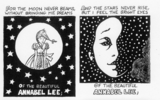
This adaptation (above) of Edgar Allan Poe’s "Annabel Lee" dates from 2011. Poe’s work gives illustrators narrative aplenty, but it also gives them repetition and ellipses. In his rendition, Peters gives us two pre-teen sweethearts similar to Tom Sawyer and Becky Thatcher, and when Annabel Lee dies from "the wind that came out of the cloud by night," we get a full panel of Annabel’s final healthy moments. Wind is everywhere to be found in the comic, forming white caps on the ocean, and blowing Annabel’s pigtails when we first see her.
Scholars tend to agree that "Annabel Lee" was based on Poe’s first cousin and teen bride Virginia Clemm, whom he married when she was 13 (and Poe was 27), but who passed away from tuberculosis at 24 years of age. The image of the beautiful corpse continues through his work from "The Raven" to "Ligeia".
You can find the first few panels of Peters’ adaptation above. Read the rest here.
Related content:
Classics Stories by Edgar Allan Poe Narrated by James Mason in a 1953 Oscar-Nominated Animation & 1958 Decca Album
Bob Dylan Reads From T.S. Eliot’s Great Modernist Poem The Waste Land
Watch the 1953 Animation of Edgar Allan Poe’s "The Tell-Tale Heart," Narrated by James Mason
Ted Mills is a freelance writer on the arts who currently hosts the FunkZone Podcast. You can also follow him on Twitter at @tedmills, read his other arts writing at tedmills.com and/or watch his films here.
A Comic Book Adaptation of Edgar Allan Poe’s Poignant Poem, Annabel Lee is a post from: Open Culture. Follow us on Facebook, Twitter, and Google Plus, or get our Daily Email. And don't miss our big collections of Free Online Courses, Free Online Movies, Free eBooks, Free Audio Books, Free Foreign Language Lessons, and MOOCs.
Open Culture
.
Blog
.
<span class='date ' tip=''><i class='icon-time'></i> Dec 06, 2015 10:06pm</span>
|
|
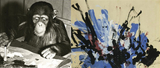
A few years ago, I watched and enjoyed My Kid Could Paint That, a documentary about Marla Olmstead, a four-year-old abstract painter who became a brief art-world sensation, her canvases (which towered over the tiny artist) at one point selling for thousands of dollars apiece. Olmstead raised the bar high indeed for all subsequent preschool-aged art celebrities, but the world of unlikely painters in general has a fuller, stranger history. Witness, for instance, Congo the Chimp, the London Zoo’s artistic sensation of the 1950s, a noted animal artist who sold work to such noted non-animal artists as Picasso, Miró, and Dalí, the last of whom made a comparison with one of the best-known abstract painters of the day: "The hand of the chimpanzee is quasihuman; the hand of Jackson Pollock is totally animal!"
Congo, who began his art career the moment he happened to pick up a pencil, went on, writes the Telegraph‘s Nigel Reynolds, to become "a television celebrity in the late 1950s as the star of Zootime, an animal programme presented from the London Zoo by Desmond Morris, the zoologist and anthropologist. He became even more of a cause célèbre when the Institute of Contemporary Arts mounted a large exhibition of his work in 1957. Critics had a field day and debate about the meaning of art raged furiously." You can see Morris, a surrealist painter himself, in addition to his zoological, anthropological, and televisual work, interacting with Congo in the 1950s and reflecting on the place of the chimpanzee artist in his own career in the clip at the top of the post. The newsreel below covers an exhibition called The Young Idea, which featured paintings not just from Congo but from such Marla Olmstead predecessors as three-year-old Timothy Vaughn and eighteen-month-old Graham Phillips. One of Congo’s paintings appears above.
And so to the obvious question: But Is It Art? And assuming it is, writes John Valentine in The Philosopher, "what then follows from such a classification? What sort of difference does it or should it make in the way we approach and appreciate chimpanzee paintings? If they are art, what sort of critical or interpretive discourse about them should we engage in? Do we simply appreciate the lines, colours, and forms of Congo’s paintings and stop at that? Does it make any difference that the paintings were done by a member of a different species? Should species differences make any difference in artistic value?" It may not, at least commercially speaking: Congo may have had his moment six decades ago, but don’t think that means his work will come cheap; back in 2005, some of his paintings went up on the auction block and fetched more than $25,620.
Related Content:
Iconic Artists at Work: Watch Rare Videos of Picasso, Matisse, Kandinsky, Renoir, Monet and More
The Jane Goodall Online Archive
Based in Seoul, Colin Marshall writes and broadcasts on cities and culture. He’s at work on a book about Los Angeles, A Los Angeles Primer, the video series The City in Cinema, and the crowdfunded journalism project Where Is the City of the Future? Follow him on Twitter at @colinmarshall or on Facebook.
Meet Congo the Chimp, London’s Sensational 1950s Abstract Painter is a post from: Open Culture. Follow us on Facebook, Twitter, and Google Plus, or get our Daily Email. And don't miss our big collections of Free Online Courses, Free Online Movies, Free eBooks, Free Audio Books, Free Foreign Language Lessons, and MOOCs.
Open Culture
.
Blog
.
<span class='date ' tip=''><i class='icon-time'></i> Dec 06, 2015 10:05pm</span>
|
|
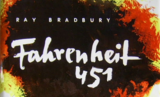
Last week we featured a list of 100 novels all kids should read before graduating from high school. Chosen by 500 English teachers from all over Britain, the list happens to have a lot of overlap with many others like it. Invariably, these kinds of young adult reading lists include Ray Bradbury’s novel of dystopian censorship and anti-intellectualism, Fahrenheit 451. Why, I’ve always wondered, should this novel be pitched almost exclusively at teenagers, so much so that it seems like one of those books many of us read in high school, then never read again, even if we are fans of Bradbury’s work?
http://traffic.libsyn.com/repspodcast/048_REPS_Podcast.mp3
A strange disconnect emerges when we look at the history of Bradbury’s novel as a teaching tool. Although most high school students are presented with freethinking as an ideal, and given cautionary tales of its suppression, their own educations are just as often highly circumscribed by adults who fret about the effects of various bad influences. As Villanova University journal Compass notes, in a perverse irony, Fahrenheit 451’s publisher Ballantine "released an expurgated version of the novel to be used in high schools" in 1967; "Such words as ‘hell,’ ‘damn’ and ‘abortion’ were eliminated."
The expurgations went unnoticed because readers did not compare this version to the original. The copyright page did not indicate any edits. The expurgated version ran for ten printings. At the same time, the authentic "adult" version was sold outside of high schools to the world at large. In 1973, after six years of publishing both editions, the publisher decided to publish only the censored work, so from 1973 to 1979 only that version was sold.
Bradbury himself did not become aware of the censored version until 1979, whereafter he demanded that it be withdrawn and wrote a forceful afterward to the restored, 1980 printing.
Whether, as a student, you read the bowdlerized or the "adult" version of Bradbury’s novel, perhaps it’s time to revisit Fahrenheit 451, particularly now that freedoms of thought, belief, and expression have again come under intense scrutiny. And in addition to re-reading Bradbury’s novel, you can listen to the 1971 radio play above. Produced in Vancouver by the CBC (and re-broadcast in recent years by the Radio Enthusiasts of Puget Sound podcast), the abridged, one-hour adaptation by necessity changes the source material, though for dramatic purposes, not to expressly soften the message. Ray Bradbury’s reputation may have been tamed over the decades. He became late in life an avuncular sci-fi master, primarily known as a writer of books for high school students. But at one time, his work—and science fiction in general—were so subversive that the FBI kept close tabs on them.
If you like the Fahrenheit 451 adaptation, you can hear many more Bradbury stories adapted into classic radio plays at our previous post.
Also note: Tim Robbins has narrated a new, unabridged audio version of Fahrenheit 451. It’s available via Audible.com. You can get it for free with Audible’s 30-day free trial. Get more details on that here.
via SFF
Related Content:
Who Was Afraid of Ray Bradbury & Science Fiction? The FBI, It Turns Out (1959)
Sci-Fi Legend Ray Bradbury Creates a Visionary Plan to Redesign Los Angeles
Ray Bradbury: "The Things That You Love Should Be Things That You Do." "Books Teach Us That"
700 Free Audio Books: Download Great Books for Free
Josh Jones is a writer and musician based in Durham, NC. Follow him at @jdmagness
Hear Ray Bradbury’s Classic Sci-Fi Story Fahrenheit 451 as a Radio Drama is a post from: Open Culture. Follow us on Facebook, Twitter, and Google Plus, or get our Daily Email. And don't miss our big collections of Free Online Courses, Free Online Movies, Free eBooks, Free Audio Books, Free Foreign Language Lessons, and MOOCs.
Open Culture
.
Blog
.
<span class='date ' tip=''><i class='icon-time'></i> Dec 06, 2015 10:03pm</span>
|
|
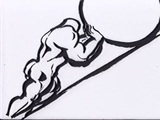
Even if you don’t know the myth by name, you know the story. In Greek mythology, Sisyphus, King of Corinth, was punished "for his self-aggrandizing craftiness and deceitfulness by being forced to roll an immense boulder up a hill, only to watch it roll back down, repeating this action for eternity." In modern times, this story inspired Albert Camus to write "The Myth of Sisyphus," an essay where he famously introduced his concept of the "absurd" and identified Sisyphus as the absurd hero. And it provided the creative material for a breathtakingly good animation created by Marcell Jankovics in 1974. The film, notes the annotation that accompanies the animation on Youtube, is "presented in a single, unbroken shot, consisting of a dynamic line drawing of Sisyphus, the stone, and the mountainside." Fittingly, Jankovics’ little masterpiece was nominated for the Best Animated Short Film at the 48th Academy Awards. Enjoy watching it above.
Related Content:
Free Courses in Ancient History, Literature & Philosophy
Watch Art on Ancient Greek Vases Come to Life with 21st Century Animation
What Ancient Greek Music Sounded Like: Hear a Reconstruction That is ‘100% Accurate’
Discover the "Brazen Bull," the Ancient Greek Torture Machine That Doubled as a Musical Instrument
The Absurd Philosophy of Albert Camus Presented in a Short Animated Film by Alain De Botton
The Myth of Sisyphus Wonderfully Animated in an Oscar-Nominated Short Film (1974) is a post from: Open Culture. Follow us on Facebook, Twitter, and Google Plus, or get our Daily Email. And don't miss our big collections of Free Online Courses, Free Online Movies, Free eBooks, Free Audio Books, Free Foreign Language Lessons, and MOOCs.
Open Culture
.
Blog
.
<span class='date ' tip=''><i class='icon-time'></i> Dec 06, 2015 10:01pm</span>
|