Blogs
|
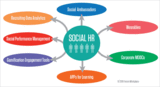
In 2014, we saw organizations use social technologies for recruitment, development and engagement practices. The year to come will bring even more transformation to human resources. The year 2015 will see the advent of what I call "the consumerization of HR," where employees expect an "intelligent mobile user experience" to guide [...]
Jeanne Meister
.
Blog
.
<span class='date ' tip=''><i class='icon-time'></i> Jul 14, 2015 07:57am</span>
|
|
This letter was received in response to a question Joseph Grenny answered in the December 14, 2011 Crucial Skills Newsletter titled, "The Gift of Forgiveness."
Dear Joseph,
A year ago, you addressed a concern by "Facilitating Forgiveness" about the communication difficulties a family was facing after a grandmother’s extended illness. The family described was my family, and that year, we canceled our family Christmas party.
Your advice included patience and changing stories. In the ensuing months, there was a gradual shift as my son, his cousins, my brother, and myself attempted to patiently do our part to mend the difficult situation.
We had a breakthrough in the summer when my nieces and nephews talked their aunt, the oldest in the story, into resuming her tradition of a 4th of July party (it was also canceled last year). That action led to the softening of some hearts and some progress in communication. When my youngest sister was diagnosed with colon cancer this fall, the rest of the resistance became, in Star Trek terms, futile. My mother’s gradual recovery, and the combination of service and prayers by the rest of the family on behalf of my sister, have done the seemingly impossible. We are having a Christmas party!
A year ago, you pointed out that hate cannot drive out hate and darkness cannot drive out darkness—only love and light can do that. Your gift from me this Christmas is knowing that your advice commending patience, love, and an appeal to what members of the family really wanted was the right path to forgiveness and restoration of family unity.
Thank you!
Editor’s Note: If you would like to share similar feedback about how the authors’ advice has helped you, please e-mail us at editor@vitalsmarts.com.
Related posts:
The Gift of Forgiveness
Kerrying On: A Christmas Gift
What Happened: Don’t Pass the Buck
Joseph Grenny
.
Blog
.
<span class='date ' tip=''><i class='icon-time'></i> Jul 14, 2015 07:57am</span>
|
|
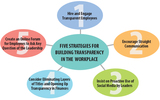
In the frenetic 21st century, when employees job-hop at an alarming pace, customers’ preferences change on a dime, and every week could bring a paradigm shift to the business world at large, what sets successful companies apart is one thing: loyalty. Loyal employees keep operations steady, prioritize long-term success, and [...]
Jeanne Meister
.
Blog
.
<span class='date ' tip=''><i class='icon-time'></i> Jul 14, 2015 07:56am</span>
|
|
ABOUT THE AUTHOR
Joseph Grenny is coauthor of four New York Times bestsellers, Change Anything, Crucial Conversations, Crucial Confrontations, and Influencer.
READ MORE
Dear Crucial Skills,
My company has grown to ten times the size it was when I started seventeen years ago, yet our systems and processes have not kept up with our rapid growth. Things need to change! One of my strengths is ideation and after seventeen years on the job, I have a lot of ideas.
I am also an activator, so I write proposals, share thoughts, and provide tangible financial justifications, yet my voice goes unheard. If given the opportunity to share, I use my crucial conversations skills to create an open, comfortable environment to discuss ideas, but I typically only get reasons we can’t do it or I’m told this is the way we’ve always done it—which doesn’t make it right!
How can I get decision makers to take my ideas and input into consideration?
Thank you,
Ignored
Dear Ignored,
Your company is lucky to have you. The VitalSmarts team now numbers over 100. As founders of the company, we have no illusions about what got us here. We were just as clueless twenty years ago as we are today, and didn’t have a company nearly as influential. The difference today is our team. We have brilliant people who have dedicated their careers to contributing ideas that make us better, stronger, and faster.
You’re asking a pretty tough question to answer with so little visibility into your reality. Why aren’t people taking your ideas seriously? Honestly, I can’t know, but what I can do is guess. So in hopes of being helpful, I’ll give you a variety of possibilities to consider. Then I’ll give you a process you can use to figure out which may have merit.
First, the options—in no particular order:
Nothing personal—it’s about the ideas.
Good ideas. Lack of resources. Your ideas are great but the organization doesn’t have incremental resources to test or implement new ideas.
Bad ideas. Your ideas are generally impractical or off-strategy. They’re being ignored because they should be ignored.
Nice ideas. The ideas are good but not great. No organization has capacity to do all of the "nice to dos."
It’s personal—work on you first, the ideas second.
Low personal credibility. You have a track record of making implausible ideas, or have had personal failures that have decreased confidence in your abilities in general.
Lack of technical/strategic skill. You don’t have a profound understanding of the strategic needs and direction of the organization, so your ideas are off target.
Communication skills. Your ideas have merit, but the way you communicate them (orally or written) undermines the merit of the ideas.
Hobbyhorses. You’re proposing ideas that are interesting to you, but not relevant to others.
Half baked. You haven’t put enough thought into developing the idea for others to take it seriously. There’s a big difference between saying, "Let’s make a new MP3 player!" and developing a prototype of an iPod. You may need to put more work into fleshing out your concept before others will see its merit. Most organizations don’t need more ideas, they need more leaders—people who will champion an idea through successful implementation. If you’re hoping to simply "ideate"—or toss out gems and have others do the work, you are likely to remain disappointed.
It’s political—you lack understanding of how to get a decision made in your organization—who the power players are and how to gain their support.
It’s process—there are channels through which you need to move in your organization to advance ideas. Your strategy has been to "ideate" only, but you haven’t done the dog work of filling out forms, attending meetings, gaining approvals, etc. It could also be that you have such a stifling bureaucracy that no ideas will survive birth. If that’s the case, you may need to raise that issue rather than continuing to toss pebbles at the brick wall.
There are dozens of other possibilities, but I hope these stimulate possibilities for reflection. So, how can you know not just what might be going on, but what is going on? I have two suggestions to help you learn how to exert great influence in your specific case:
Find positive deviants. Identify cases in your organization that contradict your experience. Look for examples where someone proposed a similarly bold idea as yours—but in this case, it was picked up, developed, and implemented. In as ego-less a way as possible, compare your case to this one. What was different about this idea, this person, the political process, or the bureaucratic process that made it work? Using any insights you gain, decide how you will tweak your approach in the future.
Find honest friends. In addition to self-reflection, you can ask others to give you honest feedback. This is tough to get. Most people will take the easy way out and say, "Your ideas are great, people are just too busy," when in fact part of the story is that your ideas haven’t been that great or you lack personal credibility. If you want them to be honest, you need to make it entirely clear that it is safe for them to be so. One way to do this would be to:
Define the problem. Give them examples of the last few ideas you’ve pitched that fell on deaf ears. Give a contrasting example of a "positive deviant."
Make it safe. Tell them you have no ego in this and that your sole intention is to gain influence. You desperately need their help. The more sensitive their feedback is, the more actionable it will be for you!
Prime the pump. Give them examples of the kinds of things you think might be going on (for example, use the list I gave you above). Ask them to ponder over the three to five reasons on that list as to why your ideas are ignored.
Give them time. Don’t demand an immediate response. Ask them to give it some thought then get together with them to debrief.
I know this last exercise sounds like a bit of work, but given your passion about making a difference, I think it will be worth it. If you want to feel fully engaged in your work and experience the joy, I can tell you are capable of finding in it, you need to solve this puzzle. It’s clear that the capacity to innovate is an important value for you, so don’t give up. Get feedback. Examine all the possibilities. Be patient as you develop greater skill at influencing your thriving and growing organization. Influence isn’t easy, but it’s worth the effort!
Warmly,
Joseph
Joseph Grenny
.
Blog
.
<span class='date ' tip=''><i class='icon-time'></i> Jul 14, 2015 07:56am</span>
|
|
Stacy Nelson asked the audience at REACH 2012 how successful they were at creating personal balance in their life. Using the analogy of truing a bicycle wheel, Stacy offered advice for aligning our physical, mental, spiritual, and social/emotional parts of our life. He says that, in order to achieve the balance we all desire, we need to do the following things:
Stop, look, and listen. We are generally blind and outnumbered to the influences in our life that pull us in competing directions and bring us out of balance.
Debunk the myth of compartmentalization. Just like truing the spokes on a bicycle wheel, every part of our life is impacted by every other part of our life.
Find space, silence, and darkness. In these quiet moments and places we are able to escape from the pressures of life and truly listen to our inner voice.
Change with gratitude. Gratitude is a lubricant for life that reduces the friction of change. When we live with an attitude of gratitude we stop whining about the changes we need to make.
In his twenty-minute BIG Idea session, Stacy says that if you truly want to live a balanced life, you have to stop, you have to look, and you have to listen. And then go out and live your life with gratitude.
Related posts:
Crucial Applications: REACH 2012 BIG Idea Video—Ron McMillan Turns Really Bad Days Into Really Good Data
Crucial Applications: REACH 2012 BIG Idea Video—Joseph Grenny Asks Two Important Questions
Crucial Applications: REACH 2012 BIG Idea Video—Brian Wansink Shares Tips to Cut Calories
Joseph Grenny
.
Blog
.
<span class='date ' tip=''><i class='icon-time'></i> Jul 14, 2015 07:56am</span>
|
|
I first learned about mindfulness at the moment I needed it the most: I was referred to the mindfulness work of Dr. Jon Kabat-Zinn, professor emeritus of the University of Massachusetts Medical School by my surgeon after breaking both my ankle and top of my foot in an accident. (Disclosure: [...]
Jeanne Meister
.
Blog
.
<span class='date ' tip=''><i class='icon-time'></i> Jul 14, 2015 07:56am</span>
|
|
ABOUT THE AUTHOR
Ron McMillan is coauthor of four New York Times bestsellers, Change Anything, Crucial Conversations, Crucial Confrontations, and Influencer.
READ MORE
Dear Crucial Skills,
After reading Change Anything, I set a goal to lose twenty pounds and created a change plan. I followed the plan and lost eight pounds in three weeks, then I hit a plateau and was unable to lose more. Did I choose the wrong plan? How do I know if my change plan is good, or if I need to change it?
Stalled
Dear Stalled,
Good job! Eight pounds in three weeks is excellent! Hitting a plateau after losing weight is not evidence of failure, it’s good data.
Be the subject and the scientist. I suggest you use this data to update your plan. Thousands of scientists, nutritionists, and physicians have studied weight loss, wellness, and health. No one, however, has studied your weight loss. Others have developed general plans based on some general ideas and principles. But you need a specific plan, specific to you. You need to be the scientist who studies you (the subject) to discover the best plan for your own health and wellness.
Let’s assume the plan you begin with is a good plan based on tried and true concepts. I suspect this is correct because you used this plan to lose eight pounds. Keep in mind a change plan is dynamic not static. You should now expand, experiment, analyze, and adjust your plan.
For example, let’s suppose your vital behaviors were to:
Weigh daily
Take a brisk twenty-minute walk three times a week
Stop eating snacks before bedtime
These behaviors have likely made you aware of your weight and the impact your plan is having on weight loss. This is good; observation and awareness are key tools of a scientist to gain understanding. Your weight loss probably resulted from not eating snacks before bedtime and being more active. You made progress and then plateaued. This is good data. Analyze it. What can you learn?
Maybe you should continue this behavior and expand your plan. Perhaps you could review what you are eating. Are there some opportunities to cut calories in a helpful, healthy way? What if you cut calorie-rich snacks between meals and replace them with healthy alternatives to keep you from getting hungry and stay energized? If this makes sense, conduct an experiment. What happens when you add this vital behavior to your plan? Note: You can drop the "no snacking before bedtime" as a vital behavior in order to keep your focus on just three vital behaviors. You continue to enact this behavior, but because you’ve mastered it, it’s no longer on your "vital" list.
With this new vital behavior in place, track your progress with daily weigh-ins. Analyze the data. Is the new vital behavior working? Adjust your plan accordingly.
As you master a vital behavior, experiment with new behaviors. Consider changing your meals and increasing activity and exercise. Also, analyze and adjust your six sources. For example, add a friend and exercise together (turn accomplices into friends), and reward yourself upon completion of your goal by allowing yourself to buy a new outfit in your new size (invert the economy).
Congratulations on creating a successful change plan. A leveling-off of your results is not failing to achieve your goal, it’s good data indicating that it’s time to expand, experiment, analyze, and adjust. Doing this keeps your plan vibrant and not only assures you reach your goals, but makes it likely you will surpass them.
All the best,Ron
Related posts:
Change Anything: Motivating Weight Loss
Change Anything: A Weight Loss Mind-set
Change Anything: An Important Weight Loss Tool
Joseph Grenny
.
Blog
.
<span class='date ' tip=''><i class='icon-time'></i> Jul 14, 2015 07:55am</span>
|
|
Three years ago, Thomas Friedman, Op-Ed Columnist for the New York Times wrote the forward looking column Come The Revolution where he summed up the disruption of MOOCs (Massive Open Online Courses) on higher education in this way: "Big breakthroughs happen when what is suddenly possible meets what is desperately [...]
Jeanne Meister
.
Blog
.
<span class='date ' tip=''><i class='icon-time'></i> Jul 14, 2015 07:55am</span>
|
|
ABOUT THE AUTHOR
David Maxfield is coauthor of two New York Times bestsellers, Change Anything and Influencer.
READ MORE
Dear Crucial Skills,
How can I rid myself of watching TV mindlessly for long hours?
Couch Potato
Dear Couch Potato,
Thanks for asking! This is a problem that sneaks up on people and has real impacts. Adolescents who watch hours of TV also eat more junk food, exercise less, study less, have fewer friends, and are more likely to be involved in drugs and alcohol. Adults who watch lots of TV are more likely to be overweight, depressed, have cardiovascular diseases, and shortened lives. Wow!
However, notice that these are correlations. They aren’t saying that watching TV causes all these ills. In fact, the causation may run the other way, at least sometimes. Think of how it might work: I feel ill and a little depressed. I don’t have a close friend to visit, and I don’t feel up to taking a walk. So instead, I watch a few hours of TV. While I’m watching, it’s easy to down a beer or two and a bag of chips. As this becomes a habit, I go out less, gain more weight, spend less time with friends, and feel worse about myself. So, how do I handle my depressed mood? By escaping into more TV.
How can you escape this vicious cycle? Personally, I use the principles from Change Anything.
Set a Goal. Decide how much TV is the right amount for you. It might be one hour a day or five hours a week. Make sure the goal is reasonable and within your control.
Create a Six-Source Plan. When a habit is hard to change, it’s usually because your world is perfectly organized to maintain it. You probably have all Six Sources of Influence pulling against you. I’ll suggest some ways to get all Six Sources pulling for you.
Source 1: Personal Motivation. Left in a room by yourself, you probably want to watch TV. How can you change your motives in the moment?
I think we often use TV as a solution to boredom, loneliness, burnout, and bad moods. And it may even work, at least in the short run. It pulls us into a compelling story and distracts us from our troubles. But it’s a distraction, not a solution. And it tends to lead us into other bad habits, as well as take time away from more healthy habits.
If you are using TV as a solution to a problem, then finding better solutions to these problems might remove an important motive for watching TV.
Track your moods. Put a notebook near your TV, and track what you are thinking and feeling when you get the urge to watch TV. Find out whether you are using your TV to manage your moods and which moods they are.
Also, note what your moods are at the end of each day. Some researchers have found that viewers are happy while watching but feel lousy at the end of the evening—as if they’ve wasted the evening. At the end of each day, ask yourself, "Do I feel good about how I spent my time today?" Enjoy the well-deserved feeling of success when you stick to your TV plan.
Source 2: Personal Ability. New habits require new skills. If you find it’s taking too much willpower to avoid TV, add some skill.
Skill up on better ways to enjoy your free time. First, determine when you watch TV: is it early morning, the middle of the day, after dinner, or late at night? Map out these times and begin searching for better activities that could replace TV during those times.
Create your own Pleasant Events Schedule. It’s an old tool, but it’s a good one. The Pleasant Events Schedule is a simple list of 320 activities that some or many people enjoy. You can find an updated version that focuses on older adults here. You can use this tool as follows:
a. Check out the items on the list
b. Select several that you enjoy and that would fit into your free time
c. Schedule them into your free time—put them on your calendar as an alternative to TV watching
d. If you discover you don’t enjoy them, pick different activities
Sources 3&4: Social Motivation and Ability. Do others around you influence you to watch more or less TV? What is your personal mix of accomplices (people who enable or encourage more TV) and friends (people who enable and encourage less TV)?
Change the Mix of Accomplices and Friends. Identify your TV buddies—the accomplices who join you in front of the TV—and then ask them to join you in non-TV activities. Or, add a new friend by finding someone who is doing something you’d rather do—exercising, taking a walk, reading aloud, volunteering, etc.—and join them.
When you feel as if you need help, help someone. Or at least connect with someone. Spend your TV time with someone you care about, instead of with your TV. Call your mom, visit a friend, talk to your children, or help your children with their homework.
Source 5: Structural Motivation. Are there hidden rewards for TV watching? Can you do something to invert the economy?
Take away hidden rewards. Don’t allow yourself to eat or drink while you’re watching TV. Don’t have the TV on during meals. For example, do you indulge in junk food when you sit in front of the TV? Don’t reward yourself while watching.
Reward incremental progress. Track and reward your progress every week. But don’t use TV watching as the reward! Find a range of little presents you can give yourself. Change them up so they stay fresh and make them contingent on achieving your weekly TV goal.
Source 6: Structural Ability. Is your environment making it too easy and convenient to watch TV? Does your living room, kitchen, or bedroom scream, "Turn me on, I’m a television!"
Use convenience and comfort. Make it less convenient and less comfortable to watch TV. My wife and I have one TV that’s out all the time and is located on the wall in our kitchen. But we’ve made sure the chairs there aren’t overly comfortable. After about 45 minutes, no one would want to keep watching TV at our house.
Actually, we do have a second TV, but we keep it on the top shelf in a closet near the living room. Whenever we want to watch a longer show (we’re Tour de France addicts) we take down this TV and put it on a stand in the living room. But we always put it away again after the show. These little touches of inconvenience and discomfort prevent us from watching too much.
The secret sauce that makes Six-Source Plans so effective is that you use all the Sources all at once. Don’t cherry pick one or two of these ideas. Make sure you have a tactic that will work for you in each of the Six Sources of Influence and implement them all at the same time.
Of course, I’ve shared only a few of the many possible tactics out there, and some that work for me might not work for you. Be the scientist. Explore what works for you and then let the rest of us know. Everyone, I’d love to hear what’s worked for you. Please share your ideas for turning off the TV.
David
Related posts:
Lose Weight and Defy Your Critics
Joseph Grenny
.
Blog
.
<span class='date ' tip=''><i class='icon-time'></i> Jul 14, 2015 07:55am</span>
|
|
Claire Narum
Dashe & Thomson is pleased to welcome Claire Narum as its new Director of Instructional Design. Claire joined the company in July after working as a training and documentation consultant for Dashe over the past five years. Prior to that, she spent several years working as a trainer and instructional designer for the World Health Organization in Geneva, Switzerland. She has developed and delivered training both nationally and internationally, for a range of industries and systems, from large-scale ERP implementations to specialized, in-house software applications. Claire has a B.S. degree in Psychology from Brigham Young University. In her spare time she enjoys reading, cycling, swimming, and travel.
Find out more about Claire in the interview below.
Q: How did you come to learn about Dashe & Thomson?
A: I was in Minnesota visiting relatives, and my sister brought home a copy of the Minneapolis Star Tribune. It contained a special section on the job market in Minnesota, and I stumbled on an article about Dashe & Thomson. As I read it, I thought ‘That sounds like the perfect place for me to work.’ However, at that time I was still living in Switzerland. I did send my resume, but not surprisingly, I didn’t hear back. Eventually, when I moved back to the United States, I found a contract position in Minneapolis. Dashe contacted me about six months later, and I’ve more or less worked exclusively for Dashe ever since.
Q: Discuss your background a little bit.
A: Well, after graduating from college I jumped on an airplane and moved to Switzerland to work for the international organizations. It took three months to ‘break in’ to the system, and my first job was as a temporary secretary for UNHCR (the United Nations High Commissioner for Refugees). I was pretty idealistic, and a little disappointed to be taking a secretarial position, but I figured I would work my way up. Eventually I found my way to the World Health Organization, and after a few years there I landed a job doing training on one of their proprietary systems called AMS (Activity Management System). That was the first time I ever had a job that I truly looked forward to in the morning. It was like a revelation! Since then I’ve moved more into the training development arena, but I’ve stayed involved in training ever since.
Q: So how long have you been working in the training field?
A: In total, I’d say about ten years.
Q: And what about this industry attracts you?
A: Initially, it was simply the desire to help people do their jobs more easily. Working at WHO, there was a lot of bureaucracy, with a lot of hoops to jump through, and very little training. Although they did have "New Hire Training," it was highly conceptual - not practical at all. So when I started, it felt great to help people go back to their desks and understand how to use the AMS to do their required work. I was also the point person for system help at that time, so I really worked hard at providing help with problem-solving, as well as answering simple system usage questions.
These days, I’m motivated a bit more by the production process. Now that I’m not doing much training, I like the process of developing effective training documentation. And I love working with lots of different companies, getting to know their cultures, their special needs, and so on. It keeps me growing and always learning, which I like.
Q: You’ve been a contractor for several years now. What’s the biggest change, working full-time for Dashe & Thomson?
A: It is kind of the best of both worlds. As I said earlier, I enjoy moving around and working with lots of different companies in different industries. Taking a position with Dashe gives me the stability of working with a team of people over the long term, without giving up the variety of contract work. Also, I’m looking forward to getting to know a bit more about the other side of the business, the project development and planning side of the equation.
Q: What are you hoping to accomplish in your new position?
A: Generally speaking, the two things I’d like to contribute are, first, to build relationships with as many clients as possible. I’d like to increase our repeat business by building trust and providing value adds wherever I can. Second, and even more generally, I’d like to help grow Dashe & Thomson as a company. I’ll spare you my grand fantasies of a multinational Dashe & Thomson perpetually climbing on the S&P 500, but I definitely want to be part of broadening the clientele throughout the United States, and beyond, if possible.
The post Dashe & Thomson Welcomes New Director of Instructional Design appeared first on Dashe & Thomson.
Dashe Thomson
.
Blog
.
<span class='date ' tip=''><i class='icon-time'></i> Jul 14, 2015 07:55am</span>
|