Blogs
|
I just got off the phone with someone who has a fairly common need that I've heard before. The needs are very similar to those in Rapid LMS and LMS Solution for Simple Partner Compliance Training. In this case, they are looking to provide their content as eLearning and sell it to individuals and organizations. Key aspects: Individual eCommerce - someone can go on and buy the course just for themselves Group eCommerce - someone can go on and buy a block of courses that can be taken by people in their organization Pricing will need to be variable Group reporting - the person who bought for the organization should be able to see who's taken, completed, etc. Users will self-select their role which will take them to the appropriate version of a SCORM course Test at the end, pass or retake Provides certificate for the individual that they can print This all seems like pretty simple stuff right? What system would you use? Would you consider a marketplace solution for this? Do any marketplaces provide the group eCommerce capabilities? What are the tradeoffs of putting it up on a marketplace? I'd like to hear your suggestions and it would definitely be helpful to the person trying to solve this problem. Related posts: LMS Selection Process Low Cost LMS eLearning Technology
Subscribe to the Best of eLearning Learning for updates from this blog and other eLearning blogs.
Tony Karrer
.
Blog
.
<span class='date ' tip=''><i class='icon-time'></i> Jul 14, 2015 12:16pm</span>
|
|
LLAMA is everywhere! And now you can learn our Lot Like Agile Management approach in the November issue of TD at Work. The Association for Talent Development (ATD, formerly known as ASTD) publishes this very practical series every month, with techniques ready to implement. This month, it’s all about Agile.
What’s really great about the state of Agile in the training industry is the newness of it all. We’re still in early adopter phase here, where a few people are putting it into action and finding out what works (and what doesn’t). And a whole lot of people are standing at the very edge of the sidelines poised to jump in.
When we do find other Agile adopters out there, we have instant new friends on our Agile journey. What tools do you use? Are you XP or Scrum-based? How do you run your Kanban boards? What’s your estimating basis? It’ll be important for us Agile aficionados to help newcomers feel welcome into our world of jargon. That’s where publications like the TD at Work come in.
Megan Torrance
.
Blog
.
<span class='date ' tip=''><i class='icon-time'></i> Jul 14, 2015 12:16pm</span>
|
|
The official Star Wars Twitter account just dropped an incredible BTS video that was screened at this evening's Hall H panel. Enjoy! The post This New Star Wars: The Force Awakens Video Is Simply Incredible appeared first on WIRED.
Wired Magazine
.
Blog
.
<span class='date ' tip=''><i class='icon-time'></i> Jul 14, 2015 12:16pm</span>
|
|
One of the biggest cultural shifts that new team members at TorranceLearning face isn’t our casual-every-day dress code or the lack of enclosed offices. It’s not the open book finance or the daily sync up sessions. Nope. It’s our fearless estimating.
We take an Agile project management approach to estimating:
We break things down into small pieces.
We estimate each piece with no padding, no "just in case," no safety margin.
We communicate with each other when we know if the estimate is off.
We don’t punish people who exceed their estimates. We thank them for letting us know.
We communicate with amazing transparency with our clients.
This article describes our approach to Fearless Estimating in some more depth.
This takes new team members some getting used to. And it takes new clients some getting used to. But it’s all part of our very transparent approach to working with each other, and it’s essential to our ability to get great courses delivered to our clients on time, in budget, and just what they need.
Megan Torrance
.
Blog
.
<span class='date ' tip=''><i class='icon-time'></i> Jul 14, 2015 12:16pm</span>
|
|
One of our colleagues came to me with a particular challenge, and I'm not sure I have a good answer, nor do I know specifically how to go about finding an answer. I'm hoping that readers can weigh in on both aspects: (1) specific thoughts or suggestions on LMS products that might fit and (2) how do you get answers to questions like this? Continuing Education Requirements Requirement #1: The LMS needs the ability to apply multiple types of continuing education credits to a single course, have the user select multiple types of credits to obtain and print certificates with the appropriate wording for the desired credit(s). Use Case: Becky Bonds is an RN with the responsibility for coding the plan of care in her office. She has acquired HCS-D credentials and must complete continuing education to maintain the certification as well as nursing continuing education for her RN license. The LMS offers courses with both nursing and HCS-D credits. Before completing the course she indicates that she wants to obtain both the nursing credits and the HCS-D credits available on the Assessing and Coding Wounds course. After completion she is notified that she has passed the test and has access to 1 hour of credit for each type. She then prints her certificates. Requirement #2: The LMS needs the ability to enter expiration dates and approval codes into the credit records and assign owners to the record. The fields for the dates and codes must be printable on the certificate and the date must be able to trigger an expiration message to the credit owner. Use Case: The Assessing and Coding Wounds course was approved for HSC-D credits on April 22, 2010 with an approval code of BMSC-LHC1234 and an expiration date of April 22, 2011. Jennifer is the credit owner for the HCS-D credit and receives a reminder 90 days prior to the expiration date to reapply for another year. She sends off the request to the BMSC and receives the approval for another year with the approval code of BMSC-LHC2345. A new credit is created for the new approval period and applied to the course when the period starts. The old credit is retained with previous completions. Requirement #3: The LMS needs the ability to create customized, course specific evaluation/survey assessments that are required to obtain a completed status for the course. Use Case: Evaluations are required for the ability to offer nursing continuing education through the American Nurses Credentialing Center (ANCC). Each course with CE nursing credits must have completed, summarizable evaluations for review by the ANCC. Typical Gap Found The biggest gap is in the number of credits most LMS products allow on a course. Most of the ones we’ve looked at allow for one credit per course. We need to be able to put multiple credits of varying values on each course. And each of those credits must be tied to an approval code and expiration date. When the credit expires (usually after 1 or 2 years) we need to be able to update the credit. The value usually stays the same, but the approval code changes. However, we need to retain the older credit so that people who took it while it was in force still have access to the approval code for certificates. The value and approval code (and sometimes the date range for the validity) must be available to print on certificates. We like to be able to have the user print individual certificates based on their need. So they can either pick the certificate by discipline/CE board or it is automatically assigned based on something in their person record. Rather than having one certificate with multiple statements on it for however many credits the course has. Each board has a different statement they like you to put on the certificate. The other issue centers around offering course materials to field facilitators for them to present locally. But, we have to approve the facilitator before they can access the materials by reviewing a biographical data form (something like a resume) and a conflict of interest signature. It’s basically a workflow where a person in the field requests permission to teach a topic, an admin has to review their credentials against the course requirements and either approve or deny their access. There is other stuff around it too, but most LMS’s have restricted approval processes that go all one way or another (manager approval OR admin approval), not one where I can choose the approval workflow on a course - by - course basis. Solutions? Any suggestions on specific LMS products that should be evaluated? Does customization make sense? Have you had a similar issue and found a way around it? Getting Questions Answered This is probably not the right venue to ask this kind of question, but I couldn't think of any other good way/place to get this question addressed. In my LinkedIn Guide for Knowledge Workers, I point out several ways that you can search for experts who might help you. But I did a quick search for things like LMS and continuing education and didn't really come up with people who I thought would be able to help. If you have this kind of question, how would you go about getting help? eLearning Technology
Subscribe to the Best of eLearning Learning for updates from this blog and other eLearning blogs.
Tony Karrer
.
Blog
.
<span class='date ' tip=''><i class='icon-time'></i> Jul 14, 2015 12:16pm</span>
|
|
We might not know what's going on, but it sure looks Lost-y! The post Carlton Cuse Is Bringing Plenty of Lost To Colony appeared first on WIRED.
Wired Magazine
.
Blog
.
<span class='date ' tip=''><i class='icon-time'></i> Jul 14, 2015 12:15pm</span>
|
|
The first couple of responses to this month's LCBQ Addressing I Want it Now #LCBQ have come in and Kasper Spiro's caught my eye: On demand: agile e-Learning development #LCBQ. Like Kasper, I'm very familiar with Agile in software development. I was not as familiar with it in terms of eLearning development. So, I wanted to pull together some reading and resources around Agile eLearning, Agile ADDIE, etc. I found some amazing resources using eLearning Learning and via search: What Agile Means to Me- ID Reflections ADDIE isn't Dead; it's just more Agile- Integrated Learnings The Agile Elearning Design Manual - Of Project Spaces & Project Managers- The Learning Generalist Agile instructional design- Jay Cross's Informal Learning Agility and Autonomy- Learning and Working on the Web Designing for Agile Learning- Big Dog, Little Dog No time for design?- Making Change Agile, Lego and Training: The common factors.- ID Reflections Agile e-learning- Clive on Learning The Agile Elearning Design Manual - Agile Re-explained- The Learning Generalist I lost my agile virginity- Challenge to Learn Tackling Wicked Problems Using an Iterative Approach- ID Reflections Get Real: Mission Critical E-learning- Lars is Learning The Agile Elearning Design Manual - Why Synchronous Learning makes so much sense today- The Learning Generalist ADDIE isn't dead; how can it be?- Integrated Learnings The Agile Elearning Design Manual: Problems with existing approaches- The Learning Generalist The Agile Elearning Design Manual - Iterations huh?- The Learning Generalist Agility through collaboration- Learning and Working on the Web The Periodic Table of Agile Learning- Big Dog, Little Dog Harold Jarche » Instructional Design Needs More Agility- Learning and Working on the Web Orientation in Agile Learning Design- Big Dog, Little Dog Towards an alternative e-learning- Onlignment Agile Design: An Ethos for Creating Learning Platforms- Big Dog, Little Dog Planning in Agile Learning Design- Big Dog, Little Dog Selection in Agile Learning Design- Big Dog, Little Dog Iterations in Agile Learning Design- Big Dog, Little Dog Agile Learning Design: Tools for Learners- Big Dog, Little Dog Bonus Items Recommended by my Tweets Agility through collaboration Is ADDIE dead? Agile Instructional Design I'm still studying all of this to see whether I really buy that Agile methods will work. Lots of my experience tells me that while we intended to be Agile, put something out and then update it. It's the updating part that doesn't happen. If Agile turns into rapid elearning, then we are back to Rapid eLearning Tools Debate. eLearning Technology
Subscribe to the Best of eLearning Learning for updates from this blog and other eLearning blogs.
Tony Karrer
.
Blog
.
<span class='date ' tip=''><i class='icon-time'></i> Jul 14, 2015 12:15pm</span>
|
|
2014 was a big year for us in our Agile journey. No, we’re not any better at yoga, despite having a yogi in residence.
No, 2014 was a big year for us because really set ourselves to sharing what we’ve learned with others. Generous Collaboration is one of our core values, you know. Megan was out giving conference presentations & workshops at Training 2014, Learning Solutions, ATD’s ICE, Learning DevCamp, Online Learning, DevLearn. She worked with several clients to bring them custom in-house workshops, too. (And we’re hosting a workshop Feb 3-5 at our Clocktower Labs training space in Chelsea, MI.)
And we wrote about it! Check out the links below to the year’s worth of articles and publications.
The book! A Quick Guide to LLAMA: Agile Project Management for Learning
You’ll find in short order that this book isn’t a how-to book. It’s a guide, a reference, a companion piece to your project management. Some of it applies to whatever project approach you’re using. Some of it is Agile-specific. As you go through the book, you will take the pieces that work for you and your project and make them your own. On Time. In Budget. What They Need (even if that changes!). That’s what you can expect as you implement LLAMA or any of the Agile project management approaches.
What Does It Mean to Be Agile?
Agile project management is an approach for managing a creative project process, where team members accept and expect change throughout the life of the project. Here are the hallmarks of the agile process, and a way to begin learning how (and why) to put this effective, fluid approach to work for your eLearning development projects.
Reconciling ADDIE and Agile
Many instructional designers know and use the linear ADDIE approach to development projects. At the same time, many are also aware of agile methods that offer significant flexibility and facilitate changes. Does a designer have to choose one or the other? Not really—and this article explains why.
TD at Work: Agile and LLAMA for ISD Project Management
The Agile methodology helps project managers respond to rapidly changing business requirements that can shift even before a project is complete. It guides you to better target the deliverables required to meet a project’s goals, fine tuning as necessary. A form of Agile, the Lot Like Agile Methods Approach (LLAMA), is designed specifically for instructional projects.
Fearless Estimating: Agile Project Management Answers
We account for the unknown in project planning by padding our estimates of time and budget. Everyone does it, out of fear of the consequences of failing to meet commitments. A key shift necessary in adopting agile project management is to shed this mode of estimating the work at hand. Here is some expert advice on becoming fearless.
The Secret of Better Project Management: Task Cards
Project management needs to be flexible, simple, and client-friendly. It must also accommodate client suggestions and designer inspirations after the project starts. While ADDIE summarizes the important steps in a systems approach to instructional design, it has trouble with common scope issues: task management, time, and budget. Task cards are a key innovation that resolves this.
Better eLearning: Agile, LLAMA, and Lean
Agile project management and lean manufacturing influence many activities today. LLAMA (lot like agile methods approach) applies those two processes and instructional-design best practices to deliver effective eLearning. At the Learning Solutions 2014 Conference, we crowd-sourced ways to reduce waste in instructional design, and we present the results of that work here.
All-Around Agility
A combination of two or more distinct "agile" concepts could lay the groundwork for a highly successful training project.
Megan Torrance
.
Blog
.
<span class='date ' tip=''><i class='icon-time'></i> Jul 14, 2015 12:15pm</span>
|
|
You did want to see as many of those images from that Star Wars: The Force Awakens Comic-Con reel, right? The post 11 Stunning Shots From That Star Wars Video, Just Because We Love You appeared first on WIRED.
Wired Magazine
.
Blog
.
<span class='date ' tip=''><i class='icon-time'></i> Jul 14, 2015 12:14pm</span>
|
|
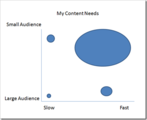
This month's #LCBQ is: How do you address the "I want it now!" demand from stakeholders? There are some great responses that can be found by visiting the link above. Corny 1986 line. :) Content Needs This is a very crude self-assessment, but I believe it makes an important point. If you are reading this, you are a knowledge worker. Consider the content (knowledge, information, learning) you personally need to get your job done. Draw a circle in each quadrant based on the amount (percentage) of the content that you need that's: Slow changing vs. fast changing. Will the content remain roughly the same for two years? Or will it really be out of date in two years? Large audience vs. small audience. Is the content I need applicable to a relatively large audience or do I have fairly particular needs? I did a crude version of this for myself and came up with the following: Definitely the vast majority of the time, I'm needing information that is relatively fast moving and is specific to the particular situations I face. In fact, often the information does really exist. Actually most of us that are Concept Workers will find that we play in that upper right quadrant most of the time. That said, there are some exceptions that I could think of. For example, I consume a fair bit of content that's around technology. There's a fair amount of it that has a pretty large applicable audience. Of course, most of it is pretty old news in two years time. There is some information around core technologies that will last longer. I also should point out that the information is more specialized all the time, meaning ever smaller audiences. So, that kind of information makes for Fast but Larger audiences. And when you consider the trends for most concept workers (knowledge workers), we clearly are heading towards faster moving content aimed at smaller audiences. Workplace Learning's Challenge Now let's put on the hat of someone in workplace learning. What's our ideal kind of content? Workplace Learning's ideal content: Slow changing and large audience How big is that circle? How is that circle doing for most knowledge workers? This isn't something new, it's just becoming more and more clear. I've discussed it in Disruptive Changes in Learning, Innovators' Dilemma in Learning/eLearning, Business of Learning, and Learning Performance Business Talent Focus. The reality is that we need to find ways to insert ourselves into the faster moving content and be able to change the dynamics to reach smaller audiences. These relate to speed. One of the nice things about the responses to this month's LCBQ is that they relate directly to speed even though they were not necessarily aimed at the bigger picture above. Responding to the Need for Speed I like where Glenn Hansen started his answer: Don’t assume that training is the answer. Even if some kind of training is reasonable, don’t assume the stakeholder in question has identified the right solution. And liked Glenn's point about what's required: Work up your material to the point where it conveys the skills and knowledge needed and where it is professionally presented and fit for purpose. Don’t chase perfection, because it’s more likely your information will be out of date by the time you have it ready. This is echoed quite a bit by the collection of Agile eLearning - 27 Great Articles that I pulled together previously. In terms of specific suggestions there are some real nuggets in several of the responses. Clive has some very good suggestions on speeding things up in The Big Question: How do you respond to the ‘I want it now’ demand?. Open Sesame's response similarly has some good ideas for rapid solutions. Jeff Goldman also has several suggestions for speeding the process or approach in his post: A Priest, A Rabbi and an Instructional Designer Are in a Bar and Identify a Training Need: A response to the #LCBQ." However, his punch-line struck me as defending slower processes: Oh, the priest, rabbi and instructional designer identified a training need, collaborated on designing an effective learning program which was not implemented until it was damn well ready to be implemented. It's fairly contrary to the rest of his more reasoned approach. And if the stakeholder hears slow moving training solutions as the response that won't be ready until it's "damn well ready." Well ... good luck with that. I also feel a bit the same way about Tom Gram's response that included: The best strategy is a preventative one. He's correctly arguing that you should try to cut off some of the problem at the pass, but the reality is that you should get yourself ready to be fast, agile or however, you want to describe it. So let me ask you ... do you feel the need? The need for speed? eLearning Technology
Subscribe to the Best of eLearning Learning for updates from this blog and other eLearning blogs.
Tony Karrer
.
Blog
.
<span class='date ' tip=''><i class='icon-time'></i> Jul 14, 2015 12:14pm</span>
|