Blogs
|
Google Classroom is one of the most interesting new ways to create and organize assignments quickly, provide feedback, and easily communicate with students.
This morning, we’re excited to announce that Versal is one of the first companies to integrate the new Classroom share button, launched this morning by Google at ISTE.
What does this mean? Now you can share courses with your class directly from Versal, and empower your students to take the assignments from within Google Classroom. Simply publish your course or lesson, and click the Classroom share button. Here’s a short video explaining how it works:
The Classroom share button is a simple embeddable javascript button which allows teachers and students to easily share content from third party websites to assignments and announcements in Google Classroom. The Classroom share button saves teachers time by removing the copy-paste steps of sharing great content with their classes in Classroom.
It’s a great step forward, and we’re honored to work with the Google Classroom team on this initiative. Open solutions are especially critical in educational environments, where teachers need the freedom to integrate the solutions that best serve their respective students. It’s the same philosophy we’ve embraced with our open embedding gadgets, empowering you to bring the best content on the Web into your courses.
Check it out, share a Versal lesson or two with your Google Classroom, and let us know what you think. We look forward to your feedback!
Christopher Poseley
.
Blog
.
<span class='date ' tip=''><i class='icon-time'></i> Jul 14, 2015 12:36pm</span>
|
|
I’ve discussed before about how it’s Hard to Evaluate the Performance of Knowledge Workers and now some additional backup from Dilbert: Which goes along with: But let’s be careful here because: eLearning Technology
Subscribe to the Best of eLearning Learning for updates from this blog and other eLearning blogs.
Tony Karrer
.
Blog
.
<span class='date ' tip=''><i class='icon-time'></i> Jul 14, 2015 12:35pm</span>
|
|
We are pleased to announce that we have received national certification as a Women’s Business Enterprise by the Center for Empowerment and Economic Development (CEED), a regional certifying partner of the Women’s Business Enterprise National Council (WBENC).
WBENC’s national standard of certification involved a meticulous process including an in-depth review of the business and site inspection. The certification process is designed to confirm the business is at least 51% owned, operated and controlled by a woman or women.
The Women’s Business Enterprise National Council is the nation’s largest third party certifier of businesses owned and operated by women in the United States. It’s a resource for the more than 700 US companies and government agencies that rely on WBENC’s certification as an integral part of their supplier diversity programs.
By including women-owned businesses among their vendors, corporations, and government agencies demonstrate their commitment to fostering diversity and the continued development of their supplier/vendor diversity programs.
Find out more here: http://www.wbenc.org/Certification/Certification-Process/
Megan Torrance
.
Blog
.
<span class='date ' tip=''><i class='icon-time'></i> Jul 14, 2015 12:34pm</span>
|
|
I was recently asked me about my recommendations for conducting effective online conferences (virtual conference). They had attended the LearnTrends free online conference. This conference has been run for a few years now and is tentatively scheduled for November 15-17 this year. This is my attempt to collect some of what we’ve learned over the years doing those conferences. There’s some good information back in Online Conferences and In-Person Conferences, Be an Insanely Great Professional Conference Attendee, Online Conference Formats, and Conference Preparation. Assign people into roles. For us we have someone who is an overall producer (actually there are three of us, but we split it well), session moderator, recording engineer, speaker prep person. Technical Issues. Prepare for technical issues and decide what you will do about them. We’ve used Elluminate as our webinar system. It has issues with firewalls. So, we ask everyone to test until they find a location where they can connect. This means that some people need to attend from home. Communicate all of the details in great detail. No matter how much you feel its obvious what to do, there will be confusion. This is especially true with information like testing the virtual meeting software, getting into sessions, protocols during sessions, time zones, etc. Closely related to the above, make sure you have a well known way/place to submit questions and some assigned to answer these. Make it obvious where to access to resources from speakers. For us, we create a discussion topic associate with the session and attach files or content into that. Session timing and design is difficult online. Most presenters are not used to designing for online, so it’s important to help them plan their sessions to be effective. You definitely need interaction and time for Q&A. Some of the best sessions have very effective means of capturing the wisdom of the attendees. Even the length of sessions is challenging. Long sessions can try to get too much content in and often lose steam before Q&A. Short sessions often means really superficial. This is where a good prep person along with a good moderator can really help. Open discussions have worked, but they are risky. I often find they meander too much for me. Of course, I generally am more comfortable with directed Learning Goals. Certainly, if you are going to try it have a great moderator and interesting audience. Getting participation outside of the sessions is challenging. People don’t read things, or enter discussions ahead of the sessions. No matter how hard we’ve tried, it’s VERY difficult to get an audience to do anything ahead of when the sessions start. And it’s even difficult to get them to engage through discussion forums outside of the sessions. It’s best to design things where the discussion forums are an added bonus and have some set questions to spark discussion. But don’t count on that much participation. Make sure you have breaks between blocks of sessions. The conference staff needs it, but so do the attendees, even if you think they will pick and choose sessions. For us, defining the times for sessions is difficult. There’s no way to choose time slots where it’s not an ungodly hour in some part of the world. Not sure we’ve ever figured out an answer. Text Chat works great during sessions as a Back Channel. Encourage it and make sure the moderator and/or presenter weave it into the session - see Presentation Backchannel Multitasking. Also, make sure that the presenter is not distracted by chat. I always encourage speakers to ignore it and I’ll (as the moderator) let them know when there’s something I’d like them to discuss. And I’m not a big fan of using multiple back channel tools that effectively split the discussion. Just keep it in the webinar tool. Inject fun into the event. Nancy White jumped in to lead a round of Pecha Kucha using slides she had never seen before. The spontaneity and spirit of fun raised energy levels. Need fun stuff sprinkled throughout. Moderators can help this greatly. Speakers on a common topic should get to know one another and swap ideas on their approach in advance of the session. Pictures of speakers make the event more real. Have pictures on session descriptions and on the first slide of each speaker. Thanks to Scott Skibell, we recorded the sessions directly off the web, i.e., outside of Elluminate and he produced great recordings. This helps a lot. We’ve tried a few different ice breakers. Interaction to learn the webinar tool is always a good idea. Sometimes a kind of introduction to break the ice with audio can be good. Especially if you want audio input. Many people freely text chat, but don’t like to speak online. Be careful with screen sharing and video. They require so much bandwidth that they often make the presentation not work for lots of attendees. Much better to use screen shots. Some people take online commitments lightly. Several presenters never showed up. Some volunteer moderators disappeared when we tried to pin down times for them to cover. Online conferences have the advantage of being able to have introductory and truly advanced topics that will appeal to a narrow audience. eLearning Technology
Subscribe to the Best of eLearning Learning for updates from this blog and other eLearning blogs.
Tony Karrer
.
Blog
.
<span class='date ' tip=''><i class='icon-time'></i> Jul 14, 2015 12:34pm</span>
|
|
Worldwide PC shipments saw their biggest drop in nearly two years. The post The Death of the PC Has Not Been Greatly Exaggerated appeared first on WIRED.
Wired Magazine
.
Blog
.
<span class='date ' tip=''><i class='icon-time'></i> Jul 14, 2015 12:33pm</span>
|
|
The stores are full of back-to-school wares and in some states, the kids are already hitting the books. It’s a great time to buckle down and make sure you’re on target for what you need to do between now and the end of the year.
So how’s business? Is the organization on track to meet all of its top strategic goals? Have those goals been communicated well throughout the organization?
How are people trained and supported to meet those goals? Are your employee development efforts aligned closely with the organization’s strategic priorities?
Are you having a hard time answering any of these questions? Read on.
Over the next few months, we’ll be exploring the critical alignment of training & employee development activities with the organization’s strategic priorities. We’ll look at strategic assessments, strategic planning for learning, pragmatic and creative development approaches, and the Competence/Confidence matrix.
For now, we’ll start looking where many organizations find skill gaps: the first 24 months of employment, the last 24 months on the job, and all throughout the sales channel.
First 24 months: First impressions last, right? First learnings last, too. Effective employee onboarding helps employees hit the ground running, resulting in stronger performance, less costly mistakes and longer retention. Most new employees leave in the first six months to a year of being employed. It costs as much as 150% of a departing employee’s salary to replace them (taking into account lost productivity, recruiting fees, retraining, and other outlays). Do the math. Once you’ve found those great employees, you’ve got to keep them - and onboarding is the first step.
You know you have an onboarding problem if:
You have high turnover in the first 12 months on the job
New hires are slow to reach full productivity
You can’t fill your open postings with qualified candidates
Last 24 months: Chew on this one: 30 - 40% of healthcare workers are expected to retire in the next 10 years. Now imagine of all the training & development you’ve invested in those employees … and imagine it walking right out your door. How do you capture that precious experience and share it with the next generation of employees? How do you avoid constantly reinventing the wheel? We call this "offboarding."
You know you have an offboarding problem if:
Your experienced employees have a wealth of knowledge that is gained over time
You have high turnover or expect to have high turnover through layoffs, retirements, and natural attrition
You have no way of capturing and then retrieving the experience of your departing employees
Training through the Channel: When dealers or brokers - even your own retail operations — are selling your products and services, how can you be sure they really get the message? One of our clients sells a substantial portion of their product through a dealership network. We worked together to create a curriculum, support materials, and an incentive program to be rolled out across North America. One dealer’s employee sold two units the same day she took the training - when she’d never sold a single one before!
You know you have a channel education problem if:
Sales people can’t effectively identify customer problems, or the solutions that your product or service provides
You’re losing market share despite your product’s superiority
Your sales team or store managers are not trainers (or could be spending their time more effectively)
Interested in finding out more? On September 6th Megan will lead an interactive Take Your Learning Strategy Back to School session at the Ann Arbor ASTD (non-members welcome) click here for more info.
Can’t wait? Click here to request a consultation.
Megan Torrance
.
Blog
.
<span class='date ' tip=''><i class='icon-time'></i> Jul 14, 2015 12:33pm</span>
|
|
I wanted to follow-up 19 Tips for Effective Online Conferences with some additional resources that relate to this topic. I primarily used the eLearning Learning and Communities and Networks sites and used Conference, Online Facilitation of Conferences, Online Interaction in Conferences, Moderating Online Interaction, and others. 28 Web Conference Training Tips- eLearning Weekly, July 10, 2009 Learning to use web conferencing technology is pretty easy, but there is a lot more to training via web conference than just putting on a headset, dialing up an audio-conferencing bridge, and logging onto the application. When developing PowerPoint slides to use in web conference training follow these guidelines: Simplify content. How to plan and run a good web conference- Influence, May 7, 2009 While the technology is getting better and better ( here's a good list of options ), putting on a good web conference still requires some preparation and practice. Encourage people to participate during the conference and identify the ways in which you want your meeting participants to engage with you. Below are some helpful tips. Community Roles: Manager, Moderator, and Administrator, January 8, 2008 was asked an interesting question last week about the best ways to divide the community manager role into separate manager, moderator, and administrator roles. In most cases, and in my case, the community manager also performs the moderation functions. Moderation would be a small part of several people’s jobs. Moderation types- Made by Many, February 4, 2009 Whenever companies want to publish user generated content (UGC) they need to look into moderation, which usually consists of the following three types: Pre-moderation: Some sites operate on the principle that every piece of UGC should be moderated before it’s displayed on the website. Community Roles: Manager, Moderator, and Administrator, January 8, 2008 was asked an interesting question last week about the best ways to divide the community manager role into separate manager, moderator, and administrator roles. In most cases, and in my case, the community manager also performs the moderation functions. Moderation would be a small part of several people’s jobs. Moderating for development- I collaborate, e-collaborate, we collaborate, July 15, 2008 It’s a process of several months which started in May and includes two live conferences (in a cinema, close to Ede), papers written by specialists on development issues and an online discussion via the website [link]. The names of these people came from the participants list of the conferences. It’s a guess why. Ed Mitchell: What are facilitation and moderation, February 17, 2008 What are facilitation and moderation February 15, 2008 - 1:55 pm A quick addendum about facilitation and moderation on online spaces before a longer post about strategy. Are they facilitating, moderating, re-purposing, or nothing at all? Moderation: Is the coalface end end of the model. Gilbane Group Blog: More on "engage and collaborate" vs. "command and control"- April 1, 2007 Gilbane Group Blog Gilbane Group analysts, consultants and contributors on Content and Web technologies & trends Open to the community and moderated Home Archives XML Blog Search Blog Globalization Blog News Conferences gilbane.com Sign In Search More on "engage and collaborate" vs. research last week, Niall Cook comments: You ask: ".what Backchannel Resources- Full Circle, September 11, 2009 back channel facilitation in online groups where you make a decision to address issues privately and not "in front&# of the whole group. Conference Back Channel. Raising the bar at online events. Clay Shirkey on back channels at conferences. Jon Garfunkle on the backchannel at conferences (from a blog post comment). Raising the Bar on Online Event Practices- Full Circle, August 11, 2009 Alan Levine wrote a deliciously provocative post on last month that I’ve been meaning to comment upon, Five Ways to Run a Deadly Online Seminar. It has been a while since I wrote about synchronous online facilitation is a focused way. inside the online meeting room). World Cafe’s online ? Spot on, CogDog! Improving Conferences - Ideas & the Year Round Conference- Engaged Learning, February 6, 2009 WH Says: "…Open up the pool of presenters beyond the same 10-20 names I see at every e-learning conference… More voices would be a good thing and shows strength (and depth) in our industry.&#. Maybe Brent Schlenker, Heidi Fisk, someone at ASTD or other conferences can tell us the # of RFPs vs. into the conference. Liveblogging an Online Conference- Experiencing eLearning, April 17, 2008 Wendy Wickham asked a good question in the comments on TCC08: Second Life: Teaching Tips from the Virtual Frontier: Christy - are you using 2 computers (one for blogging, one for the conference), or just one? How are you finding the experience of liveblogging an online conference? am using two computers. It does feel a little intense. How to Run a Conference That Makes Us Say "WOW!"- Engaged Learning, June 22, 2010 Attending conferences is always a mixed bag. conference , my favorite part was talking to others about each others’ issues, concerns, questions. conference Barcamp e2.0 conference keynote session . . Photo on Flickr by Lars Plougmann. We LOVE the other attendees and the idea we get from each other. More of you. Online Facilitation, Twitter, Backchannel and Keynotes- Full Circle, February 24, 2010 The topic was "Online Facilitation: 14 years on. My topic was about my past experience with online facilitation and where I thought it was headed. The conference started with an amazing "Light Night Learning Live&# biting and sharp comedy set up by Jared Stein and Marc Hugentobler. First: Reflection. Perfect timing. You do whaaat? A glimpse behind the scenes of technical moderation- eModeration, June 10, 2010 For anyone who believes that a moderator spends his or her time deleting rude words from forums and hitting 'reject' on naughty video submissions (although we do this also), I wanted to give a quick glimpse into the nitty-gritty involved in eModeration's most complex project for a mobile phone provider client. Warning: this gets technical. How to Develop Robust Moderation Methodology- Community Guy, March 23, 2010 Moderation, at its core is about ensuring that published content on a particular site, typically submitted by the site’s users themselves, meets the terms of the site’s Terms of Service (ToS). The problem with approaching the moderation task as an analog, queue-clearing activity is that it simply doesn’t scale. 4. Moderation and safety- FreshNetworks, June 6, 2009 Why moderate? 8220;Why moderate?&# Moderators] help and assist new members by welcoming them into the community.&#. Moderation is essential to a clean, healthy, vibrant community. good moderator has a light touch, barely noticeable, and a well-moderated community is spam-free, troll-resilient and buzzing. How to Moderate Teens and Tweens- eModeration, June 26, 2009 We're really pleased to anounce that we've published a new whitepaper; the second in our series on Teens and Tweens, called 'How to Moderate Teens and Tweens'. Moderation has a role in helping to guide them as well as keeping them safe.". Tags: teens child safety moderation In this latest publication. References on Lurking | Full Circle Associates- Full Circle, March 28, 2010 First, is an old discussion summary from the Online Facilitation list from 2003, compiled by Chris Lang which still has value to me. I’ve written about it here on the blog quite often over the years!) It is more generalized reciprocity. Download file. Finally, some fine blog posts on lurking by friends and colleagues. link] Is your event worth the price of the ticket?- Social Reporter, March 15, 2009 The other day I was discussing social reporting and other online activities for a £300-ticket, two-day event with the organiser, and he said: "Next year we are going to have to make it free&#. And in future they’ll have to blend online and offline activities. Limited interaction conference. Problems if not! Conference Balance- eLearning Technology, June 6, 2008 Just read a great post by Clive Shepherd - Cutting the Pie - where he discusses what the appropriate balance is at conferences. As you know creating Better Conferences is something that very much interests me. Check out that post, the poll results and the discussion for lots of ideas on how to make conferences better. Rethinking the Conference Structure - Time to Step it UP- Engaged Learning, February 3, 2009 Mark Oehlert attended TechKnowledge ‘09 and his thoughts were very similarly to mine: Conferences need to be updated. 8220;Social media should be the default and should kick in as soon as I register and continue past the conference.&#. I will be MUCH less likely to come to your conference. Ohhhhhh yes. Yes, Mark, it is. Online Conference Formats- eLearning Technology, April 23, 2009 Also, if you are interested in future conferences, please go sign up on the Learn Trends Ning Group. We've just seen an interesting experience with Jay Cross having pulled together a 24 hour, worldwide discussion on the future of learning at Learn Trends. You can find some of the recordings here. On Tuesday morning, we had 125 listening in. Rethinking conferences- Informal Learning, February 17, 2009 When I signed up for Spaces for Interaction: An Online Conversation about Improving the Traditional Conference , I didn’t appreciate how timely the topic would become. Conferences have traditionally provided foundation knowledge for instructional designers, trainers, CLOs, and others in the field. Is it a Conference? Twitter Conference Ideas- eLearning Technology, January 30, 2009 Twitter has become a pretty great tool to help with socializing at conferences. There is also an interesting effect that people who are not attending still hear quite a bit about the conference and have some level of tangential participation. We also encouraged everyone to put in the hashtag. What do I need to cover by what point. Better Conferences- eLearning Technology, June 18, 2007 believe we can build better conferences. And, I need you to help by doing one or more of the following: provide a response to the poll below (won't show in an RSS feed - sorry) provide suggestions for what you'd like to see in future conferences (add comment). because most conferences have these same problems. distributed. Online Conferences and In-Person Conferences- eLearning Technology, October 28, 2008 Lisa Neal asked a great question in a comment on Learn Trends 2008 - Free Online Conference : What do you see as the main differences between in person and online conferences? Now, don't get me wrong, I still very much like to do in-person conferences. It's hard to get all the way to an in-person conference. Social Conference Tools - Expect Poor Results- eLearning Technology, April 23, 2008 I saw a post by David Warlick - Reaching Out With Your Conference where he suggests that conference organizers should: Consider a social network for your conference. Although I remain skeptical about social networks, social networking is essential, and a few conferences have made brilliant use of them. It's rare. What Exactly IS a Conference?- aLearning, March 2, 2010 What’s the intention of having the conference? Jeff Hurt, over at Midcourse Corrections, has a great post about opening and keynote speakers, and it made me think about conferences in general… …and about my own situation. So what’s the purpose of the conference? Is it an educational event? Meeting? I Have Seen the Future of Conferences...and it is 3D!- Kapp Notes, March 15, 2010 Terrence Linden discussing the new Second Life browser at VWBPE conference. If you missed the Virtual Worlds' Best Practices in Education Conference , you missed not only a great conference with really good content and presentations, you missed a glimpse into the future of conferences. Check out her entire presentation. Conference Networking Tools - Do They Work?- eLearning Technology, May 18, 2007 You may have seen them before and will likely remember their scatter plot: There are other applications aimed at helping you to network at conferences: CMC Central - Tradeshow Appointments , Eveni Meeting Matching ExpoMATCH , eXtreme Networking , Introplus , Leverage Software , NetworkingMatch , and PowerMingle.com. Or maybe it's me. Be an Insanely Great Professional Conference Attendee - eLearning Technology, September 14, 2006 As way of introduction to this topic, let me start with a typical scenario that you will recognize if you've ever attended a professional conference. The conference organizer has put signs in the middle of each table with a topic. What are other activities at the conference where I can talk to people? So what LMS are you using? Conference Preparation- eLearning Technology, March 14, 2007 As I'm thinking about going to the eLearningGuild Annual Gathering in Boston next month and ASTD in Atlanta in June, I went back to look at some notes I had created before around getting ready for conferences. link] I also ran across this good post: Conference Survival Guide for the Web Worker with some good suggestions Conference Wiki Examples- eLearning Technology, November 25, 2008 Someone asked me for an example of a conference using a Wiki both for organizers during planning, evaluating proposed sessions, etc. can say that this made pulling things together for the conference significantly easier. and for attendees with session pages, participant lists, that kind of stuff. It was more aimed at the attendee side. Conference Session Breakout- eLearning Technology, December 18, 2007 Uh oh, I just saw a post by Donald Clark slamming the use of small group breakouts during conference sessions. Update: 12/19/2007. There has been great discussion in the comments. wanted to provide a bit more context for this. The session will be workforce learning professionals (an ASTD audience). Original post. Uh oh. Now I'm worried. Prepare for a Conference- eLearning Technology, January 12, 2009 Heading into ASTD TechKnowledge , there's a particularly timely podcast that I just did for Tom Crawford of VizThink on the topic of: How to be an Insanely Great Conference Attendee If you follow the link you can get to the podcast. There will be more information coming around the use of Twitter at the conference. The Rise of Webinars, Virtual Conferences, and Twitter Chats- Element K Blog, May 8, 2009 Conferences are still being held in the Learning and Development industry as in past years, and generally they have the same level of quality presentations, hallway discussions, vendor demos, and much more. An example of the latter would be the "online forums" that the eLearning Guild does each month. Online Communites are Changing my World- Daretoshare, June 26, 2010 Here are four examples of how online communities have changed my world: I was organizing a conference in London UK for a client. The first time we met in person was at the conference. Should online communities have a better reputation? Should Should you join and participate in one more online community? Twittering at Conferences- Learning with e's, May 7, 2009 I really missed the Edumedia Conference in Salzburg this year. have pleasant memories of last year's conference and the beautiful city of Salzburg. Here's the conclusion in full: Microblogging at conferences seems to be an additional way of discussing presented topics and exchanging additional information. Ebner, M., Beham, G. How to Get the Most Out of a Conference- eLearning Weekly, May 7, 2009 Conferences have been on my mind quite a bit lately. So you can see why I was pleasantly surprised today when I ran across an excellent blog post on how to get the most out of a conference. Here’s a summary of his suggestions: Choose your conference wisely. Conference Survival Guide for the Web Worker. Layered communications will change online communities- FreshNetworks, April 14, 2009 Time for a prediction: layered communications - a mixing of text, speech and video - will become a key issue for online communities in 2010 and beyond. . Two things this week got me thinking about the place for layered communications in online communities and social networks. eLearning Technology
Subscribe to the Best of eLearning Learning for updates from this blog and other eLearning blogs.
Tony Karrer
.
Blog
.
<span class='date ' tip=''><i class='icon-time'></i> Jul 14, 2015 12:32pm</span>
|
|
When was the last time you checked in with a SME for a course after it has gone live? Can you even find the SME for all your courses?
Believe it or not, you’re not the only one who has a tough time tracking down your SMEs. It happens all the time in all sorts of organizations. You’ve both done a ton of work to get a project off the ground and running, and as soon as things go live, it’s easy to go your separate ways. But this is one of the most critical points in your project’s implementation: the evaluation. (Remember the "E" in ADDIE?) And the "E" means more than just checking to see if learners actually learned the content. Your SME will be a key point person in the process of evaluating your content over time and deciding when to make updates.
Here are four tips you can use to connect with your SMEs and keep your course material up to date.
Plan for content sustainability before the course launches. What can you do before the project ends to keep in touch?
Decide in advance when to re-evaluate the course. This may depend on how fast you expect the content to change, and what other activities may be in process (like budgeting cycles, product cycles, etc.).
Build SME interaction or question-gathering into the course. It may be as simple as the ability for users to email questions, or a focus group among learners. Ready for the really cutting edge stuff? Host a social learning platform where discussions about the content take place and include the SME in the conversation.
Include the SME in the learner evaluation process. Here are some important things to address as you both sit down after the "go live":
Share evaluation feedback and updates from actual learners. What trends do you see among the feedback? Do you see any common threads in the comments or questions?
Look at the numbers. Have enrollment rates gone up? Are more people completing the training compared to before? Have more people passed the training? Are people finishing the course?
Measure workplace performance. Are people more knowledgeable about the task at hand? Is there a noticeable improvement in workplace performance?
Review learners’ satisfaction. What have they said about the training? What do your Level 1 evaluations say?
Invite your SMEs to continue their teaching informally.
Ask the SME to speak at conferences, training sessions, and events where learners will be gathered.
Include articles and blog posts from SMEs in your communications with learners.
Include the SMEs in the online social learning space, where they can provide expertise and insights to the learner community.
Take the lead yourself - and ask! When it comes to content in any training program, evaluation is a continuous cycle. New technology or processes emerge, organizations evolve, and what used to be up-to-date information gets stale. It’s important to sit down with SMEs to look at what content may need to be updated as time passes. Here are some questions to ask to help you decide what actions to take:
What is currently right and/or wrong about the content?
Is it necessary for content to be updated?
Is new, updated material available?
To make this process easy, we’ve created a simple template to help you record these answers. Download the file, schedule a coffee meeting with your SME and get updating!
Content Update Template (Word document)
Megan Torrance
.
Blog
.
<span class='date ' tip=''><i class='icon-time'></i> Jul 14, 2015 12:31pm</span>
|
|
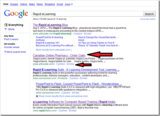
This is stupid but struck me funny. I did a search for rapid eLearning and the following is a screen shot showing the results with arrows added for one that I really don’t understand. There have to be all sorts of great jokes about what this implies about Rapid eLearning, Articulate, etc. By the way, I had logged out at the time. It’s NOT because of personalized search. eLearning Technology
Subscribe to the Best of eLearning Learning for updates from this blog and other eLearning blogs.
Tony Karrer
.
Blog
.
<span class='date ' tip=''><i class='icon-time'></i> Jul 14, 2015 12:31pm</span>
|
|
Ed Skrein, who plays Ajax in the upcoming 'Deadpool' movie, says Ridley Scott's classic was a big influence on the film's style. The post The New Deadpool Movie Will Look Like Blade Runner appeared first on WIRED.
Wired Magazine
.
Blog
.
<span class='date ' tip=''><i class='icon-time'></i> Jul 14, 2015 12:31pm</span>
|