Blogs
|
As instructional designers, training managers, subject matter experts, project managers, and project stakeholders, we all have heard of the term ‘process’. Deciding on and selecting the process which will increase learner performance and improve the Return on Investment (ROI) is of utmost importance to everyone involved in an eLearning project.
What is the best process?
Ideally, there are no hard and fast rules about what the best process is. What suits one organization and one type of eLearning project may not work in another situation. The best process is one which best suits the task at hand and achieves the best results with optimum resource utilization within the projected timelines and budget. Hence, the ideal process is one which works best for you.
This definition of the ideal process is open to interpretation and can often lead to loss of clarity and wasted effort if the wrong process is selected. To avoid this scenario, there are certain attributes every process should possess if it has to be called an ideal process.
Characteristics of the ideal process
An ideal process model should be:
Iterative
Collaborative
Efficient and Effective
Manageable
Iterative Process
The ideal process should be transparent and shed light on the product as early as possible. It should be iterative rather than linear. This makes it easy to identify whether the project is proceeding as planned at each milestone and bring it back on track if needed. This eliminates costly rework and prevents investing the majority of the project’s resources on a product which does not work. It also helps learners have an idea of how the course will be right from the outset.
The main benefit of an iterative process is that it takes small, experimental steps that can be evaluated and modified/reversed/reworked as needed without wasting vast resources.
Collaborative Process
An effective model seeks the participation of and leverages the strengths, experiences, and knowledge of everyone involved in the project. Also, in a collaborative effort, everyone is aware of their role and responsibilities, who is responsible for what and what are the expected outcomes from each member. This makes it very easy to avoid unnecessary delays and indecisive elements which otherwise cost a lot of time.
Efficient and Effective Process
While it is a given that no project can ever be perfect, an efficient process works around the underlying constraints and addresses unexpected issues which might crop up. The ability to anticipate and address contingencies is the hallmark of an efficient process.
When one element in the process undergoes a change, it may have a cascading effect on the other elements. In such cases, time might be spent trying to better things till they become perfect, but perfection is a mirage. We can move closer to it, but never reach it. Hence, an effective process must focus resources on areas which will yield maximum results. The process should produce operational products as quickly as possible.
Manageable Process
An ideal process must be easy to manage and provide clarity on the project requirements. It should be feasible to complete the project within the set time and budgetary expectations and deliver a product that meets quality requirements.
The next time you start an eLearning project, ensure you select a process that suits your organization, product and adheres to these guidelines so that you achieve the best results.
Reference
Leaving Addie for Sam: An Agile Model for Developing the Best Learning Experience
By Michael Allen and Richard Sites
Related PostsWant to Make Effective Use of Your Training Budgets - Consider These! [Video]Recommendations for Quick and Cost-Effective E-learning RolloutDeveloping an Instructional Strategy for E-Learning Courses
RK Prasad
.
Blog
.
<span class='date ' tip=''><i class='icon-time'></i> Jul 15, 2015 10:29am</span>
|
|
We are delighted to announce the release of gomo 2.2, the second quarterly update to our multi-device authoring tool since launching in April.
Because gomo is a software as a service (SaaS) tool, subscribers and trialists get all of 2.2’s improvements and future updates to the authoring tool by simply logging into their account.
Some of the latest enhancements include:
Slide out menu/ table of contents
Header and footer navigation bars across all devices
Inline actions - navigate to a page, sub screen or external website from any text asset
Dropdown list asset - create a simple quiz with a drop down in seconds
Numeric input asset - test students’ math ability
Advanced animation control, allowing you to animate all content assets
Orientation preview - test landscape and portrait views on any device
Preview courses - share a link to courses as they are being built with colleagues who aren’t using gomo.
gomo Managing Director Mike Alcock said "Once again our team have raised the bar for responsive and adaptive HTML5 e-learning development. gomo gets better with each new version and our growing customer base and industry accolades reflect the improvements we are making."
gomo is a cost-effective way to easily create beautiful multi-device learning content which looks and feels bespoke. Starting at just £49/$89/€59 a month, teams and individuals can effortlessly build, collaborate and publish their own custom content, making it a budget-friendly solution for organisations of any size.
You can find out more info about gomo 2.2 here and if you like what you see, begin a no obligation, 21-day free trail of gomo today to get to grips with our authoring tool and the brand-new features we’ve added.
The post gomo 2.2 is here! appeared first on gomo Learning.
Gomo Learning Team
.
Blog
.
<span class='date ' tip=''><i class='icon-time'></i> Jul 15, 2015 10:29am</span>
|
|
How can you develop a top-notch eLearning course that meets your needs very effectively? What does it take to create the perfect online course? Well, you need to follow a well-defined eLearning development process.
Following a proper online course development process prevents time and cost overruns and ensures quality. Here is a wonderful info-graphic that list the 6 steps of a good eLearning development process.
Hope you find this post interesting. How do you create eLearning courses? We’d love to know.
Related Posts5 Ways to Make E-learning Interesting - An InfographicSteps to Create an E-learning Course - An InfographicBasics of E-learning Project Management - An Infographic
RK Prasad
.
Blog
.
<span class='date ' tip=''><i class='icon-time'></i> Jul 15, 2015 10:28am</span>
|
|
Why Embrace eLearning
For Centuries we had been used to learning in a particular way. Our learning was always shepherded by a guide - parents at home; teachers and tutors during our school years; professors and mentors at college. We then entered a vocation which again required some learning; and the way we learned from our childhood carried on into adulthood where we again learned under the guidance of an instructor.
This worked fine until recently when technology enabled learning changed the way that educators and L&D faculty thought of learning. Today, educational institutions and offices, both in the public and the private sectors, are making the shift to technology-enabled, online learning. Within organizations, there is always a faction of those employees who are uncomfortable with this new way of learning. If you are one of those who hesitates to give technology-enabled learning a try, here’s 1 reason to embrace eLearning - you will love it!
Here are 12 reasons why you will love and embrace eLearning:
Learn on your own device. If your organization is against its employees bringing in their own device to work, you can access your learning when you are not at work.
Learn at your own pace. eLearning recognizes that your needs are unique and lets you learn in your own time, in your own way, at your own pace.
You will have access to a unique learning plan that has been designed keeping your job role and capabilities in mind.
Get access to information as soon as you need it - courses are well structured, so you can find the information you need, easily.
The industries' best practices are at your fingertips. Oftentimes, instructors are inadequately equipped to answer questions related to the most recent practices. eLearning courses are prepared with much thought and research. Because the content can be easily updated, you can be sure that you are accessing the most recent information.
Self-evaluate. Self assessments after every course let you know where you stand. If you are unable to fair well in a particular course, you have the option of redoing the course until you get it right.
Get immediate answers to your most pressing questions through the interactive interface that connects you with peers and industry experts - across the globe.
Train in a safe environment with simulated learning. This is especially useful for employees who are exposed to hazardous conditions like the pharmaceutical industry and those who must train on the use of heavy/dangerous machinery.
eLearning is eco-friendly and drastically reduces your carbon footprint.
Increase your overall productivity by training in your free time, when you are at home or traveling; it is accessible every day.
You don’t have to be connected to the internet. Organizations, whose employees are constantly on the move, make sure that they can train, offline; work is automatically uploaded when you are connected to the internet.
Perform better, and have greater retention of what you have learnt, than your classroom-trained counterparts, and enjoy the fruit of being a top performer.
We live in a futuristic world of high expectations and increasing demands. We must keep pace with the superfast changes around us while delivering a 100%. It’s impossible to keep up a chaotic lifestyle, keep pace with hectic work schedules and attend training. How do we sustain the balance? With the help of eLearning, of course. For most of us this is a scary proposition; the more set our ways - the scarier it is; but eLearning is one of the most beneficial forms of learning for busy employees.
Don’t think of the ‘e’ in eLearning as ‘electronic’. Think of it as ‘exciting,’ ‘extraordinary,’ ‘efficient,’ and ‘easy,’ and you would have taken your first step toward a more rewarding career.
This post was first published on eLearning Industry.
eLearning Industry
.
Blog
.
<span class='date ' tip=''><i class='icon-time'></i> Jul 15, 2015 10:28am</span>
|
|
Once you’re e-learning course is developed and ready to be published, you need to start thinking of it as a commodity. It’s simple - the more people buy into what you’re offering them, the greater number you can expect to take the course.
Why you need to market e-learning
As technology becomes increasingly accessible and we can create and produce high quality digital materials without a specialist vendor, it’s possible to miss a trick or two when it comes to the strategy surrounding your e-learning. Taking the time to drum up support and market e-learning to your internal audience can do wonders for the numbers through the course and how L&D is perceived in your organisation.
To make people buy into your course, we need to deploy some tactics to market e-learning effectively to your internal audience. Implementing a marketing strategy for your course is key to ensuring you’re course doesn’t gather dust on your LMS.
If you don’t woo your audience with the benefits and personal value of your course, then you can’t be too surprised if you aren’t getting the results you were expecting. You could have built the best course in the world, but if nobody knows about it, how can they even consider taking it? Think of it like this blog, I’ve taken the time to write it, so I promote it on social media, post it in relevant groups and forums plus a load of other things to ensure that it finds its audience, which is exactly what you need to do when you begin to market e-learning.
What’s in it for me?
It will come as no surprise that while you’re building a course, you should be thinking all about your learners. As soon as you’re course is built, however, it’s time to think of them as consumers. Busy ones at that - their working weeks are predefined and will rarely let up, leaving little time for them to stop and think about their personal development.
In order to make your audience want to consume your course, you’ve got to make sure they’re well aware of what is in it for them. Some courses may be mandatory, but telling your workforce they have to complete it is hardly riveting. In this case, you should help them understand why mandatory or annual refreshers will benefit their performance and address potential weaknesses in the way that they work.
Learning isn’t cool
We might have designers, developers and intuitive tools (like gomo) to make e-learning content as interesting and visually pleasing as possible, but take it outside of your L&D peers and without the right marketing and messaging, staff could take one look at it and decide they want nothing to do with it. Make sure once the course is complete, you leave the learning theory, intricate workings and other L&D-isms behind and consider how your audience will perceive it. After all, whether your course takes minutes or months, it relies on people taking time out of their day to complete it.
To make people want take the time out, you need to tap into what motivates them and sell benefits related to that. Through speaking with line managers, you could work the course into being a part of personal development plans. This means that staff are looking to reach bigger goals by they look up to, which could in turn lead to a pay rise or a new job role they are working towards.
If you have found the above useful, why not read the second part of the blog, which provides information regarding internal communications, marketing messages and more to help you market e-learning effectively.
To be sure you don’t miss it or any future mobile and multi-device learning insights, sign up to the gomo RSS feed here or follow us on Twitter or Google+.
The post How to market e-learning (part 1) appeared first on gomo Learning.
Gomo Learning Team
.
Blog
.
<span class='date ' tip=''><i class='icon-time'></i> Jul 15, 2015 10:28am</span>
|
|
Creating an effective eLearning course is a challenging task, as you need to cater to the expectations of different stakeholders. You can make it easier using prototypes.
A prototype is a sample of the "final" eLearning course. It gives a clear idea to the stakeholders of how the course would look like upon the completion of development.
Here, I would like to share some benefits of using prototypes in eLearning.
Provides clarity on the final output
Prototype gives a clear picture of the strategy and good idea of how the elearning course will look like when the development is complete. It provides a quick overview of the final course by helping zero-in on the final GUI in the early stages of the design phase.
Eliminates ambiguity
Prototypes go a long way in helping the developer understand the requirements of the client properly. The client can view the prototype and suggest modifications to the course, if needed. Thus, it reduces the ambiguity, incompleteness, inconsistency, misconceptions and faults between the developer and the client.
Improves accuracy
Inconsistencies in the eLearning course can be identified and eliminated in the initial stages of development, and this result in an online course of high quality without time and cost overruns.
In case, the client asks feedback in the proposed design or interface, it can be corrected right at the beginning. Thus, it improves accuracy of the final course.
Cuts down the review time
You can reduce the time taken to review the course considerably using a prototype. This is because certain important elements of the course such as the fonts, slide layouts, interactivities, etc. will be finalized before the development of the elearning course.
Helps meet stakeholder’s expectations
Prototype helps you meet the stakeholder’s expectations, because it helps you understand his requirements clearly. Furthermore, shortcomings are addressed quite early in the development process, and this leads to the development of a first-rate online course.
Creation of a prototype is generally seen as an additional step in the eLearning development, and people try to skip it as it takes time and resources. But, it helps you to save considerable time and avoid rework.
These are some of the benefits of using prototypes in eLearning. Please share your thoughts!
Related Posts3 Tips to Instructional Designers for Effective E-learning - An InfographicTop 5 blogs of 2014 on Instructional DesignImportance of Content Comprehension in E-learning
RK Prasad
.
Blog
.
<span class='date ' tip=''><i class='icon-time'></i> Jul 15, 2015 10:28am</span>
|
|
Today, it’s more evident than ever that the power is in our hands. The internet, connected technology, and the dawn of simplified tools are all proof that today, we are in control.
Consider e-learning; we can now build whole courses of learning through a browser, collaborating with fellow learning technologists in other global locations on the same project, storing data in the cloud to ensure a cohesive, collaborative building experience which, in the form of the finished course, ultimately benefits the learners your course is built to serve.
With the power firmly in our hands, it’s important to understand that once we’ve built it, it’s our responsibility to ensure we’re marketing e-learning efficiently. This can feel quite removed from L&D, and involves a completely new skill set, but the benefits associated make it worth your time.
As we mentioned last week in our first part on marketing e-learning, you might think a course is out of this world from an L&D perspective, but if you aren’t marketing e-learning sufficiently with the right messaging, it’s probably going to seem like just another course to your audience.
We can’t stress the importance of marketing e-learning; it can really make the difference between a course you thought was good and course which is great, with results to prove it.
Marketing e learning messages
Just like the words you chose within a course, the language you use while marketing e-learning is really important. Decide on several statements which articulate the benefits of your course and refer to them throughout your marketing e-learning campaign. If your messaging is concise and appeals to your organisation, interest in your course will begin to build.
It’s important to engage at all levels through all channels available, so you reach the right audience and hit them over the head with the messaging and benefits of your course at every opportunity. your learners are consumers and defining this messaging will help you sell your great product to them.
Marketing e learning to Influencers
The fact you’ve actually built the course means you already have the buy-in of internal stakeholders. Use this to your advantage and work out how you can get these (probably fairly senior) people to begin championing the course amongst their departments, peers, seniors and juniors. Chances are, these stakeholders will represent different areas of the business, and could help spread your message into areas of the business you might struggle to tap into alone.
You are looking for the superstars of your organisation; the ones who are widely known, well respected and listened to. Whether its a CEO or a head of department, getting key people on board can make your campaign gain traction much faster.
Quick wins
Every team, department and organisation will have their own
Internal newsletters
Management updates
Team meetings
Forums
intranets
Find out about them and either post or appear yourself, or recruit the help of line managers and stakeholders to lend a hand marketing e-learning to individual groups.
If you have one, speak with your internal marketing team and find out what they think about your message and how you can get it out. After all, this is the sort of thing they do every day on a much larger scale.
A good product sells itself
Once you’re implementing the above (and some of the stuff from part 1), you have to rely on your course to do the talking. If you’re course is doing the trick and staff benefit from it, you can rely on further uptake through word of mouth, one of the oldest and most effective forms of marketing.
If your course proves a hit, look at feeding back the results to your organisation to benefit future initiatives, or enter it for an e-learning industry award. The first time you go through the process of marketing elearning may take a while, but just like any commodity, you can build from it with future products.
It does go without saying, though, that even with the best marketing, a bad course is still a bad course, and once you’ve enticed some internal consumers into becoming learners, a course needs to stand on its own two feet. To make sure they aren’t disappointed, you need to make sure you build responsive, adaptive content that you can output to an app store, an LMS or internal website. This means that wherever your course lives, your internal audience can access it on any device they need to.
I can’t stress the importance of this - consumers today expect nothing less than to be able to put down one device and pick up the same task on another, and learning should be no different.
gomo produces HTML5 responsive, adaptive content as standard, and gives you a super simple way of creating e-learning content which looks and feels bespoke which you will be proud to market.
To see how easy creating first class multi-device e-learning can be, sign up for our next webinar, where you can learn how gomo works, the benefits of cloud authoring and see an intuitive, feature rich course built in minutes.
The post What’s your message? Marketing e learning (part 2) appeared first on gomo Learning.
Gomo Learning Team
.
Blog
.
<span class='date ' tip=''><i class='icon-time'></i> Jul 15, 2015 10:28am</span>
|
|
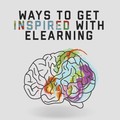
Is your eLearning a giant snooze fest? There’s a way to fix that. Your learners shouldn’t be taking their afternoon nap during your online training course. If you’re looking for some new ways to get inspired before you start designing, then I have a few ideas. Get ready to change the way you think about eLearning development.
Here are 3 ways to get inspired with eLearning:
Chat with your colleagues and other eLearning professionals.
Just talk to them? Yes. It’s easy to start a conversation in an online discussion forum or on social media. Or, you could just poke your head into your coworker’s office and ask how his weekend was and what he’s using in his courses to improve learner feedback and assessment scores. Before you know it, you’ll have a bunch of cool, fresh ideas and maybe even a new lunch buddy. But what if your coworkers don’t have any good ideas? (Don’t worry; I won’t tell anyone you said that.) Or, more likely, what if you’re the only one in your training department and you just want to see how other companies are creating energized courses? Then you’d want to join an online eLearning community like the new Trivantis Community. It’s an awesome place to connect with other developers in the discussion forum, share your content and browse the Knowledge Base for inspiration and how-to tutorials.
Tune in to an eLearning podcast.
Keep learning—even if you think you’re a pro eLearning developer. You might actually be a pro, but you can always keep growing. I like Rick Zanotti’s eLearnChat, which is a video podcast. Rick and his cohost, Dawn J. Mahoney, chat with top eLearning and training influencers about eLearning, multimedia development, project management, and what’s new in the industry. Joe Ganci, John Blackmon, and gamification expert Karl Kapp have all been interviewed on eLearnChat, plus other eLearning experts and thought leaders.
Use templates to kick start your creativity.
You can be creative without building everything yourself. Pre-made templates provide a great starting point; from there, you can tweak the template to customize your course. They’re an easy way to start your course with a new look and save valuable development time too. The eLearning Brothers have an awesome template library—and it’s now included with Lectora® Inspire. If you’re creating scenarios, they also have thousands of character images. And the eLearning Brothers clip the images out for you so that they look professional and are ready to add to your course.
Looking for an authoring tool that will also inspire you? Try Lectora Inspire free today!
This post was first published on eLearning Industry.
eLearning Industry
.
Blog
.
<span class='date ' tip=''><i class='icon-time'></i> Jul 15, 2015 10:28am</span>
|
|
Marketing Tips To Promote Your eLearning Courses
Creating memorable eLearning courses for your audience is just half the battle. The real trick is knowing how to promote your eLearning courses, so that it ends up on the screens of those who can truly benefit from them and potentially turn a profit to your business. But have no fear; below you’ll find 6 useful marketing tips to promote your eLearning courses.
Identify your target audience.
In order to market to your audience you first have to identify just who you are addressing to and what they expect. This often involves a fair amount of market research, surveys, interviews and focus groups. Learn as much as you can about the type of educational and cultural background of your target audience. Are you addressing to novices or advanced learners? What the current knowledge base of your target audience should be? What type of information they need to acquire while taking your eLearning course? Once you have a grasp of who you are marketing to, you will have the ability to custom tailor your marketing efforts to reach out to them and attract learners who are actually interested in what your eLearning course has to offer.
Tell them how your eLearning course meets their learning needs.
Ultimately, organizations and individual learners rely upon eLearning to offer a solution to a problem. Whether they need to improve the skill sets of their employees or to achieve specific goals, your audience is looking for a way to improve some aspect of their personal or professional lives. This is why it’s essential that you clearly state what your eLearning course can offer them, what benefits it will provide and how it will go about doing this. Tell them exactly how it will solve a problem they face on a daily basis or the advantages that they can expect to receive if they successfully complete your eLearning course. In some cases, you may also need to specify why your eLearning course is more beneficial than traditional learning, especially when dealing with organizations that may be hesitant to convert to online training.
Show them how your eLearning course is time and cost effective.
There are two types of value to consider here. The first is the value that your learners are going to get for their money. If they are paying for your eLearning course, then you need to emphasize the fact that it offers a great ROI. On the other hand, if their company is footing the bill, you need to also stress the idea that it’s worth their time. Bear in mind that your learners are pressed for time, so they are looking for an eLearning course that can give them the skills they need in the shortest amount of seat time.
Give them a sneak peek.
More often than not, people need to be convinced before clicking on the "enroll" or "buy" button; giving them a free preview of your eLearning course may be just what they need. Why not offer your learners a sneak peek of your eLearning course to get them hooked and to give them an idea of what to expect? There are still some individuals who may be resistant to eLearning, or may not even know the advantages of taking an eLearning course, but giving them a glimpse of the forthcoming eLearning experience can change all of that and can even make them loyal lifelong learners. Be sure to include contact information, such as your website or email at the end of the preview, so that they have a way to purchase the full eLearning course once they’ve thoroughly enjoyed the free version.
Ask satisfied current learners to endorse your eLearning course.
People generally like trying new things. In the case of eLearning, however, they prefer to first see reviews and testimonials from other satisfied learners who have already successfully completed the eLearning course. But, how do you get these endorsements? While you can ask your learners to give you a glowing review, you can also opt for surveys and questionnaires. If a learner gives you positive feedback, you may use that on your website or in your marketing materials. In case that learners are on the fence about whether to enroll in your eLearning course or not, they are more likely to commit if they know that it has made a difference in other learners’ lives.
Remind them of your online presence.
Learners have a tendency to forget information after they have learned it if they don’t refresh and review it from time to time. The same rule applies to your marketing efforts. If someone signs up for your mailing list, then keep your eLearning course fresh in their minds by sending occasional emails that offer them value or letting them know about special eLearning events you have planned. For learners who have already participated in one of your eLearning courses you can reach out to them via social media or emails to tell them about special offers or new eLearning courses that may be of interest to them. Also, on all messages or posts, be sure to include your website and any important contact information, so that learners always know how to get in touch with you if they decide to take you up on your offer.
These tips can give you the opportunity to increase your eLearning sales and reach a wider audience. You’ve put so much time and effort into designing and developing your eLearning deliverable. So, why not get the most out of your marketing strategy by utilizing these techniques?
Want to learn more about how to boost your eLearning course sales? Read the article 6 Marketing Tips To Boost Your eLearning Course Sales where you will find a variety of marketing ideas to promote and build the buzz for your eLearning deliverables.
This post was first published on eLearning Industry.
eLearning Industry
.
Blog
.
<span class='date ' tip=''><i class='icon-time'></i> Jul 15, 2015 10:28am</span>
|
|
A standard is a frame of reference which qualifies what is good and what is not. In the context of computer-based learning, there are many elearning standards given by AICC, ASTD, IMS Global, etc.,
We usually come across customers asking for SCORM/AICC compliance which makes our courses interoperable and portable. These standards not only help track and report a learner’s performance, but also help improve the quality of learning delivered through eLearning courses.
As per ASTD, there are 13 standards in four clusters. Let us see what each cluster of standards deals with.
Cluster 1 - Interface standards
This cluster of standards speaks about the relationship of the learner with the courseware.
The courseware should provide clear navigation/ orientation display features to indicate where the learner is currently in the course.
The standards state that course should allow tracking and reporting of the learners’ performance.
The course should enable the learner to navigate freely.
The developers need to provide optional navigational devices in the form of hypertext and bookmarks.
The developers also need to provide operational support such as installation recommendations, instructions, etc.
Cluster 2 - Compatibility standards
This cluster of standards speaks about the relationship between the courseware, operating systems and related applications.
The courseware needs to provide installation recommendations and launching facility from the LMS.
The standards state that the course should be made compatible to SCORM or AICC to ensure interoperability and portability. Also, you can have Tin Can API, the successor to SCORM to track learning experiences anytime, anywhere.
Cluster 3 - Production quality standards
This cluster of standards deals with the quality of the courseware.
The course should be consistent in the use of text and graphics like callouts, graphics, etc.
The course needs to be well-formatted and devoid of errors to prevent learner distraction.
Cluster 4 - Instructional design standards
Finally, the fourth cluster examines the relationship between the objectives, content, instructional methods and the learner.
The learning objectives need to be clearly stated.
The instructional objectives need to be performance-based and describe specific, measurable and observable skills or knowledge that the learner will acquire in each unit
The content needs to be aligned to the learning objectives.
In addition to complying with the above elearning standards, the developers need to use engagement techniques, provide opportunities for practice, create effective assessments and give appropriate feedback to the learners. Was this information useful? Please do share your thoughts.
Related Posts3 Reasons Why Problem-based Learning Is Effective LearningWhy do You Need to Go Beyond ‘E-learning Development Cost Per Hour’?The Real E-learning Standards for Course Development
RK Prasad
.
Blog
.
<span class='date ' tip=''><i class='icon-time'></i> Jul 15, 2015 10:28am</span>
|