Blogs
|
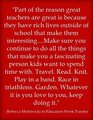
Focusing ‘More On What Goes Right Than On What Goes Wrong’ is the headline of my latest column at Education Week Teacher.
In it, Rebecca Mieliwocki, Allen Mendler, Jennifer Orr, Mike Anderson, and Daniel Rechtschaffen contribute their suggestions on how teachers can maintain a sane balance between classroom and home life.
Here are some excerpts:
Larry Ferlazzo
.
Blog
.
<span class='date ' tip=''><i class='icon-time'></i> Jul 16, 2015 05:48am</span>
|
|
© 2012 tsaiproject, Flickr | CC-BY | via Wylio
As regular readers know, my colleague Katie Hull and I are working on a sequel to our popular ESL/ELL Teacher’s Survival Guide, and it’s going to be a good one.
I’ve run up against a question in my writing and I’m hoping that readers can help…
I’m trying to figure out the difference between cooperative and collaborative learning and, very importantly, how the Common Core Standards views them both.
There seems to be multiple definitions out there about what the two mean - and, boy, do I mean multiple!
It appears to me, and I might very well be wrong, that the Standards use the word "collaborate" in the context of discussions to help individual students develop their own understanding of concepts, like a Socratic Seminar (what might be other examples?). And it also seems to me that the Standards don’t particularly value a cooperative learning project where students are working on a common goal as "collaboration." However, the Standards would view that kind of project as a valid means towards achieving other Standards, such as "sustained research."
I’m not an expert on collaborative or cooperative learning, and nor am I an expert on the Common Core Standards.
So I’m hoping the readers will help me out here — am I on the right track or am I missing something?
Larry Ferlazzo
.
Blog
.
<span class='date ' tip=''><i class='icon-time'></i> Jul 16, 2015 05:48am</span>
|
|
I’m adding this NBC News video to The Best Resources For Helping Teens Learn About The Importance Of Sleep:
Larry Ferlazzo
.
Blog
.
<span class='date ' tip=''><i class='icon-time'></i> Jul 16, 2015 05:48am</span>
|
|
© 2009 ankakay, Flickr | CC-BY | via Wylio
Canada Day is often called "Canada’s birthday" and is celebrated on July 1st.
You might be interested in The Best Sites To Learn About Canada and feel free to suggestion resources I should add to that list.
Larry Ferlazzo
.
Blog
.
<span class='date ' tip=''><i class='icon-time'></i> Jul 16, 2015 05:47am</span>
|
|
You’ll want to watch this new NPR animation accompanied by Jonathan Kozol reading from his classic education book, "Death At An Early Age":
Larry Ferlazzo
.
Blog
.
<span class='date ' tip=''><i class='icon-time'></i> Jul 16, 2015 05:47am</span>
|
|
World Bank Photo Collection via Compfight
I’ve got a ton of tools on The Best Places Where Students Can Write Online. Many let you create picture books, create multimedia projects, and write a blog.
But hardly any provide any scaffolded support for a student to actually write a "standard" essay.
John Spencer’s Write About site, which I’ve previously written about in "Write About" May Be The Education Site Of The Year offers some of that.
A site I learned about today called Write Well has some potential, though its scaffolded instructions are pretty meager and there are no models.
What are tools that you use that I don’t know about?
Here’s a Twitter exchange with a good caution and that also shares what I think would be helpful:
@greg_ashman 1 that used graphic organizers,like ones many of us use in class,that could be moved around, w/accessible models could b useful
— Larry Ferlazzo (@Larryferlazzo) June 29, 2015
Larry Ferlazzo
.
Blog
.
<span class='date ' tip=''><i class='icon-time'></i> Jul 16, 2015 05:47am</span>
|
|
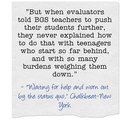
Jenn Borgioli Binis shared and important article, Waiting for help and worn out by the status quo, about a school in New York City. It appeared in Chalkbeat.
Here’s an excerpt:
Happily, we are less likely to face this kind of situation here in California and at our school, but I’ve got to think that what’s happening at this New York school is not an uncommon experience.
You might be interested in The Best Resources For Learning About Effective Student & Teacher Assessments.
Larry Ferlazzo
.
Blog
.
<span class='date ' tip=''><i class='icon-time'></i> Jul 16, 2015 05:47am</span>
|
|
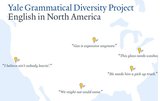
Yale has created the Grammatical Diversity Project to document varieties of grammar usage across the United States. You can explore it with an interactive map on its site.
You can also learn more about it at this Slate article: Documenting the Diversity of American English.
I’m adding it to The Best "Language Maps."
Larry Ferlazzo
.
Blog
.
<span class='date ' tip=''><i class='icon-time'></i> Jul 16, 2015 05:47am</span>
|
|
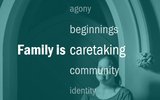
"Family.Life" is a Syracuse University project that " explores family as the center of life around the world." The images are indexed by theme, a few of which you can see in the image at the top of this post. You can read more about what they’ve done at The New York Times article headlined A Global Look at Family and Life.
I’m adding this info to The Best Sites For Learning About The World’s Different Cultures.
You might also be interested in two New York Times posts where I described ELL lessons centered around family:
This Mother’s Day interactive and supplemental activities focus on conjunctions and having students do writing about their mothers or other key family members.
Students learn about the progressive tense in this passage about the changing nature of families, and use the article as a stepping-stone to a lesson of creating family trees — with a twist!
Larry Ferlazzo
.
Blog
.
<span class='date ' tip=''><i class='icon-time'></i> Jul 16, 2015 05:47am</span>
|
|
© 2011 mSeattle, Flickr | CC-BY | via Wylio
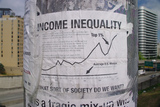
Here are new additions to The Best Resources About Wealth & Income Inequality:
Nine Charts about Wealth Inequality in America are from The Urban Institute.
This chart explains everything you need to know about inequality is from The Washington Post.
If you thought income inequality was bad, get a load of wealth inequality is from The Washington Post.
Quiz: Can you recognize the shape of inequality in America? Most can’t is also from The Washington Post.
People have no idea what inequality actually looks like is from The Washington POst.
Larry Ferlazzo
.
Blog
.
<span class='date ' tip=''><i class='icon-time'></i> Jul 16, 2015 05:47am</span>
|