Blogs
|
In this episode of MEP, Janelle Allen, founder of Learnwise, joins the program to discuss the importance of instructional design in education and some common misconceptions about online learning. Don’t miss this chat!
Guest Bio
Janelle Allen is an Instructional Designer, with a Bachelors degree in English (Creative Writing) from Georgia State University.
After 6 years of working as a trainer for companies such as Starbucks and Apple, Janelle decided to get serious about online learning. In 2009, after receiving her Masters in Science in Instructional Technology, she began working with Pearson Education to help overwhelmed instructors create amazing online courses. In 2012, she left Pearson to found Learnwise.
Janelle’s mission is to democratize online learning by making it less overwhelming for businesses and entrepreneurs.
Show Notes
03:06 Janelle’s background
04:43 What is instructional design and why is it important in delivering great courses?
05:57 Do you see instructional design moving forward? Do you see course design as a team effort type thing?
07:55 Can you talk about an ideal example of how an interaction with a faculty member resulted in a great product for the customer?
09:36 What makes for an amazing online course?
11:50 What are the other misconceptions about online learning and how do we overcome those?
15:34 What do you think is the difference between learners who take online courses and those that attend brick and mortar courses?
18:08 If you could have dinner with anyone you admire, past or present, who would it be and why?
*Miles Davis
Links
learnwise.com
@JanelleAllen
http://www.linkedin.com/in/janellesallen
For more episodes featuring thought leaders in education visit MeetEducationProject.com, subscribe to the podcast on iTunes and follow Nick DiNardo on Twitter.
Edukwest
.
Blog
.
<span class='date ' tip=''><i class='icon-time'></i> Jul 16, 2015 01:12pm</span>
|
|
Business Management student Amanda Viau has been named April’s Student of the Month on the Sioux Falls campus.
Amanda has been nominated several times for Student of the Month by her program chair Angela Livingston and other staff and faculty members. Those who know Amanda on campus appreciate her positive energy in and out of the classroom.
"Amanda always goes above and beyond in her courses and with DECA. She has volunteered with DECA several times and always does an outstanding job." said program chair Angela Livingston.
Amanda recently brought several bags of clothing to campus for Sioux Falls’ Dress of Success campaign. The clothes she was able to collect will benefit her fellow classmates for job interviews and fulfill their need for professional attire.
Here is what Amanda had to say about her time at Globe:
"The impact Globe University has on me is one of perspective. I have learned so much from my classmates and faculty. When someone here shares their point of view with me, it causes me to look at things from a different perspective.
Being selected as Student of the Month is absolutely amazing, because there are so many students here that impact my outlook on the world.
I volunteer with Ground Works and do community cooking classes with Drug Court, DUI Court, and Face It Together SD. I also help out periodically where ever I see a need, like Dress For Success.
My advice for current and future Globe Students is that getting an education is supposed to be hard. Appreciate where you are and how far you have come through every step of the process. Learning to balance work, life, and school develops our skills for the handling what’s to come."
Congratulations Amanda!
The post April Student of the Month: Amanda Viau, Business Management appeared first on Globe University Blog.
Globe University & Minnesota School of Business
.
Blog
.
<span class='date ' tip=''><i class='icon-time'></i> Jul 16, 2015 01:11pm</span>
|
|
Click here to enlarge. Source: e-Learning Infographics
Jason Rhode
.
Blog
.
<span class='date ' tip=''><i class='icon-time'></i> Jul 16, 2015 01:11pm</span>
|
|
Name: FluentU
Website: www.fluentu.com
Headquarters: New Jersey, USA
Vertical: Language Learning
Tech: Web App, Mobile App
Introduce your startup and give a short description of what you are doing.
FluentU brings language learning to life with real-world videos.
FluentU takes music videos, movie trailers, news, and inspiring talks, and turns them into language learning experiences.
Our iPhone app is like a mobile language learning lab.
Who are the founders, how did you meet, what are your different roles in the startup.
Alan Park is the founder of FluentU. He is a Duke university and Harvard Law School grad who went on to work as a management consultant at the Boston Consulting Group in China, Japan, and Asia.
Alan does a little bit of everything (content, marketing, product, and taking out the trash).
FluentU has a 20+ person distributed team, most of whom have never met one another. We've found each other virtually.
How was the idea for your startup born?
Alan started to learn Chinese, Japanese, and Korean for over a decade, and used those languages as a management consultant in Asia. FluentU came out of that experience of learning those languages to fluency.
While learning, Alan found that he learned best from authentic content like movies. But the process of learning from authentic content was very painful. It meant he had to look up words, write them down, create flashcards, and manage his learning. FluentU arose to make it possible to learn from authentic content without all of the pain.
What is the main problem in education that you aim to solve.
Language learning products today are boring and don't equip people to learn a language the way that it's actually used. Instead, they train learners to learn words in isolation. Once learners go from the classroom into the real world, they find themselves completely unequipped to engage in actual conversation. And even if they're able to talk, they don't know what to talk about because they haven't really learned about the culture.
For language teachers, exposing students to authentic content is an increasing priority, especially as it becomes a core part of standardized tests like the AP exam. But finding, assigning, and grading authentic content is time consuming and difficult.
Who are your main competitors? What sets you apart from them?
2 competitors are Yabla and English Central, which are also great video immersion learning tools.
There are 4 differences that come to mind:
1. FluentU personalizes users' experiences based on their history on FluentU. This means that even if 2 users are learning the same word, they will see different things on FluentU. Adjustments are automatically made based on a user's strengths and weaknesses.
2. FluentU is more flexible in how it lets you learn with videos. For example, FluentU lets you import your own vocab list and start learning them with video context. Your learning is enhanced by the videos, without being limited by them. FluentU even has audio content.
3. FluentU has the most useful and comprehensive annotations. FluentU's definitions are produced from scratch by a team of professional editors. Each definition is accompanied by picture, audio, and example sentences that are carefully written to demonstrate the meaning of the word. You can even see how a word is used across different videos on FluentU. This is a level of painstaking detail that is unique to FluentU. http://screencast.com/t/LQOzIPN9Q0g8
4. FluentU's exercises are the most rigorous and are backed by spaced repetition. Other solutions succeed in getting users to remember isolated words. FluentU succeeds in getting users to reproduce entire sentences. FluentU is the most effective in getting people to learn words in context and to true fluency.
In which markets / regions are you active. What markets / regions are next.
Our biggest market is the US. FluentU is available for learning Chinese, Spanish, French, German, Japanese, and English.
For now, we will focus on continuing to improve our product for existing markets - especially schools.
Who is your target audience.
Self-directed language learners and schools.
How many users / downloads does your service have?
Hundred of thousands of individual users and thousands of schools.
How do you engage with your target audience. How do you convert them into users of your product.
We have an active blog and are active on social media. We have a free plan that lets users and teachers try FluentU before buying.
What is your business model. How much does your product / service cost.
For individual users, it costs $8 or $18 per month, depending on the plan.
For schools, it currently costs $5 per user per year.
We are planning to raise prices in the future (while grandfathering existing paying users).
If you raised funding, how much did you raise. Who are your investors. If not, are you planning to raise funding.
Self and customer funded. :)
Are there milestones you are especially proud of and would like to share.
We launched our iPhone app on May 28.
Also, achieving liftoff and not needing to seek VC investment. Jeff Bezos has said that "if you’re willing to invest on a seven-year time horizon, you’re now competing against a fraction of those people, because very few companies are willing to do that."
We believe that this is especially true in the edtech space, where there are long sales cycles. We believe that our ability and willingness to have a long term view will be a big competitive edge.
What are the next steps in growing your startup.
Continue to add more content, and further develop the learning management system for schools.
How can people get in touch with you.
support@fluentu.com
https://twitter.com/fluentu
Room for anything else you would like to add.
Long term, we believe that SaaS tools will also become the norm in language learning education. We aim to become the go-to SaaS tool for language educators around the world.
Edukwest
.
Blog
.
<span class='date ' tip=''><i class='icon-time'></i> Jul 16, 2015 01:10pm</span>
|
|
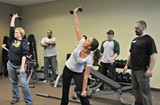
David Walker, exercise science program chair at Globe University-Madison West, recently sat down for an interview and shared some details about the recent name change that his program underwent.
What is Exercise Science?
Exercise science is the industry terminology for health fitness. Using industry terminology helps people understand that the program is scientifically based and encompasses more than one specialty.
Why did your program undergo a name change?
The health fitness specialist program included the same scientific structure and curriculum as the current program but the name did not emphasis the scientific basis of the curriculum. It is this scientific background that gives Globe University students the competitive edge once they are out in the field. We wanted the name of the program to reflect the education that the students are receiving.
The exercise science program encourages students to think critically and to really understand the materials they are studying. Students are able to evaluate exercises and exercise routines and see if they are appropriate for the individual that they are working with. It is important that exercise programs be tailored to each individual’s goals. If you look at the field today, and the availability of information online, you will find that without critical thinking skills and the ability to analyze a situation, the fitness professional is limited and not able to efficiently help people meet their goals. Globe University’s exercise science program provides the training needed for these skills.
What skills are needed for a student to be successful in the exercise science program?
A passion for helping people
Enjoying being fit and active
The ability to make health a priority for yourself and others
Good communication skills and the ability to build relationships
Excellent customer service skills
The post Exercise Science: New Name, Same Great Program appeared first on Globe University Blog.
Globe University & Minnesota School of Business
.
Blog
.
<span class='date ' tip=''><i class='icon-time'></i> Jul 16, 2015 01:10pm</span>
|
|
Success is measured in many ways; but when a student finds gainful employment two weeks into their externship no less, it is truly an accomplishment. Shelly Ace is a Medical Assistant student who will be graduating in June of 2015. As she exclaims, "who would have thought in a short year and a half I would be hired in my area of study before graduation!"
Shelly began her externship at Dean Medical Clinic in the internal medicine department. Initially, Ace says she was supposed to transfer to another department after three weeks, but upon working with her supervisor she was offered a full-time position after that short span of time. She has since accepted. On her coursework and classes she had this to say:
"I had a really good experience as a student at Globe University; the program just seemed to fly right by. I really enjoyed being a student at Globe because of all the hands-on skill learning opportunities. I feel like having the ability to work with hands-on equipment really prepared me for my career. I also enjoyed my instructors! Without them and all their help I would not be where I am today. I can’t even begin to describe the feeling of being hired before graduation! It honestly felt like the best feeling ever to be offered a position only two and half weeks into my externship!"
A few skills she learned that she uses in her work now are rooming patients, taking vitals, administering immunizations and injections, performing ear irrigation, and refilling prescriptions per protocol. Ace does have some advice for current students, "put your best foot forward in your externship." Items such as first impressions to current employees, integrity, offering help to anyone who needs it, she says are great traits to show, Otherwise you may get passed up for that job opportunity that opens up.
Ace had a few last parting words stating that "Employers are looking for those who display top-notch attitude and integrity; so bring the best of what you have into the workplace." We wish Shelly Ace good luck in her new position and congratulate her on her hard work and dedication towards excellence.
The post Hired Before Graduation: Shelly Ace, Medical Assistant appeared first on Globe University Blog.
Globe University & Minnesota School of Business
.
Blog
.
<span class='date ' tip=''><i class='icon-time'></i> Jul 16, 2015 01:09pm</span>
|
|
The modern economy has no real respect for degrees—other than demanding at least a Bachelors for every position and from every applicant.
Higher education in America has become confused with trade school: everything from four-year computer science degrees to Masters-level management schools are concerned with occupational education. They are advertised as the necessary link between academic life and employment: high schoolers take jobs; college graduates enter careers.
Yet, as every senior knows, some degrees are better than others. By the time college applications start going out, seniors need to start thinking seriously about what they want to do professionally, and avoid degrees—overwhelmingly in the liberal arts fields—that might sound interesting on a hobbyist level, but offer no competitive advantage when it comes to entering the workforce.
In reality, even the most heavily promoted degrees like engineering or business offer little more guarantee of employment than art history or philosophy. Academic advice and the associated ‘conventional wisdom’ surrounding college comes off much the same way as stock market trend-watching: make an investment now in hot industries like technology and or business, and reap the benefits as their value soars in the future!
As anyone (like the vast majority of students) paying off student loan debt can attest, college degrees are most assuredly an investment, for better or worse. But the flipside of the Wall Street wisdom on chasing the hot commodities of the moment is twofold: first, an influx of interest in a single field (or property) changes the game, and dilutes the competitiveness of each new degree-holder entering that field professionally; and second, trends change in a flash, and what seems like a good investment now may not continue paying dividends down the line.
American universities are not trade schools, and degrees do not qualify students to do any particular job, perhaps with the exception of intensive programs like medicine and law (which also tend to take more than the four years of a Bachelors program). But at base, current assumptions about college are wrong, and are being increasingly challenged.
In a mobile age, where facts are constantly changing, the skills in demand ever-shifting, and the world itself undergoing more rapid and dramatic shifts in culture, economy, and social order, spending years in what amounts to a glorified training program end up making less sense than simply learning to adapt.
Despite popular rumor that such liberal arts programs offer little more than deferred poverty and unemployment, the rules for landing a job out of college are roughly the same without respect for the specific degree program:
Network extensively: it matters who you know, not what you know
Get an Internship: networking meets on-the-job learning, before you even graduate
Location: even in a digital world, where you graduate still matters for your recruitment prospects
Adapting and growing is at the heart of the liberal arts experience. Learning to learn is the only real life skill that warrants pursuit, when everything from technical prowess to medical knowledge are prone to being rendered irrelevant in less than a decade. Rather than purchasing an education that expects the world to reward students and the knowledge they (hopefully) acquired, a liberal arts-oriented education expects to prepare students to adapt to an uncertain world, and engage situations where roles and demands are evolving.
So if the value of specific degrees is no sure bet, what about specific campuses—or even campuses themselves?
The outdated notion that simply being among academics and student peers justifies college is being challenged by both technology, and economics. Rutgers professor Sharon Stoerger has researched and written extensively to audiences of students and teachers on how to utilize everything from mobile devices to virtual platform Second Life to enrich online learning experiences.
By pushing the limits of technology, online education not only provides for engagement intellectually, it helps instill some of the skills and technical savvy that will ultimately serve workers better in a globalized economy. Leveraging technology to connect with partners around the world has more lasting value than chatting up coeds across the dormitory hall, however memorable the conversation.
To extract lasting value from the college experience, students are better served to ignore any advice that resembles a weight-loss product commercial: guarantees, testimonials, and wild claims of lasting benefits are fertilizer. Broad skills, flexibility, and social networks are the resources needed to survive and thrive in the modern world. Likewise, the notion that the only place to meet like-minded peers and be intellectually challenged is the same place that offers mandatory cafeteria meal plans and Greek life under devastating national scrutiny is fundamentally flawed. The internet has created plenty of alternatives for the lonely, the curious, and the community-minded.
Even in STEM programs, there is wiggle-room for incorporating liberal elements, and those are the skills that can withstand the whims and fluctuations of a dynamic world. The liberal arts are online and well in the 21st century.
Picture License Some rights reserved by archer10 (Dennis)
Edukwest
.
Blog
.
<span class='date ' tip=''><i class='icon-time'></i> Jul 16, 2015 01:09pm</span>
|
|
Source: e-Learning Infographics | Click here to enlarge
Jason Rhode
.
Blog
.
<span class='date ' tip=''><i class='icon-time'></i> Jul 16, 2015 01:09pm</span>
|
|
Figuring out how to finance their college education is something almost all students deal with at one point or another. To make things a little easier for Globe Education Network (GEN) students, the company provides the Globe Education Network Scholarship, which is a $1,000 need-based scholarship for eligible, full-time, undergraduate students. This scholarship is funded by GEN’s community partners and managed by Scholarship America. Students are encouraged to apply, and eight have been selected to receive it this year.
Moriah Prange
For Minnesota School of Business-Elk River massage therapy student Moriah Prange, this scholarship will help fund her dreams.
"In the future, I hope to serve special populations (senior citizens, infants, special needs children, etc.). This scholarship is going to help me pay for tuition so that I can continue to take classes and get the skills I need," she says. "I am one of five college students in my family, so having this extra help with finances is a blessing."
Kristen Markstrom
Kristen Markstrom says this scholarship is also a blessing for her.
"I am in the nursing program at the MSB Richfield campus. The bachelor’s of nursing will be my second bachelor’s degree, and therefore I will be headed into the professional realm saddled with quite a bit of student debt," Kristen explains. "Every bit of help is so appreciated, and with the support of the Globe Education Network scholarship, I can rest a bit easier at night. I am so grateful for the recognition and support of my academic achievement and pursuits."
Chase Vigen
Globe University-Moorhead business management student Chase Vigen says the scholarship will help him tremendously as well, because he won’t have to take out a loan.
Broadview University-West Jordan veterinary technology student Danielle Adams Eaton says she would like to finish her degree sooner than later, and the Globe Education Network Scholarship will be a big help.
Danielle Eaton
"This scholarship is going to help me, hopefully, finish my degree a little more quickly and just, in general, help me pay for school," says Danielle.
GEN Scholarship recipient Jessica Theis is currently halfway through the veterinary technology program at the Sioux Falls campus.
Jessica Theis
"The scholarship will help greatly since I decided to not work while in school so that I can focus on my education," she explains.
Finally, Amanda Podlak, another vet tech student at the Moorhead campus, says the scholarship is taking some of the stress out of school for her, too.
Amanda Podlak
"It will allow me to spend more hours studying, and doing other school-related activities instead of working to pay for school," says Amanda.
The contributors who made this year’s scholarships possible are Safeguard and Staples Advantage. Globe Education Network is grateful for the support from its community partners. Not only is it important for students to see that their school believes in them, but that many local businesses also want to support their education. With this award, students become eligible for the GEN Matching Scholarship, which matches up to $1,000 of a student’s outside scholarship.
Visit www.globeuniversity.edu/financial-aid to learn more.
The post Globe Education Network Scholarship Helps Students Reach Their Goals appeared first on Globe University Blog.
Globe University & Minnesota School of Business
.
Blog
.
<span class='date ' tip=''><i class='icon-time'></i> Jul 16, 2015 01:09pm</span>
|
|
Despite India’s many challenges, the e-learning industry in the country is on a steady path of growth with increasing internet adoption and better low-cost devices like smartphones and laptops.
In the past year visitors from India have surged massively for EDUKWEST. The country now takes the number 2 spot in terms of number of visitors per month on our site, right after our visitors from the U.S., which is another sign for the increased interest in the Indian education technology sector.
[purchase_link id="11253" text="Purchase" style="button" color="blue"]
Consequently, several of EDUKWEST’s articles covering the Indian education market now rank in the top 10 articles on a regular basis. We see the segments of online tutoring solutions, e-learning platforms for professional development, low-cost phone and tablet projects, MOOCs as well as investors in the Indian market to be the most popular ones among our audience.
We also see strong initiatives from both entrepreneurs, private investors and the government that will push the market further.
Here are a few interesting numbers to support our findings:
The Indian education market is predicted to be worth Rs 590,000 crore in FY2014-15
The education market in India is over $90 billion and growing at a healthy rate of 15 per cent CAGR
Indian e-learning content market is expected to grow at a Compound Annual Growth Rate (CAGR) of 18.4% from Financial Year 2014 - Financial Year 2018.
Since April, at least five edtech startups have raised close to $40 million in initial funding
India overtakes China in tech exits, now ranks in global top 5
If you’re interested in learning more about the opportunities and challenges the Indian e-learning industry faces, you will find great value in our new EdTech Reading List India.
At EDUKWEST we go through a large number of articles each day for our own research, and we put together the 22 most relevant ones on edtech in India for you in this reading list, covering the months of January to June 2015.
With a price of €10, this means that an articles is less than 50 cents. Conveniently pay via PayPal or contact us for other payment options.
[purchase_link id="11253" text="Purchase" style="button" color="blue"]
And if you buy our package containing the Reading List EdTech India and the Reading List EdTech China we offer you the two for the special price of €22.50 € (instead of €25, you save 10%).
[purchase_link id="11264" text="Purchase" style="button" color="blue"]
If you have any further question about our reports, send me an email to kirsten@edukwest.com.
Edukwest
.
Blog
.
<span class='date ' tip=''><i class='icon-time'></i> Jul 16, 2015 01:09pm</span>
|