Blogs
|
The NIU Instructional Guide for University Faculty and Teaching Assistants is a brief compilation of teaching-related information from several sources, including instructional guidebooks from other institutions, journals, and contributions from master teachers and academic support units at Northern Illinois University. The guide is meant to be a quick reference rather than a comprehensive source on teaching-related information. Topics include teaching preparation, effective instruction, assessment, classroom management, and more.
The Instructional Guide is now available for download as a PDF, or in mobile and eBook formats: EPUB or MOBI. The EPUB format is a universal eBook format that can be read easily on tablets and smart phones. The MOBI format is optimized specifically for Kindle and other dedicated eBook readers.
For more details and to download the guide, please visit niu.edu/facdev/resources/guide.
Jason Rhode
.
Blog
.
<span class='date ' tip=''><i class='icon-time'></i> Jul 16, 2015 02:28pm</span>
|
|
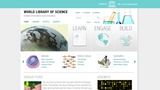
UNESCO officially launched a free online science education resource portal in partnership with Nature Education and Roche. The project is called World Library of Science (WLoS) and aims to provide students with free access to the latest science information as well as a hub to connect and discuss with peers from around the globe.
The World Library of Science wants to especially support students in underdeveloped regions by equalizing learning opportunities, improving the quality of teaching and learning and promoting the use of Open Educational Resources.
At launch the World Library of Science features over 300 articles, 25 eBooks, and over 70 videos from the publishers of Nature. Through the portal students can join classes and create groups to connect with other learners and teachers.
07.11.2014 - UNESCOPRESS
UNESCO partners with Nature Education and Roche to launch the World Library of Science: a free online science education resource
UNESCO launched the UNESCO World Library of Science (WLoS), a newly created, free online science education resource for a global community of users. Developed through the joint efforts of UNESCO, Nature Education and Roche, the WLoS was created to give students around the world, especially those in disadvantaged regions, access to the latest science information as well as the opportunity to share their experiences and learning through discussion with their peers in a shared learning environment.
Launched on the occasion of World Science Day for Peace and Development 2014, the WLoS is a science resource library stocked with over 300 top-quality articles, 25 eBooks, and over 70 videos from the publishers of Nature, the most cited scientific journal in the world. It is also a state-of-the-art digital platform that provides a community hub for learning. Users can join classes, build groups and connect with other learners.
Specifically, the WLoS seeks to make science learning accessible to students everywhere in the world by:
Helping equalize learning opportunities. The WLoS is open to all at no cost. It provides students with access to high-quality educational material, regardless of geography or economic circumstances. UNESCO will dedicate special attention to training teachers and students in least developed countries in how to use the WLoS, accelerating science learning in disadvantaged regions.
Improving the quality of teaching and learning. The WLoS supports teachers and students worldwide by giving educators concrete ideas about how to present complex scientific concepts and students resources to fuel and complement their learning. The website provides a searchable database of content that is peer-reviewed.
Strengthening science education. Scientific understanding is the foundation of sustainable development and prepares learners for employment.
Promoting the use of open educational resources. The WLoS content is open. It can be tailored and shared for any educational or non-commercial use. The WLoS is founded on the idea that educational content and scientific knowledge should be free and accessible to all.
Connecting communities of students and teachers. The WLoS is more than just a traditional library: it is a dynamic resource that allows users to collaborate with others, personalize their learning experience, pose and answer questions, and collaborate with others while exploring scientific concepts. The WLoS fosters knowledge-sharing and peer-learning.
"The world needs more science and more scientists to face today’s global challenges, "
said UNESCO Director-General Irina Bokova.
"Achieving this requires better and more accessible science education. The UNESCO World Library of Science is a remarkable and exciting new tool that will help provide it, not only to students, but also to education planners and teachers, wherever they may be."
Mariette DiChristina, Executive Editor, Nature Publishing Group and Editor-in-Chief of Scientific American, added:
"Science is the engine of human prosperity that powers and enables a better future for us all. That is why it is so important to widen access to high-quality information about science and to science teaching, and why we are tremendously proud to be involved in this effort to open up high-quality content from Nature, the world’s leading science journal, and other quality sources. As we continue to add to the UNESCO World Library of Science over time, we will help share scientific knowledge and the wonder of discovery with students and teachers all over the world."
Dr. John C. Reed, Head of Roche Pharma Research and Early Development, said:
"As a research-focused company, we are firmly committed to promoting excellence in science across the world. The UNESCO World Library of Science is an excellent platform to enable future generations of scientists, particularly those in disadvantaged regions of the world, to have access to the latest science information and educational resources. This is why we proudly support the project as Enabling Sponsor."
****
Press contact:
Agnes Bardon
UNESCO Media Relations
Tel: +33 1 4568 1764; a.bardon@unesco.org
Notes for Editors:
1. About UNESCO: UNESCO was founded in 1945, in the aftermath of World War Two, to develop the "intellectual and moral solidarity of mankind" as a means of building lasting peace. It strives to build networks among nations that enable this kind of solidarity by: mobilizing for education so that every girl and boy as access to quality education; pursuing scientific cooperation to create knowledge and understanding , and to build sustainable and greener societies; foster intercultural understanding; safeguard cultural heritage; and protect freedom of expression..
For more information about UNESCO’s work in the fields of science and education, visit: www.unesco.org/new/en/natural-sciences.of building lasting peace. Its pioneering work has helped change the way people everywhere
2. About World Science Day: Established by UNESCO in 2001, the World Science Day for Peace and Development is celebrated worldwide on 10 November each year. The day offers an opportunity to mobilize various partners to highlight the important role of science in society and to engage the wider public in debates on emerging scientific issues and the relevance of science in their daily lives. The theme for the 2014 World Science Day for Peace and Development is promoting Quality Science Education: ensuring a sustainable future for all.
3. About Nature Education: Nature Education was formed in 2008 with a primary mission of connecting the research and discovery community with science education and innovative publishing strategies. Nature Education publications are written by scientists, and meant to explain research discovery as well as spark curiosity about what we still do not understand. With these publications, Nature Education aims to push the boundaries of science publishing and breathe new life into the global science education landscape. For more information on Nature Education, visit:http://www.nature.com/nature_education. Nature Education is part of Macmillan Science and Education. To find out more visit: www.se.macmillan.com.
4. About Roche: Headquartered in Basel, Switzerland, Roche is a leader in research-focused healthcare with combined strengths in pharmaceuticals and diagnostics. Roche is the world’s largest biotech company, with truly differentiated medicines in oncology, immunology, infectious diseases, ophthalmology and neuroscience. Roche is also the world leader in in vitro diagnostics and tissue-based cancer diagnostics, and a frontrunner in diabetes management. Roche’s personalised healthcare strategy aims at providing medicines and diagnostics that enable tangible improvements in the health, quality of life and survival of patients. Founded in 1896, Roche has been making important contributions to global health for more than a century. Twenty-four medicines developed by Roche are included in the World Health Organisation Model Lists of Essential Medicines, among them life-saving antibiotics, anti-malarials and chemotherapy. In 2013 the Roche Group employed over 85,000 people worldwide, invested 8.7 billion Swiss francs in R&D and posted sales of 46.8 billion Swiss francs. Genentech, in the United States, is a wholly owned member of the Roche Group. Roche is the majority shareholder in Chugai Pharmaceutical, Japan. For more information, please visit www.roche.com.
Edukwest
.
Blog
.
<span class='date ' tip=''><i class='icon-time'></i> Jul 16, 2015 02:28pm</span>
|
|
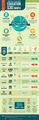
Online courses, OpenCourseWare, and MOOCs have fundamentally changed how we perceive affordable and accessible education. This inforgraphic highlights how startups like Khan Academy, BenchPrep, Udemy, and others are empowering students and educators by offering hundreds of courses online for almost next to nothing.
Via: OnlineUniversities.com
Jason Rhode
.
Blog
.
<span class='date ' tip=''><i class='icon-time'></i> Jul 16, 2015 02:28pm</span>
|
|
Class notes and peer learning community Course Hero has raised a $15 million Series A led by GSV Capital Corp. and IDG Capital, with participation of existing investors SV Angel and Maveron.
GSV Capital is one of the most active investors in education technology counting startups like 2U, Coursera, Declara, Knewton, General Assembly, Parchment, Dreambox Learning to its portfolio. IDG Capital recently invested in a $15 million Series C of Chinese test preparation platform Yuantiku.
Founded in 2006 by Andrew Grauer at Cornell University, Course Hero previously raised around $2 million in seed and angel funding in three rounds. The new funding will be used to grow the team and user base.
Class notes marketplaces have become a popular service among students even though there is still a notion that sharing or even selling class notes and other study resources is borderline cheating and should therefore be banished.
Nevertheless, edtech startups like Course Hero have managed to build sizeable audiences, raise venture capital and get exits. Notehall got acquired by Chegg, NoteUtopia and Moolaguides got acquired by Flashnotes, which itself is a class notes marketplace.
Course Hero’s $15 million Series A from two leading VC firms shows that the vertical is on the upswing as it also fits well into the broader theme of the sharing economy which is represented by so called unicorns like home rental platform airbnb and ride sharing provider Uber.
It might also be seen as a reaction to Brainly’s entrance in the US market. Founded in 2009 in Krakow, Poland Brainly has created a global network of homework help sites across Europe and Asia, totaling more than 30 million students. Brainly raised a €9 million Series A last month and opened an office in New York City.
Course Hero has over 5 million users at universities and high schools worldwide which have access to more than 7 million course-specific notes, study guides, and practice tests via the site as well as homework help from expert tutors and customizable flashcards.
Video
Links
coursehero.com | Twitter
Edukwest
.
Blog
.
<span class='date ' tip=''><i class='icon-time'></i> Jul 16, 2015 02:28pm</span>
|
|
Keeping Pace with K-12 Online Learning: An Annual Review of Policy and Practice (2012) is the latest in a series of annual reports that began in 2004 that examine the status of K-12 online education across the country. The report provides an overview of the latest policies, practices, and trends affecting online learning programs across all 50 states. Highlights from this year’s report include:
Blended learning continues to be an important story in K-12 online learning (and is reflected in our report title for the first time this year). Once-fully online schools are adapting to student demand for in-person services, school districts are responding to student desire for flexibility, and full-time blended schools (typically charters) are opening around the country.
275,000 students were enrolled in fully online K-12 programs around the country in school year 2011-12. As of fall 2012, 31 states allow multi-district fully online schools.
State virtual schools reported 619,847 course enrollments (one student enrolled in one semester-long course) in school year 2011-12, an increase of 16%. State virtual schools continue to bifurcate into two groups: those that are well-supported and growing (Florida Virtual School reported 303,329 course enrollments) and those that are not well-supported and shrinking or closing (Tennessee and Kentucky both closed state virtual schools in the last year).
Keeping Pace 2011 included a Planning for Quality section that offered guidance to leaders who are starting and growing online and blended programs. Keeping Pace 2012 offers three possible timelines as a companion to that guide.
The complete report can be downloaded from http://kpk12.com/reports.
Jason Rhode
.
Blog
.
<span class='date ' tip=''><i class='icon-time'></i> Jul 16, 2015 02:27pm</span>
|
|
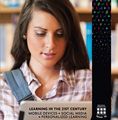
Each year, Project Tomorrow, a national education nonprofit organization, facilitates the Speak Up National Research Project and, as part of this initiative, tracks the increasing interest and growth in the use of emerging technologies to address the specific needs and aspirations of students, parents and educators for 21st century learning environments. Since 2007, Project Tomorrow has partnered with Blackboard Inc. to create a series of annual reports that focus on key trends in the use of technology to increase student achievement, teacher productivity and parental engagement.
As outlined in the Speak Up 2011 national reports, many emerging technology products and services are not only addressing instructional needs, but are also enabling greater personalization of the learning process, both in school and out of school. Within this context, the use of mobile devices such as tablet computers and smartphones combined with wireless accessibility and social media tools stand out increasingly as a game changer in this movement to more personalized learning.
This new special report examines the Speak Up 2011 national findings to both answer some of the questions first posed two years ago but also to present an updated perspective on the role of mobile devices within K-12 education.
The key findings from this report include:
Mobile devices when combined with social media and wireless connectivity are enabling more personalized learning opportunities for both students and educators.
Driven by several factors, the incorporation of student owned devices within classroom instruction is quickly becoming a viable solution for many schools and districts.
Increasingly parental support for mobile learning is changing the district conversation.
Changing teacher practice is the critical challenge today to expanding mobile learning.
The future of mobile learning depends upon a shared vision for how to personalize learning.
Here are a few more interesting stats and takeaways from this study:
In 2011, two-thirds of parents of school aged children (67 percent) noted that they have a personal smartphone; an increase of almost three times from 2006.
In the past three years, teachers’ access to a smartphone has more than doubled from 20 percent in 2008 to 54 percent in 2011.
District office administrators are almost twice as likely now to be carrying a tablet computer (55 percent) than a simple cellphone that does not have Internet access (31 percent).
and administrators’ interest in using a smartphone or a tablet computer is not dependent upon their years of experience. administrators with 1 to 3 years of experience are only slightly more likely to use a smartphone or tablet than their peers with 16 or more years of experience.
87 percent of parents say that the effective implementation of technology within instruction is important to their child’s success (50 percent label it as "extremely important").
But only 64 percent say that their child’s school is doing a good job of using technology to enhance student achievement (and only 12 percent strongly agree with that statement).
Download the complete report here.
Jason Rhode
.
Blog
.
<span class='date ' tip=''><i class='icon-time'></i> Jul 16, 2015 02:27pm</span>
|
|
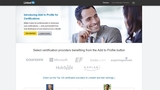
One year after the launch of the Direct-to-Profile Certifications pilot LinkedIn announced the launch of Add-to-Profile for Certifications, opening the pilot to any professional education provider interested in offering the service to its learners.
Through the program, education institutions are able to add a certification widget to their courses. Learners can then simply add the certification to their LinkedIn profile with the click of a button once the course has been completed successfully.
LinkedIn also introduced a new ranking of the top certification providers on the network which is based upon the number of professionals displaying those certifications in their profiles.
The top spot on the list currently goes to Microsoft followed by MOOC platform Coursera. From the other launch partners we find lynda.com in ninth place, Pearson VUE in 33rd place, edX in 39th and takes Udemy the 67th spot. The ranking also features an overview of top certifications by occupation.
Links
addtoprofile.linkedin.com
Further Reading
LinkedIn pilots Direct-to-Profile Certifications with Coursera, edX, Lynda, Udemy
Edukwest
.
Blog
.
<span class='date ' tip=''><i class='icon-time'></i> Jul 16, 2015 02:27pm</span>
|
|
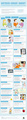
Ever get confused over the latest terms in the world of teaching and learning with technology? This infographic will definately help! (Click on the image to enlarge.)
Thanks Jamie Nelson for sharing!
Jason Rhode
.
Blog
.
<span class='date ' tip=''><i class='icon-time'></i> Jul 16, 2015 02:27pm</span>
|
|
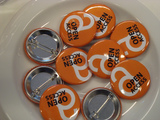
The Bill & Melinda Gates Foundation published its new Open Access Policy last week which requires all recipients of grants from the foundation to make their published research accessible to the general public.
The new policy comes into effect as of January 1, though the foundation commits to a "two-year transition period" during which publishers can apply for a so called 12-month embargo period to limit the accessibility of research as well as underlying data sets.
The new policy is rather straight forward and contains five main elements:
the research must be meta-tagged and thus be searchable on the web
it must be published under Creative Commons CC BY 4.0 or a similar license which covers unlimited copy and redistribution of findings and data
the foundation will pay what they call "reasonable" fees to a publisher
the publications will be open and accessible immediately
the underlying data will be open and accessible immediately
The latter two with the exception of the embargo period mentioned above.
Over the past 24 month the voices in higher education and from journalists have become louder to get more and unrestricted access and reuse of peer-reviewed published research. Of course, the big scientific publishers certainly aren’t enthusiastic to make this happen. As a researcher your need to publish your work in one of the big journals, and of course publishers are interested in keeping their cash cow.
From what I know and have read, if a researcher wants to make his or her research accessible to the general public journals often charge them USD $2,000 to $3,000. And everybody who needs to access those papers knows that it can quickly cost you several hundreds of dollars for one publication.
It remains to be seen what the Bill & Melinda Gates Foundation determines as reasonable fees. The global STM (science, technology and medicine) market in 2011 was estimated at $23.5 billion by Outsell. And journals are the a big piece of this market with $9.4 billion. So why change such a profitable system?
The scientific publishers might look at their colleagues in the global newspaper publishing industry who have struggled to keep up with technological changes over the five years to 2014.
One might say that scientific journals are one of the last niches virtually untouched by change. It is somewhat comprehensible that publishers want to keep things the way they are as long as possible.
Although this reasoning might still be dominant among STM publishers, I recommend to read the article in The Scholarly Kitchen about Elsevier’s market position and the acquisition of Mendeley, there might also be some first signs of rethinking the situation. Annette Thomas, CEO of Macmillan Science and Education, gave the Independent an interview published yesterday in which she discusses open access to data.
"Scientists have better tools to share their personal photographs or to collect their music than they do to actually share and access data,"
she states.
Under Thomas’ leadership Macmillan has opened up to the idea of open access and invested in related startups such as Figshare and Readcube. Nature, the publisher’s leading science journal, is also a founding partner of the UNESCO’s World Library of Science which aims to provide students with free access to the latest science information as well as a hub to connect and discuss with peers from around the globe.
Disclosure: Macmillan Digital Education, part of Macmillan Science & Education, is a supporter of EDUKWEST.
Further Reading
Bill & Melinda Gates Open Access Policy
A Snapshot of the Scientific and Technical Publishing Market
An overview of scientific and scholarly journal publishing
Annette Thomas interview: Cut out the middle man and bring science straight to the masses
UNESCO launches World Library of Science - Free Online Science Education Resource
Picture License Some rights reserved by biblioteekje
Edukwest
.
Blog
.
<span class='date ' tip=''><i class='icon-time'></i> Jul 16, 2015 02:27pm</span>
|
|
Macmillan Science and Education announced today that from now on it will enable subscribers to journals on nature.com to share articles with colleagues not having a subscription. The same is true for readers of 100 media outlets and blogs from around the world who can now direct their readers to the original paper via a link.
The links can be shared via email or on social media, though the articles come as read only hosted on Readcube, meaning they come without the possibility to copy or print them. Institutional subscribers can share any article since the first issue of nature in 1869, individual subscribers, however, are limited to the years from 1997 on.
Commercial use is excluded, instead the focus is on fostering collaboration as the possibility to annotate text is enabled in the read-only versions.
Macmillan Science and Education says nature.com has more than 10 million monthly unique visitors and this new way of opening up the journals would benefit more than 6,000 universities and organizations worldwide.
Articles on nature.com to be made widely available to read and share to support collaborative research
Macmillan Science and Education, one of the leading publishing and technology companies in the world, today announces the launch of a groundbreaking publishing initiative that will make it easy for readers to share an unprecedented wealth of scientific knowledge instantly with researchers and scientists across the globe.
Subscribers to 49 journals on nature.com can now legitimately and conveniently share the full-text of articles of interest with colleagues who do not have a subscription via a shareable web link on nature.com. In addition, Macmillan Science and Education will take a lead on opening up public engagement with scientific knowledge to society at large by giving access to the same content to readers of 100 global media outlets and blogs.
Two initiatives are being introduced:
Subscribers to 49 journals on nature.com will be able to share a unique URL to a full text, read-only version of published scientific research with colleagues or collaborators in the most convenient way for them, e.g. via email and social media. Included are the world's most cited scientific publication, Nature; the Nature family of journals and fifteen other quality science journals. This new initiative will be available to scientists and students at more than 6,000 universities and organizations worldwide, and serve the more 10 million monthly unique visitors to nature.com. This sharing is intended for personal, non-commercial use. To further aid collaboration, forthcoming annotation functionality will enable subscribers to share comments and highlighted text with their colleagues.
100 media outlets and blogs across the globe that report on the findings of articles published on nature.com will be able to provide their own readers with a link to a full text, read-only view of the original scientific paper. Thousands of high-quality scientific papers will be available. Nature has published some of the leading scientific stories of our time, such as the Human Genome; the structure of DNA; Dolly the Sheep; the invention of the laser; the identification of the AIDS virus and the discovery of the hole in the ozone layer.
Annette Thomas, CEO of Macmillan Science and Education said: "We exist to serve the information needs of researchers, to help them in their work, and ultimately in making discoveries in order to improve the way we all live. We have, over many decades, published a wealth of world-leading scientific knowledge through our family of journals. Today we are able to present a new way to conveniently share and disseminate this knowledge using technology from one of our innovative and disruptive divisions - Digital Science - to provide a real solution to the global problem of how to efficiently and legitimately share scientific research for the benefit of all."
Steven Inchcoombe, CEO of Nature Publishing Group added: "Scientists have always shared their work, it is essential to advancing progress. Nature was established in 1869 to help scientists share, and to bring science to the public. In today's global, internet-enabled world, we think we can meet the needs of science and society better. We know researchers are already sharing content, but not always optimally. We're committed to adapting to meet the needs of the community, and to basing our decisions on an evidence-based approach. We are conducting our own "experiment" to understand how best to help sharing of knowledge in a sustainable way. Working with authors, readers, libraries and journalists, we hope to learn a lot."
Timo Hannay, Managing Director of Digital Science explained: "We know researchers are already sharing content, often in hidden corners of the Internet or using clumsy, time-consuming practices. At Digital Science we have the technology to provide a convenient, legitimate alternative that encourages researchers to access the information they need and the wider, interested public access to scientific knowledge, from the definitive, original source."
The technology behind this initiative has been developed by ReadCube, a Digital Science portfolio company which develops software to make research literature more accessible and connected for researchers, institutions and publishers. Its publisher technologies have already been adopted by partners such as Wiley, Nature Publishing Group, Karger De Gruyter, Rockefeller University press and many others.
Nature Publishing Group have also today released content sharing principles and a new policy to support this sharing initiative, which will be refined based on usage and community feedback over a one year period. To follow updates throughout the pilot launch, please follow the hashtag #scishare.
-ENDS-
About Macmillan Science and Education
Macmillan Science and Education has more than 5,700 employees in more than 50 markets and supplies high-quality content and innovative digital products and services to customers in 120 countries around the world. It unites all Macmillan's scientific, scholarly, academic and education businesses across the globe. Visit www.learndiscover.com and follow @MacmillanSandE on Twitter.
About Nature Publishing Group (NPG)
Nature Publishing Group (NPG) is a leading provider of scientific journals, magazines, products and services. Publisher of Nature and Scientific American, NPG is dedicated to serving the scientific community and the wider scientifically interested general public. Visitnature.com and follow @npgnews on Twitter.
About ReadCube and Digital Science
ReadCube develops software to make the world of research more accessible and connected. The free ReadCube desktop application for PC and Mac helps researchers in any discipline easily organize and manage existing article libraries, and discover new literature through searches and personalized recommendations. ReadCube is supported by Digital Science, a technology business unit within the Macmillan Science and Education portfolio which serves the needs of scientific research. It offers a range of scientific technology and data solutions, from intelligent knowledge discovery tools to software applications for the laboratory and decision support systems for managers. Visit www.digital-science.com and follow @digitalsci on Twitter. To find out more about ReadCube, visit www.readcube.com and follow @ReadCube on Twitter.
Contact: Grace Baynes
Head of Science and Scholarly Communications
Nature Publishing Group
T: 020 7014 4063 | M: +44 (0) 7540 920 600
g.baynes@nature.com
Contact: Lisa Hulme
Digital Science and ReadCube
M: +44 (0) 7941 232 333
l.hulme@digital-science.com
Contact: Sarah MacDonald
Head of External Communications
Macmillan Science and Education
T: 020 7014 6829 | M: +44 (0) 7714 916 798
sarah.macdonald@macmillan.com
Further Reading
Nature makes all articles free to view
Edukwest
.
Blog
.
<span class='date ' tip=''><i class='icon-time'></i> Jul 16, 2015 02:27pm</span>
|