Blogs
|
[Post by Karla Willems, Account Manager at GeoMetrix Data Systems Inc.]
Since 2003, the Chief Learning Officer Learning In Practice awards have recognized learning leaders who demonstrate excellence in the design and delivery of employee development programs through a combination of qualities such as leadership, vision, business acumen and strategic alignment.
Nominations for the 2015 Learning In Practice Awards are now open! Submit your nomination by June 22 at 11:59 pm CST.
Winners will be recognized during a special Learning In Practice Awards Dinner at the Fall 2015 CLO Symposium on Sun, Oct. 11 at the Hyatt Lost Pines Resort in Austin, Texas.
There are three categories:
Practitioner Award
Provider Award
CLO of the Year
For more information visit the nomination portal here.
Justin Hearn
.
Blog
.
<span class='date ' tip=''><i class='icon-time'></i> Jul 20, 2015 07:58am</span>
|
|
Today I attended the Media Enhanced Learning Special Interest Group - MELSIG - hosted by Alex Spiers (@alexgspiers) and co at LJMU. Luckily for me, it wasn't much of a walk across the city centre.It was a great day looking at the use of social media in learning and teaching, made even better by catching up with people. Sue Beckingham (@suebecks) delivered a great keynote, sharing her Social Media for Learning Framework. The following main sessions by Steve Harrison (on the use of Twitter with UG journalists) and Mark Feltham (on 10 reasons you should use social media, with examples from the use of Facebook groups) were particularly interesting. I had about a million questions or points based on my own practice that I wanted to raise, but would have kept them all there for an age if I had. Anyway, my presentation would be putting my view across on many points anyway.I presented at the breakouts after lunch, discussing my work using Twitter with my students whilst at MMU last year. I have updated my older slides with the newer data and embedded below. The work was also published in Research in Learning Technology - Hashtags & Retweets: using Twitter to aid community, communication and casual learning. Following my presentation, Anne Nortcliffe shared her work on using Facebook Groups, which also featured some students sharing their experiences. I'm sure we were supposed to be doing an activity in the session, but I think we were all engrossed in asking the students questions.The twitter backchannel was bubbling away throughout the day, so as well as my slides, I've also used Martin Hawksey's TAGS Explorer to visualise the use of the #MELSIG and #MELSIGLJMU hashtags. A static image is below but this link takes you to the interactive version. As you can see, @chrissinnerantzi and @alexgspiers were the two most active of those tweeters using the hashtags. Of course, there were many ongoing discussions that failed to include the hashtags - something I'm guilty of myself.Slide for presentation - Hashtags & Retweets: using Twitter to aid community, communication and casual (informal) learning. Hashtags & Retweets: Using Twitter to aid Community, Communication and Casual (informal) Learning from Peter Reed Peter@Reedyreedles$nbsp;The Reed Diaries by Peter Reed is licensed under a Creative Commons Attribution-NonCommercial 3.0 Unported License
Peter Reed
.
Blog
.
<span class='date ' tip=''><i class='icon-time'></i> Jul 20, 2015 07:58am</span>
|
|
[Post by Arden Rose, Account Manager at GeoMetrix Data Systems Inc.]
The SHRM Annual Conference & Exposition is the largest HR event in the world, providing organizations with the tools and resources to create and implement the successful HR practices. Targeted strategies and practical takeaways help achieve organizational goals - from talent management to federal compliance to cutting-edge business strategies.
The conference hosted by the Society for Human Resource Management features internationally-renowned speakers that offer fresh points of view and inspiring stories that can help shift your perspectives and deepen your understanding of leadership, motivation, and success. You’ll hear from business leaders, HR practitioners, consultants and academicians.
For more information visit: SHRM
Justin Hearn
.
Blog
.
<span class='date ' tip=''><i class='icon-time'></i> Jul 20, 2015 07:58am</span>
|
|
[Post by Greg Gammie, Implementations Manager at GeoMetrix Data Systems Inc.]
The E-Learning Awards showcase some of the most recognisable, memorable, and life-changing e-learning worldwide. They are internationally recognised and open to organisations of all sizes - if you offer outstanding e-learning, then you should be entering the E-Learning Awards!
Independently judged to the highest and most rigorous of standards, there is no greater recognition of your hard work and commitment to e-learning than winning an E-Learning Award. Reaching the shortlist is really something to shout about. Winning is proof to your, clients, colleagues and rivals that you’re at the top of your game - a shining example to the learning and technology world.
With lots of categories to choose from, there’s bound to be one to suit you.
For more information visit: E-learning Awards 2015
Justin Hearn
.
Blog
.
<span class='date ' tip=''><i class='icon-time'></i> Jul 20, 2015 07:57am</span>
|
|
It's been a busy week which has seen me on my second presentation roadshow in 3 days. Today was the turn of the SOLSTICE Conference at Edge Hill University - an event I'm particularly fond of given my time working there. Although the conference has quietened a bit, it's nice to see it's still running and still attracting external presenters and delegates, even though the CETL funding finished a few years back. I've only been gone 3 years or so but still felt very strange going back, with many familiar and unfamiliar things, especially with the significant campus developments.Anyway, George Roberts (@georgeroberts) and Simon Thomson (@digisim) were the two keynote speakers. It was nice to catch up briefly with Simon in the morning - yet another person I've tweeted lots with but never really had the opportunity for a proper chat. It was also nice that he was at my earlier presentation and gave me a little shout out during his keynote! Both keynotes were thought provoking, and involved audience participation - George set us of on short talks with neighbours, and Simon had the audience making paper 'Smart Devices'...4E Cootie catchers at #solstice2014 by @digisim pic.twitter.com/rfbYoRUt2x— George Roberts (@georgeroberts) June 5, 2014 Anyway, I've been dabbling with @mhawksey's TAGS explorer for a while now, but only on a very surface level - I've set it up quite a few times to visualise networks after specific events e.g. the openness tweet chats or the #melsigljmu event earlier this week, but I'm conscious I've never actually looked at what was going on. And of course, I've forgotten almost everything I watched during the SNA MOOC I signed up to all those months back....So here we are. The visuals for today is below, with some commentary as to what's going on! I'm new to this Social Network Analysis game though, so bear with me....So first off, there are 51 nodes (people) in the network, but only 21 edges (or connections). So more people were tweeting using the hashtag, but not necessarily in conversation with other people.The size of the names that appear in the list must mean something, right? Right! BUT, the biggest names are not just the biggest tweeters. Rather, they play a bigger role in the network, so on the day key nodes in the network appear to be Simon (digisim), Mark Wilcock (wilcockM) and myself (reedyreedles, obviously!).[I only know this because the TAGS Explorer tells me the numbers of tweets from different people, and in fact, NorthernShirley (a great name btw, tweeted most)].What you can also see, is that the pointed arrows focus to and from the bigger names in the diagram, indicating greater mentions of those names in tweets, replies, and RTs. These are connections (between nodes) or 'degrees'. So the three of us acted as separate, but connected, hubs. What's also important, is that we are the connecting points for people who may not otherwise be connected. So in theory, person 1 is linked to person 3 via me (person 2). Because of this 'Betweenness Centrality' (our popular role in the network), there is a greater risk the network could break if either Mark, Simon or I were missing. A less centralised network wouldn't have any such 'points of failure'.Right, I've given myself a headache with all of this stuff now. I'm not sure what else I can get from the diagram, but I'm sure there's plenty. If you want to have a play with the interactive network, head over to the page.Peter@ReedyreedlesThe Reed Diaries by Peter Reed is licensed under a Creative Commons Attribution-NonCommercial 3.0 Unported License
Peter Reed
.
Blog
.
<span class='date ' tip=''><i class='icon-time'></i> Jul 20, 2015 07:57am</span>
|
|
Knowledge Building in the Learning Commons Knowledge Building in the Learning Commons By Deborah McCallum "Knowledge building is perhaps the most important skill of the 21st Century" McCallum aligns the knowledge building process to major ideas and the standards from the new document Leading Learning: Standards of Practice for School Library Learning Commons published […]
Deborah McCallum
.
Blog
.
<span class='date ' tip=''><i class='icon-time'></i> Jul 20, 2015 07:57am</span>
|
|
[Post by Arden Rose, Account Manager at GeoMetrix Data Systems Inc.]
If you work at a US-based company with more than 100 employees, take Training magazine’s 2015 Training Industry Survey before June 29 and not only will you receive an advance copy of the executive summary, but you’ll be entered to win a Maui Jim Gift Card.
Training magazine is looking for your valuable input for its annual industry survey that provides a comprehensive source for training benchmarking data.
To show thanks for participating in the annual study, Training will send you a special advance copy of the Executive Summary of the Industry Report. Plus, all survey-takers will be entered into a random drawing to win a Maui Jim gift card for merchandise worth up to $300 (the card allows you to redeem any one style of Non-Rx Maui Jim sunglasses).
The Industry Report details the training activities of U.S.-based companies with 100 or more employees, providing critical metrics on training spending, staffing, delivery, and technology usage.
Conducted and tabulated by an independent form, all responses are, of course, strictly confidential.
Take the survey at Survey Monkey Training Industry
Justin Hearn
.
Blog
.
<span class='date ' tip=''><i class='icon-time'></i> Jul 20, 2015 07:57am</span>
|
|
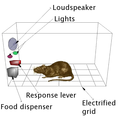
B.F. Skinner Pigeon experiment (BY-NC-ND) flickr photo by Psychology Pictures I admit to not reading as much of Audrey Watters' posts as I probably should, however when I read her post the other day, one thing she said particularly rang a bell with me. She identifies that despite behaviourist/conditioning approaches to teaching and learning being somewhat outdated, these theories resonate throughout the web and educational technology:"...all around me, I see Skinnerism - click-for-immediate-feedback. People as pigeons. Zynga. Farmville. Gamification."I'd recommend you read her complete post - this is just one of the many points that really strikes a chord with me. It's much easier to provide this level of gratification for users - somewhat spurred by open badges. Read. Click. Answer. Feedback. Rewarding learners reinforces the bond between a particular stimulus and a desired response. But we know we need to move beyond this into the social aspects that really enable us to make meaning and form a deeper understanding of topics, beyond the notion that 'doing x results in y'. Still, the behaviourist approaches are increasingly popular on the web and in educational technology.I guess the easy answer is to include a discussion board, but this can be really difficult to ensure all students are actually engaged, particularly in undergraduate face-to-face modules. Of course building fora into assessment can help, but isn't that just against the philosophy of social constructivism? Alternatively, collaborative opportunities exist through wikis and shared docs, or even discursive peer review, but I think the fact that ePedagogy hasn't really moved on a great deal with new technologies (despite the noise of MOOCs) doesn't help a great deal. We seem to be replicating much of our teaching practices online, rather than necessarily enhancing practice through technology. This is a key challenge I think, although I am a fan of improving existing processes and practices by replicating them online. And as I've previously blogged, much of the current focus on TEL is about the potential big wins!Anyway, these are just more thoughts bobbling around my head since Audrey's post! Would be interested in your perspectives via the comments!Peter@ReedyreedlesThe Reed Diaries by Peter Reed is licensed under a Creative Commons Attribution-NonCommercial 3.0 Unported License
Peter Reed
.
Blog
.
<span class='date ' tip=''><i class='icon-time'></i> Jul 20, 2015 07:57am</span>
|
|
Learn to build a smarter organization. Right from your desktop. And some sessions on July 16 are free!
Get inspired by today’s learning leaders at Enterprise Learning! Conference 2015 Online, July 16 and 17 - without leaving your office.
If you are responsible for business and agency performance, employee development and learning strategy, you need to attend the Enterprise Learning! Conference Online event.
Enterprise Learning! Conference Online includes:
Live interactive Sessions with Speaker Q&A networking
Expo Hall with Hundreds of Resources & Experts
Resource Center Hosting Complimentary Case Studies, Research, Products & Solutions
Network with 2000+ Learning Leaders in Networking Lounge or Live Chat
Convene with 2,000+ corporate and government learning executives. Hear success stories from learning leaders; Share best practices with the Learning! 100; See best-in-class solutions; and Network with experts at this live virtual event. If you are responsible for business and agency performance, employee development and learning strategy, you need to attend the Enterprise Learning! Conference Online event.
For more information visit: Enterprise Learning! Conference
Justin Hearn
.
Blog
.
<span class='date ' tip=''><i class='icon-time'></i> Jul 20, 2015 07:57am</span>
|
|
According to Michael Fullan (2013) from his book: The Principal: Three Keys to Maximizing Impact, passion without skill is dangerous. Passion and mastery will naturally need to feed off of each other to be effective - and that is why ALL leaders, including teachers, other educators and principals need to promote: deliberate skill development - with […]
Deborah McCallum
.
Blog
.
<span class='date ' tip=''><i class='icon-time'></i> Jul 20, 2015 07:57am</span>
|