Blogs
|
Inside Search: Become a Google power searcher: (Cross-posted on the Official Google Blog ) You may already be familiar with some shortcuts for Google Search, like using the search box a...
Debbie Richards
.
Blog
.
<span class='date ' tip=''><i class='icon-time'></i> Jul 20, 2015 08:44am</span>
|
|
"What we must do now is step back from self interest and let common interest prevail." - United Nations Framework Convention on Climate Change, Executive Secretary, Yvo de Boer, at the Closing Press Briefing, Bangkok Climate Change Talks, 9 October, 2009.The earth is a ball of rocky material, partly covered by water and enclosed in a capsule of gas called the atmosphere. As it orbits the sun, it is bathed in a stream of radiant energy. Some of this energy is absorbed by the earth as heat.If absorption was the only process, the earth’s temperature would rise quickly, the water would boil off and its rocky surface would melt. Fortunately, this doesn’t happen. The earth reflects some radiation away from itself. It also radiates energy out to space. Artificial satellites can take photographs of the earth by the reflected and radiated energy.There is a balance between energy the earth receives from the sun over time and energy it reflects and radiates. In an ideal world, the earth's overall temperature would be stable.A hothouseTheory has it that some factors enhance the absorption of the sun’s energy. One idea is that particular gases in the atmosphere can act like the glass of a greenhouse, trapping heat energy. It is believed that gases like these, known as greenhouse gases, can cause the temperature of the earth’s atmosphere to rise.Temperature shifts caused in this way are not necessarily evenly distributed across the globe. Some parts of the globe may even experience a lowering in the average temperature. Such is the complex nature of the earth’s atmosphere.Some earth historyI find it fascinating that a beautiful green savanna, over a period of 6000 years, became the wasteland we now know as the Sahara Dessert.Equally as curious is the desertion of a Neolithic settlement on Orkney 4500 years ago. Supposition is that a fall in temperature in the earth’s atmosphere, and ultimately a brutal storm, drove the settlers from their homes at Skara Brae in Orkney.About 1500 years ago, Britain was invaded by the Saxons. One theory for the invasion is that it happened when Saxon homelands were being flooded by rising seas caused through climate change. The Saxons were looking for land that was less likely to be threatened by rising sea levels.Earth’s varying climateDespite the blame for climate change being levelled at the production of greenhouse gases by humans, it appears that significant climate variation is part of what has always happened.All the above happenings took place during recorded history and are similar to situations that have arisen in other parts of the world today. They came about when human contribution was comparatively insignificant.Is it possible that these events would have occurred even if there had been no human contribution? Is it also possible that human intervention may have little effect on future climate change?Faithful representationThere is a deal of misrepresentation about climate variation and its consequences. Unfortunately, the cover of the most recent United Nations Environmental Programme Report is a typical example of this. Not only is the representation flawed as to what global warming is likely to do to the surface of the planet, it also conveys a completely erroneous view of possible consequences to humankind.There is a need for faithful representation of what’s happening to our planet. Attempts to provide this are likely to be subjective and are often prejudiced politically.Reasoned approachesThe Kyoto Protocol was adopted in December 1997, "aimed at combating global warming. The Protocol establishes legally binding commitment for the reduction of four greenhouse gases (carbon dioxide, methane, nitrous oxide, sulphur hexafluoride), and two groups of gases (hydrofluorocarbons and perfluorocarbons) . . . "Yvo de Boer expressed dismay at the current moves to "kill the Kyoto Protocol . . . by a number of developing countries . . . while at the same time there is not even something better in sight or on offer".The Kyoto Protocol attempts to take charge of those factors that may contribute to global warming and that are within human control. It represents reasoned approaches to responsibilities to the future of humankind and of other living creatures on this planet.Global responsibilityFor as much as change happening within the earth’s atmosphere is inevitable, humans apparently continue to make ruinous contributions that may well exacerbate a dangerous climatic situation.Should we strive to deal with likely contributing factors that are within our reach to control? Or do we simply leave it to ‘Mother Earth’ to take care of all this?The world’s nations are being alerted to the possible consequences of ignoring what appear to be clear signals from the planet. Talks are being held across the globe. My sincere hope is that nations throughout the world will adopt a unified approach to dangerous climate problems facing the planet - that they reaffirm the Kyoto Protocol and make commitments to take concerted action for the common good.videoGrant (us) the serenity to accept the things (we) cannot change, the courage to change the things (we) can, and the wisdom to know the difference - Reinhold Niebuhr
Ken Allan
.
Blog
.
<span class='date ' tip=''><i class='icon-time'></i> Jul 20, 2015 08:44am</span>
|
|
The University of Eastern (UEF) Finland organized last week a national training event for Student Counselors. The event was held in Joensuu, a nice Finnish city close to the Russian border and included several lectures and an amazing amount of … Continue reading →
Eliademy
.
Blog
.
<span class='date ' tip=''><i class='icon-time'></i> Jul 20, 2015 08:44am</span>
|
|
There have been a lot of studies, discussions or even products developed around microlearning, the success factors include not only chucking learning content into bite-sized units, also weaving learning into our work and life in a way that makes sense. With the rise of informal learning, and everyone has a learning gateway in his/her pocket. Now... Read More ›
Classroom Aid
.
Blog
.
<span class='date ' tip=''><i class='icon-time'></i> Jul 20, 2015 08:43am</span>
|
|
I was part of a learning team developing a new course for FEMA. The purpose of the course is to provide the participants with best practices including tools, techniques and a basic roadmap to build capabilities in the use of social media technologies in their own emergency management organizations (State, local, Tribal) in order to further their emergency response missions.Great experience collaborating in a virtual environment. Our team was spread out all over the country - Seattle, New York, Virginia and Texas. We used BaseCamp to store master files, source materials and to manage the development schedule. Drop Box was used to exchange large files.Check out the final course: http://training.fema.gov/EMIWeb/IS/is42.asp
Debbie Richards
.
Blog
.
<span class='date ' tip=''><i class='icon-time'></i> Jul 20, 2015 08:43am</span>
|
|
An open letter to our friends, partners and users of Eliademy. Greetings from Finland! 11th of February is a special day throughout the history - Yalta agreement was signed on this day, Nelson Mandela was freed from jail and Eliademy was launched … Continue reading →
Eliademy
.
Blog
.
<span class='date ' tip=''><i class='icon-time'></i> Jul 20, 2015 08:43am</span>
|
|
The web image and how it operates are often misunderstood. Hypertext Mark-up Language, more commonly known as html, was invented to process text size, shape and colour on the Web.When it was realised that html and related codes could be used to handle images, the Internet became a viable commercial medium.The pixelClose examination of images, on screen or when printed, shows that they are made up of many coloured spots, dots or squares. These are called pixels. The word pixel (picture-element pix-el) can also refer to the digital information associated directly with the coloured spot, held on a computer or transferred in a download.What can be confusing is that ‘pixel’ is also used when referring to the smallest element that displays a single spot of coloured light on a monitor or TV screen. These tiny elements are permanent parts of the screen hardware. They are not the same as the pixels in the image that effect the display.Image file sizeA popular misconception is that the dimensions of an image, as it appears on the screen, are to do with the space the image occupies in computer memory or on disk. The term ‘image size’ can also be misleading, though this term refers to the capacity of an image to occupy space in computer memory or on disk. It’s more usual to refer to it as the image ‘file size’, measured in kilobytes or megabytes.Image dimensionThe physical size of an image on the screen is another property that’s often misinterpreted or misunderstood. Images are really two dimensional things. Despite tricks of design, it’s not possible to have an image that is triangular, round or any shape other than rectangular, unless there is some distortional fault with the printer or screen.An image has a height and a width, which make it easy to define its dimensions. These two lengths are measured in pixels, but can also be given in mm or cm. Though variation tends to be slight, the physical accuracy of image dimensions expressed in metric units varies with the equipment used to display the image.Optimising image file sizeDigital cameras can take pictures with file sizes of several megabytes. There has to be literally tens of millions of pixels in the files so that high quality pictures can be obtained. The fineness of detail that’s displayed from such images is particularly useful if they are to be printed in a large format or viewed with full screen in a picture viewer.Images show how pixelation increases when file size is reducedFor most web purposes, however, image files of that order of size and quality are not necessary. What’s more, huge image files can occupy valuable resource space on the host site and cause unreasonably long upload or download times.It’s often prudent to use some form of quality reduction. Adjusting the content of the image so that it gives a satisfactory display with a smaller file size is called optimisation, or optimising the image.Most image hosting websites, including blogs and social network sites, optimise images automatically. If the images are satisfactorily optimised before uploading to the host site, it can save time, and in some instances be a cost saving too. Sue Waters’ excellent post on Uploading Photos From Digital Cameras Into Blog Posts gives great instruction on using several free packages for doing this.Bitmapped imagesThe simplest way of arranging image information in a digital file is when each pixel carries its own information, as in a bitmap. This can be an inefficient way of packing image information, however, so bitmapped images tend to have larger file sizes than other image types of the same quality.Compressed formatsJPEG, PNG or GIF type images use different systems of file compression. Pixel information that is duplicated, as can happen when the same colours are used over large areas of an image, is stored in a formula within the image file. The result is a smaller file size than that of the equivalent bitmapped file with the same image quality.One advantage of the GIF compressed file type is that it can also include information on how separate image frames can be constructed. A special type of GIF file can display a cyclical series of frames like a looped movie - the so-called animated GIF.Vector graphicsThe introduction of vector graphic creation tools, such as Adobe Flash Writer, has brought new dimensions to image design and the way images can be displayed. Standard bitmapped images and related image types tend to break up, or pixelate, when enlarged on the screen.What happens on display is that the information held in the image file is stretched over a larger area than was intended. The result is an image that appears to lose detail and sharpness and may look as if it is made up of chunks of colour, which is precisely how it is composed.A vector image, on the other hand, does not lose its sharpness or detail when it is enlarged on the screen, simply because there are no pixels in its image construction. True vector images tend to be limited to line diagrams and ones with solid areas of colour, however, and cannot be created from digital camera image files.
Ken Allan
.
Blog
.
<span class='date ' tip=''><i class='icon-time'></i> Jul 20, 2015 08:42am</span>
|
|
In this paper "Lockyer, L., Heathcote, E., & Dawson, S. (2013). Informing Pedagogical Action: Aligning Learning Analytics With Learning Design. American Behavioral Scientist", it claims that learning design can be used "as a framework for design of analytics to support faculty in their learning and teaching decisions". But given the current nature of the tools... Read More ›
Classroom Aid
.
Blog
.
<span class='date ' tip=''><i class='icon-time'></i> Jul 20, 2015 08:42am</span>
|
|
Effective eLearning deliverables require more than just text and a few random graphics. Good graphic design, user interface (UI) design, and user experience (UX) design aren’t optional - they’re necessary to ensure maximum learner comprehension and retention. This complimentary eBook, 62 Tips on Graphic Design, UI/UX Design, and Visualization for eLearning, draws on the experience of 12 professionals who are leading sessions in The eLearning Guild’s August 2012 Online Forum, "Graphic Design, UI/UX Design, and Visualization for eLearning."Download this complimentary eBook today and discover tips to guide you in areas including:• Highlighting Learning • Aesthetic Considerations• Tricks and Tools Download now: http://bit.ly/NWASUo
Debbie Richards
.
Blog
.
<span class='date ' tip=''><i class='icon-time'></i> Jul 20, 2015 08:42am</span>
|
|
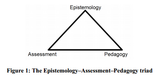
Evidence-centered design suggests that any system of assessment begins with a conception of the capabilities one wants to develop in a learner; from there develops the machinery of the assessment system, such as tasks, rubrics, and scoring models (Messick 1994). From "Analytics to Literacies: The Development of a Learning Analytics Framework for Multiliteracies Assessment"(Shane Dawson and... Read More ›
Classroom Aid
.
Blog
.
<span class='date ' tip=''><i class='icon-time'></i> Jul 20, 2015 08:41am</span>
|