Blogs
|
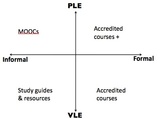
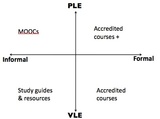
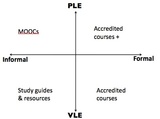
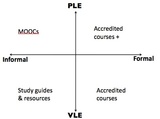
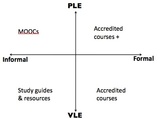
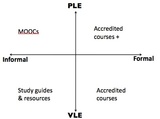
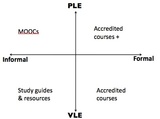
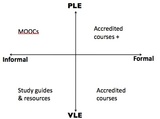
We are currently in the process of upgrading to BlackBoard 9.1. As part of this we would like to create a VLE template for incorporation in the new version. We think this has a number of benefits:
It will provide designers with a set of guidelines and learning design tools to support the design and delivery of a course online.
It will provide links to examples of good practice on the use of different technologies, these will be searchable by pedagogy, tool, and discipline.
It will enable us to have a more consistent look and feel to courses created in the VLE.
The following six categories are available in the new VLE template. These directly map to six of the seven categories in the 7Cs design and delivery framework described in the previous post. The first one, conceptualise, is not applicable. They provide the designer with guidance on the key stages of the design and delivery of a course, as well as learning design tools and resources.
Capture/Search - which covers the ways in which search engines, OER repositories and social bookmarking can be used to find and collate relevant resources and activities.
Create/Design - which covers both the creation of content and activities. Includes links to conceptual design tools, examples of good practice, OER, pedagogical and learning design templates. Includes links to learning resources, activities and file upload.
Communicate - which covers how to moderate asynchronous and synchronous forums. Includes links to notifications, forum, wiki, blog, google docs, and audio and video conferencing tools.
Collaborate - which considers how tools like wikis, voicethread, pirate pad can be used to foster collaboration and how to work in virtual teams.
Consider/Assess - which covers the ways in which tools such as blogs, e-portfolios and Multiple Choice Questions (MCQs) can be used to promote reflection and different forms of assessment. Includes links to diagnostic, formative and summative assessment and course marks.
Consolidate/Plan - which covers the ways in which the learner can be supported in their learning, a schedule of activities and deadlines and mechanisms to guide their learning. Includes links to the course calendar and study guide.
e4Innovation
.
Blog
.
<span class='date ' tip=''><i class='icon-time'></i> Jul 23, 2015 12:36pm</span>
|
|
On the 6th and 7th March 2012, the University of Leicester will be running a series of webinars entitled ‘Enabling universal access to higher education via openness and collaboration?’ to celebrate Open Education week. Gabi Witthaus in our team is leading on this and is doing a great job of lining up some fantastic speakers for the events!
Confirmed speakers include Jim Taylor (University of Southern Queensland), George Siemens (Athabasca University), Martin Weller and Patrick McAndrew (The Open University, UK), Sandra Wills (Wollongong University) and Casi Doncheva (Northtec Polytechnic). Oh and me
The series is hosted by us at the Beyond Distance Research Alliance at Leicester, as part of the TOUCANS and ELKS projects, in partnership with the Open University’s SCORE programme and HEFCE. More information and registration details can be found here.
e4Innovation
.
Blog
.
<span class='date ' tip=''><i class='icon-time'></i> Jul 23, 2015 12:36pm</span>
|
|
We are currently developing a new Masters in Learning Innovation, which we hope to launch in September 2012. Here is a brief overview of it.
Students taking the Masters in Learning Innovation will obtain a thorough critical overview of the use of technologies to support learning across formal and informal learning contexts. The programme will be designed to enable the students to be critically reflective of their readings, communication and collaboration online, as well as provide practical experience in the use of a range of technologies. It will provide ample opportunities for them to apply the knowledge gained from the programme to their own professional practice and environment. Students will examine case studies of learning innovation to help them to situate and contexualise the use of technologies in their own setting. The programme will take students through the full spectrum of technology-enhanced learning. The modules included are:
Technology-Enhanced Learning - which will provide an overview of new technologies and how they can be used to support different pedagogical approaches. This will include social and participatory media, Open Educational Resources, learning spaces, use of virtual worlds, and mobile learning,
Learning Design - which will provide an overview of the state of the art in learning design research, including a review of learning design tools and resources.
Research methodologies - this will provide students with a good grounding in relevant qualitative and quantitative research methods, as well as commonly used methodological approaches adopted.
Case studies of innovation - this will enable the students to explore the use of technologies in different contexts, including different disciplines and sectors.
Dissertation module - students will carry out and write up a project in learning innovation.
The uniqueness of the Masters is that it is underpinned by a state of the art learning design methodology and the adoption of open practices to address the key challenges of 21st Century learning, harnessing the potential of new technologies. This builds on the strong track record of the course team in these research areas. Completion of the programme will equip the students with mechanisms to enable changes in their own practices and those of their colleagues. They will have had the opportunity to explore how they can act as change agents, as well as supporting radical innovation in the design and the delivery of programmes.
We think this is going to be a really exciting course, giving students lots of hands on exposure to different technologies, enabling them to reflect on the relevance to their own practice. So if this is something you are interested in get in touch with us and we can tell you more!
e4Innovation
.
Blog
.
<span class='date ' tip=''><i class='icon-time'></i> Jul 23, 2015 12:36pm</span>
|
|
Picture from: http://www.flickr.com/photos/sari-coche/4457749167/lightbox/
Heard yesterday that the abstract I submitted for the HE Academy conference was rejected… so thought I might at least blog it! Authors: me, Alex Moseley, Nichola Hayes, Denise Sweeney, Alejandro Armellini and Jon Gunnell
Abstract
The presentation aims to give an overview of an extensive survey being undertaken at the University of Leicester on the current uses and future plans for the use of our Virtual Learning Environment (VLE) Blackboard, as part of our upgrade to Blackboard 9.1.
Outline
Virtual Learning Environments (VLEs) are an established part of institutions’ core infrastructure. A number of benefits are evident: they offer a consistent/accessible environment for learners, they include tools to support communication and collaboration (such as forums, blogs and wikis), they provide a safe ‘nursery slope’ for academics to explore how they can use technologies to support their teaching, and they incorporate assessment and monitoring tools to enable them to evaluate learner progress. In addition, they can be used in conjunction with free Web tools to augment the core functionality offered by the VLE.
However, despite the evident benefits that VLEs offer, overall they are not being used to support learning extensively. Much use is little more than using the VLE as a content repository or what Oliver (2001) refers to as ‘Web page turning’. Academics lack the necessary digital literacy skills (Jenkins 2006) needed to make effective use of technologies, and see the VLE as additional work, rather than an integrated part of the learning experience. Furthermore, in research-intensive institutions there is a tension between teaching and research.
Leicester is currently in the process of upgrading to BlackBoard 9.1. We see this as an opportunity to help tackle the problems outlined above and as a mechanism for providing academics with the support they need to use the VLE more effectively. Essentially, we are using the VLE as a ‘Trojan horse’ to encourage staff to rethink their learning and teaching methods for the modern, online, student experience. As part of this work, we are undertaking an extensive survey of how academics and learners across the university are using the VLE. This will give us a rich picture of the ways in which it is being used (highlighting good practice), as well as insights into associated support issues. We are also finding out to what extent other technologies are being used by them. The survey consists of an online questionnaire, focus groups with both teachers and learners, and a series of interviews with key departmental pictures. We have the survey results and have started the process of carrying out the focus groups and interviews to be completed in Febuary 2012.
The presentation will report the findings and describe how we using these to improve support to academics in the run up to the roll out to 9.1. It relates to the ‘supporting staff to deliver student learning experiences of a lifetime’ theme.
Relevance to the audience
Effective use of technologies, and in particular VLEs, is a key concern for practitioners and policy makers in education. The presentation will be of interest to delegates as it articulates the strategy currently being adopted by the University of Leicester. The presentation will give a rich picture of the current use of the VLE, as well as a description of our future plans for increasing the use of technologies across the university.
Engaging the audience
The session will be a mixture of a presentation and audience participation. Delegates will be invited to share the approaches they are adopting to increase the use of technologies in their own institutions, as well as reflecting back on the findings and the approach Leicester is adopting.
How the paper links to HEA work
The paper relates strongly to the conference themes and also to the HEA’s work in terms of promoting the use of technologies more effectively. It is also a good example of adopting an empirically based approach to transforming practice, whereby the survey results are directly feeding into actual practice and promoting of the use of technologies across the university.
References
Jenkins, H. (2006). Convergence culture: Where old and new media collide, NYU Press.
Oliver, R. and J. Herrington (2001). Teaching and learning online: a beginners guide to e-learning and e-teaching in Higher Education. Perth, Edith Cowan University.
e4Innovation
.
Blog
.
<span class='date ' tip=''><i class='icon-time'></i> Jul 23, 2015 12:36pm</span>
|
|
John Naughton, Professor of Public Understanding at the Open University gave a talk at Leicester University on the 22nd February, summarizing some of his ideas from his new book - What you really need to know about the Internet - From Gutenberg to Zuckerberg. His talk is summarized here.
We have seen a shift in terms of the Internet, a transition from the exotic (weird) to the mundane. The Internet is now taken for granted and infiltrates all aspects of our lives. The result is that we are dependant on a network that (almost) no one understands. When did this change happen and why? There are a number of consequences:
· Clueless law making
· Hood winked users
· Informed bewilderment - Castells (We are awash with data and don’t know what it means)
· Comprehensive surveillance
· Vapourisation of privacy
What can we do about it? We need to develop (at the least) a round appreciation of the Internet. John referenced George Miller’s paper from the fifties on the notion of 7 plus or minus 2, i.e. cognitively in short terms memory we can only hold this many chunks of information at any one idea. John took this idea and based his thoughts on the Internet and its implications around a small number of big ideas.
1. Take the long view
We have seen a transformation of communication as a result of the use of the Internet. We tend to focus too much on the short terms trends, impact of fb, e-books etcc. Whereas we need to take a longer view and realise that the impact of emergent technologies is likely to be more transformative and disruptive that we can imagine. Think back to before the Internet - could anyone have predicted its emergent and how it would infiltrate all aspects of our lives? In 1455 Gutenberg created a communication revolution with the development of the printing press, we are now, with the Internet, in the middle of another communication revolution. However, because we are in the middle of this revolution, we can’t conceive or imagine how radical it is and the extent to which it will transform our practice.
2. The Web is not the Net
There is a common misconception that the Web and the Internet are synonymous, they are not. The Internet is the underlying infrastructure, the Web just one application. John drew on a railway metaphor, i.e. the tracks and signals of the railway are equivalent to the Internet, whereas the trains are one application, like the Web. John argued that the Internet is more important than anyone application that runs on it
3. For the Internet, disruption is a feature, not a bug
There are a number of architectural principles: i) there is no central ownership with the Internet, ii) the Internet is neutral towards the applications that run on it. The result is an explosion of ‘permissionless innovation’, i.e there are endless possibilities and innovations. It is a global machine for springing surprises. John wrote a book in the mid-nineties about the history of the Internet and how it was developed. It’s a great read and gives a real flavour of the people involved. He referred back to this in his talk. He said that the Internet was development because Tim Berners-Lee had a bad memory! He wanted to create a system to be able to easily access his files and date. The result was the Web and the rest is history. Hence the Web is an example of a disruptive technology. Arguably everything we do now is shaped and affected by the web.
The second example of a distruptive technology John cited is Napster, a site which provided digitized music in the web. Within, 18 months it had 80 million users and almost all music that has ever been created was available from the site. Clearly however there were copyright issues and eventually it was shut down. However it is interesting to see how sites like Napster and the power of the web for distributing materials has changed the nature of the music industry, music publishing houses are being seriously affected. For example Radiohead made one of their albums available on the web and said that people could choose to download it for free or pay a donation. Interestingly many did pay for the album, introducing a new business model for buying content. An unpleasant example of a distruptive innovation is the rise of malware or malicious software, which can invade computers piggy backing on commonly used programmes like Microsoft word. Second order surprises include Wikipedia and Facebook, which has 850 million users, of which about 50% check the site everyday.
4. Think ecology not just economics
Application of economics is not appropriate in a web-world dominated by abundance. John used the analogy of shifting fro a dessert to a rich biodiverse rainforest. The ecological metaphor is a useful metaphor or analytical framework for describing both the diversity of the activities occurring on the web, as well as the evolving dynamics of different tools.
5. Complexity is the new reality
The web provides an order of magnitude of complexity. Properties include: dense interconnectivity, highly dynamic, open, non-linear, extraordinary behavourial diversity and intrinsically unpredictable. Ashley’s law of requisite variety is in effect and its implications. For a system to be viable it has to be able to handle the complexity of the environment.
6. The network is now the computer
In particular with the emergence of cloud computing the network is now the computer. Increasingly we use cloud-based tools and store data on the net rather than our computer. There are implications of this, for: users, the environment (cloud computer requires huge, energy hungry server farms, mainstream business, privacy, security and freedom.
7. The web is evolving
We pages are not static, they are made up on the fly. Arguably there is a web geology consisting of: Web 1.0 (1991-2003), Web 2.0 (2004-present), Web 3.0 (2012?), Web 4.0 (?).
8. Copyright and copyleft
Our intellectual property regime no longer makes any sense. Analogue copyright is about different, degenerative, costly, and hard to disseminate, whereas digital copyright is perfect, easy, cheap, and easy to disseminate. Our IP was development in an analogue era, we are trying to apply it to a world dominated by a technology for which copying is an integral and essential part. Copying in the digital era is equivalent to breathing for animal life, i.e you can’t have one without the other. Our current regime of copyright is unsustainable, it can’t go on.
9. Orwell vs. Huxley - bookends of our future?
John concluded by reflecting on the future and whether it will be an Orwellian or Huxleyian vision. Where is all this taking us? Is it the end of the techno-Utopia, i.e the fantasy that the internet would change everything for the better. Orwell feared that we would be destroyed by the things that we fear - examples might include Government surveillance, i.e. the power to monitor everything that you do on the net. Huxley argued that it is easier to control people by making them happy rather that through fear. Are we controlled by our love and addiction to technologies?
Reflections
We need to stop extrapolating from the short term and take a longer term view. There are lessons to be learnt from the impact of previous disruptive technologies - the impact of reading for example, reading is a learnt skill, and arguably it changes the way we think. It took 15-20 years to fine a business model for the radio. We are seeing similarly patterns now with the net and new business models are emerging. Will the same happen with the net, are we cognitively different now because of the net? Alternatively is Google making us stupid? (Nicolas Carr).
e4Innovation
.
Blog
.
<span class='date ' tip=''><i class='icon-time'></i> Jul 23, 2015 12:36pm</span>
|
|
So I am currently writing an application for the HE Academy National Teaching Fellowship (NTF) Scheme. You need to write 5000 words against three criteria: i) Individual excellence: enhancing and transforming the student experience, ii) raising the profile of excellence and iii) developing excellence. The first is all about how you have enhanced you students’ learning experience, the second about how you have enabled and supported others and the third about your own personal reflection and development. It’s been a really hard thing to write, but on reflection it has been useful. It is good sometimes to take stock of where you are and what you believe in. For me I think my main motivation is a desire to help others improve their teaching practice and enable them to create engaging learning experiences for their students. This is very much at the heart of the learning design research I have been doing. I find it very motivating when workshops go well and people say that they find the resources and activities that I have developed useful.
My first draft read very much like a CV - I worked here, I did this. But my mentor at the University gave me really useful feedback. In particular she said stop writing as you and write as if you are your mother lol! I completely restructured the application as a result and in particular focussed around four key phases of technology development: multimedia, the emergence of the internet, new approaches to promoting the use of technologies, and OER and social and participatory media. It has been interesting to look back and to reflect on the work I have done in each of these areas and to see how my ideas have developed over time. I don’t know if I will be successful, but its been a useful exercise nonetheless.
e4Innovation
.
Blog
.
<span class='date ' tip=''><i class='icon-time'></i> Jul 23, 2015 12:36pm</span>
|
|
Conole elearning summit
View more PowerPoint from Grainne Conole
I gave a talk at the e-learning summit in Sydney a couple of weeks ago. It is somewhat of a commercial conference, so quite different from the usual ones I talk at, but it was good to meet up with a number of friends and catch up. Mark Brown from Massey University gave a nice talk about how to choose a Learning Management System (LMS). He gave some good tips and described the process they went through at Massey. Despite many thinking that the LMS is dead, I don’t think it is, I think institutions will continue to support LMS certainly in the short to medium term. It is interesting to see how they have moved from being a peripheral innovation to core systems and I think students now expect and have a right to have their course materials available online. However, as our own survey of the use of Blackboard showed recently, most use of the LMS is still basically using it as a content repository, There is little evidence of use to support more innovative pedagogies and in particular communication and collaboration. At Leicester we are currently developing design templates to enable teachers to think more creatively about how to use the LMS.
e4Innovation
.
Blog
.
<span class='date ' tip=''><i class='icon-time'></i> Jul 23, 2015 12:36pm</span>
|
|
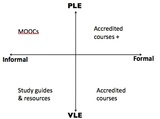
I have been rethinking the framework we developed back in 2004 (Conole, Dyke et al. 2004).The framework maps three dimensions of learning: formal to informal learning, learning individually to learning in a social context, and learning through information to learning through experience. In the original paper we considered non-reflective to reflective learning instead of learning informally or in a formal context. The framework can be used to map the realization of different pedagogical approaches through technologies in a particular context. So inquiry-based learning can be realised through use of Google by an individual or in a social context through use of Twitter. I think it provides a useful conceptual tool to clarify how different pedagogies map to different facets of learning and helps consider which technologies are most appropriate in different contexts. The following presentation visualises the framework and gives examples of how it can be used. Thoughts welcome on this!
Pedagogies map
View more PowerPoint from Grainne Conole
References
Conole, G., M. Dyke, et al. (2004). "Mapping pedagogy and tools for effective learning design." Computers and Education 43(1-2): 17-33.
e4Innovation
.
Blog
.
<span class='date ' tip=''><i class='icon-time'></i> Jul 23, 2015 12:36pm</span>
|
|
Next week we are running our annual Follow the Sun conference entitled ‘Futures for Knowledge’. This is a 48-hour online conference starting with a series of presentations in Australia, then moving to the UK and finishing in Canada. We have a really exciting line up of presentations by key international experts. The focus is on the challenges facing different disciples, as well as ways in which technologies might address these. Keynote speakers include Wendy Hall, Alistair Blair, Mike Petterson and John Fothergill from the UK. There are four speakers from Australia and four from Canada. A full list of the presenters can be found here. The programme is available here. You can also submit an e-poster. The conference is free so please consider registering; we already have nearly 600 people signed up!
e4Innovation
.
Blog
.
<span class='date ' tip=''><i class='icon-time'></i> Jul 23, 2015 12:35pm</span>
|
|
John Mac reminded me of Laurillard’s conversational framework (Laurillard 2002). There is a nice interactive map of it available here. There is also a nice video describing the framework and how it works in practice. The framework essentially articulates the dialogic exchange between a teacher and a learner and how each one internalized the conversation before acting on it in the context of their role in the learning process; i.e. the learner in terms of their learning and the teacher in terms of understanding what the learner is doing. It focuses on Laurillard’s five media types:
Narrative - print, web resources, TV, video, etc.
Interactive - hypermedia and web resources
Communicative - audio and video conferencing, student collaboration, etc.
Adaptive - simulations and interactive tutorials
Productive - microworlds, etc.
References
Laurillard, D. (2002). Rethinking university teaching, London: Routledge
e4Innovation
.
Blog
.
<span class='date ' tip=''><i class='icon-time'></i> Jul 23, 2015 12:35pm</span>
|