Blogs
|
Why Selling is a Joke
A young executive was leaving the office late one evening when he found the CEO standing in front of a shredder with a piece of paper in his hand.
"Listen," the CEO said, "this is a very sensitive and important document here, and my assistant has gone for the night. Can you make this thing work for me?"
"Certainly," said the young executive. He turned the machine on, inserted the paper, and pressed the start button.
"Excellent, excellent!" said the CEO, as his paper disappeared inside the shredder. "I just need one copy…"
[Cue laugh track]
Whoops!
So, what made that funny? You thought it was going in one direction, but at the last moment, it went another way, right? There was a surprise; often called "a left turn." There’s a reason they call it the "punch line"… it hits you right in the figurative funny bone. This is one way that comedians make us laugh.
It’s also one way that sales professionals can spark an Aha Moment, using insights.
The Aha Moment
According to Wikipedia, the "eureka effect," also known as the "aha! effect," refers to the common human experience of suddenly understanding a previously incomprehensible problem or concept. Scientists actually study this. We call it the Aha Moment and talk about it in our Selling with Insights® program. In the course, we share these definitions of insight, which relate to the Aha Moment.
The Cambridge Dictionaries Online defines insight as:
"…a clear, deep, and sometimes sudden understanding of a complicated problem or situation, or the ability to have such an understanding." Insight can come in the form of an idea (sometimes a surprise or "flash insight"), a data point from research, or knowledge gained from experience.
In the context of selling, we define insight specifically as:
"… information or an idea that is based on credible research, authoritative content, or relevant experiences, which, when personalized to your client’s likely or known challenges and opportunities and shared appropriately, opens your client’s mind to think about their situation in a new way and shows them a path toward solving a challenge or capitalizing on opportunity through your company’s capabilities and differentiators."
Shake, Rattle and Roll
If you’re selling, the goal is to bring value, create opportunity, solve problems, empower outcomes, influence decisions, and ultimately incite action. We think of the "insight" as the data or information and the Aha Moment as the desired short-term outcome of sharing the insight and making some dot connection. Whether it’s in the context of selling or not, the Aha Moment is the same… it sparks interest and results in seeing things in a new light or gaining a new understanding. It’s not the only thing that matters, but it is one very important piece of selling with insights.
You can think of an Aha Moment like an earthquake. They vary in intensity, right? Some topple buildings; others just rattle your China. But both get your attention. Remember this, to keep expectations realistic. Not every Aha Moment will be earth-shattering. The goal of sharing an insight isn’t an end in itself… it’s a means to continue and deepen the ensuing dialogue and explore new possibilities together with your client.
Creating Surprise or Tension with Your Insight
To get back to the main purpose (and title) of this post, if you want to create an Aha Moment or surprise left-turn with your insights, you can learn from what comedians do. (This is just one method that we’re exploring today, but it works.) To do this, you must find a way to juxtapose facts to make a quick "left turn." In business situations, as opposed to comedy, this typically creates a "resolvable tension," which illuminates (or further illuminates) a challenge or opportunity, or leads to a path to resolve one.
Here are two examples to consider.
EXAMPLE 1
Here’s an example using some data from CSO Insights that you’ve likely heard or seen this year:
If you say, "According to the 2013 research conducted by CSO Insights, 65% of top sales leaders say that new account acquisition is their primary objective for the coming year," that’s simply a statistic. It’s interesting and it points toward something important, but it’s just a fact.
If you add, in juxtaposition, "Yet, 67% of those same sales leaders, rate their sales team as ‘Needing Improvement’ in lead generation," suddenly, you’ve created some tension. Hmm. They want X, but Y could get in the way of achieving that.
Presuming you offer a way to improve sales reps’ ability to generate leads and acquire customers, these facts could be helpful to share. (Or, if you’re a learning and development or sales enablement leader, and you confirm these facts as true in your organization, you’ve certainly just found a way to link sales training initiatives to business strategy.)
EXAMPLE 2
Let’s look at another example. (Disclaimer: this is for illustrative purposes… some of this unverified data has been sourced from various websites, and some is fabricated for the teaching example.)
Data from a 2011 federal crime report shows that, in the U.S.:
A burglary happens once every 15 seconds
We can expect one in every thirty-six homes in the United States to be burglarized this year
Homeowners incur an average loss of $1,675 per break in
In 38% of home invasion incidents where someone was home at the time, assault was reported (of injuries reported, 36% were minor and 9% were serious)
Grim statistics, but just facts. What if we added…
While many home security systems adequately protect front doors, only 34% of home intrusions come through the front door, with 66% entering through windows and other less-secured points
Most security companies hire contractors to install systems, but according to research commissioned by Crime Prevention Journal, trained law enforcement personnel offer the best advice on avoiding home intrusions and can more accurately identify the most vulnerable and likely entrance points
Might this influence your thinking about the home security company and system that you choose?
What if you then learned that Richardson Home Security offered the following?
A complimentary home inspection to determine areas at greatest risk, especially windows, with inspection and installation crews comprised entirely of retired or off-duty law enforcement professionals
A wide variety of window protection options, from installed bars, reinforced locking devices, electronic barrier deterrents, automated sliding covers, laser barriers, lighting, and biometric scanners.
See what I did there?
The first data set exposes the seriousness of the home invasion risk. The second layers information and takes a slight left turn to point out a specific problem and create some tension. The capabilities offered by our fake security company address those problems.
This may be over-simplified or different compared to some of the complex B2B products you sell, but the concepts are the same and I hope the point is clear. In both cases above, we took data that established a baseline and juxtaposed data against it to make a left-turn or create a resolvable tension.
Our Own Aha Moment
So what’s the take-away from this?
Well, if you begin with your capabilities and get clear about what problems you can solve and the special value you can bring, it’s a great start.
Then, conduct, commission, source, or buy research or codify your knowledge gained from experience to create a baseline of data about the challenge or opportunity that you can solve.
Next, look for ways to juxtapose the data to further exacerbate the issue, highlight the importance of addressing it, or lead to the unique ways you can address it and add value.
While this is a very simplified representation, this is exactly what we do with our Insight Blueprint™ (among other things).
Coming full circle back to our earlier definition, then you can craft relevant, compelling, personalized Insight Messages to share:
"… information or an idea that is based on credible research, authoritative content, or relevant experiences, which, when personalized to your client’s likely or known challenges and opportunities and shared appropriately, opens your client’s mind to think about their situation in a new way and shows them a path toward solving a challenge or capitalizing on opportunity through your company’s capabilities and differentiators."
We’ll talk more about the Insight message, another day.
Oh - and about that title - no, of course I don’t think selling is a joke. But by using those same funny, left-turn principles used by comedians, you can surprise clients, capture interest, and perhaps enlighten them, if your message is delivered well. If you’d like to talk about that or anything else about selling more effectively with insights and thoughtful dialogue, reach out and let me know.
Good luck with those punch lines!
Man: "Did I ever tell you that my uncle Bob was a magician?"
Woman: "No, you didn’t! Really?
Man: "Yup. Every time he walks down the street, he turns into a bar."
The post Why Selling is a Joke appeared first on The Richardson Sales Excellence Review™.
Richardson Sales Enablement
.
Blog
.
<span class='date ' tip=''><i class='icon-time'></i> Jul 28, 2015 12:26am</span>
|
|
How to Stop the Spoon Feeding and Start Coaching Sales Reps to Remove Obstacles for Themselves
What’s preventing your sales reps from being successful? Are sales coming slower than expected or being blocked altogether? What obstacles are standing in the way of your sales reps, and how can you help overcome them?
Obstacles get in the way, slow you down, and force you to change direction, settle for less, or flat-out stop in your tracks. In short, they prevent you from achieving your goals. In business, these barriers to success can be physical, but they are more often process-oriented, procedural, or behavioral in nature. What obstacles are in the way of your sales team, and how can you help your sales reps to overcome them? How much revenue are you losing from obstacles due to slow, low, or no sales?
There’s no app for this — Google Maps can’t help you reroute to circumvent the obstacle blocking the path. By their very nature, obstacles deter or impede progress, which in this context is selling. The key is to start coaching sales reps to resolve the issues for themselves in order to overcome them in the future.
Coaching, Not Doing
Sales managers can’t do it all. They can’t see every client, ride along with every sales rep, or make every decision to be made throughout the sales process. Here are five steps sales managers should take to help their sales reps to overcome obstacles to selling.
Identify the obstacle. What behavior is getting in the way of the sales rep’s success? Try to understand the sales rep’s perspective. Every person is unique and possesses their own backgrounds, experiences, and perspectives, while each client (even in the same industry and geography) is similarly distinct, meaning that an obstacle for one person may not hold someone else back. Embark on a questioning dialogue in a manner that leads the sales rep to identify the obstacle. You might have a theory, but they know more about the situation and variables than you do, so don’t assume. Besides, if you do it for them, then the outcome will seem like your idea and directives akin to an assignment as opposed to something they uncovered on their own (albeit with your help).
Coach the sales rep to remove or circumvent the obstacle. Once you agree on the obstacle that’s in the way, the next step is to determine the best steps to take to overcome it. Again, this isn’t a time to be directive (even if you have something in mind). Take a page from the lawyer’s handbook and "lead the witness" if you must, but really try to get them to own the solution.
Individual follow-up — ensure changed behavior avoids these obstacles. Their numbers should be an indicator, but don’t assume that no news is good news. Take a long-term interest in your sales reps’ development, and follow up with them in regular intervals to make sure they’ve truly moved on from their old habits.
Look for patterns among your sales reps. When you see many sales reps struggling with the same issues, sound the alarm and get help for your team. Perhaps training is necessary to get them over the hump. Don’t ignore warning signs of larger problems.
Rinse and repeat (watch for new obstacles). Just because you’ve helped sales reps overcome an obstacle doesn’t mean that’s all there is or ever will be. In the same way that problems and rewards get bigger as a child becomes an adult, so too do issues grow in significance as you sell bigger solutions to bigger companies higher up the food chain. There will always be some kind of obstacle that could get in the way. Help your sales reps — no matter how seasoned they may be — to recognize and avoid new blockades.
Gone Fishing
The critical factor here is to start coaching sales reps to help themselves. Yes, you might be able to do it for them or give them the answers they need in order to proceed, but that’s enabling them to repeat the same behavior that led them to this predicament. This ancient proverb sums it up best:
"Give a man a fish and he’ll eat for a day. Teach a man to fish and he’ll eat for a lifetime."
At the beginning stages of the coaching relationship, your role should be more extensive and directive. However, over time, your role as a coach should diminish as the sales rep learns to self-assess and then self-coach. Regardless of how much you direct, keep the responsibility for identifying and removing the obstacle with the sales rep.
The objective is to coach in a way that makes the sales rep responsible. As the sales rep learns to figure out what the obstacle is and how to remove it, less direction will be needed. Your role is to add value, refine the solution as necessary, critique and modify, and offer guidance to help the sales rep successfully develop the best solution.
You must leverage your time and abilities across all of your sales reps to get them to help themselves to overcome obstacles they face. It’s the only way they’ll grow as professionals, and it’s the best way to grow your revenues.
The post How to Stop the Spoon Feeding and Start Coaching Sales Reps to Remove Obstacles for Themselves appeared first on The Richardson Sales Excellence Review™.
Richardson Sales Enablement
.
Blog
.
<span class='date ' tip=''><i class='icon-time'></i> Jul 28, 2015 12:26am</span>
|
|
Quarter-end Contracts Slip-sliding Away? Check Your Sales Process!
Negotiations went well. You made your case to your buyer, and you have their assurance that the deal will close by the end of the quarter. You update your forecasts and just sit back and enjoy. Nothing can go wrong. Or can it?
There is a term you should know … slippage.
Fast forward now to the second-to-last week of the quarter. Your buyer still hasn’t returned the signed contract, and you’re feeling the heat to get it signed. You call to get a status update, and you learn from the buyer that IT still needs to complete its security audit. You’re in the queue. A week goes by, and there is still no signed contract. Now, your buyer tells you that a purchase of this size will need to go through procurement, and the CFO will likely need to sign off personally. The problem is that the CFO is on vacation and doesn’t share your sense of urgency to sign the deal by the end of the quarter. Now, your deal and your forecast are in serious trouble. At this point, there is little you can do. You can pray that the slippage is just temporary, that the whole deal has not gone south, and that your forecasts are not just off but gone. Otherwise, it is just damage control.
The best way to avoid the need for damage control is to avoid damage. There are several steps you can take to avoid slippage. Start with a sound sales process that is aligned with the customer’s buying process. Following a well-defined sales process will let you know what to expect and when to expect it. Keep in mind that you sell your products, services, and solutions all day every day, but your buyer might only make this purchase once in his or her career. You need to know what to expect. You need to anticipate challenges to a smooth buying process. You need to work with your buyer to anticipate problems before they arise and should then move through with little or no problem.
The process should include buyer-centric "verifiable outcomes." This is a big word for clear activities your buyer has taken that verify where the buyer is in the buying process and where you are in your selling process.
Start with knowing the key players and buying processes with the company. Valuable things to learn include:
How familiar is the customer with your product, service, or solution? Have they bought something like it before? If not, educate them in how others buy.
Who makes the final decision? Who signs the contract?
What role, if any, will the CFO or the finance people play?
Who are the other major players that influence the purchase? Every department affected by a purchase, particularly if they might have to change the way they currently work, could have some impact on the decision-making process. Find out sooner rather than later.
Can your contact do more than just recommend you to the decision makers? Does his or her opinion carry real weight?
You should learn decision maker priorities. They may need or want what you offer but may need something else more. You have to learn decision maker problems. You have to be able to convince the decision makers that your product or service will solve problems and meet needs — that what you offer will become a solution.
Be especially aware when key personnel in a buying organization change. What if the supportive decision maker leaves the company? What if a higher up, even the CEO, is replaced? New "powers that be" at a company may come in with a new agenda. At the very least, they will want to review operations and get to know the company, or part of a company, they inherit. When this happens, it is not uncommon for major purchases to stall while the dust settles. If you smell smoke, there may be fire.
Find out about regulatory and compliance issues that need to be satisfied. If you are selling something like machinery, you already know to ask about environmental issues. But what about IT? Security is a huge issue. No company wants IT problems. A company is going to want to be especially sure IT problems do not make the national news, like Target. Not good for the career of anyone who signed off on Target’s IT security buying decision.
Finally, and this sounds simple but people forget the simple, look at a calendar. Are any holidays coming up that might delay contract signing? Foreign companies have different holidays than in the United States, so you will want to check. Check religious holidays. Vacations are also a factor, particularly if a decision maker has one planned. Times to be particularly careful are the weeks of Thanksgiving, Christmas, and New Year’s when a lot of people may take time off. The latter two are international holidays.
Design your sales process with the buyer in mind, and ensure that you are tracking with your buyer throughout the process. Anticipate the challenges to close the deal, and proactively take measures to avoid slippage.
————————————————————————
COMPLIMENTARY REPORT
Organizations invest substantially in sales training and development. This complimentary report from Training Industry and Richardson summarizes data and provides recommended strategies for maximizing the impact of sales training over time. Click here or on the image below to download this report.
The post Quarter-end Contracts Slip-sliding Away? Check Your Sales Process! appeared first on The Richardson Sales Excellence Review™.
Richardson Sales Enablement
.
Blog
.
<span class='date ' tip=''><i class='icon-time'></i> Jul 28, 2015 12:26am</span>
|
|
Opportunities and Challenges: Bersin’s Human Capital Predictions for 2014
We often come across research reports in the industry from thought leaders who we respect. If human capital management is of interest to you, we recommend "Predictions 2014" by Bersin by Deloitte, a human resource-focused consulting subsidiary of Deloitte. The subtitle gives a good idea of what this report is about: "Building A Strong Talent Pipeline for The Global Economic Recovery — Time for Innovative and Integrated Talent and HR Strategies." The link for the report can be found by clicking here. Take a look. You will find it useful.
Josh Bersin, the human resources expert who wrote this report, is guardedly optimistic about 2014, calling it a year of "global transition and recovery." He sees the year as being both an opportunity and a challenge. He sees a new focus on company growth, and growth-oriented companies will have to compete for the right talent. They will have to invest in developing leaders and creating a progressive and dynamic place where people want to work. People must have a feeling that their work is appreciated and that they can rise as far as their skills, and desires, will take them. They have to have a supportive company culture.
Unfortunately, there will a short supply of people with certain key skills. One key skill is experienced leadership. Companies seek leadership that can motivate employees, not just order them what to do. Education and
training can help meet skill needs, but, as more and more baby boomers reach retirement age, companies are expressing concern as to whether this will be sufficient in the future.
Bersin calls for "Integrated Capability Development," as opposed to just learning, for developing people with the needed skills. Throughout the report, he makes the point that people are a company’s major resource. Treating staff well is the way to get the most out of staff, but a company always has to be aware of what skills and capabilities it needs now and will need in the future. It has to develop the skills within the company. Companies have to develop a "supply chain" of skills to meet needs when they arise. They have to develop what sports teams call a "strong bench" to be sure they can meet expected capability needs.
Bersin raises the interesting issue of software firms moving to different parts of the world to tap into foreign local talent to meet their needs. Not just "third world" centers, such as Bangalore, India, but also Silicon Alley in New York City and the home of the "Beltway Bandits" in suburban Washington, D.C. A company’s competitors will know these places. He suggests firms look for ways to develop local talent where they are, not just on the other side of the world.
Staff development programs typically include well-known elements like performance management, but Bersin strongly advises that companies add programs such as career planning and development, basic coaching, training to refresh and update skills, formal and informal feedback, recognition, and other programs. Training and staff development programs also have to interface with other programs and with current and future company needs.
This report stresses the need for data collection and use. A company has to know not only where it is going but also where it is now. Data analysis, and training for that matter, has to remember that a simple system used effectively is better than a complicated, even more comprehensive system not used effectively.
We have only skimmed the surface of this interesting and valuable report. The value for those of you involved in sales is to provide a better idea of the environment in 2014 and the years after. In sales, your basic need may be to understand the environment and how your product or service fits into the environment and becomes a "solution" for a client company. At 60-plus pages, this report is long, but it is well-structured and easy to read. This report is worth your time.
COMPLIMENTARY RESEARCH REPORT
Organizations invest substantially in sales training and development. This complimentary report from Training Industry and Richardson summarizes data and provides recommended strategies for maximizing the impact of sales training over time. Click here or on the image below to download this report.
The post Opportunities and Challenges: Bersin’s Human Capital Predictions for 2014 appeared first on The Richardson Sales Excellence Review™.
Richardson Sales Enablement
.
Blog
.
<span class='date ' tip=''><i class='icon-time'></i> Jul 28, 2015 12:24am</span>
|
|
Improve your Sales Effectiveness with Insight and Dialogue
Selling with insight is all the rage now. I get why. As Brian Fetherstonhsugh of OgilyOne has alluded, selling needs to evolve because buyer behavior has fundamentally changed. While the impact of this is felt differently and more deeply in some industries and verticals than others (context and nuance always matter), the need for most selling organizations to evolve is clear.
We get it, too, and designed our Selling with Insights® program to help clients make this shift. Unless you want to get caught at the end of the buying process in a fiercely competitive battle for the business, where buyers have pre-decided solution options (fraught with their own bias and possible misconceptions) and with Procurement doing their best to commoditize you into a price war, it’s time to do something differently.
Another Oldest, New Killer Sales Skills
Enter insight, a timely approach given the era of Big Data, right? I won’t spoil the moment by reminding you that selling with insight is not new… it’s been done successfully in professional services for years, and used elsewhere and very successfully by top-performing reps (think the top 20% of the top 20%. Very similar to our 2013 post on dialogue being the oldest, new killer sales skill.) What we’ve really done is create an insight methodology that is replicable and can be scaled across a sales organization, without requiring reps to become something they’re not or start challenging their prospects and clients.
A View into Deja Vu
At one of my past employers, the very top reps used their knowledge gained from experience and perspective gained through research to completely reframe how customers saw an issue, and offer an innovative solution to a common challenge. It was a stunningly-brilliant and customer-oriented approach that yielded great results. (For the fellow geeks in the house we showed a statistically significant difference in outcomes for those reps who used this approach.)
Did these reps challenge their customers? Did they go in swinging with their insights or bludgeon clients or try to shock them with their brilliance?
Sorry to disappoint, perhaps, but not a chance. They actually worked hard to AVOID shocking their clients and reduce the risk of walking into a surprise jab (avoiding what I like to call "black eye/bloody nose syndrome"). My friend Dave Brock has written about the dangers of selling with insight here. I paraphrase one of his examples often, saying, "Pit a 25 year-old enterprise software sales rep against a 47-year old, battle-worn CIO, and have that rep ‘challenge’ the CIO about how he sees his business, and see how well that works out for the rep." Greg Alexander of Sales Benchmark Index wrote about one of his unfortunate experiences shadowing a Challenger rep, here. It’s ugly. I know these are extreme examples, but unfortunately, we frequently hear that companies struggle to operationalize an insight-led approach.
In contrast, the reps I mentioned earlier used a very educational, respectful approach. There were times when they did share information and insights outright (and did it with confidence and presence, completely without arrogance), but there were just as many where they led their clients to a new realization through questions, leading an open dialogue.
In the room, you could see the gears turning in their prospects’ heads… they’d lean forward, brows wrinkled, heads tilted, questions leaked out, and sometimes, a few objections or resistance. But you could literally see them thinking. At the end, you could always see the proverbial light bulb go off over their heads. It was a process that was always very respectful and engaged the client at every step. The reps led the client to a new understanding and new solution for an old problem, that provided bigger benefits at a similar or reduced price. At the end of the dialogue, it was such a no-brainer for customers to buy that most did. Did everyone "get it" and buy exactly what the rep recommended? Of course not. It was a pretty radical departure from what others were doing. It worked more often than not for these top producers and I didn’t see or hear about reps being tossed out for challenging customers either. In the calls I observed personally, clients went out of their way to thank the reps for helping them see things differently.
Yup. It’s Still About Dialogue.
It’s probably no surprise to those who have followed Richardson for a while that we believe selling is still all about having an effective dialogue. Sure, there are times when you lead with insight, versus questions, because the changes in buyer behavior demand that you get it in early or cut through the clutter, or build credibility and differentiate yourself. At the end of the day, once you capture attention, gain interest, and hopefully orchestrate an Aha Moment… it’s the dialogue that takes it home from there (and honestly, even our insight-led models incorporate dialogue within the models).
What Makes This Work?
There is no single defining moment, but rather a series of steps and skills that when combined completely shift the approach and increase the effectiveness.
Pick a capability you want to support with insight. The capability must address a significant challenge or enable a considerable opportunity for your clients.
Find or gather your research, data, case studies, white papers, or experience gained from knowledge, which either increases the weight of the challenge/opportunity, or helps clarify the solution you offer as the best approach. (See this post for tips on creating an Aha Moment by juxtaposing two points to create a resolvable tension.) Not every Aha Moment has to be Earth-shattering, but the more you can bring a surprise to the table or a perspective that could help someone see the issue or solution differently, the better. (You can see that some advance thinking or research may need to go into this step.)
Develop an Insight Blueprint™ to codify and capture the thinking around the Challenge/Opportunity, the Insights, the Capabilities/Differentiators, and more. This is the source document where the information and logic path are contained.
Use the information in the Blueprint source document combined with what you know about a prospect’s or client’s real situation to personalize an Insight Message (we have a model for this). In this stage, you need to think about how you can position the Insight to influence the client’s thinking or help them see things in a new way.
Deliver your Insight Message in the context of a dialogue or sales conversation.
All of this must be done well to improve sales performance and increase win rates, but it’s that last bullet where the magic happens. We teach reps to identify what stage the decision maker is at in their Buying Process, to identify the appropriate Selling Mode (where you Create, Shape, or Respond to opportunities). Then, we teach dialogue models that will get the best results for each mode, and teach reps how to plug their Insight Message into the dialogue. This is where strong dialogue skills come into play, such as the Six Critical Skills and others taught in our foundational Consultative Selling Skills course. This is so much more than just "making a pitch" (that term still makes my skin crawl) or a presentation. This is an influential, ethical, respectful dialogue between business professionals.
Is that easy? No. Is this different than what most reps typically do? By far. Can you just hold a training event and hope for change? Hardly - you know better. Done with mastery and sustained throughout the period of culture and behavior change, can it transform your company’s sales effectiveness? Yes, it can. This is what the very top reps in some industries have been doing for years. Now, the changes in buying behavior are pushing many more of us in this direction.
Are you feeling the push, in your industry, your company, with your sales force? If so, we’re here to help.
The post Improve your Sales Effectiveness with Insight and Dialogue appeared first on The Richardson Sales Excellence Review™.
Richardson Sales Enablement
.
Blog
.
<span class='date ' tip=''><i class='icon-time'></i> Jul 28, 2015 12:23am</span>
|
|
Overcoming The Fear of Selling to the CFO
Anyone know a good Chief Financial Officer (CFO) joke they’d like to share?
Here’s one. Joe managed a large account that required him to interact periodically with that company’s CFO. Joe dreaded these meetings, and would prepare meticulously with spreadsheets, slide shows, and any other supporting material imaginable. One day Joe gets a call from his day-to-day contact in the account informing him that a scheduled meeting would need to be postponed because the CFO had a heart attack. To which Joe replied, "You mean he has a heart?"
Many professionals who sell high-value B2B solutions will share Joe’s feelings and frustrations, but there’s no easy way around this obstacle. Once the cost of a purchase starts bumping-up against a certain amount, or if contract terms start to drift outside of the normal, you can bet the CFO will become involved. The CFO may become involved earlier, even just to have the finance department sign off on contracts. That is the CFO’s job. Getting through and effectively selling to the CFO is your job.
Let’s use a medical analogy - a bit strange, perhaps, but bear with me. The pain is that sales people fear selling to the CFO, and become uncomfortable when the CFO gets involved. But the pain has to be cured, or you won’t be able to do your best work of selling the product or the service. Simply:
You need to understand the CFO.
You need to be able to view the world from the CFO’s perspective.
You need to position your product or service as a solution, a compelling way to solve their problem and meet their needs.
Start with learning your CFO’s priorities. CFO magazine, a specialized web journal, recently published a good summary of general company financial priorities for 2014. Some or all of these will affect your potential customer. Raising some of these issues with your contact at the company, or even directly with the CFO, will be very useful. You can find the article at http://bit.ly/1drpcIC.
Outlook 2014 starts with what might be called the "Big Two" of CFO concerns, the Affordable Care Act, better known as "Obamacare," and regulatory changes. CFOs will have opinions on whether Obamacare and specific new regulations should exist. But in the real world they exist, and have to be taken into account. Your job is to find out how much of a handicap they pose for individual companies, or the companies think they pose, and what impact this will have on the money available to spend on your product or service.
Technology is cited as a CFO interest, including "cloud" computing. Data security is a major factor. A company does not want to lose confidential information, or, even worse, make the news because it has lost this information. This is not good for business.
CFOs will be interested in currency risk, particularly in the many companies involved in foreign trade. If costs are locked in at the time of a contract, a volatile currency might greatly lower the value of a contract to a company.
These are all realities for the company, for the CFO, and for you. But the article provides a piece of good news for those selling to companies - curing the pain may be less challenging than you think. Six out of ten CFOs of growth companies are setting higher growth targets for this year.
Your job is not done. You need to find out more about the particular CFO and company. Ask your contacts in the company. Simple, but it can be quite effective. They should even be pleased you are making the effort. One excellent first question is to ask how big a contract has to be before the CFO becomes directly involved. When does the CFO have to approve the contract? What role will the CFO play under different contract conditions?
Are you selling a "budgeted purchase" — was it planned before hand with its need recognized. Is the purchase "unbudgeted," with the need suddenly apparent? In this case there might be less time for the purchase to be studied, and you may have a better chance of quick approval. The material you found on the web may be able to tell how well the client’s financial plan is being implemented. No plan ever works perfectly, but how well is this company keeping up with its current plan? It won’t hurt to ask.
You are going to want to do outside research to learn what you can about the company - at least some before your first meeting with the company. Check the company web site. Public companies have to issue periodic reports. Their web sites should have these reports. You can find their Securities and Exchange Commission reports at http://www.sec.gov/edgar/searchedgar/webusers.htm. Private company information is harder to find, but the larger ones will have web sites. Some places to start researching a private company, or a public company, are attached as the appendix to this column.
Armed with information on the company and the CFO, you now have to relate your product or service to company needs. You have to make a case that what you call your solution actually is a solution to helping the company meet its growth targets.
Start with the core issue, money. What is the ROI, return on investment - in English, how much more money will they make by purchasing your solution? Almost by definition, the ROI will have to be better than the alternatives. Products and services both have ROIs. What is the total ownership cost for products? Basically, what does the product cost above the initial cost? Is your solution something that would be "capitalized" (paid for all at once) or "expensed", paid for when the expenses actually occur? Capitalizing lowers profits at the start. Expensing lowers profits for each period the expense occurs, but by less each time. Can billing for your solution be adjusted to fit into the most convenient schedule for the client? If not, you will have to make a stronger case for what you are offering.
Finally, how will the product or service help the CFO lower risk, which is one of his or her main jobs? The CFO wants a product or service to help decrease any number of risks to the company. These risks fun from the relatively minor risk of more work, to major threats to the company.
The role of the CFO in a company is a reality you have to discover and map to be effective at sales. It is one part of the basic need to focus sales on what the customer needs and wants.
Appendix: Research Sources
Below are some databases to use in researching companies. They are subscriptions services, and often not cheap. But they may be worth the cost. You might also be able to use some of the sources at a public library or university library.
Bloomberg Finance Markets - http://www.bloomberg.com/
Business Source Premier - http://www.ebscohost.com/academic/business-source-premie
Capital IQ - https://www.capitaliq.com/home.aspx
Factiva - http://www.dowjones.com/factiva/index.asp?link=factivacomURLdirect
Hoover’s - http://www.hoovers.com/
OneSource - http://www.onesource.com/corporate/
Priv Co - www.privco.com
——————————————————
Industry Specific Sales Training
Interested in learning more about Richardson’s industry specific sales training solutions? Click here to take a look at our February featured industry, Financial Services.
The post Overcoming The Fear of Selling to the CFO appeared first on The Richardson Sales Excellence Review™.
Richardson Sales Enablement
.
Blog
.
<span class='date ' tip=''><i class='icon-time'></i> Jul 28, 2015 12:23am</span>
|
|
How’s Your Selling Energy?
With new goals and results just beginning to post for 2014, it is worth reflecting on what you are doing differently today to generate better outcomes tomorrow. The topic I’d like to focus on today is more fundamental than the selling process and skills you leverage to create an effective sales meeting. It is your Selling Energy — or how the energy you carry into and through a meeting impacts how successfully you close.
Take this quick True-or-False quiz to determine your Selling Energy:
I need coffee to get going in the morning.
I often zone in and out of client meetings.
I crave carbs and snacks to keep me going through the day.
I tend to feel sluggish mid-afternoon.
I get headaches and don’t go anywhere without a bottle of aspirin or pain relievers.
I feel tired but wired at the end of the day and average fewer than eight hours of uninterrupted sleep.
How many Trues did you score? Because you are a high-achieving sales professional, I may need to point out that on this quiz, the fewer Trues you counted, the better.
In a previous blog post, Presence: 80% of Success -The Role Presence Plays in "Showing Up" to an Effective Sales Meeting, I addressed the topic of how presence impacts your ability to conduct an effective sales meeting, and you will note some similar themes here. Client-facing professionals enjoy adrenaline and action and tend not to be known for heaping amounts of patience. And so it follows that we tend to be large consumers of coffee or other caffeinated energy drinks, fast food, and energy snacks high in sugar or carbs. If this is true for you some or all of the time, let’s look at how this translates into the energy level you bring into a sales meeting or client call.
Reflect on some recent client meetings. How often did your Selling Energy include some or all of the following: tired, foggy, irritable, impatient, and anxious? Consider the ways in which this may have surfaced during that meeting and how quickly and easily it was felt by the client. Consider how this detracted from your efforts at building trust, credibility, and commitment.
If we take a set of feelings opposite to those above — energetic, focused, positive, patient, and steady — can you see how this Selling Energy changes the tone and sets the stage for an effective sales meeting? With some awareness and self-reflection, you can connect your Selling Energy to what you eat, drink, or do before, during, or after an effective sales meeting.
With thanks to my nutrition coach (and wife, Sandy Dalis, www.cravenutrition.net), here are six proven ways to boost your Selling Energy in 2014:
Sleep more: Research shows that our bodies need at least eight hours to regenerate.
Hydrate: Americans are chronically dehydrated. Many of us respond to this feeling by reaching for a cup of coffee or some other form of caffeine which, ironically, is dehydrating. Hydration experts, including Dr. Fereydoon Batamanghelidj, suggest setting a daily goal of drinking ½ your weight in water ounces. (For example, someone weighing 150 lbs. should target 75 oz. water daily. Water-like drinks, including carbonated or flavored, don’t count.)
Eat better: You won’t be surprised to learn that food and beverage companies spend a fortune engineering their products and advertising to appeal to your taste buds and psyche. Eating nutritionally deficient food promotes illness and provides inadequate fuel to keep you going. When we feel tired, studies show that we eat on average 25% more with particular cravings for sugar, caffeine, and carbs … all of which make it tougher to sleep the following night. Plan your meals, including and especially those where you know you will be in transit without a dependable place to eat, with a focus on real versus processed food.
Breathe more: Especially with colder temps this time of year, how often do you find yourself going from hotel room to car to office to plane? The human body requires and thrives on oxygen intake, yet it is amazing how little non-processed air we breathe during the winter. Take time to step outside for some nice, deep breaths.
Exercise: Squeezing exercise into your day is tough, especially with increased calling and revenue goals and making more time for sleep. When you find yourself with the time and energy, consider taking the stairs, walking to appointments, or even a light run, swim, or workout at the start or end of your day.
Schedule better: When results lag, many overcompensate by making more calls to show effort. Increasing the number of your appointments will reduce the time you have to properly prepare for each — both the filler calls and the ones that matter. Find ways, seeking support from a manager, coach, mentor, or peer, to become a more effective and efficient salesperson by better qualifying opportunities, leveraging your selling strengths, and shoring up any weaknesses.
When you make the connection between how you live and how you feel, you are on your way to harnessing the power of your Selling Energy in conducting an effective sales meeting. So, challenge yourself to pick and commit to one or more of the things above as your Q1’2014 focus. Some of these changes will feel uncomfortable at first. Start implementing these changes during a light week, and be aware of how this is impacting 1) how you feel throughout the day, 2) how clients are reacting, and 3) the ground you are able to gain in your meetings. Small steps lead to big changes, and the outcomes at stake here — your health, happiness, relationships, and success — are significant. Please share your thoughts and experiences here about how you are boosting your Selling Energy and how this is changing your outlook, meetings, and results. Stay healthy!
Industry Specific Sales Training
Interested in learning more about Richardson’s industry specific sales training solutions? Click here to take a look at our February featured industry, Financial Services.
The post How’s Your Selling Energy? appeared first on The Richardson Sales Excellence Review™.
Richardson Sales Enablement
.
Blog
.
<span class='date ' tip=''><i class='icon-time'></i> Jul 28, 2015 12:22am</span>
|
|
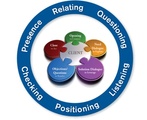
Richardson’s Six Critical Skills are invaluable at all levels of the sales organization, as they provide a consistent methodology for sales reps. The Six Critical Skills represent the heart of the Richardson sales framework and are the foundation of a client-focused sales process. They allow users to create the building blocks for engaging dialogue, understanding client needs, closing business, and building long-term relationships. The Six Critical Skills are:
Questioning - determine client needs and obtaining in-depth information.
Checking - keep the content interactive, and getting client feedback and input.
Listening - understand client issues, and incorporating client ideas and priorities into your story.
Presence - project confidence and creating a level of comfort with the client.
Relating - establish rapport and building relationships.
Positioning - tell your story from the client’s point of view, not yours.
In this video blog post, Andrea Grodnitzky, Senior Vice President, Global Performance Solutions, discusses the idea that the Six Critical Skills are more relevant than ever for the incoming generation of sales people.
If you can not see this video, please click here
Industry Specific Sales Training
Interested in learning more about Richardson’s industry specific sales training solutions? Click here to take a look at our February featured industry, Financial Services.
The post The Six Critical Skills of Selling: Are They Relevant Today? appeared first on The Richardson Sales Excellence Review™.
Richardson Sales Enablement
.
Blog
.
<span class='date ' tip=''><i class='icon-time'></i> Jul 28, 2015 12:21am</span>
|
|
Strategies for Sustaining the Impact of Sales Training: Overview and Key Findings
When you invest in something, you expect a return. Otherwise, such an investment is known as a donation (or more cynically, throwing your money away). Before making a substantial investment, you are likely to give it careful consideration. "What am I paying for? What will I get for that investment? Could that money be put to better use elsewhere?"
These are necessary and often tough questions to answer when investing in sales training. Sales leaders can’t expect to get by on false assumption that conducting training is a de facto cost of doing business.
Effective, But Not Sustained?
A recent Training Industry, Inc. study revealed that sales training programs are generally considered effective, with approximately 81% of respondents indicating that their organization’s sales training programs are somewhat or very effective. However, they may be less effective at sustaining the impact of such training and development programs over time.
I would argue that a sales training program cannot be considered effective if its impact fails to be sustained. Otherwise, the training program is in fact an "event" that is perhaps good as a pep rally for sales reps but with no intention or plan for lasting change. My colleagues and I have written in previous posts of the need to view training not as an event with a defined start and finish but as a series of events that occur before, during, and long after a classroom training or similar activity. The goal is to change behaviors and improve skills, not get through a two-day session to in order to check a box on the training curriculum.
With estimates of the global sales training market exceeding $2 billion annually, the importance of sustaining the impact of sales training investment cannot be overstated. The current study addresses this important goal by investigating approaches that organizations use in sustaining the impact of sales training and highlights recommended strategies for maximizing the impact of sales training over time.
Key Findings
There are several findings of interest from the study. As you read through them, I encourage you to consider what I mentioned above — that is, training as a engagement, not a singular event.
Only 32% of respondents rate their organization effective or very effective at sustaining the impact of their sales training program. Put another way, two out of every three companies are guilty of treating training as an event.
Over half of respondents report that their organizations sustain the impact of sales training for greater than three months following training. This could be questioned given the results in the previous finding.
Organizations rated as effective, invest less in the delivery of sales training and more in the planning, evaluation, and sustainment of that training. This is a step in the right direction. When planning and budgeting, don’t neglect the before and after.
In our study, effective companies sustained the impact of training 63% longer than ineffective companies. The most frequently used pre-training strategies for sustainment involve communicating the importance of and expectations for training.
Also consider pre-training assessments to benchmark where your sales reps are now versus where you want them to be. And don’t forget to ask for their input, which gives them a voice and greater ownership over the process and outcomes.
Effective organizations utilize more pre-training strategies for sustaining training, including establishing post-training development plans and optimizing the sales management process before training begins.
In-person and virtual instructor-led training are the most frequently used modalities for delivering training.
Effective organizations are more likely to utilize gamification and competition both during and following training. This is becoming an ever-increasing tactic that can yield great results if done properly. Read more about gamification in previous posts.
While tracking performance metrics was the most frequently used evaluation technique across all learning leaders, effective organizations consistently use more evaluation techniques to assess the impact of training. See #5 above. This will also help you know where the greatest needs are for your training efforts.
Providing refresher training and using curated learning portals were the most frequently used post-training techniques for sustaining sales training. Provide helpful triggers to help keep what was taught top of mind and reinforced as soon as possible after the training event.
Effective organizations use mobile/tablet reinforcement solutions post-training more frequently than ineffective organizations. Make it convenient so that sales reps can keep up while standing in line at Starbucks rather than force them to log in when they return to the office or their hotel room. Keep it short, simple, and accessible to keep them engaged.
Five Strategies for Sustaining the Impact of Sales Training
Based on the key findings above, here are five strategies for you to follow in order to sustaining the impact of sales training solutions over a longer period, thus increasing your effectiveness and training ROI.
Invest in sustainment. Don’t invest in training events. Yes, classroom activities will likely be part of your training program, but it shouldn’t take up all or even most of your budget and efforts. Invest in communication, assessments, evaluations, training aids, and gamification.
Establish post-training developmental plans before training begins. Have a vision for what you want your sales reps to be doing immediately following the training and then three, six, and 12 months later. How will you help them remember what they’ve learned and apply it in place of old behaviors?
Utilize gamification during and after training. Have it ready to demonstrate during the training so that sales reps can leave and hit the ground running with it after. Use friendly competition and leader boards to encourage usage. Try to make it fun and not a chore, which means getting the timing and relevance right.
Use mobile and tablet reinforcement solutions. Bring it to them to make it easy to access. Break free of the desktop-only apps in order to appear fresh and timely. Perhaps showing that you’ve invested your time and energy into a working gamification tool will further encourage them to take advantage of it.
Evaluate and provide individual feedback on training. You can’t "set it and forget it" as Ron Popeil used to say. Don’t assume that a successful training event will translate into the desired behaviors and actions you set out to achieve. Find out what’s working and what’s not catching on to know who to help and how through one-on-one coaching, mentoring, or more training.
Does your organization view training as an event or a longer-term program with specific sustainment activities? How would your organization compare to the stats listed in the key findings above? How can you most effectively move the needle to improve your efforts and impact?
COMPLIMENTARY RESEARCH REPORT
Organizations invest substantially in sales training and development. This complimentary report from Training Industry and Richardson summarizes data and provides recommended strategies for maximizing the impact of sales training over time. Click here or on the image below to download this report.
The post Strategies for Sustaining the Impact of Sales Training: Overview and Key Findings appeared first on The Richardson Sales Excellence Review™.
Richardson Sales Enablement
.
Blog
.
<span class='date ' tip=''><i class='icon-time'></i> Jul 28, 2015 12:20am</span>
|
|
Time to Trash Event-based Sales Training!
In my last post, Strategies for Sustaining the Impact of Sales Training: Overview and Key Findings, I shared with you the key findings from a recent study from TrainingIndustry.com. This is such an important topic that I wanted to follow that up with a post focused specifically on the major takeaways from that research.
You might guess where this is going once you see the section headings below. The major findings are neatly grouped into pre-, during, and post-training. We can’t underscore enough the need to focus beyond the training event and place considerable emphasis on how you prepare your sales reps before the sales training and especially how well you follow through afterward in order to get the most bang for your buck.
Pre-training
Respondents overwhelmingly indicated that pre-training activities have a major impact on sales training sustainment. Effective organizations invested more in planning and were significantly more likely to use pre-training strategies to set learner expectations and support training. Among these strategies, establishing post-training developmental plans and optimizing the sales management process resulted in the greatest levels of sales training sustainment.
Few companies and leaders possess the patience and discipline to truly plan for something with the necessary time and effort. There’s almost always a rush to finish, with the feeling that the paint is still wet on the surface. "Is this the color we really wanted?" Too late to change now. Give your team plenty of time — with wiggle room — to properly plan your activities and prepare your sales reps before the training.
The flip side to that can be equally maddening: you’ve allowed enough time in the schedule for planning, testing, modeling, and the like and are so very proud of it that you unleash it early! "It’s so good we can’t wait to put it out there!" That impatience can disrupt the sense of flow in favor of a series of stops and starts. If you do your pre-training three months before an event, it quickly turns into a game of hurry-up-and-wait, which frustrates those who are to be trained and loses momentum. Be disciplined enough to build and stick to the optimum schedule.
During Training
Results point to a much smaller role for activities completed during training. Indeed, organizations that invest more in training delivery experience significantly lower sales training sustainment. Still, some activities completed during training were important for training sustainment; organizations that utilized gamification in the classroom and provided individual feedback on learning assessments were significantly more effective at sustaining the impact of sales training. These findings are particularly interesting in light of the relatively small frequency of organizations actually using gamification during training.
A key element during training is to keep it practical. Don’t waste time on activities that won’t help your sales reps get where you want them to be. Take advantage of the time you have with your people to demonstrate exactly what you expect them to be doing once the training has ended. Make it as real for them as possible so that they can easily hit the ground running and directly apply what they’ve been taught on the job. That level of focus on the end result should help you make the best impact and set you up for sustainment.
Post-training
Unsurprisingly, respondents stressed the importance of evaluating training. Effective organizations utilized every evaluation technique more frequently than organizations that were considered ineffective at sustaining sales training. Furthermore, a sizable 25% of respondents reported being unsure of how long their organizations’ sales training participants exhibit trained behaviors. These results point to a need for continuous evaluation in order to better inform organizational sales training decisions and increase the length of time that training impacts the performance of sales reps.
The results indicate that a number of post-training activities also result in longer and more effective training sustainment. Organizations that use mobile reinforcement and client spotlights were rated more effective at sustaining sales training. Mirroring the findings on effective strategies for sustainment during training, results suggest that providing feedback on assessments and using gamification lead to greater sales training sustainment effectiveness. It is surprising that post-training gamification led to greater sustainment, as only 24% of respondents indicated that it is important for post-training activities. Thus, while gamification is less frequently used and rated less important, its use results in more effective and longer-lasting sales training impact.
Another critical aspect of post-training success lies with sales managers: their ability to coach their sales reps. Ensure that your sales managers are ready to guide their sales reps following the training to assure them and help them stay on target. Sales managers should know what the expectations are before the training begins and be prepared to talk about it immediately upon their sales reps returning to the office. Get them ready to answer difficult and easy questions. The more your new normal can be baked into everyday conversations and interactions, the longer it will stay top of mind for sales reps — and the more likely that they’ll be able to follow through.
Sustaining Sales Training: A Vision of Success
Many training programs fail to sustain results beyond the training event itself due to a lack of vision. What does the end result look like? What should my sales reps be doing differently in order to achieve our targets? How do we get them to let go of "the way we do things" in favor of embracing the new?
If you allow your people to think of the training in project terms, then you might find it difficult to break free of the end-date mindset. Silly as it may sound, perhaps the best way forward is to start with an illustration. In order to fulfill a mission or task, it’s common to draw a pie chart that defines the various stages of an activity from start to finish. It can be useful to see how evenly or unevenly the various components are or when the stages begin and end (as if you’re looking at a clock face.) However, the notion that there’s a beginning and end essentially squashes your hopes of sustaining the impact of the training. (If you’ve come full circle, then you’ve gone nowhere.)
I’d challenge you to think instead of a line graph that isn’t necessarily bound to defined beginnings and ends. You can more easily show where you’ve been, where you are, and where you want to be. Set both short- and long-term post-training milestones, and measure your progress toward them. Hold yourself, your sales managers, and your sales reps accountable for working toward those common goals.
It’s often said that effective leaders possess a clear vision for where they’re going. Take heed, and apply that logic to your training efforts so that you move the needle and keep it moving forward rather than ending up right back where you started.
COMPLIMENTARY RESEARCH REPORT
Organizations invest substantially in sales training and development. This complimentary report from Training Industry and Richardson summarizes data and provides recommended strategies for maximizing the impact of sales training over time. Click here or on the image below to download this report.
The post Time to Trash Event-based Sales Training! appeared first on The Richardson Sales Excellence Review™.
Richardson Sales Enablement
.
Blog
.
<span class='date ' tip=''><i class='icon-time'></i> Jul 28, 2015 12:19am</span>
|