Blogs
|
How will the kids see themselves on the screen? Whose teeth will they brush?
Leontyne ran an informal survey of Jenna's ideas for the Avatar.
She had five candidates:
PuppetBoyDogMonsterMr TeethRobot.
Each kid identified the character they liked best, and which they liked least.
Then the kid was asked to point to the tooth in his own mouththat matched the one that the Avatar was brushing.
(Kids might like an Avatar --without being able to identify their own teeth with its teeth.)
The results were interesting.
The most popular avatar - Dog- was also the worst for tooth-indicating accuracy.Most kids liked the Dog - but most could not tell which tooth he was brushing.PS: It's a canine!
Mr. Teeth - the naked choppers - had almost perfect accuracy,but he made some kids uncomfortable.
The Robot was far more appealling than Mr. Teeth, and nearly as accurate.
So we are going forth with the Robot.
Summary results below
(sample size: 12 boys, 2 girls)
Thanks, kids, Leontyne and Jenna
AvatarBoysGirls LikeIdentBoys -1Girls0Like-1Ident69%Boys2Girls1Like2Ident38%Boy-1Girls -1Like-1Ident77%Boys-2Girls1Like-2Ident92%Boys 2Girls -1Like2Ident89%
Dov Jacobson
.
Blog
.
<span class='date ' tip=''><i class='icon-time'></i> Jul 29, 2015 05:35am</span>
|
|
This is a series now…practically an institution! #2 Removing Gamification from an Enterprise SNS I still haven’t found the real strength to write a post on Gamification. It is coming, soon. Until then, you’re just going to have to take this information for what it’s worth. This study reviews the implementation and focuses on the […]
Alicia Sanchez
.
Blog
.
<span class='date ' tip=''><i class='icon-time'></i> Jul 29, 2015 04:39am</span>
|
|
This is the last post of this series! #1 The impact of tutorials on games of varying complexity This study takes a look at another important component of games, the tutorial. When designing a game, we always must decide how we will teach our users how to play the game itself. And most good, high […]
Alicia Sanchez
.
Blog
.
<span class='date ' tip=''><i class='icon-time'></i> Jul 29, 2015 04:38am</span>
|
|
#10 Wang, L. & Chen, M. (2012). The effects of learning style and gender consciousness on novice’s learning from playing educational games. Knowledge Management & E-Learning: An International Journal, 4(1), 63-77. #9 Ventura, M., Shute, V., & Zhao, W. (2012). The Relationship Between Video Game use and a Performance Based Measure of Persistence. Computers in […]
Alicia Sanchez
.
Blog
.
<span class='date ' tip=''><i class='icon-time'></i> Jul 29, 2015 04:38am</span>
|
|
I wanted to write something short and sweet today, so I thought this would be a fun topic to tackle. While this post is not related to games specifically, it is a question that has to be answered before really digging into to any education or training initiative. One of the most common questions I […]
Alicia Sanchez
.
Blog
.
<span class='date ' tip=''><i class='icon-time'></i> Jul 29, 2015 04:38am</span>
|
|
I love deconstructing and reviewing games. This is definitely a game that I really loved! I first downloaded this game to my iPad as part of an evaluation to be performed for the IITSEC Serious Games Showcase & Challenge. I hadn’t heard of the game prior to then, but based on the title suspected Algebra […]
Alicia Sanchez
.
Blog
.
<span class='date ' tip=''><i class='icon-time'></i> Jul 29, 2015 04:37am</span>
|
|
This conference had me at hello. I mean, who doesn’t want to become the supreme leader of the universe? It seemed a little loose in terms of schedules and speakers, but I figured it was time to try something new. Let me start by saying, I was lucky to score a ticket. A friend had […]
Alicia Sanchez
.
Blog
.
<span class='date ' tip=''><i class='icon-time'></i> Jul 29, 2015 04:37am</span>
|
|
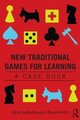
Super excited to report that @krisrockwell & I co-penned a chapter in the much anticipated a new book! New Traditional Games for Learning: A Case Book This book is a collection of games for learning, not all of them digital! Edited by Alex Moseley & Nicola Whitton. This book is finally out and available via […]
Alicia Sanchez
.
Blog
.
<span class='date ' tip=''><i class='icon-time'></i> Jul 29, 2015 04:35am</span>
|
|
Hi, my name is Cheryl Keeton. Throughout my career, I’ve been responsible for program evaluation, review, and success. Most recently I transitioned to independent consulting to focus my energy and passion to the field of evaluation. I want to share my experience as one way to make the transition.
Lessons Learned: Three years before I decided to become an independent evaluator, I began exploring evaluation from the 50,000 foot view. I attended my first AEA Conference to learn about the many ways evaluation is used outside of my field. I wanted to know who is doing evaluation, how are the various approaches different from the way I do things, and how can I use the sessions to help self-evaluate my strengths and weaknesses. The sessions were fascinating and the community of AEA members was very friendly and helpful. I made new friends and began to establish a network of support.
Next I attended an AEA Summer Institute for in-depth learning and practice. I knew I had a firm foundation but the summer study program allowed me to build and grow, extending my understanding, and learning techniques that were new to me.
Since those initial steps, I reached out to resources around me to help establish my independent consulting. Gail Barrington gave me the best advice for how to begin when I met her at an AEA conference "do it now while you are still working." Before making the transition, I read Dr. Barrington’s book- Consulting Start-Up and Management: A Guide for Evaluators and Applied Researchers. I got advice from the career center at the local community college and created a web presence. Dr. Barrington’s book has been the best investment and reference for me as the process unfolds.
I reached out to the evaluation community through AEA and my regional organization, volunteering on the local and national level and taking advantage of training such as Ann K. Emery’s Data Visualization workshop. Her blog and resources are amazing. I also follow Sheila Robinson, AEA365 Tip-a-Day by and for Evaluators, and advice on Potent Presentations, p2i.
I found that knowing what you are good at helps to provide direction as you begin. Fields of experience help me to narrow the scope so I know what projects to consider and where to place my energies for marketing. Gail Barrington outlines this in her book very well.
My experience transitioning from in-house evaluation to independent evaluation and consulting has confirmed for me that membership in AEA is essential to provide the big picture and grounding in principles, training is imperative to stay current, and connecting with others in the field is invaluable.
Do you have questions, concerns, kudos, or content to extend this aea365 contribution? Please add them in the comments section for this post on the aea365 webpage so that we may enrich our community of practice. Would you like to submit an aea365 Tip? Please send a note of interest to aea365@eval.org . aea365 is sponsored by the American Evaluation Association and provides a Tip-a-Day by and for evaluators.
AEA365
.
Blog
.
<span class='date ' tip=''><i class='icon-time'></i> Jul 29, 2015 02:35am</span>
|
|
You know how when you're early in your career you'll be willing to do just about anything to get your foot in the door? Well, that's how it was for me and my first full-time instructional design role... and the "anything" in this case was a repulsively long commute in bumper-to-bumper traffic every day.I won't lie, the hours in the car were all sorts of stressful and unpleasant, but there was one plus side to it: I finally started listening to podcasts. Sure, before this job I had understood that podcasts were a thing and had even poked at them with a stick once or twice, but I hadn't really bonded with any. Hours and hours in the car, though, gave me a great excuse to try out a bunch and finally find some I loved.The podcasts kept me entertained, but (and this is possibly because I skew towards non-fiction in my choices) they also taught me a lot about how to convey content in a fascinating way. It might seem like an unusual source of inspiration, but they definitely influenced the way I design training. If you haven't gotten into podcasts or if you're looking for some new ones to try out, here are the ones that I've found have helped me out the most as an ID.Podcast: 99% InvisibleListen to it to learn how to: make ANY content interesting, leverage storytelling to convey information, get excited about designThat this podcast on the design of everyday things is my all-time favourite should surprise nobody at all (a big thanks to @marklearns for suggesting I try this one out)! The topics of each episode can range from things as bizarre as the carpet in the Portland airport, buildings that started out as Pizza Huts, or those strange "dancing" inflatable creatures you sometimes see at car dealerships, but when it comes to the content it's always solidly based in finding the fascinating story behind a design. This podcast has given me a lot of ideas of how to use storytelling to make my content more interesting, but it's also been helpful just as a simple boost to my creativity levels.Podcast: Stuff seriesListen to it to learn how to: talk about content in a way that's exciting to your audience, explain concepts in a simple way that newbies can wrap their heads around (without making them feel you're dumbing it down too much), make things interesting that could easily be boring This is actually a family of podcasts from the How Stuff Works website. Each series covers a specific subject (like history, tech, and science), but is structured basically the same way: the (usually two) podcast hosts use each episode to get you up-to-speed on one specific topic. In the hands of a lot of people, this could end up being a snoozefest of a content dump, but the Stuff hosts are amazing at talking about content in a conversational, chatty way that makes you feel like a friend is catching you up on a topic over coffee. They're also generally quite good at pacing the content for the audience (you won't find it goes over your head or is too easy) and knowing what they can leave out to make things go faster. It's been a great inspiration for how to write training content that's effective and interesting.Which one should you start with? While I personally have a soft spot for Stuff To Blow Your Mind because once they used Katamari Damacy to explain accretion, you're pretty safe just looking for the show topic you like best and starting there.Podcast: Snap JudgmentListen to it to learn how to: talk about content in a way that's exciting to your audience, leverage storytelling to convey information, explain your content concisely There is one simple thing that links all the content in this podcast together: great storytelling. Every episode has a loose theme, like Unrequited (the opening story of this ep is a personal fav), The Return, and The B-Team, and features a collection of stories, often non-fiction, from a variety of speakers that all in one way or another connect back to that theme. The storytelling in this podcast is some of the best you'll find and you'll be astounded at just how much ground they can cover in just a few minutes. I think storytelling is one of the most important parts of the work we do, so I love this podcast as a source for a wide variety of examples of how to do this right.Podcast: Welcome to Night ValeListen to it to learn how to: design for your audience, think about the long game of conveying information, putting fun in your content If you know anything about podcasts then you've probably already heard about this one. Night Vale is one of the most downloaded podcasts these days, which you wouldn't really expect from a show that's pretty much Lake Wobegone by way of The X-Files (with a healthy dash of Eureka in there for flavour). So it's really entertaining if that's your cup of tea (note: it is totally my cup of tea), but what does a silly and bizarre show like this have to tell you about creating great training? Plenty.First, Night Vale knows who its audience is and is written in a way that appeals to that group. Because of this it's not the kind of show that's right for everyone, and it's better because of that. It's a perfect example of how much more effective something can be when it targets a specific audience. Also, it does a great job of long game storytelling. It plants threads of stories here and there for episode after episode, and sometimes these threads don't pay off for months... but when they do it's so much fun to see how everything eventually comes together. This is a great technique to use to make your simulations feel more real or to help content spread over a lot of lessons feel like it's meaningfully connected. Plus, Night Vale is an excellent reminder that humor is a great way to catch and keep attention (writers of dry technical or legal training: take note!).So those are my four favorites of the moment, but I'd love to hear more about the podcasts you find inspire your work (or just inspire you to think your commute is a bit more bearable). Be sure to put your favs in the comments below!
Bianca Woods
.
Blog
.
<span class='date ' tip=''><i class='icon-time'></i> Jul 28, 2015 11:16pm</span>
|