Blogs
|
"Everyone has an invisible sign hanging from their neck saying, ‘Make me feel important.’ Never forget this message when working with people." — Mary Kay Ash, founder of Mary Kay Cosmetics, Inc.
The Ritz-Carlton Leadership Center:
Human nature makes people want to feel special and remembered. Taking a moment to understand who your employees and co-workers are outside of the office is a simple way to demonstrate they are important to you. Delegating tasks and showing you trust them allows them to take ownership and feel like valued members of your team. These two small actions will help your team be more fully engaged.
Your customers also need to feel important. The Ladies and Gentlemen of The Ritz-Carlton spend each day talking, sharing and learning about our guests. Asking customers about small details—such as how they enjoyed their dinner at the restaurant you booked for them—personalizes the experience. By understanding our guests’ passions, hobbies and lifestyles, we are able to give them The Ritz-Carlton Mystique and create genuine, lasting relationships. ∞
The Blog Post Inspired Thinking: Make Me Feel Important appeared first on The Ritz-Carlton Leadership Center.
Diana Oreck
.
Blog
.
<span class='date ' tip=''><i class='icon-time'></i> Jul 29, 2015 09:29am</span>
|
|
Today we have a guest post from Kim Gusta. A content marketer and copywriter, Kim creates engaging content and sound marketing strategy for small businesses and technology companies. Visit her blog for more information about content marketing.
One of the most frequent reasons companies want to use content marketing is to generate high-quality leads. And I couldn’t agree more - content marketing is terrific for finding leads that fit your optimal target market, but to do it well, you need to know the right strategies.
I’ll be covering how to use content to generate leads in my upcoming webinar for GoToWebinar, "5 Keys to Using Content for Effective Lead Generation."
Key #1: Understand your buyer really well.
I can’t overstate how important this step is. The better you understand your buyers and their hot buttons, the better your content will be. As a result, they’ll be more inclined to register and download it. If you build awesome content that really speaks to your buyers, I guarantee they’ll want more. And that makes them a better lead for you, because they’ll learn more about your company and your solutions.
I’ll cover some low-cost methods for researching your buyers on the webinar.
Key #2: Focus on "How can we help you?" vs. "What can we sell you?"
This is a mindshift you (and your company) might need to make. Successful content marketing is built around offering your buyers helpful, high-value content that addresses their challenges, talks to their concerns, describes their issues and so on. Content that only sells your product or company is likely to be deleted or ignored. Think educational content and not sales content.
Key #3: Use economies of scale when creating content.
There are ways to make the process of creating content easier while also avoiding content overload. First, inventory your existing content and capture a list of everything you already have in a spreadsheet. Then whenever you’re about to create a new piece of content, review your list and ask "What are at least 5 different ways I can repurpose one of these?" If you get in the habit of doing this every time before you create something, you’ll soon have a large repository of high-value content.
Key #4 Expect incremental buyer movement.
Yes, we’d love our buyers to quickly move through our sales funnel, consume all our content and get on with buying something from us, but it doesn’t work that way. Customers will take their research and buying process at their own pace.
As Ardath Albee explains on her blog, we need to be patient with our buyers. We can’t constantly bother them to buy - we must let the content process work. I’ve seen this issue alone derail content marketing programs. You may want to proactively educate others in your organization about this reality so they have appropriate expectations.
The Final Key
Want to know the next step for how to use content to generate high-quality leads?
Attend my webinar "5 Keys to Using Content for Effective Lead Generation" on August 9. I’ll discuss these steps in much greater detail and give you a 60-day action plan for getting started.
As a bonus, all attendees will receive my free Reference Guide to Using Content for Lead Generation plus customizable content templates that’ll save you lots of time in your content efforts.
Register for the webinar.
Photo credit: daniel_gies
Bob Lee
.
Blog
.
<span class='date ' tip=''><i class='icon-time'></i> Jul 29, 2015 09:29am</span>
|
|
Dear Ritz-Carlton: What does empowerment mean for an employee at The Ritz-Carlton?
Answer from Joseph Quitoni, Corporate Director, Culture Transformation at The Ritz-Carlton Leadership Center:
At The Ritz-Carlton, we believe in empowering our Ladies and Gentlemen through trust that releases their greatness and contributes to the mystique of our brand. "Empowering through trust" instills a sense of pride, leading to service excellence at every level of our company. The word empowerment means "giving employees the power to do their job and engage the guest." The presence of empowerment creates an environment where there is no fear of retribution and an environment where employees understand that they not only fulfill functions, but also have a purpose. Each employee at all levels is empowered to spend $2,000 per guest, per day if needed to engage with our guests. However, empowerment is rarely about money. It’s about having the ability to connect with each guest to leave an imprint that is a unique, memorable and positive experience. ∞
On Monday, April 13, 2015, The Ritz-Carlton Leadership Center presents "Your Journey to Service Excellence," The Ritz-Carlton approach to legendary service, employee engagement and a customer-centric culture. This special Symposium takes place at The Ritz-Carlton, Dallas. Learn more about the keynote speaker, the presentation speakers, and the members of The Ritz-Carlton Executive Panel.
The Blog Post Dear Ritz-Carlton: Empowerment at The Ritz-Carlton? appeared first on The Ritz-Carlton Leadership Center.
Diana Oreck
.
Blog
.
<span class='date ' tip=''><i class='icon-time'></i> Jul 29, 2015 09:28am</span>
|
|
After writing "Women Can Have It All (But What Does "All" Really Mean?)," I found myself discussing the topic with my Citrix colleagues on a number of occasions and was fascinated by the stories they shared. To explore the subject further, I asked two of those co-workers, Erin Hintz, VP and GM for Marketing and eCommerce, and Diane Gonzalez, VP of Engineering, to join me in a round-table discussion via GoToMeeting with HDFaces.
You can watch the 3-part series here: (or on YouTube here)
Video 1: Women in the Workplace: Having It All
Video 2: Women in the Workplace: Advice for Having It All
Women in the Workplace: Future Predications
What does having it all mean to you? Do you have advice for achieving work-life success? Do you think it will be easier to have it all in the future? Share your thoughts with us in the comments below.
Bob Lee
.
Blog
.
<span class='date ' tip=''><i class='icon-time'></i> Jul 29, 2015 09:28am</span>
|
|
In part one of this two-part executive interview, Bob Kharazmi, Global Officer, Worldwide Operations at The Ritz-Carlton Hotel Company, L.L.C. sits down with The Ritz-Carlton Leadership Center (RCLC) to share his thoughts on employees and mentoring. Mr. Kharazmi has worked at The Ritz-Carlton Hotel Company over three decades. Throughout his career, he has devoted time to asking employees about their career goals and future with the organization.
RCLC: Why should leaders mentor employees?
Mr. Kharazmi: When anyone looks back on his or her career, the biggest accomplishment he or she will see is how many lives they impacted in a positive way. That is the best reward we can have. We always get promotions, new job titles and even different jobs. Those things come and go, but what stays is the positive impact that we have made in the lives of other people. That’s what mentoring really means to me and that’s why I truly love mentoring.
RCLC: What makes someone a good mentor?
Mr. Kharazmi: Mentoring becomes successful when people see that you genuinely care. You create relationships with employees when you acknowledge them for doing the right things as opposed to catching them when they do something wrong. This creates trust, and employees become more comfortable with you. They are less concerned about their failure, and they share their wins with you. They become so close to you that you can help and guide them. You become a nurturing person in their life who facilitates progress.
RCLC: How do leaders have time to connect with employees?
Mr. Kharazmi: What is priority for a leader? The first and most important priority for a leader is his or her people. No matter where we want to go—no matter what our belief is—no matter what our destination is—we are not going to go alone. We are going with our employees, our Ladies and Gentlemen. So we have to make this a top priority. We have to take time to spend one-on-one time—either in person or over the phone. We have to make sure that we are staying in touch with them.
If you segregate yourself from your employees and focus only on strategy, you can go wrong—because the strategy that you put together needs to bubble up from your people. Any strategy that is developed needs to translate into action, and the action will need to be executed by your people. So leaders cannot create strategies in isolation. They need to interact with employees to create good strategies.
You must also understand the burden of execution. You might not roll up your sleeves every day and do what your employees do. But you have to know what they do. You have to know the burden of doing it. There can’t be total separation between the people making the decisions and the people who have to execute those decisions.
A lot of companies have great strategies. If you look at the airlines in the United States, they have the right leadership in their organizations. They have great strategies. But when you look at the execution part—the service part, you see a lot of complaining about the lack of care. I strongly believe that leadership is not involved in the day-to-day execution. They sit in their offices and put plans together, but they are unaware of how it gets done. You have to connect the dots. You can’t just send the email and define your strategy without knowing how it gets done. If employees don’t buy in, then strategies will not get done.
RCLC: Do you lose your edge as an authority figure when you mentor and bond with employees?
Mr. Kharazmi: Absolutely not. The 20th century is gone. There was a day when there was a hierarchy between executives, management and employees. There were so many different layers. That is gone. The 21st century is a horizontal line. Any organization should have an environment where leadership is accessible. There should be togetherness. It’s no longer the leaders demanding, "Go do this." Instead we should be collaborating, and leaders should be saying, "Let’s go together to get this done."
People do not come to work to do something wrong. They don’t leave their homes and think, "Today I’m going to really mess up a service." The intention is never to make a mistake. No one—not even a disengaged employee—has in mind, "I’m going to do wrong today." They come to do something right, but they don’t get guided on how to do it. They just need to be guided and that’s the leader’s role.
A leader can be an executive or vice president of the regional office or a leader can work in room service, the front office or as restaurant manager. All leaders need to guide their people, show them how to do their best and how to create excellence. Leaders will get the best out of their people when they guide them.
RCLC: Have you ever experienced employees who are intimidated by you because you are an important person within the company?
Mr. Kharazmi: I believe our employees are more important than I am. I really believe that. If I can’t make it to work, meetings get rescheduled. But if a server doesn’t show up in the restaurant, then there’s a problem because there’s no one there to serve the guests. When it comes to serving the guests, our employees are more important than I am.
If you create a good relationship, if you are humble, if you are a servant leader, then any nervousness goes away very quickly and people feel comfortable with you. It goes back to trust. When people trust you, then they establish a relationship with you. They speak freely with you. When you are transparent, then you get respect. When you uphold your promises and extend trust, you create an environment where people can be open and discuss their issues with you.
RCLC: At The Ritz-Carlton, people are a higher priority than profits. How can a company be profitable but make people a priority?
Mr. Kharazmi: Profit is a by-product of having a great concept and having great employees to put the concept in place. Profit truly is a by-product. In our organization, we always, always, always have tried from day one to make sure that we live our value system. What is our value system? Our gold standards. Our gold standards put people first because it is the people who achieve our goal of creating a hotel company where service is our highest mission.
The founders of The Ritz-Carlton Company never intended to create just another hotel company—because there were already a lot of hotel companies out there. Their desire was to have a hotel company that redefined service and provided service in a way that had never been experienced by anyone. They developed the three steps of service and put systems in place that drive guest engagement. The Ritz-Carlton was developed out of this passion for service excellence. That passion has been kept alive and continues even today. ∞
The Ritz-Carlton Leadership Center offers advisory services, courses and presentations to organizations that wish to benchmark the award-winning business practices of The Ritz-Carlton. Your organization can learn about The Ritz-Carlton methodology for customer service, employee engagement and leadership development. We also guide organizations through a multi-step process in order to achieve sustainable culture transformation.
The Blog Post Our Ladies and Gentlemen: Bob Kharazmi (Part 1 - Mentoring) appeared first on The Ritz-Carlton Leadership Center.
Diana Oreck
.
Blog
.
<span class='date ' tip=''><i class='icon-time'></i> Jul 29, 2015 09:28am</span>
|
|
Today, we have a guest post from Morgan Pinney. Currently Morgan is the Environmental Health and Safety Officer for Citrix. He has been with Citrix since 2006. A graduate of UC Santa Barbara, Morgan has been in charge of ergonomics for Citrix and has attended workshops at The Ergonomics Center at NC State and Ergonomic conferences in Las Vegas, Nashville, and New York.
The standup desk has been a big hit at Citrix for a few years now. The human body is not conditioned to stand or sit for hours on end. Having the ability to switch between both whenever you wish dramatically reduces the risk of back, neck or shoulder injuries, which can develop gradually over time.
To assist us in our ergonomic efforts, we sought out the services of a company called Health Postures. They provide a product called Taskmate that can be easily installed on most desks. Once plugged in, our employees can switch from sitting to standing with the press of a button.
The Taskmate has been a huge success with our employees, as you can see for yourself in our photo album on Facebook. One thing to note, though, is once you give an employee one, they will never want to give it back.
Bob Lee
.
Blog
.
<span class='date ' tip=''><i class='icon-time'></i> Jul 29, 2015 09:27am</span>
|
|
"Outstanding leaders go out of their way to boost the self-esteem of their personnel. If people believe in themselves, it’s amazing what they can accomplish." — Sam Walton, Founder of Walmart and Sam’s Club
The Ritz-Carlton Leadership Center:
Think about the last time you looked back and thought, "I can’t believe I did that!" Was there someone you admired who gave you the conviction and courage to take on a project outside your comfort zone? Our confidence enables our successes, but when we face huge challenges, the people who believe in us and cheer us on can provide the extra motivation needed to make it across any finish line. At The Ritz-Carlton, it is the duty of our leaders to strengthen and encourage the Ladies and Gentlemen, the employees of The Ritz-Carlton. Empowered employees who are supported by leaders are naturally more confident and willing to take risks. Which leaders have inspired you to achieve more? ∞
The Blog Post Inspired Thinking: Outstanding Leaders Inspire appeared first on The Ritz-Carlton Leadership Center.
Diana Oreck
.
Blog
.
<span class='date ' tip=''><i class='icon-time'></i> Jul 29, 2015 09:27am</span>
|
|
Today we have a Q&A with Roopam Jain. Roopam is Industry Director of the Conferencing and Collaboration practice at Frost & Sullivan. She is a leading expert in conferencing, unified communications and collaboration technologies. Ms. Jain has 14 years of market analysis and strategic consulting expertise. She has received acclaim for her industry knowledge through quotes in leading publications such as Business Week, New York Times, USA Today and Wall Street Journal.
The world of education is changing at a fast pace. Technologies like video, mobile devices and social media will continue to reshape the learning environment by providing easier access to information and lowering the cost of education. For this post, Citrix posed questions about online education market trends and technologies to Frost & Sullivan’s industry director of research, Roopam Jain.
Which technologies are newest to the classroom and what’s been the trend that brought them there?
Online learning 2.0 is seeing tremendous adoption, which means learning is becoming more mobile, social and accessible. Educators today are increasingly using the latest communication and collaboration technologies, like video, mobile devices and social networks. Consumerization trends are largely driving this adoption of new technologies; students want their choice of communication device in the learning environment and they want the software applications they use in their personal lives to be available for their education experience. Also, the Bring Your Own Device (BYOD) trend is driving mobile learning - where students are increasingly asking for rich content that they can access anytime, anywhere and changing the way teaching and learning is taking place today.
How is video being used in learning, and how is its use reshaping the learning environment?
Video is becoming highly important in learning today, creating a flexible and more engaging environment for students. This is done primarily by adding the visual element otherwise missing from the online learning experience.
Students are using video today in a variety of different ways, ranging from taking classes remotely, connecting with fellow students and learning from teachers and other educational resources virtually.
Online video content is also being used in hybrid learning environments where students have the flexibility to view content - video or otherwise - online at their own pace and complement that with in-person or online interactions with peers and instructors. In fact, hybrid learning is preferred by a majority of students today compared to pure eLearning situations.
Another interesting trend taking off in recent years is the concept of a flipped classroom where the instruction is delivered through on-demand video and online content at home, and the scheduled classroom time is reserved for activity-based "homework" and hands-on projects. One of the greatest perceived benefits from this model is that it allows teachers to use classroom time for more interactive engagements with their students, elevating the personal attention and level of learning across the board. As educators have been striving for ways to accomplish these exact goals for many years, these are obviously being viewed as notable improvements.
How are collaborative technologies and practices being used in the learning environment?
Collaboration is a huge part of learning today. In the past, education was more about teacher-to-student communication in a one-to-many setting and structure. Today learning is all about distributed collaboration, whether it is ad hoc or structured, online or in person.
The latest collaboration technologies - such as instant messaging, presence, web and video conferencing and social media - are all supporting this evolution and trend. Students today are learning from each other at their own pace and using social networks to find and share information. Everyone learns differently, so providing students this flexibility to learn at their own pace using these collaboration tools is a tremendous development.
Download the white paper
For a full review of current trends in online learning, read the Frost & Sullivan white paper "Online Learning 2.0: The Technologies and Trends Revolutionizing the Classroom."
Photo credit: Stanford Ed Tech
Bob Lee
.
Blog
.
<span class='date ' tip=''><i class='icon-time'></i> Jul 29, 2015 09:26am</span>
|
|
Dear Ritz-Carlton: How do you encourage teamwork and collaboration?
Answer from Alexandra Valentin, Corporate Director, Culture Transformation at The Ritz-Carlton Leadership Center:
At The Ritz-Carlton, one of our non-negotiables is Service Value 7: "I create a work environment of teamwork and lateral service so that the needs of our guests and each other are met." This service value emphasizes that each person is responsible for maintaining a nurturing, pleasant and positive work environment. The Ladies and Gentlemen—the employees of The Ritz-Carlton—are each here to serve our guests, but they are not alone. They are a team. They could not accomplish the mission of The Ritz-Carlton without supporting one another. One of the ways they show their commitment to teamwork is through lateral service. Lateral service requires breaking away from regular duties to assist a colleague or to assist another department. It could be as simple as helping a colleague carry a heavy item or watching over a colleague’s work area while he/she escorts a guest to another area of the hotel or handles a guest opportunity. Or it could be a time when extra help is needed by housekeeping on a large check-out day or if help is needed turning a banquet room. These situations do not occur often, but when they do, the Ladies and Gentlemen appreciate the support. Collaboration and teamwork are an integral part of The Ritz-Carlton culture. ∞
On Monday, April 13, 2015, The Ritz-Carlton Leadership Center presents "Your Journey to Service Excellence," The Ritz-Carlton approach to legendary service, employee engagement and a customer-centric culture. This special Symposium takes place at The Ritz-Carlton, Dallas. Learn more about the keynote speaker, the presentation speakers, and the members of The Ritz-Carlton Executive Panel.
The Blog Post Dear Ritz-Carlton: Encourage Teamwork? appeared first on The Ritz-Carlton Leadership Center.
Diana Oreck
.
Blog
.
<span class='date ' tip=''><i class='icon-time'></i> Jul 29, 2015 09:26am</span>
|
|
Today we have a guest post from Melanie Turek. Melanie is Vice President, Research at Frost & Sullivan. She is a renowned expert in unified communications, collaboration, social networking and content-management technologies in the enterprise. For 20 years, Ms. Turek has worked closely with hundreds of vendors and senior IT executives across a range of industries to track and capture the changes and growth in the fast-moving unified communications market. Ms. Turek graduated cum laude with BA in Anthropology from Harvard College. She currently works from her home office in Steamboat Springs, Colorado.
Frost & Sullivan research clearly shows that webinars are going mainstream. In a recent survey of more than 200 C-level executives, 41 percent reported that web conferencing is used by their organization - higher than any other unified communications and collaboration tool except instant messaging. And more than three-quarters of those respondents report using the technology on a daily or weekly basis.
What that means for marketers is that webinars are a viable alternative to in-person events, since a large percentage of a company’s prospects and customers are familiar with the technology and happy to use it. That’s especially valuable today: In comparison to 2011, marketing budgets are expected to increase moderately, but staffing levels will remain the same, according to a just-released Frost & Sullivan survey of 233 marketing professionals. Needless to say, that puts pressure on marketing teams to do more with less in an increasingly competitive global environment.
Webinars have long been a cost-effective way to get a message out to a large audience; generate and qualify leads; add value and thought leadership to the industry overall; and identify areas of interest or concern within your customer base. But now, thanks to three key trends in the web conferencing industry, webinars are becoming an even more effective part of a broader marketing campaign:
Application Programming Interfaces (APIs) make integration with marketing and sales automation easy.
For webinars to deliver the most value to marketers, they must integrate into the company’s overall marketing and sales best practices and processes, which are often determined and monitored by marketing automation software or CRM applications. With open APIs, companies can easily make webinar registration, attendance and participation part of the process - allowing marketers to capture pertinent information about registrants and attendees (including answers to registration questions, as well as live polls and Q&A sessions during the event itself) and automatically incorporate that data into the marketing automation or CRM program for effective follow up and due diligence. What all this means for marketers? No more manual uploads of webinar data.
Webinars are easily customized for niche audiences.
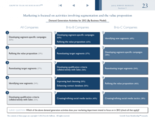
Respondents to our recent marketing survey consider "developing segment-specific campaigns" their strongest demand-generation capability, followed by "refining the value proposition" and "reevaluating and identifying target segments." Webinars can help in all three of these areas, since they make it very easy to target key audiences with specific topics based on job roles, industry challenges, company size or location and so on. With the freedom to customize content without regard to cost or location, marketers can develop campaigns based on key segments and improve their overall perception in the market by offering value-added content like best practices for specific user groups.
Webinars let marketers target customers’ needs and deepen relationships.
By leveraging new capabilities like video content and social-media integration, marketers can ensure their events meet prospects’ and customers’ expectations. That helps boost attendance numbers and improve content effectiveness, but it also deepens relationships and ensures they last well beyond the life of the live event. Social media and customizable registration pages also let webinar producers collect valuable information from their registrant about their pain points needs in order to address or answer those issues in the live event.
Bob Lee
.
Blog
.
<span class='date ' tip=''><i class='icon-time'></i> Jul 29, 2015 09:26am</span>
|