Blogs
|
Scholastic Publishes Fifth Edition of Kids & Family Reading Report
http://publiclibrariesonline.org/2015/07/scholastic-publishes-fifth-edition-of-kids-family-reading-report/
"Scholastic has published the fifth edition of its popular Kids & Family Reading Report, the results of a survey conducted in conjunction with YouGov that gauges how children and their parents view reading in their daily lives. The organizations polled over 2,500 respondents, representing ages 0-17, in late 2014. Questions ranged from the importance and frequency of reading for pleasure, what makes a "frequent" reader, where kids are reading, and what kids are looking for when selecting books.
Of the children surveyed, 51% were currently reading a book for fun, and an additional 20% had recently completed one. Significantly more girls than boys identified in the former category. The other 29% of students admitted to not having read for pleasure in a long time. Surprisingly, when compared to these numbers, only 46% of children felt pleasure reading and developing skills in this area are important, compared to 71% of their parents.
Scholastic also looked at the differences between "frequent" (5-7 days a week) and "infrequent" (less than one day a week) reading. Today, 31% of the children polled identify as frequent readers, down from 37% in 2010. The two demographics responsible for this drop are boys of any age, and readers over the age of 8.
Perhaps the biggest reason behind the drop in reading frequency among older readers is the increasing prevalence of other activities, such as sports, extracurriculars, and most notably, spending time using devices such as smartphones, tablets, and computers. Unfortunately, the report notes that many children have found activities they prefer, preventing them from reading as much as they did when they were younger. One positive finding was that children are far more likely to enjoy reading—and thus take part in it more frequently—when they are given the freedom to choose their own books."
…
"The study additionally shows a positive correlation between how regularly parents read and whether their children will become frequent readers. The prevalence of books at home is also a strong indicator of a more avid reader. Because so many adults cannot afford to purchase reading material for their families, this makes borrowing from the library critical."
There’s more in the report:
Scholastic, Inc. "Kids & Family Reading Report." 5th Ed (2015). Accessed May 1, 2015. http://www.scholastic.com/readingreport/."
Stephen
Stephen Abram
.
Blog
.
<span class='date ' tip=''><i class='icon-time'></i> Aug 07, 2015 11:18am</span>
|
|
7 Common Mistakes About Open Online Education
https://www.insidehighered.com/blogs/technology-and-learning/7-common-mistakes-about-open-online-education
"Mistake #1: "Open Online Courses Are a Substitute for Traditional Courses"
Higher order learning is an activity that cannot be scaled. Foundational knowledge may be appropriate for a MOOC (or a textbook, or even a really well-designed educational video game), but advanced learning works best with an educator.
The skills that are most valuable for both personal growth and for employment are those best practiced in the context of a relationship with an educator. These skills include critical thinking, judgement, the ability to synthesize large amounts of information, and a facility in making persuasive arguments using evidence.
Mistake #2: "MOOCs Are Synonymous with Online Education"
The online thing that traditional online education and open online education have in common is that both are done at a distance. MOOCs are all about scale and access. Traditional online education (when done well) is all about intimacy and quality. A traditional online course is built around the presence and connections of a small cohort of learners, all being led by an experienced and skilled educator.
Developing MOOCs may help schools build technical capacity in traditional online education, as many of the same learning design and educational media principals apply. But these are fundamentally different educational activities, and should never be confused as sharing goals, methods, or lessons.
Mistake #3: "Open Online Education Will Drive Down the Cost of Education"
What open online education is doing is pushing colleges and universities to ensure that our traditional educational offerings are truly valuable. Any school that offers traditional courses (be these courses residential, online, or blended) that are no better than what can be had online and for free will be in deep trouble.
It is not clear how this push to quality will impact educational costs. In some cases, MOOCs will drive up the cost of traditional education because creating quality educational opportunities is expensive. The large enrollment lecture course was always more about cost sharing than pedagogy. The days of big classes paying for small classes are over. Every class offered at a fee will need to offer real value.
Mistake #4: "Open Online Education Threatens Traditional Residential Based Education"
If you are involved in open online education (participating, building, teaching), you quickly realize that what MOOCs do best is illuminate the strengths of traditional higher education. Of course, MOOCs also shine a light on the deficiencies of any educational model built on a transmission of information model of teaching.
What is most valuable about a good college or university education, and what MOOCs will never deliver, is the learning that occurs in the context of a relationship between an educator and a student. Higher order learning requires mentorship, guidance, expertise, and experience. MOOCs will eventually do a wonderful job of raising the floor for where higher education should begin. MOOCs reveal how a quality college education is more valuable, not less.
Mistake #5: "MOOCs are Prohibitively Expensive to Produce"
The super secret thing about MOOCs is that they are they offer an amazing value for their sponsoring institutions. The people making and teaching the MOOCs are doing so out of love. They are creating art. And like most art, it doesn’t pay all that well. Every open online education team that I know works an enormous number of hours to develop and teach their open online courses. They do so because they love what they are teaching. They do so because they love their schools, and they want to show the world some of what goes on on our campuses.
The faculty and non-faculty educators who are putting together and teaching the MOOCs are internally motivated. They want to connect with lifelong learners. They want to be in the conversation with how teaching and learning is changing. Every dollar that a school spends to support these creative educational teams is returned many times over in outreach, excitement, and institutional learning that these teams bring to our campuses.
Mistake #6: "Open Online Education Is A Fad"
Open online education is becoming embedded in the fabric of our teaching and learning operations and culture. Schools will keep creating and teaching open online courses because we derive tremendous value from the experience.
Creating and teaching MOOCs gives us the opportunity to engage in disciplined experiments in teaching and learning. We can try new things out because the stakes are low. It turns out that free and open can be liberating for the provider as well as the consumer.
Mistake #7: "MOOCs Will Not Change the Higher Ed Status Quo"
The big higher ed story that nobody seems to be telling is just how much better colleges and universities are getting. Where everyone is focused on climbing walls and lazy rivers, the real story is improved learning. Visit any campus and you are bound to see experiments going on that are designed to improve learning. The most exciting work is in the redesign of large classes, and the move to offer blended and online degrees for graduate (mostly professional) students.
There is huge excitement on our campuses about the research in how people learn, in new methods to improve learning, in the use of data to bring evidence to our teaching designs, and in new technologies to support teaching. The scholarship of teaching and learning (SOTL) is taking off in a big way. Learning is hot. Educators are cool. And MOOCs deserve some of the credit.
The hype around MOOCs played the same role as the dot com bubble. MOOCs helped lay the groundwork for a sustained conversation about how people learn and how we teach. The excitement about MOOCs was never justified. But the excitement around learning was and is. Every college and university is working to make sure that the classes offered on campus offer greater value than what can be had online and for free. Methods and practices around residential education are being reexamined and rethought. Learning is understood as a competitive institutional differentiator."
Stephen
Stephen Abram
.
Blog
.
<span class='date ' tip=''><i class='icon-time'></i> Aug 07, 2015 11:17am</span>
|
|
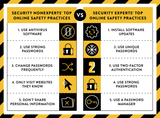
How the Experts Protect Themselves Online (Compared to Everyone Else)
http://lifehacker.com/how-the-experts-protect-themselves-online-compared-to-1720047084
Stephen
Stephen Abram
.
Blog
.
<span class='date ' tip=''><i class='icon-time'></i> Aug 07, 2015 11:17am</span>
|
|
12 Satisfying Videos of Dominoes Falling
http://mentalfloss.com/article/66449/12-satisfying-videos-dominoes-falling
A wonderful summer time-waster.
Stephen
Stephen Abram
.
Blog
.
<span class='date ' tip=''><i class='icon-time'></i> Aug 07, 2015 11:17am</span>
|
|
For week two of the Tinkering Fundamentals online course we explored circuits! But even more so, I learned about the importance of exploration and fun. Read on to learn what I accomplished while I played with circuits!We were first instructed to watch a few videos on the subjects of circuit boards and inspiration. In one of the videos they talked about the Social Element of Space. How can we design a space for tinkering that will engage learners and encourage them to work collaboratively. One concept that caught my attention was the shape of the tables that they used in the videos. They looked something like this:A table like this serves two purposes. It allows for easier collaboration by drawing learners towards each other, both in the concave spaces on the sides and along the rounded edges. It also prevents the teacher from becoming the center of attention, and instead, forces them to be facilitators around the outside of the space. I found this design most interesting!Another important concept I picked up on from the videos was the thought behind failure and frustration. As teachers, we need to allow our students to fail and to become frustrated with the task. The reason and thought behind this is that those moments of failure and frustration can sometimes lead to breakthroughs in learning. And as I shared in my last post, FAIL = First Attempt In Learning.Activity Sharing: Playing w/ CircuitsFor this week's activity, we were given a circuits kit that include battery packs, alligator clip wires, a motor, a buzzer, and two types of switches. The goal was to explore the materials and learn the basic concepts of circuitry. Here is my reflection for this activity.I was really looking forward to playing around these wires, bulbs, switches, and battery packs! And I appreciated having to take off my "teacher cap" and replacing it with my "student cap".I started out by simply trying to turn on a light bulb.Then I wanted to add in an on/off switch.I then became even more adventurous! I wanted to see if I could use the bigger switch and have it turn on the bulb on one side and turn on the buzzer on the other side. It's true when they say that breakthroughs come when you are at your most frustrated. I almost gave up on this challenge, but reorganized my materials and backtracked through my wires to figure it out.WATCH MY VIDEO DEMONSTRATION!Lastly, I wanted to test out the strength of different types and amounts of batteries. I wanted to put to use the 2x AA battery pack, the 4x AA pack, and the 9V. I tested each to see how bright two bulbs would get and the results were what I expected, in terms of voltage.Week Two Reflection: How has the Circuits Activity Impacted Your Thinking?Whenever I help a teacher introduce a new tool, app, or technology to students I always emphasize the importance of PLAY. I’ve come across too many teachers that have issues with their students being too distracted and unfocused when they introduce them to new tools and materials at the beginning of a lesson. And this is simply because the students weren’t given the opportunity to explore and play with those tools and materials first. Play is a very important phase of the process in learning. When we, as humans, are introduced to something new, our first instinct is to pick it up and examine it. Explore it and figure out how it works. Try and make it do different things. We learn this skill at a very young age and it needs to continue to be fostered. So I always suggest to teachers that they give their students at least 15 minutes to PLAY with something new. You have to allow them the time to handle it, to explore it, to figure it out for themselves, to be inquisitive, and to have fun. Once this has been accomplished, then they are going to wonder what the teacher wants them to do with it, and thus, you’ll have their undivided attention. This idea of play and exploration is really what tinkering is all about, and I definitely enjoyed that about this activity. I was given an assortment of wires, parts, and tools, and really wasn’t told what to do with them. So I had to play with them to figure it out. I started with the simple task of powering a light bulb, and then challenged myself further to include other switches, and buzzers, and motors, and different types of batteries. And through that exploration and challenge I was able to come to some realization of how circuits work. This is how we, as teachers, need to "teach", or rather mentor and guide our students through the process of investigating and learning. Learning by exploring, and challenging ourselves, and solving problems along the way. This activity helped to solidify the purpose and importance of tinkering in the classroom (and in life!).Tinkering Journal: My Understanding of CircuitsAnother, more complicated, circuit that I created involved using the larger switch to turn on the buzzer when pulled to the left and turn on the light bulb when pulled to the right. This one was quite a challenge for me because it involved a lot of wiring which became very confusing at one point, causing me to connect some of the wires incorrectly and failing at my task. At that point, I decided to backtrack by reorganizing my wires and components, and then starting again. This helped me to refocus and gain better control over the wiring, resulting in a success as demonstrated in my video!Share with me: Do you do a similar activity with your students? How do you address tinkering and play in the classroom?
Michael Fricano II
.
Blog
.
<span class='date ' tip=''><i class='icon-time'></i> Aug 07, 2015 11:15am</span>
|
|
Helping colleagues learn how to create blended onsite-online learning spaces by actually creating blended onsite-online learning spaces is an exercise we are far from exhausting, as I saw once again while facilitating a session at the American Library Association (ALA) 2015 Annual Conference here in San Francisco a month ago.
Being able to foster this sort of blended interaction seems to me to be another critically-important digital-literacy skill along the lines of what colleagues are exploring in our ALA Editions "Rethinking Digital Literacy" course; is not at all difficult or costly to do if we creatively use tech tools readily available to many of us; and actually becomes a fun and engaging way for many of us to extend the size of the learning spaces we typically inhabit, we again saw during that "Blend It" session sponsored by ALA’s Library and Information Technology Association (LITA).
The concept, which I’ve explored with colleagues in a variety of settings, is straightforward: using little more than a laptop with a webcam, a projector and screen, and some form of audio system (either a small, portable set of speakers or a connection to an existing sound system within the onsite space that serves as the anchor for our efforts), we create real-time multiple levels of communication between learners/colleagues in a physical setting and colleagues who join us via their own online access points anywhere in the world. This quickly transforms those offsite learners/colleagues from being part of a "left behind" group to being active participants in a learning space that can be thousands of miles wide if those colleagues come from a variety of countries.
What makes this personally rewarding for all involved is that we continue to learn through experimentation. The earliest effort I was lucky enough to help design and facilitate used Skype as the tool uniting an offsite presenter with approximately 200 colleagues here in San Francisco for a dynamic and tremendously rewarding exchange. The experiments continued a few years later when two colleagues and I used Skype and Twitter to connect onsite and online participants in a wide-ranging conversation about how we could incorporate these tools and these blended spaces into effective learning spaces. New Media Consortium colleague Samantha Adams Becker and I continue to push this particular learning envelop via Google Hangouts in a variety of settings, so I was ready, at the ALA Annual Conference this year, to carry it a step further by adding a "bring your own device" element to the conversation.
After introducing onsite participants to the concepts we were exploring, Harford County Public Library tech trainer Maurice Coleman and I demonstrated the concept by having Maurice step outside the room, use his own smartphone to join a Google Hangout I had started with my own laptop and was projecting onto a large screen that everyone in the room could see, and carry on a brief conversation that those in the room could join by addressing questions to him via the microphone that was embedded in the laptop.
The magic moment came when he physically returned to the room—it’s worth noting that by remaining visible and audible via that smartphone, he had never really left the room or the conversation—and we offered onsite participants a challenge: quickly identify someone you know could not be here at the conference, try to reach them using your own mobile device, and bring them into the room now via a Google Hangout. It was learning at its best: those unfamiliar with Hangouts helped others try to set up individual sessions; those familiar with Hangouts tried to initiate their own. And those who were successful let the rest of us know that had eliminated another member of the "left behind" corps through that virtual contact.
At its peak, we had nearly a dozen individual hangouts happening simultaneously, and those in the room completely made the learning space their own: some explained to their friends what they were doing and what others were accomplishing; a few kept those sessions live for the remainder of the time we had together. And one particularly creative learner left her seat and gave her offsite colleague a virtual tour of the room by walking around and introducing our offsite colleague to others who were onsite.
It may have been gimmicky. It may have been far from pretty. But it was an exploration of digital literacy and educational technology at work in a way that provided a visceral example of how far we literally have come together. How easy it is for us to foster those levels of training, teaching, learning, and collaboration when we’re not afraid to risk failure in seeking small and large successes. And how easy it is to have fun while creating memorable, meaningful learning experiences that will continue spreading long after that formal session ended.
N.B. - This is the fourth (and final) in a series of reflections inspired by the American Library Association 2015 Annual Conference in San Francisco and the fifth in a series of reflections inspired by our ALA Editions "Rethinking Digital Literacy" course.
Paul Signorelli
.
Blog
.
<span class='date ' tip=''><i class='icon-time'></i> Aug 07, 2015 11:13am</span>
|
|
Critical Thinking is more than just a concept, it is a real-life model upon which you can build successful and efficient problem solving skills, skills that prove highly valuable in the workplace and beyond.
This technique, with its roots in Greek philosophy, is the application of logic to enable better, more reasoned decision-making. It can revolutionise your everyday life, by improving how you interpret opinions, rationalisations and problem solving practices.
Critical Thinking is a system that is often misjudged as criticism, but rather it focuses on the ability to follow logical steps and arrive at a decisive and appropriate conclusion.
With some careful and structured training, you too can become a more informed, reasoned decision maker.
Filtered
.
Blog
.
<span class='date ' tip=''><i class='icon-time'></i> Aug 07, 2015 11:12am</span>
|
|
Each month, I speak to dozens of teachers about making the transition into online teaching. While some are able to work full-time on their new business, others have other things - jobs, young children, university, travel etc. - that get in the way. I often get asked questions like, ̶...
The post How to Transition into Online Teaching while Working a Full-Time Job appeared first on Teaching ESL Online.
Jack Askew
.
Blog
.
<span class='date ' tip=''><i class='icon-time'></i> Aug 07, 2015 11:12am</span>
|
|
Who we are: Hello, my name is Barbara Howard, Chair of the Joint Committee on Standards for Educational Evaluation. My colleagues, Katherine Tibbetts, Don Klinger, and Patricia McDivitt, serve on the Joint Committee, which is a consortium of seventeen professional organizations, including AEA. Katherine Tibbetts is our AEA representative. We want to share our work on the Joint Committee with you in a workshop at the AEA Annual Conference this November in Chicago.
Joint Committee Standards: Our mission is to research, develop, and disseminate standards, which can be used with confidence to guide sound evaluations of programs, students, and personnel in education. Our standards - The Program Evaluation Standards (3rd Ed.), the Personnel Evaluation Standards (2nd Ed.), and the new Classroom Assessment Standards - are the only educational standards certified by the American National Standards Institute (ANSI). These standards are compatible with guidelines, principles, and other standards issued by our member organizations such as AEA, primarily because these organizations have a seat at the table when the standards are reviewed and approved through a rigorous process. Many of you may have even reviewed our standards!
Hot (Helpful) Tips: Here is how our standards may be helpful. Let’s say you are in a district adopting a new teacher evaluation system. Have you considered things like developing a new policy? Have you carefully planned the training of all the evaluators? What about training all the teachers on what to expect? Do you know if the system will yield valid and reliable results? How will you use the results? Have you thought about confidentiality issues? The Personnel Evaluation Standards can help guide you and your district in developing or implementing a system that will give you the results you desire. On the other hand, whether you are an experienced or novice, independent or in-house program evaluator, The Program Evaluation Standards can guide you in a similar way by helping you to consider all the aspects of a project from the early planning stages to the final report. Our newest standards, Classroom Assessment Standards, guide classroom teachers in the intricate process of developing, selecting, and using assessments to inform their instruction and promote student learning. Regardless of your field or level of expertise, these standards can help you sharpen your skills into best practice. The tools and tips we plan to share highlight the standards even more!
Rad Resource: For more information about our standards and the Joint Committee, please visit our website www.jcsee.org
Want to learn more? Register for Applying the Joint Committee Standards for Exemplary Program, Classroom and Personnel Evaluations at Evaluation 2015 in Chicago, IL.
This week, we’re featuring posts by people who will be presenting Professional Development workshops at Evaluation 2015 in Chicago, IL. Click here for a complete listing of Professional Development workshops offered at Evaluation 2015. Do you have questions, concerns, kudos, or content to extend this aea365 contribution? Please add them in the comments section for this post on the aea365 webpage so that we may enrich our community of practice. Would you like to submit an aea365 Tip? Please send a note of interest to aea365@eval.org. aea365 is sponsored by the American Evaluation Association and provides a Tip-a-Day by and for evaluators.
AEA365
.
Blog
.
<span class='date ' tip=''><i class='icon-time'></i> Aug 07, 2015 11:08am</span>
|
|
Living abroad can be a life changing and eye opening experience. By submerging yourself in a new culture, you gain a new perspective on life, meet new and diverse people and feel connected to a community of global citizens. Not only can you benefit from the personal enrichment of living abroad, it is also an excellent career development opportunity and can pave the way for leadership opportunities. From navigating a new city, juggling time zones, adapting to new cultural expectations and learning a new language, living abroad can...
SHRM
.
Blog
.
<span class='date ' tip=''><i class='icon-time'></i> Aug 07, 2015 11:08am</span>
|