Blogs
|
This weekend, the star of "Hamlet" at the Barbican berated smartphone-wielding fans for filming his performances, calling the flashing red lights from mobile cameras in the audience "mortifying."
Erich Dierdorff
.
Blog
.
<span class='date ' tip=''><i class='icon-time'></i> Aug 11, 2015 12:33pm</span>
|
|
Amell will take part in a tag-team bout at the Aug. 23 pay-per-view event.
Erich Dierdorff
.
Blog
.
<span class='date ' tip=''><i class='icon-time'></i> Aug 11, 2015 12:33pm</span>
|
|
"Space Sessions: Songs from a Tin Can" will be available Oct. 9.
Erich Dierdorff
.
Blog
.
<span class='date ' tip=''><i class='icon-time'></i> Aug 11, 2015 12:33pm</span>
|
|
The Malian singer-guitarist and American singer worked together on the album "Touristes."
Erich Dierdorff
.
Blog
.
<span class='date ' tip=''><i class='icon-time'></i> Aug 11, 2015 12:33pm</span>
|
|
The series premieres Jan. 17.
Erich Dierdorff
.
Blog
.
<span class='date ' tip=''><i class='icon-time'></i> Aug 11, 2015 12:33pm</span>
|
|
Historically, consulting companies have gotten a bad rap for swooping in with presentations full of industry trends or spewing out jargon-laden recommendations. Or, even worse, they try to give the company’s identity a facelift and leave leaders fumbling to latch onto a vision that just doesn’t fit.
Fortunately, there’s a new crop of consulting companies that take a much different approach when lending their expertise. And the good ones meet their clients where they are and offer solutions that can add immediate value. The best consultants help executives refine their vision and solve problems faster and more effectively.
If you’ve been burned by a lackluster consultant relationship in the past, it’s no reason to write off all consultants. Before hiring your next consulting firm, use these tips to protect your company’s identity and extract the greatest value from the partnership.
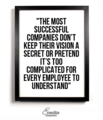
Start with a clear vision. The most successful companies don’t keep their vision a secret or pretend it’s too complicated for every employee to understand; they clearly articulate their vision and use it to find the best talent and win over customers.
Look for a nimble partner. Big, bulky solutions are rarely the answer to your organization’s toughest challenges. It’s better to start with a set of assumptions and learn at each stage of the process. Any consulting company you hire should have a model that allows you to adjust quickly as you uncover new insights.
Ask for what you want. To get the most out of your consulting partnership, share your three-year vision for your company, a 12-month strategy, and quarterly goals that align with that vision. Then, take control of the conversation by saying, "This is my vision for the company. How can you help me achieve it?"
Beware of jargon and industry trends. If you start the conversation with your consulting firm by sharing your vision and the firm responds with stats about the latest industry trends, made-up jargon you don’t understand, or a host of canned recommendations, move on to another firm. The last thing you want is a consulting company that’s just trying to fit you into a box. You want one that can help you overcome challenges and capitalize on opportunities that are unique to your organization.
Stand by your vision. An agile, innovative organization is always reinventing how it goes to market, but its mission and vision don’t change. A consultant’s role is simply to add clarity and focus to that vision and illuminate the most logical path to help you get there. The only time you should allow a consultant to point you in a completely new direction is if your core market has proven unprofitable.
Partnering with a consulting firm can be a game changer for your organization — if you hire the right one. Have confidence in your leadership team, and stick to your long-term vision. You already know where you want to go; you just need a nimble partner to help you expand and contract as you execute your plan.
Carey Rome is founder and CEO of Cypress Resources, a management consulting firm based in Birmingham, Ala., with more than 15 years of experience helping business executives reach their goals. He has served as an adviser to business leaders at mid-sized to Fortune 1000 companies.
Related Posts:
How stories can reinforce the culture you want
Succession planning for everyone (almost!)
3 ways to reduce risk of managerial failure
Advisory boards: The when, why and how
A better approach to trimming costs and improving profits
5 tips for protecting your company’s identity when working with a consultant originally published by SmartBlogs
Julie Winkle Giulioni
.
Blog
.
<span class='date ' tip=''><i class='icon-time'></i> Aug 11, 2015 12:33pm</span>
|
|
Tarrant
If you haven’t noticed, the $600 billion-a-year grocery industry is in the midst of massive digital disruption. Traditionally a risk-adverse business, grocery’s late entry to the e-commerce game is largely due to the complexity of the industry. Factors such as constantly fluctuating prices, complex promotions, and the volume and variety of store-level SKUs don’t exist in many other areas of retail the way they do in grocery, making e-commerce seem like a daunting task. But there’s another factor involved: complacency. For decades, grocers have been successful resting on their laurels. If the competition isn’t doing it, why should they?
In the U.S., e-commerce currently accounts for just 1% of all food and beverage sales according to BI Intelligence. But, this slow adoption is not a function of consumer demand — rather it’s simply a function of consumer access. In fact, according to a recent Nielsen study, nearly six in 10 (58%) consumers worldwide are willing shop for groceries online once the option becomes available to them. The trouble is, in the U.S., most grocers simply haven’t offered the solutions yet, despite the availability and maturation of e-commerce technology across similar markets.
Thankfully for grocers and consumers alike, this is all changing. Every day we’re seeing both startups and behemoths emerge with digital grocery offerings and it’s serving as a huge wakeup call to traditional grocers. And as they look for areas of growth (and consumer demand increases and sales start leaking out of their stores to other outlets such as restaurant delivery or meal-planning and delivery services), grocers will start thinking of ways to make themselves more relevant.
So now that the industry is being disrupted, what’s the right strategy for grocers looking to add digital conveniences for their shoppers? Here are four initial considerations to make when determining the best way to move forward:
Start with curbside pickup: There is a misconception in the market that e-commerce equals delivery, and that scares a lot of grocers. What they are forgetting is that they have the most critical infrastructure necessary for click-and-collect e-commerce — a supply chain, labor, brand recognition and a close proximity to every consumer. Stores are built on commuting routes for a reason, so offering e-commerce with a pickup model that is convenient to the consumer’s everyday commuting pattern not only makes sense, but is often the preferred model for shoppers vs. delivery (for our clients that offer both options, pickup is three times as popular as delivery).
Own the experience: Experience has become one of the most important elements of retail today, regardless of industry, so I’ve yet to understand why a retail brand would turn their customers over to someone else. But it’s happening more and more with grocers turning the delivery experience over to a third party. The only other time I remember this happening in retail is when Borders had Amazon fulfill their orders. And look how well that turned out for Borders. To set yourself up for success, own the customer experience from start to finish.
Expect profitability: In a click-and-collect model, grocers will have to invest in technology, labor and modify stores, but you should expect business value quickly. First, you’ll see bulk purchases in categories you’ve been losing market share in for years start to come back to you. Second, you’ll see cross-channel shoppers increase their spend with you vs. when they were in-store only shoppers. Third, you’ll see new customers start shopping with you because the grocer they typically shop doesn’t offer e-commerce — and this online shopper spends on average of twice what an in-store only shopper spends. Moreover, the average ring for an online basket is $157 vs. $50 for an in-store basket. When you combine how these benefits stack up, plus how margins work out given the size of the basket to begin with, you’re looking at incremental profit.
Involve your brand partners: CPGs and grocers have a highly symbiotic relationship that needs to be accounted for in the digital shopping experience. Identify ways to connect brands with shoppers in the digital channel the same way you do in the store. Take it one step further by using loyalty, purchase and intent data to present more relevant and meaningful offers throughout the digital path to purchase.
Grocery is seeing a resurgence in the digital age and grocers that are not at least thinking about e-commerce are putting themselves at a competitive disadvantage that they will not be able to overcome as more consumers seek and come to expect digital options.
Rich Tarrant is founder and CEO of MyWebGrocer. Rich was an early believer in the viability of the online grocery business and has been working with grocers and CPG manufacturers since 1999. For more information, please visit www.mywebgrocer.com.
_________________________________________________
If you enjoyed this article, join SmartBrief’s email list for more stories about the food and beverage industry. We offer 14 newsletters covering the industry from restaurants to food manufacturing.
Related Posts:
Flexibility, personalization drive online grocery growth
Omnichannel retail: What does the store of the future look like for Waitrose?
Adopting e-commerce and omnichannel retail in the wholesale club industry
Q&A: Relay Foods CEO Zach Buckner on leading an online startup in today’s food retail world
Companies get creative to navigate the complex world of online grocery
Digital just tipped over the $600B grocery cart originally published by SmartBlogs
Julie Winkle Giulioni
.
Blog
.
<span class='date ' tip=''><i class='icon-time'></i> Aug 11, 2015 12:33pm</span>
|
|
This month, SmartBlog on Education is exploring classroom design and management — just in time for the new school year. In this blog post, educator and national trainer Ed Bates shares back-to-school tips for classroom procedures and expectations.
The arrival of August always seemed to put me on notice that another school years was slowly inching closer. With that, came the questions and challenges as to what the coming year would hold. Having worked with several student teachers, I always lamented the fact that they did not have the opportunity to participate in the first few weeks of school, as I felt they were the most critical for a teacher’s success. How teachers set up and manage their classrooms more often than not determines their success for the year.
As an educator, you want to have the year get off to a positive start. Topics to be discussed on the first day of school are extremely important. If a teacher does it right, it sets a great tone for the year. I always made sure to cover a student agreement which outlined what was to be expected of my students and procedures which would benefit them throughout the year.
The number one problem encountered by teachers in the classroom is NOT discipline, but rather the lack of structures and procedures. Classroom management is like an offensive lineman, in that they’re only noticed when something goes wrong. Once it is gone, you can never get it back.
Having procedures is not micro-managing. Teaching middle school, I attempted to have them for everything, including things like entering and exiting the room, homework procedures, and how to access materials. Learning and creativity should be free flowing, but behavior needs to be directed with procedures.
When dealing with disciplinary problems, have rules, but not too many. Make the punishment fit the behavior, not your level of frustration. Handle discipline discreetly and learn what to overlook. One doesn’t want to be drawn into power struggles with kids. Handle as much as you can on your own without it allowing it to take away from learning
I always advocated greeting students at the door. It might be the only greeting they’ll get all day. Students appreciate and respond to environments where they feel welcome. Students who feel more welcome are more likely to "buy" what you’re "selling." By greeting kids at the door, you can see potential problems. Problems in the cafeteria, a previous class, in the gym, home. Recognize a potential problem before it becomes an actual problem.
Try catching them being good. Teachers are trained to recognize problems, diagnose the cause and respond accordingly. Why not try these things on positive behaviors. When you observe positive behaviors, reward them.
Use proximity as an ally. Without a seating chart, "problem" students will gravitate to the back of the classroom. Even with assigned seats, problems tend to arise in the back of the room. MOVE AROUND. Get to the back of the room, (or that’s where the problems will be). Use what works for you without the "teacher eye" or verbal reprimand. Move problems up front.
When problems are encountered, don’t escalate them. Don’t ask a question you aren’t prepared to hear the answer to. We’ve all been there. Questions like: "How many times do I have to tell you?" These provoke defensiveness and create power struggles. Yelling and screaming isn’t the answer either. Eventually, kids know its coming. They’ll tune you out and ride out the storm.
Do your best to avoid "down time" in which students have nothing to do. This usually occurs at the end of the period or an assignment as a teacher "transitions" to their next class. There are several activities that can be used when confronted with the possibility of down time. For example, get students started on their homework. Also try a brain teaser or a ticket out the door. We’ve also implemented DEAR time for our students where they are to "Drop Everything And Read". Get them busy, keep them busy, keep your sanity.
These are just a few points I’ve drawn from during my teaching career. It’s important that all teachers use their colleagues as resources. Work collegially to develop a plan which works for you to ensure a positive school year.
Ed Bates has over 25 years experience in the classroom teaching young adults. As a certified National Trainer, he presents concepts to various school districts and universities throughout the country. He has extensive experience in implementation of NYS Common Core Mathematics Curriculum Modules, Annual Professional Performance Review (APPR), and Integration of Technology into the Classroom.
If you enjoyed this article, join SmartBrief’s email list for more stories about education. We offer newsletters covering educational leadership, special education and more.
Related Posts:
Flipping over changes in the classroom
How libraries can support summer-reading programs
Classroom management tips and tricks originally published by SmartBlogs
Julie Winkle Giulioni
.
Blog
.
<span class='date ' tip=''><i class='icon-time'></i> Aug 11, 2015 12:33pm</span>
|
|
You will never read a single line from some of today’s best writers. Instead, you will hear them in a TV program or movie.
A line that has resonated with me is from season six of "Mad Men." When Pete, distraught about his work circumstance, asked for advice, he received this thought-provoking statement: "I realized I had regrets because I didn’t understand the wellspring of my confidence." Spurred by that counsel, Pete recognized the importance of his ex-wife and family, reunited with them, and was able to take a risk on a huge career move.
That’s fiction, yet in reality, there is tremendous significance to being a wellspring of others’ confidence in order to help them grow. You can shore up your employees’ footing to go face risks and make big leaps in their capabilities.
While not always expecting to receive it, most employees look to their managers to build confidence. Viewing it as a lesser priority in their role, many managers do a poor job with this. Based upon interviews I did with scores of managers who now excel at developing others, there were typical mistakes these managers made while learning to do this well. Today, their advice is to start by looking inward and overcome some natural tendencies such as: micromanaging, risk avoidance, playing favorites, indiscriminate cheerleading, and lack of follow through with their employees.
Next, consider that it is not only the action you take with employees, but also the relationship you build that will have an impact. After all, you are not just affecting their skill, but most especially their will; and, employees use that support to push through internal (e.g., fear of failure) barriers.
Here are four actions toward being a wellspring of confidence for your employees:
Focus on each employee individually knowing their skill set, interests, and tolerances. For example, new and seasoned employees have different needs and encounter different challenges (new employees need direction on what skills are needed for progression, while seasoned employees may feel there is less interest in investing in their development). Understanding each person allows you to pinpoint the tailored direction to take, will be noticed by each employee, and more likely results in prompting them to take those next steps of development.
Relate feedback in respectful and credible terms. Give them honest feedback in a thoughtful give and take discussion. This involves more preparation then a straight telling of your observation, and requires you to neutralize any emotional reactions to their actions that caused you extra effort. Leave space for their viewpoints, inviting them to share their questions and concerns. Allowing them to have their foibles, and still be OK with them, is crucial. Do this regularly so that it is an expected part of the work week.
Get yourself ready to provide challenging assignments, even high-stakes tasks, if possible. Thoughtfully consider and unlock your own inclination to take reasonable risks in giving this assignment. You can quietly plan behind-the-scenes contingencies. Without dispelling or downplaying their qualms, discuss what will be required for success. In fact, help them identify potential vulnerabilities to getting the job done and set the expectation for some missteps. Let them know that you and other resources can provide guidance if and when they get stuck. This provides a relatively safe testing ground. And, when they do make those mistakes, provide guidance and resources without micromanaging.
Follow up and acknowledge progress. Spurring them to new, challenging behaviors is not one-and-done. Give them your observations, ask where their new behaviors are working and where they are not, and have them fine tune. Let them know how the impact they are having increases the team’s ability to achieve the objectives. It is amazing how often managers forget to do this, yet the payback from this relatively small action is very high.
Who will be saying you are the wellspring of their confidence? Overcoming some typical manager tendencies and delivering on this not only advances your employees but importantly becomes a hallmark of your own leadership brand.
Wendy Axelrod, PhD, is a recognized expert in manager-driven, work-centered people development. She is co-author of the practical "Make Talent Your Business: How exceptional managers develop people while getting results". With over 30 years of experience as a corporate executive and external consultant, she has worked directly with thousands of leaders in workshops and as an executive coach. She speaks frequently at conferences and corporate workshops. Learn more about her consulting, speaking and coaching atwww.TalentSavvyManager.com.
If you enjoyed this article, join SmartBrief’s e-mail list for our daily newsletter on being a better, smarter leader.
Related Posts:
How to increase your team’s productivity in minutes each month
8 tips for first-time leaders to get results from the team
3 little words
Deepening the workplace bond
How you can spend less time and be a more effective leader
4 actions that can make you a wellspring of confidence originally published by SmartBlogs
Julie Winkle Giulioni
.
Blog
.
<span class='date ' tip=''><i class='icon-time'></i> Aug 11, 2015 12:32pm</span>
|
|
SmartPulse — our weekly nonscientific reader poll in SmartBrief on Leadership — tracks feedback from more than 190,000 business leaders. We run the poll question each week in our e-newsletter.
What are the most important "services" you provide your team?
Directing — setting direction, priorities and coordinating efforts: 29%
Doing — making decisions, clearing obstacles and getting things done: 26%
Delivering — ensuring quality and managing change: 5%
Developing — training, coaching and growing your team: 39%
Point and Build. 70% of you spend your time either pointing your team in a direction or building that team. Clearly worthwhile pursuits because the stronger you make your team, the more effective they’ll be in meeting their goals. Don’t overlook delivery though. You’re the last stop in terms of quality. As for managing change, you play a critical role in moving the organization through the inertia that slows all change. If you can maintain a balance of services you provide to your team, they’ll perform well and always get what they need from you.
Mike Figliuolo is managing director of thoughtLEADERS, author of "Lead Inside the Box: How Smart Leaders Guide Their Teams to Exceptional Results" and "One Piece of Paper: The Simple Approach to Powerful, Personal Leadership."
Related Posts:
How well do reorganizations go in your organization?
Would you rather be seen as being a fair leader or a just one?
How do you handle someone who’s a "squeaky wheel"?
How do you deal with "steamrollers" on your team?
Leadership : Which is harder: improving a slacker’s performance or getting a high-performer promoted?
What are the most important "services" you provide your team? originally published by SmartBlogs
Julie Winkle Giulioni
.
Blog
.
<span class='date ' tip=''><i class='icon-time'></i> Aug 11, 2015 12:32pm</span>
|